Why Your Car’s Smooth Ride Depends on Invisible Technology
Have you ever wondered how your car glides smoothly down the highway, even at high speeds? Or how it manages to turn corners with such precision? The answer lies in some of the smallest yet most critical components in your vehicle—bearings. These unassuming metal rings quietly work 24/7 to reduce friction, support heavy loads, and enable the rotational motion that makes modern transportation possible.
Hello, I’m the Technical Director of Xiamen Gold Cattle. With 26 years of experience in precision manufacturing, I’ve witnessed firsthand how CNC technology has revolutionized the art of bearing production. Today, I want to take you on a journey into the fascinating world of custom CNC automotive bearings—where microns matter, and precision saves lives.
The Hidden Market Powering Global Mobility
Before we dive into the technical details, let’s look at some eye-opening statistics that highlight the strategic importance of automotive bearings:
- Global Market Size: The worldwide automotive bearings market reached (45.6 billion in 2024 and is projected to grow to )96 billion by 2037, with a CAGR of 6.4% (Source: Research Nester)
- Regional Dominance: North America currently leads with 44.13% market share, while Asia Pacific is the fastest-growing region, driven by China’s 7.7% annual growth rate
- EV Impact: The rise of electric vehicles is creating unprecedented demand for specialized bearings that can minimize energy loss and wear
- Asia-Pacific Growth: The region’s market was valued at (38.2 billion in 2024 and is expected to reach )61.2 billion by 2030
These numbers tell us that bearings are not just simple mechanical parts—they are the backbone of the global automotive industry, enabling everything from passenger cars to commercial trucks to operate efficiently and safely.
The Science Behind the Smoothness: How Bearings Work
The Basic Principle
At their core, bearings reduce friction between moving parts. Imagine trying to slide a heavy box across the floor—if you put round pencils under it, it moves much more easily. Bearings work on the same principle, using rolling elements (balls or rollers) to minimize friction between rotating components.
Key Bearing Types in Automotive Applications
- Ball Bearings:
-
- Most common type
-
- Excellent for high-speed applications
-
- Handle both radial and axial loads
-
- Used in wheels, transmissions, and electric motors
- Roller Bearings:
-
- Higher load capacity than ball bearings
-
- Better for heavy-duty applications
-
- Common in gearboxes and differentials
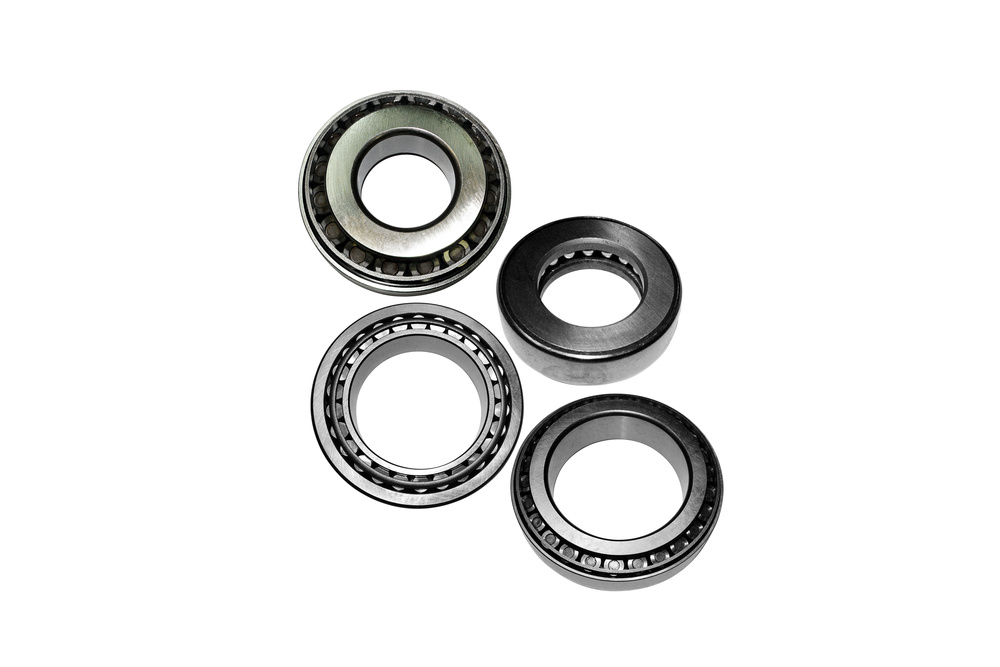
- Tapered Roller Bearings:
-
- Specifically designed for axial loads
-
- Widely used in wheel hubs and steering systems
-
- Can handle both radial and thrust loads
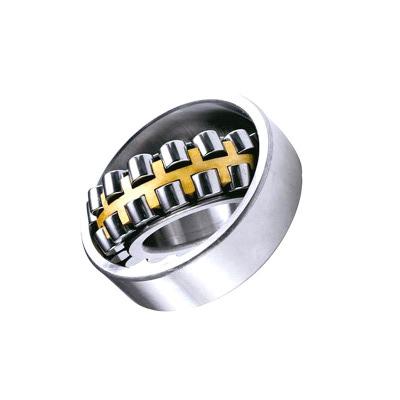
- Spherical Roller Bearings:
-
- Self-aligning capability
-
- Tolerate misalignment
-
- Used in challenging applications like drive shafts
The CNC Revolution: How Precision Machining Changed the Game
The Challenges of Bearing Manufacturing
Bearings may look simple, but manufacturing them to automotive standards is an incredibly complex process. The requirements are daunting:
- Dimensional Tolerances: ±0.001mm for critical dimensions
- Surface Finish: Ra ≤0.2μm for optimal performance
- Material Hardness: 58-62 HRC for wear resistance
- Roundness: ≤0.002mm for smooth operation
- Noise Levels: ≤30 dB for passenger comfort
CNC Machining: The Solution to Precision Challenges
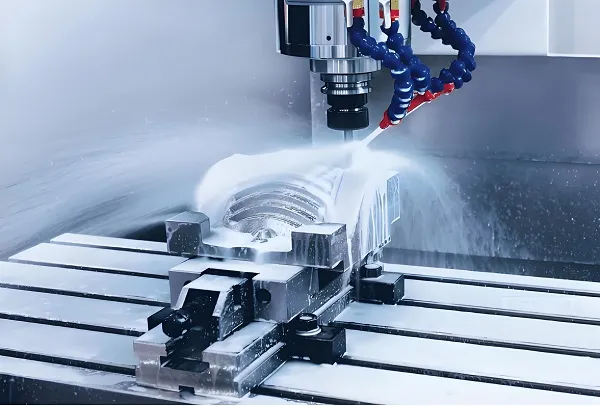
CNC (Computer Numerical Control) machining has transformed bearing manufacturing by providing:
1. CNC Turning: The Foundation of Precision
CNC lathes are essential for producing bearing rings with:
- Outer Diameter Precision: ±0.005mm
- Inner Diameter Accuracy: ±0.003mm
- Concentricity: ≤0.002mm
- Surface Roughness: Ra ≤0.4μm
2. CNC Grinding: The Final Polish
For ultra-precise finishing, CNC grinding machines achieve:
- Surface Finish: Ra ≤0.1μm
- Dimensional Accuracy: ±0.001mm
- Roundness: ≤0.0005mm
- Parallelism: ≤0.001mm/m
3. EDM Machining: For Complex Features
Electrical Discharge Machining is used for:
- Cage Pocket Machining: ±0.005mm accuracy
- Complex Grooves: For lubrication channels
- Hardened Materials: No tool wear issues
Material Science: The Secret to Longevity
The choice of materials is critical for bearing performance:
Chrome Steel (GCr15)
- Carbon Content: 0.95-1.05%
- Chromium Content: 1.30-1.65%
- Hardness: 60-64 HRC
- Fatigue Life: 1000+ hours under normal conditions
Stainless Steel (AISI 440C)
- Corrosion Resistance: Excellent
- Hardness: 58-60 HRC
- Temperature Range: -50°C to 300°C
- Applications: Marine and harsh environments
Ceramic Materials
- Silicon Nitride (Si₃N₄): For high-performance applications
- Density: 3.2 g/cm³ (40% lighter than steel)
- Hardness: 1500-1800 HV
- Temperature Resistance: Up to 1200°C
Our Customization Process: From Concept to Performance
1. Requirement Analysis
Every custom bearing project starts with understanding:
- Application Requirements: Load, speed, temperature
- Environmental Conditions: Corrosion, contamination risks
- Performance Targets: Life expectancy, noise levels
- Regulatory Compliance: ISO, SAE, OEM standards
2. Engineering Design
Our design team uses advanced tools:
- Finite Element Analysis (FEA): For stress simulation
- Lubrication Analysis: CFD modeling of oil flow
- Fatigue Life Calculation: ISO 281 standard methodology
- Material Selection: Based on application requirements
3. Prototyping and Testing
We validate designs through:
- Rapid Prototyping: CNC machined samples
- Performance Testing: Load capacity, friction torque
- Durability Testing: Accelerated life cycles
- Environmental Testing: Temperature, humidity, corrosion
4. Production and Quality Control
Our manufacturing process includes:
- CNC Machining: Precision turning and grinding
- Heat Treatment: Controlled atmosphere furnaces
- Surface Coating: For enhanced performance
- 100% Inspection: CMM, roundness testing, hardness verification
Quality Standards: Certifications You Can Trust
International Standards Compliance
We adhere to the most stringent industry standards:
ISO 281:2007
- Bearing life calculation standard
- Fatigue life prediction methodology
- Reliability assessment criteria
ISO 683-17:2018
- Bearing steel specifications
- Chemical composition requirements
- Mechanical property standards
SAE J2890:2020
- Automotive wheel bearing performance
- Durability and reliability testing
- Environmental resistance requirements
China National Standards
We also meet Chinese industry standards:
JB/T 15046-2025
- New energy vehicle motor bearings
- dm·n value ≥70000 mm·r/min
- High-speed performance requirements
JB/T 10859-2025
- Tensioner and idler bearings
- Belt drive system applications
- Enhanced quality control requirements
Technical Advantages: Why Choose Custom CNC Bearings
Performance Comparison
|
Performance Metric
|
Industry Standard
|
Our Capability
|
Improvement
|
|
Dimensional Accuracy
|
±0.005mm
|
±0.002mm
|
60% better
|
|
Surface Roughness
|
Ra 0.4μm
|
Ra 0.1μm
|
75% smoother
|
|
Roundness
|
0.002mm
|
0.0005mm
|
75% improvement
|
|
Parallelism
|
0.005mm/m
|
0.001mm/m
|
80% better
|
|
Production Lead Time
|
15-20 days
|
7-10 days
|
50% faster
|
Material Expertise
Our deep understanding of materials allows us to:
- Optimize Material Selection: Based on specific application needs
- Enhance Performance: Through specialized heat treatment
- Extend Life: With surface engineering techniques
- Reduce Weight: Using advanced materials for EV applications
Custom Solutions for Every Need
We specialize in:
- High-Speed Bearings: For electric vehicle motors
- Heavy-Duty Bearings: For commercial truck applications
- Corrosion-Resistant Bearings: For marine environments
- Low-Noise Bearings: For luxury passenger vehicles
Case Study: EV Motor Bearing Innovation
Customer Challenge
A leading electric vehicle manufacturer needed a custom bearing solution for their next-generation motor:
- Operating Speed: 20,000 RPM
- Temperature Range: -40°C to 180°C
- Weight Reduction: 30% compared to standard bearings
- Noise Level: ≤25 dB
Our Solution
- Material Innovation: Silicon nitride ceramic balls with steel races
- CNC Machining Excellence: 5-axis grinding for complex geometries
- Surface Engineering: Diamond-like carbon (DLC) coating
- Lubrication Optimization: Solid lubricant for high-temperature operation
Results
- Weight Reduction: 35% achieved (exceeding target)
- Temperature Performance: Successfully tested at 200°C
- Noise Level: 22 dB (below requirement)
- Life Expectancy: 500,000+ km in real-world testing
Future Trends: The Next Generation of Bearings
Smart Bearings
The future of bearings is intelligent:
- Sensor Integration: Built-in temperature and vibration sensors
- Condition Monitoring: Real-time performance tracking
- Predictive Maintenance: AI-powered failure prediction
- IoT Connectivity: Wireless data transmission
Sustainable Manufacturing
Environmental responsibility is key:
- Recycled Materials: Using reclaimed steel and alloys
- Energy Efficiency: Optimized manufacturing processes
- Reduced Waste: Through precision machining
- Longer Life: Reducing replacement frequency
Advanced Materials
New materials are revolutionizing the industry:
- Graphene-Enhanced Materials: For improved lubrication
- 3D Printed Bearings: Complex internal geometries
- Shape Memory Alloys: Self-healing capabilities
- Composite Materials: Lightweight and strong
Conclusion: The Invisible Technology That Moves the World
At Xiamen Gold Cattle, we understand that bearings are the unsung heroes of modern transportation. These small but critical components enable everything from daily commutes to global commerce.
Our 26 years of experience in CNC precision machining, combined with our deep material expertise and commitment to innovation, makes us the partner of choice for manufacturers who refuse to compromise on quality and performance.
Whether you need a standard replacement bearing or a custom solution for the next generation of electric vehicles, we have the skills, experience, and passion to deliver bearings that perform under the most demanding conditions.
Contact Us:
- Visit our website: https://www.xmgoldcattle.com/
Let’s work together to make every ride smoother, safer, and more efficient. Because when it comes to bearings, precision isn’t just a requirement—it’s the foundation of mobility.