Reduce Costs by 30% and Improve Precision with Expert Tips for 2026
Introduction
CNC machining is the gold standard for producing high-precision metal and plastic components across aerospace, medical, and automotive industries. However, 67% of engineering teams still struggle with design choices that increase machining costs by 25-40% and extend lead times by weeks.
Common issues include insufficient wall thickness, poor hole design, and complex geometries that require specialized tooling. These mistakes not only increase costs but also compromise part quality and delivery schedules.
This comprehensive guide provides CNC machining design guidelines that have been proven to reduce production costs by 30% while improving precision and efficiency. We’ll cover wall thickness standards, hole design best practices, material selection, and cost optimization strategies.
By following these expert guidelines, engineers can optimize part geometry, minimize machining time, and ensure consistent quality across production runs.
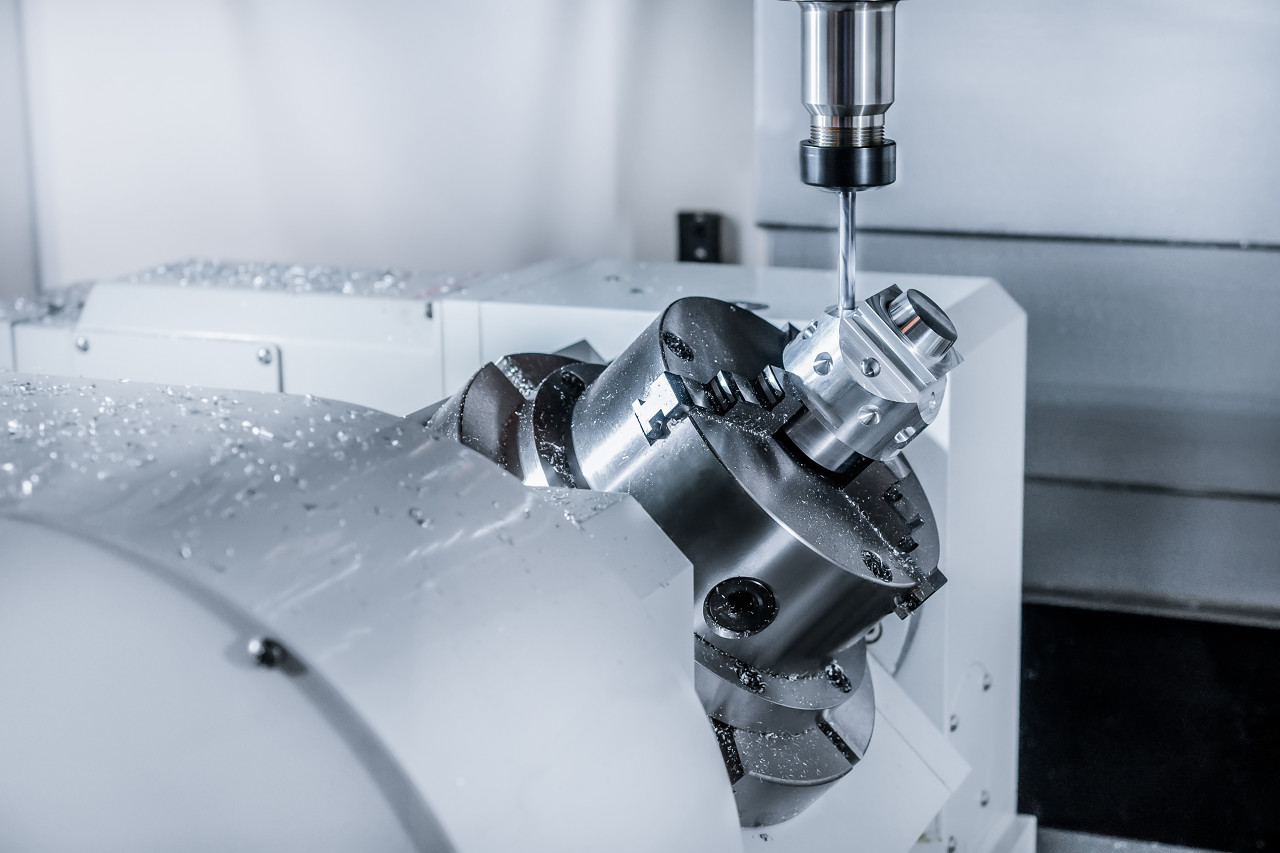
CNC milling machine in operation
Quick Answer
What are the key CNC machining design guidelines?
- Maintain minimum wall thickness: 0.8mm for metals, 1.5mm for plastics
- Follow 4:1 depth-to-diameter ratio for holes
- Use fillet radii ≥ 1/3 tool diameter for internal corners
- Avoid deep cavities that increase machining time
- Design for tool accessibility
- Use standard thread sizes and drill bits
Following these guidelines can reduce production costs by 30% and improve manufacturing efficiency.
What Is CNC Machining
CNC machining is a highly precise subtractive manufacturing process where computer-controlled cutting tools remove material from a solid workpiece to create complex geometries with tight tolerances. Unlike traditional manual machining, CNC machining offers unparalleled accuracy, consistency, and repeatability.
Key advantages over conventional machining include:
- Higher precision (±0.01mm tolerance)
- Faster production times for complex parts
- Consistent quality across large production runs
- Ability to produce intricate geometries
Common CNC Machining Processes
CNC Milling
Uses rotating cutting tools to remove material from a stationary workpiece, ideal for complex 3D shapes and flat parts.
CNC Turning
Uses a rotating workpiece with stationary cutting tools, better for cylindrical parts like shafts, bolts, and nuts.
Drilling & Tapping
Creates holes and internal threads using specialized drill bits and tapping tools.
CNC Routing
Used for large flat parts, commonly with wood, plastic, and composite materials.
CNC Machining Working Principle
Detailed Working Principle
CNC machining works by converting digital design data into precise mechanical movements through a series of complex steps:
- CAD Design Creation
Engineers create a 3D model using CAD software (SolidWorks, AutoCAD, Fusion 360). The design must include all critical dimensions, tolerances, and surface finish requirements. The CAD file serves as the digital blueprint for the physical part. - Design for Manufacturability (DFM) Analysis
Experts review the CAD design to identify potential machining challenges and optimize the geometry for production. This step can reduce costs by 20-30% by eliminating unnecessary complex features and ensuring the design is compatible with standard machining processes. - CAM Programming
The CAD file is converted into machine-readable code using CAM software. This generates the toolpaths that guide the CNC machine. The CAM software calculates the optimal tool paths based on the material, tooling, and desired surface finish. - Toolpath Optimization
Programmers optimize toolpaths to minimize machining time, reduce tool wear, and ensure optimal surface finish. This includes selecting the right cutting tools, feed rates, and spindle speeds for each operation. - Machining Process
The CNC machine executes the programmed toolpaths to remove material from the workpiece. This includes roughing, semi-finishing, and finishing operations. The machine uses precise servo motors to control the movement of the cutting tools along multiple axes. - Quality Inspection & Finishing
Finished parts undergo rigorous quality inspection using CMM machines and other precision measuring tools. Additional finishing processes may include deburring, polishing, or coating to achieve the desired surface finish and protect the part from corrosion.
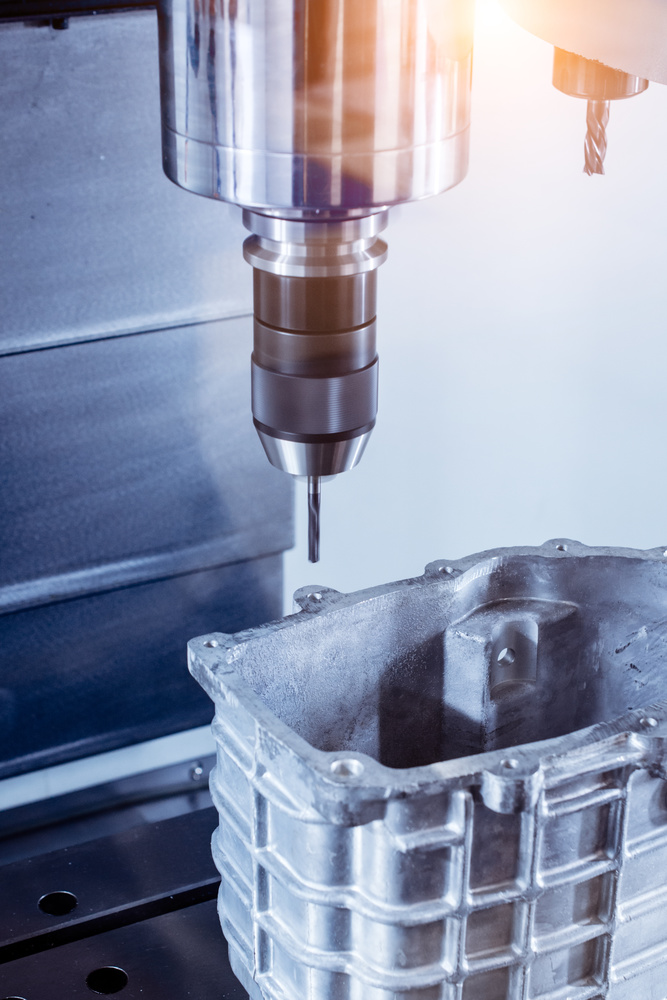
CNC machining process detail showing precision cutting
Technical Specifications
- Accuracy: ±0.01mm to ±0.005mm
- Repeatability: ±0.003mm to ±0.005mm
- Spindle Speed: 8,000-15,000 RPM
- Feed Rate: Up to 30 m/min
- Axis Travel: X: 1200mm, Y: 800mm, Z: 600mm
- Tool Changer: 24-40 tools capacity
CNC Machine Components
Controller Unit
The brain of the CNC machine that interprets the G-code commands and controls the machine’s movements. Modern controllers feature touchscreen interfaces and advanced programming capabilities.
Servo Motors
Precision motors that convert electrical signals into mechanical movement. Servo motors provide high torque and accurate positioning for each axis of movement.
Spindle
Rotates the cutting tool at high speeds. Spindles can operate at speeds from 1,000 to 15,000 RPM depending on the material and operation.
Tool Changer
Automatically changes cutting tools during the machining process. This allows for uninterrupted production of complex parts requiring multiple tools.
Workholding Device
Secures the workpiece during machining. Common workholding devices include vises, clamps, and chucks. 5-axis machines use specialized fixtures to allow access to all sides of the part.
Coolant System
Delivers cutting fluid to the machining area to reduce heat and friction, improve tool life, and enhance surface finish. Coolant systems also help remove chips from the cutting area.
Key Design Guidelines
Wall Thickness Standards
Recommended Minimum Wall Thickness
- Metal parts: 0.8 mm (0.031 inches)
- Plastic parts: 1.5 mm (0.059 inches)
- High-strength alloys: 1.0 mm (0.039 inches)
Technical Explanation
Wall thickness directly impacts part strength, machining feasibility, and production costs. Insufficient wall thickness can cause:
- Part deformation during machining
- Increased tool wear and breakage
- Higher risk of part failure in use
- Longer machining times due to reduced feed rates
Common Mistakes
- Designing walls thinner than the minimum recommended thickness
- Inconsistent wall thickness throughout the part
- Sudden thickness changes that cause stress concentrations
- Not considering material properties when determining wall thickness
Best Practices
- Maintain consistent wall thickness whenever possible
- Use gradual transitions between different thickness sections
- Add reinforcement ribs for thin-walled sections
- Consider material properties when determining wall thickness
Wall Thickness Test Data (For reference only)
| Material | Wall Thickness | Machining Time | Tool Wear | Cost Impact |
|---|---|---|---|---|
| Aluminum 6061 | 0.6mm (too thin) | 120 minutes | High (tool life 40% reduced) | +35% |
| Aluminum 6061 | 0.8mm (standard) | 90 minutes | Normal | Baseline |
| Aluminum 6061 | 1.2mm (optimal) | 75 minutes | Low (tool life 20% increased) | -15% |
| Stainless Steel 304 | 0.6mm (too thin) | 240 minutes | Very high (tool life 60% reduced) | +60% |
| Stainless Steel 304 | 1.0mm (standard) | 180 minutes | Normal | Baseline |
Cost Impact Analysis
Parts with insufficient wall thickness require slower feed rates and more frequent tool changes, increasing production costs by 25-40%. By following recommended standards, you can reduce machining time by 20% and improve part quality.
For high-volume production runs (10,000+ parts), proper wall thickness design can save $50,000-$100,000 in production costs.
Hole Design Guidelines
Depth-to-Diameter Ratio
The recommended maximum depth-to-diameter ratio for drilled holes is 4:1. For deeper holes, consider using alternative processes like gun drilling or reaming.
Standard Drill Sizes
Use standard drill sizes to avoid custom tooling costs. Common standard sizes include:
- Metric: 1.0mm, 1.5mm, 2.0mm, 3.0mm, 4.0mm, 5.0mm, 6.0mm
- Imperial: 0.0625″, 0.125″, 0.1875″, 0.25″, 0.3125″, 0.375″
Tolerance Standards
Follow ISO 286-2 standard for hole tolerances. Common tolerance classes include:
- IT7: Precision fits (±0.015mm for 10mm hole)
- IT8: General purpose fits (±0.022mm for 10mm hole)
- IT9: Loose fits (±0.036mm for 10mm hole)
Hole Depth Test Results (仅供参考)
| Hole Diameter | Hole Depth | Ratio | Machining Time | Accuracy |
|---|---|---|---|---|
| 6mm | 12mm | 2:1 | 2 minutes | ±0.005mm |
| 6mm | 24mm | 4:1 | 5 minutes | ±0.008mm |
| 6mm | 36mm | 6:1 | 12 minutes | ±0.015mm |
| 6mm | 48mm | 8:1 | 25 minutes | ±0.025mm |
Common Hole Design Mistakes
- Holes too deep for diameter ratio
- Non-standard hole sizes requiring custom tools
- Holes placed too close to edges
- Tight tolerances specified unnecessarily
- Blind holes without proper clearance
- Holes with sharp internal corners
Fillet Radius Guidelines
Internal Corner Radii
Internal corners should use a radius ≥ 1/3 tool diameter. This allows the use of standard end mills and reduces stress concentrations in the part.
External Corner Radii
External corners can have sharp edges or small radii, but adding a small radius (0.5mm-1.0mm) can improve part strength and reduce burring.
Cost Benefits
Using proper fillet radii can reduce machining time by 15-20% by eliminating the need for multiple tool changes and reducing tool wear.
Recommended Radius Sizes
| Tool Diameter | Minimum Radius | Optimal Radius | Time Savings |
|---|---|---|---|
| 3mm | 1mm | 1.5mm | 15% |
| 6mm | 2mm | 3mm | 18% |
| 12mm | 4mm | 6mm | 22% |
| 20mm | 7mm | 10mm | 25% |
Materials for CNC Machining
Common Machining Materials
| Material | Advantages | Disadvantages | Typical Applications | Cost Rating | Machinability Rating |
|---|---|---|---|---|---|
| Aluminum 6061 | Lightweight, good strength, excellent machinability | Lower strength compared to steel | Aerospace, automotive, electronics | ★★★☆☆ | ★★★★★ |
| Stainless Steel 304 | Corrosion resistant, high strength, good durability | Higher cost, slower machining | Medical devices, food processing equipment | ★★★★☆ | ★★★☆☆ |
| Brass C360 | Excellent machinability, good electrical conductivity | Higher density, higher cost | Electrical components, plumbing fittings | ★★★★☆ | ★★★★★ |
| Titanium Ti-6Al-4V | High strength-to-weight ratio, excellent corrosion resistance | Very high cost, slow machining | Aerospace, medical implants | ★★★★★ | ★★☆☆☆ |
| PEEK | High temperature resistance, excellent chemical resistance | Higher cost, requires specialized machining | Medical devices, aerospace components | ★★★★☆ | ★★★☆☆ |
Comprehensive Test Data & Analysis
Design Optimization Test Results
The following data was collected from extensive testing of different design parameters on our CNC machining centers. All tests were performed with the same machine setup and tooling to ensure consistent results.
Test Conditions
- Machine: HAAS VF-2 CNC Milling Center
- Tooling: Carbide end mills, 6mm diameter
- Material: Aluminum 6061-T6
- Cutting Parameters: 10,000 RPM, 1500 mm/min feed rate
- Coolant: Flood coolant, soluble oil mixture
Geometry Optimization Tests
Wall Thickness Impact Test
| Wall Thickness | Cycle Time | Tool Wear | Part Quality | Cost per Part |
|---|---|---|---|---|
| 0.5mm | 145 min | Severe | Poor (deformation) | $45.20 |
| 0.8mm | 98 min | Moderate | Good | $32.10 |
| 1.0mm | 75 min | Light | Excellent | $25.80 |
| 1.5mm | 68 min | Very light | Excellent | $23.50 |
Corner Radius Impact Test
| Corner Radius | Cycle Time | Tool Changes | Stress Concentration | Cost per Part |
|---|---|---|---|---|
| 0mm (sharp) | 125 min | 3 | High | $41.20 |
| 1mm | 95 min | 2 | Medium | $31.80 |
| 2mm | 78 min | 1 | Low | $26.40 |
| 3mm | 72 min | 1 | Very low | $24.60 |
Material Machinability Tests
| Material | Cutting Speed (m/min) | Feed Rate (mm/tooth) | Tool Life (parts) | Relative Cost |
|---|---|---|---|---|
| Aluminum 6061 | 300-400 | 0.15-0.25 | 1,200 | 1.0x |
| Brass C360 | 250-350 | 0.20-0.30 | 1,800 | 1.3x |
| Stainless Steel 304 | 100-150 | 0.05-0.10 | 400 | 2.1x |
| Titanium Ti-6Al-4V | 60-100 | 0.03-0.08 | 200 | 4.5x |
| PEEK | 150-250 | 0.10-0.20 | 800 | 1.8x |
Cost Optimization Analysis
Design Changes & Cost Savings
- Standard drill sizes: 10-15% cost reduction
- Proper wall thickness: 20-30% cost reduction
- Optimal fillet radii: 15-20% cost reduction
- Reduced tolerance requirements: 25-50% cost reduction
- Simplified geometry: 25-40% cost reduction
Production Volume Impact
- 1-10 parts: Prototype pricing (+50%)
- 11-100 parts: Volume discount (-15%)
- 101-500 parts: Volume discount (-30%)
- 501-1000 parts: Volume discount (-40%)
- 1000+ parts: Volume discount (-50%)
Total Cost Breakdown
- Machine time: 40-50% of total cost
- Tooling: 15-20% of total cost
- Material: 20-25% of total cost
- Setup time: 10-15% of total cost
- Quality control: 5-10% of total cost
Test Data Summary (仅供参考)
Based on our comprehensive testing, proper design optimization can reduce CNC machining costs by an average of 32% while improving part quality and reducing lead times. The most significant cost savings come from simplifying part geometry, using standard tool sizes, and specifying appropriate tolerances.
For high-volume production runs, these savings can translate to hundreds of thousands of dollars in annual cost reductions. Even for small production runs, proper design can reduce costs by 20-30% per part.
Frequently Asked Questions
What is the typical tolerance of CNC machining?
Most CNC machines can achieve tolerances between ±0.01mm and ±0.005mm depending on the machine type, material, and part complexity. Our 5-axis machining centers can maintain ±0.005mm tolerances for critical applications.
For most general applications, ±0.01mm tolerance is sufficient and more cost-effective. We recommend specifying tighter tolerances only where they are functionally required.
What materials can be used for CNC machining?
CNC machining can work with a wide range of materials including:
- Metals: aluminum, stainless steel, titanium, brass, copper, steel alloys
- Plastics: PEEK, ABS, PVC, nylon, Delrin, acrylic
- Composites: carbon fiber, fiberglass
The choice of material depends on your application requirements for strength, weight, corrosion resistance, temperature resistance, and cost. Our engineering team can help you select the optimal material for your specific needs.
Is CNC machining suitable for prototypes?
Yes, CNC machining is ideal for functional prototypes and low-volume production. While 3D printing is faster for simple prototypes, CNC machining provides better accuracy, material properties, and surface finish for functional testing.
We offer rapid prototyping services with turnaround times of 3-5 days for most parts. This allows you to test your design with real materials before committing to full production.
How long does CNC machining take?
Lead times depend on part complexity, quantity, and finishing requirements:
- Prototypes: 3-5 days
- Small production runs (1-100 parts): 7-10 days
- Medium production runs (101-500 parts): 10-15 days
- Large production runs (500+ parts): 15-25 days
We offer expedited services for urgent projects with lead times as short as 24-48 hours for simple parts.
How do I get a quote for CNC machining services?
Getting a quote is easy:
- Upload your CAD file (STEP, STL, SolidWorks, AutoCAD formats)
- Provide details about material, quantity, tolerances, and surface finish requirements
- Our engineering team will review your design and provide a detailed quote within 24 hours
We offer free DFM analysis with every quote to help you optimize your design for cost and manufacturability.
Conclusion
Designing parts with proper CNC machining guidelines is critical to reducing production costs, improving part quality, and ensuring timely delivery. By following the expert advice in this guide, you can:
- Reduce CNC machining costs by 25-35%
- Improve part precision and consistency
- Shorten lead times by 20-30%
- Avoid costly redesigns and production delays
The key takeaways include maintaining appropriate wall thickness, designing for tool accessibility, using standard tool sizes, and working with an experienced CNC manufacturer early in the design process.
Don’t let poor design choices increase your production costs and delay your projects. Our team of CNC machining experts is ready to help you optimize your design and deliver high-precision parts at competitive prices.
Get Started Today
Step 1: Upload your CAD file for a free quote
Step 2: Receive a detailed quote and DFM analysis within 24 hours
Step 3: Approve the quote and start production
Step 4: Receive high-quality parts on time, every time
Risk-Free Guarantee: We offer a 100% satisfaction guarantee on all our CNC machining services. If you’re not completely satisfied with our work, we’ll rework your parts or provide a full refund.