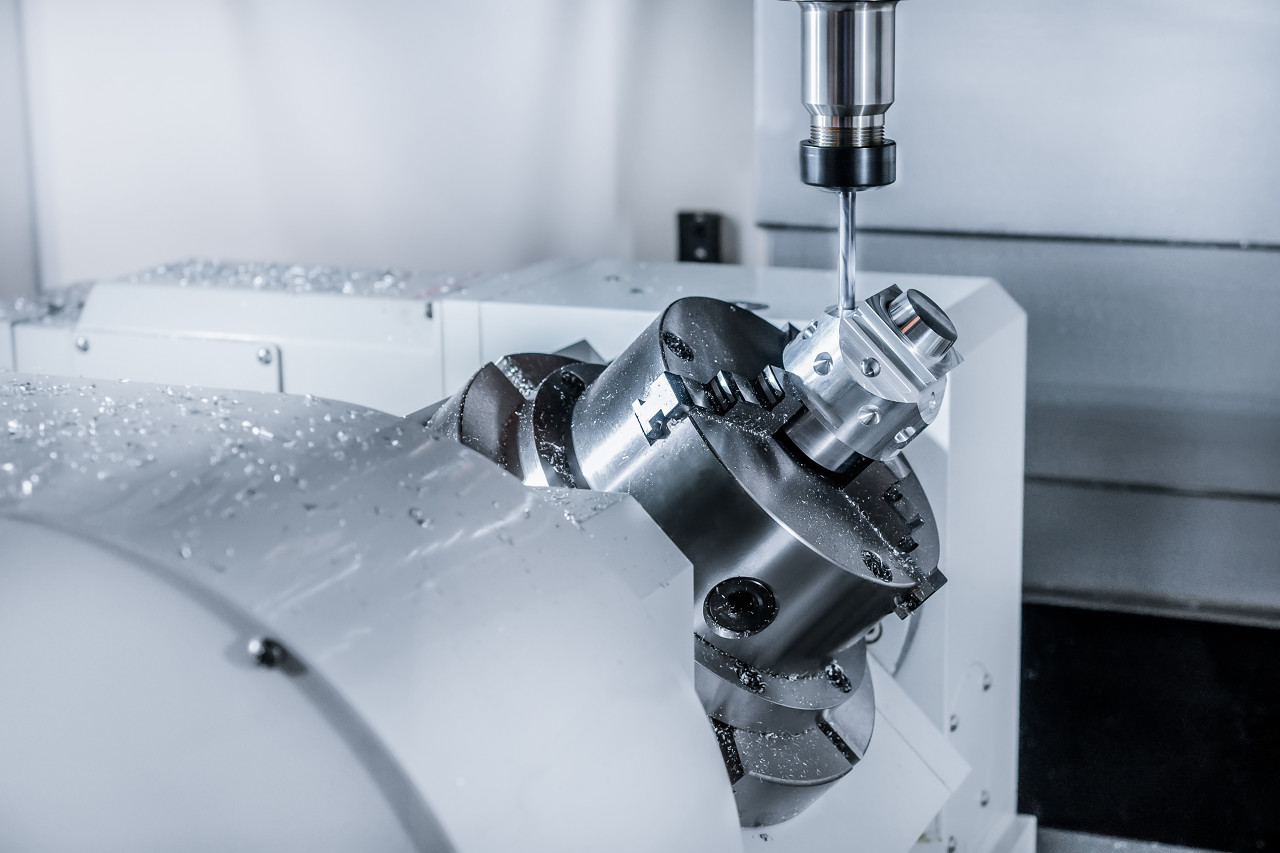
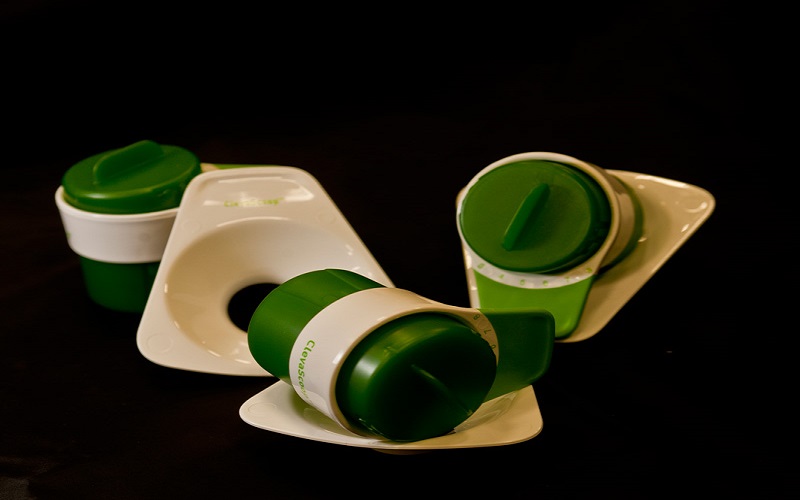
CNC machining parts are precision-engineered components manufactured using computer numerical control (CNC) technology. These parts serve as critical building blocks in various industries, offering unparalleled accuracy, consistency, and complexity compared to traditional manufacturing methods. This comprehensive guide explores everything you need to know about custom CNC machining parts, from fundamental processes to advanced applications.
Ready to Get Started with Your CNC Machining Project?
Request a free quote and upload your CAD files today for custom precision CNC machining parts.
What Are CNC Machining Parts
CNC machining parts are components produced through computer numerical control machining, a subtractive manufacturing process that removes material from a solid workpiece to create precise geometries. Unlike traditional manual machining, CNC machining uses pre-programmed computer software to control machine tool movements with exceptional accuracy.
The CNC machining process begins with a digital 3D model created using CAD (Computer-Aided Design) software. This model is then converted into machine-readable G-code instructions that guide the CNC machine through the precise movements required to shape the material into the desired part.
Key characteristics of CNC machined parts include:
- High precision and accuracy (typically ±0.01mm or better)
- Excellent repeatability for consistent production
- Ability to produce complex geometries and intricate features
- Wide material compatibility including metals, plastics, and composites
- Suitable for both prototyping and high-volume production
Compared to traditional machining methods, CNC machining offers significant advantages in terms of production efficiency, quality control, and design flexibility. It eliminates human error and allows for unattended operation, making it ideal for modern manufacturing environments.
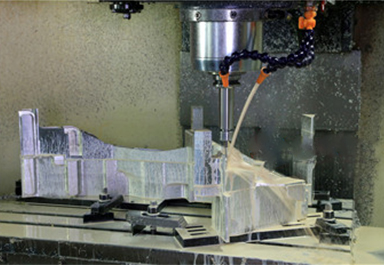
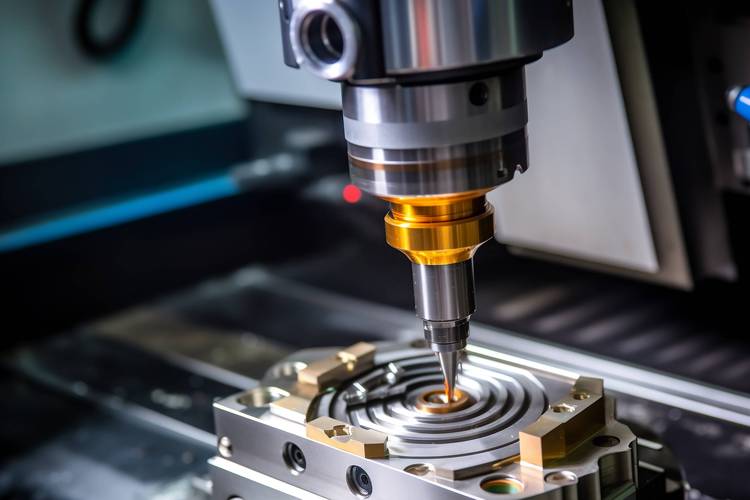
CNC milling machine producing precision machined components
Types of CNC Machining Processes
CNC Milling Parts
CNC milling is one of the most common CNC machining processes, using rotating cutting tools to remove material from a workpiece. The milling process can create a wide variety of features including slots, pockets, contours, and complex 3D surfaces.
CNC milling parts are ideal for producing components with complex shapes and features that would be difficult or impossible to create with other machining methods. The process supports multi-axis machining, allowing for simultaneous cutting from multiple angles.
Suitable parts include:
- Mechanical components and housings
- Aerospace structural parts
- Medical device components
- Automotive engine parts
- Electronic enclosures and heat sinks
Processing capabilities:
- Tolerances down to ±0.005mm with precision equipment
- Surface finishes as fine as Ra 0.2μm
- Ability to machine complex 3D geometries
- Support for 3-axis, 4-axis, and 5-axis machining
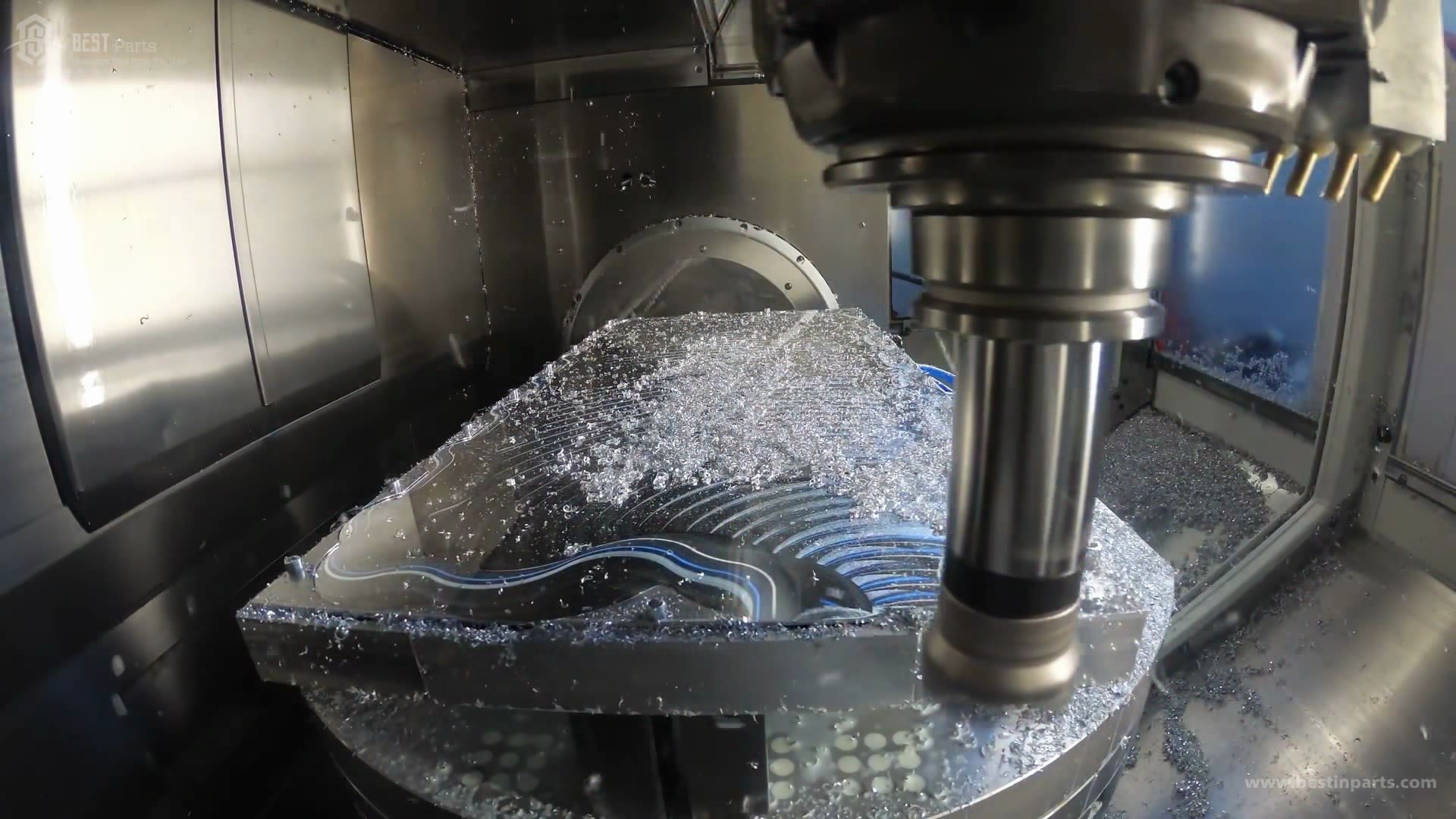
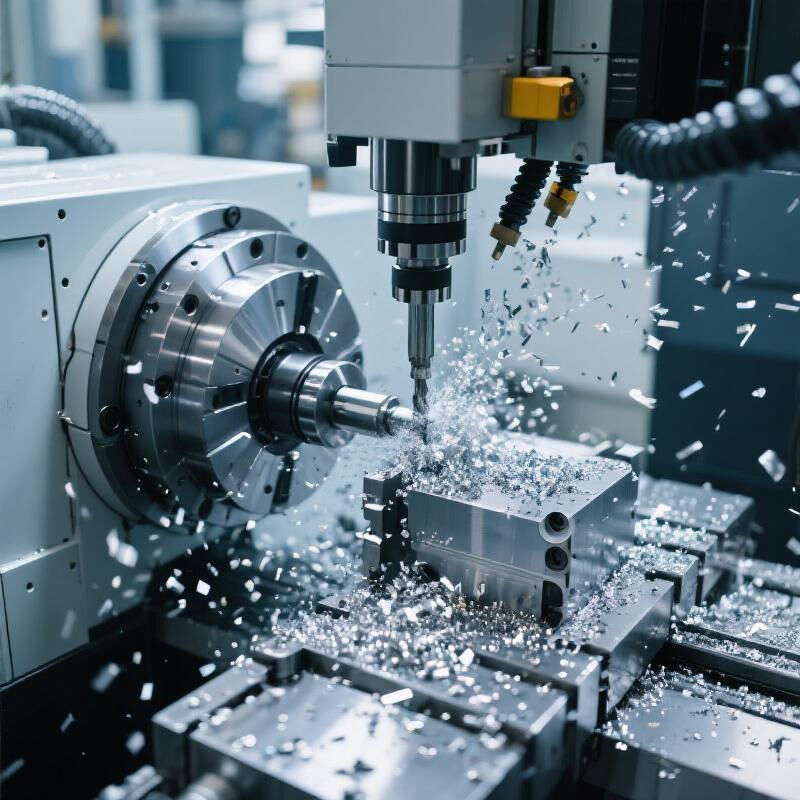
CNC milling process showing metal removal and chip formation
CNC Turning Parts
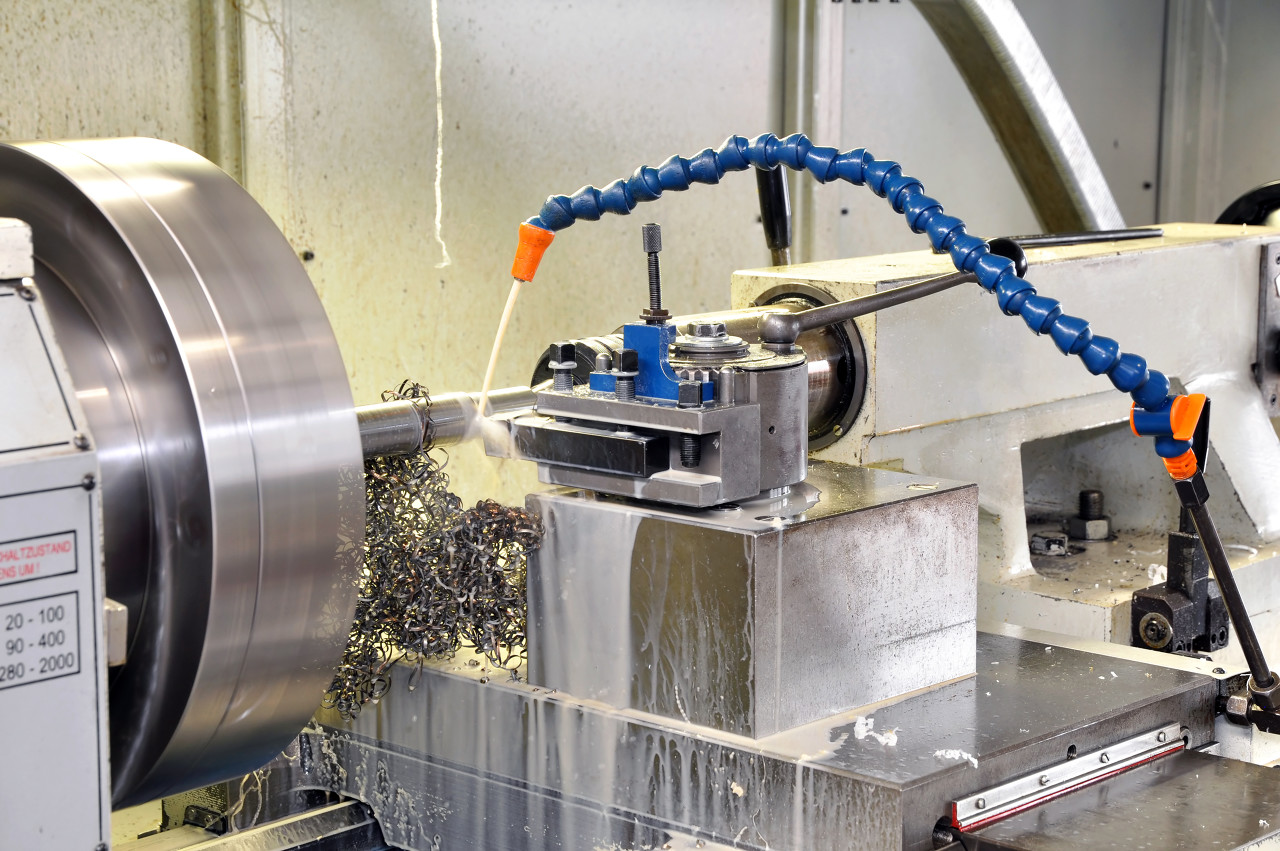
CNC lathe machining cylindrical components with coolant system
CNC turning is a machining process where the workpiece rotates while a stationary cutting tool removes material to create cylindrical shapes. This process is ideal for producing parts with rotational symmetry such as shafts, rods, pins, and bushings.
CNC turning parts are characterized by their cylindrical geometry and can include features such as threads, tapers, grooves, and chamfers. The turning process is particularly efficient for producing round parts in high volumes.
Typical turning parts include:
- Shafts and axles for mechanical systems
- Bolts, nuts, and threaded components
- Bearings and bushings
- Hydraulic and pneumatic cylinders
- Valve bodies and fittings
Key advantages of CNC turning:
- High production rates for cylindrical parts
- Excellent surface finish on external and internal diameters
- Precise thread cutting capabilities
- Ability to produce complex profiles with live tooling
- Support for bar feeding for unattended operation
5 Axis CNC Machining
5 axis CNC machining represents the pinnacle of machining technology, offering unparalleled flexibility and precision for complex part geometries. This advanced machining process allows the cutting tool to move along five different axes simultaneously, enabling access to all sides of a workpiece without repositioning.
The five axes typically include three linear axes (X, Y, Z) and two rotational axes (A, B or C), providing complete freedom of movement for the cutting tool. This capability is particularly valuable for producing intricate parts with complex curved surfaces and features.
Key advantages of 5 axis machining:
- Ability to machine complex 3D geometries in a single setup
- Reduced setup time and improved accuracy
- Access to difficult-to-reach features
- Improved surface finish and reduced handwork
- Higher productivity for complex parts
Typical applications include:
- Aerospace turbine blades and engine components
- Medical implants and surgical instruments
- Complex mold and die components
- Prototyping of intricate mechanical parts
- High-precision optical components
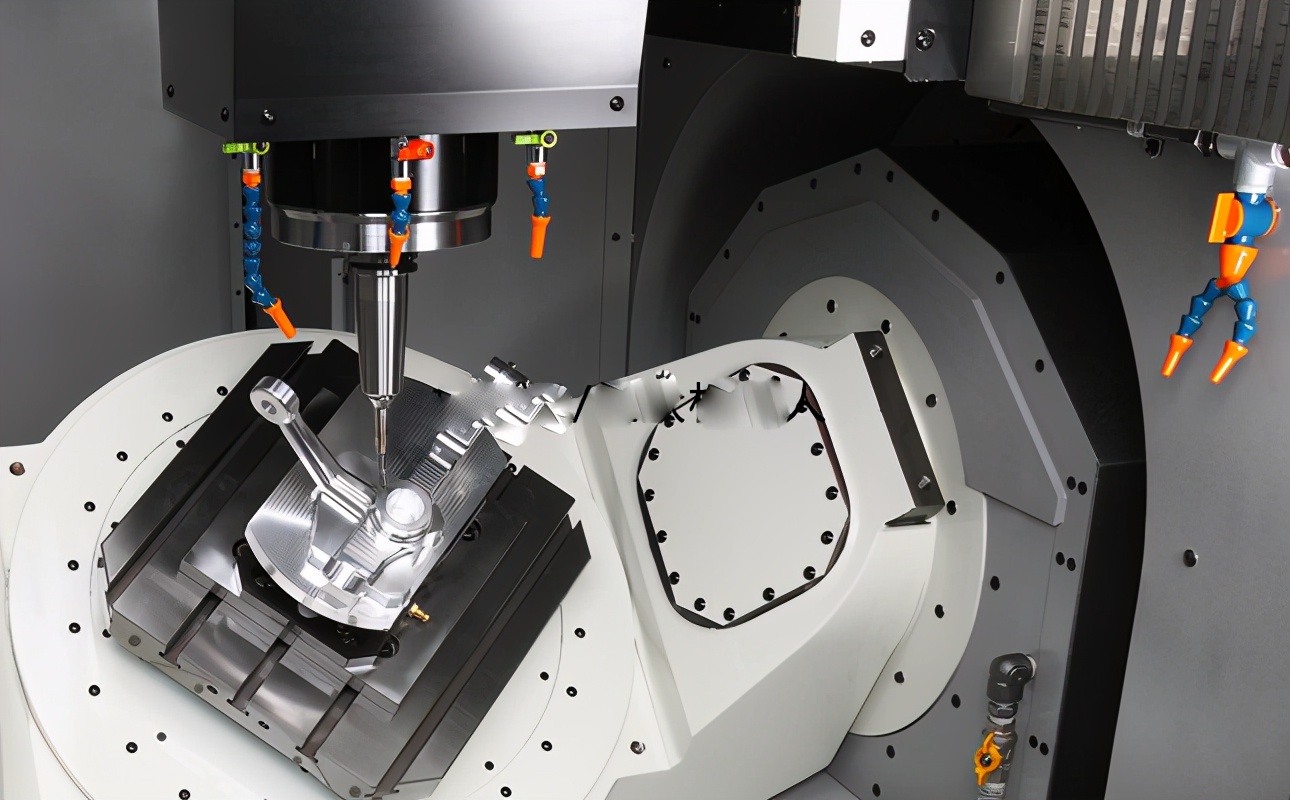
5 axis CNC machining center producing complex aerospace components
Materials Used for CNC Machining Parts
Metal CNC Machining Parts
Metals are the most commonly used materials for CNC machining parts due to their strength, durability, and wide range of properties. Different metals offer unique characteristics that make them suitable for specific applications.
Aluminum CNC Machining Parts
Aluminum is the most popular material for CNC machining due to its excellent combination of properties:
- High strength-to-weight ratio
- Excellent machinability
- Good corrosion resistance
- Excellent thermal conductivity
- Ability to be anodized for enhanced appearance and protection
Common aluminum alloys: 6061-T6 (most versatile), 7075-T6 (high strength), 2024-T3 (aerospace grade), 5052-H32 (marine grade)
Stainless Steel CNC Machining Parts
Stainless steel offers exceptional corrosion resistance and strength, making it ideal for demanding applications:
- Excellent corrosion resistance
- High strength and durability
- Good temperature resistance
- Hygienic properties (ideal for medical and food applications)
- Good wear resistance
Common stainless steel grades: 304 (general purpose), 316 (marine grade), 17-4 PH (precipitation hardening), 416 (free machining)
Brass CNC Machining Parts
Brass is a copper-zinc alloy known for its excellent machinability and aesthetic appeal:
- Excellent machinability
- Good corrosion resistance
- Attractive golden appearance
- Good electrical conductivity
- Low friction properties
Common brass alloys: C36000 (free machining), C26000 (cartridge brass), C37700 (forging brass)
Copper CNC Machining Parts
Copper offers excellent electrical and thermal conductivity, making it ideal for electrical and heat transfer applications:
- Excellent electrical conductivity
- Excellent thermal conductivity
- Good corrosion resistance
- Antimicrobial properties
- Good ductility
Common copper alloys: C11000 (electrolytic tough pitch), C10100 (oxygen-free electronic)
Titanium CNC Machining Parts
Titanium offers an exceptional combination of high strength, low weight, and excellent corrosion resistance:
- Exceptional strength-to-weight ratio
- Excellent corrosion resistance
- Good biocompatibility (ideal for medical implants)
- Good temperature resistance
- Low density (45% lighter than steel)
Common titanium grades: Ti-6Al-4V (most common), Ti Grade 2 (pure titanium), Ti Grade 5 (alpha-beta alloy)
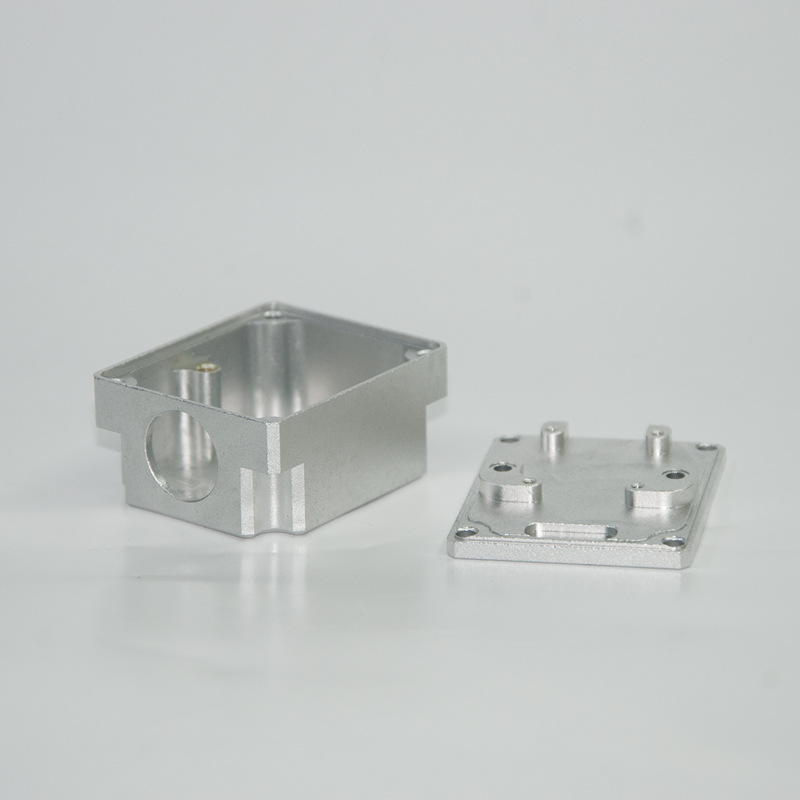
Precision CNC machined aluminum components with complex geometries
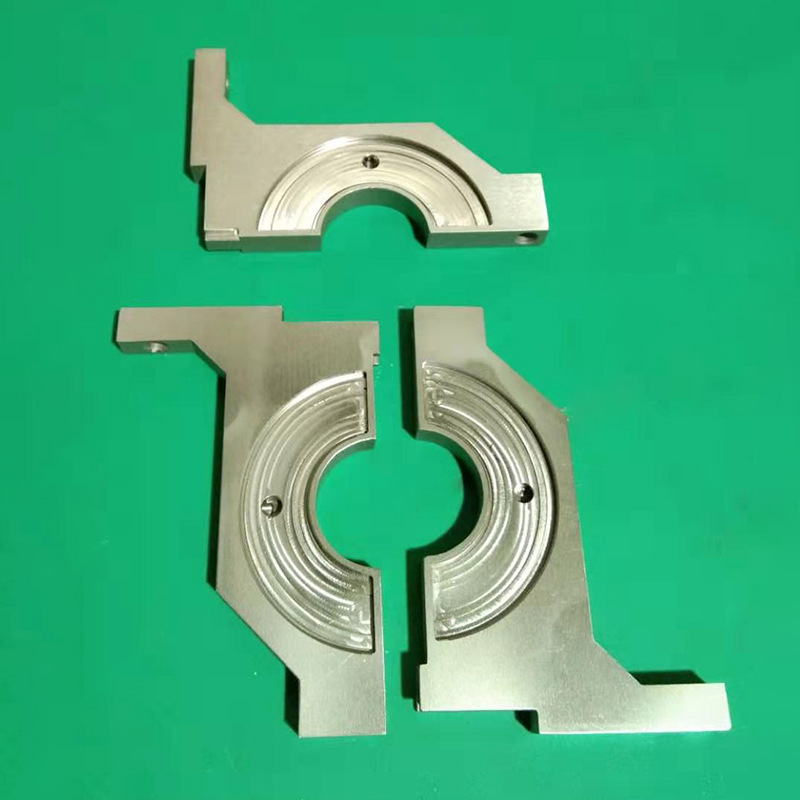
CNC machined stainless steel parts with precision features
Plastic CNC Machining Parts
Plastics offer unique advantages for CNC machining applications, including lightweight properties, excellent chemical resistance, and good electrical insulation. Different plastics offer varying levels of strength, temperature resistance, and machinability.
ABS CNC Machining Parts
ABS (Acrylonitrile Butadiene Styrene) is a common thermoplastic known for its good balance of properties:
- Good impact resistance
- Excellent machinability
- Good dimensional stability
- Easy to paint and glue
- Cost-effective
Applications: Electronic enclosures, consumer products, toys, automotive components
PEEK CNC Machining Parts
PEEK (Polyether Ether Ketone) is a high-performance engineering plastic with exceptional properties:
- Excellent mechanical strength and stiffness
- High temperature resistance (up to 260°C)
- Excellent chemical resistance
- Good biocompatibility (FDA approved)
- Low moisture absorption
Applications: Medical implants, aerospace components, oil and gas equipment, semiconductor industry
Nylon CNC Machining Parts
Nylon (Polyamide) is a versatile engineering plastic known for its toughness and wear resistance:
- Excellent wear resistance
- Good impact strength
- Low friction coefficient
- Good chemical resistance
- Self-lubricating properties
Applications: Gears, bearings, bushings, wear pads, electrical insulators
Delrin CNC Machining Parts
Delrin (Acetal Homopolymer) is a high-performance engineering plastic with excellent dimensional stability:
- Excellent dimensional stability
- Good mechanical strength and stiffness
- Low friction coefficient
- Good chemical resistance
- Easy to machine
Applications: Gears, bearings, valves, pump components, precision mechanical parts
Polycarbonate CNC Machining Parts
Polycarbonate is a transparent engineering plastic with excellent impact resistance:
- Excellent impact resistance
- Good transparency
- Good temperature resistance
- Good electrical insulation properties
- FDA approved for food contact
Applications: Safety shields, optical components, medical devices, electronic enclosures
CNC Machining Capabilities
CNC machining offers exceptional capabilities for producing high-precision components with complex geometries. The following table summarizes the key capabilities and technical specifications:
| Capability | Standard | Precision | Ultra-Precision |
|---|---|---|---|
| Dimensional Tolerance | ±0.02mm | ±0.005mm | ±0.002mm |
| Surface Roughness (Ra) | 3.2μm | 0.8μm | 0.2μm |
| Maximum Part Size | 1000x800x600mm | 1500x1200x1000mm | 2000x1500x1200mm |
| Minimum Feature Size | 0.5mm | 0.2mm | 0.1mm |
| Production Volume | 1-100 parts | 100-1000 parts | 1000+ parts |
Tolerances
CNC machining tolerances refer to the allowable deviation from the specified dimensions in a part design. The tolerance level depends on several factors including the machining process, material, part geometry, and equipment capabilities.
Standard tolerance standards:
- ISO 2768: General tolerances for linear and angular dimensions
- ASME Y14.5: Geometric Dimensioning and Tolerancing (GD&T) standard
- IT Grades: International Tolerance grades from IT01 (most precise) to IT18 (least precise)
Tolerance capabilities by material:
| Material | Standard Tolerance | Precision Tolerance | Typical IT Grade |
|---|---|---|---|
| Aluminum | ±0.01mm | ±0.005mm | IT7-IT8 |
| Steel | ±0.005mm | ±0.002mm | IT6-IT7 |
| Stainless Steel | ±0.008mm | ±0.003mm | IT7-IT8 |
| Plastics | ±0.02mm | ±0.01mm | IT8-IT9 |
Surface Finish
Surface finish is a critical aspect of CNC machining parts that affects functionality, aesthetics, and performance. It is typically measured using the Ra (Roughness Average) parameter, which represents the average deviation of the surface profile from the mean line.
Common surface finish levels:
- Ra 3.2μm: Standard finish for non-critical surfaces
- Ra 1.6μm: Good finish for general applications
- Ra 0.8μm: Fine finish for mating surfaces
- Ra 0.4μm: Very fine finish for precision applications
- Ra 0.2μm: Mirror-like finish for optical and medical parts
Surface finish can be improved through secondary operations such as polishing, grinding, honing, and lapping. The choice of finish depends on the application requirements, cost considerations, and functional needs.
Industries Using CNC Machining Parts
CNC machining parts play a critical role in numerous industries, providing the precision components needed for modern technology and manufacturing. The following sections highlight key industries and their specific applications.
Aerospace
The aerospace industry demands the highest levels of precision, reliability, and performance from its components. CNC machining parts are essential for producing critical aerospace components that meet strict safety and performance standards.
- Turbine blades and engine components
- Airframe structural parts
- Landing gear components
- Avionics enclosures
- Hydraulic and pneumatic systems
Requirements: AS9100 certification, tight tolerances (±0.002mm), high-strength materials
Medical
The medical industry relies on CNC machining parts for a wide range of applications, from surgical instruments to implantable devices. These components must meet strict biocompatibility and sterilization requirements.
- Surgical instruments and tools
- Implantable devices (hip replacements, screws)
- Medical device housings
- Dental components
- Diagnostic equipment parts
Requirements: ISO 13485 certification, FDA approval, biocompatible materials
Automotive
The automotive industry uses CNC machining parts for both production vehicles and racing applications. These components must withstand high stresses and provide reliable performance in demanding environments.
- Engine components (crankshafts, pistons)
- Transmission parts
- Suspension components
- Brake system parts
- Custom racing components
Requirements: IATF 16949 certification, high-volume production, durability
Electronics
The electronics industry requires precise CNC machining parts for enclosures, heat sinks, and internal components. These parts must provide excellent electrical insulation and thermal management capabilities.
- Electronic enclosures and chassis
- Heat sinks and thermal management parts
- Connector components
- PCB mounting hardware
- Precision gears and mechanisms
Requirements: EMI shielding, thermal conductivity, tight dimensional control
Industrial Equipment
Industrial equipment manufacturers rely on CNC machining parts for machinery components that must operate reliably in harsh industrial environments. These parts often require high strength and wear resistance.
- Gearboxes and transmission parts
- Hydraulic and pneumatic components
- Conveyor system parts
- Robotic components
- Machine tool parts
Requirements: High strength, wear resistance, corrosion resistance
Oil and Gas
The oil and gas industry requires CNC machining parts that can withstand extreme pressures, temperatures, and corrosive environments. These components are critical for exploration, production, and refining operations.
- Valve bodies and components
- Drilling equipment parts
- Pump components
- Pressure vessel parts
- Pipeline components
Requirements: NACE MR0175 certification, high pressure rating, corrosion resistance
Advantages of CNC Machining Parts
CNC machining parts offer numerous advantages over traditional manufacturing methods, making them the preferred choice for modern production environments. These advantages span multiple dimensions including precision, efficiency, flexibility, and quality.
High Precision and Accuracy
CNC machining delivers exceptional precision with tolerances as tight as ±0.002mm, ensuring that every part meets exact design specifications. This level of accuracy is critical for applications where even minor deviations can affect performance.
- Consistent quality across all parts
- Elimination of human error
- Ability to produce complex geometries
- Compliance with strict industry standards
Excellent Repeatability
Once a CNC program is created, it can be repeated infinitely to produce identical parts with consistent quality. This repeatability is essential for high-volume production and ensures that every part meets the same exacting standards.
- Identical parts from first to last
- Reduced inspection time
- Scalable production volumes
- Easy replication of successful designs
Complex Geometry Capabilities
CNC machining can produce complex shapes and features that would be impossible or impractical with traditional machining methods. Multi-axis machining allows for intricate 3D geometries and undercut features.
- Intricate 3D surfaces
- Undercut features
- Complex internal cavities
- Combined features in single setup
High Material Compatibility
CNC machining works with a wide range of materials including metals, plastics, composites, and exotic alloys. This versatility allows manufacturers to choose the best material for each application.
- Metals: aluminum, steel, titanium, brass
- Plastics: ABS, PEEK, nylon, Delrin
- Composites: carbon fiber, fiberglass
- Exotic materials: Inconel, Hastelloy
Additional Benefits
- Efficiency: CNC machines can operate 24/7 with minimal supervision, maximizing production output.
- Cost-effectiveness: Reduced labor costs, less material waste, and lower rework expenses.
- Flexibility: Quick changeover between different part designs with minimal setup time.
- Quality control: Real-time monitoring and in-process inspection capabilities.
- Prototyping: Rapid production of functional prototypes for testing and validation.
- Scalability: Seamless transition from prototyping to full production.
- Documentation: Complete digital records of production processes and parameters.
- Sustainability: Optimized material usage and energy efficiency.
CNC Machining Design Guidelines
Designing for CNC machining requires careful consideration of the manufacturing process to ensure optimal part quality, cost-effectiveness, and production efficiency. Following these design guidelines will help you create parts that are easy to machine while meeting your functional requirements.
Wall Thickness
Proper wall thickness is critical for ensuring part strength and preventing machining issues such as vibration and tool deflection. The recommended wall thickness depends on the material and part size.
| Material | Minimum Wall Thickness | Recommended Wall Thickness | Maximum Wall Thickness |
|---|---|---|---|
| Aluminum | 0.8mm | 1.5-3.0mm | 25mm |
| Steel | 0.5mm | 1.0-2.5mm | 50mm |
| Plastics | 1.0mm | 2.0-4.0mm | 20mm |
Corner Radius
Internal corners should always include a radius rather than sharp 90-degree angles. This allows the cutting tool to follow the contour smoothly and reduces stress concentrations in the part.
- Minimum radius should be at least 0.5mm for most applications
- Larger radii (1-3mm) are recommended for better tool life and surface finish
- Radius should match the smallest tool size used in machining
- Sharp external corners are generally acceptable but may require deburring
Hole Depth
Deep holes require special consideration to ensure proper chip evacuation and tool rigidity. The depth-to-diameter ratio is an important factor in determining machinability.
- Standard drills: 3-5x diameter depth
- Deep hole drills: 10-20x diameter depth
- Holes deeper than 10x diameter require special peck drilling cycles
- Blind holes should include a small flat bottom or allow for a drill point
- Through holes are generally easier to machine than blind holes
Thread Design
Threads can be machined directly into CNC parts, but require careful design to ensure proper functionality and manufacturability.
- Standard thread forms (metric, UNC, UNF) are preferred over custom threads
- Minimum thread depth should be at least 1.5x the thread diameter
- Include a relief at the end of blind threaded holes
- Consider using inserts for high-load or frequent assembly/disassembly applications
- Thread tolerance should be specified (e.g., 6H for metric internal threads)
Tolerances
Specifying appropriate tolerances is crucial for balancing part functionality with manufacturing cost. Tighter tolerances increase production time and cost, so they should only be used where necessary.
- Use standard tolerance grades (IT7-IT9) for most applications
- Only specify tight tolerances for critical features
- Consider the stack-up of tolerances in assemblies
- Use GD&T for complex geometric tolerances
- Provide clear tolerance specifications on drawings
Surface Finish
Surface finish requirements should be specified based on functional needs rather than aesthetic preferences. Different surface finishes require different machining processes and affect production cost.
- Ra 3.2μm: Standard finish for non-critical surfaces
- Ra 1.6μm: Good finish for general applications
- Ra 0.8μm: Fine finish for mating surfaces
- Ra 0.2μm: Mirror-like finish for precision applications
- Consider secondary operations for special finishes
Design for Manufacturing (DFM) Checklist
- ✓ Wall thickness is consistent and within recommended limits
- ✓ Internal corners have appropriate radii
- ✓ Hole depth-to-diameter ratio is reasonable
- ✓ Threads are designed for manufacturability
- ✓ Tolerances are specified appropriately
- ✓ Surface finish requirements are clearly defined
- ✓ Part can be fixtured securely
- ✓ No undercuts that require special tooling
- ✓ Material selection matches application needs
- ✓ Design allows for efficient machining
CNC Machining Cost Factors
Understanding the factors that influence CNC machining costs is essential for optimizing part design and managing project budgets. The total cost of CNC machining parts depends on a combination of material, process, and production factors.
Material Cost
Material cost typically represents 20-40% of the total machining cost. The price varies significantly depending on the material type, grade, and availability.
- Aluminum: $2-$8 per kg
- Steel: $1-$5 per kg
- Stainless Steel: $3-$10 per kg
- Titanium: $20-$50 per kg
- PEEK: $80-$150 per kg
Note: Prices are approximate and subject to market fluctuations
Machining Time
Machining time is the single largest cost factor, typically representing 40-60% of total cost. It depends on part complexity, material hardness, and required precision.
- Roughing operations: 10-30 minutes per part
- Finishing operations: 5-20 minutes per part
- Complex parts: 30-120 minutes per part
- Simple parts: 5-15 minutes per part
Rate: $50-$150 per hour depending on machine type
Complexity
Part complexity significantly impacts cost due to increased machining time, specialized tooling, and additional setup requirements.
- Simple 2D parts: Low cost
- 3D contoured parts: Medium cost
- 5-axis machining: High cost
- Intricate features: Very high cost
Complexity multiplier: 1.0-3.0x base cost
Surface Finish
Special surface finish requirements can significantly increase cost due to additional machining operations or secondary processes.
- Standard finish (Ra 3.2μm): No extra cost
- Fine finish (Ra 0.8μm): 10-20% extra cost
- Mirror finish (Ra 0.2μm): 30-50% extra cost
- Special coatings: 20-40% extra cost
Secondary processes: Polishing, grinding, coating, plating
Quantity
Production volume affects cost through economies of scale. Larger quantities reduce the per-part cost due to shared setup costs and optimized production processes.
- 1-10 parts: High per-part cost
- 10-100 parts: Medium per-part cost
- 100-1000 parts: Low per-part cost
- 1000+ parts: Very low per-part cost
Volume discount: 10-30% reduction for quantities over 100 parts
Additional Costs
Other factors that contribute to total cost include tooling, fixturing, inspection, and shipping.
- Tooling: $50-$500 per project
- Fixturing: $100-$1000 per project
- Inspection: 5-15% of total cost
- Shipping: $20-$200 per order
Note: Tooling and fixturing costs are one-time expenses
Cost Estimation Example
Example: Aluminum Housing Part
| Cost Component | Quantity 1 | Quantity 10 | Quantity 100 |
|---|---|---|---|
| Material Cost | $15.00 | $150.00 | $1,500.00 |
| Machining Time | $40.00 | $400.00 | $4,000.00 |
| Setup & Tooling | $100.00 | $100.00 | $100.00 |
| Inspection | $8.00 | $56.00 | $392.00 |
| Shipping | $25.00 | $50.00 | $150.00 |
| Total Cost | $188.00 | $756.00 | $6,142.00 |
| Per-Part Cost | $188.00 | $75.60 | $61.42 |
Note: This example demonstrates the significant cost reduction achieved through economies of scale. Per-part cost decreases by 66% when moving from 1 to 100 parts.
Cost Optimization Strategies
Design Optimization
- Simplify part geometry where possible
- Use standard tolerances instead of tight tolerances
- Avoid unnecessary complex features
- Design for efficient fixturing
- Use common tool sizes
Material Selection
- Choose the most cost-effective material that meets requirements
- Consider material machinability
- Use standard material sizes to minimize waste
- Consider material availability and lead time
- Evaluate alternative materials
Production Planning
- Optimize production quantities to take advantage of economies of scale
- Combine similar parts in a single production run
- Plan for future production needs
- Consider inventory costs vs. production costs
- Evaluate outsourcing vs. in-house production
How to Order Custom CNC Machining Parts
Ordering custom CNC machining parts involves a structured process to ensure that your parts meet your exact specifications and quality requirements. Following these steps will help you achieve the best results and minimize production delays.
Upload CAD Files
Start by uploading your 3D CAD model in a compatible format (STEP, IGES, STL, or SolidWorks). Include detailed drawings with dimensions, tolerances, and surface finish requirements.
- Preferred formats: STEP, IGES, SOLIDWORKS
- Include 2D drawings with critical dimensions
- Specify material and finish requirements
- Provide assembly context if applicable
Engineering Review
Our engineering team will review your design for manufacturability, cost optimization, and quality considerations. We’ll provide feedback on any design issues or potential improvements.
- DFM (Design for Manufacturing) analysis
- Tolerance feasibility assessment
- Material compatibility review
- Cost optimization suggestions
Quote Approval
Based on the engineering review, we’ll provide a detailed quote including material costs, machining time, setup fees, and delivery lead time. Review and approve the quote to proceed with production.
- Detailed cost breakdown
- Lead time estimation
- Quality assurance plan
- Payment terms and conditions
Production
Once approved, we’ll begin production using state-of-the-art CNC machines and quality control processes. We’ll provide regular updates and photos throughout the production process.
- Material selection and preparation
- CNC programming and setup
- Machining and inspection
- Secondary operations if required
Quality Inspection
Before shipment, every part undergoes comprehensive quality inspection to ensure it meets your specifications. We provide detailed inspection reports and material certifications upon request.
- Dimensional inspection
- Surface finish verification
- Material certification
- Final quality control report
Delivery
Your finished parts will be carefully packaged and shipped to your location using a reliable courier service. We offer various shipping options to meet your delivery timeline requirements.
- Secure packaging to prevent damage
- Tracking information provided
- Multiple shipping options available
- International shipping capabilities
FAQ
What are CNC machining parts?
CNC machining parts are precision components manufactured using computer numerical control (CNC) technology. The process involves removing material from a solid workpiece using pre-programmed machine tools to create complex geometries with high accuracy and repeatability. CNC machining parts are used in a wide range of industries including aerospace, medical, automotive, and electronics.
What materials can be CNC machined?
CNC machining works with a wide variety of materials including metals (aluminum, steel, stainless steel, titanium, brass, copper), plastics (ABS, PEEK, nylon, Delrin, polycarbonate), composites (carbon fiber, fiberglass), and exotic alloys (Inconel, Hastelloy). The choice of material depends on the application requirements for strength, weight, corrosion resistance, temperature resistance, and cost.
How accurate is CNC machining?
CNC machining offers exceptional accuracy with standard tolerances of ±0.01mm and precision tolerances as tight as ±0.002mm for high-precision applications. The actual accuracy depends on several factors including the machine tool capabilities, material properties, part geometry, and machining process. Modern CNC machines can achieve surface finishes as fine as Ra 0.2μm with appropriate tooling and machining parameters.
How much does CNC machining cost?
The cost of CNC machining parts depends on several factors including material type, part complexity, machining time, surface finish requirements, and production volume. Simple parts can cost as little as $50 while complex precision parts can cost several hundred dollars each. As a general rule, per-part cost decreases significantly with higher production volumes due to economies of scale. It’s best to request a detailed quote based on your specific design requirements.
What industries use CNC machining parts?
CNC machining parts are used in virtually every industry that requires precision components. Major industries include aerospace (turbine blades, structural parts), medical (surgical instruments, implants), automotive (engine components, suspension parts), electronics (enclosures, heat sinks), industrial equipment (gearboxes, hydraulic components), and oil and gas (valves, drilling equipment). The technology is also widely used for prototyping and custom manufacturing applications.
What is the tolerance of CNC machining?
CNC machining tolerances are typically specified using international standards such as ISO 2768 or ASME Y14.5. Standard tolerances range from ±0.01mm to ±0.02mm for most applications, while precision tolerances can be as tight as ±0.002mm for critical features. The tolerance capability depends on the machining process (milling vs. turning), material hardness, part size, and machine tool precision. It’s important to specify only the tolerances necessary for functionality to avoid unnecessary costs.
How long does CNC machining take?
The production time for CNC machining parts varies depending on part complexity, material, and production volume. Simple parts can be produced in 5-15 minutes per piece, while complex parts may require 30-120 minutes per piece. Setup time for programming and tooling typically takes 1-4 hours per project. Lead time from order to delivery is usually 3-10 business days for small to medium quantities, with larger quantities taking 2-4 weeks. Rush delivery options are available for urgent projects.
What file formats are supported for CNC machining?
The most commonly supported CAD file formats for CNC machining include STEP (ISO 10303), IGES (Initial Graphics Exchange Specification), STL (STereoLithography), and native formats from CAD software such as SolidWorks, CATIA, and Pro/ENGINEER. STEP and IGES are preferred for their compatibility across different CAD systems. 2D drawing files in PDF, DWG, or DXF format are also accepted, but 3D models are strongly recommended for best results and accuracy.
Get Your Custom CNC Machining Parts Today
With over 20 years of experience in CNC manufacturing, we deliver precision parts that meet the highest quality standards.
We offer competitive pricing, fast turnaround, and exceptional customer service. Get started today!