Complete Manufacturing Guide for High-Performance Titanium Components
Introduction to CNC Titanium Machining
CNC titanium machining is a specialized manufacturing process that uses computer-controlled machines to shape titanium alloys into high-precision components for demanding applications. Titanium is renowned for its exceptional strength-to-weight ratio, corrosion resistance, and biocompatibility, making it the material of choice for aerospace, medical, and high-performance industrial applications.
However, titanium’s unique properties also present significant machining challenges that require specialized equipment, tooling, and expertise. This comprehensive guide will explore everything you need to know about CNC titanium machining, including material properties, common grades, machining processes, applications, and best practices.
What Is CNC Titanium Machining

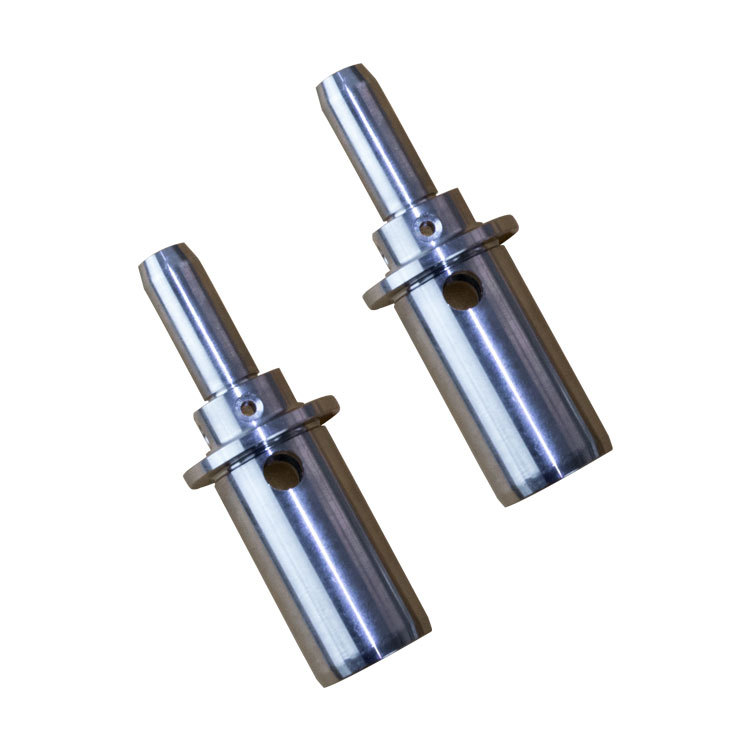
CNC titanium machining is a precision subtractive manufacturing process that uses computer numerical control (CNC) machines to shape titanium alloys into complex, high-performance components. The process requires specialized techniques due to titanium’s unique material properties.
Titanium has a low thermal conductivity, high chemical reactivity at elevated temperatures, and significant work-hardening tendency, which makes it more challenging to machine than traditional metals like steel or aluminum.
Key Characteristics of Titanium for CNC Machining
Exceptional Strength-to-Weight Ratio
Titanium has the highest strength-to-weight ratio of any metal, making it ideal for weight-critical applications
Excellent Corrosion Resistance
Natural passivation layer provides superior resistance to corrosion in harsh environments
Biocompatibility
Titanium is non-toxic and compatible with human tissue, making it ideal for medical implants
High Temperature Performance
Maintains strength at temperatures up to 600°C, suitable for aerospace and industrial applications
Advantages of CNC Titanium Machining Parts
Exceptional Strength-to-Weight Ratio
Titanium offers strength comparable to steel but at 40% less weight, making it ideal for applications where weight reduction is critical without compromising performance.
Superior Corrosion Resistance
Titanium forms a natural protective oxide layer that provides excellent resistance to corrosion, even in harsh marine, chemical, and industrial environments.
Excellent Biocompatibility
Titanium is non-toxic, non-allergenic, and compatible with human tissue, making it the material of choice for medical implants and surgical instruments.
High Temperature Stability
Titanium maintains its mechanical properties at temperatures up to 600°C, making it suitable for aerospace engines and high-temperature industrial applications.
Low Thermal Expansion
Titanium has a low coefficient of thermal expansion, maintaining tight tolerances in environments with extreme temperature variations.
Non-Magnetic Properties
Titanium is non-magnetic, making it suitable for use in MRI equipment and other applications where magnetic interference must be avoided.
Common Titanium Grades for CNC Machining
Choosing the right titanium grade is crucial for achieving optimal performance in your CNC machining applications. Titanium alloys are classified into three main categories: commercially pure titanium, alpha-beta alloys, and beta alloys.
Each titanium grade has unique properties that make it suitable for specific applications. Understanding these differences will help you select the best material for your project.

| Grade | Alloy Composition | Key Characteristics | Typical Applications |
|---|---|---|---|
| Grade 2 (CP Ti) | Commercially Pure Titanium | Excellent corrosion resistance, good formability, moderate strength | Chemical processing equipment, marine components, heat exchangers |
| Ti-6Al-4V (Grade 5, TC4) | 6% Aluminum, 4% Vanadium | High strength-to-weight ratio, good fatigue resistance, temperature resistant up to 400°C | Aerospace components, medical implants, automotive parts, marine hardware |
| Ti-6Al-2Sn-4Zr-2Mo (Ti-6242) | 6% Aluminum, 2% Tin, 4% Zirconium, 2% Molybdenum | Excellent high-temperature performance, retains 80% strength at 600°C | Aerospace engines, rocket nozzles, turbine discs, high-temperature applications |
| Ti-13Nb-13Zr | 13% Niobium, 13% Zirconium | Excellent biocompatibility, low modulus of elasticity, good corrosion resistance | Medical implants, orthopedic devices, dental applications |
| Ti-5Al-2.5Sn (Grade 6) | 5% Aluminum, 2.5% Tin | Good high-temperature strength, excellent corrosion resistance | Aerospace components, cryogenic applications, chemical processing |
| Ti-3Al-2.5V (Grade 9) | 3% Aluminum, 2.5% Vanadium | Good strength, excellent weldability, moderate corrosion resistance | Aerospace tubing, hydraulic systems, automotive components |
CNC Titanium Machining Challenges & Solutions
Titanium machining presents unique challenges that require specialized techniques and equipment. Understanding these challenges is essential for successful titanium component production.
Low Thermal Conductivity
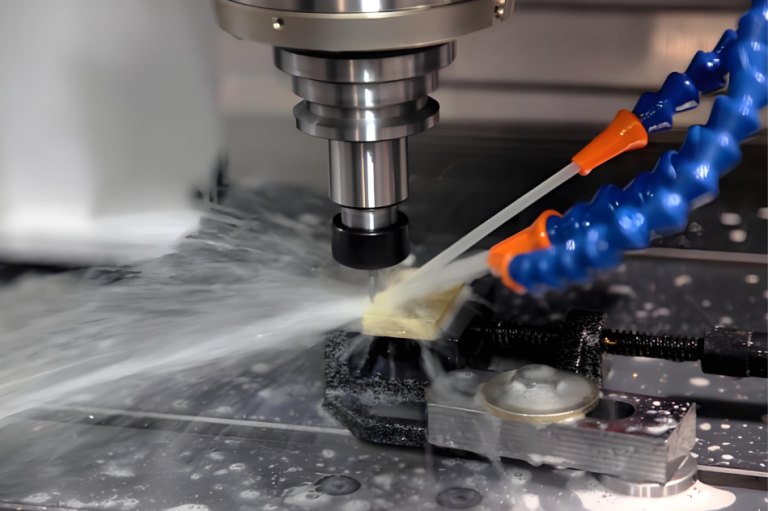
Titanium has thermal conductivity only 1/5 to 1/7 that of steel, causing heat to concentrate at the cutting edge rather than dissipating through the workpiece.
Solutions:
- Use high-pressure coolant systems
- Employ carbide or ceramic cutting tools
- Maintain proper cutting speeds and feeds
- Use minimum quantity lubrication (MQL)
High Chemical Reactivity
Titanium exhibits high chemical activity at elevated temperatures, readily reacting with tool materials causing diffusion wear and built-up edge.
Solutions:
- Use coated cutting tools (TiN, TiCN, TiAlN)
- Keep cutting temperatures low
- Use sharp tools to minimize heat generation
- Avoid dwell times that allow contact between tool and workpiece
Work Hardening
Titanium has significant work-hardening tendency, with the hardened layer being 1-2 times harder than the base material.
Solutions:
- Use positive rake angle tools
- Maintain sufficient depth of cut
- Avoid light finishing cuts
- Use high feed rates with moderate speeds
High Cutting Forces
Titanium’s low elastic modulus causes springback during machining, requiring higher cutting forces and leading to tool deflection.
Solutions:
- Use rigid machine tools
- Employ proper fixturing and workholding
- Use high-strength cutting tools
- Optimize tool path strategies
CNC Titanium Machining Processes

CNC titanium machining utilizes various processes to create complex parts with high precision. Each process requires specialized techniques to handle titanium’s unique properties.
The choice of machining process depends on the part geometry, required tolerances, production volume, and specific application requirements.
CNC Milling for Titanium
CNC milling is widely used for titanium components, especially those with complex geometries. It requires rigid machines and specialized tooling to handle the high cutting forces.
- Suitable for complex 3D geometries and multi-feature parts
- Achievable tolerances: ±0.01 mm (±0.0004 inches)
- Requires high-rigidity machine tools
- Uses carbide or ceramic end mills with proper coatings
CNC Turning for Titanium
CNC turning is ideal for producing cylindrical titanium components such as shafts, bolts, and fittings. It requires careful control of cutting parameters to manage heat generation.
- Perfect for cylindrical and rotational parts
- Achievable tolerances: ±0.005 mm (±0.0002 inches)
- Requires high-pressure coolant systems
- Uses coated carbide inserts with positive rake angles
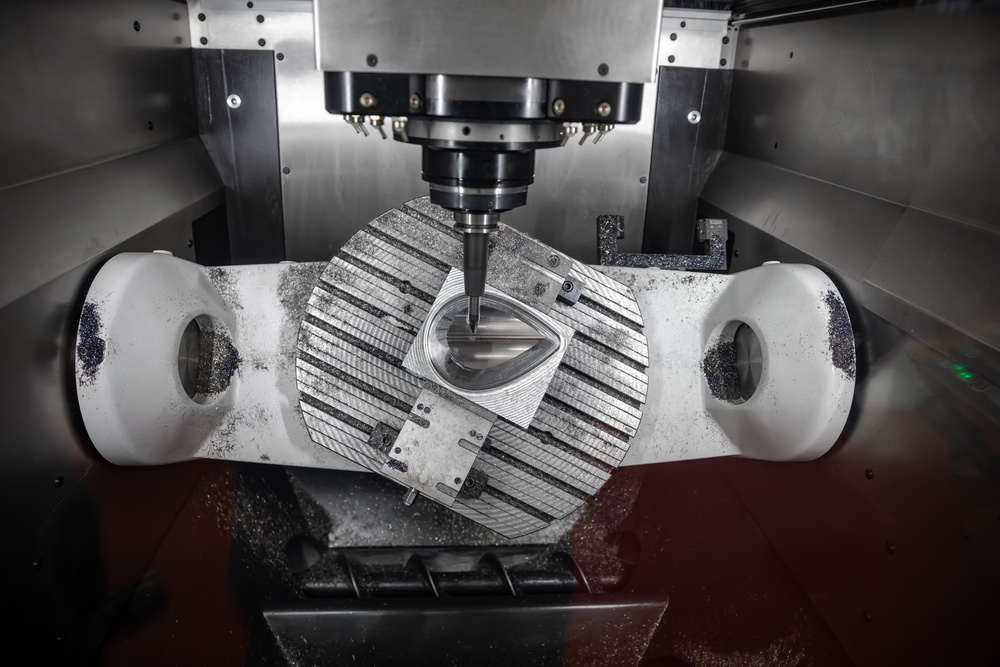
5-Axis CNC Machining for Titanium
5-axis CNC machining enables the production of highly complex titanium parts in a single setup, reducing handling and improving accuracy for aerospace and medical applications.
- Produces complex, multi-sided geometries efficiently
- Achievable tolerances: ±0.002 mm (±0.0001 inches)
- Reduces setup time for complex parts
- Ideal for aerospace and medical implants
Applications of CNC Titanium Machined Parts
Aerospace & Defense
- Airframe structural components
- Jet engine blades and discs
- Landing gear components
- Rocket nozzles and thrusters
- Missile guidance systems
Medical & Dental
- Orthopedic implants (hips, knees, spine)
- Dental implants and abutments
- Surgical instruments
- MRI equipment components
- Maxillofacial reconstruction plates
Marine & Offshore
- Propeller shafts and blades
- Subsea ROV components
- Offshore drilling equipment
- Marine hardware and fittings
- Desalination plant components
Automotive & Motorsports
- High-performance connecting rods
- Turbocharger wheels
- Exhaust system components
- Brake system parts
- Suspension components
Industrial & Chemical
- Chemical processing equipment
- Heat exchangers
- Pump and valve components
- Pressure vessels
- Precision instrumentation
Energy & Power
- Wind turbine components
- Nuclear reactor parts
- Geothermal equipment
- Solar panel mounting systems
- Battery components
Surface Finishing for CNC Titanium Parts
Surface finishing is critical for titanium components to enhance corrosion resistance, improve biocompatibility, and achieve desired aesthetic properties.
| Finish Type | Benefits | Typical Applications | Cost Level |
|---|---|---|---|
| Passivation | Enhances natural corrosion resistance, removes free iron contamination | All titanium components, especially critical applications | Low |
| Anodizing | Creates durable oxide layer, allows color coding, improves wear resistance | Medical implants, aerospace components, decorative applications | Medium |
| Electropolishing | Creates smooth, clean surface, improves biocompatibility, reduces friction | Medical implants, surgical instruments, precision components | Medium-High |
| Shot Peening | Improves fatigue life, creates compressive residual stresses | Aerospace components, high-performance parts | Medium |
| Chemical Milling | Removes surface defects, creates precise thickness control | Aerospace panels, thin-walled components | Medium-High |
| Coating | Enhances wear resistance, provides lubrication, improves appearance | Industrial components, automotive parts, aerospace applications | High |
CNC Titanium Machining Tolerances
Achieving tight tolerances in titanium machining requires careful control of cutting parameters, machine rigidity, and tooling selection.
Typical Tolerance Capabilities
| Machining Process | Standard Tolerance | Precision Tolerance | Ultra-Precision Tolerance |
|---|---|---|---|
| CNC Milling | ±0.01 mm (±0.0004″) | ±0.005 mm (±0.0002″) | ±0.002 mm (±0.0001″) |
| CNC Turning | ±0.005 mm (±0.0002″) | ±0.002 mm (±0.0001″) | ±0.001 mm (±0.00004″) |
| 5-Axis Machining | ±0.005 mm (±0.0002″) | ±0.002 mm (±0.0001″) | ±0.001 mm (±0.00004″) |
Factors Affecting Tolerance
Machine Rigidity
Titanium machining requires high-rigidity machines to minimize deflection under high cutting forces
Tooling Selection
Proper tool material and geometry are critical for maintaining dimensional accuracy
Cutting Parameters
Optimal speeds, feeds, and depth of cut help minimize heat-induced distortion
Workholding
Secure fixturing is essential to prevent workpiece movement during machining
Temperature Control
Stable operating temperatures help maintain consistent dimensional accuracy
Operator Skill
Experienced machinists can better manage the unique challenges of titanium machining
Titanium CNC Machining Cost Factors
Titanium machining costs are generally higher than traditional metals due to material costs and specialized processing requirements. Understanding these factors helps in cost optimization.
Material Cost
Titanium material costs are significantly higher than steel or aluminum, often 5-10 times more expensive.
Machining Time
Titanium requires slower cutting speeds and more passes, increasing machining time by 2-4 times compared to steel.
Tooling Costs
Specialized carbide and ceramic tools are required, with higher tool wear rates increasing tooling costs.
Coolant & Lubrication
High-pressure coolant systems and specialized lubricants are required for effective heat management.
Tolerance Requirements
Tighter tolerances require more precise machining, additional quality control, and longer production times.
Production Volume
Larger production volumes help spread fixed costs, reducing per-unit costs significantly.
Design Tips for CNC Titanium Parts
Proper design is essential for optimizing titanium machining costs and ensuring successful production. Here are key design considerations:
Wall Thickness
Maintain minimum wall thickness of 1.0 mm (0.040 inches) for titanium parts to ensure rigidity during machining. For complex geometries, consider increasing to 1.5 mm (0.060 inches) to prevent deflection.
Corner Radii
Use minimum corner radii of 1.0 mm (0.040 inches) to reduce tool stress and improve tool life. Internal corners should have radii at least equal to the tool radius to avoid excessive tool wear.
Hole Design
For drilled holes, keep depth-to-diameter ratio below 8:1 to ensure proper chip evacuation. Use through holes instead of blind holes where possible to simplify machining.
Surface Finish
Specify surface finishes only as required for functionality. Avoid overly smooth finishes unless necessary, as they significantly increase production time and cost.
Tolerance Specification
Only specify tight tolerances where functionally necessary. Over-specifying tolerances can increase costs by 2-3 times without providing corresponding benefits.
Part Orientation
Design parts to minimize the number of setups required. Use symmetrical designs where possible and avoid complex undercuts that require specialized tooling.
Ready to Start Your CNC Titanium Machining Project?
Our experienced engineering team specializes in titanium machining for aerospace, medical, and high-performance applications
Frequently Asked Questions
Why is titanium machining more expensive than steel?
Titanium machining is more expensive due to higher material costs, slower cutting speeds, increased tool wear, and the need for specialized equipment and coolant systems.
What is the most common titanium grade for CNC machining?
Ti-6Al-4V (Grade 5, TC4) is the most commonly used titanium grade, offering an excellent balance of strength, weight, and machinability for most applications.
What tolerances can be achieved with titanium machining?
Standard tolerances of ±0.01 mm (±0.0004 inches) are achievable, with precision machining capable of ±0.002 mm (±0.0001 inches) for critical applications.
What cutting tools are best for titanium machining?
Carbide tools with TiN, TiCN, or TiAlN coatings are recommended for titanium machining. Ceramic tools can also be used for high-speed applications.
How can I reduce titanium machining costs?
Costs can be reduced by optimizing part design, specifying appropriate tolerances, using standard grades, and increasing production volume to leverage economies of scale.
What surface finishes are available for titanium parts?
Common surface finishes include passivation, anodizing, electropolishing, shot peening, and various coatings to enhance corrosion resistance, wear resistance, or appearance.