Everything engineers need to know about manufacturing high-precision robot parts
Introduction
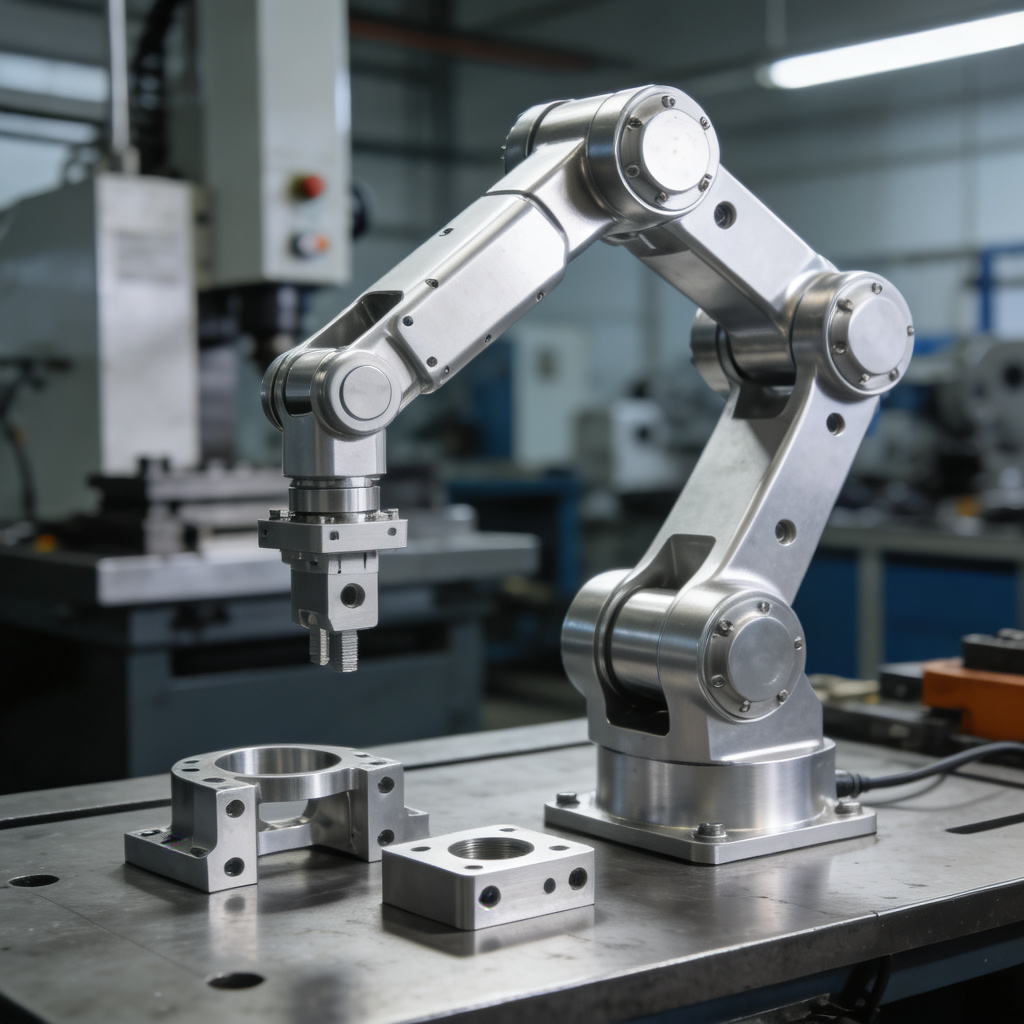
The robotics industry is blowing up right now—we’re talking 14.5% annual growth, with the global market expected to hit $210 billion by 2025.
And here’s the thing: none of this happens without high-quality CNC machining.
I’ve been in the CNC machining business for 20 years, and I can tell you firsthand that robots live or die by the precision of their components.
A tiny 0.01mm error might not sound like much, but in a robotic arm joint, that can mean the difference between a smooth operation and a total breakdown.
That’s why CNC machining is so critical here. It lets us make parts with micron-level accuracy, handle complex shapes that would be impossible with other methods,
and work with all the advanced materials robots need to be light yet strong.
Why Robots Can’t Live Without CNC Machining
Precision That Matters
Robots are all about precision. Imagine trying to build a surgical robot that needs to make incisions smaller than a millimeter—you can’t do that with parts that are even slightly off.
Here’s what we’re typically working with:
- ±0.005 mm for critical joint parts (that’s 5 microns!)
- ±0.01 mm for structural components
- ±0.02 mm for non-critical parts
- Surface finishes smoother than Ra 0.4 μm for moving parts
Shapes That Defy Traditional Manufacturing
Modern robots have some crazy complex parts. We’re talking curved surfaces, holes at weird angles, and internal channels that would be impossible with old-school methods.
With 5-axis CNC, we can make:
- Holes that go in 3 different directions from the same part
- Curved surfaces that need to fit perfectly with other parts
- Thin walls that are strong enough to support heavy loads
- Internal passages for wires or fluids
Materials That Work Harder
Robots need to be strong but light—like, really light. A heavy robot arm wastes energy and isn’t as precise. That’s why we work with all these advanced materials:
Aerospace Aluminum
6061-T6, 7075-T6 alloys
Perfect for robot arms
Titanium Alloys
Ti-6Al-4V, Ti-5Al-2.5Sn
For medical and aerospace robots
Carbon Fiber
CFRP composites
Ultra-light but super strong
Engineering Plastics
PEEK, POM, Delrin
For low-friction parts
The Robot Parts We Actually Make

Robotic Arm Frames
These are the backbone of any robot arm. We mill these from solid aluminum blocks to get the perfect balance of strength and light weight.
Go-to materials: 6061-T6, 7075-T6 Aluminum
Typical tolerance: ±0.01 mm
Surface finish: Ra 0.8 μm
Gearbox Parts
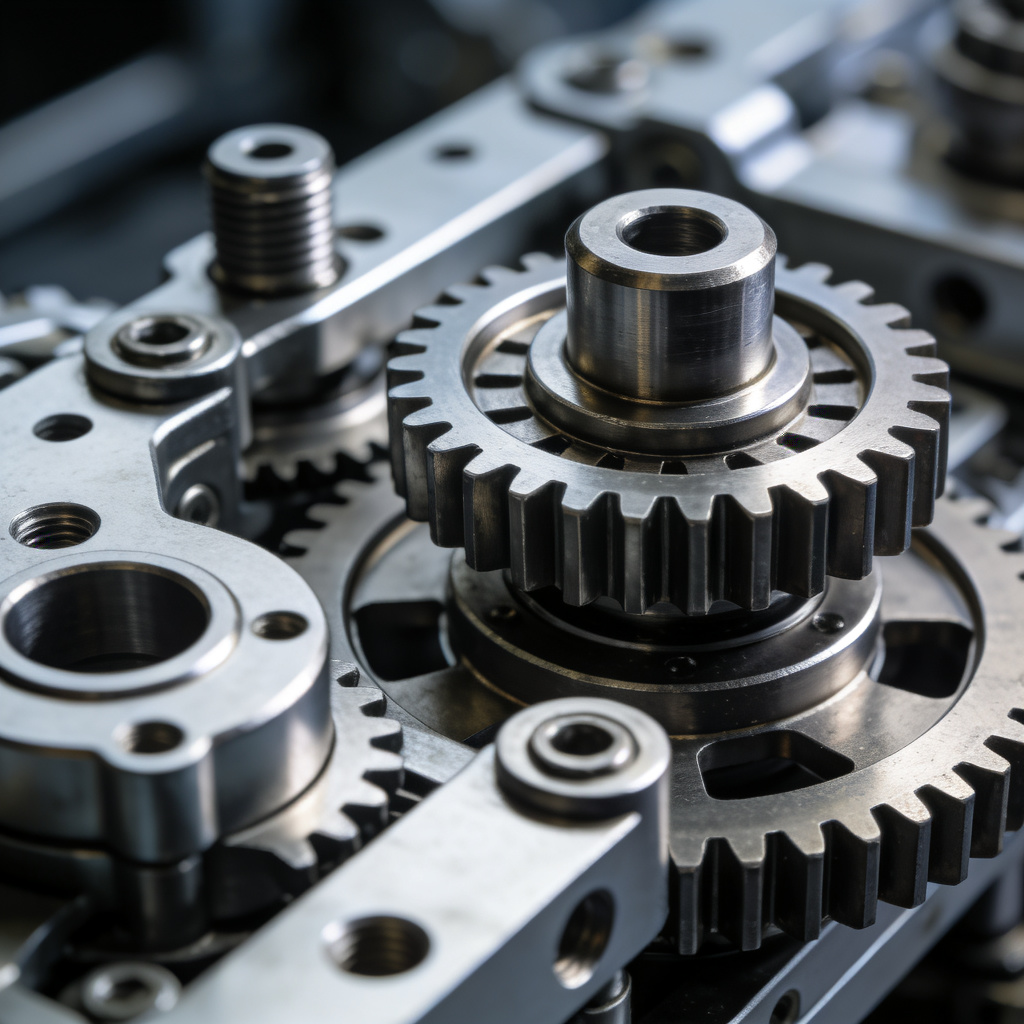
These are the parts that make robots move smoothly. Gears, shafts, and housings all need to be perfect to avoid backlash and ensure precise movement.
Go-to materials: 4140 Steel, Stainless Steel
Typical tolerance: ±0.005 mm
Surface finish: Ra 0.4 μm
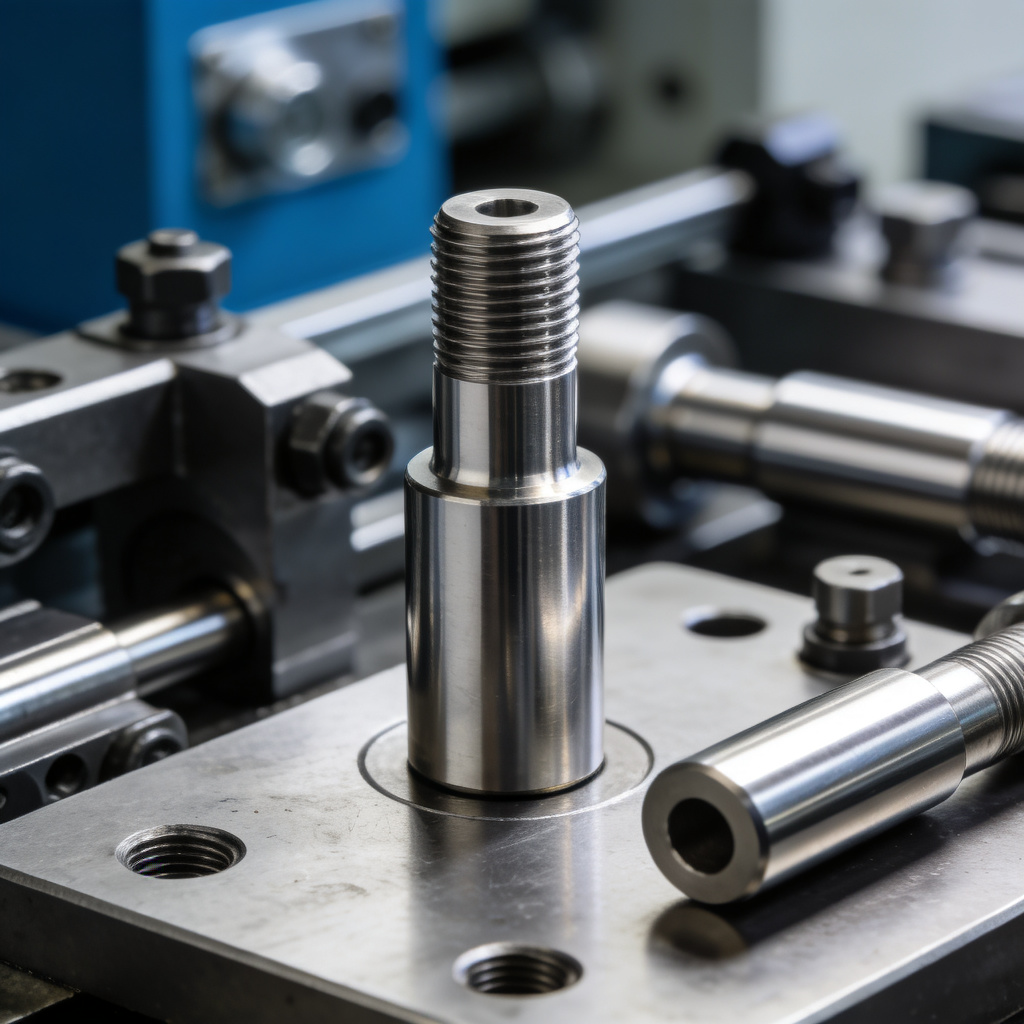
Precision Shafts
These are the rotating parts that everything else connects to. We turn these on CNC lathes to get perfect roundness and smooth surfaces.
Go-to materials: 1045 Steel, Stainless Steel
Typical tolerance: ±0.003 mm
Surface finish: Ra 0.2 μm
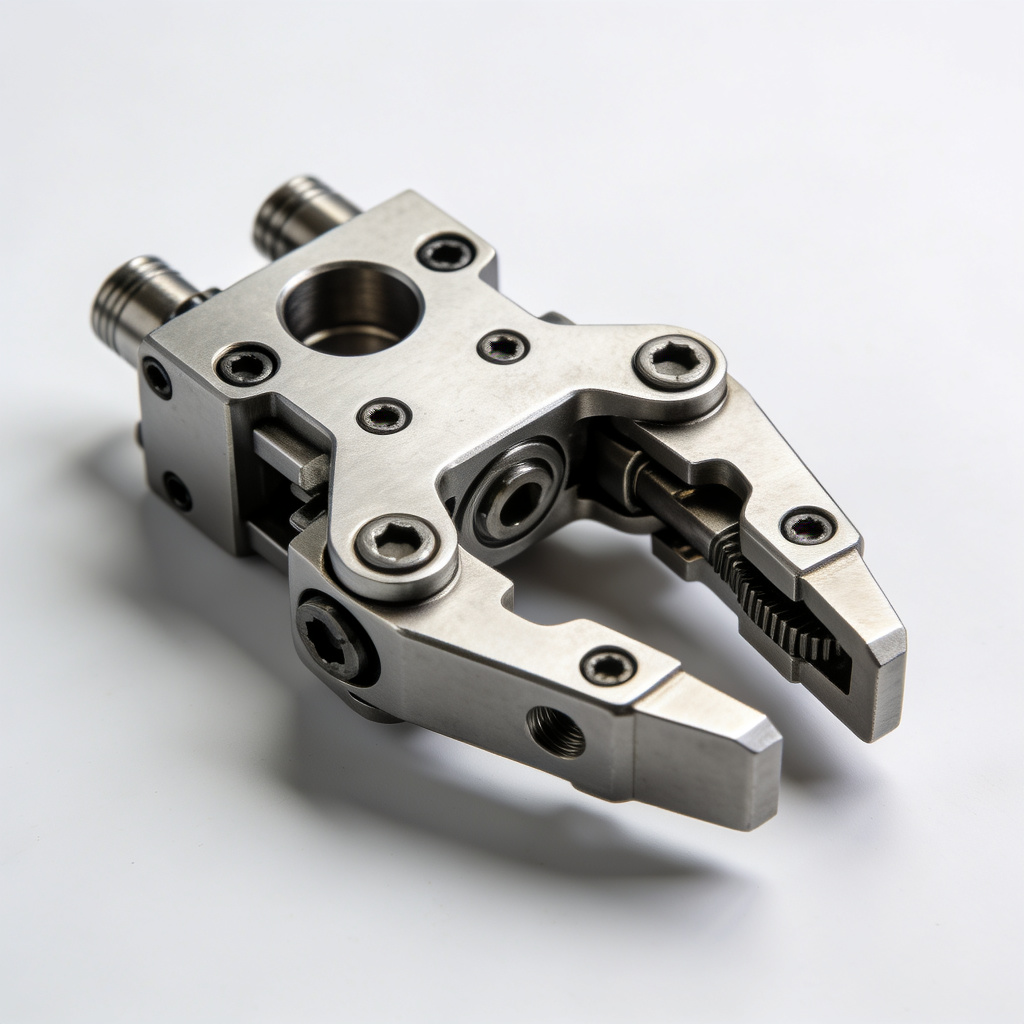
End-Effectors
These are the “hands” of the robot. Grippers, tool changers, and other end-effectors need to be precise to handle objects correctly.
Go-to materials: Aluminum, Titanium, PEEK
Typical tolerance: ±0.01 mm
Surface finish: Ra 0.8 μm
Choosing the Right Material for Robot Parts
Let me break down the most common materials we use for robot parts, and why we choose them. I’ve been doing this long enough to know what works and what doesn’t.
Aluminum Alloys
Our go-tos: 6061-T6, 7075-T6, 5052-H32
Weight: Super light (2.7 g/cm³)
Strength: 200-500 MPa tensile strength
Why we love it:
- Perfect balance of strength and weight
- Doesn’t corrode easily
- Machines like a dream
- Great at dissipating heat
Best for: Robot arm frames, housings, brackets
Stainless Steel
Our go-tos: 304, 316, 17-4 PH
Weight: Heavy but strong (8.0 g/cm³)
Strength: 500-1000 MPa tensile strength
Why we love it:
- Tough as nails
- Won’t rust or corrode
- Great wear resistance
- Can be sterilized (perfect for medical robots)
Best for: Surgical robots, food processing robots
Titanium Alloys
Our go-tos: Ti-6Al-4V, Ti-5Al-2.5Sn
Weight: Light but super strong (4.5 g/cm³)
Strength: 800-1200 MPa tensile strength
Why we love it:
- Unbelievable strength-to-weight ratio
- Body-friendly (biocompatible)
- Amazing corrosion resistance
- Doesn’t fatigue easily
Best for: Medical robots, aerospace robotics
Engineering Plastics
Our go-tos: PEEK, POM, Delrin, Nylon
Weight: Super light (1.1-1.4 g/cm³)
Strength: 50-100 MPa tensile strength
Why we love it:
- Light as a feather, no corrosion
- Self-lubricating (no extra oil needed)
- Great electrical insulator
- Low friction surfaces
Best for: Gripper jaws, bearing components, insulators
Quick Material Selection Guide
| Application | Best Material | Why It Works |
|---|---|---|
| Industrial Robot Arms | 6061-T6 Aluminum | Perfect balance of strength, weight, and cost |
| Medical Surgical Robots | 316 Stainless Steel, Ti-6Al-4V | Can be sterilized, body-friendly |
| Aerospace Robots | 7075-T6 Aluminum, Titanium | Ultra-high strength-to-weight ratio |
| Food Processing Robots | 304 Stainless Steel | Hygienic, easy to clean, corrosion-resistant |
| High-Precision Grippers | PEEK, Titanium | Low weight, super precise |
Precision That Actually Matters
Let me tell you a story. A few years back, a customer came to us with a problem—their robotic arms were failing prematurely.
We looked at their parts and found that the tolerances were off by just 0.02 mm in the joint bearings. That tiny error was causing extra friction,
which led to wear and tear, and eventually, complete failure.
That’s why precision isn’t just a buzzword in robotics—it’s the difference between a robot that works reliably for years and one that breaks down constantly.
Why Precision Matters So Much
- Repeatability: If your robot can’t do the same task the same way every time, it’s useless
- Efficiency: Tighter tolerances mean less friction, which means less energy wasted
- Longevity: Proper clearances mean parts don’t wear out as fast
- Quiet operation: Precise parts don’t rattle or vibrate as much
Tolerance Levels We Work With
Critical Components
Tolerance: ±0.003-0.005 mm
Surface Roughness: Ra ≤ 0.2 μm
Think gear teeth, bearing journals, sensor mounts
Precision Components
Tolerance: ±0.005-0.01 mm
Surface Roughness: Ra ≤ 0.4 μm
Linkage arms, housing bores, shaft ends
Structural Components
Tolerance: ±0.01-0.02 mm
Surface Roughness: Ra ≤ 1.6 μm
Mounting brackets, housing exteriors
IT Tolerance Standards We Follow
We use ISO 2768 tolerance standards for most robot parts. Here’s what that actually means in practice:
| IT Grade | Tolerance for 100mm part | What we use it for | Example Part |
|---|---|---|---|
| IT5 | 0.011 mm | Super high precision fits | Precision gear teeth |
| IT6 | 0.016 mm | Precision bearings | Ball bearing fits |
| IT7 | 0.025 mm | General precision parts | Shaft and housing fits |
| IT8 | 0.040 mm | Less critical fits | Mounting brackets |
The CNC Processes We Use for Robot Parts
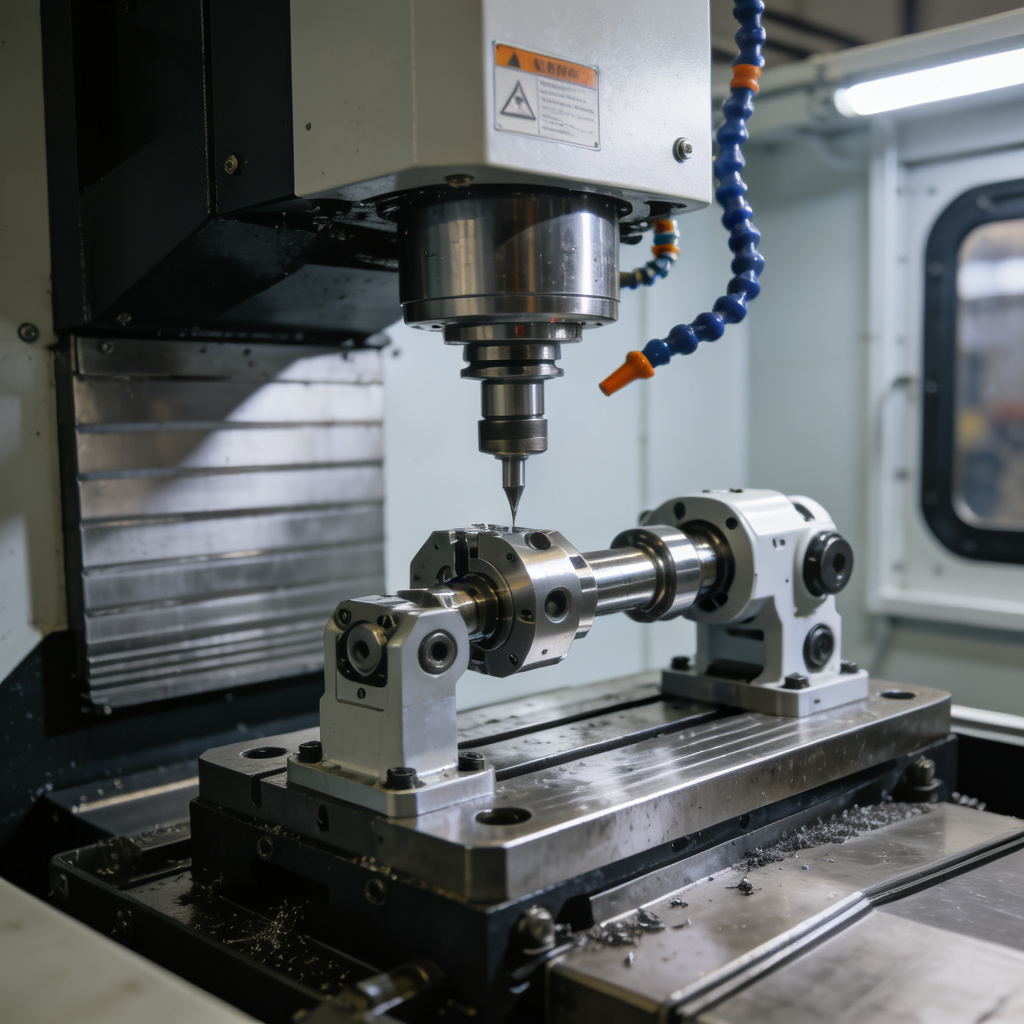
Making robot parts isn’t just about having a fancy CNC machine—it’s about knowing which process to use for which part.
Over the years, we’ve figured out exactly what works best for different robot components.
5-axis CNC machining is a game-changer for robot parts. It lets us machine complex shapes from all angles without having to reposition the part multiple times.
That means fewer errors, faster production, and better overall quality.
3-Axis CNC Milling
This is our workhorse for most basic parts. It’s great for flat surfaces, simple holes, and parts that don’t need complex angles.
- Perfect for brackets, plates, and simple housings
- Fast and cost-effective for standard parts
- Great for high-volume production runs
- Lower equipment costs mean better pricing for you
5-Axis CNC Machining
This is where the magic happens for complex robot parts. It can move the part or the tool in five different directions at the same time.
- Machines complex shapes in one setup
- No need to reposition the part multiple times
- Way more accurate than multiple setups
- Perfect for intricate robotic components
CNC Turning
This is for all the round parts—shafts, pins, cylindrical housings. We spin the part while the tool cuts away material.
- Ideal for shafts, pins, and cylindrical parts
- Super fast for round components
- Great surface finish on cylindrical surfaces
- Can add threads and tapers easily
Precision Grinding
This is the finishing touch for super precise parts. We use grinding to get that last little bit of precision and smoothness.
- Achieves sub-micron level tolerances
- Mirror-like surface finishes
- Used for critical bearing surfaces
- Greatly improves wear resistance
Which Process Should You Choose?
| Component Type | Best Process | Why It Works |
|---|---|---|
| Robotic arm housings | 3-axis or 5-axis milling | Handles complex cavities, high accuracy |
| Precision shafts | CNC turning + grinding | Perfect roundness and surface finish |
| Gearbox components | 5-axis machining + hobbing | Complex gear profiles, high precision |
| End-effectors | 5-axis machining | Intricate geometries, one setup |
| Mounting brackets | 3-axis milling | Cost-effective, fast production |
Surface Finishing That Makes a Difference
Surface finishing isn’t just about making parts look pretty—it’s about making them work better and last longer.
I’ve seen robot parts fail prematurely because someone skipped the proper surface finishing. Let me show you what we use and why it matters.
Anodizing
This is our go-to for aluminum parts. It creates a hard, protective oxide layer on the surface that’s way more durable than bare aluminum.
- Type II: General purpose, 5-25 μm thick
- Type III: Hard anodize, 25-100 μm thick
- Comes in all kinds of colors
- Makes surface hardness up to 60 HRC
Electropolishing
This is like reverse plating—we actually remove a tiny bit of material to make the surface super smooth. Great for stainless steel parts.
- Gets surfaces smoother than Ra 0.05 μm
- Makes parts more corrosion-resistant
- Removes any surface imperfections
- Perfect for medical and food applications
Powder Coating
This is a dry finishing process where we spray electrostatically charged powder onto the part, then bake it to make a tough coating.
- Thickness: 25-75 μm
- Super tough and impact-resistant
- Hundreds of colors and textures
- Great corrosion protection
Sandblasting
We shoot tiny abrasive particles at the part to create a uniform matte finish. It’s great for preparing surfaces for other coatings.
- Creates a uniform surface texture
- Helps other coatings stick better
- Removes any surface contaminants
- Different grit sizes for different finishes
Which Finish Should You Use?
| Application | Best Finish | Surface Roughness | Why It Works |
|---|---|---|---|
| Medical robots | Electropolishing | Ra ≤ 0.05 μm | Can be sterilized, corrosion-resistant |
| Industrial robots | Hard anodizing | Ra ≤ 0.4 μm | Wear-resistant, durable |
| Food processing robots | Electropolishing | Ra ≤ 0.1 μm | Hygienic, easy to clean |
| Aerospace robots | Type II anodizing | Ra ≤ 0.8 μm | Lightweight, corrosion protection |
| Consumer robots | Powder coating | Ra ≤ 1.6 μm | Looks good, durable |
Where We See CNC Machined Robot Parts
Industrial Robotics
This is where we do most of our work. Industrial robots need tough, precise parts that can handle heavy use day in and day out.
- Robotic arm structures and linkages
- Precision gearboxes and reducers
- End-effectors and grippers
- Conveyor system components
- Sensor mounting and calibration fixtures
Medical Robotics
Medical robots need the highest precision—we’re talking parts that need to be accurate to within a few microns. And they have to be completely safe for use in the body.
- Surgical robotic arm components
- Minimally invasive surgical tools
- Patient positioning systems
- Medical device housings
- Implant manufacturing tools
Aerospace Robotics
Aerospace robots need to be light but incredibly strong. Every gram counts when you’re launching something into space, so we use a lot of titanium and high-grade aluminum.
- Satellite deployment mechanisms
- Aerospace robotic manipulators
- UAV and drone components
- Radar and sensor housings
- Launch vehicle robotics systems
Service Robots
These are the robots you see in hotels, hospitals, and homes. They need to be reliable but also cost-effective to produce.
- Home assistant robot components
- Delivery robot chassis and frames
- Navigation sensor mounts
- Battery housing and cooling systems
- Interactive kiosk components
Design Tips for Robot Parts That Are Easy to Machine
Over the years, I’ve seen a lot of designs that look great on paper but are a nightmare to machine. Let me share some tips that will save you time and money.
Design Guidelines That Actually Help
- Avoid thin walls: Keep walls at least 1.5 mm thick for aluminum, 2 mm for steel
- Use standard tool sizes: This reduces tooling costs and makes production faster
- Add fillets: Internal corners should have radii that match standard tool sizes
- Don’t overdo tolerances: Only use tight tolerances where you really need them
- Think about tool access: Make sure all features can be reached with standard tools
- Minimize deep cavities: Deep, narrow holes increase machining time and tool wear
- Keep wall thickness uniform: This prevents warping and stress concentrations
Material Selection Tips
- Strength-to-weight ratio: This is critical for robot arm parts
- Corrosion resistance: Important if the robot will be in harsh environments
- Machinability: Some materials are just easier (and cheaper) to machine
- Wear resistance: Moving parts need materials that can handle friction
- Thermal conductivity: Important for parts that need to dissipate heat
- Cost: Balance performance with your budget
- Availability: Make sure the material is actually available when you need it
Common Design Mistakes to Avoid
Overly Tight Tolerances
Specifying tighter tolerances than needed can double or triple your costs. Only use tight tolerances where they’re actually required for functionality.
Inaccessible Features
If a feature can’t be reached with standard tools, we’ll need special setups or custom tools, which adds time and cost.
Sharp Internal Corners
Sharp corners require special EDM operations or custom tools. Use fillets that match standard tool radii instead.
Thin Wall Sections
Thin walls vibrate and deform during machining. Keep walls at least 1.5-2mm thick for most materials.
Why CNC Machining Is Perfect for Robot Parts
Unbeatable Precision
CNC machining achieves the micron-level tolerances that robots need to work reliably. We’re talking precision that’s just not possible with other methods.
Typical Tolerance: ±0.005-0.01 mm
Surface Finish: Ra ≤ 0.4 μm
Perfect Consistency
Every part comes out exactly the same, which is critical for robot production. No more worrying about parts that don’t fit together.
Cpk ≥ 1.67
99.9% Conformance Rate
Material Flexibility
We can machine almost any material you need—from aluminum and steel to titanium and advanced plastics.
20+ Materials Supported
From Plastics to Titanium
Complex Shapes
5-axis CNC machining lets us make the complex 3D shapes that modern robots need—shapes that would be impossible with other manufacturing methods.
5-Axis Machining
Complex 3D Geometries
Fast Prototyping
CNC machining lets us go from design to prototype in just a few days, which means you can test and iterate your robot designs faster.
3-7 Day Prototyping
Fast Design Iteration
Cost-Effective
While setup costs might be higher initially, CNC machining becomes very cost-effective for medium to high volume production runs.
Low Per-Unit Cost
Scalable Production
FAQs About CNC Machining for Robot Parts
What materials work best for robot components?
It depends on what you need the part to do. For most robot arms, we recommend 6061-T6 aluminum because it’s strong but light.
For medical robots, we use stainless steel or titanium because they’re body-friendly and can be sterilized.
For parts that need to be super light but still strong, we might use carbon fiber composites.
How precise do robot parts need to be?
It varies a lot. For critical parts like gear teeth and bearing surfaces, we need tolerances of ±0.003-0.005 mm.
For structural parts, ±0.01-0.02 mm is usually enough. The surface finish is also important—moving parts need to be smooth (Ra ≤ 0.4 μm) to reduce friction and wear.
Can you use CNC machining for robot prototypes?
Absolutely! In fact, CNC machining is great for prototypes because it gives you parts that are very close to what you’ll get in production.
While 3D printing might be faster for very simple parts, CNC prototypes are stronger and more accurate, which is important for testing how the robot will actually work.
How long does it take to make CNC machined robot parts?
It depends on how complex the parts are and how many you need. Prototypes usually take 3-7 days.
For production runs of 10-1000 parts, we’re usually looking at 2-4 weeks.
If you need parts really fast, we can often rush simple parts in 1-2 days, but it costs a bit more.
How does CNC machining compare to 3D printing for robot parts?
Both have their place. 3D printing is great for very complex shapes and small quantities, but the parts aren’t as strong or precise as CNC machined parts.
CNC machining is better for parts that need to be strong, precise, or made from high-performance materials.
For most robot parts that will actually be used in production, CNC machining is the way to go.
Need Help with Your Robot Parts?
I’ve been making CNC machined robot parts for 20 years, and I’ve seen just about every challenge you can imagine.
My team and I can help you design parts that are easy to machine, choose the right materials, and get high-quality parts delivered on time.
We offer competitive pricing, fast turnaround times, and exceptional quality for all your CNC machining needs.
Wrapping Up
CNC machining is absolutely critical for making the high-precision parts that modern robots need to work reliably.
From lightweight aluminum frames to super-precise gearboxes, CNC technology makes it possible to build robots that can do everything from surgery to manufacturing to delivering packages.
The key things to remember are:
- Precision matters: Even tiny errors can cause big problems in robot systems
- Choose the right material: Aluminum is great for most parts, but use stainless steel or titanium for special applications
- Design for manufacturability: Follow the tips I shared to save time and money
- Work with experienced partners: A good CNC shop can help you optimize your designs and get better results
As the robotics industry keeps growing, CNC machining will only become more important.
We’re already seeing robots that can do things we never thought possible, and that’s only going to continue as machining technology improves.
Whether you’re building industrial robots, medical robots, or something else entirely, CNC machining is the best way to get the high-precision parts you need to make your robots work perfectly.