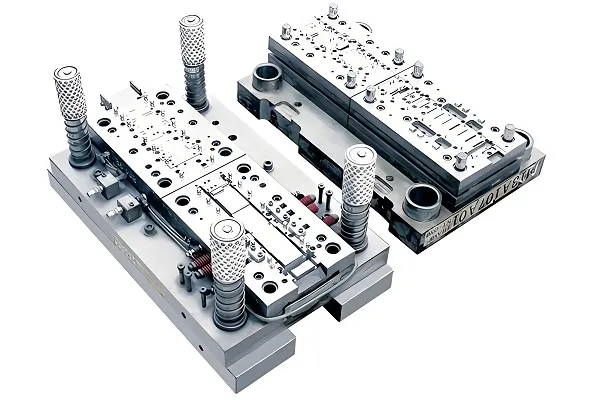
Complete Technical Reference for Precision Manufacturing Professionals
Introduction
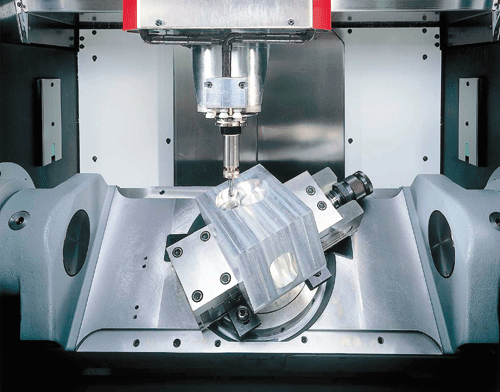
5 axis CNC machining is one of the most advanced manufacturing technologies used in modern precision engineering.
As a CNC machining professional with 20 years of experience, I’ve seen firsthand how this technology has revolutionized
complex part manufacturing across industries.
Unlike traditional 3-axis machining, 5-axis machines allow the cutting tool to move along five different axes simultaneously,
enabling the production of highly complex parts with exceptional precision. This capability makes 5-axis CNC machining
widely used in industries such as aerospace, robotics, automotive, and medical equipment manufacturing.
According to industry data, 5-axis machining can reduce setup time by up to 60% and improve part accuracy by 30% compared to
traditional machining methods. These benefits have made it an essential technology for manufacturers looking to stay competitive
in today’s demanding market.
What is 5 Axis CNC Machining?
5 axis CNC machining refers to a manufacturing process where a cutting tool moves along five different axes simultaneously
to remove material from a workpiece. These axes typically include the traditional X, Y, and Z linear axes, combined with two
rotational axes that allow the tool or workpiece to tilt and rotate during machining.
The key advantage of 5-axis machining is its ability to machine complex geometries in a single setup, eliminating the need
for multiple setups and reducing the risk of alignment errors. This results in higher precision, shorter production times,
and improved surface quality compared to traditional 3-axis machining.
Core Principles of 5 Axis Machining
- Simultaneous movement along five axes (X, Y, Z, A, B/C)
- Dynamic tool orientation adjustment
- Single setup machining for complex parts
- Continuous tool path optimization
- Real-time error compensation
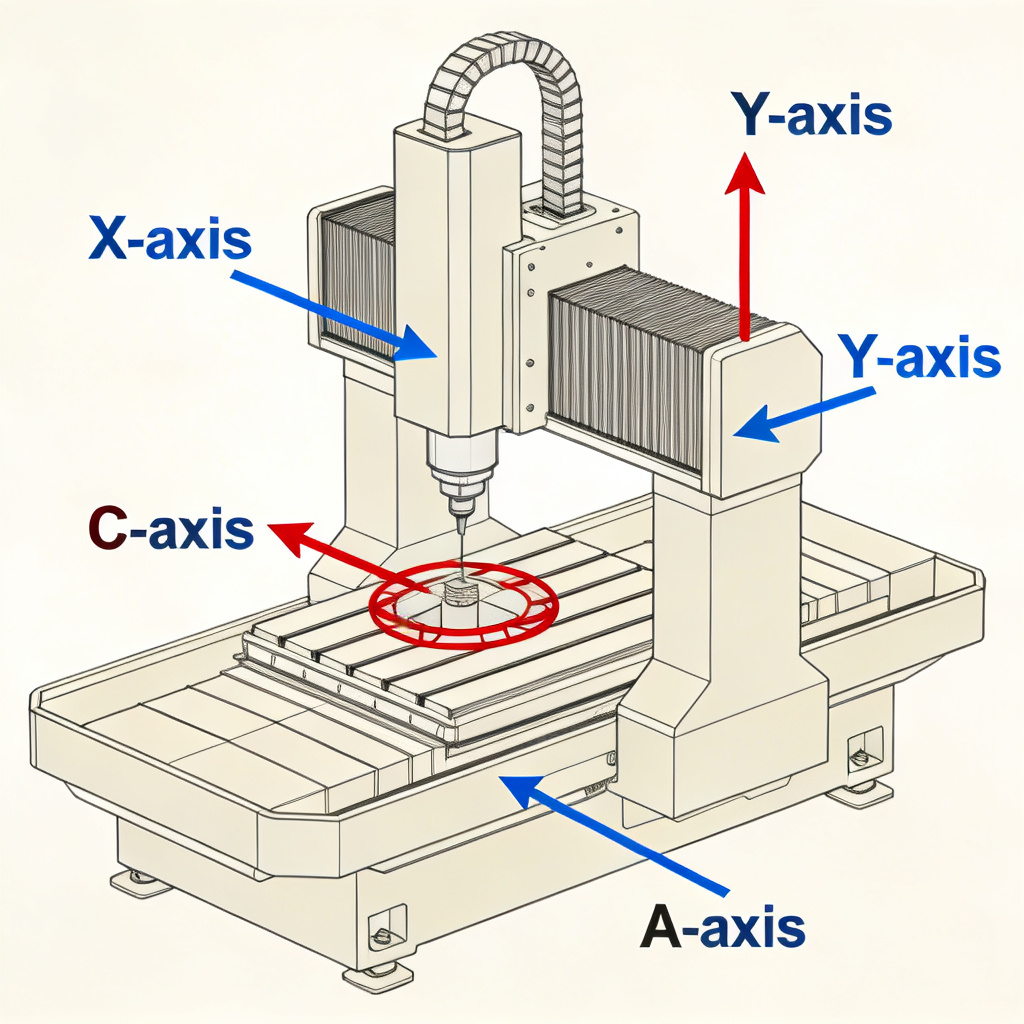
How 5 Axis CNC Machining Works
Linear Axes (X, Y, Z)
- X-axis: Horizontal movement along the length of the workpiece
- Y-axis: Horizontal movement along the width of the workpiece
- Z-axis: Vertical movement towards or away from the workpiece
- Typical travel ranges: 500-2000 mm depending on machine size
- Positioning accuracy: ±0.003-0.005 mm for high-precision machines
Rotational Axes (A, B, C)
- A-axis: Rotation around the X-axis (typically -120° to +120°)
- B-axis: Rotation around the Y-axis (typically -110° to +110°)
- C-axis: Rotation around the Z-axis (360° continuous rotation)
- Rotation speed: 15-30 RPM for positioning
- Angular positioning accuracy: ±5-10 arc seconds
The Machining Process Flow
Step 1: CAD Design
Create 3D model of the part
Step 2: CAM Programming
Generate tool paths and machining strategies
Step 3: Machine Setup
Load program and prepare workpiece
Step 4: Machining
Execute 5-axis machining operations
Step 5: Inspection
Verify dimensions and quality
Types of 5 Axis CNC Machines
Trunnion Style Machines
Trunnion-style machines rotate the workpiece while the cutting tool remains relatively fixed, allowing complex multi-angle machining.
The workpiece is mounted on a rotating table (trunnion) that provides the rotational axes.
- Excellent for small to medium-sized parts
- Good rigidity and stability
- Suitable for high-precision applications
- Typical load capacity: 50-500 kg
Swivel Head Machines
Swivel head machines feature a rotating spindle head that provides the rotational axes, while the workpiece remains stationary.
This design is ideal for large, heavy workpieces that are difficult to rotate.
- Ideal for large, heavy workpieces
- Excellent access to complex features
- High spindle power available
- Typical load capacity: 500-5000 kg
Table-Table Machines
Table-table machines feature two rotating tables that provide the rotational axes. This design offers maximum flexibility for
machining complex parts from multiple angles.
- Maximum flexibility for complex parts
- Excellent for multi-sided machining
- High precision and repeatability
- Typical load capacity: 100-1000 kg
3 Axis vs 4 Axis vs 5 Axis CNC Machining
| Feature | 3 Axis | 4 Axis | 5 Axis |
|---|---|---|---|
| Axes Configuration | X, Y, Z linear axes | X, Y, Z + 1 rotational axis | 5 simultaneous axes (X, Y, Z + 2 rotational) |
| Part Complexity | Simple 2D and 3D parts | Moderate complexity with rotational features | Highly complex 3D geometries |
| Setup Requirements | Multiple setups for complex parts | Fewer setups than 3-axis | Single setup for most complex parts |
| Precision Level | Medium (±0.01-0.02 mm) | High (±0.005-0.01 mm) | Very high (±0.003-0.005 mm) |
| Surface Finish | Ra 1.6-3.2 μm | Ra 0.8-1.6 μm | Ra 0.2-0.8 μm |
| Production Time | Longer (multiple setups) | Medium | Shorter (single setup) |
| Machine Cost | Lower ($50k-$200k) | Medium ($150k-$400k) | Higher ($300k-$1M+) |
| Programming Complexity | Low to medium | Medium to high | High (requires specialized software) |
| Typical Applications | Simple parts, prototypes, flat components | Parts with rotational features, simple 4-axis parts | Aerospace components, medical implants, complex molds |
When to Choose Which Technology
Choose 3-axis when:
- Parts are relatively simple
- Budget is limited
- Production volumes are low
- Precision requirements are moderate
Choose 4-axis when:
- Parts have rotational features
- Need to machine around a cylinder
- Want to reduce setup time
- Need better precision than 3-axis
Choose 5-axis when:
- Parts have complex 3D geometries
- Need highest precision possible
- Want to minimize setup time
- Surface finish is critical
Advantages of 5 Axis CNC Machining
Higher Precision
5-axis machining eliminates multiple setups, reducing alignment errors and improving overall part accuracy.
Typical precision levels reach ±0.003-0.005 mm, with surface finishes down to Ra 0.2 μm.
Precision Metrics:
- Positioning accuracy: ±0.003 mm
- Repeatability: ±0.002 mm
- Surface roughness: Ra ≤ 0.2 μm
Fewer Setups
Complex parts can be machined in a single setup, reducing production time by up to 60% compared to traditional methods.
This also eliminates the need for multiple fixtures and reduces handling errors.
Time Savings:
- Setup time reduced by 60-80%
- Production time reduced by 30-50%
- Overall lead time reduced by 40-60%
Complex Geometry Capability
5-axis machining enables the production of highly complex parts that would be impossible or extremely difficult
with traditional machining methods. This includes parts with undercuts, complex curves, and multi-sided features.
Complex Features Possible:
- Deep undercuts and cavities
- Complex curved surfaces
- Multi-directional holes
- Intricate internal features
Improved Surface Finish
The ability to orient the tool at the optimal angle for each surface results in better surface quality and
reduces the need for secondary finishing operations. This can save significant time and cost in production.
Surface Quality Benefits:
- Reduced need for hand finishing
- Better surface consistency
- Improved fatigue resistance
- Enhanced aesthetic appearance
Reduced Machining Time
By eliminating multiple setups and optimizing tool paths, 5-axis machining can significantly reduce overall
machining time. This allows manufacturers to produce more parts in less time, improving productivity and profitability.
Productivity Improvements:
- Machining time reduced by 30-50%
- Increased machine utilization
- Higher throughput
- Lower labor costs
Cost Savings
While initial investment costs are higher, 5-axis machining can result in significant cost savings over time through
reduced setup time, lower labor costs, improved quality, and reduced material waste.
Cost Reduction Areas:
- Lower setup and labor costs
- Reduced material waste
- Fewer secondary operations
- Lower scrap and rework costs
Common Applications of 5 Axis Machining
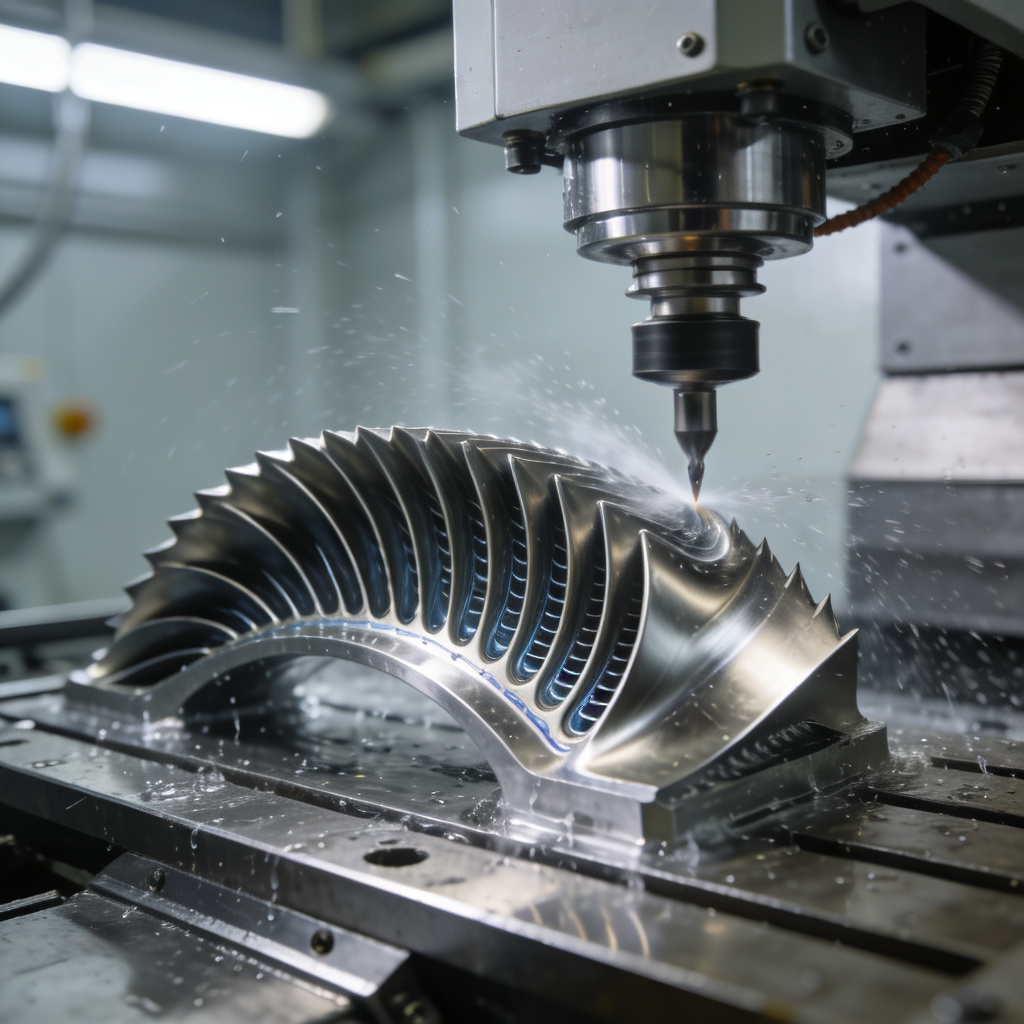
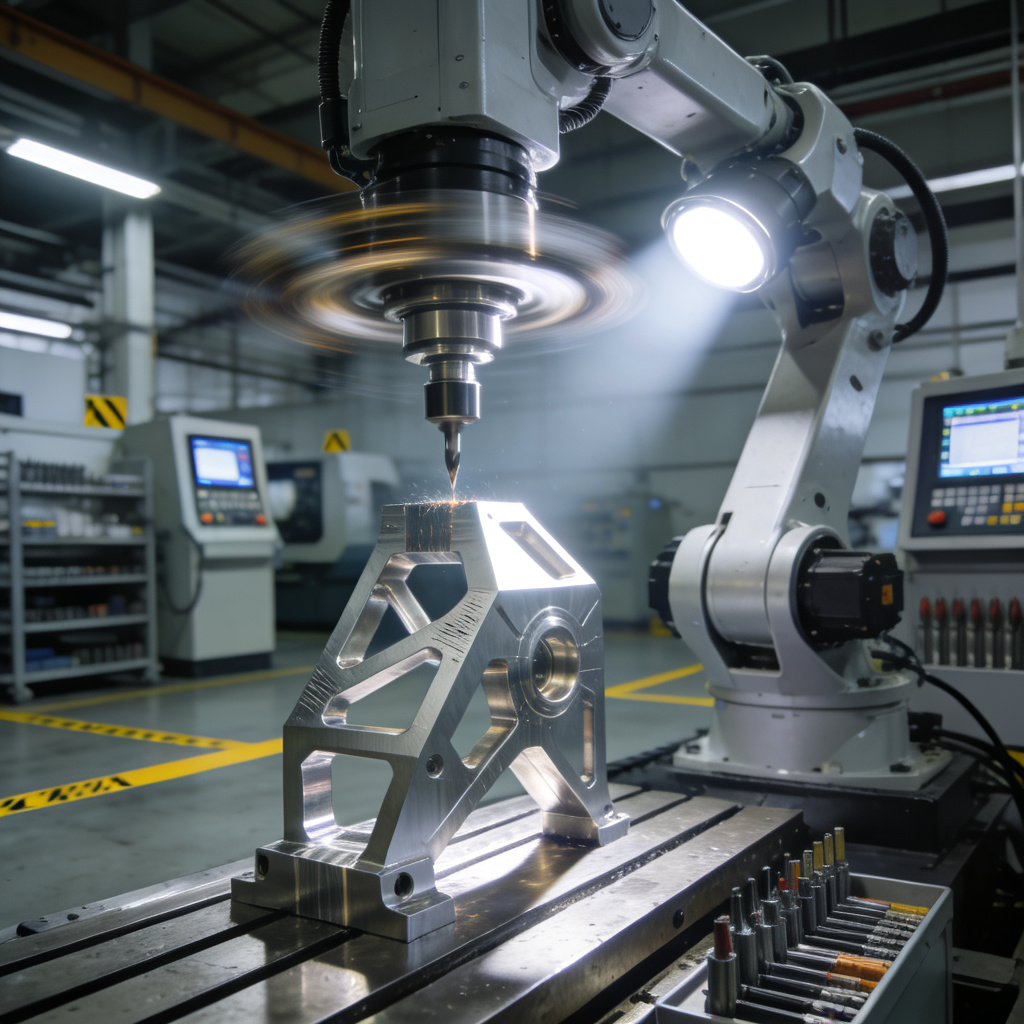
Aerospace Components
5-axis machining is widely used in aerospace for manufacturing turbine blades, engine components, structural parts,
and complex aircraft assemblies that require extremely high precision and complex geometries.
Typical Applications:
- Turbine blades and vanes
- Engine casings and housings
- Airframe structural components
- Landing gear components
- Avionics housings
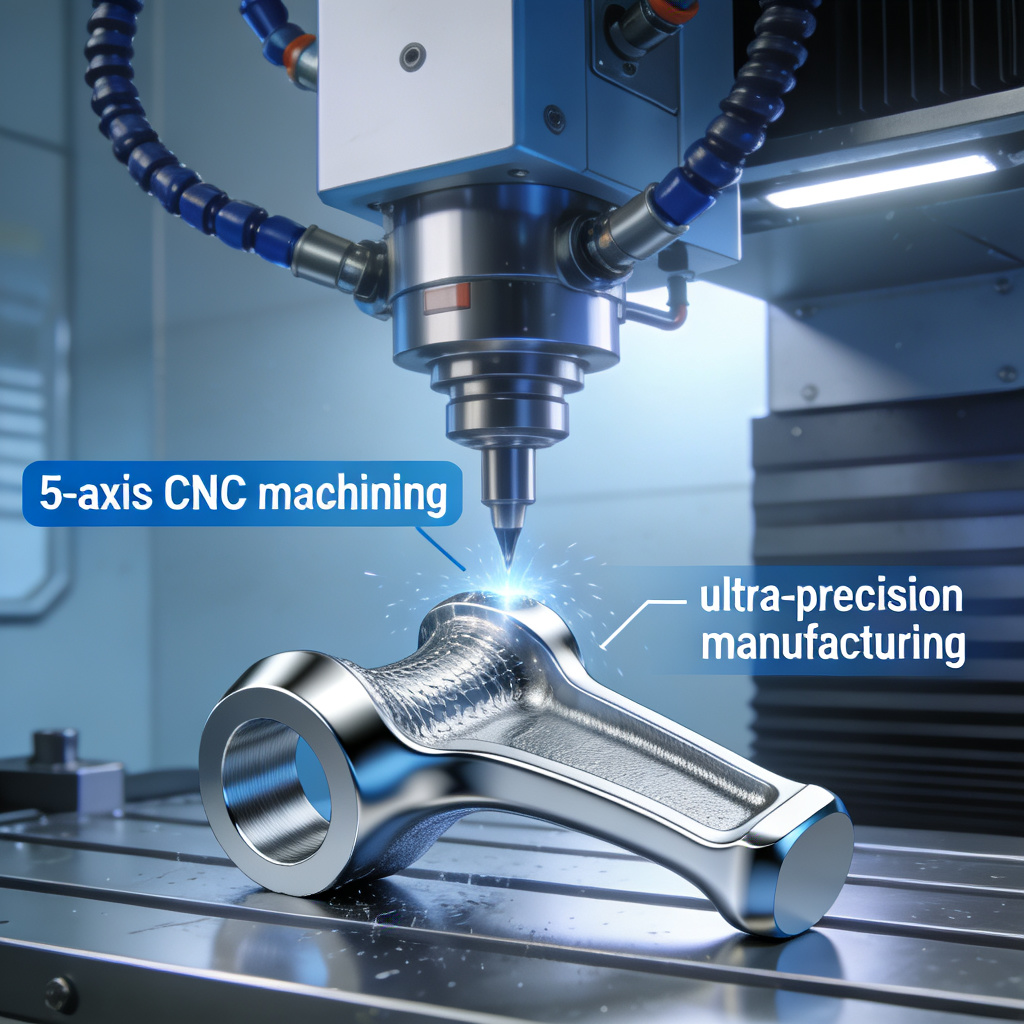
Robotics Components
The robotics industry relies on 5-axis machining for producing complex robotic arm components, joints, grippers,
and other precision parts that require high accuracy and complex geometries.
Typical Applications:
- Robotic arm linkages
- Joint components and bearings
- End-effectors and grippers
- Sensor mounting brackets
- Actuator housings
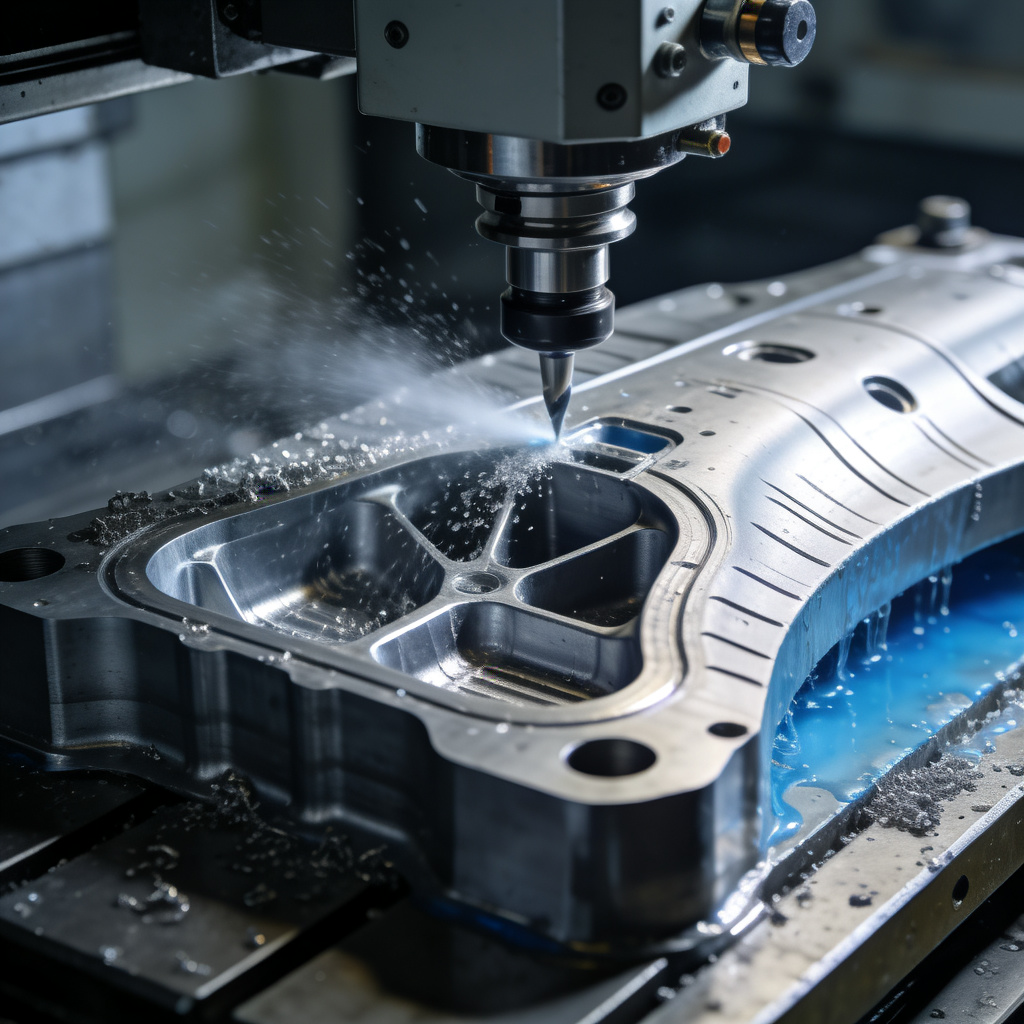
Medical Implants
Medical implants such as knee and hip replacements, dental implants, and surgical instruments require the
highest levels of precision and surface quality, making 5-axis machining the ideal manufacturing method.
Typical Applications:
- Orthopedic implants (knee, hip)
- Dental implants and abutments
- Surgical instruments
- Medical device components
- Prosthetic components
Automotive Components
In the automotive industry, 5-axis machining is used for manufacturing high-performance engine components,
transmission parts, and complex molds for plastic injection molding.
Typical Applications:
- Engine blocks and cylinder heads
- Transmission components
- Suspension parts
- Mold and die components
- Racing car components
Best Materials for 5 Axis CNC Machining
Aluminum Alloys
Aluminum alloys are commonly used in 5-axis machining because they offer excellent machinability and strength-to-weight ratio.
They are ideal for aerospace, automotive, and robotics applications where weight reduction is important.
Common Grades:
- 6061-T6: Good all-around performance
- 7075-T6: High strength aerospace grade
- 5052-H32: Excellent corrosion resistance
- 2024-T3: High strength for structural parts
Titanium Alloys
Titanium alloys are used in aerospace, medical, and high-performance applications where high strength,
corrosion resistance, and biocompatibility are required. They are more difficult to machine but offer exceptional properties.
Common Grades:
- Ti-6Al-4V: Most widely used titanium alloy
- Ti-5Al-2.5Sn: High temperature applications
- Ti-6Al-2Sn-4Zr-2Mo: Aerospace grade
- CP Titanium: Pure titanium for medical implants
Stainless Steel
Stainless steel is used in applications requiring corrosion resistance, high strength, and durability.
It is commonly used in medical devices, food processing equipment, and marine applications.
Common Grades:
- 304: General purpose stainless steel
- 316: Excellent corrosion resistance
- 17-4 PH: High strength precipitation hardening
- 440C: High hardness for bearing applications
Engineering Plastics
Engineering plastics are used in applications requiring lightweight, corrosion resistance, and electrical insulation.
They are commonly used in electronics, medical devices, and consumer products.
Common Types:
- PEEK: High performance thermoplastic
- POM/Delrin: High strength acetal
- PTFE/Teflon: Low friction material
- PVC: Versatile plastic for various applications
Material Selection Guide
| Material | Machinability Rating | Typical Cutting Speed | Surface Finish | Common Applications |
|---|---|---|---|---|
| 6061 Aluminum | Excellent (9/10) | 300-600 m/min | Ra 0.4-0.8 μm | Aerospace, automotive, robotics |
| Ti-6Al-4V Titanium | Fair (4/10) | 50-150 m/min | Ra 0.4-1.6 μm | Aerospace, medical implants |
| 304 Stainless Steel | Good (6/10) | 60-120 m/min | Ra 0.8-1.6 μm | Medical devices, food equipment |
| PEEK Plastic | Good (7/10) | 100-200 m/min | Ra 0.8-1.6 μm | Medical devices, electronics |
Cost of 5 Axis CNC Machining
5-axis CNC machining generally costs more than traditional 3-axis machining due to advanced equipment and programming requirements.
However, the cost difference is often offset by reduced setup time, improved quality, and lower overall production costs.
As someone with 20 years in the industry, I’ve seen the cost of 5-axis machining decrease significantly over the years as technology has advanced.
Today, it’s more accessible than ever for manufacturers of all sizes.
Typical Cost Comparison
Machine Investment Costs:
- 3-axis machines: $50,000 – $200,000
- 4-axis machines: $150,000 – $400,000
- 5-axis machines: $300,000 – $1,000,000+
Hourly Operating Costs:
- 3-axis machines: $50 – $100/hour
- 4-axis machines: $75 – $150/hour
- 5-axis machines: $100 – $250/hour
Factors Affecting 5 Axis Machining Costs
Machine Complexity
The type and size of the 5-axis machine significantly impacts costs. Larger machines with higher precision capabilities
and advanced features cost more to purchase and operate.
Programming Complexity
5-axis programming requires specialized software and skilled programmers, which adds to the overall cost.
Complex parts with intricate geometries require more programming time.
Material Selection
Difficult-to-machine materials like titanium and high-temperature alloys require specialized tools and slower cutting speeds,
increasing machining time and costs.
Part Complexity
Parts with complex geometries, thin walls, and tight tolerances require more machining time and specialized tooling,
increasing overall costs.
Design Guidelines for 5 Axis CNC Machining
Design for Machinability
Designing parts specifically for 5-axis machining can significantly improve manufacturability and reduce costs.
Here are some key guidelines based on my 20 years of experience:
- Avoid extremely thin walls: Keep walls at least 1.5 mm thick for aluminum, 2 mm for steel
- Optimize tool access: Ensure all features can be reached with standard tools
- Maintain consistent radii: Use standard tool radii for internal corners
- Consider tool length: Avoid deep cavities that require long tools
- Provide adequate clearance: Allow space for tool movement around the part
- Use standard tolerances: Only specify tight tolerances where necessary
- Minimize sharp corners: Use fillets to reduce stress concentrations and improve tool life
Common Design Mistakes to Avoid
Over the years, I’ve seen many designs that could have been improved with better consideration for 5-axis machining.
Here are some common mistakes to avoid:
- Overly tight tolerances: Specifying tighter tolerances than needed can double costs
- Inaccessible features: Features that can’t be reached with standard tools require special setups
- Sharp internal corners: Require special EDM operations or custom tools
- Thin wall sections: Can vibrate and deform during machining
- Inconsistent wall thickness: Causes warping and stress concentrations
- Complex features without considering tool access: Can increase machining time significantly
- Ignoring machine limitations: Not considering the machine’s travel limits or rotational capabilities
Recommended Design Practices
Wall Thickness
Minimum 1.5mm for aluminum, 2mm for steel, 3mm for titanium
Corner Radii
Use standard tool radii (3mm, 6mm, 10mm) for internal corners
Tolerances
Use ±0.01mm for most features, ±0.005mm only where critical
Surface Finish
Specify Ra 0.8μm for most surfaces, Ra 0.4μm for moving parts
Limitations of 5 Axis CNC Machining
Higher Initial Investment
5-axis CNC machines require a significantly higher initial investment compared to traditional 3-axis machines.
This can make it difficult for small businesses to justify the cost unless they have sufficient volume of complex parts.
- Machine costs 2-5 times higher than 3-axis
- Higher maintenance and repair costs
- Requires more advanced tooling
- Need for specialized programming software
Complex Programming Requirements
5-axis machining requires more complex programming and skilled operators. The learning curve is steeper, and it can take
significant time to become proficient with the technology.
- Requires specialized CAM software
- Longer programming time for complex parts
- Need for skilled programmers and operators
- More difficult to troubleshoot programming errors
Not Always Necessary
For simple parts, 5-axis machining may be overkill and more expensive than necessary. Traditional 3-axis machining
may be more cost-effective for straightforward geometries.
- Higher cost for simple parts
- Longer setup time for simple jobs
- Overly complex for basic 2D and 3D parts
- May not be cost-effective for low-volume simple parts
FAQ About 5 Axis CNC Machining
What is the difference between 3 axis and 5 axis CNC machining?
The main difference is the number of axes the machine can move simultaneously. 3-axis machines move along X, Y, and Z linear axes only,
while 5-axis machines add two rotational axes (A, B, or C). This allows 5-axis machines to approach the workpiece from multiple angles,
enabling complex part machining in a single setup.
Is 5 axis machining more accurate than 3 axis?
Yes, 5-axis machining is generally more accurate because it eliminates multiple setups, which can introduce alignment errors.
With 5-axis machining, complex parts can be machined in a single setup, maintaining consistent accuracy throughout the entire part.
Typical precision levels for 5-axis machines are ±0.003-0.005 mm, compared to ±0.01-0.02 mm for standard 3-axis machines.
When should you use 5 axis CNC machining?
You should consider 5-axis machining when:
- Your part has complex 3D geometries or curved surfaces
- You need to machine features from multiple angles
- High precision and surface finish are critical
- You want to reduce setup time and improve efficiency
- Traditional machining methods would require multiple setups
Is 5 axis machining more expensive?
Yes, 5-axis machining is generally more expensive than 3-axis machining due to higher equipment costs, more complex programming,
and the need for skilled operators. However, the higher cost per hour is often offset by reduced setup time, improved quality,
and lower overall production costs for complex parts.
As a general rule, if a part requires more than 2-3 setups on a 3-axis machine, 5-axis machining will likely be more cost-effective.
What materials can be machined with 5 axis CNC?
5-axis CNC machining can work with almost any material, including:
- Aluminum alloys (6061, 7075, etc.)
- Steel alloys (stainless steel, tool steel, etc.)
- Titanium alloys (Ti-6Al-4V, etc.)
- Engineering plastics (PEEK, POM, etc.)
- Exotic materials (inconel, hastelloy, etc.)
What programming software is used for 5 axis machining?
Common CAM software used for 5-axis machining includes:
- Mastercam
- SolidWorks CAM
- NX (Unigraphics)
- CATIA
- Creo CAM
- HyperMill
These software packages provide advanced 5-axis programming capabilities, including tool path optimization, collision detection,
and simulation to ensure safe and efficient machining.
Need Help with 5 Axis CNC Machining?
Our team of experienced engineers specializes in 5-axis CNC machining for complex parts across aerospace, robotics, medical, and automotive industries.
With over 20 years of experience, we can help you optimize your designs for manufacturability and deliver high-quality components that meet your exact specifications.