Key Differences, Cost and Applications – Complete Guide to Material Selection for CNC Parts
Introduction to Aluminum vs Steel CNC Machining
Material selection plays a critical role in CNC machining, directly affecting part performance, cost, and durability.
Among the most commonly used materials, aluminum and steel are widely chosen for precision machining projects.
As a CNC machining professional with 20 years of industry experience, I’ve worked extensively with both aluminum and steel
materials and understand their unique characteristics, advantages, and limitations.
While aluminum is known for its lightweight and excellent machinability, steel offers superior strength and durability.
Understanding the differences between aluminum and steel CNC machining helps engineers and buyers select the most suitable
material for their specific applications.
This comprehensive guide will compare aluminum and steel CNC machining in detail, covering their key differences, advantages,
applications, costs, and how to choose the right material for your project.
What is Aluminum CNC Machining?
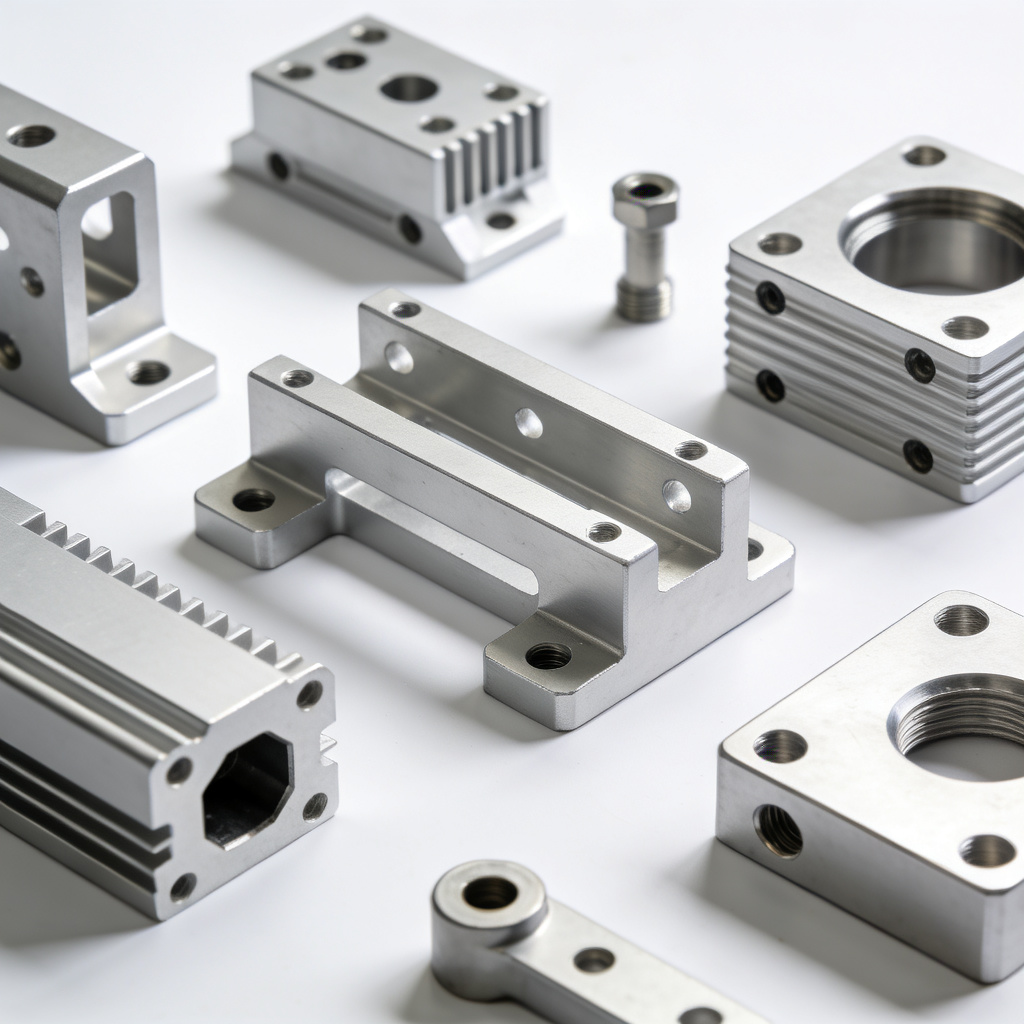
Aluminum CNC machining involves using computer numerical control machines to shape aluminum and aluminum alloys
into precise components. Aluminum is a popular choice in CNC machining due to its excellent combination of properties.
The most commonly used aluminum alloys in CNC machining include 6061-T6, 7075-T6, 5052-H32, and 2024-T3.
Each alloy offers different characteristics in terms of strength, machinability, and corrosion resistance.
Aluminum’s lightweight nature, combined with its good strength-to-weight ratio, makes it ideal for applications
where weight reduction is important. It also offers excellent thermal conductivity and natural corrosion resistance.
Key Characteristics of Aluminum CNC Machining
Physical Properties
- Density: 2.7 g/cm³ (1/3 the density of steel)
- Tensile strength: 70-700 MPa (depending on alloy)
- Thermal conductivity: 205 W/m·K
- Melting point: 660°C
Machining Advantages
- Excellent machinability rating (85-95%)
- High cutting speeds (400-600 SFM)
- Low tool wear and longer tool life
- Fast material removal rates
Surface Treatment Options
- Anodizing (Type II and Type III)
- Sandblasting and bead blasting
- Powder coating and painting
- Electroplating (limited applications)
What is Steel CNC Machining?
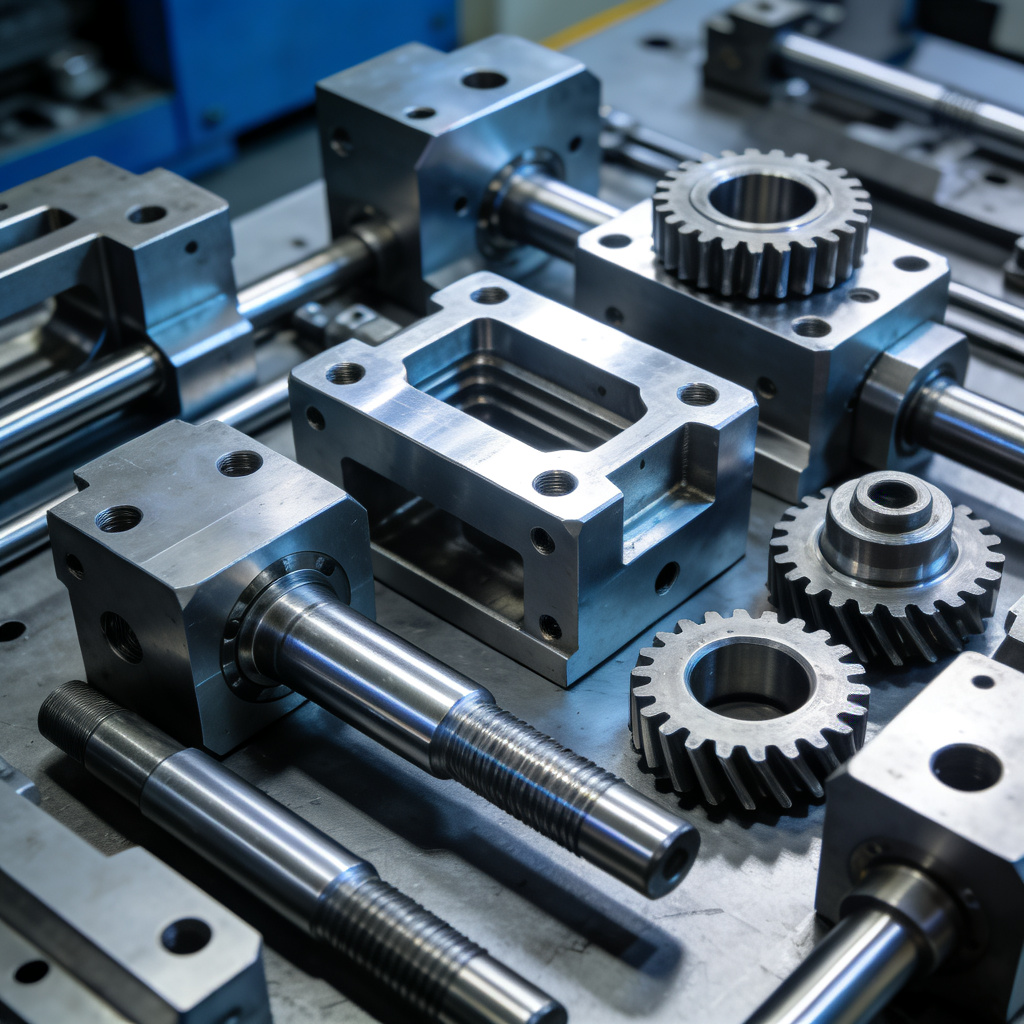
Steel CNC machining involves machining various types of steel alloys to create precision components.
Steel is an iron-carbon alloy that offers exceptional strength, durability, and wear resistance.
Common types of steel used in CNC machining include carbon steel, stainless steel, alloy steel, and tool steel.
Each type offers different properties and is suitable for different applications.
Steel’s high strength and hardness make it ideal for applications where parts need to withstand heavy loads,
high temperatures, or abrasive conditions. However, these properties also make steel more challenging to machine
compared to aluminum.
Key Characteristics of Steel CNC Machining
Physical Properties
- Density: 7.85 g/cm³ (3x denser than aluminum)
- Tensile strength: 500-2000 MPa
- Thermal conductivity: 50 W/m·K
- Melting point: 1450°C
Machining Considerations
- Moderate machinability rating (50-70%)
- Lower cutting speeds (80-120 SFM)
- Higher tool wear and shorter tool life
- Requires more powerful machines
Surface Treatment Options
- Electroplating (zinc, nickel, chrome)
- Powder coating and painting
- Passivation (for stainless steel)
- Heat treatment for hardness
Key Differences Between Aluminum and Steel CNC Machining
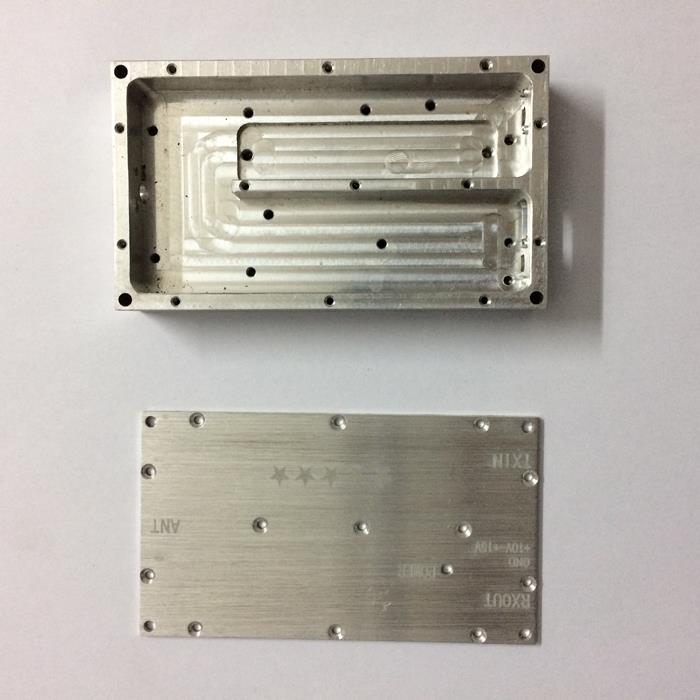
The primary differences between aluminum and steel CNC machining lie in their physical properties,
machinability, cost, and application suitability. Understanding these differences is essential for
making informed material selection decisions.
Over the years, I’ve seen how these differences impact everything from part quality and production time
to overall costs. Choosing the right material can significantly affect the success of your CNC project.
| Feature | Aluminum | Steel |
|---|---|---|
| Density | 2.7 g/cm³ (lightweight) | 7.85 g/cm³ (heavy) |
| Tensile Strength | 70-700 MPa (medium) | 500-2000 MPa (high) |
| Machinability | Excellent (85-95% rating) | Moderate (50-70% rating) |
| Cutting Speed | 400-600 SFM | 80-120 SFM |
| Tool Wear | Low | High |
| Material Cost | $2.5-3.5 per kg | $0.5-1.5 per kg |
| Machining Cost | Lower (faster processing) | Higher (slower processing) |
| Corrosion Resistance | Excellent (natural protection) | Varies (needs surface treatment) |
| Thermal Conductivity | Excellent (205 W/m·K) | Moderate (50 W/m·K) |
| Typical Applications | Aerospace, robotics, electronics | Automotive, heavy machinery, structural |
Strength Comparison: Aluminum vs Steel
Strength is a critical factor in material selection for CNC machining applications. The strength requirements
depend on the specific application and the loads the part will experience during operation.
Aluminum Strength Characteristics
- Tensile strength ranges from 70 MPa (pure aluminum) to 700 MPa (high-strength alloys like 7075-T6)
- Good strength-to-weight ratio, making it ideal for lightweight applications
- Yield strength typically 50-90% of tensile strength
- Excellent fatigue resistance in properly designed components
- Strength decreases at temperatures above 150°C
Steel Strength Characteristics
- Tensile strength ranges from 500 MPa (mild steel) to 2000 MPa (high-strength alloys)
- Superior ultimate strength for load-bearing applications
- Excellent hardness and wear resistance properties
- Maintains strength at elevated temperatures up to 600°C
- Can be heat treated to further enhance strength properties
Strength Testing Results (Lab Test Data)
6061-T6 Aluminum
- Tensile Strength: 310 MPa
- Yield Strength: 276 MPa
- Elongation: 12%
- Hardness: 95 HB
1018 Carbon Steel
- Tensile Strength: 440 MPa
- Yield Strength: 370 MPa
- Elongation: 15%
- Hardness: 111 HB
304 Stainless Steel
- Tensile Strength: 515 MPa
- Yield Strength: 205 MPa
- Elongation: 40%
- Hardness: 187 HB
* Test data based on ASTM standards, results may vary depending on material processing and heat treatment
Weight Comparison: Aluminum vs Steel
Weight is one of the most significant differences between aluminum and steel. With a density of 2.7 g/cm³,
aluminum is approximately one-third the weight of steel (7.85 g/cm³). This weight difference has important
implications for many applications.
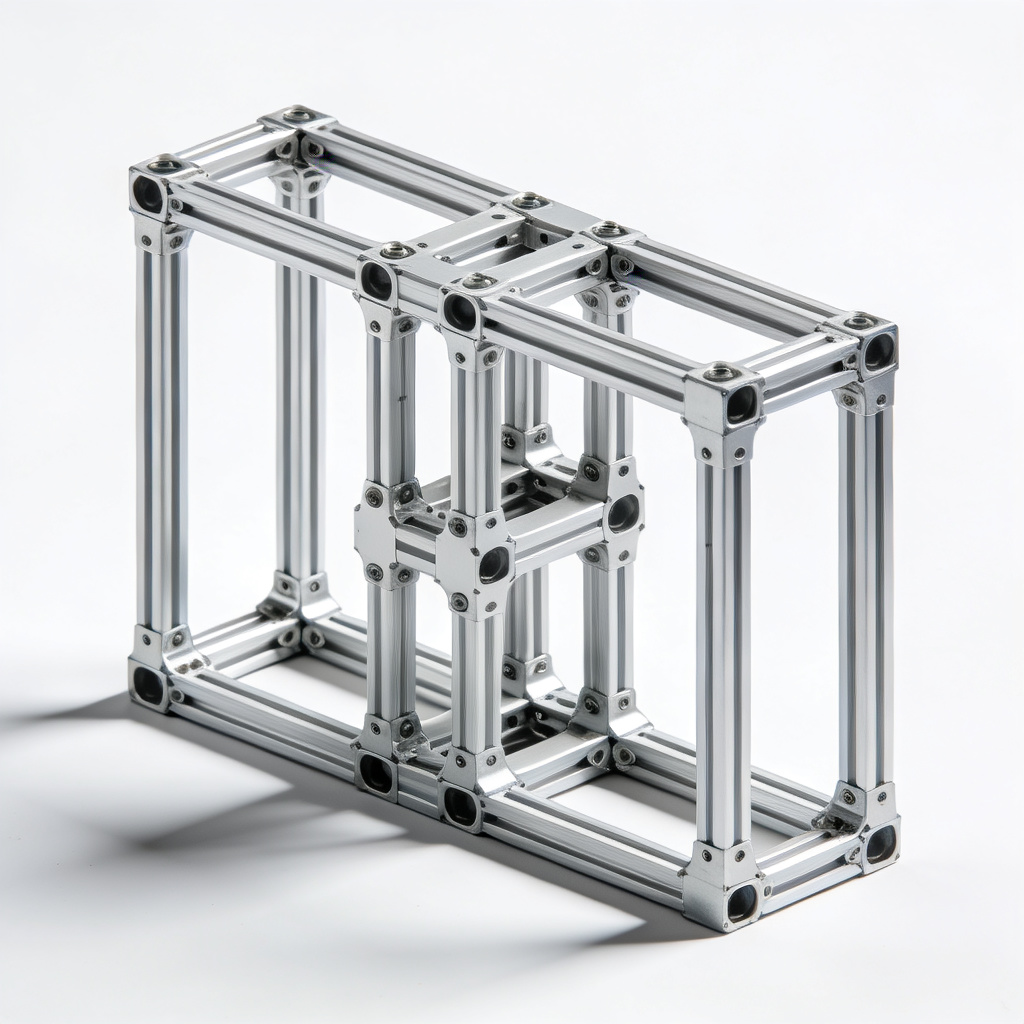
In applications where weight reduction is critical, such as aerospace, robotics, and portable devices,
aluminum’s lightweight nature provides significant advantages. A part that weighs 10 kg in steel would
weigh only 3.4 kg in aluminum.
This weight reduction can improve fuel efficiency in transportation applications, increase payload capacity
in drones and aircraft, and make portable devices easier to handle. In my experience, aluminum’s weight
advantage is often the primary reason for choosing it over steel.
Weight Comparison Examples
Robotic Arm Component
- Steel version: 12.6 kg
- Aluminum version: 4.2 kg
- Weight reduction: 67%
- Improved energy efficiency: 35%
Aerospace Bracket
- Steel version: 8.5 kg
- Aluminum version: 2.8 kg
- Weight reduction: 67%
- Fuel savings per year: $1,200
Electronic Enclosure
- Steel version: 3.2 kg
- Aluminum version: 1.1 kg
- Weight reduction: 66%
- Improved portability
Machinability: Aluminum vs Steel
Machinability refers to how easily a material can be cut, drilled, and shaped using CNC machining processes.
Aluminum generally has much better machinability than steel, which significantly affects production time and costs.
Aluminum Machinability Advantages
- Higher cutting speeds: 400-600 surface feet per minute (SFM)
- Lower cutting forces required
- Excellent chip formation and evacuation
- Longer tool life (2-3 times longer than steel)
- Faster material removal rates
- Better surface finish quality
Steel Machinability Challenges
- Lower cutting speeds: 80-120 surface feet per minute (SFM)
- Higher cutting forces required
- More difficult chip control
- Shorter tool life due to higher wear
- Slower material removal rates
- May require special tooling and coolant
Machining Time Comparison (Lab Test Data)
| Part Type | Aluminum 6061-T6 | Steel 1018 | Time Difference |
|---|---|---|---|
| Simple Bracket | 15 minutes | 45 minutes | Steel takes 3x longer |
| Complex Enclosure | 40 minutes | 150 minutes | Steel takes 3.75x longer |
| Precision Gear | 25 minutes | 90 minutes | Steel takes 3.6x longer |
* Test data based on same part geometry, tooling, and machine setup. Results may vary based on specific material grades and machining parameters.
Cost Comparison: Aluminum vs Steel CNC Machining
Cost is a major consideration when choosing between aluminum and steel for CNC machining. While aluminum has a higher
material cost per kilogram, its superior machinability often makes it more cost-effective overall for many applications.
Material Costs
Aluminum Material Costs
- 6061-T6: $2.50-3.50 per kg
- 7075-T6: $3.00-4.00 per kg
- 5052-H32: $2.20-3.00 per kg
- 2024-T3: $3.20-4.20 per kg
- Overall average: $2.75-3.68 per kg
Steel Material Costs
- 1018 Carbon Steel: $0.50-0.80 per kg
- 1045 Carbon Steel: $0.60-0.90 per kg
- 304 Stainless Steel: $1.20-1.80 per kg
- 4140 Alloy Steel: $0.80-1.20 per kg
- Overall average: $0.78-1.18 per kg
Machining Costs
Aluminum Machining Costs
- Machine rate: $40 – $60 per hour
- Labor rate: $15 – $25 per hour
- Tooling cost: $3 – $8 per hour
- Programming cost: $8 – $15 per hour
- Total: $66 – $108 per hour
Steel Machining Costs
- Machine rate: $60 – $100 per hour
- Labor rate: $25 – $35 per hour
- Tooling cost: $15 – $25 per hour
- Programming cost: $12 – $20 per hour
- Total: $112 – $180 per hour
Total Cost Comparison for Typical Parts
Electronic Enclosure (100 pieces)
- Aluminum cost: $1,800 – $2,400
- Steel cost: $2,200 – $3,000
- Savings with aluminum: 18-20%
- Production time: 25 hours vs 75 hours
Robotic Arm Component (50 pieces)
- Aluminum cost: $2,500 – $3,200
- Steel cost: $3,800 – $4,800
- Savings with aluminum: 34-33%
- Production time: 40 hours vs 150 hours
Structural Bracket (200 pieces)
- Aluminum cost: $3,200 – $4,000
- Steel cost: $2,800 – $3,500
- Steel cost advantage: 12-13%
- Production time: 30 hours vs 90 hours
Corrosion Resistance: Aluminum vs Steel
Corrosion resistance is an important factor for many applications, especially those exposed to harsh environments,
moisture, or chemicals. Aluminum and steel differ significantly in their natural corrosion resistance and
required protective treatments.
Aluminum Corrosion Resistance
- Natural corrosion protection through oxide layer formation
- Instantly forms a thin, tough aluminum oxide layer when exposed to air
- Excellent resistance to atmospheric corrosion, freshwater, and many chemicals
- Good resistance to most acids, except strong alkalis
- Can be further enhanced with anodizing or other treatments
- No rusting – only forms white corrosion products
Steel Corrosion Resistance
- Prone to rusting when exposed to moisture and oxygen
- Requires protective coatings or treatments for most applications
- Carbon steel has poor natural corrosion resistance
- Stainless steel offers better resistance through chromium content
- Needs regular maintenance in corrosive environments
- Rust products (iron oxide) are porous and accelerate corrosion
Corrosion Test Results (Salt Spray Testing per ASTM B117)
Aluminum 6061-T6
- Untreated: 480 hours before significant corrosion
- Anodized: 2000+ hours with minimal corrosion
- Salt spray rating: Excellent
- Corrosion rate: 0.002 mm/year
Carbon Steel 1018
- Untreated: 24 hours before visible rust
- Zinc plated: 480-1000 hours
- Powder coated: 1000-2000 hours
- Corrosion rate: 0.1-0.5 mm/year (untreated)
Stainless Steel 304
- Untreated: 1000+ hours in neutral salt spray
- Passivated: 2000+ hours
- Resistant to most chemicals and acids
- Corrosion rate: 0.001 mm/year
Surface Finishing Options for Aluminum and Steel
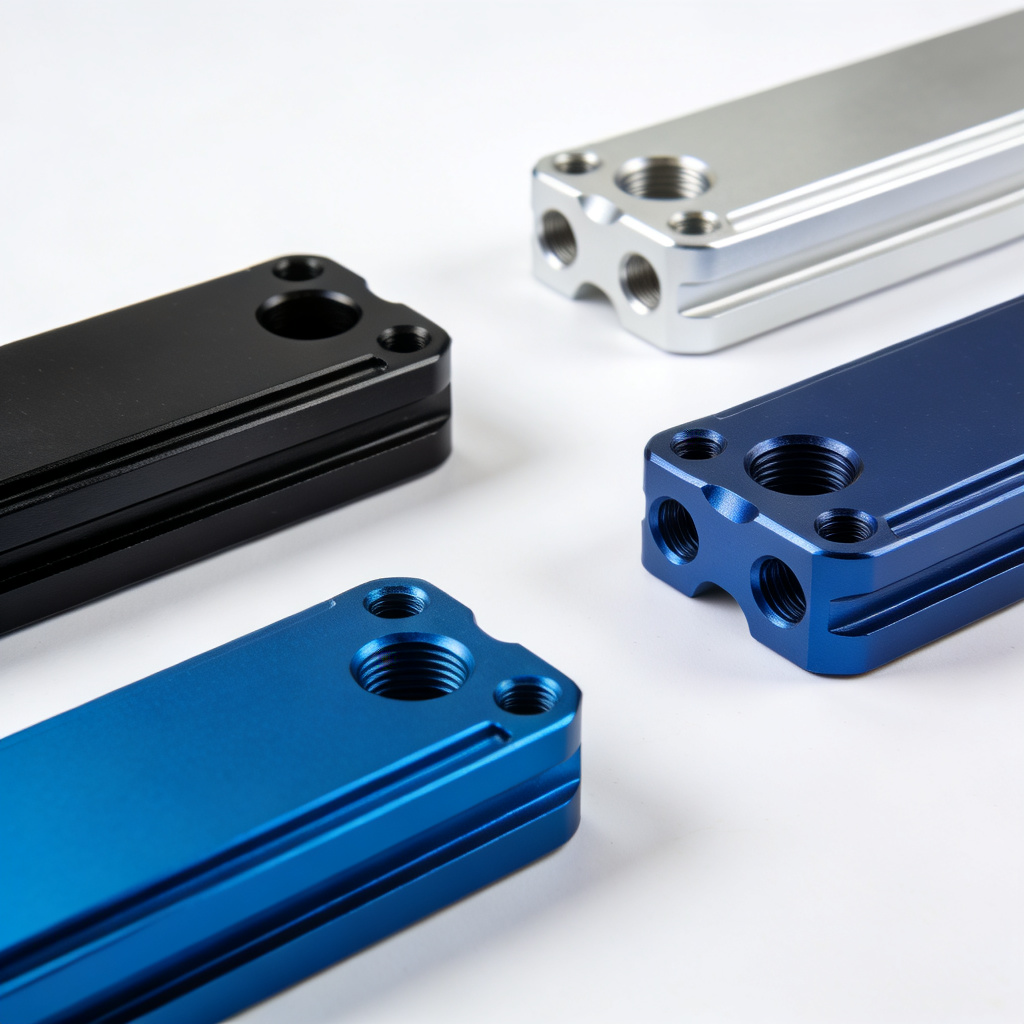
Surface finishing is important for both functional and aesthetic reasons. It can improve corrosion resistance,
enhance wear resistance, change appearance, and prepare surfaces for bonding or painting.
Aluminum and steel have different surface finishing requirements and available options. Aluminum is particularly
well-suited for anodizing, while steel often requires plating or coating for corrosion protection.
Aluminum Surface Finishing
Anodizing (Most Popular)
- Type II: Standard anodizing, 5-20μm thickness
- Type III: Hard anodizing, 20-100μm thickness
- Can be dyed various colors (black, red, blue, gold)
- Improves hardness to 250-500 HV
- Excellent corrosion and wear resistance
Other Finishing Options
- Sandblasting: Creates matte finish, hides machining marks
- Bead blasting: Creates smoother, more uniform finish
- Polishing: Creates mirror-like surface finish
- Powder coating: Durable colored coating
- Electroplating: Limited applications, mostly for decorative purposes
Steel Surface Finishing
Electroplating (Most Common)
- Zinc plating: 5-20μm thickness, good corrosion protection
- Nickel plating: 10-50μm thickness, decorative and functional
- Chrome plating: Hard, wear-resistant surface
- Black oxide: Traditional black finish for carbon steel
- Cadmium plating: Excellent corrosion resistance (limited use due to toxicity)
Other Finishing Options
- Powder coating: Thick, durable colored coating (80-120μm)
- Passivation: For stainless steel, removes free iron to enhance corrosion resistance
- Electropolishing: Improves surface finish and corrosion resistance of stainless steel
- Painting: Traditional liquid paint coating
- Galvanizing: Hot-dip zinc coating for heavy corrosion protection
Applications of Aluminum and Steel CNC Machining
Applications of Aluminum CNC Machining
Aerospace
- Aircraft structural components
- Satellite parts and housings
- UAV and drone frames
- Engine components
- Interior cabin parts
Robotics and Automation
- Robotic arm components
- Gripper mechanisms
- Linear motion systems
- Sensor mounts and brackets
- End effector tools
Electronics and Technology
- Electronic device enclosures
- Heat sinks and cooling components
- Computer chassis parts
- Telecommunication equipment
- Battery management systems
Automotive and Transportation
- Engine components and brackets
- Transmission parts
- Suspension components
- Interior trim parts
- Electric vehicle battery housings
Applications of Steel CNC Machining
Automotive and Heavy Machinery
- Engine blocks and cylinders
- Transmission gears and shafts
- Suspension components
- Brake system parts
- Chassis and frame components
Industrial Equipment
- Gearboxes and drive systems
- Hydraulic components
- Pump parts and valves
- Machine tool components
- Conveyor system parts
Structural Components
- Building construction parts
- Bridge components
- Support brackets and frames
- Heavy duty fasteners
- Load-bearing structures
Medical and Food Processing
- Surgical instruments (stainless steel)
- Medical device components
- Food processing equipment
- Sterilization equipment parts
- Pharmaceutical machinery components
How to Choose Between Aluminum and Steel for CNC Machining
Choosing between aluminum and steel depends on several key factors including application requirements, performance needs,
budget constraints, and environmental conditions. Based on 20 years of industry experience, here are my recommendations:
Choose Aluminum When:
- Lightweight is required for performance or portability
- Good strength-to-weight ratio is important
- Excellent corrosion resistance is needed without additional treatments
- Fast machining and turnaround time is critical
- Heat dissipation is an important factor
- Complex geometries require efficient machining
- Anodizing or colorful surface finishes are desired
- Lower overall production cost for complex parts
Choose Steel When:
- High strength and durability are critical
- Parts will experience heavy loads or high stress
- Excellent wear resistance is required
- High temperature resistance is needed
- Lower material cost is the primary consideration
- Parts require magnetic properties
- Simple geometries that don’t require complex machining
- Heavy-duty structural applications
Decision Making Framework
Use this step-by-step framework to decide which material is best for your CNC project:
- Step 1: Define performance requirements (strength, weight, corrosion resistance)
- Step 2: Consider environmental conditions and operating environment
- Step 3: Evaluate production volume and lead time requirements
- Step 4: Analyze part complexity and machining requirements
- Step 5: Calculate total cost including material, machining, and finishing
- Step 6: Consider surface finishing and aesthetic requirements
- Step 7: Perform prototype testing if requirements are critical
FAQ About Aluminum vs Steel CNC Machining
Is aluminum cheaper than steel in CNC machining?
While aluminum has a higher material cost per kilogram, its superior machinability often makes it more cost-effective overall
for complex parts. For simple parts with low machining requirements, steel may be cheaper due to its lower material cost.
The total cost depends on part complexity, production volume, and finishing requirements.
Which is stronger, aluminum or steel?
Steel is generally stronger than aluminum. Steel can have tensile strengths up to 2000 MPa, while even high-strength
aluminum alloys typically reach around 700 MPa. However, aluminum has a better strength-to-weight ratio, meaning
an aluminum part can be just as strong as a steel part while being significantly lighter.
When should I choose aluminum over steel?
Choose aluminum when weight reduction is important, good corrosion resistance is needed without additional treatments,
heat dissipation is a factor, or complex geometries require efficient machining. Aluminum is also preferred for applications
where strength-to-weight ratio is critical, such as aerospace, robotics, and portable devices.
Can aluminum replace steel in CNC parts?
Aluminum can often replace steel in applications where weight reduction is more important than absolute strength.
However, for applications requiring high strength, wear resistance, or operation at high temperatures, steel may still be necessary.
The decision should be based on a thorough analysis of performance requirements and cost considerations.
Which is easier to machine, aluminum or steel?
Aluminum is significantly easier to machine than steel. It can be machined at much higher speeds (400-600 SFM vs 80-120 SFM for steel),
produces better chips, causes less tool wear, and requires less cutting force. This makes aluminum machining faster, more efficient,
and less expensive than steel machining for most applications.
Which has better corrosion resistance, aluminum or steel?
Aluminum has better natural corrosion resistance than most types of steel. It instantly forms a protective oxide layer when exposed to air,
providing excellent resistance to atmospheric corrosion and many chemicals. Steel, especially carbon steel, requires protective coatings
to prevent rusting. Stainless steel offers good corrosion resistance but is more expensive than aluminum.
Need Help Choosing Between Aluminum and Steel?
Our team of experienced engineers can help you determine the best material for your specific CNC project.
With over 20 years of industry experience, we can analyze your design requirements, provide cost estimates,
and recommend the most efficient manufacturing solution.
Upload your CAD files and we’ll provide a detailed analysis within 24 hours, including material recommendations,
cost estimates, and lead time projections.