First off: In the first half of 2025, orders for aerospace machinery grew by 6%. It’s not an explosive number, but it sends a clear signal: demand is on the rise.
If you’re an engineering or procurement manager, you might have previously only asked suppliers, “What’s your price? How fast can you deliver?” But things are different now. Before anything else, you have to ask about compliance.
Why? Because cutting corners on compliance leads to real, costly trouble.
I’ve spoken with several friends in the aerospace industry, and they’ve shared just how painful it is to pick the wrong supplier:
A whole shipment gets detained by customs because of unauthorized technical data transfers
Fines running into millions of dollars, not to mention costly delivery delays
In the worst cases, losing government contracts entirely
In extreme scenarios, even facing criminal liability
These aren’t scare tactics—they’re real, documented cases. That’s why smart buyers now only work with suppliers who can first prove their ISO and ITAR compliance.
ISO vs. ITAR: What’s the Difference?
To be honest, I was a bit confused by these two standards at first too. But once I broke it down, it became clear:
ISO = The Foundation of Quality Management
ISO 9001 is the most common quality standard, used across nearly all manufacturing sectors. It ensures a supplier has consistent processes, document control, and the ability to deliver on time.
But the aerospace and defense industry has far stricter requirements, which is why we have a specialized standard called AS9100. This standard builds on ISO 9001 by adding over 100 additional requirements specifically tailored to the aerospace and defense sector, including:
More rigorous risk management
Enhanced focus on product safety
Strict configuration management
Protections against counterfeit parts
For aerospace CNC machining, AS9100 isn’t optional—it’s the baseline requirement.
ITAR = The Non-Negotiable Export Control Line
The International Traffic in Arms Regulations (ITAR), managed by the U.S. Department of State, controls the import and export of defense-related articles and services. Its core goal is simple: prevent sensitive military technology from falling into the wrong hands.
ITAR compliance is different from ISO certification. It’s not just a certificate you hang on the wall—it’s an ongoing set of operational processes that cover:
Who can access technical data (restricted to authorized U.S. persons)
How technical data is stored and transmitted
Physical security protocols for manufacturing facilities
With the final implementation of the Cybersecurity Maturity Model Certification (CMMC) rule in mid-2025, ITAR compliance now also includes cybersecurity requirements, designed to protect Controlled Unclassified Information (CUI) from cyber threats.
Compliance Isn’t Just a Poster—It’s Built Into Every Process
A truly compliant CNC machine shop doesn’t just check compliance at the final inspection. It embeds these requirements into every step of production, from start to finish.
1. Strict Technical Data Control
ITAR’s definition of “technical data” is broader than you might think. It’s not just your CAD drawings—it also includes:
CNC programming files and G-code
Machining process specifications
Quality inspection reports and test data
Material Test Reports (MTR)
Compliant suppliers will:
Encrypt all this sensitive data at rest
Enforce role-based access controls
Maintain detailed audit logs of who accessed what data, and when
This way, if anything goes wrong, you have a full audit trail to trace it.
2. Full Part Traceability
Both ISO and ITAR require full traceability. For every part produced, you need to be able to trace back to:
The exact raw material batch, including its material certification
Which machine and operator produced the part
Which inspection equipment was used to verify tolerances
The exact time and date of every production step
This level of traceability means that if an issue is discovered years later, you can quickly identify which parts are affected and execute a precise, targeted recall.
3. Robust Physical & Personnel Security
ITAR requires facilities handling defense articles to have strict access controls. In practical terms, this means:
Dedicated secure work zones for ITAR-controlled projects
Background checks and citizenship verification for all employees working on these projects
Strict visitor controls to prevent unauthorized access to sensitive production lines
4. Up-to-Date Cybersecurity
With the new CMMC requirements, cybersecurity is no longer optional. Compliant suppliers must implement NIST SP 800-171 security controls, including:
Network segmentation
Multi-factor authentication
Regular vulnerability scanning
This ensures your design files are protected from hackers and data breaches.
U.S. vs. European Markets: Different Compliance Priorities
It’s interesting to note that compliance priorities vary slightly by region.
U.S. Market: Focus on Export Control & Cybersecurity
For U.S. defense programs, the top concerns are ITAR and the Defense Federal Acquisition Regulation Supplement (DFARS). Procurement managers here care deeply about:
Cost vs. compliance risk: The cost of non-compliance is too high, with potential fines reaching millions of dollars
CMMC readiness: Starting in 2025, CMMC certification is a hard requirement to bid on DoD (Department of Defense) contracts
Reshoring trends: After past supply chain disruptions, many U.S. companies are bringing production back onshore to maintain full control over their supply chains
European Market: Focus on Quality & Cross-Border Standards
In Europe, if parts are ultimately destined for U.S. defense programs, ITAR compliance still applies. But local buyers have additional priorities:
EASA and EN standards: The European Union Aviation Safety Agency (EASA) enforces its own strict airworthiness standards
Cross-border supply chain management: European buyers need suppliers who can manage complex cross-border logistics while maintaining full quality documentation
Ultra-precision requirements: Manufacturing hubs in Germany, the UK, and other regions have extremely high standards, demanding tight tolerances and perfect surface finishes.
The Real Benefits of Working With a Compliant Supplier
Compliance isn’t just about checking boxes to meet regulations. A compliant supplier delivers tangible, practical value:
Eliminate compliance risk: No more worrying about suppliers cutting corners on data security or personnel screening
Faster audit preparation: Fully documented processes mean you’ll pass customer or government audits with ease
More consistent quality: The strict process controls of AS9100 directly translate to fewer defects and more consistent parts
Access to major contracts: Prime contractors like Lockheed Martin, Boeing, and Raytheon only work with suppliers who can prove ITAR and ISO compliance.
Our ISO/ITAR CNC Machining Capabilities
We are a specialized manufacturing facility focused exclusively on aerospace and defense projects. We maintain ISO 9001:2015 and AS9100D certification, along with full ITAR registration and CMMC readiness.
Our core capabilities include:
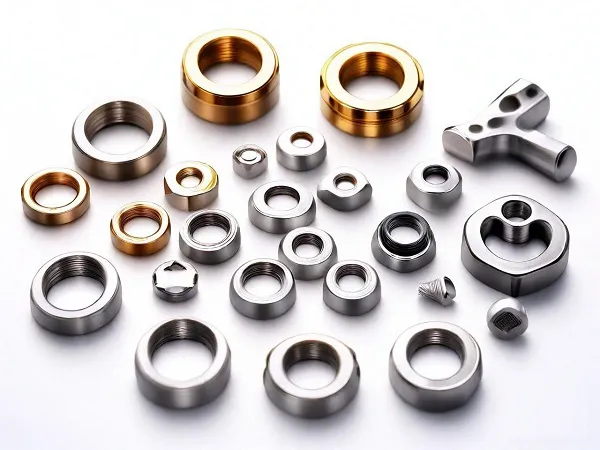
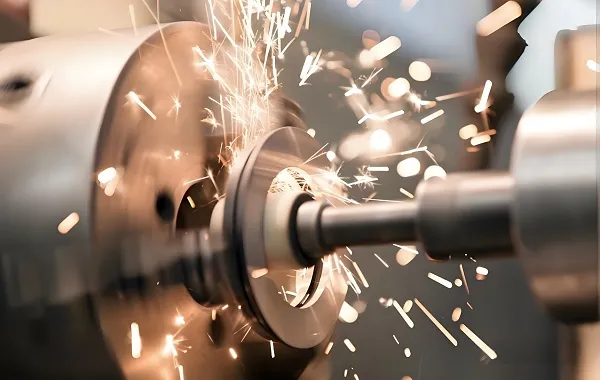
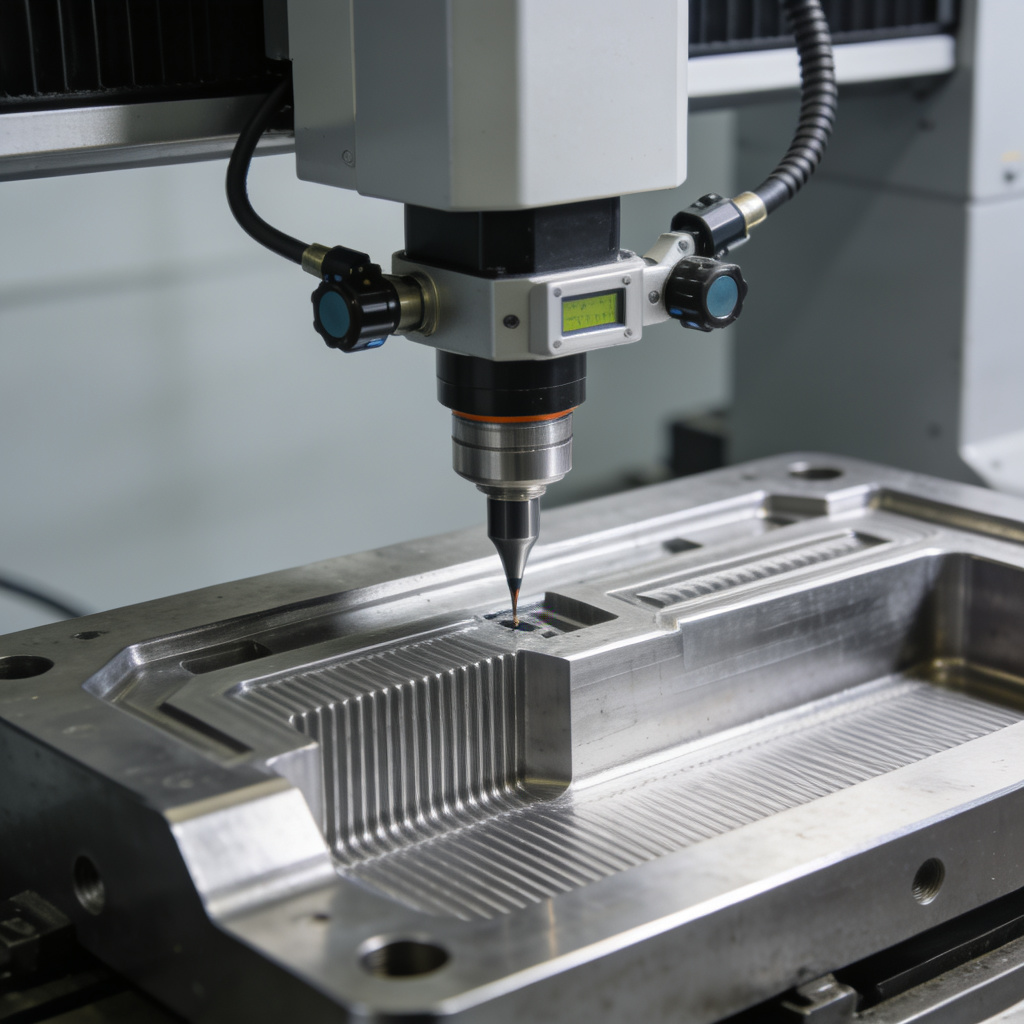
Multi-axis machining: We operate advanced 5-axis CNC machining centers, capable of producing complex geometries in a single setup. This reduces handling errors and ensures precision for critical components like turbine blades and airframe parts
Material expertise: We specialize in machining the hard-to-cut materials common in the defense industry, including titanium alloy (Ti-6Al-4V), Inconel, stainless steel, and high-strength aluminum alloys
Precision tolerances: We routinely hold tolerances of ±0.0001 inches (±0.0025 mm), meeting the strictest requirements for mission-critical components
Secure digital infrastructure: Encrypted servers, access-controlled networks, and detailed audit logs ensure your technical data is always protected, meeting the strictest ITAR and CMMC requirements.
Lead Times
Prototypes: 5-10 business days
Production runs: 2-4 weeks
Because we operate a dedicated ITAR machining cell and never outsource any work, we can deliver these fast lead times without compromising compliance.
Frequently Asked Questions
Q: How much more expensive is ITAR-compliant CNC machining? A: There is a small premium to cover the additional security and documentation management, but it’s far less than you might expect. For most projects, this adds between 5-15% to the total cost. Compare that to the cost of non-compliance—fines, lost contracts, and reputational damage—and it’s a small investment for huge risk mitigation.
Q: What’s the difference between ISO 9001 and AS9100? A: ISO 9001 is a general quality standard that works for every industry. AS9100 is aerospace-specific, adding extra requirements for risk management, configuration control, traceability, and more. If you’re in the aerospace industry, you need an AS9100-certified supplier to ensure the safety and reliability of your flight-critical parts.
Q: How long does it take to get ITAR certified? A: ITAR isn’t a one-time certification you earn and forget. It requires registration with the DDTC, followed by ongoing compliance operations. A new facility can take several months to implement all the required security and documentation processes. But we are already fully ITAR registered and compliant, so you can start your project immediately, no waiting required.
Q: What are typical lead times for ITAR-compliant parts? A: It depends on the complexity of the part. But because we operate a dedicated ITAR machining cell and never outsource work, we can deliver lead times of 5-10 business days for prototypes and 2-4 weeks for production runs—on par with non-compliant shops.
Disclaimer: The content in this article is for general informational purposes only. For specific compliance guidance, please refer to the official resources from ISO and the U.S. Department of State’s Directorate of Defense Trade Controls (DDTC).