Custom PVC Electrical Enclosures & Control Boxes
Built to your drawing, not pulled from a catalog. CNC-routed cutouts, cable glands, internal DIN rails and mounting panels — engineered around the equipment the box has to protect.
- Founded in 1998OEM/ODM manufacturer
- 100+ MachinesAcross six processes
- ISO 9001:2015Quality system
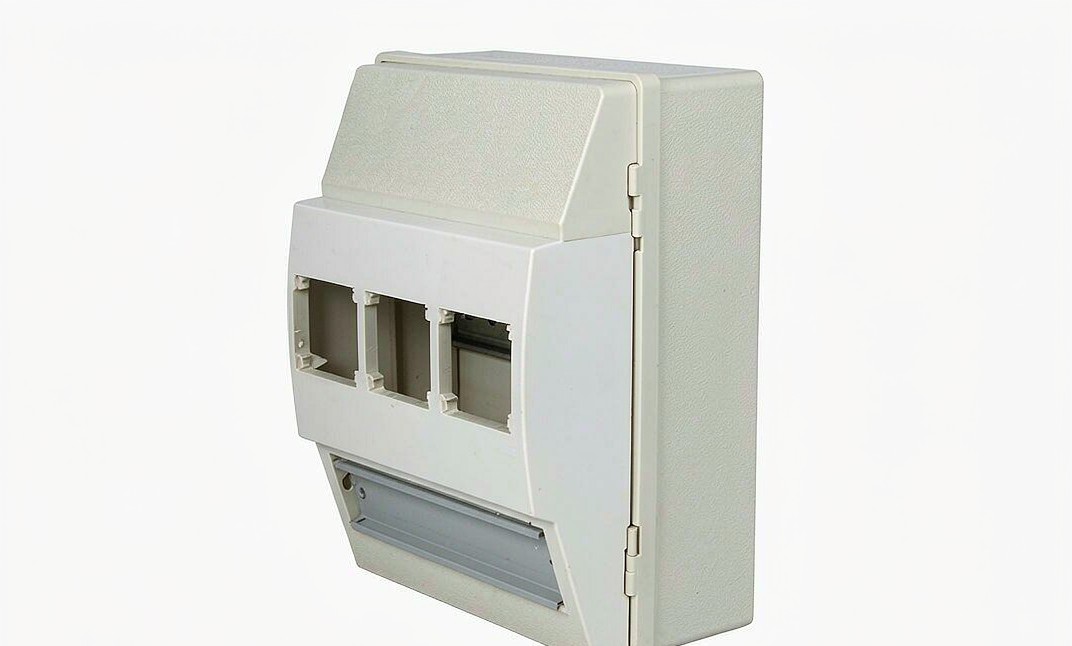
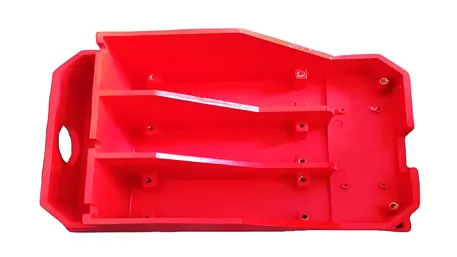
A custom PVC electrical enclosure is a housing made from polyvinyl chloride, built to a customer's drawing rather than a standard catalog size. It protects electrical and electronic components from dust, accidental contact and the environment. "Custom" means the dimensions, wall thickness, cable entries, internal mounting and finish are defined by the equipment it must contain — so the box is designed around the device, not the other way around.
What Is a Custom PVC Electrical Enclosure?
An electrical enclosure is the box that houses switches, terminals, controllers, sensors or power components. A custom PVC enclosure is one produced to a specific drawing: the outer shape, wall thickness, openings and internal fittings are all defined by the device it protects, rather than chosen from a fixed catalog of standard sizes.
Polyvinyl chloride (PVC) is a rigid thermoplastic. For enclosures it is valued because it is a good electrical insulator, resists many chemicals and cleaning agents, is light and easy to machine, and is inexpensive relative to metal. Those properties make it a common choice for control boxes, junction boxes, sensor housings and indoor equipment panels.
It is worth separating the product name from a common source of confusion: in North American wiring practice a "panel box" usually refers to a distribution panelboard built to NEC and UL requirements. The products described here are custom fabricated PVC enclosures — control boxes, junction boxes and housings — not certified panelboards. They are made to the buyer's specification, not to a fixed electrical-distribution standard.
Why Choose PVC for an Enclosure?
PVC is not the right material for every enclosure, but for a wide band of control and instrumentation applications it is a strong default. The reasons buyers select it:
Electrical insulation
PVC is a non-conductor, which simplifies isolation of low-voltage circuits and reduces the need for additional insulating hardware inside the box.
Chemical resistance
It resists many acids, alkalis, salts and cleaning agents, which suits it to process, lab and washdown-adjacent environments more than plain steel.
Lightweight
A PVC box weighs far less than an equivalent metal one, lowering shipping cost and making wall- or machine-mounted enclosures easier to install.
Easy to machine & low cost
PVC routes, drills and bonds cleanly with standard fabrication tools, so cutouts and custom shapes are economical even at low volumes.
What Can Be Customized?
A custom enclosure is defined by the equipment it holds. The list below is the usual set of variables a buyer specifies — or that we help define from a sketch.
- Overall dimensions — length, width, depth to suit the device and clearance
- Wall thickness — matched to stiffness and mounting method
- Color — gray, white, black or custom-matched
- Lid style — screwed, hinged or snap-fit
- Cable entries — knockouts, drilled holes or gland ports
- Internal mounting — DIN rails, panels, standoffs, brackets
- Hardware — hinges, latches, seals, feet
- Identification — engraved or printed labels, logos
Design the Enclosure Around Your Equipment
The most reliable custom enclosure starts from the inside out. Before fixing the outer shape, define what must live inside: the device footprint, the cable routes in and out, the mounting points, and the clearances needed for heat or service access. Designing around the equipment avoids the common failure of a "standard" box that is too small, poorly ventilated, or impossible to wire.
A practical sequence is: list every component and its dimensions → map cable and connector entries → decide how parts mount (rail, panel or standoff) → set the outer envelope with service clearance → then finalize wall thickness and lid style. Suppliers who ask for this information up front tend to deliver a box that fits the first time.
Cable Entry & Cutouts
Cable entry is where most enclosure problems originate, so it is worth specifying carefully. Options range from simple drilled holes to pre-formed knockouts and threaded ports for cable glands.
Drilled / CNC-routed openings
Each opening is cut to the exact size and position of the connector or cable, including rectangular cutouts for display windows and switches.
Knockouts
Pre-scored discs the installer punches out at the required locations, giving flexibility for field changes.
Gland ports
Threaded holes sized for standard cable glands, which provide a tighter seal where dust or moisture resistance is a goal.
Sealing details
Neoprene or silicone gaskets at the lid and around entries improve dust and splash resistance; the right seal depends on the installation.
Internal Mounting
An enclosure is only useful if the equipment inside is held securely and serviceable. Common internal fittings we build in:
- DIN rails — for terminal blocks, relays and compact controllers that clip onto standard rails.
- Mounting panels — a flat plate (PVC, aluminum or steel) on which PCBs, displays or devices are fixed.
- Standoffs and bosses — molded or drilled bosses that let a board sit at a fixed height with clearance behind it.
- Brackets and clips — for batteries, modules or cables that need a defined position.
PVC Material Selection
"PVC" covers more than one formulation, and the grade should follow the environment:
| Grade | Characteristics | Typical use |
|---|---|---|
| Rigid PVC (PVC-U) | Stiff, good insulator, low cost | Indoor control boxes, junction boxes |
| UV-stabilized PVC | Resists sunlight degradation | Covered or semi-outdoor installations |
| CPVC | Higher temperature resistance | Warm-environment enclosures |
| Foam-core / expanded PVC | Lighter, easy to route | Light-duty housings, signage-style panels |
PVC vs ABS vs Polycarbonate vs Aluminum
Choosing the enclosure material is a trade between environment, mechanical load and cost. The table sets out where each option wins.
| Property | PVC | ABS | Polycarbonate | Aluminum |
|---|---|---|---|---|
| Electrical insulation | Excellent | Good | Good | Conductive |
| Chemical resistance | Good | Moderate | Good | Needs coating |
| Impact resistance | Moderate | Good | Excellent | Excellent |
| UV / outdoor | Needs stabilizer | Poor | Excellent | Good |
| Temperature range | Limited | Moderate | High | Highest |
| EMI shielding | None | None | None | Yes |
| Machinability / cost | Easy, low | Easy, low | Moderate | Higher |
IP vs NEMA: What the Ratings Mean
Two rating systems are used to describe how well an enclosure keeps out solids and water. They are not interchangeable, and understanding the difference prevents over- or under-specifying a box.
Outdoor & Environmental Considerations
PVC performs well indoors and in covered locations. For outdoor or harsh duty, three factors decide whether PVC is still the right call:
- UV exposure — standard rigid PVC can chalk and embrittle under prolonged sunlight; UV-stabilized grades or a shaded/coated installation address this.
- Temperature — PVC has a lower continuous-service temperature than metal or polycarbonate; warm environments call for CPVC or a different material.
- Moisture and chemicals — PVC resists many chemicals, but sustained immersion or specific solvents need grade verification and appropriate sealing.
For genuinely outdoor, high-impact or heat-intensive duty, polycarbonate or aluminum is usually the safer long-term choice. The material table above is the quick way to see where the boundary sits.
Compliance & Documentation
Xiamen Goldcattle Plastic & Metal Products Co., Ltd. operates an ISO 9001:2015 quality management system, with RoHS and third-party material test reports available on request. Documentation packages, inspection reports and material certificates can be provided under NDA where a project requires traceability.
Manufacturing Process
A typical custom enclosure moves from the buyer's drawing through fabrication and assembly to a verified first article.
Drawing Review
Dimensions, wall thickness, cutouts, mounting and material grade are checked for manufacturability.
Sheet Preparation
PVC sheet or profile is cut to blank size and the material grade confirmed.
CNC Routing
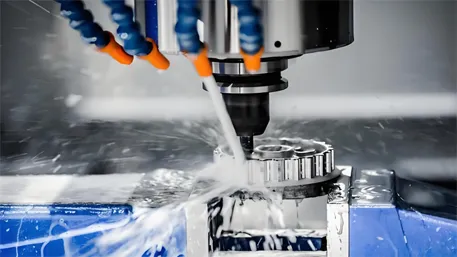
Cutouts, holes and profiles are machined to drawing tolerance.
Forming & Bonding
Faces are joined by solvent welding or mechanical fastening; hinges and latches fitted.
Internal Fitting
DIN rails, panels, standoffs and hardware are installed per the drawing.
Inspection & Packing
Dimensions and fit are verified against the drawing before packing.
Verification
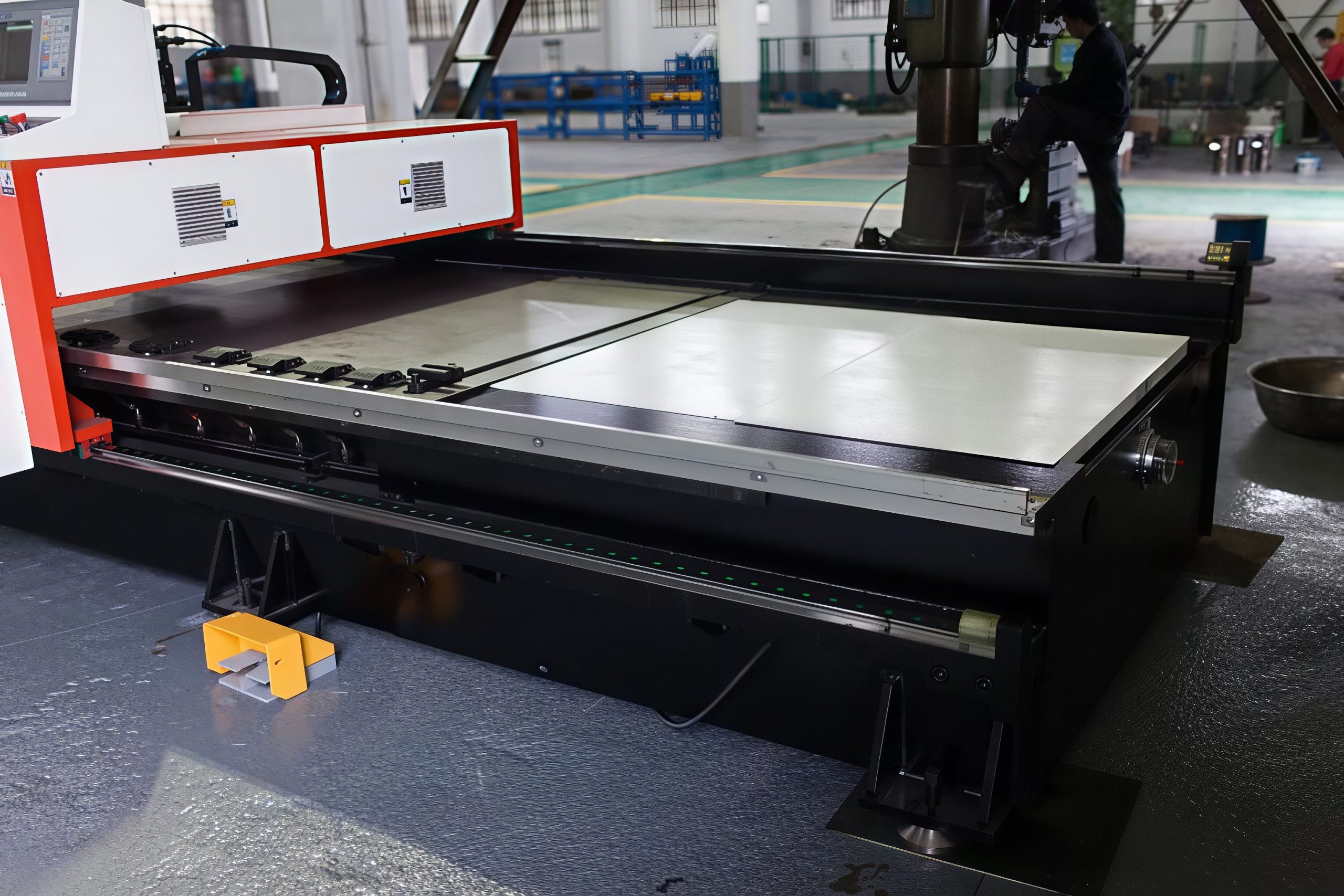
Because an enclosure is a fit-critical part, verification is part of the process rather than an afterthought. We check critical dimensions against the drawing, confirm that cable entries and internal fittings line up, and — on request — produce a first-article inspection report. For buyers who need traceability, material certificates and test reports are supplied with the order.
Applications
Control boxes
Machine and process controllers, relay and terminal assemblies.
Junction boxes
Cable splicing and connection points in fixed installations.
Sensor housings
Protected shells for sensors and small instruments.
Lab & medical
Enclosures where chemical resistance and insulation matter.
Aquarium & pool
Low-voltage control near water, with appropriate seals.
IoT & field nodes
Compact housings for edge devices and gateways.
Case Study
The example below shows the kind of parameters a custom enclosure project should specify — material, method, dimensions, mounting and verification — rather than vague claims of "perfect fit."
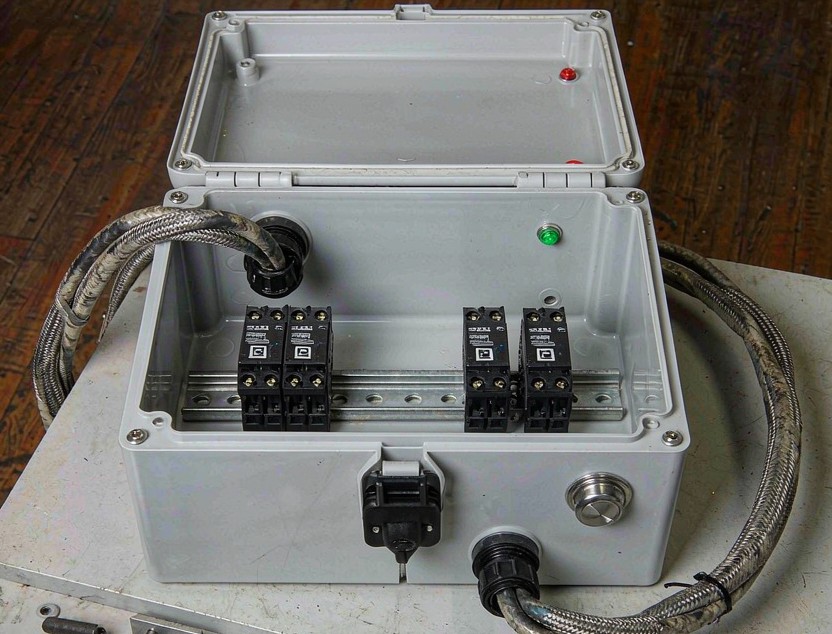
Custom Sensor Control Box
- MaterialUV-stabilized rigid PVC
- Outer size240 × 160 × 90 mm
- FabricationCNC-routed cutouts
- Cable entry4 × M20 gland ports
- InternalDIN rail + mounting panel
- SealingNeoprene lid gasket
- VerificationFirst-article inspection
Parameters shown are representative of a defined project, not a claimed standard product rating.
What We Need to Quote Your Enclosure
To quote accurately and avoid rework, send as much of the following as you can define:
- Overall dimensions and wall thickness
- 2D drawing or sketch with cutout positions
- Cable entry count, size and type
- Internal mounting requirements
- Material grade preference
- Color and lid style
- Quantity (prototype / batch / production)
- Environment and documentation needs
For guidance on preparing a precise request, see the CNC Machining RFQ Guide, which covers the same discipline of defining inputs before quoting.
How Goldcattle Builds Custom Enclosures
Xiamen Goldcattle Plastic & Metal Products Co., Ltd. has provided custom fabricated parts since 1998. Its capabilities span six core processes — CNC machining, injection molding, mold making, 3D printing, die casting and sheet metal fabrication — supported by 100+ machines under one ISO 9001:2015 quality system.
For custom PVC enclosures, the relevant controls are practical: drawing review, CNC routing of cutouts to tolerance, controlled bonding and assembly, and inspection against the drawing. The aim is to make the box to specification and be able to show how it was verified.
Goldcattle serves customers in 100+ countries across automotive, machinery, medical, electronics and related industries, providing one-stop OEM/ODM custom parts from prototype through production.
Who Should Choose a Custom PVC Enclosure?
Choose PVC when…
Your box is indoor or covered, needs electrical insulation and chemical resistance, carries low-to-moderate mechanical load, and cost or weight matters.
Look elsewhere when…
The duty is outdoor-unprotected, high-impact, high-temperature or EMI-sensitive — polycarbonate or aluminum is the better long-term fit.
Frequently Asked Questions
What is a custom PVC electrical enclosure?
What can be customized on a PVC enclosure?
Is PVC suitable for outdoor use?
Can you build an enclosure to a specific IP or NEMA rating?
What is the difference between PVC, ABS, polycarbonate and aluminum enclosures?
What information do you need to quote a custom enclosure?
Have a Drawing for a Custom PVC Enclosure?
Send us your sketch or CAD file. Our engineering team can review dimensions, cutouts, mounting and material grade before you commit to a build.
Upload Drawing / Request Quote →Free design review · Quote typically within 24 hours
Explore Material Options →