Complete Guide to Materials, Tolerance, Process and Cost for Precision Machined Components
What is Custom CNC Machining
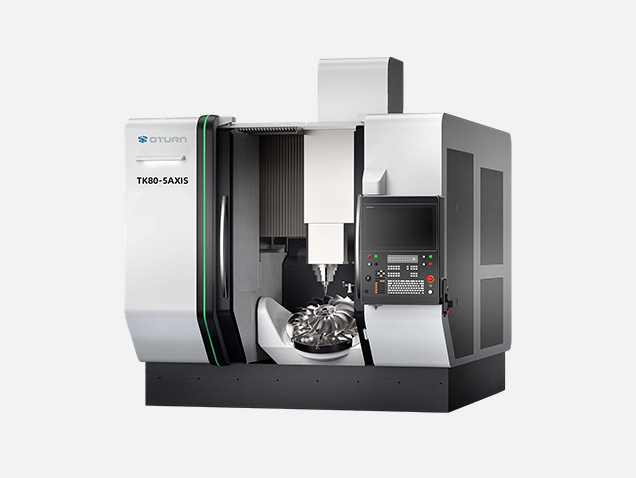
CNC (Computer Numerical Control) machining is a subtractive manufacturing process where pre-programmed computer software dictates the movement of factory tools and machinery. The process can be used to control a range of complex machinery, from grinders and lathes to mills and routers.
Custom CNC machining allows manufacturers to produce highly precise parts with tight tolerances, making it ideal for creating complex components that would be difficult or impossible to produce using traditional manufacturing methods.
CNC Machining Process Steps
- Design & Programming: Create a 3D CAD model and generate CNC program using CAM software
- Material Preparation: Select appropriate material and prepare it for machining
- Setup: Install material in CNC machine and set up tools
- Machining: Execute CNC program to remove material
- Inspection: Verify dimensions and quality of finished part
- Finishing: Apply surface treatments as required
Key Advantages of CNC Machining
- High precision and accuracy (up to ±0.002mm tolerance)
- Ability to produce complex geometries
- Consistency across multiple parts
- Wide range of materials can be machined
- Cost-effective for both prototyping and production runs
Materials for CNC Machining
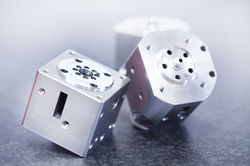
The choice of material significantly impacts the cost, quality, and performance of CNC machined parts. We work with a wide range of materials to meet your specific application requirements.
Common Materials We Machine
| Material | Common Grades | Typical Applications | Cost (Relative) |
|---|---|---|---|
| Aluminum | 6061, 7075, 6063, 2024 | Aerospace, automotive, electronics | Low-Medium |
| Stainless Steel | 304, 316, 17-4 PH, 416 | Medical, food processing, marine | Medium-High |
| Titanium | Grade 5 (Ti-6Al-4V), Grade 2 | Aerospace, medical, defense | High |
| Brass | C360, C260, C353 | Electrical components, plumbing | Medium |
| Engineering Plastics | ABS, PEEK, Delrin, Teflon | Electronics, medical, industrial | Low-High |
Material Selection Guide
When selecting a material for your CNC machined part, consider these key factors:
- Mechanical Properties: Strength, hardness, toughness required for the application
- Environmental Conditions: Temperature, humidity, chemical exposure
- Cost Considerations: Material cost vs. performance requirements
- Machinability: How easily the material can be machined
- Surface Finish Requirements: Aesthetics and functional needs
Expert Recommendation
For most general-purpose applications, we recommend 6061 aluminum for its excellent balance of strength, machinability, and cost-effectiveness. For high-stress applications, consider 7075 aluminum or titanium alloys.
CNC Machining Tolerance
Tolerance refers to the allowable variation in dimensions from the specified design. At Goldcattle, we offer different tolerance levels to meet various application requirements.
Standard Tolerance Levels
| Tolerance Level | Accuracy | Typical Applications | Cost Impact |
|---|---|---|---|
| Standard | ±0.1mm (±0.004″) | General purpose parts | Standard cost |
| Precision | ±0.025mm (±0.001″) | Mechanical components | +20-30% cost |
| High Precision | ±0.005mm (±0.0002″) | Aerospace, medical | +50-100% cost |
Factors Affecting Tolerance
- Material Properties: Harder materials can hold tighter tolerances
- Part Size: Larger parts have looser practical tolerances
- Machine Capability: 5-axis machines offer higher precision
- Tooling: High-quality tools maintain accuracy longer
- Temperature Control: Stable environment prevents thermal expansion
Technical Data (For reference only)
Our 5-axis CNC machines can achieve the following tolerance levels based on part size:
- 0-100mm: ±0.003mm
- 100-300mm: ±0.005mm
- 300-500mm: ±0.01mm
- 500-1000mm: ±0.02mm
Surface Finishing Options
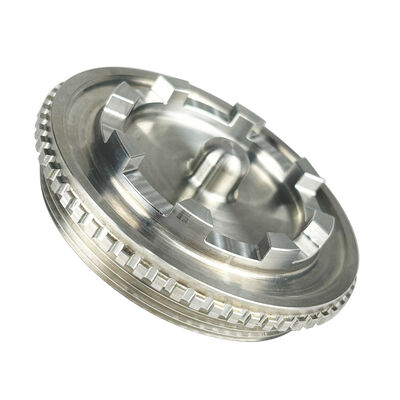
Surface finishing not only improves the appearance of CNC machined parts but also enhances their functional properties such as corrosion resistance, wear resistance, and fatigue strength.
Common Surface Finishes
| Finish Type | Ra (μm) | Applications | Cost |
|---|---|---|---|
| As-machined | 1.6-6.3 | Internal components, non-critical surfaces | No extra cost |
| Bead Blasting | 0.8-3.2 | Aesthetic finishes, deburring | Low cost |
| Anodizing | 0.4-1.6 | Aluminum parts, corrosion resistance | Medium cost |
| Electroplating | 0.2-0.8 | Corrosion protection, conductivity | Medium cost |
| Polishing | 0.025-0.4 | Aesthetic parts, food contact | High cost |
Surface Finish Selection Guide
- Functional Requirements: Consider wear resistance, corrosion resistance, and friction needs
- Aesthetic Requirements: Surface roughness affects appearance and light reflection
- Environmental Conditions: Exposure to chemicals, moisture, or extreme temperatures
- Cost Considerations: Finer finishes require more processing time and cost
- Material Compatibility: Some finishes work better with specific materials
Quality Standards
We follow international standards for surface finishing including ISO 8785, ASME B46.1, and DIN 4768 to ensure consistent quality across all our products.
CNC Machining Cost Factors
Understanding the factors that influence CNC machining costs helps you optimize your design for better value without compromising quality. At Goldcattle, we provide transparent pricing with detailed breakdowns.
Key Cost Drivers
1. Material Cost (20-40% of total cost)
Material costs vary significantly between different types. Titanium costs approximately 5-10 times more than aluminum, while stainless steel costs 2-3 times more than aluminum.
2. Machining Time (30-50% of total cost)
Machining time depends on part complexity, size, and required tolerance. Complex geometries with tight tolerances require more machining time.
3. Setup Time (10-20% of total cost)
Setup time includes preparing the machine, installing tools, and programming. This cost is spread across the production quantity.
4. Surface Treatment (5-20% of total cost)
Surface treatments add cost based on the type and complexity. Anodizing costs $0.50-$2.00 per square foot, while plating costs $1.00-$3.00 per square foot.
5. Quantity Discounts
Larger production runs benefit from quantity discounts. Typical discounts are 10-30% for quantities over 100 pieces, and 20-50% for quantities over 1000 pieces.
Cost Optimization Tips
- Design for Manufacturability: Avoid unnecessary complexity and tight tolerances
- Choose Cost-Effective Materials: Use aluminum instead of titanium when possible
- Optimize Batch Size: Consider minimum order quantities and quantity discounts
- Standardize Components: Reduce setup costs by standardizing designs
- Work with Our Engineers: Our DFM (Design for Manufacturing) team can help optimize your design for cost and quality
Cost Estimate Example (For reference only)
For a typical aluminum part (50mm x 50mm x 20mm) with standard tolerance and as-machined finish:
- 1-10 pieces: $25-$45 each
- 10-50 pieces: $15-$25 each
- 50-100 pieces: $10-$15 each
- 100+ pieces: $8-$12 each
How to Order Custom CNC Parts
Our streamlined ordering process ensures you get high-quality custom CNC parts quickly and efficiently. We work closely with you at every step to ensure your exact requirements are met.
Step-by-Step Order Process
Submit Your Design
Upload your CAD file (STEP, IGES, STL, or DWG format) along with your requirements for material, tolerance, and surface finish.
DFM Analysis
Our engineering team will review your design and provide a Design for Manufacturing (DFM) report with cost optimization suggestions.
Quote Approval
We’ll provide a detailed quote with pricing, lead time, and delivery options. You can approve the quote online or request modifications.
Production & Inspection
We’ll manufacture your parts using state-of-the-art CNC machines and perform rigorous quality inspections at every stage.
Delivery
Your finished parts will be carefully packaged and shipped to your location with tracking information provided.
What You Need to Provide
- CAD File: STEP, IGES, STL, or DWG format preferred
- Material Specification: Material type and grade
- Tolerance Requirements: Specific tolerances for critical dimensions
- Surface Finish Requirements: Type of finish and roughness specification
- Quantity: Number of parts needed
- Application Information: How the part will be used helps us optimize the design
Lead Time
Standard lead times are 3-7 days for prototypes and 10-15 days for production runs. Rush delivery options are available for urgent orders.
Ready to Start Your CNC Machining Project?
Our team of experienced engineers is ready to help you create high-quality custom CNC parts