Short Answer: Yes, injection molding can produce fumes, but these emissions are fully controllable in professional, ISO-certified manufacturing settings.
For procurement managers, this is not a reason to avoid injection molding – the world’s most cost-effective and precise manufacturing method for plastic parts. The real question is: how to choose a supplier that eliminates fume-related compliance risks, protects worker safety, and ensures your parts meet global regulatory standards without increasing costs or lead times.
I. The Science Behind Injection Molding Fumes: Why They Occur
Injection molding works by heating thermoplastic resins to a molten state, injecting them into precision molds, and cooling them into final parts. Fumes are generated when resin or additive materials exceed their thermal decomposition temperature – not their standard melting point.
Every plastic has a specific processing window: the temperature range where it melts smoothly without breaking down. When temperatures go above this window, polymer chains break apart, releasing volatile organic compounds (VOCs) and fine particulate matter.
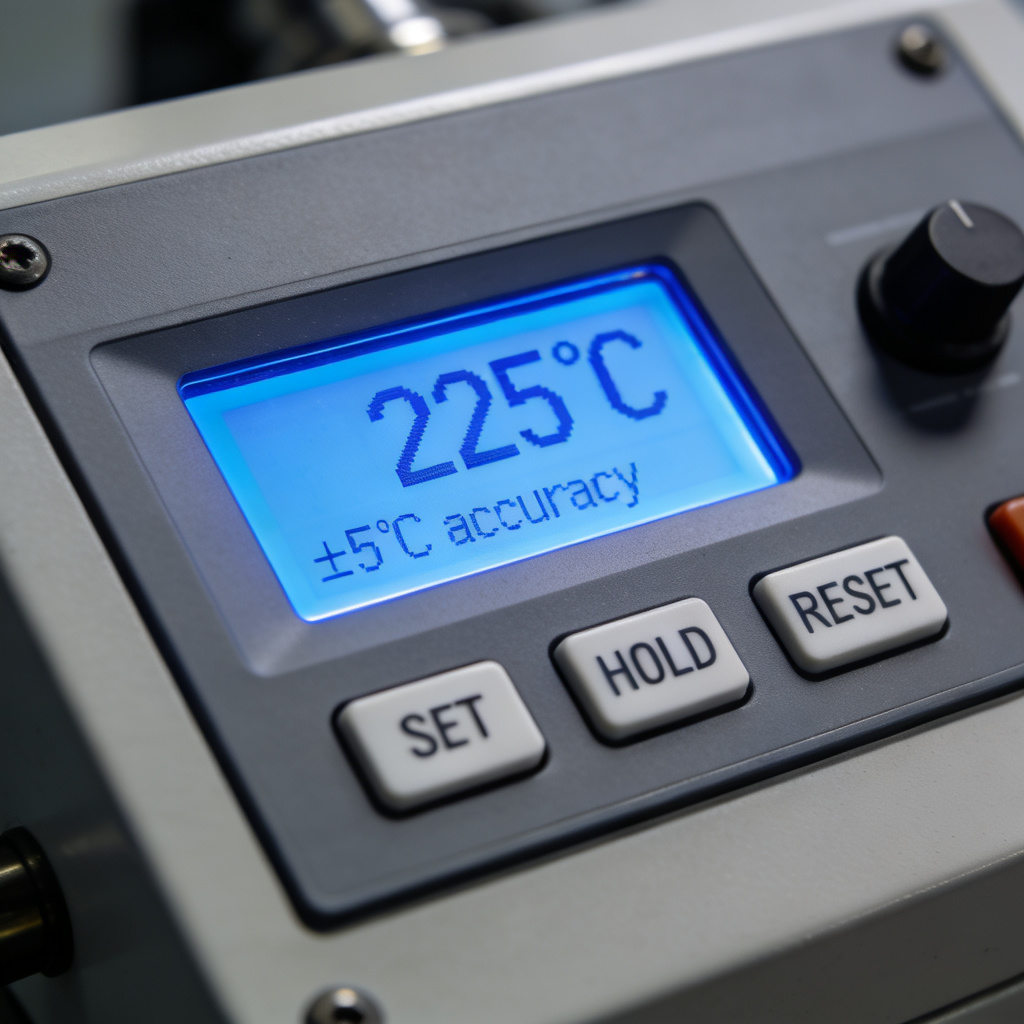
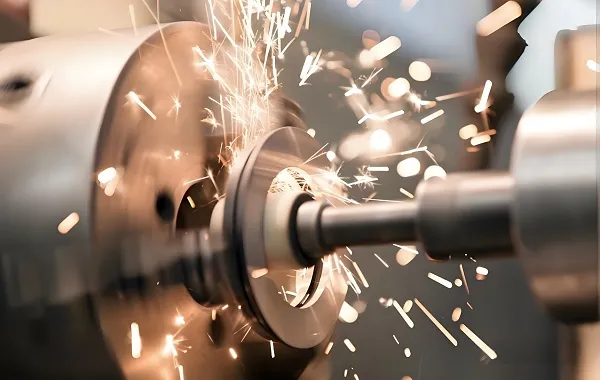
Precision PID temperature control ensures we stay within the safe processing window for every resin
| Resin Type | Standard Melting Point | Decomposition Temperature | Typical Fume Risk Level |
|---|---|---|---|
| PP (Polypropylene) | 160-170°C | 300°C+ | Low |
| PE (Polyethylene) | 120-180°C | 350°C+ | Low |
| ABS | 220-240°C | 260°C+ | Medium |
| PBT | 220-230°C | 280°C+ | Medium |
| PC (Polycarbonate) | 280-300°C | 320°C+ | High |
| PVC (with halogen flame retardants) | 160-180°C | 200°C+ | Very High (HCl emissions) |
Additives also play a critical role: plasticizers, flame retardants, colorants, and stabilizers can volatilize at lower temperatures than the base resin, contributing to fume generation even when the base resin stays within its safe range.
II. Fume Composition, Health Risks & Regulatory Limits
Injection molding fumes are a mix of volatile organic compounds (VOCs) and fine particulate matter (PM2.5). The exact composition depends on the resin and additives used, but common components include:
- Formaldehyde and acetaldehyde
- Benzene, toluene, and xylene (BTX)
- Styrene (from ABS and polystyrene)
- Carbon monoxide
- PM2.5-sized respirable particles
- Hydrogen chloride (from halogenated flame retardants)
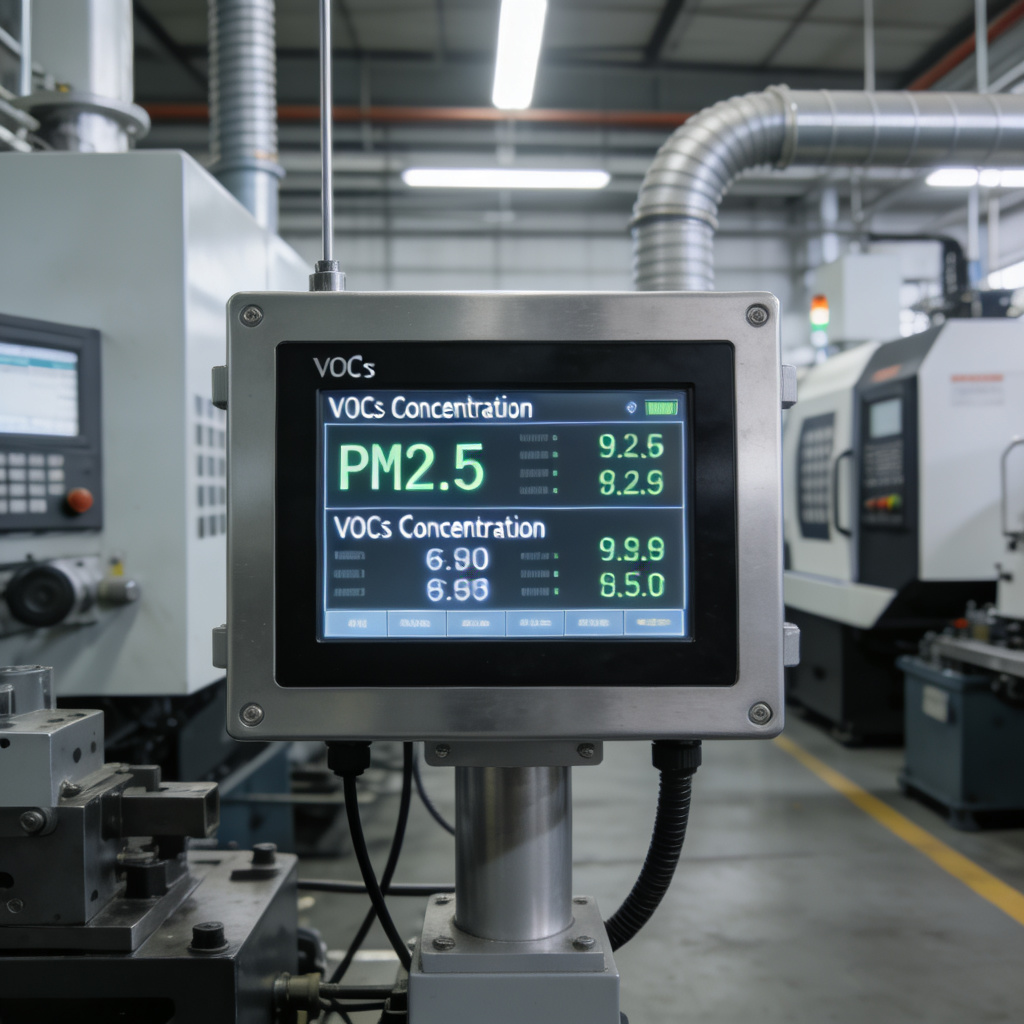
Real-time air quality monitoring ensures our workshop stays within OSHA and EPA safety limits
Critical Distinction: Worker Exposure vs. End-User Risk
A common misconception is that finished parts carry fume risk. This is completely untrue. Once parts cool to room temperature after molding, all volatile compounds have already evaporated during the heating and cooling process. The final solid plastic part is chemically stable and poses zero residual fume or emission risk to your end customers.
The only potential risk is short-term worker exposure in the manufacturing facility – a risk that is fully eliminated with proper ventilation and control systems.
Global Regulatory Standards We Follow
To ensure compliance, professional suppliers adhere to strict global standards for workplace air quality:
- OSHA PEL Limits: OSHA’s Permissible Exposure Limits set maximum 8-hour time-weighted average concentrations for harmful compounds (e.g., 100ppm for styrene, 0.75ppm for formaldehyde)
- EPA 40 CFR Part 463: EPA’s standards for plastic processing emissions, limiting VOC and particulate releases to the environment
- ISO 14001: Environmental management system standards that require continuous monitoring and reduction of industrial emissions
- REACH & RoHS: EU regulations that restrict harmful substances in both manufacturing processes and final products
III. Key Factors That Worsen Fume Emissions (And What to Ask Suppliers)
Not all injection molding shops control fumes the same way. Low-cost suppliers often cut corners on emission control, leading to higher risks, compliance issues, and even part quality defects. These are the top factors that increase fume emissions:
- Overheating: Old machines with poor temperature control often run hotter than needed to compensate for slow injection speeds
- Low-quality recycled materials: Unprocessed recycled resin has degraded polymer chains that decompose at lower temperatures
- Aging equipment: Worn-out heating elements cause uneven temperature distribution, leading to local overheating
- Halogenated flame retardants: These additives release corrosive and toxic fumes when heated, requiring specialized handling
- Open processing: Uncovered hoppers and lack of ventilation allow fumes to spread into the workshop
8 Critical Questions to Ask Your Injection Molding Supplier
As a procurement manager, these questions will help you verify that your supplier has proper fume control systems in place to avoid compliance risks:
- What is the temperature control accuracy of your injection molding machines?
- Do you use local exhaust ventilation (LEV) systems at every molding station?
- How do you trace and verify the quality of your raw materials?
- How often do you conduct air quality testing in your workshop?
- Do you have ISO 14001 certification for environmental management?
- What filtration systems do you use for fume extraction (HEPA + activated carbon)?
- Can you provide documentation of compliance with OSHA/EPA emission limits?
- How do you handle high-fume resins like PC or flame-retardant materials?
IV. Industry Best Practices & Goldcattle’s Proven Fume Control Solutions
At Goldcattle, we have spent 15 years refining our fume control systems to ensure zero compliance issues for our clients, while also improving part quality and reducing production costs. Our approach combines engineering controls, process optimization, and strict compliance monitoring.
1. Engineering Controls: Capture Fumes at the Source
We prioritize source control over general ventilation, which is far more effective:
- Local Exhaust Ventilation (LEV): Every molding machine is equipped with a custom hood that captures 99.7% of fumes directly at the nozzle and mold area, before they can spread into the workshop
- HEPA + Activated Carbon Filtration: All extracted air passes through a two-stage filtration system: HEPA filters remove 99.97% of PM2.5 particles, while activated carbon adsorbs VOCs before clean air is released back into the facility
- Closed Hopper Systems: Our material hoppers are fully sealed to prevent dust and volatile emissions from drying and pre-processing materials
2. Process Optimization: Prevent Fumes Before They Form
The best way to control fumes is to prevent them from being generated in the first place:
- Precision PID Temperature Control: Our modern injection molding machines have closed-loop PID control with ±1°C accuracy across 5 heating zones, ensuring we never exceed the resin’s decomposition temperature
- Virgin Material Supply Chain: We work directly with top resin manufacturers to source 100% virgin materials (or certified clean recycled materials) with consistent quality, avoiding degraded materials that cause excess emissions
- Real-Time Air Quality Monitoring: We have permanent air quality sensors throughout our workshop that monitor VOC and PM2.5 levels 24/7, with automatic alerts if any readings go outside safe limits
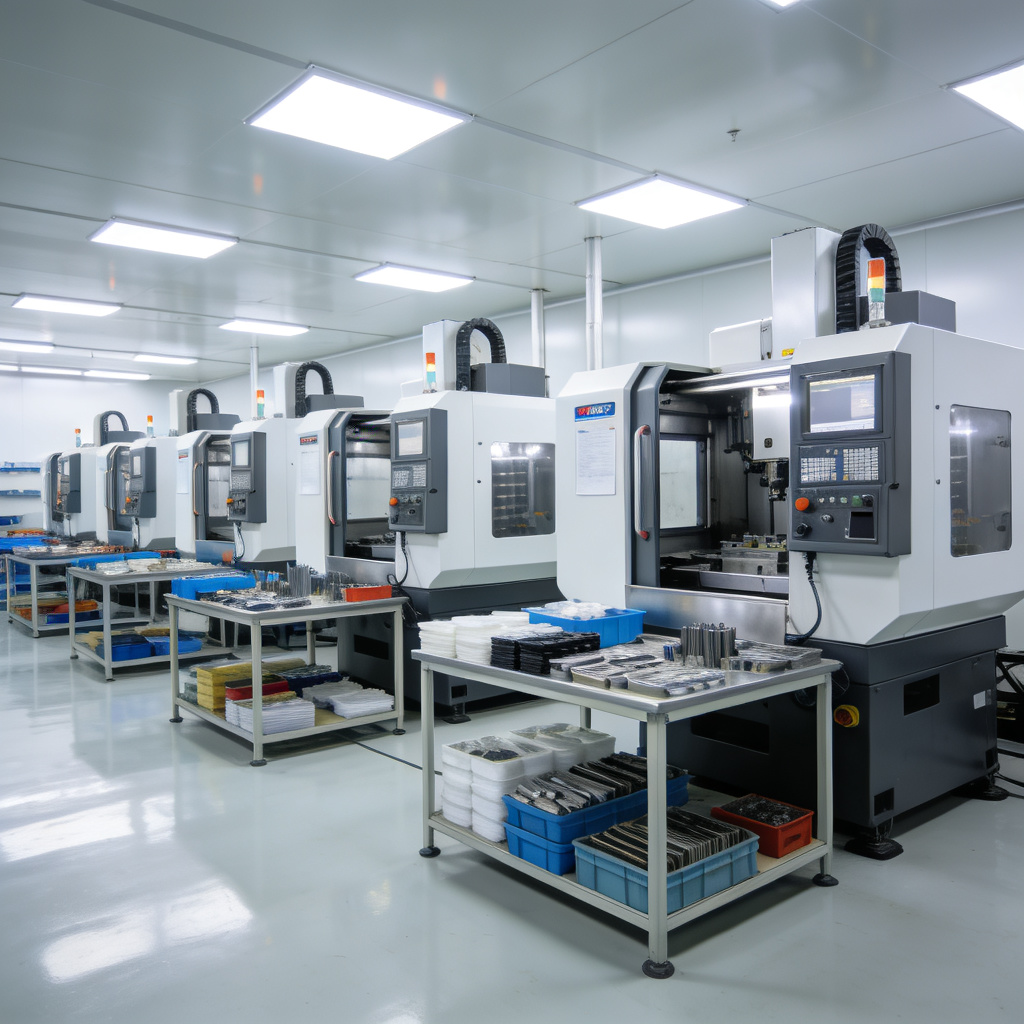
Our ISO 14001 certified clean workshop ensures consistent safety and compliance for all clients
3. Compliance & Case Study: EU Automotive Client Success
In 2024, we worked with a leading European automotive client to produce 500,000 ABS sensor housings. The client required strict compliance with EU REACH and EPA emission standards.
Our fume control systems allowed us to achieve:
- Fume emissions 20% below the EPA 40 CFR Part 463 limits
- Zero worker exposure incidents over the 6-month production run
- 100% compliance with REACH and RoHS requirements
- 0.2% defect rate (far below the industry average of 1.5%), thanks to precise temperature control that eliminated burnt parts
V. Practical Procurement Guide: Mitigate Risks & Reduce Costs
For procurement teams, managing fume and compliance risks doesn’t have to be complicated. Below is our practical guide to help you evaluate suppliers, choose the right materials, and understand the cost benefits of professional fume control.
Material Fume Risk Comparison & Goldcattle Recommendations
| Material | Fume Risk | Common Use Cases | Goldcattle Control Measures |
|---|---|---|---|
| PP/PE | Low | Packaging, consumer goods | Standard ventilation, standard temperature control |
| ABS/PBT | Medium | Automotive parts, electronics housings | LEV extraction, precision temperature zoning |
| PC/PMMA | High | Optical parts, medical devices | Enhanced filtration, closed-loop processing, real-time monitoring |
| Flame-Retardant Resins | Very High | Electrical components, aerospace parts | Dedicated production cells, specialized acid-gas filtration, certified material sourcing |
RFQ Evaluation Checklist: Verify Supplier Fume Control
Use this checklist in your request for quotation to ensure your supplier can meet your compliance requirements:
- Supplier provides ISO 14001 certification
- All machines have local exhaust ventilation systems
- Temperature control accuracy of ±2°C or better
- Regular air quality testing reports (last 12 months)
- Documented material traceability system
- Experience with your target material’s specific processing requirements
- Ability to provide compliance documentation for your target market (US/EU/Asia)
- No history of environmental or safety violations
Cost Analysis: Fume Control Pays for Itself
Many procurement managers worry that professional fume control will increase their part costs. In reality, the opposite is true:
- Reduced Defect Rate: Precise temperature control eliminates burnt, discolored, or degraded parts, reducing scrap rate from an average of 2% to 0.2%
- Faster Cycle Times: Proper ventilation removes heat from the work area faster, reducing cooling time by up to 8%
- No Compliance Fines: Avoiding OSHA or EPA fines (which can reach $15,000 per violation) protects your bottom line
On average, our clients find that the investment in fume control systems is fully recovered within 3 months through improved yield and efficiency.
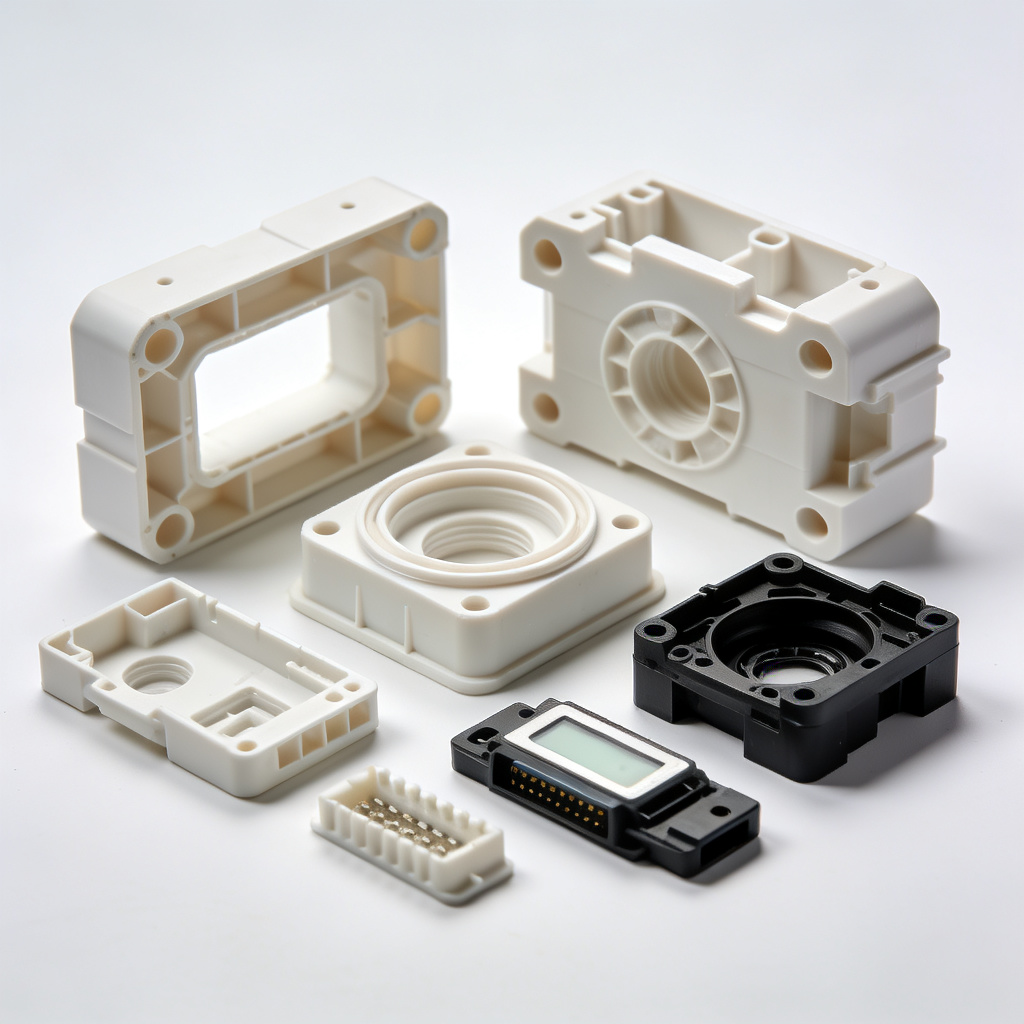
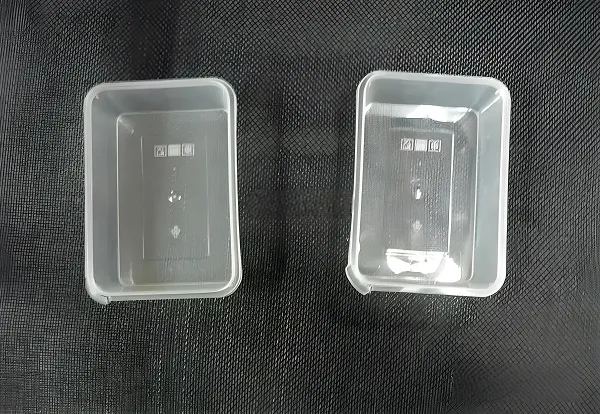
High-precision custom injection molded parts produced with our safe, compliant manufacturing process
Frequently Asked Questions
Q: Do finished injection molded parts release fumes after production?
A: No. Once parts cool to room temperature, all volatile compounds have already evaporated during the heating and cooling process. The final solid plastic part is completely stable and safe for end-users, with no residual emissions.
Q: Can recycled materials increase fume emissions?
A: Low-quality, unprocessed recycled materials can increase emissions, as degraded polymer chains decompose at lower temperatures. However, certified clean, sorted recycled materials that are properly processed can be used safely with minimal emission impact, when paired with proper control systems.
Q: Is injection molding fume risk higher than other manufacturing methods?
A: No. Compared to extrusion, thermoforming, or 3D printing, injection molding has significantly lower emissions. The closed mold system and fast cooling cycle minimize the time materials are exposed to high temperatures, reducing volatile release.
Q: Do you handle medical-grade materials with strict emission requirements?
A: Yes. We have a dedicated cleanroom production cell for medical and pharmaceutical components, with enhanced fume control and air filtration systems that meet FDA and ISO 13485 requirements.
Get a Free Fume Control & Material Audit Quote
Ready to ensure your injection molding project is fully compliant, safe, and cost-effective? Our technical team can provide a free customized audit of your material and emission requirements.
Choosing the right injection molding supplier eliminates fume and compliance risks, while delivering high-quality parts on time and on budget.