The Evolution of CNC Wood Turning
Modern CNC wood turning technology has transformed traditional woodworking into a precise industrial process. By combining computer-controlled automation with advanced cutting tools, manufacturers can produce complex wood components with micron-level accuracy and consistent quality.
This technology enables production of everything from simple spindles to intricate decorative elements, all while maintaining tight tolerances and meeting strict industry standards.
CNC Wood Turning Process Overview
Precision Machining Process
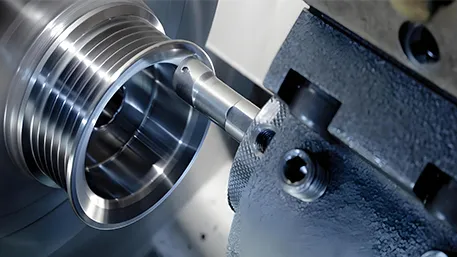
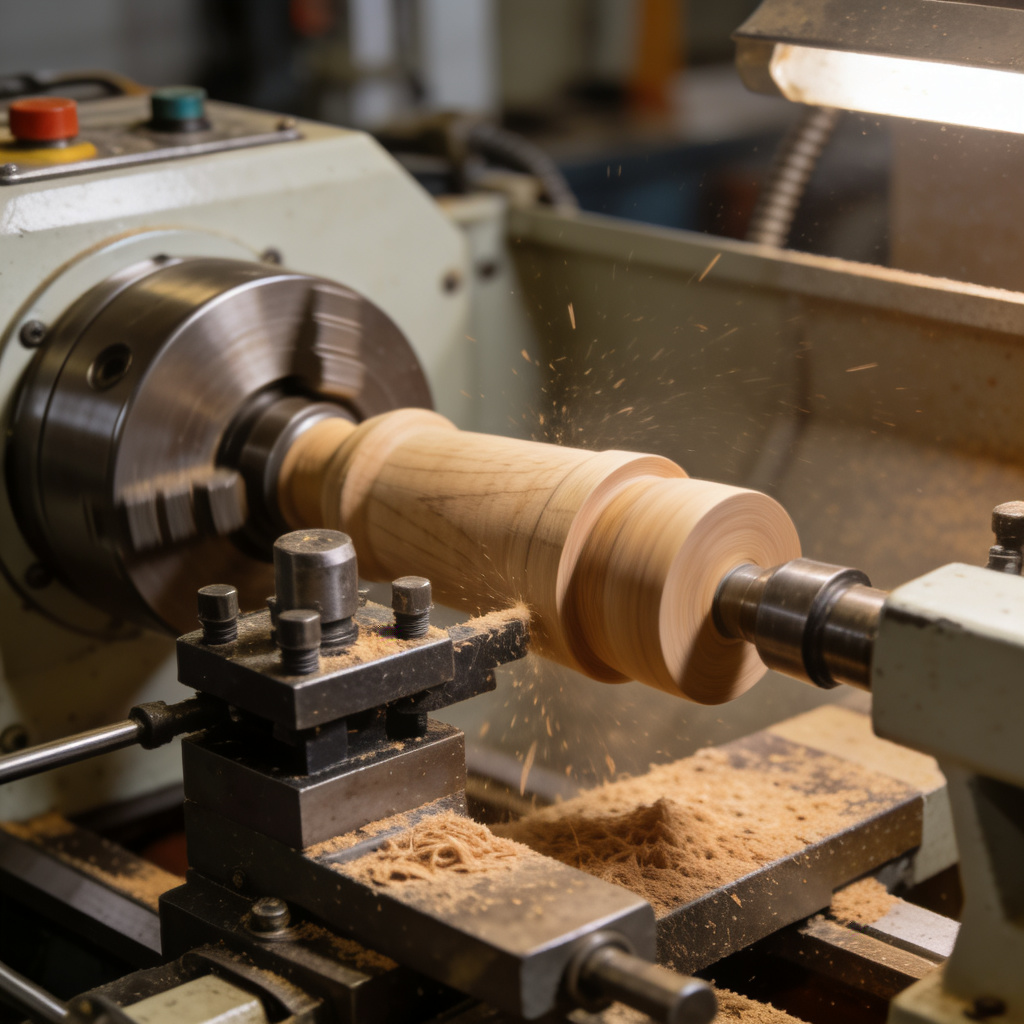
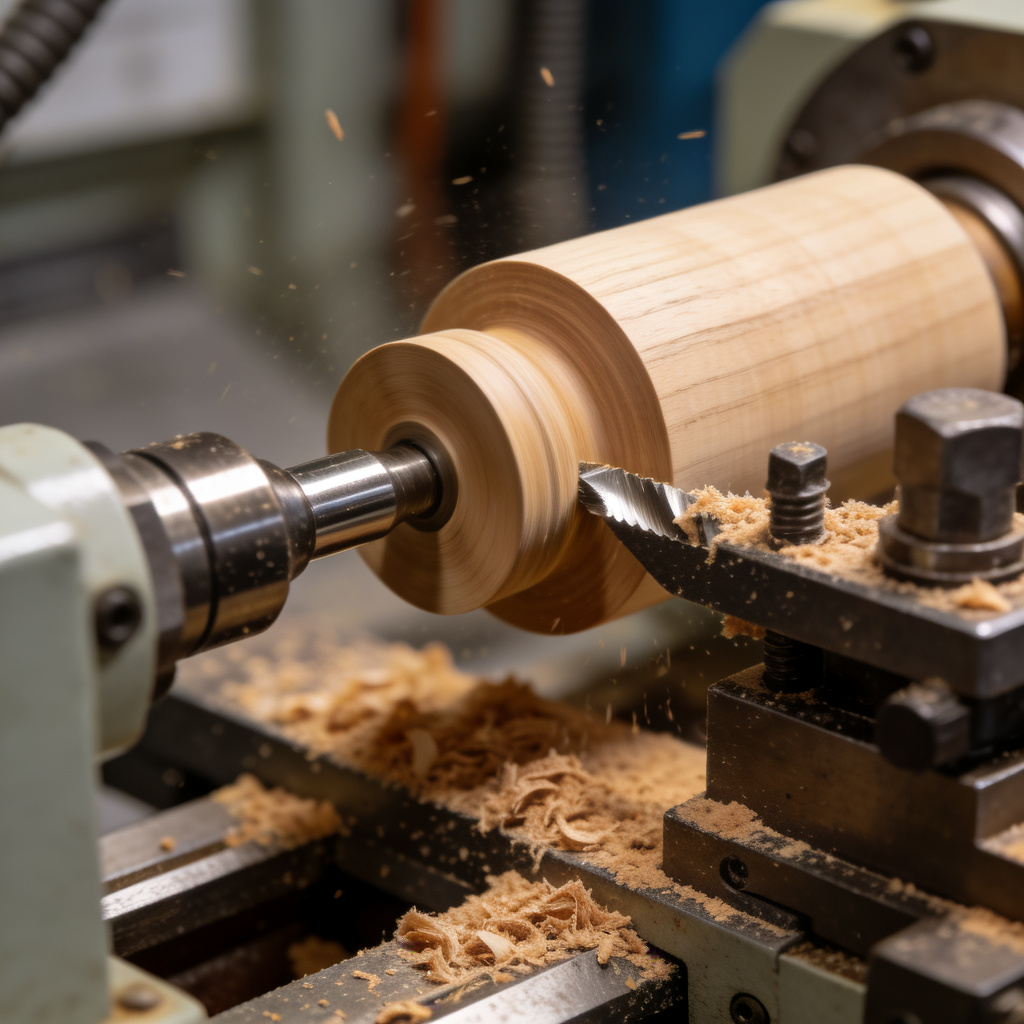
The CNC wood turning process begins with CAD design creation, followed by CAM programming to generate tool paths. The wood workpiece is secured in the lathe, and the CNC system controls the cutting tools to shape the material according to precise specifications.
Advanced systems can perform multiple operations in a single setup, including turning, facing, drilling, milling, and texturing, significantly reducing production time and improving accuracy.
CAD Design & Programming
3D modeling and tool path generation using specialized CAM software
Material Preparation
Wood selection, moisture content control, and workpiece preparation
CNC Machining
Automated turning, milling, and finishing operations
Quality Inspection
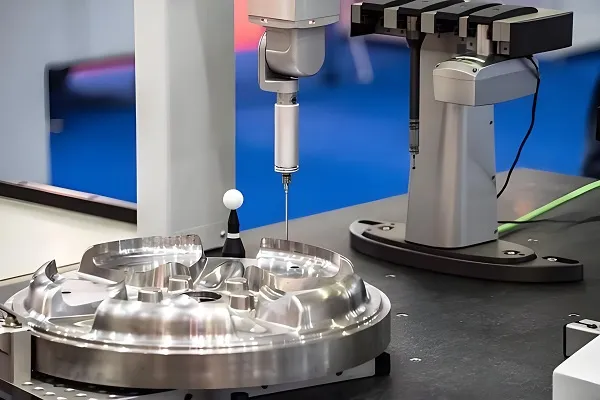
Dimensional verification and surface quality assessment
Materials & Specifications
Wood Material Selection
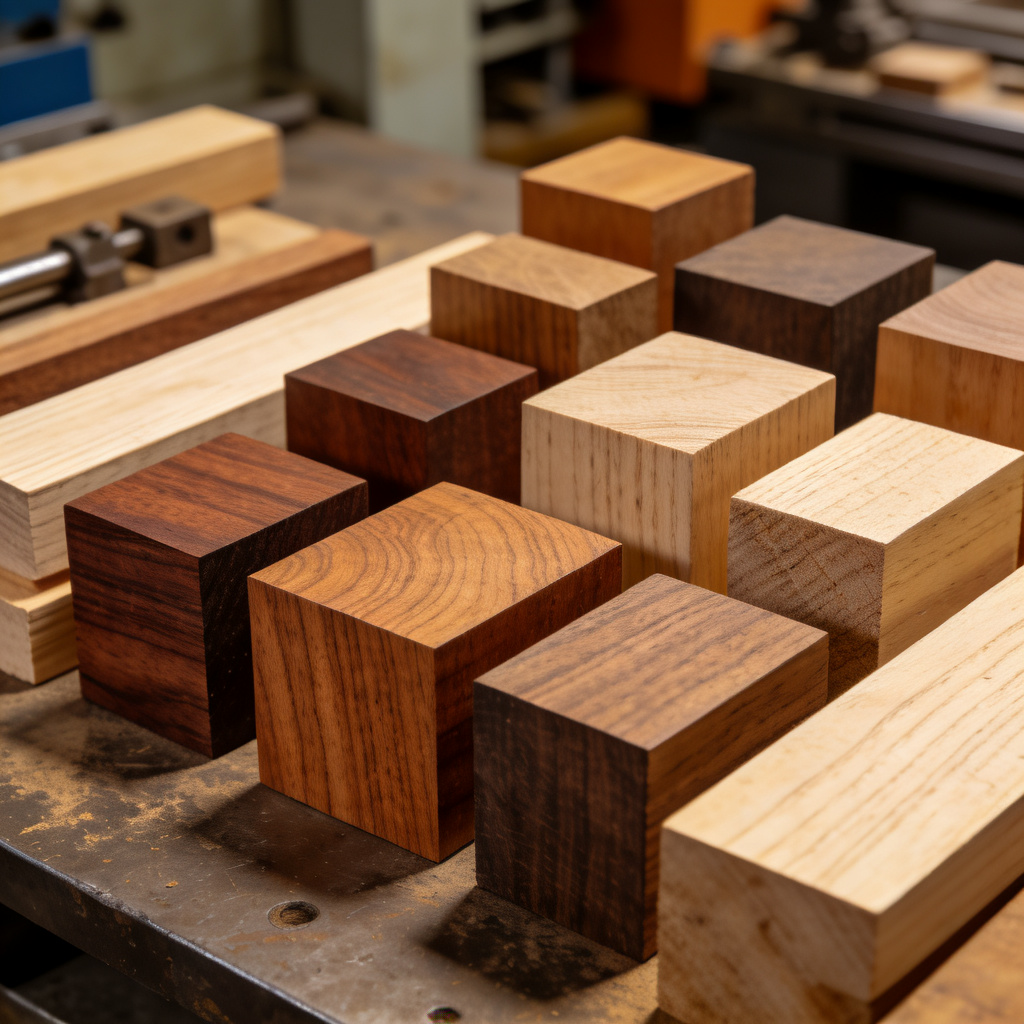
Different wood types require specific machining parameters to achieve optimal results. The selection depends on application requirements, durability needs, and aesthetic considerations.
Hardwoods
- Maple (Janka hardness: 1,450) – Ideal for high-wear applications
- Walnut (Janka hardness: 1,010) – Excellent for decorative components
- Oak (Janka hardness: 1,360) – Provides good strength and durability
- Teak (Janka hardness: 1,155) – Natural weather resistance
Softwoods & Engineered Materials
- Pine – Cost-effective option for less demanding applications
- MDF – Consistent density for complex shapes
- Plywood – Good strength-to-weight ratio
- Bamboo – Sustainable alternative with good hardness
Technical Specifications & Machining Parameters
| Material Type | Spindle Speed (RPM) | Feed Rate (mm/rev) | Cutting Depth (mm) |
|---|---|---|---|
| Softwoods (Pine, Cedar) | 2000 – 3500 | 0.15 – 0.3 | 1 – 3 |
| Hardwoods (Maple, Walnut) | 800 – 1800 | 0.05 – 0.15 | 0.5 – 2 |
| Engineered Materials | 800 – 2000 | 0.1 – 0.25 | 0.5 – 2 |
| Decorative Woods (Bamboo) | 1000 – 2500 | 0.08 – 0.2 | 0.3 – 1.5 |
Critical Quality Parameters
- Moisture content controlled at 6-8% for dimensional stability (per ASTM D4442 standards)
- Positioning accuracy: ±0.005mm, repeatability: ±0.002mm
- Surface roughness: Ra < 1.6 μm achievable with precision finishing
- Tolerance control: ±0.01-0.05mm for critical dimensions
Industry Standards & Compliance
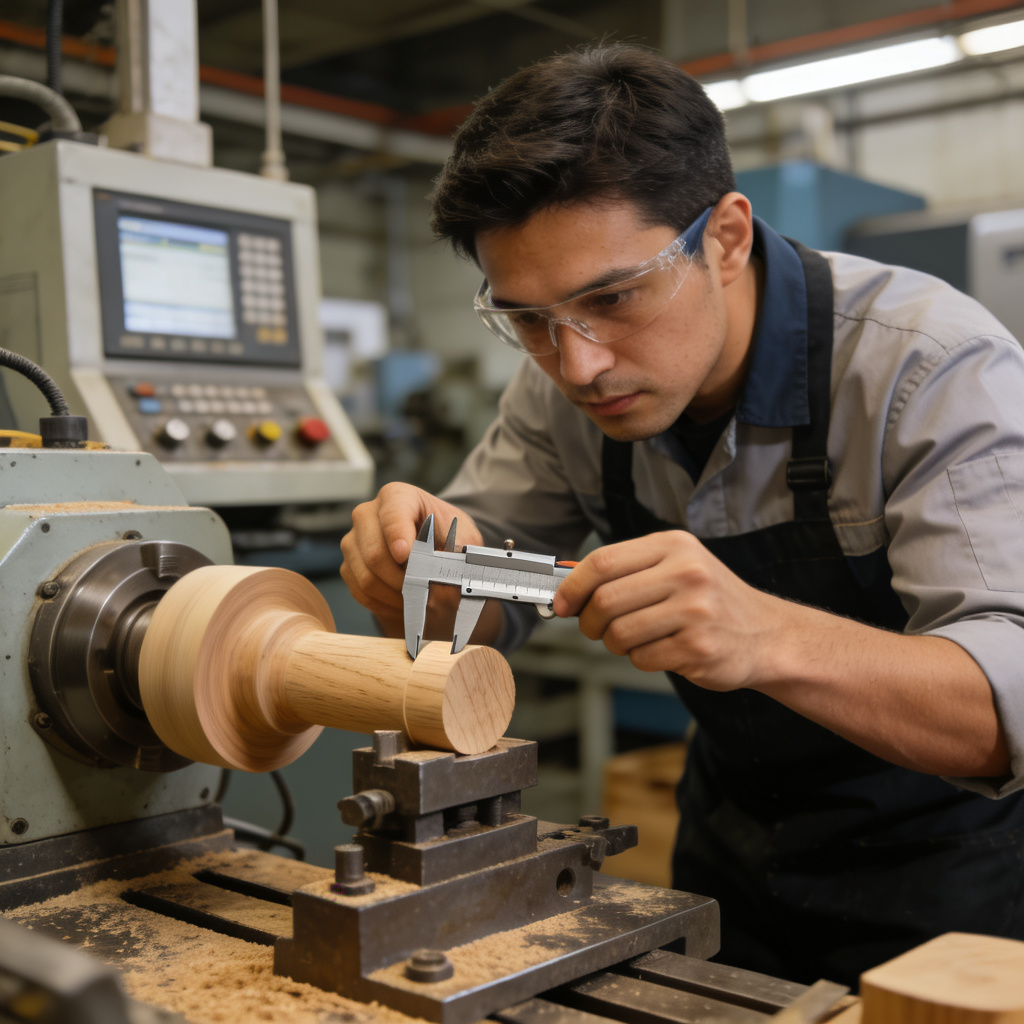
Adherence to International Standards
All CNC wood turning processes follow strict industry standards to ensure consistent quality and performance. Compliance with these standards guarantees that products meet or exceed customer expectations.
Key Standards Followed
- ASTM D1666-17: Standard Test Methods for Conducting Machining Tests of Wood and Wood-Base Panel Materials
- ASTM D4442: Standard Test Methods for Direct Moisture Content Measurement of Wood and Wood-Base Materials
- ISO 9001:2015: Quality management systems requirements
- ANSI/ASME B5.54: Standard for CNC turning machines
Quality Certification
Manufacturing facilities are ISO 9001:2015 certified, with regular audits to maintain quality standards. All products undergo comprehensive inspection before shipment.
Test Data & Performance Results
Machining Performance Test Results (For Reference Only)
Surface Finish Testing
- Average surface roughness: Ra 0.8-1.2 μm
- Best achievable finish: Ra 0.4 μm with diamond tools
- Tool life: 8-12 hours for carbide tools (hardwoods)
- Tool wear rate: 0.02mm per 100 pieces (maple)
Dimensional Accuracy Testing
- Overall dimensional accuracy: ±0.02mm
- Roundness error: ≤0.01mm
- Straightness deviation: ≤0.005mm per 100mm length
- Concentricity: ≤0.015mm for rotating parts
Material Performance Testing
- Moisture content stability: ±0.5% over 12 months
- Warpage rate: <0.1% for properly seasoned wood
- Compression strength: 45-65 MPa (hardwoods)
- Modulus of elasticity: 10-15 GPa
Industrial Applications & Products
Diverse Industry Applications
CNC wood turning components serve a wide range of industrial and commercial applications, combining natural beauty with engineered precision.
Key Application Areas
- **Furniture Manufacturing**: Table legs, chair spindles, decorative trim components
- **Architectural Elements**: Staircase balusters, handrails, door handles
- **Musical Instruments**: Guitar necks, woodwind instrument keys, violin pegs
- **Industrial Components**: Wear-resistant bearing sleeves, precision tool handles
- **Aerospace**: Lightweight structural components for interior applications
- **Medical Equipment**: Wooden handles for surgical tools and examination devices
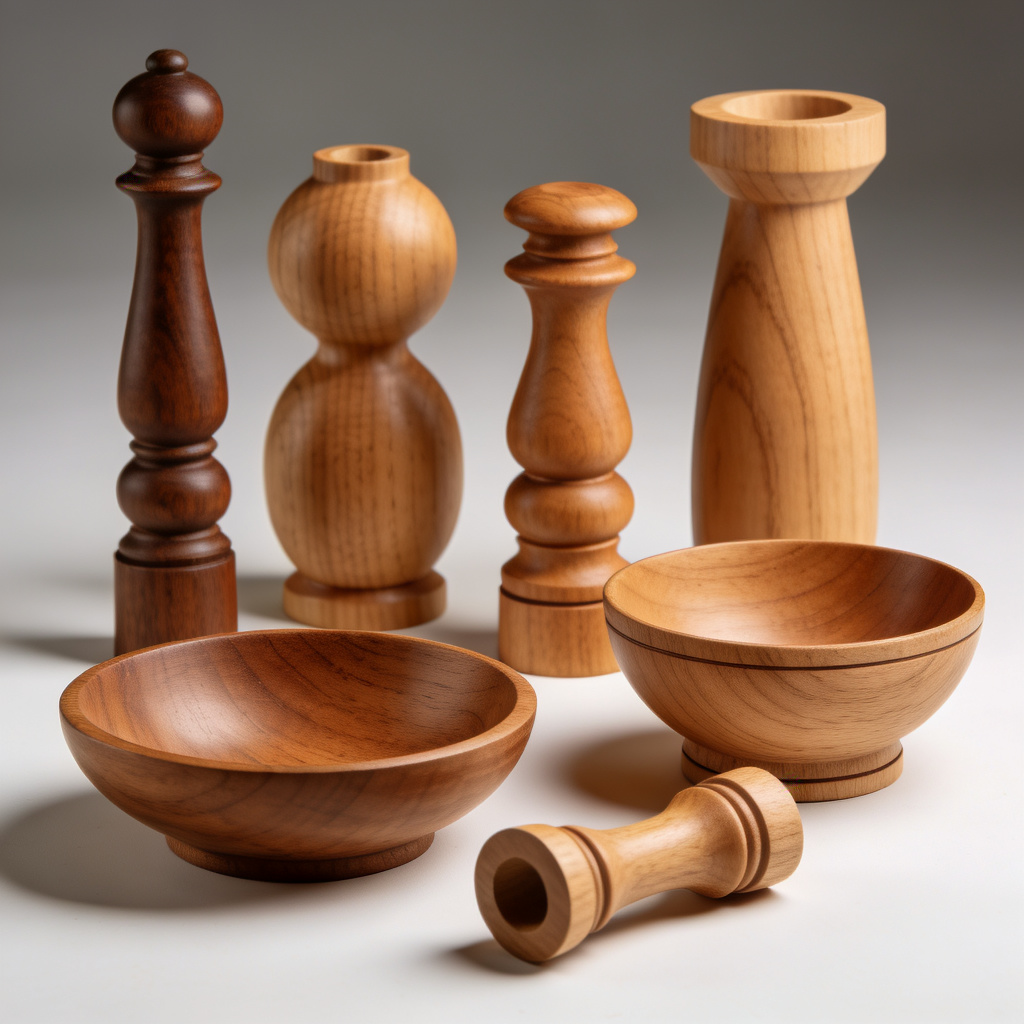
Technology Advantages
Precision & Consistency
Micron-level accuracy ensures every part meets exact specifications, with consistent quality across production runs
Efficiency & Speed
Automated processes reduce production time by 40-60% compared to traditional woodworking methods
Design Flexibility
Complex geometries and intricate details that are impossible with manual turning can be achieved with CNC technology
Material Optimization
Minimal material waste through precise cutting paths and optimized tool strategies
Advanced Manufacturing Equipment
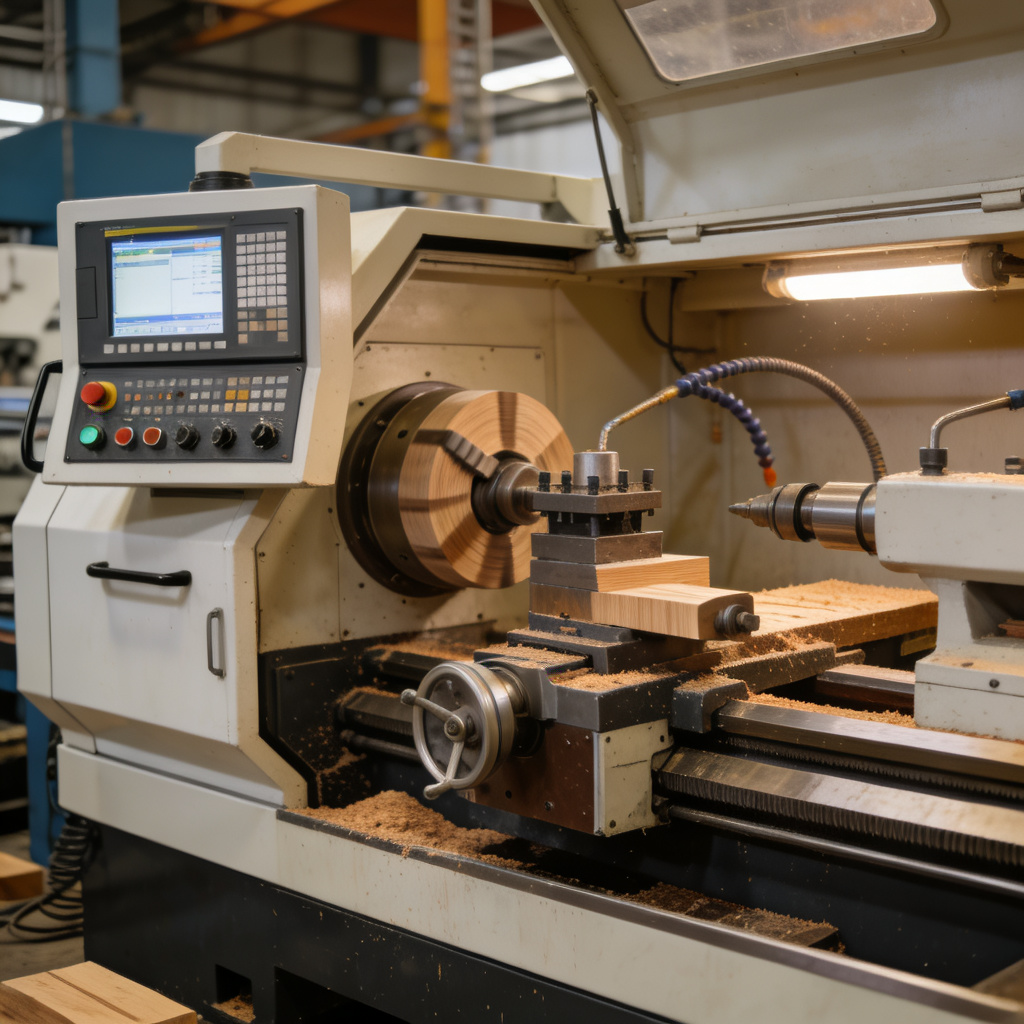
State-of-the-Art Machinery
Manufacturing facilities feature the latest CNC wood turning technology, including multi-axis turning centers with live tooling capabilities.
Key Equipment Features
- 5-axis CNC turning centers with Y-axis and C-axis capabilities
- High-speed spindles up to 8000 RPM
- Automatic tool changers with 20+ tool positions
- Advanced vibration control systems for precision machining
- Real-time monitoring and feedback systems
- Automated loading/unloading for continuous production
Quality Control & Assurance
In-Process Inspection
- Continuous dimensional monitoring during machining
- Tool wear detection and automatic compensation
- Real-time surface quality assessment
- Material moisture content verification
Final Inspection
- Comprehensive dimensional verification
- Surface finish measurement using profilometers
- Visual inspection for defects and quality
- Packaging and shipping quality control
Documentation & Traceability
- Complete production records for every part
- Material lot tracking and certification
- Test data and inspection reports
- Compliance documentation for regulatory requirements
Ready to Start Your Project?
Our team of CNC wood turning experts is ready to help you with your custom component requirements. From initial design to final production, we provide comprehensive solutions tailored to your specific needs.
Phone:+86-18150097490 | Email:charlie@plasticmetalparts.com