Introduction: Your Precision Manufacturing Solutions Expert
When you’re looking for core components for aerospace, medical devices, or precision instruments, are you facing multiple challenges in material selection, precision control, and cost optimization? Stainless steel CNC turning parts, with their excellent corrosion resistance, high strength, and precision machining capabilities, have become the preferred solution for high-end manufacturing.
This article will serve as your ultimate technical guide, systematically explaining the complete process from material selection to final delivery, helping you make professional decisions when customizing stainless steel CNC turning parts to ensure you obtain high-quality, cost-effective precision components.
Chapter 1: Basic Understanding – Why Choose Stainless Steel CNC Turning?
1.1 Introduction to CNC Turning Technology
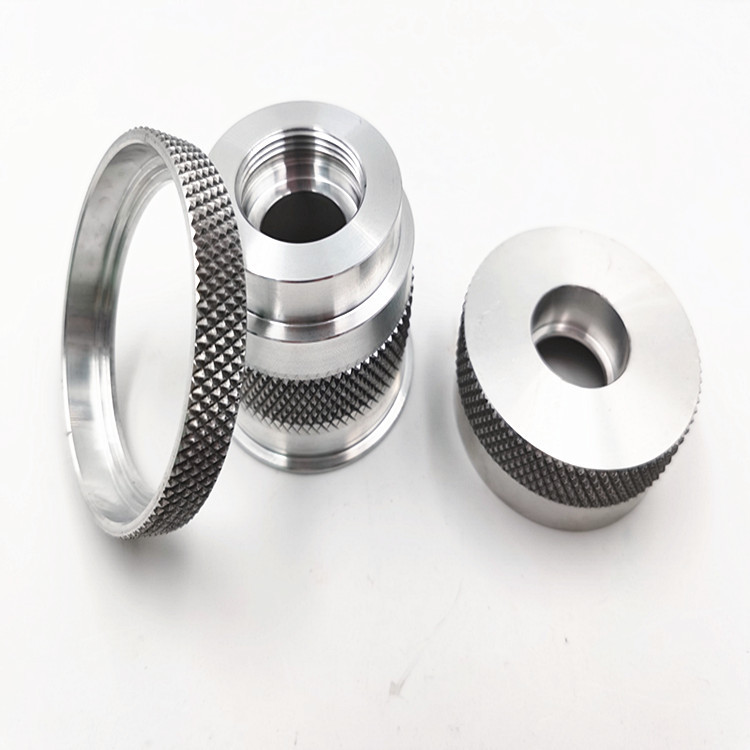
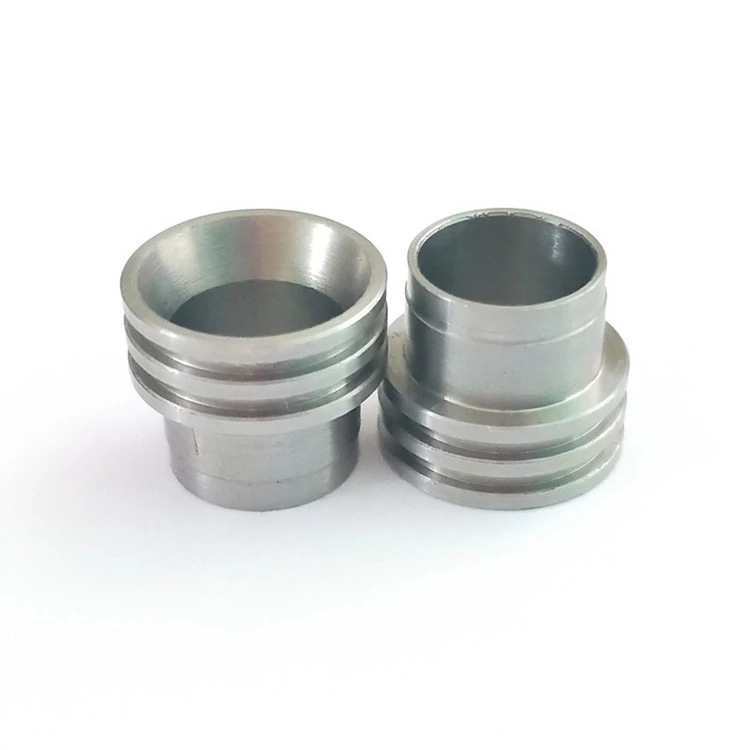
CNC turning is a subtractive manufacturing process that uses computer programs to control machine tools. While the workpiece rotates, fixed tools move along the workpiece axis to precisely remove excess material, ultimately forming the desired part shape. This machining method is particularly suitable for manufacturing rotationally symmetric parts such as shafts, sleeves, and threaded components.
1.2 Core Advantages of Stainless Steel Materials
Excellent Corrosion Resistance
Stainless steel contains at least 10.5% chromium, forming a dense chromium oxide passive film that effectively prevents corrosion medium erosion, making it particularly suitable for components in harsh environments.
High Strength and Excellent Mechanical Properties
Stainless steel has good tensile strength, yield strength, and toughness, capable of withstanding various mechanical loads under complex working conditions.
Hygienic and Non-toxic Properties
Stainless steel surfaces are smooth and easy to clean, do not release harmful substances, and fully comply with hygiene standards for food processing, medical devices, and other industries.
Aesthetic and Durable
Surface-treated stainless steel parts have a unique metallic luster, are not easily discolored, and balance functionality with aesthetics.
1.3 Synergistic Effect: The Perfect Combination of 1+1>2
The combination of CNC turning technology and stainless steel materials produces significant synergistic effects:
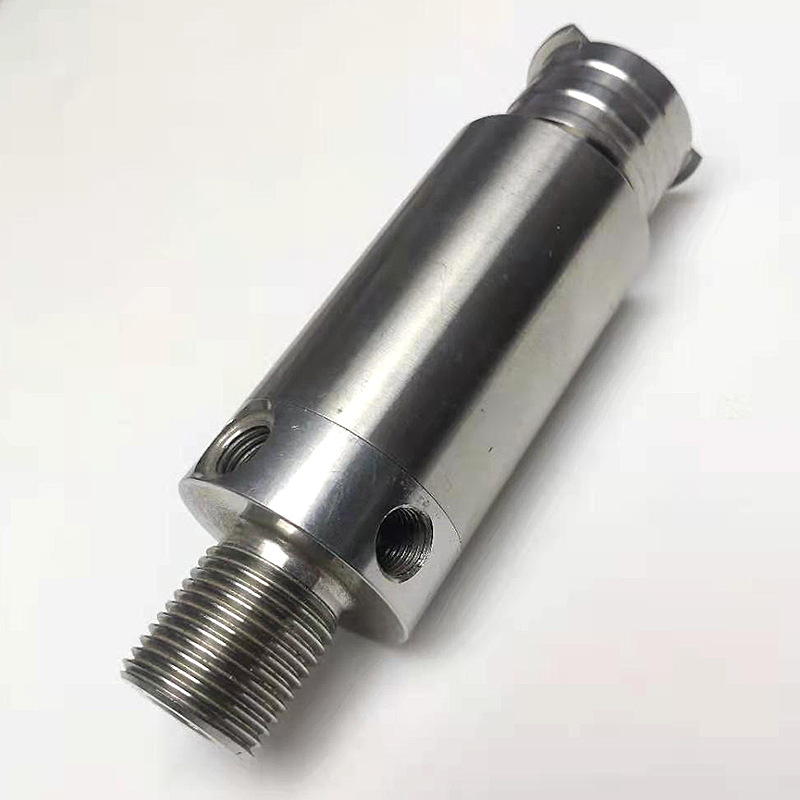
- High-precision machining capability: CNC turning can achieve ±0.01mm machining accuracy, fully utilizing the material potential of stainless steel
- Complex shape manufacturing: Capable of processing complex geometric shapes that are difficult to achieve with traditional processes
- Batch consistency: Ensuring complete consistency in dimensional accuracy and performance for each batch of parts
- Design freedom: Providing engineers with greater design space to realize innovative design concepts
Chapter 2: Technical Core – Key Decision Points in the Customization Process
2.1 Stainless Steel Material Selection Guide
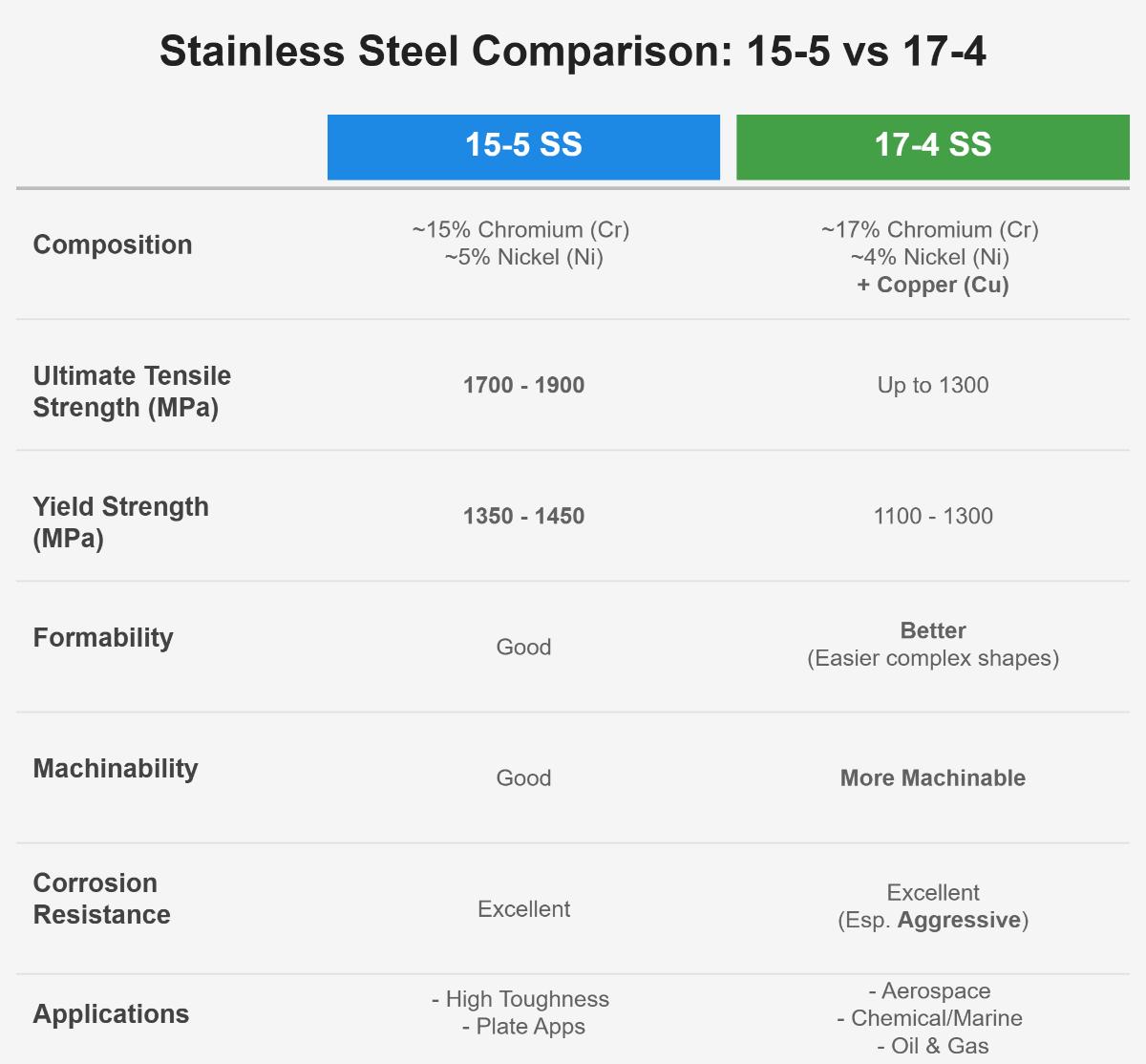
Choosing the right stainless steel grade is the first step to successful customization. Below is a comparison of the most commonly used stainless steel materials:
|
Grade
|
Main Composition
|
Corrosion Resistance
|
Machinability
|
Strength Level
|
Typical Applications
|
|
303
|
Cr17-19%, Ni8-10%, S≥0.15%
|
Good
|
Excellent
|
Medium
|
Precision gears, valve parts, shaft components
|
|
304
|
Cr18-20%, Ni8-10.5%
|
Excellent
|
Good
|
Medium
|
Food equipment, household appliances, architectural decoration
|
|
304L
|
Cr18-20%, Ni8-12%, C≤0.03%
|
Excellent
|
Good
|
Medium
|
Welded pipes, low-temperature vessels, petrochemical equipment
|
|
316
|
Cr16-18%, Ni10-14%, Mo2-3%
|
Excellent
|
Medium
|
Medium
|
Marine equipment, chemical vessels, medical equipment
|
|
316L
|
Cr16-18%, Ni10-14%, Mo2-3%, C≤0.03%
|
Excellent
|
Medium
|
Medium
|
Semiconductor chambers, medical implants
|
|
416
|
Cr12-14%, S0.15%
|
Fair
|
Excellent
|
High
|
Precision mechanical parts, valves, fasteners
|
|
17-4PH
|
Cr15-17.5%, Ni3-5%, Cu3-5%
|
Good
|
Medium
|
Very High
|
Aerospace components, high-strength structural parts
|
Material Selection Recommendations:
- Pursuing ultimate machining efficiency: Choose 303 stainless steel, where sulfur significantly improves cutting performance
- General corrosion resistance requirements: 304 stainless steel is the most cost-effective choice
- Marine or highly corrosive environments: 316/316L stainless steel with molybdenum provides excellent chloride corrosion resistance
- Needing heat treatment strengthening: 17-4PH can achieve high strength above 1300MPa through aging treatment
- Cost-sensitive with moderate corrosion resistance: 416 stainless steel is a good choice
2.2 Key Design and Process Parameters
Tolerance and Precision Control
The precision level of CNC turned stainless steel parts can typically reach IT7-IT8 grade, with specific precision indicators as follows:
- Dimensional tolerance: ±0.01mm
- Roundness: 0.005mm
- Cylindricity: 0.01mm/m
- Surface roughness: Ra0.8-3.2μm
Important Note: More stringent tolerance requirements will significantly increase machining costs and difficulty. It is recommended to choose reasonable tolerance levels while meeting usage requirements.
Surface Treatment Processes

|
Surface Treatment Process
|
Treatment Effect
|
Main Function
|
Applicable Scenarios
|
|
Passivation Treatment
|
Maintains original color, forms protective film
|
Improves corrosion resistance, extends service life
|
Medical devices, food equipment
|
|
Electroplating Treatment
|
Surface covered with metal layer (e.g., nickel, chromium)
|
Enhances aesthetics, improves wear resistance
|
Decorative parts, friction components
|
|
Sandblasting Treatment
|
Surface forms uniform matte effect
|
Eliminates machining marks, uniform appearance
|
Industrial components, structural parts
|
|
Brushing Treatment
|
Surface forms uniform linear texture
|
Aesthetic decoration, easy to clean
|
Panels, housings, handles
|
|
Mirror Polishing
|
Surface achieves mirror effect
|
Ultimate aesthetics, easy to clean
|
High-end decorative parts, optical components
|
Design Optimization Recommendations
Design Tip 1: Avoid Sharp Corners
- All external corners are recommended to be designed with R0.5-R1.0mm fillets
- Minimum internal corner radius not less than 0.2mm
Design Tip 2: Wall Thickness Design
- Minimum wall thickness not less than 0.8mm (diameter <20mm)
- Maximum wall thickness to minimum wall thickness ratio not exceeding 3:1
- Avoid sudden wall thickness changes, use gradual transitions
Design Tip 3: Thread Design
- Thread length not exceeding 1.5 times the thread diameter
- Design undercut at thread start and end
- 6g/6H thread tolerance fit is recommended
2.3 Machining Challenges and Solutions
Work Hardening Problem
Stainless steel is prone to work hardening during machining, making subsequent processing difficult. Solutions:
- Reasonable cutting parameters: Use lower feed rates and appropriate cutting speeds
- Sharp tools: Use dedicated stainless steel machining tools
- Adequate cooling: Adopt high-pressure coolant system to ensure adequate cooling of the cutting area
Chip Control
Stainless steel has high toughness and easily produces long, continuous chips, affecting machining quality and safety. Solutions:
- Chip breaker design: Select appropriate tool chip breakers
- Vibration cutting: Adopt micro-vibration cutting technology
- High-pressure flushing: Use high-pressure coolant for forced chip breaking
Chapter 3: Quality Control – How to Ensure Professional Reliability of Parts?
3.1 Testing Equipment and Methods
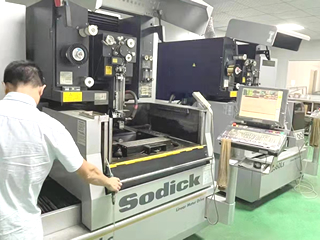
Dimensional Accuracy Testing
- Coordinate Measuring Machine (CMM): Tests 3D dimensional accuracy of complex parts
- Optical Projector: Tests 2D contour and shape accuracy
- Micrometers, calipers: Precise measurement of conventional dimensions
- Thread gauges, ring gauges: Thread size and accuracy testing
Surface Quality Testing
- Surface roughness tester: Measures surface roughness Ra value
- Metallographic microscope: Observes surface microstructure
- Visual inspection system: Automated appearance defect detection
Material Performance Testing
- Hardness tester: Tests material hardness (HV, HRC)
- Tensile testing machine: Tests material mechanical properties
- Spectrometer: Verifies material chemical composition
3.2 Quality Control Process
1. Incoming Quality Control (IQC)
- Material chemical composition verification
- Material mechanical property testing
- Material surface quality inspection
- Material dimensional tolerance confirmation
2. First Article Inspection (FAI)
- Complete dimensional inspection
- Geometric tolerance verification
- Surface roughness measurement
- Functional performance testing
- First article inspection report confirmation
3. In-Process Quality Control (IPQC)
- Regular sampling inspection system (1 piece sampled every 10-20 pieces)
- Real-time monitoring of key dimensions
- Machining parameter stability monitoring
- Timely handling of abnormal situations
4. Final Quality Control (FQC)
- Full-dimensional inspection
- Appearance quality inspection
- Surface treatment quality verification
- Final confirmation before packaging
3.3 Standards and Certifications
Quality Management System Certifications
- ISO 9001: Quality management system certification
- AS9100: Aerospace quality management system
- IATF 16949: Automotive industry quality management system
- ISO 13485: Medical device quality management system
Product Standard Compliance
- GB/T 1220: Stainless steel bar standard
- GB/T 1221: Heat-resistant steel bar standard
- ASTM A276: Stainless steel bar and shape standard
- DIN 17440: German stainless steel standard
Chapter 4: Cooperation Process – Clear Path from Inquiry to Delivery
4.1 Standard Cooperation Process
Step 1: Requirement Communication and Technical Evaluation
- Provide 2D/3D drawings or samples
- Clarify material requirements and quantity
- Determine precision level and surface treatment
- Evaluate technical feasibility and cost
Step 2: Quotation and Program Confirmation
- Technical team reviews drawings
- Provide detailed quotation
- Confirm delivery cycle and payment terms
- Sign technical agreement
Step 3: Sample Production and Confirmation
- Produce first article sample
- Conduct First Article Inspection (FAI)
- Customer confirms sample quality
- Determine final production plan
Step 4: Mass Production
- Raw material procurement and inspection
- Mass production and process monitoring
- Product quality inspection
- Packaging and labeling
Step 5: Delivery and After-sales Service
- Shipping according to agreed method
- Provide quality inspection report
- After-sales service and technical support
- Customer satisfaction survey
4.2 Key Success Factors
Clear Technical Requirements
- Provide complete 2D/3D drawings (recommended formats: PDF, DWG, IGES, STEP)
- Clearly mark key dimensions and tolerance requirements
- Detailed description of surface treatment and packaging requirements
Timely Communication and Coordination
- Establish dedicated project communication group
- Regular production progress reporting
- Timely handling of technical issues and changes
Reasonable Delivery Cycle
- Sample production: 3-7 working days
- Small batch production: 5-15 working days
- Mass production: 15-30 working days
- Emergency orders: Expedited service available
Chapter 5: Industry Application Case Analysis
5.1 Medical Device Industry
Application Case: Precision Surgical Instrument Parts
- Material Selection: 316L stainless steel
- Precision Requirement: ±0.005mm
- Surface Treatment: Passivation treatment
- Quality Standard: ISO 13485 certification
- Key Challenges: Biocompatibility, cleanliness requirements
5.2 Aerospace Industry
Application Case: Engine Connecting Shaft
- Material Selection: 17-4PH stainless steel
- Precision Requirement: ±0.003mm
- Surface Treatment: Natural passivation
- Quality Standard: AS9100 certification
- Key Challenges: High strength, lightweight, reliability
5.3 Food Processing Equipment
Application Case: Food-grade Transmission Components
- Material Selection: 304 stainless steel
- Precision Requirement: ±0.01mm
- Surface Treatment: Electrolytic polishing
- Quality Standard: FDA certification
- Key Challenges: Hygiene standards, corrosion resistance
5.4 Electronic Communication Industry
Application Case: Precision Connector Housing
- Material Selection: 303 stainless steel
- Precision Requirement: ±0.008mm
- Surface Treatment: Nickel plating
- Quality Standard: RoHS compliance
- Key Challenges: Miniaturization, high precision, large quantities
Chapter 6: Cost Control and Optimization Strategies
6.1 Cost Composition Analysis
Material Cost (40-60% of total cost)
- Raw material price fluctuations
- Material utilization rate
- Scrap disposal cost
Processing Cost (25-40% of total cost)
- Equipment depreciation
- Tool consumption
- Labor cost
- Energy consumption
Quality Cost (5-15% of total cost)
- Testing equipment investment
- Testing labor cost
- Rework and scrap cost
Management Cost (5-10% of total cost)
- Project management cost
- Quality system maintenance
- After-sales service cost
6.2 Cost Optimization Strategies
Design Optimization for Cost Reduction
- Reasonable selection of material grades
- Optimization of part structure design
- Selection of appropriate tolerance levels
- Simplification of surface treatment requirements
Process Optimization for Cost Reduction
- Optimization of cutting parameters
- Improvement of tool life
- Reduction of processing steps
- Improvement of production efficiency
Batch Optimization for Cost Reduction
- Reasonable arrangement of production batches
- Optimization of procurement strategy
- Improvement of equipment utilization
- Reduction of changeover costs
Chapter 7: Future Development Trends and Technological Innovation
7.1 Technology Development Trends
Intelligent Machining
- AI-driven process parameter optimization
- Application of digital twin technology
- Adaptive control machining systems
- Predictive maintenance technology
High-precision Machining Technology
- Nanoscale machining accuracy
- Ultra-precision testing technology
- Multi-axis linkage machining
- Composite machining technology
Green Manufacturing Technology
- Environmentally friendly cutting fluids
- Energy-saving machining processes
- Waste recycling and utilization
- Clean production technology
7.2 Application Field Expansion
New Energy Industry
- New energy vehicle components
- Photovoltaic equipment precision parts
- Energy storage equipment structural parts
- Hydrogen energy equipment key components
High-end Equipment Manufacturing
- Industrial robot precision parts
- 3C equipment structural parts
- Precision instrument components
- Smart equipment core components
Conclusion: Choose Professional Partners to Create a Precision Manufacturing Future
Custom stainless steel CNC turning parts is a technology-intensive work that requires professional technical teams, advanced machining equipment, and complete quality systems as support. Through the systematic introduction in this article, I believe you now have a comprehensive understanding of the customization process, technical points, and quality control of stainless steel CNC turning parts.
Our Core Advantages:
- 15 years of professional experience: Focused on stainless steel precision machining for 15 years
- 80+ advanced equipment: Possessing imported CNC lathes, machining centers, and other equipment
- ISO 9001 certification: Complete quality management system
- 24-hour rapid response: Professional technical team at your service anytime
- One-stop solution: Full-process service from design optimization to final delivery
Take action now to start your precision manufacturing journey:
- Upload drawings for quotation: Send your 2D/3D drawings to our technical email
- Technical consultation hotline: Call our technical hotline for professional technical advice
- Factory visit: Welcome to make an appointment to visit our production workshop and testing center
- Sample production: Rapid sample production to verify product quality and technical solutions
Choosing a professional partner is the key to ensuring project success. We look forward to working with you to create high-quality stainless steel CNC turning parts and enhance the competitiveness of your products!
This article was written by a professional technical team based on actual production experience and industry standards, for reference only. Specific technical solutions need to be detailed evaluated and confirmed according to actual requirements.