In the evolving landscape of manufacturing, businesses face a critical decision when choosing between CNC machining and additive manufacturing (3D printing). As hybrid manufacturing emerges as a leading industry trend—combining the precision of CNC machining with the design flexibility of 3D printing—understanding the strengths, weaknesses, and ideal use cases of each process is more important than ever. Whether you’re a procurement manager sourcing parts for aerospace applications, an engineer designing medical device components, or a product developer prototyping a new robotics part, this guide will help you make an informed decision that balances cost, quality, and production efficiency.
What is CNC Machining
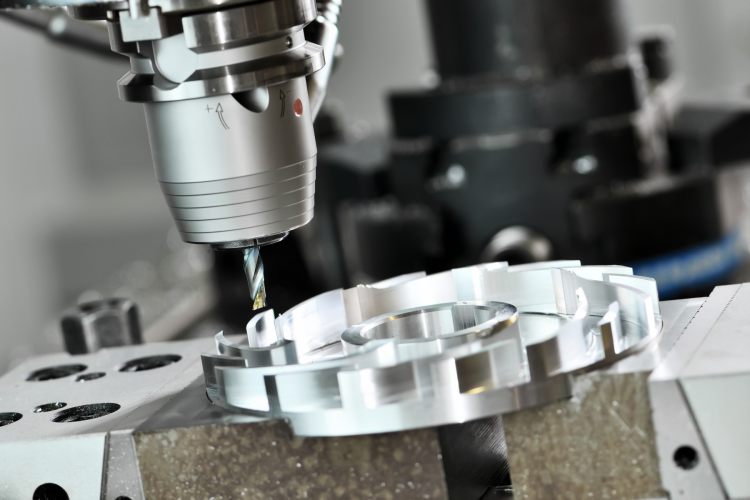
CNC (Computer Numerical Control) machining is a subtractive manufacturing process that uses pre-programmed computer software to control the movement of cutting tools. The process begins with a solid block of material (such as aluminum, stainless steel, or titanium) which is precisely shaped by removing excess material until the final part is achieved.
Core Advantages of CNC Machining
- Exceptional Precision: CNC machining achieves tolerances as tight as ±0.005mm, making it ideal for parts that require high accuracy, such as aerospace components and medical devices.
- Material Versatility: It supports a wide range of industrial materials, including metals, plastics, and composites, with consistent quality across production runs.
- High Production Efficiency for Large Batches: Once the CNC program is set up, it can produce identical parts quickly and efficiently, reducing per-unit costs for large-scale production.
- Superior Surface Finish: CNC machining delivers smooth, precise surface finishes that often require minimal post-processing, eliminating the need for additional finishing steps in many cases.
Typical CNC Machining Workflow
- CAD Design Creation: Engineers develop a detailed 3D model of the part using CAD software.
- CAM Programming: The CAD file is converted into a CNC program (G-code) that guides the cutting tools.
- Material Setup: The raw material block is secured in the CNC machine.
- Machining Process: The machine executes the programmed commands, cutting away excess material to form the final part.
- Quality Inspection: The finished part is inspected for accuracy and quality using precision measuring tools.
At Xiamen Goldcattle, our CNC machining workshop has over 15 years of experience producing high-precision parts for automotive, electronics, and aerospace industries. In many of our projects, we combine CNC machining with post-processing techniques like anodizing and polishing to meet the strictest client specifications.
What is Additive Manufacturing
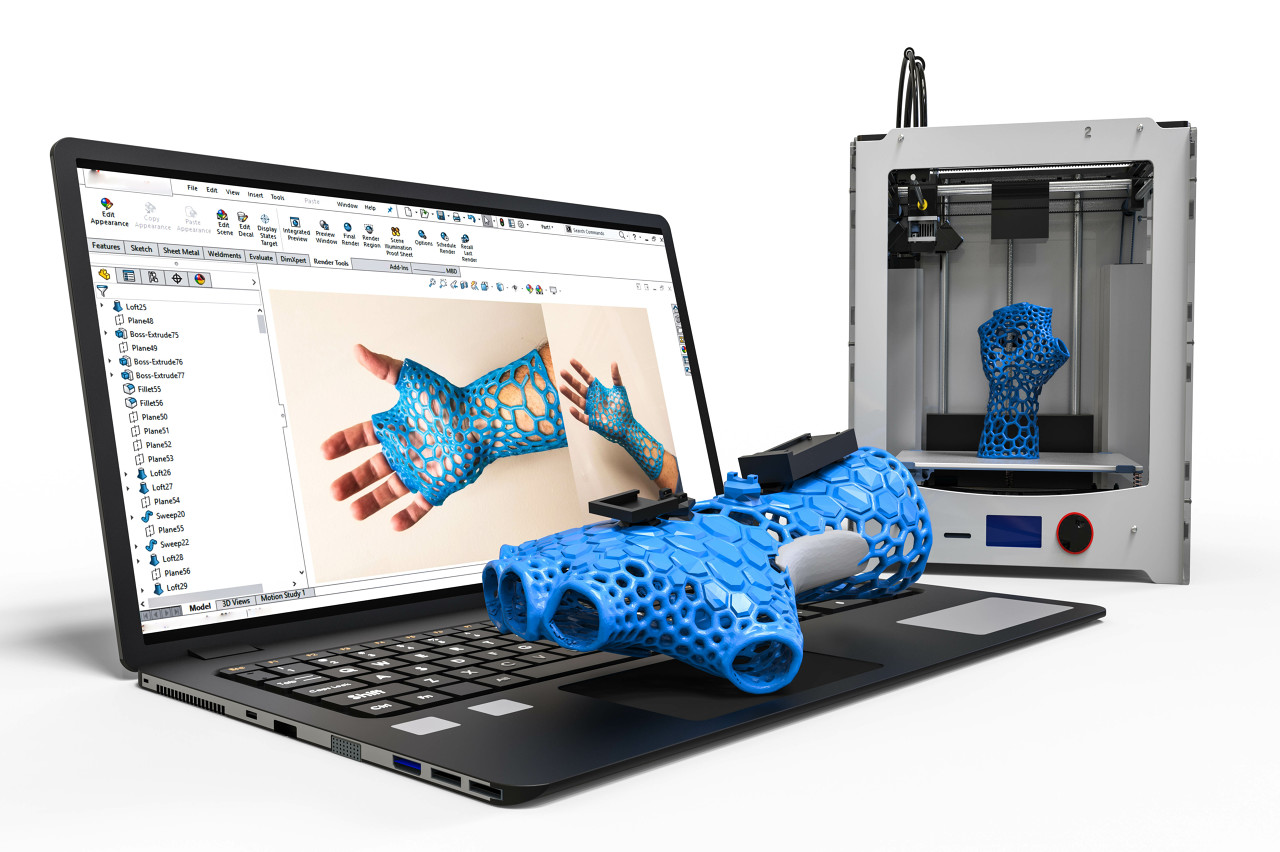
Additive manufacturing, commonly known as 3D printing, is a process that builds parts layer by layer from digital 3D models. Instead of removing material, 3D printing deposits material (such as plastic filaments, metal powders, or resin) in successive layers until the final part is complete.
Core Advantages of Additive Manufacturing
- Design Freedom: It can create complex geometries, internal cavities, and organic shapes that are impossible or extremely difficult to produce with CNC machining.
- Rapid Prototyping: 3D printing allows for quick iteration of designs, enabling engineers to test and refine prototypes in days rather than weeks.
- Low Initial Costs for Small Batches: There is no need for expensive tooling or setup, making it cost-effective for small production runs or custom parts.
- Material Efficiency: Since it only uses the material needed to build the part, additive manufacturing generates less waste compared to subtractive processes.
Typical Additive Manufacturing Workflow
- CAD Design Optimization: Engineers design or modify a 3D model to suit additive manufacturing constraints (such as overhang requirements).
- Slicing Software: The CAD file is converted into layer-by-layer instructions using slicing software.
- 3D Printing Setup: The printing material is loaded into the 3D printer, and the build platform is prepared.
- Printing Process: The printer deposits material layer by layer according to the sliced instructions.
- Post-Processing: The finished part may require support removal, curing, or sanding to achieve the desired surface finish.
Our team at Xiamen Goldcattle frequently uses 3D printing to create functional prototypes for clients in the robotics industry, allowing them to test mechanical components before investing in full-scale CNC production.
Key Differences Between CNC Machining and Additive Manufacturing
To help you quickly compare the two processes, here’s a detailed breakdown of their core differences:
| Aspect | CNC Machining | Additive Manufacturing (3D Printing) |
|---|---|---|
| Process Type | Subtractive (removes material) | Additive (builds layer by layer) |
| Typical Tolerance | ±0.005mm to ±0.01mm | ±0.1mm to ±0.3mm (varies by technology) |
| Material Range | Wide range of metals, plastics, composites | Limited to specific 3D printing materials (filaments, powders, resins) |
| Production Speed | Fast for large batches | Fast for small batches/prototypes |
| Surface Finish | Smooth, precise finish | Requires post-processing for smooth finish |
| Waste Generation | Higher (excess material removed) | Lower (only uses required material) |
| Tooling Costs | High (custom tooling may be needed) | Low (no custom tooling required) |
Cost Comparison
Cost is a critical factor for B2B procurement decisions. Here’s a detailed analysis of the costs associated with each process:
Initial Setup Costs
- CNC Machining: Requires CAD/CAM programming and custom tooling (if needed), which can cost between $500 to $5,000 depending on the complexity of the part. This makes setup costs high for small production runs.
- Additive Manufacturing: No custom tooling is required, and setup costs are minimal—typically only the cost of preparing the 3D model and slicing software, which ranges from $100 to $500.
Per-Unit Costs
- CNC Machining: Per-unit costs decrease significantly with larger production runs. For example, a simple aluminum part may cost $20 per unit for 10 parts, but only $5 per unit for 1,000 parts.
- Additive Manufacturing: Per-unit costs remain relatively consistent regardless of batch size. A similar aluminum part produced via 3D printing may cost $30 per unit for 10 parts and $28 per unit for 1,000 parts.
Post-Processing Costs
- CNC Machining: Minimal post-processing costs, as the parts often achieve the desired finish directly from the machine. Additional finishing (such as anodizing) may add $2 to $10 per unit.
- Additive Manufacturing: Requires more post-processing, including support removal, curing, and sanding, which can add $5 to $20 per unit depending on the part complexity.
At Xiamen Goldcattle, we help clients optimize their production costs by recommending the right process based on their batch size and part requirements. For example, we recently worked with a medical device company that reduced their production costs by 40% by using 3D printing for prototypes and CNC machining for final production runs.
Accuracy Comparison
Precision is essential for many industrial applications. Here’s how the two processes compare in terms of accuracy:
CNC Machining Accuracy
CNC machining is renowned for its high precision, with tolerances as tight as ±0.005mm. This level of accuracy is critical for parts that require tight fits, such as aerospace components, medical implants, and automotive engine parts. The accuracy of CNC machining is consistent across all production runs, ensuring that every part meets the exact specifications.
Additive Manufacturing Accuracy
Additive manufacturing accuracy varies depending on the technology used. Fused Deposition Modeling (FDM) printers typically achieve tolerances of ±0.1mm to ±0.3mm, while Stereolithography (SLA) printers can achieve tolerances of ±0.05mm to ±0.1mm. While this is sufficient for prototypes and non-critical parts, it may not meet the requirements for high-precision industrial applications.
When Accuracy Matters Most
If your project requires tight tolerances or consistent precision across large production runs, CNC machining is the better choice. For prototypes or parts where minor variations are acceptable, additive manufacturing offers a cost-effective solution.
When to Choose CNC Machining
CNC machining is the ideal choice for the following scenarios:
- Large Production Runs: When you need to produce 100 or more identical parts, CNC machining offers lower per-unit costs and faster production times.
- High Precision Requirements: For parts that require tight tolerances (±0.005mm or better), such as aerospace components, medical devices, and automotive parts.
- Hard or Durable Materials: CNC machining can handle a wide range of hard materials, including titanium, stainless steel, and high-performance plastics like PEEK.
- Smooth Surface Finishes: If your parts require a precise, smooth surface finish without extensive post-processing, CNC machining is the optimal choice.
- Complex Parts with Simple Geometries: While CNC machining can produce complex parts, it is most efficient for parts with simple to moderately complex geometries.
When to Choose Additive Manufacturing
Additive manufacturing is the best choice for the following scenarios:
- Prototyping: When you need to quickly test and iterate on design concepts, 3D printing allows you to produce prototypes in days rather than weeks.
- Small Production Runs or Custom Parts: For batches of 1 to 50 parts, additive manufacturing offers lower setup costs and faster turnaround times.
- Complex Geometries: 3D printing can create parts with internal cavities, organic shapes, and complex structures that are impossible to produce with CNC machining.
- Low-Volume, High-Value Parts: For custom parts or small production runs where tooling costs would be prohibitive, additive manufacturing is a cost-effective solution.
- Material Efficiency: When you want to minimize waste and use only the material needed to build the part, additive manufacturing is the more sustainable option.
Hybrid Manufacturing: Combining CNC Machining and Additive Manufacturing
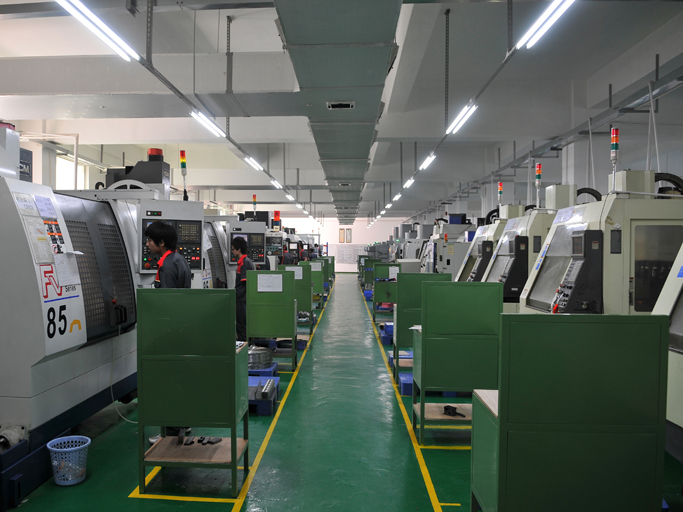
Hybrid manufacturing is a cutting-edge approach that combines the best of both CNC machining and additive manufacturing. This process uses 3D printing to create the basic shape of the part, then uses CNC machining to achieve the final precision and surface finish.
Advantages of Hybrid Manufacturing
- Design Flexibility: Combines the complex geometry capabilities of 3D printing with the precision of CNC machining.
- Cost Efficiency: Reduces material waste and production time by using 3D printing for the base shape and CNC machining for critical features.
- Improved Quality: Achieves the high precision and surface finish of CNC machining while maintaining the design freedom of 3D printing.
Hybrid Manufacturing Workflow
- 3D Printing the Base Part: The part is 3D printed to create the basic shape, including complex internal structures.
- CNC Machining for Precision Features: The printed part is secured in a CNC machine, which machines the critical features (such as holes, threads, and mating surfaces) to achieve tight tolerances.
- Final Inspection and Finishing: The finished part is inspected for accuracy and may undergo additional finishing steps if needed.
At Xiamen Goldcattle, we have invested in hybrid manufacturing technology to serve clients in the aerospace industry, who require parts with complex internal cooling channels and precise mating surfaces. Our hybrid manufacturing process reduces production time by 30% while maintaining the highest quality standards.
Case Study: Robotics Company Optimizes Production with Hybrid Manufacturing
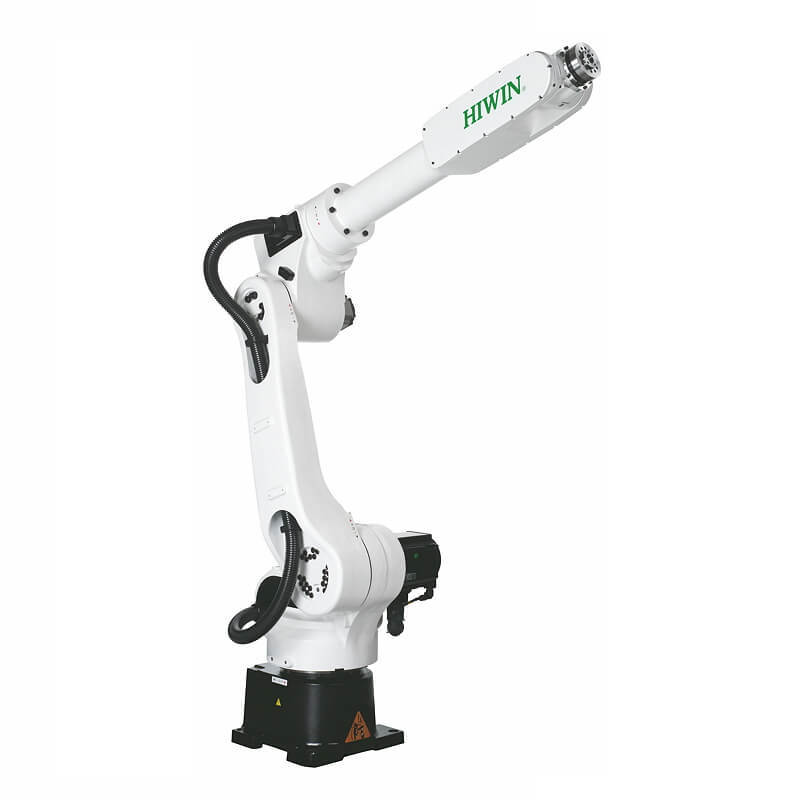
A leading robotics company approached Xiamen Goldcattle with a challenge: they needed to produce 50 custom robotic arm components with complex internal cable channels and precise mating surfaces. The components required tight tolerances (±0.01mm) and a smooth surface finish.
Initial Challenge
The company initially considered using only CNC machining, but the complex internal channels would have required expensive custom tooling and long production times. Using only 3D printing would have resulted in parts that did not meet the precision requirements.
Our Solution
We recommended a hybrid manufacturing approach:
- 3D Printing the Base Part: We used metal 3D printing to create the base part with the complex internal cable channels.
- CNC Machining the Mating Surfaces: We then used CNC machining to machine the mating surfaces to achieve the required ±0.01mm tolerance.
- Post-Processing: The parts were anodized to improve corrosion resistance and achieve the desired surface finish.
Results
- Reduced Production Time: The hybrid manufacturing process reduced production time by 40% compared to traditional CNC machining.
- Lower Costs: The company saved 25% on production costs by avoiding expensive custom tooling.
- Improved Quality: The parts met all precision and surface finish requirements, and the company was able to launch their new robotic arm two months ahead of schedule.
Frequently Asked Questions (FAQ)
1. Is additive manufacturing more expensive than CNC machining?
It depends on the batch size. For small batches (1-50 parts), additive manufacturing is often more cost-effective due to lower setup costs. For large batches (100+ parts), CNC machining offers lower per-unit costs.
2. Can CNC machining finish 3D printed parts?
Yes, CNC machining is commonly used to finish 3D printed parts, especially for critical features that require tight tolerances or smooth surface finishes. This is a key part of the hybrid manufacturing process.
3. What materials can be used for hybrid manufacturing?
Hybrid manufacturing supports a wide range of materials, including aluminum, stainless steel, titanium, and high-performance plastics like PEEK. The choice of material depends on the application requirements.
4. How long does it take to produce a part with CNC machining vs 3D printing?
For prototypes, 3D printing is faster—parts can be produced in 1-3 days. For large production runs, CNC machining is faster—parts can be produced in 1-2 weeks for batches of 1,000 or more.
5. Which process is better for aerospace parts?
CNC machining is typically preferred for aerospace parts due to its high precision and ability to handle hard, high-performance materials. However, hybrid manufacturing is increasingly used for aerospace parts that require complex geometries.
6. Can 3D printing produce parts with the same strength as CNC machining?
While 3D printed parts can be strong, they are often less dense than CNC machined parts, which can affect their strength. For high-strength applications, CNC machining or hybrid manufacturing is typically the better choice.
Conclusion + Request for Quote
Choosing between CNC machining and additive manufacturing depends on your specific project requirements, including batch size, precision needs, design complexity, and budget. For large production runs and high-precision parts, CNC machining is the optimal choice. For prototypes, small batches, and complex geometries, additive manufacturing offers greater flexibility. And for parts that require both design freedom and precision, hybrid manufacturing is the ideal solution.
At Xiamen Goldcattle, we offer a full range of manufacturing services, including CNC machining, additive manufacturing, and hybrid manufacturing. Our team of experienced engineers can help you choose the right process for your project and deliver high-quality parts on time and within budget.
Get a Free Quote Today
If you need CNC machining or 3D printing services, we invite you to upload your CAD file and get a free quote in 12 hours. We support the following file formats:
- STEP
- STP
- IGES
- STL
- SOLIDWORKS
We work with a wide range of materials, including:
- Aluminum (6061, 7075)
- Stainless Steel (304, 316)
- Titanium (Ti-6Al-4V)
- PEEK
- ABS
- PC