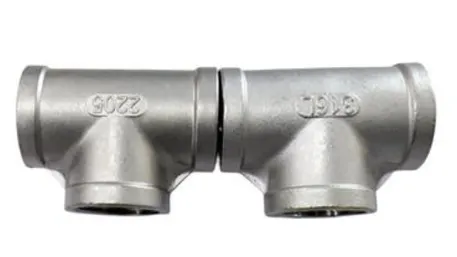
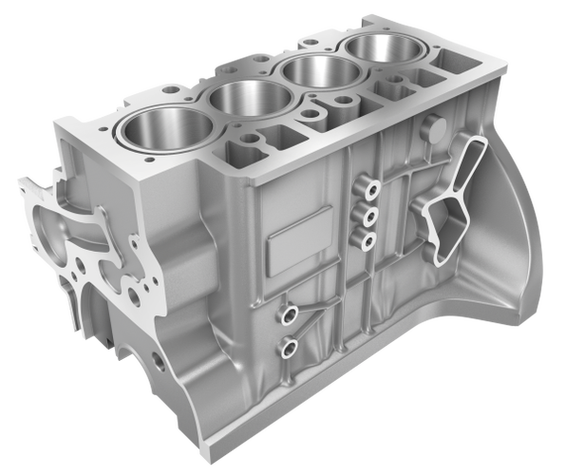
We provide CNC machining services for precision fixture components, ensuring high positioning accuracy, repeatability, and dimensional stability for assembly and automation systems. With 26 years of precision manufacturing experience, we serve automation equipment factories, fixture design engineers, and procurement teams from automotive, electronics, and medical industries.
What Are Precision Fixture Components?
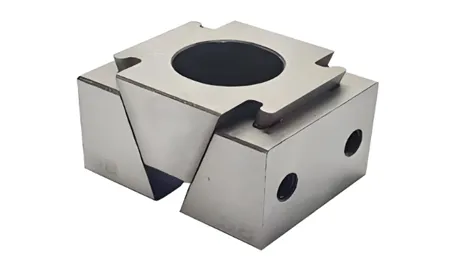
Precision fixture components are critical parts used in jigs and fixtures to ensure accurate positioning, alignment, and repeatability during manufacturing and assembly processes.
Unlike general CNC parts, these components are the core of your fixture system, directly determining the final assembly accuracy, production consistency, and service life of your entire tooling. Ordinary machining cannot meet the strict tolerance and stability requirements of these functional parts.
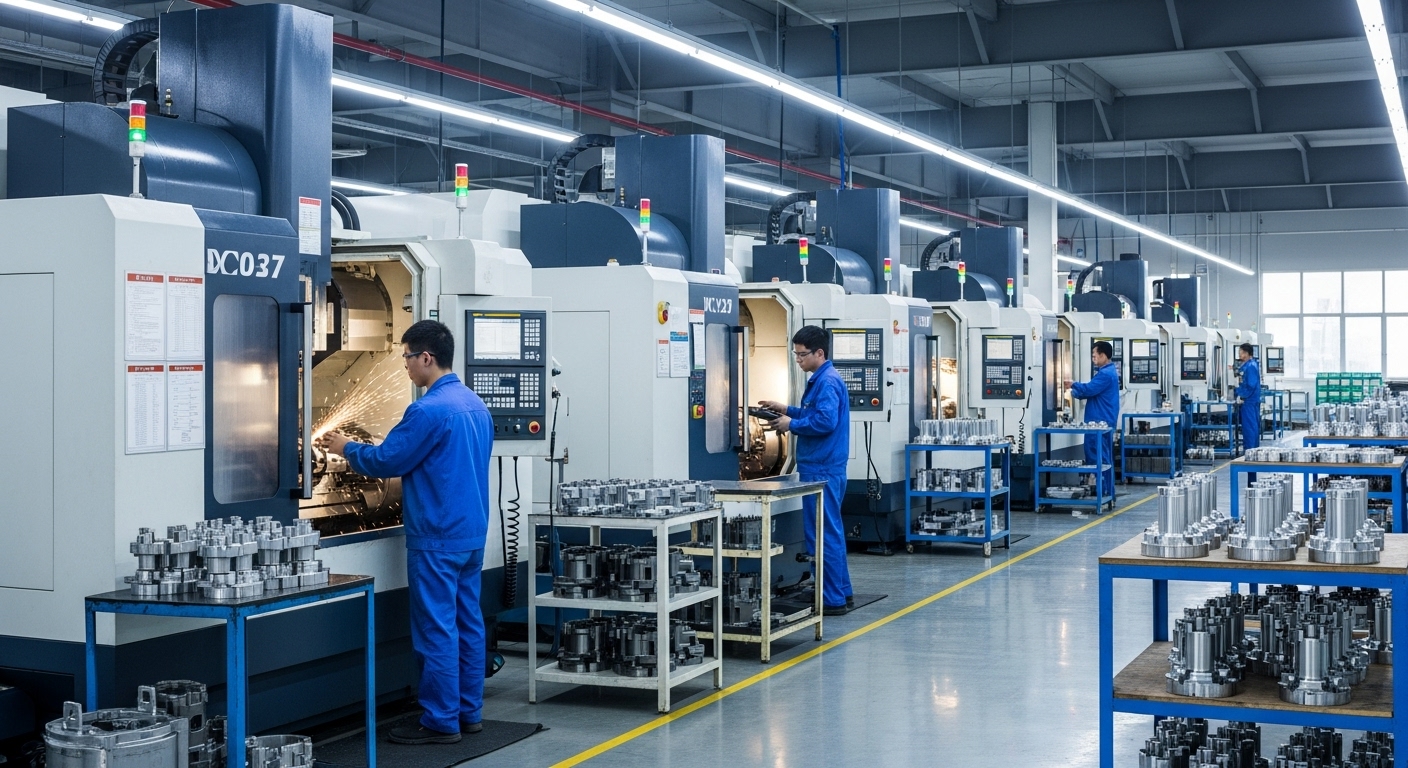
Industry Applications
Assembly Fixtures
Precision positioning parts for automated assembly lines, ensuring consistent part alignment for mass production.
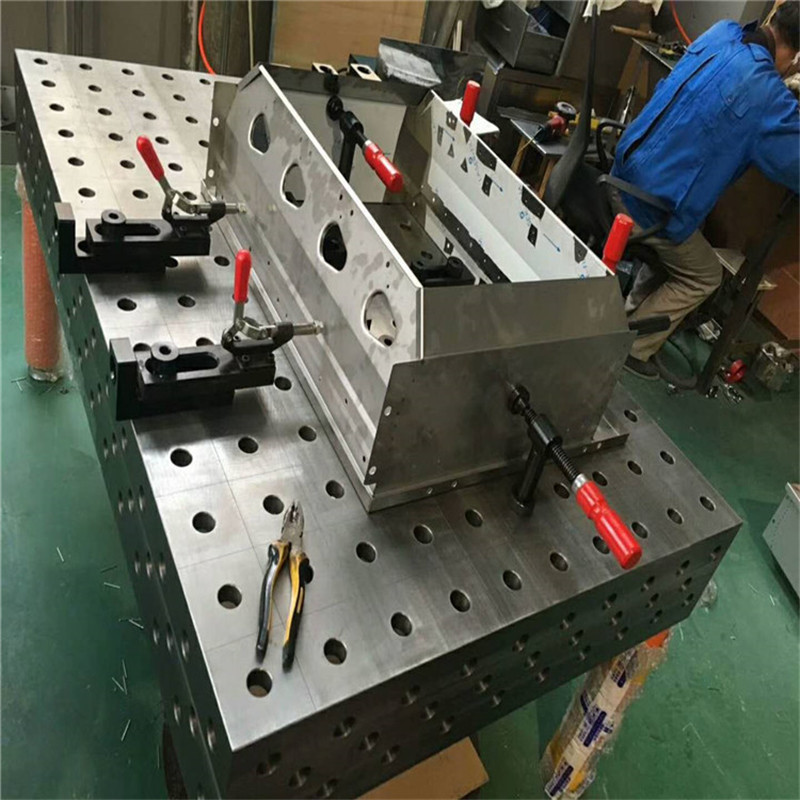
Welding Jigs
High wear-resistant components for welding fixtures, maintaining accuracy under high temperature and frequent clamping.
Inspection Fixtures
Ultra-precision parts for quality checking fixtures, guaranteeing measurement accuracy for critical dimensions.
CNC Positioning Systems
Locating elements for CNC machine tooling, enabling fast and accurate workpiece change-over.
Automation Equipment
Custom fixture parts for robotic automation systems, supporting high-speed and high-repeatability operations.
Challenges & Engineering Solutions
Fixture component machining has unique technical requirements that ordinary CNC machining cannot fully address. We have developed targeted solutions to ensure your fixture system works perfectly:
Common Challenges
| Challenge | Description |
|---|---|
| Positioning Accuracy | Micron-level error control requirement |
| Repeatability | Consistent performance in batch production |
| Fit Tolerance | Tolerance stack-up in assembly |
| Wear Resistance | Long-term service life under frequent use |
| Thermal Deformation | Dimensional stability under temperature change |
Our Solutions
| Problem | Engineering Solution |
|---|---|
| Positioning Accuracy | 5-axis high precision CNC machining |
| Repeatability | Tight tolerance control & process validation |
| Wear Resistance | Hardened tool steel materials & coating |
| Thermal Deformation | Material selection + stress relief process |
| Assembly Error | GD&T based precision machining |
Machining Capabilities & Test Data
We strictly control the geometric tolerances of fixture components, which is the core guarantee of your fixture system performance:
Standard Capabilities
| Specification | Parameter |
|---|---|
| Dimensional Tolerance | ±0.002–0.01 mm |
| Flatness | ≤0.005 mm |
| Coaxiality | ≤0.003 mm |
| Parallelism | ≤0.004 mm |
| Surface Roughness | Ra 0.4–0.8 μm |
| Machining Axis | 3/4/5 axis CNC |
Reference Test Data (For Reference Only)
We have conducted repeatability and wear tests on typical fixture materials to verify long-term performance:
| Material | Hardness | Repeatability | Wear Life |
|---|---|---|---|
| GCr15 Bearing Steel | HRC62 | ±0.002mm | 100k cycles |
| Cr12MoV Tool Steel | HRC60 | ±0.003mm | 80k cycles |
| 304 Stainless Steel | HRC30 | ±0.005mm | 30k cycles |
| 7075 Aluminum | HRC15 | ±0.005mm | 20k cycles |
Materials for Fixture Components
Material selection is critical for fixture components, as it directly determines the wear resistance and dimensional stability. We select the most suitable material based on your application:
Hardened Tool Steel
GCr15, Cr12MoV, SKD11
Hardened to HRC58-65, 3x higher wear resistance than regular steel. Ideal for high-frequency positioning parts like locating pins.
Stainless Steel
304, 316, 440C
Excellent corrosion resistance, suitable for wet or corrosive environments like food processing or chemical industry fixtures.
Aluminum Alloy
6061, 7075
Light weight and good machinability, perfect for light-weight inspection fixtures and prototype tooling.
Engineering Plastics
POM, Nylon, PEEK
Self-lubricating and non-marring, ideal for clamping parts that need to protect workpiece surface.
Typical Fixture Components
- Locating Pins: Precision positioning elements with tight diameter tolerance, ensuring accurate workpiece alignment.
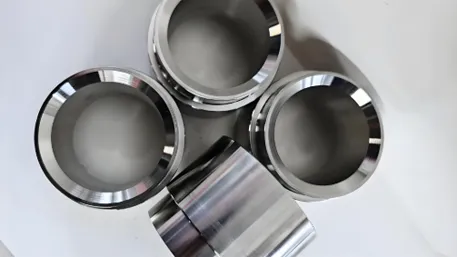
- Locating Bushings: Wear-resistant guide parts for replaceable positioning system, extending fixture service life.
- Base Plates: Precision fixture base with ultra-flat surface, providing stable reference for the entire fixture system.
- Clamping Elements: Custom clamping parts like clamps, jaws, and rest buttons to hold workpieces securely.
- Guide Rails & Elements: Precision guide parts for sliding fixture mechanisms, ensuring smooth movement.
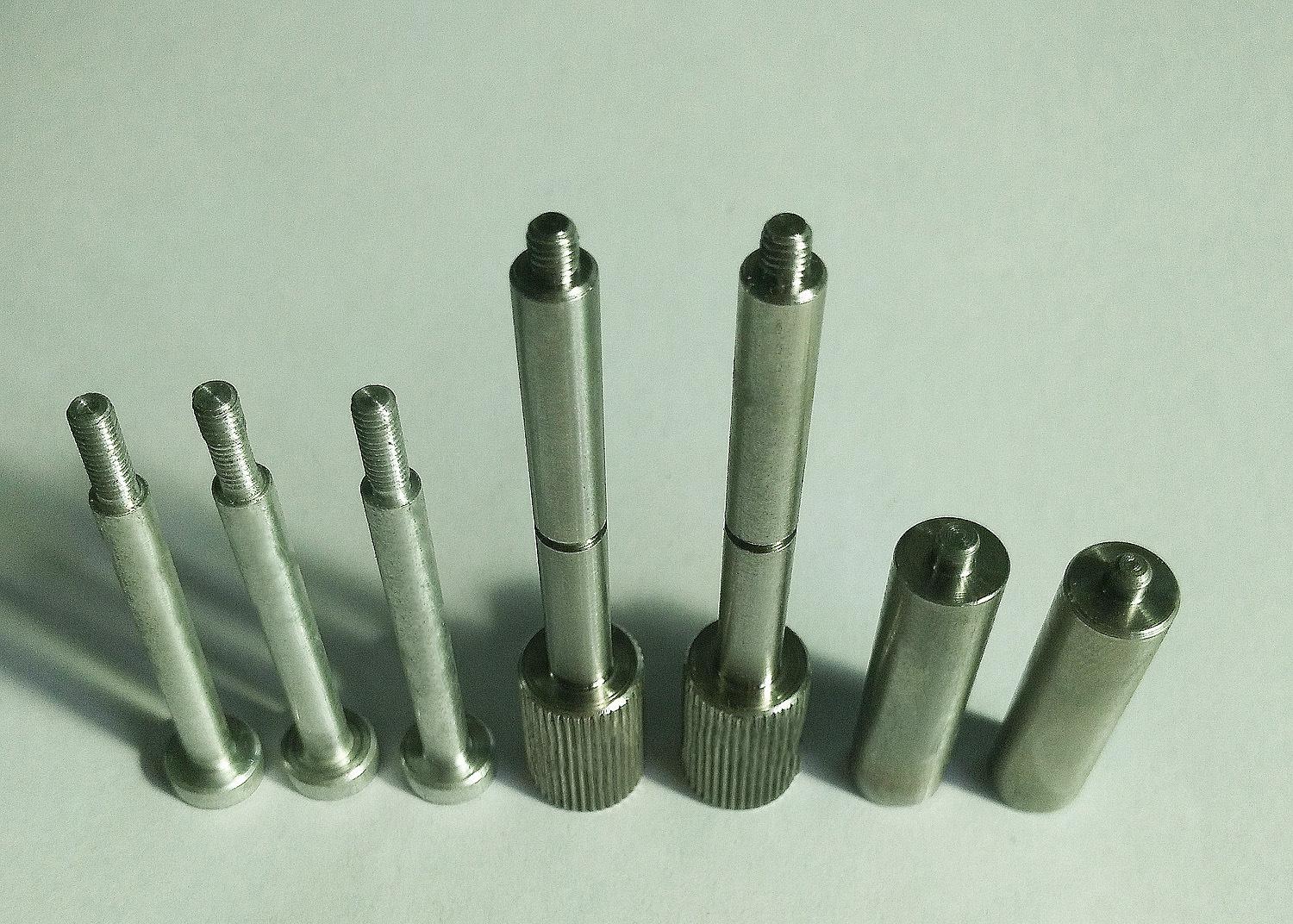
Manufacturing Process
Our specialized process for fixture components ensures dimensional stability and long-term performance, with stress relief and precision grinding as key steps:
DFM Analysis
Free design review to optimize your fixture part design for manufacturability
Material Selection
Choose the best material based on your application requirement
Stress Relief
Artificial aging process to eliminate internal material stress
CNC Machining
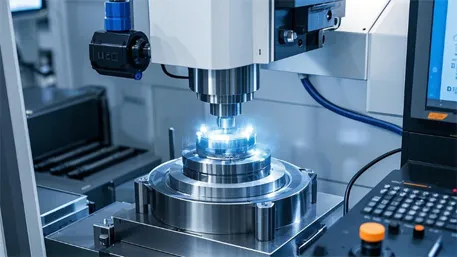
5-axis precision machining to achieve tight tolerance
Heat Treatment
Hardening and tempering to improve wear resistance
Precision Grinding
Final grinding to achieve ultra-precision surface and tolerance
Surface Treatment for Wear Resistance
We provide various surface treatment options to further improve the wear resistance and service life of your fixture components:
Heat Treatment & Hardening
Quenching and tempering to achieve HRC58-65 hardness, significantly improving wear resistance.
TiN Coating
Titanium nitride coating with 2000HV hardness, reducing friction and improving wear life by 2x.
DLC Coating
Diamond-like carbon coating for ultra-low friction and extreme wear resistance for high-frequency applications.
Precision Grinding
Ultra-precision grinding to achieve Ra0.4 surface finish, reducing friction and improving fit accuracy.
Quality Assurance
We implement strict quality control to ensure every fixture component meets your strict requirements, including repeatability verification:
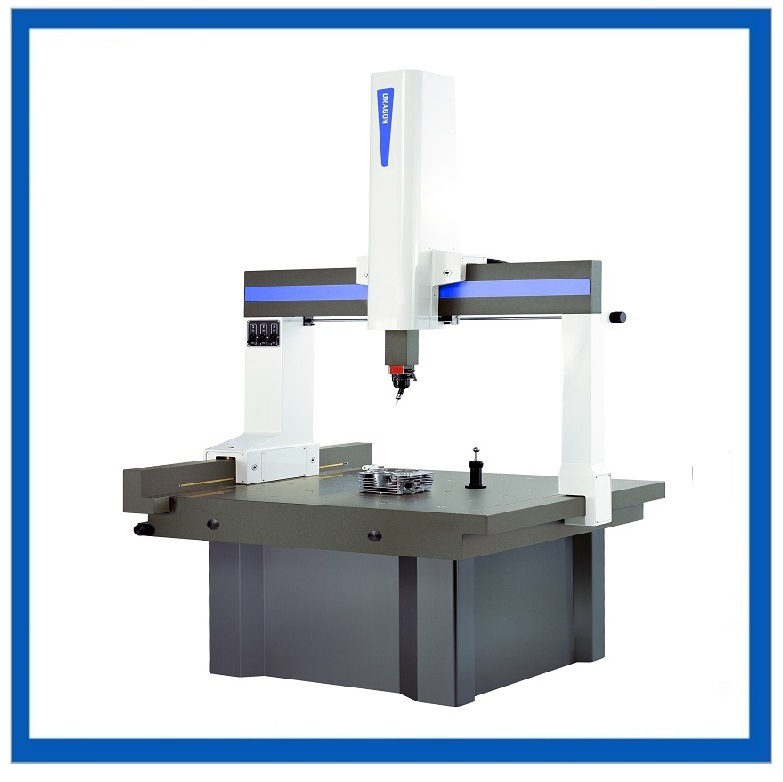
- CMM inspection for full dimensional verification
- GD&T verification for all geometric tolerances
- Surface roughness testing for inner and outer surface
- Fit & assembly testing to ensure perfect matching
- Repeatability verification for long-term consistency
Compliance with Standards
- JB/T 8044-1999: Technical requirements for machine tool fixture components
- GB/T 1182-2018 / ISO 1101: Geometrical tolerancing for features
- ISO 12164: Standard for locating pins for fixtures
- AS9100: Aerospace quality management system
Cost Factors
The cost of precision fixture components depends on several key factors. Our engineers will work with you to optimize the design to get the best value:
Tolerance Requirements
Tighter tolerances require more precise machining and inspection processes, which affects the cost.
Material Hardness
Hardened materials require special tooling and slower machining speed, increasing the processing cost.
Surface Treatment
Special coating or heat treatment adds additional process steps and cost, but extends service life.
Batch Size
Larger batch size can reduce the setup cost per part, providing better unit price for mass production.
Case Study: Automotive Assembly Line Locating Pin
A leading automotive assembly line manufacturer was facing high rejection rate in their engine assembly process. Their previous supplier’s locating pins could not maintain the required precision after 20k cycles, leading to assembly misalignment.
Project Specifications:
- Part: Fixture locating pin for engine block assembly
- Material: GCr15 hardened bearing steel
- Diameter Tolerance: ±0.003 mm
- Coaxiality: ≤0.003 mm
- Surface Treatment: TiN coating
Result: We achieved stable positioning accuracy, helping the client improve their assembly accuracy by 25%, and the service life of the locating pin increased from 20k to 100k cycles, reducing their fixture maintenance cost significantly.
Frequently Asked Questions
Ready to Start Your Fixture Components Project?
Get a free DFM review and competitive quote for your precision fixture components. Upload your CAD drawing now and we will get back to you within 24 hours.