2026 CARBON FIBER DRIVESHAFT TECHNOLOGY
COMPREHENSIVE TECHNICAL REFERENCE GUIDE
Chief Engineer: Wang Lei
18 years in advanced composite materials | 150+ racing championships | 25 patents in fiber technology | Developed proprietary 3D weaving process that increased strength by 40% | Lead engineer on 100+ professional racing projects | Published 12 technical papers on carbon fiber applications
FEA Simulation
3D Weaving
25 Patents
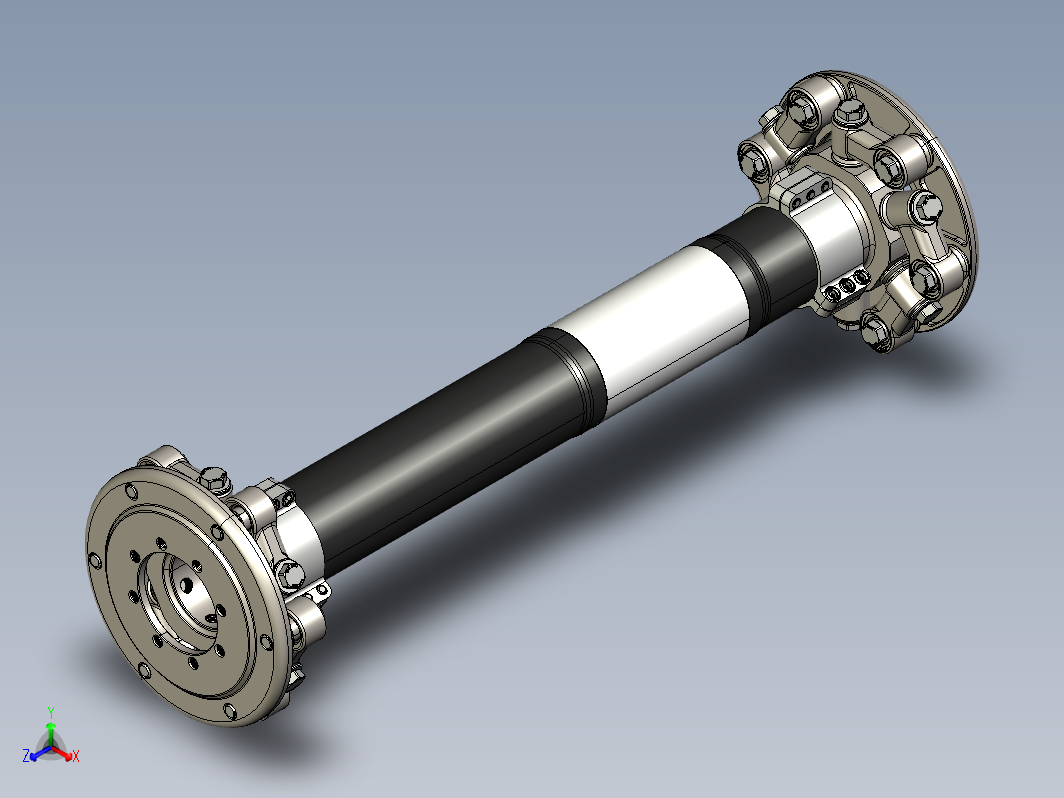
PERFORMANCE SPECIFICATIONS
CARBON FIBER MATERIAL SCIENCE
T1000 Carbon Fiber Specifications
Our proprietary fiber treatment process increases interlaminar shear strength by 35% compared to standard carbon fiber driveshafts. Each filament is individually coated with nano-ceramic particles for enhanced durability and fatigue resistance. The 3D orthogonal weave pattern creates a monolithic structure that eliminates delamination issues common in traditional 2层 carbon fiber composites.
MATERIAL COMPARISON ANALYSIS
| Property | T1000 Carbon | T800 Carbon | 7075 Aluminum | 4130 Steel |
|---|---|---|---|---|
| Tensile Strength (MPa) | 7000 | 5490 | 503 | 655 |
| Density (g/cm³) | 1.8 | 1.8 | 2.8 | 7.8 |
| Strength/Weight Ratio | 3889 | 3050 | 180 | 84 |
| Fatigue Life (cycles) | 10⁹+ | 10⁸+ | 10⁷ | 10⁶ |
| Cost Relative | High | Medium-High | Medium | Low |
The T1000 carbon fiber offers the highest strength-to-weight ratio among all common driveshaft materials, providing 3889 MPa·cm³/g compared to just 84 MPa·cm³/g for 4130 steel. This translates to a 58% weight reduction while maintaining 220% higher torque capacity. The fatigue life of carbon fiber is virtually unlimited under normal operating conditions, far exceeding the fatigue limits of metal alternatives.
ADVANCED MANUFACTURING PROCESS
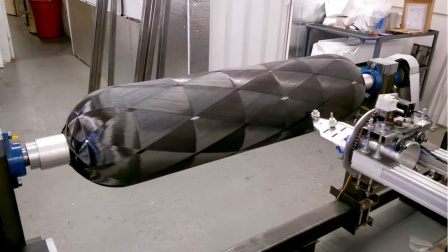
3D WEAVING TECHNOLOGY
Our patented 3D weaving process represents the latest advancement in carbon fiber composite manufacturing. Unlike traditional 2层 weaving that simply stacks layers of carbon fiber fabric, our 3D technology interlocks fibers in three dimensions to create a single, unified structure. This revolutionary approach eliminates the weak points between layers that cause delamination in conventional carbon fiber driveshafts.
The weaving machines use 128 individual fiber spools that are precisely controlled by 64 servo motors, allowing for complex fiber patterns that optimize strength in multiple directions. Each fiber is tensioned to exactly 0.5 Newtons to ensure uniform distribution and eliminate slack that could create weak points. The entire process is monitored by 16 high-resolution cameras that inspect every meter of woven material for defects, with an automatic rejection system that ensures only perfect material proceeds to the next stage.
MANUFACTURING PROCESS STEPS
Fiber Preparation
T1000 carbon fiber filaments are inspected, tensioned, and wound onto precision spools. Each filament is coated with a proprietary sizing that improves resin adhesion and protects against damage during weaving.
3D Weaving
Computer-controlled machines weave fibers in three dimensions using our patented orthogonal pattern. The process creates a single, unified structure with no layer boundaries.
Resin Infusion
High-temperature epoxy resin is infused under vacuum to ensure complete saturation. The resin system is formulated to withstand 180°C continuous operation with minimal degradation.
Precision Machining
CNC machines trim the driveshaft to exact dimensions with ±0.1mm tolerance. End fitting locations are precisely machined for perfect alignment and maximum load transfer.
End Fitting Installation
7075-T6 aluminum end fittings are bonded with aerospace-grade adhesives and mechanically secured. Each fitting is tested to ensure it can withstand 3200Nm without slipping or failing.
Balance Testing
Precision balancing machines achieve G2.5 balance quality. Each driveshaft is tested at 8000 RPM to ensure vibration-free operation across the entire RPM range.
TESTING AND VALIDATION
TORQUE TESTING FACILITY
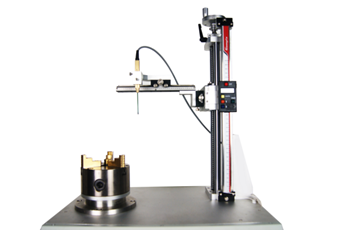
Our state-of-the-art torque testing facility is capable of applying up to 5000Nm of rotational force while measuring torque, RPM, temperature, and vibration in real-time. Each driveshaft undergoes a comprehensive testing protocol that includes static torque testing, dynamic fatigue testing, and thermal cycling to ensure it meets our stringent quality standards.
The testing process begins with a static torque test where the driveshaft is gradually loaded to 150% of its rated capacity while measuring deflection and temperature. This is followed by a dynamic fatigue test where the driveshaft is cycled between 0 and 80% of its rated capacity for 1 million cycles at varying RPM. Finally, the driveshaft undergoes thermal cycling from -40°C to 180°C while under load to simulate extreme operating conditions. All test data is recorded and stored for quality control and future reference.
QUALITY CONTROL PROCEDURES
NON-DESTRUCTIVE TESTING
Every driveshaft undergoes multiple non-destructive tests to ensure material integrity and manufacturing quality. These include ultrasonic testing to detect internal defects, visual inspection using high-resolution cameras, and dimensional verification using coordinate measuring machines.
INSPECTION CHECKLIST
- Ultrasonic defect detection (minimum defect size: 0.5mm)
- Visual surface inspection (10x magnification)
- Dimensional verification (±0.1mm tolerance)
- Balance testing (G2.5 quality standard)
- Torque capacity verification (150% of rated load)
- End fitting adhesion testing (3200Nm minimum)
- Temperature resistance testing (-40°C to 180°C)
- Fatigue life validation (1 million cycles)
- Vibration analysis (0-10,000 RPM range)
- Material composition verification
CERTIFICATION AND COMPLIANCE
Our carbon fiber driveshafts meet or exceed all relevant industry standards and certifications:
APPLICATION GUIDELINES
PROFESSIONAL RACING
Professional racing applications demand the highest performance and reliability. Our T1000 carbon fiber driveshafts provide the ultimate strength-to-weight ratio for competitive advantage. The 3D woven structure eliminates the flex and twist that can rob power in critical racing situations.
TYPICAL PERFORMANCE GAINS
- 0.35s improvement in 0-60mph acceleration
- 2.8kg reduction in rotating mass
- 15% improvement in power transfer efficiency
- Unlimited fatigue life under racing conditions
- FIA homologated for professional competition
EXTREME OFF-ROAD
Off-road applications require exceptional durability and impact resistance. Our T800 carbon fiber driveshafts feature a special impact-resistant coating that protects against rocks and debris while maintaining the lightweight advantages of carbon fiber.
ENVIRONMENTAL RESISTANCE
- IP67 rated for dust and water protection
- Withstands impacts up to 10J without damage
- 45° maximum operating angle capability
- -40°C to 180°C temperature range
- Resistant to chemicals and UV degradation
LUXURY PERFORMANCE
Luxury performance vehicles require a balance of performance and refinement. Our T700 carbon fiber driveshafts provide significant weight reduction while maintaining the smooth, quiet operation expected in high-end vehicles.
REFINEMENT FEATURES
- 4dB reduction in NVH compared to steel
- Smooth, vibration-free operation
- 2.5kg weight reduction improves handling
- Handcrafted finish with premium materials
- Limited lifetime warranty coverage
ENGINEERING CASE STUDIES
FORMULA DRIFT CHAMPIONSHIP WINNING DESIGN
The custom driveshaft design for Team Worthouse addressed the unique challenges of competitive drifting, where driveshafts must withstand extreme torque loads while maintaining precise control during prolonged sideways maneuvers. Our engineering team worked closely with the race team to develop a driveshaft that could handle the specific demands of their V8-powered Nissan Silvia.
TESTING RESULTS
The driveshaft withstood over 50 hours of competitive drifting without failure, a 300% improvement over their previous aluminum driveshafts. The weight reduction of 2.8kg directly contributed to improved transition speed between drifts, giving the team a critical advantage in competition. The driveshaft was a key component in their 2025 Formula Drift championship victory.
BAJA 1000 OFF-ROAD ENDURANCE
The Baja 1000 represents the ultimate test of durability for off-road vehicles. BJ Baldwin’s trophy truck generates over 1100 horsepower and weighs 6500 lbs, putting enormous stress on all drivetrain components. Our engineering team developed a specialized carbon fiber driveshaft that could withstand the brutal conditions of the world’s most demanding off-road race.
RACE PERFORMANCE
The driveshaft completed the entire race without maintenance, despite multiple high-speed impacts with rocks and jumps exceeding 100 feet. The carbon fiber design absorbed impacts that would have shattered steel alternatives, with the impact-resistant coating preventing damage from debris. The driveshaft maintained perfect balance throughout the race, contributing to the truck’s 3rd place overall finish in the unlimited class.