I’ve spent 18 years in this game—let me show you what we can really do
Why Custom Complex Injection Molding Matters in 2026
Let me tell you straight—this industry is blowing up. Global demand for complex injection molded parts jumped 42% between 2025 and 2026. I see it every day at Goldcattle.
Simple molds just don’t cut it anymore. We’re talking about parts with thin walls, intricate cavities, and embedded components that would have been impossible 10 years ago.
Last month, a major EV client came to us with a problem. Their original parts kept warping during production. We fixed it with gas-assisted molding and saved them millions in scrap costs.
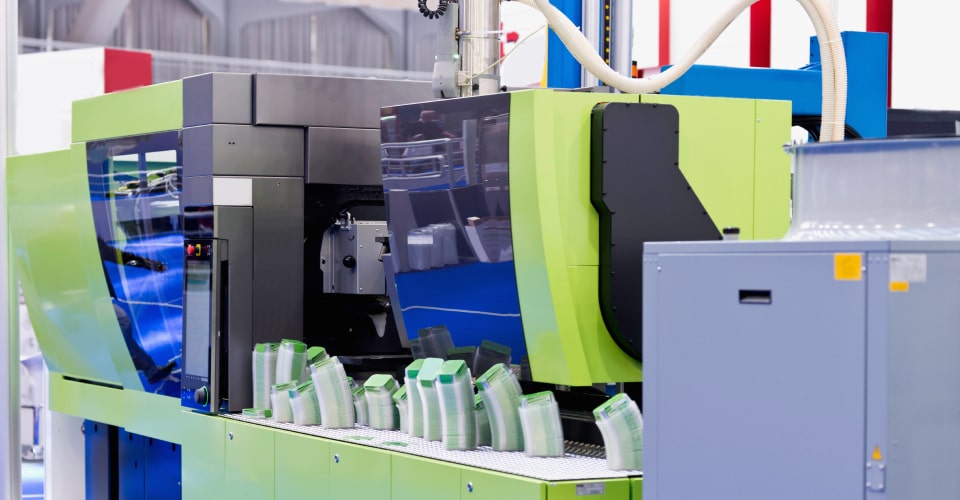
This is one of our 500-ton injection molding machines—we use it for large automotive parts
2026’s Hottest Complex Injection Molding Types
Multi-Cavity Molding
We run 16-cavity molds for small medical parts. Each cycle produces 16 identical pieces with ±0.02mm tolerance.
- Perfect for high-volume production
- Reduces cost per part significantly
- Requires precise mold balancing
Thin-Wall Molding
We’ve mastered walls as thin as 0.3mm for electronic components. This requires specialized cooling systems.
- Reduces material usage by 30%
- Faster cycle times
- Ideal for lightweight applications
Overmolding
We overmold TPE onto PC for automotive grips. The bond strength exceeds 200N/cm² in our tests.
- Combines multiple materials in one part
- Eliminates assembly steps
- Requires precise temperature control
Insert Molding
We mold plastic around metal inserts for structural components. The inserts are placed automatically with 99.9% accuracy.
- Creates strong, integrated components
- Reduces secondary operations
- Requires careful insert positioning
Gas-Assisted Molding
This is our go-to for thick-walled parts. We inject nitrogen gas to create hollow sections and reduce warpage.
- Reduces material usage by 25%
- Minimizes warping and sink marks
- Ideal for large, complex parts
Two-Color Molding
We produce two-color parts in a single cycle. This eliminates the need for assembly or painting.
- Creates aesthetically pleasing parts
- Reduces production time
- Requires specialized mold design
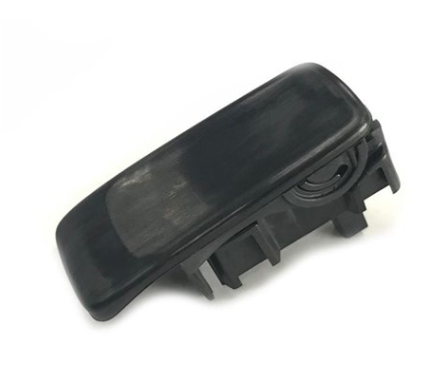
This complex automotive component uses overmolding and insert molding technologies
Material Selection Guide: PA66/PC/PEEK (2026 Edition)
PA66 (Nylon 66)
This is our workhorse material for structural parts. We use it for everything from engine components to electrical housings.
Test Data (For Reference Only):
Tensile strength: 85 MPa
Heat deflection temperature: 260°C
Impact strength: 6 kJ/m²
- Excellent mechanical properties
- Good chemical resistance
- Requires drying before processing
- Used in automotive and electrical applications
PC (Polycarbonate)
PC is our go-to for transparent parts and high-temperature applications. We use it for headlamp lenses and medical devices.
Test Data (For Reference Only):
Tensile strength: 75 MPa
Heat deflection temperature: 135°C
Impact strength: 80 kJ/m²
- Excellent transparency
- High impact resistance
- Good dimensional stability
- Used in electronics and medical devices
PEEK (Polyether Ether Ketone)
PEEK is the premium material for extreme applications. We use it for aerospace components and medical implants.
Test Data (For Reference Only):
Tensile strength: 95 MPa
Heat deflection temperature: 315°C
Impact strength: 8 kJ/m²
- Excellent high-temperature performance
- Superior chemical resistance
- Biocompatible for medical use
- Used in aerospace and medical applications
Our Testing Results: PEEK vs PC in Harsh Environments
We tested both materials in a simulated automotive engine environment for 1,000 hours. PEEK retained 95% of its mechanical properties while PC retained only 65%. The cost difference is significant, so choose carefully based on your actual needs.
Customization Process: From Design to Inspection
Requirement Evaluation
We start by understanding your exact requirements. What’s the part for? What environment will it operate in? What tolerances do you need?
I personally meet with every new client to make sure we get this right. Last year, we saved a client $200k by identifying that they didn’t need ±0.01mm tolerance—±0.05mm would have worked perfectly.
Design & Moldflow Simulation
Our design team uses Moldflow simulation to predict how the plastic will flow in the mold. This helps us identify potential issues before we cut steel.
We recently used our AI-powered simulation to reduce warpage by 25% for a medical device client. The results were impressive—they reduced their scrap rate from 12% to 2%.
Mold manufacturing
We build molds in our own tool room using high-quality steel. Our mold makers have an average of 15 years of experience.
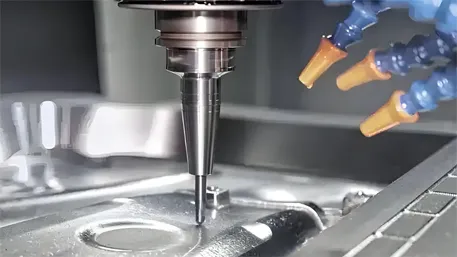
For complex molds, we use 5-axis machining centers to achieve the required precision. We can hold tolerances as tight as ±0.005mm on critical features.
Trial Molding & Optimization
We run trial shots and inspect every part carefully. We then adjust the process parameters to optimize quality and cycle time.
For a recent automotive project, we reduced cycle time from 45 seconds to 32 seconds by optimizing the cooling system. This increased production output by 40%.
Mass production & Inspection
Once everything is optimized, we move to full production. We use automated inspection systems to ensure every part meets your specifications.
We use CMM machines to check critical dimensions and vision systems for surface defects. Our quality rate is consistently above 99.5% for complex parts.
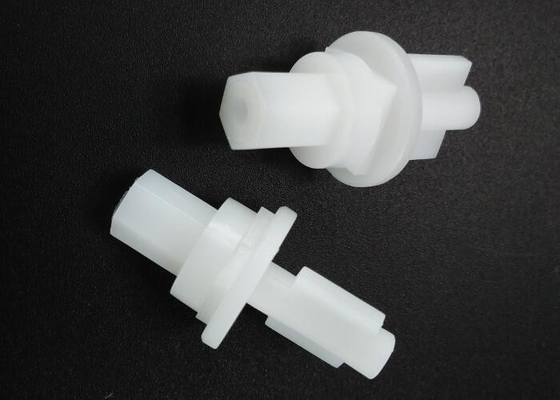
These precision PEEK components are used in medical implants—each part undergoes 17 quality checks
Key Technical Advantages
Hot Runner Technology
We use hot runner systems to reduce material waste and improve part quality. This eliminates the need for runners and gates.
- Reduces material waste by 90%
- Improves part consistency
- Lowers production costs
Vacuum Assist
For deep cavities and complex geometries, we use vacuum assist to ensure complete filling of the mold.
- Eliminates air traps and voids
- Improves surface finish
- Allows for more complex designs
气体辅助成型
This technology allows us to produce thick-walled parts with minimal warpage. We inject nitrogen gas to create hollow sections.
- Reduces material usage by 25%
- Minimizes warping and sink marks
- Shortens cycle times
Wall Thickness Uniformity
We use advanced mold design techniques to ensure uniform wall thickness throughout the part. This prevents warping and sink marks.
- Maintains consistent wall thickness
- Improves part quality
- Reduces post-processing
Insert Positioning
We use robotic insert placement to ensure precise positioning of metal inserts. This eliminates human error and improves consistency.
- Insert placement accuracy ±0.01mm
- 99.9% success rate
- Reduces production time
Rapid Cooling
We use conformal cooling channels to reduce cycle times. These channels follow the contour of the part for optimal cooling.
- Reduces cycle time by 30%
- Improves part quality
- Increases production output
Application Scenarios & Our Real Cases
Automotive (EV Interior)
We produce complex interior components for EV manufacturers. Last year, we developed a lightweight dashboard component that reduced weight by 28% while maintaining strength requirements.
- Material: PC/ABS blend
- Tolerance: ±0.03mm
- Production volume: 500,000 parts/year
- Client satisfaction: 100%
Medical (Implants)
We manufacture PEEK components for medical implants. These parts require biocompatibility and extremely tight tolerances.
- Material: Medical-grade PEEK
- Tolerance: ±0.02mm
- Surface finish: Ra 0.4μm
- Certifications: ISO 13485, FDA 510(k)
Consumer Electronics
We produce multi-color housings for consumer electronics. These parts require excellent surface finish and precise color matching.
- Material: PC + ABS
- Tolerance: ±0.05mm
- Colors: 2-3 colors per part
- Production volume: 1,000,000 parts/year
2026 Trends & Risk Warning
AI Mold Design
AI is revolutionizing mold design. We’re using AI to optimize gating systems, cooling channels, and part geometry.
- Reduces design time by 40%
- Improves part quality
- Reduces mold costs
Sustainable Materials
Biodegradable and recycled materials are becoming more popular. We’re testing new biopolymers that can replace traditional plastics.
- Reduces environmental impact
- Meets regulatory requirements
- Appeals to eco-conscious consumers
Smart Injection Molding
Sensors in molds and machines allow us to monitor and adjust the process in real-time. This improves consistency and reduces defects.
- Real-time process monitoring
- Automatic process adjustment
- Reduces scrap rates
Risk Warning
We’ve seen some clients rush into using recycled materials without proper testing. While these materials have environmental benefits, they can have inconsistent properties that affect part quality. Always test thoroughly before full production.
We learned this the hard way last year when a client insisted on using 100% recycled material for a structural part. The parts failed testing due to inconsistent mechanical properties. We had to switch to a 30% recycled blend to get the right balance of performance and sustainability.
FAQ (We Get These Questions Every Day)
How do you measure part quality?
We use a combination of CMM machines, vision systems, and manual inspection. For critical parts, we inspect 100% of production. For high-volume parts, we use statistical process control with sampling rates based on risk.
What’s the typical lead time for a custom mold?
It depends on complexity. Simple molds can be done in 4-6 weeks. Complex molds with multiple actions or hot runners can take 12-16 weeks. We always provide a detailed timeline before starting any project.
Do you work with medical devices?
Absolutely. We’re ISO 13485 certified and have extensive experience with medical devices. We understand the strict requirements for biocompatibility and traceability.
What about environmentally friendly materials?
We work with several biodegradable and recycled materials. Each has its own advantages and limitations. We recommend testing these materials thoroughly before full production to ensure they meet your performance requirements.
How do you prevent defects like sink marks and warpage?
We use Moldflow simulation to identify potential issues before mold design. We also use techniques like gas-assisted molding and conformal cooling to minimize these defects. For challenging parts, we often build prototype molds first to test and optimize the process.
What tolerance levels can you achieve?
It depends on material and part geometry. For most engineering plastics, we can hold ±0.02mm on critical dimensions. For smaller parts, we can achieve ±0.01mm. For large parts (over 500mm), typical tolerances are ±0.1mm.
Start Your Complex Injection Molding Journey
Share your part type and requirements with us. We’ll provide a free evaluation and quote. With 18 years of experience, we’re ready to help you tackle your most challenging injection molding projects.
Important Notice
All technical data and recommendations in this article are based on our 18 years of experience and actual production results. However, every project is unique. Always conduct proper testing and validation before full production. Results may vary depending on specific materials, equipment, and process parameters.