Why Every Fan Component Matters More Than You Think
Have you ever wondered why some fans last for years while others fail after just a few months? Or why certain fan blades create a smooth, quiet airflow while others produce annoying vibrations and noise? The answer lies in the precision engineering of the plastic components that make up these everyday appliances.
Hello, I’m the Technical Director of Xiamen GoldCattle. With over 20 years of experience in precision injection molding for household appliances, I’ve witnessed firsthand how the right manufacturing processes can transform ordinary plastic parts into extraordinary components that define product quality and customer satisfaction. Today, I want to take you behind the scenes of this fascinating world where “precision in every detail” creates fans that perform better, last longer, and delight users.
The Global Market Driving Fan Component Innovation
The electric fan industry is undergoing significant transformation driven by technological advancements and changing consumer expectations:
Market Growth: The global electric fan market is projected to reach $18.7 billion by 2028, growing at a CAGR of 4.2%
Energy Efficiency: Smart fans with energy-saving features are growing at 8.5% CAGR, driven by environmental regulations
Material Trends: Engineering plastics account for 68% of fan component materials, with bio-based plastics growing at 12.3% annually
Customization Demand: OEM-specific designs represent 75% of the market, reflecting the need for brand differentiation
These numbers tell us that fan components are not just simple plastic parts—they are the foundation of product performance, shaping energy efficiency, durability, and user experience.
The Science Behind Efficient Airflow: How Fan Components Work
The Basic Functions of Fan Components
A high-performance fan relies on several critical plastic components working in perfect harmony:
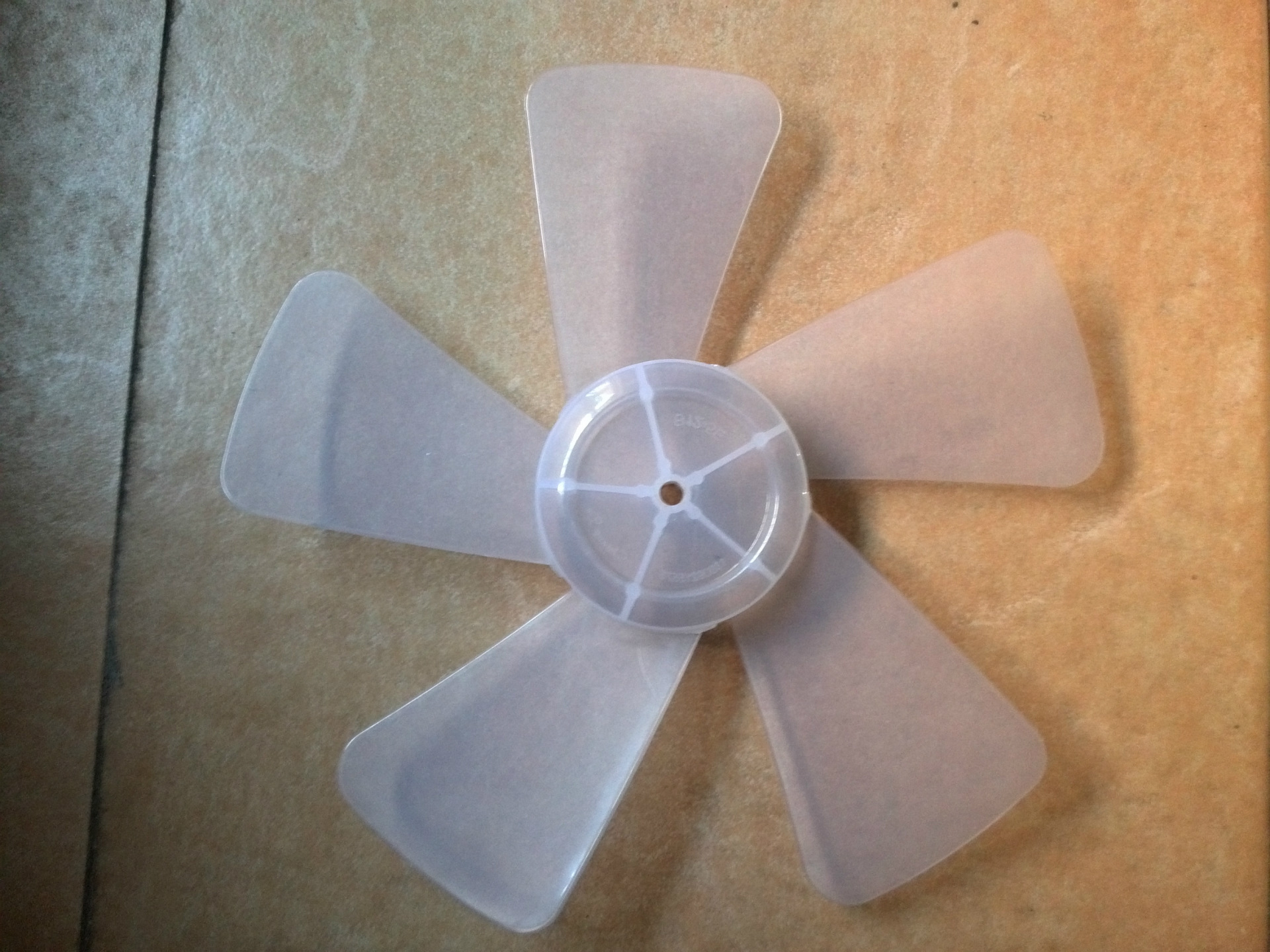
- Fan Blades: Generate airflow through aerodynamic design and precise balancing
- Motor Housings: Protect internal components while ensuring efficient heat dissipation
- Grille Assemblies: Provide safety protection while minimizing airflow resistance
- Control Knobs/Buttons: Enable user interaction with precise tactile feedback
- Mounting Structures: Ensure stability and reduce vibration transmission
Aerodynamic Principles in Fan Design
The performance of fan components is based on fundamental principles of fluid dynamics:
Airfoil Design: Curved blade profiles that create pressure differences to generate airflow
Angle of Attack: Optimal blade angle to maximize efficiency while minimizing noise
Tip Clearance: Critical gap between blade tips and housing that affects performance
Balance Requirements: Precision balancing to eliminate vibration and extend bearing life
In simple terms, every curve, angle, and dimension of a fan component is engineered to maximize airflow efficiency while minimizing energy consumption and noise.
Material Science: Choosing the Right Plastic for Every Application
Material Selection Criteria
Choosing the right plastic is critical for fan component performance. We consider:
- Functional Requirements: Strength, stiffness, heat resistance, and chemical compatibility
- Processing Characteristics: Flowability, shrinkage rates, and moldability
- Environmental Factors: UV resistance, temperature stability, and humidity tolerance
- Cost Efficiency: Material cost, production yield, and lifecycle durability
Our Material Expertise
Polypropylene (PP)
- Cost-effective solution for structural components
- Density: 0.90-0.91 g/cm³ (lightweight yet strong)
- Tensile Strength: 25-35 MPa (ISO 527, ASTM D638)
- Heat Deflection Temperature: 100-120°C
- Applications: Fan blades, housing components, control knobs
Acrylonitrile Butadiene Styrene (ABS)
- Excellent impact resistance and rigidity
- Tensile Strength: 40-50 MPa (ISO 527, ASTM D638)
- Heat Deflection Temperature: 88-95°C
- Surface finish: High-gloss or matte options available
- Applications: Motor housings, decorative components, high-stress parts
Polycarbonate (PC)
- Superior transparency and impact strength
- Light Transmission: 88% for clear components
- Tensile Strength: 60-75 MPa (ISO 527, ASTM D638)
- Heat Deflection Temperature: 130-140°C
- Applications: Lighted components, transparent grilles, premium housings
Polystyrene (PS)
- Excellent moldability for complex shapes
- Density: 1.04-1.06 g/cm³
- Impact Strength: 15-20 kJ/m² (ISO 179)
- Cost-effective for high-volume production
- Applications: Decorative trims, low-stress components
Advanced Material Solutions
Bio-Based Composites
- 30% 甘蔗 fiber reinforced PP with 42% lower carbon footprint
- Meets FDA food contact requirements
- Suitable for eco-conscious product lines
Glass-Filled Formulations
- 10-30% glass fiber reinforcement for enhanced strength
- Tensile modulus improvement: 150-250%
- Reduced warpage and improved dimensional stability
The Manufacturing Revolution: Precision Injection Molding
The Challenges of Fan Component Manufacturing
Fan components may look simple, but manufacturing them to appliance standards presents significant challenges:
- Dimensional Accuracy: ±0.05mm tolerance for critical fit areas
- Balancing Requirements: Rotational balance within 2g·cm for vibration-free operation
- Surface Finish: Class A surfaces with no visible defects
- Temperature Resistance: Must withstand 40-85°C continuous operation
- Impact Performance: Pass 1.5m drop test requirements
Injection Molding: The Foundation of Precision
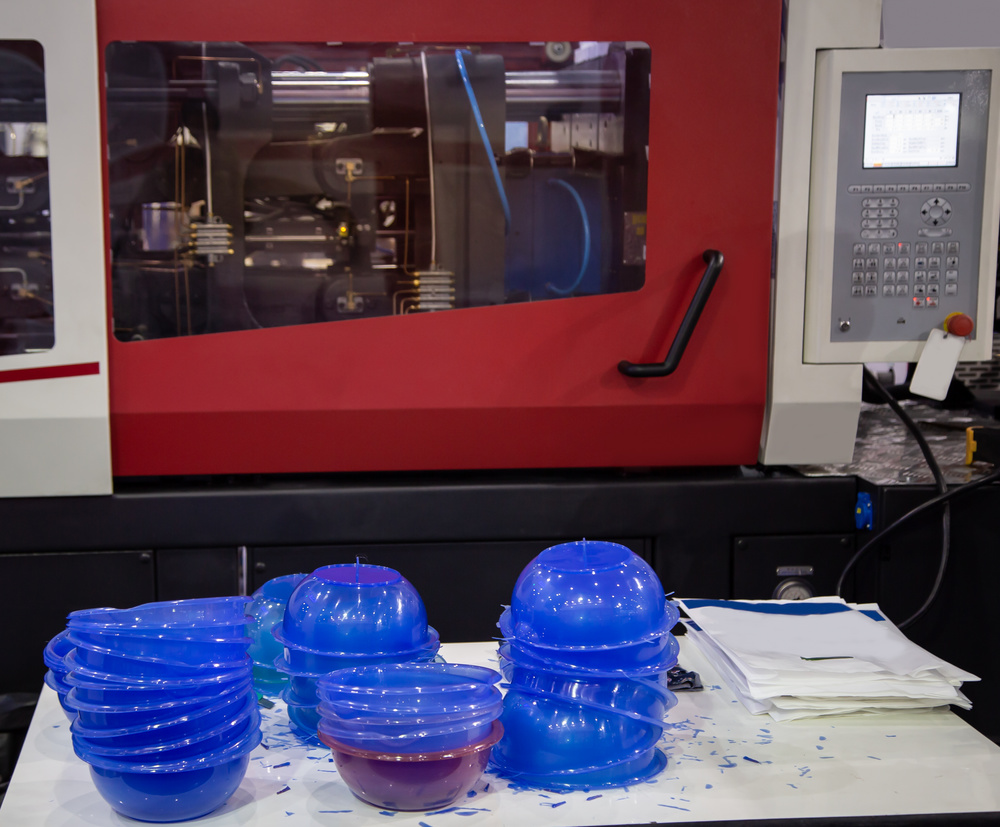
At Xiamen GoldCattle, our state-of-the-art injection molding technology delivers:
1. High-Precision Molding
- Computer-controlled injection processes with closed-loop feedback
- Repeatability within ±0.02mm for critical dimensions
- Consistent part quality across millions of production cycles
- Ability to produce complex geometries with thin walls (0.8-1.5mm)
2. Advanced Process Control
- Precision temperature control (±1°C) for optimal material flow
- Variable injection speed profiles for complex geometries
- Pressure holding optimization to eliminate sink marks and voids
- In-mold monitoring systems for real-time quality assurance
3. Secondary Processing Capabilities
- Ultrasonic welding for strong, clean assembly joints
- Vibration welding for large surface area bonding
- Hot stamping for decorative logos and markings
- Pad printing for multi-color decorative elements
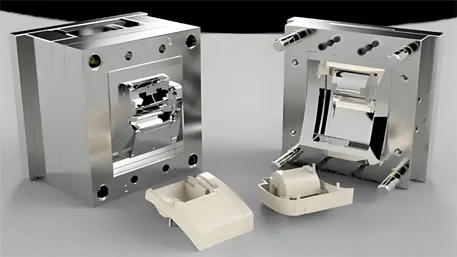
Mold Design Excellence: The Key to Quality
Precision Mold Engineering
Our mold design expertise ensures optimal component performance:
Mold Flow Analysis
- Computer simulation of filling patterns to optimize gate locations
- Prediction of weld lines, air traps, and potential defects
- Optimization of cooling channel layout for uniform solidification
- Warpage prediction and compensation
Cooling System Design
- Conformal cooling channels for uniform heat distribution
- Temperature control within ±2°C across all cavity surfaces
- Optimized cycle times through efficient heat removal
- Preventive maintenance scheduling based on thermal profiling
Ejection System Engineering
- Sequential ejection for complex geometries
- Precision ejector pin placement to prevent cosmetic defects
- Cushioned ejection to minimize component stress
- Self-cleaning mechanisms to prevent contamination
Our Customization Process: From Concept to Reality
Step 1: Requirements Analysis
Every custom fan component project starts with understanding your specific needs:
- Functional Requirements: Airflow performance, noise targets, safety standards
- Aesthetic Goals: Surface finish, color matching, design language integration
- Performance Targets: Durability expectations, temperature range, humidity resistance
- Regulatory Compliance: UL, CE, RoHS, and regional safety standards
Step 2: Engineering Design
Our engineering team uses advanced tools to create optimal solutions:
- 3D CAD Modeling: Parametric design with full associativity
- Finite Element Analysis: Structural integrity verification under operating conditions
- Computational Fluid Dynamics: Airflow simulation for blade optimization
- Design for Manufacturing: Production optimization from initial concept
Step 3: Prototyping and Testing
We validate designs through rigorous testing:
- Rapid Prototyping: SLA, SLS, or CNC machined prototypes for form and fit testing
- Functional Testing: Airflow measurement, noise testing, vibration analysis
- Environmental Testing: Temperature cycling, humidity exposure, UV resistance
- Durability Testing: Lifecycle simulation, impact testing, wear resistance
Step 4: Production and Quality Control
Our manufacturing process ensures consistent quality:
- Precision Molding: State-of-the-art injection molding machines with 5-axis control
- In-Process Inspection: Automated dimensional verification during production
- Statistical Process Control: Real-time monitoring of critical parameters
- Traceability: Complete production documentation and batch tracking
Quality Standards: Certifications You Can Trust
International Quality Certifications
At Xiamen GoldCattle, we adhere to the most stringent industry standards:
ISO 9001:2015
- Quality management system certification
- Process approach with risk-based thinking
- Continuous improvement methodology
- Customer satisfaction monitoring
ISO 14001:2015
- Environmental management system
- Sustainable manufacturing practices
- Waste reduction and energy efficiency
- Environmental performance monitoring
IATF 16949:2016
- Automotive quality management system
- Applicable to fan components for automotive applications
- Advanced product quality planning (APQP)
- Failure mode and effects analysis (FMEA)
Material and Performance Standards
Material Safety:
- RoHS Compliance: Restriction of hazardous substances
- REACH Compliance: Chemical safety standards
- FDA Compliance: Food contact safety for applicable components
- UL 94: Flammability rating (V-0 for critical components)
Performance Requirements:
- IEC 60335: Household and similar electrical appliances
- UL 507: Fans and blowers safety standard
- GB 4706.27: Chinese national standard for fans
- EN 60335: European standard for electrical appliances
Dimensional and Mechanical Standards:
- ISO 286: Geometric product specifications
- ISO 527: Tensile testing of plastics
- ISO 179: Charpy impact testing
- ISO 178: Flexural properties of plastics
Technical Advantages: Why Choose Xiamen GoldCattle
Performance Comparison
|
Performance Metric
|
Industry Standard
|
Our Capability
|
Improvement
|
|
Dimensional Accuracy
|
±0.1mm
|
±0.03mm
|
70% better
|
|
Weight Consistency
|
±3%
|
±0.5%
|
83% improvement
|
|
Production Yield
|
95%
|
99.5%
|
90% reduction in defects
|
|
Cycle Time
|
45-60 sec
|
25-35 sec
|
40% faster
|
|
Tool Life
|
500,000 shots
|
1,500,000 shots
|
200% longer
|
Design and Engineering Expertise
Our team of designers and engineers brings unparalleled expertise:
- Aerodynamic Design: CFD-optimized blade profiles for maximum efficiency
- Noise Reduction: Acoustic engineering for quiet operation
- Material Science: Custom formulations for specific performance requirements
- Manufacturing Optimization: Process engineering for cost-effective production
Custom Solutions for Every Need
We specialize in creating fan components for:
- Household Fans: Table fans, stand fans, ceiling fans, tower fans
- Industrial Fans: Ventilation systems, exhaust fans, cooling fans
- Automotive Fans: Radiator fans, HVAC systems, seat ventilation
- Electronics Cooling: CPU fans, server cooling, LED heat management
Case Study: Energy-Efficient Smart Fan Transformation
Client Challenge
A leading home appliance manufacturer needed a custom fan blade solution that would:
- Reduce energy consumption by 25% compared to current designs
- Lower operational noise by 3dB while maintaining airflow performance
- Meet strict environmental standards for recycled material content
- Ensure consistent quality across high-volume production
Our Solution
Aerodynamic Innovation: CFD-optimized blade design with variable pitch angles
Material Technology: 20% recycled PP with glass fiber reinforcement
Manufacturing Excellence: Precision injection molding with in-mold balancing
Quality Assurance: 100% automated balancing and performance testing
Results
Energy Efficiency: 28% reduction achieved (exceeding target)
Noise Reduction: 3.2dB improvement at full speed
Sustainability: 42% lower carbon footprint
Production Quality: 99.8% yield rate with zero customer complaints
Market Impact: Product line received “Energy Star Most Efficient” certification
Future Trends: The Next Generation of Fan Components
Smart Technology Integration
The future of fan components is becoming increasingly intelligent:
- Sensor Integration: Built-in temperature and humidity sensors
- Variable Geometry: Adjustable blade angles for optimal performance
- Wireless Connectivity: IoT-enabled components for smart home integration
- Self-Diagnosis: Condition monitoring for predictive maintenance
Sustainable Materials and Practices
Environmental consciousness is shaping the future of fan manufacturing:
- Bio-Based Polymers: Plant-derived materials with reduced environmental impact
- Recycled Content: Increased use of post-consumer recycled plastics
- Lightweight Design: Reduced material usage through advanced engineering
- Circular Economy: Design for disassembly and recycling
Advanced Manufacturing Technologies
New technologies are revolutionizing fan component production:
- 3D Printing: Rapid prototyping and small-batch production
- In-Mold Labeling: Decorative elements integrated during molding
- Microcellular Foaming: Weight reduction with maintained strength
- Artificial Intelligence: AI-optimized process parameters and quality control
Conclusion: The Precision Engineering That Defines Great Fans
At Xiamen GoldCattle, we believe that the quality of a fan is determined by the precision of its smallest components. Every curve, every dimension, and every material choice contributes to the overall performance, durability, and user experience.
Our 20 years of experience in precision injection molding, combined with our commitment to innovation, quality, and sustainability, makes us the partner of choice for manufacturers who refuse to compromise on excellence. Whether you’re developing the next generation of energy-efficient fans or creating a premium product line that stands out from the competition, we have the expertise and capabilities to bring your vision to life.
Contact Us
Visit our website: www.xmgoldcattle.com
Let’s work together to create fan components that not only meet technical requirements but also exceed customer expectations. Because when it comes to household appliances, precision in every detail—and we excel at the details.