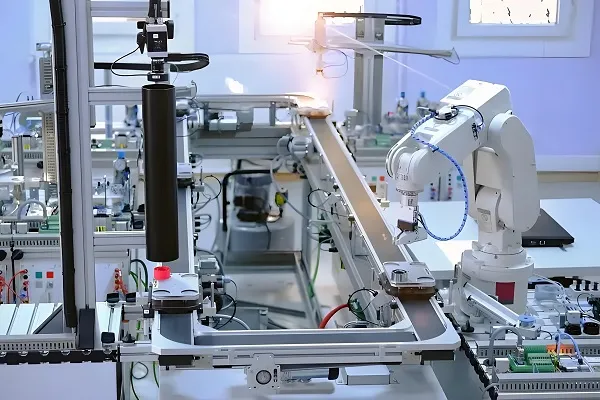
Technical Advantages: Precision Manufacturing Capabilities Based on ISO 20457 Standard
According to ISO 20457:2018 “Plastics – Tolerances and acceptance conditions for moulded parts” and GB/T 14486-2019 “Dimensional tolerances for plastic moulded parts”, the core advantage of Xiamen Goldcattle’s custom plastic components service lies in providing a full-process solution from concept design to mass production, with precise control over dimensional accuracy, surface quality, and mechanical properties. Compared with traditional manufacturing, our custom service can achieve:
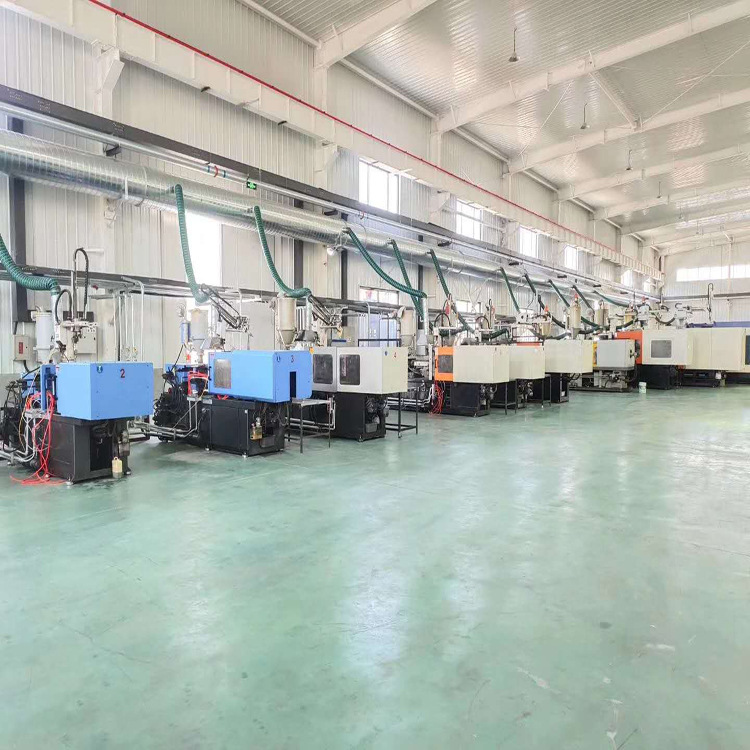
- Micron-level dimensional control: Based on ISO 20457 standard, critical dimensional tolerance can be controlled within ±0.05mm, surface roughness Ra≤0.4μm, far exceeding industry average level
- Material performance optimization: Provide a wide selection of high-performance materials from PP, ABS, PC to PEEK according to different application scenarios, ensuring optimal balance between product performance and cost
- Complex structure realization: Capable of manufacturing thin-walled structures (minimum wall thickness 0.3mm), complex curved surfaces, and internal channel designs that are difficult to achieve with traditional processes
Professional Team: Engineering Team with Over 15 Years of Industry Experience
Xiamen Goldcattle has a technical team composed of 20 professional engineers, 12 of whom have over 15 years of experience in plastic mold design and injection molding, all holding relevant industry qualification certifications. Core team members include:
- Chief Mold Engineer Chen Gang: 20 years of plastic mold design experience, has led multiple automotive parts and medical device mold projects, proficient in Moldflow CAE analysis
- Material Expert Lin Xiaohua: 18 years of material science background, focusing on plastic material selection and performance optimization, familiar with processing characteristics of various engineering plastics
- Process Engineer Wang Jianguo: 16 years of injection molding process experience, specialized in process parameter optimization and quality problem solving, has provided technical support for many well-known enterprises
Based on product drawings, 3D model files (STL/STEP format) or samples provided by customers, our engineering team will provide professional Design for Manufacturability (DFM) analysis, including:
- Structural optimization suggestions: Conduct strength analysis and molding feasibility evaluation of product structure according to ISO 20457 standard
- Material selection guidance: Recommend the most suitable plastic materials based on product usage environment and performance requirements
- Mold design solution: Provide detailed mold design plan and cost estimation to ensure smooth project progress
Authoritative Standards: Strictly Following International Quality Standard Systems
Xiamen Goldcattle strictly follows multiple international and national standards to ensure that every custom plastic component meets customer quality requirements:
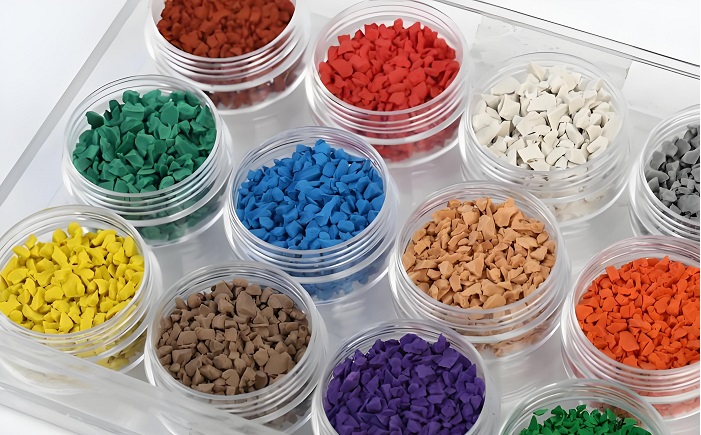
Material Performance Comparison Table
|
Material Name
|
Density (g/cm³)
|
Tensile Strength (MPa)
|
Flexural Strength (MPa)
|
HDT (1.82MPa, °C)
|
Impact Strength (kJ/m²)
|
Mold Shrinkage (%)
|
Typical Applications
|
|
ABS
|
1.02-1.08
|
35-50
|
50-80
|
80-110
|
15-40 (notched)
|
0.4-0.7
|
Electronic housings, automotive parts, toys
|
|
Polypropylene (PP)
|
0.89-0.91
|
20-30
|
30-50
|
100-120
|
2-5 (notched)
|
1.5-2.5
|
Automotive components, household appliance housings, packaging
|
|
Polycarbonate (PC)
|
1.18-1.20
|
60-70
|
90-110
|
130-140
|
60-80 (unnotched)
|
0.5-0.8
|
Transparent parts, safety helmets, optical components
|
|
Nylon 6 (PA6)
|
1.13-1.15
|
60-90
|
90-120
|
70-90
|
5-20 (notched)
|
0.8-2.5
|
Gears, bearings, electrical connectors
|
|
Nylon 66 (PA66)
|
1.14-1.15
|
70-90
|
100-130
|
75-95
|
5-15 (notched)
|
1.5-2.2
|
Automotive parts, mechanical components
|
|
Acetal (POM)
|
1.41-1.43
|
60-75
|
80-100
|
110-130
|
6-10 (notched)
|
1.2-3.0
|
Precision gears, fasteners, sliding components
|
|
PEEK
|
1.30-1.32
|
90-100
|
130-150
|
340-350
|
8-15 (notched)
|
1.2-1.8
|
Aerospace components, medical implants
|
|
HDPE
|
0.94-0.96
|
20-35
|
25-40
|
60-80
|
20-100 (unnotched)
|
1.5-3.0
|
Chemical tanks, pipes, bottle caps
|
|
Rigid PVC
|
1.3-1.45
|
40-60
|
70-90
|
70-80
|
2-5 (notched)
|
0.2-0.6
|
Pipes, profiles, construction materials
|
Note: All data is based on ISO standard test methods (ISO 527 for tensile strength, ISO 178 for flexural strength, ISO 75 for HDT, ISO 179 for impact strength)
Material Selection Guide Table
|
Application Requirement
|
Recommended Materials
|
Key Performance Features
|
Application Examples
|
|
High Strength Requirements
|
PA66, POM, PEEK
|
Tensile strength >70MPa, flexural strength >100MPa
|
Mechanical structural parts, transmission components
|
|
High Toughness Requirements
|
PC, ABS, TPU
|
Impact strength >40kJ/m², elongation at break >50%
|
Protective housings, sports equipment
|
|
High Temperature Resistance
|
PEEK, PPS, LCP
|
HDT >200°C, continuous use temperature >150°C
|
Automotive engine components, electronic parts
|
|
Chemical Resistance
|
PTFE, PP, HDPE
|
Excellent resistance to acids, alkalis, solvents, oils
|
Chemical equipment, piping systems
|
|
Transparency Requirements
|
PC, PMMA, PS
|
Light transmittance >85%, haze <2%
|
Optical components, transparent housings
|
|
Wear Resistance
|
POM, PA66, PTFE
|
Low friction coefficient, small wear rate
|
Gears, bearings, sliding components
|
|
Electrical Insulation
|
PBT, PET, PP
|
Dielectric strength >20kV/mm, volume resistivity >10¹⁴Ω·cm
|
Electronic insulation components, connectors
|
|
Food Contact
|
PP, PE, PC
|
Complies with GB 4806.7-2016, non-toxic and odorless
|
Food packaging, kitchenware, medical devices
|
1. Dimensional Accuracy Standards
According to ISO 20457:2018 “Plastics – Tolerances and acceptance conditions for moulded parts”, we control product dimensional errors within:
- Critical dimensional accuracy: ±0.05mm (TG3 tolerance class), suitable for precision parts with high fitting requirements
- General dimensional accuracy: ±0.15mm (TG5 tolerance class), suitable for most structural parts
- Geometric tolerances: Flatness ≤0.1mm/100mm, perpendicularity ≤0.2mm/100mm, ensuring assembly accuracy
2. Material Performance Standards
All plastic materials used comply with the following standards:
- Food contact materials: Complies with GB 4806.7-2016 “Food contact plastic materials and articles”, total heavy metal migration ≤10mg/kg
- Electronic and electrical materials: Meets EU RoHS 2.0 directive, restricting the use of 6 hazardous substances including lead and mercury
- Medical-grade materials: Complies with GB/T 16886 “Biological evaluation of medical devices”, cytotoxicity grade ≤1
3. Surface Quality Standards
- Surface roughness: Ra≤0.8μm (general requirement), Ra≤0.2μm (high-gloss requirement)
- Surface defects: Short shot area ≤0.5mm², flash width ≤0.05mm, bubble diameter ≤0.3mm
- Color consistency: Color difference ΔE≤2.0 (complying with CIE LAB color space standard)
Process Flow: Standardized Six-Step Manufacturing Process
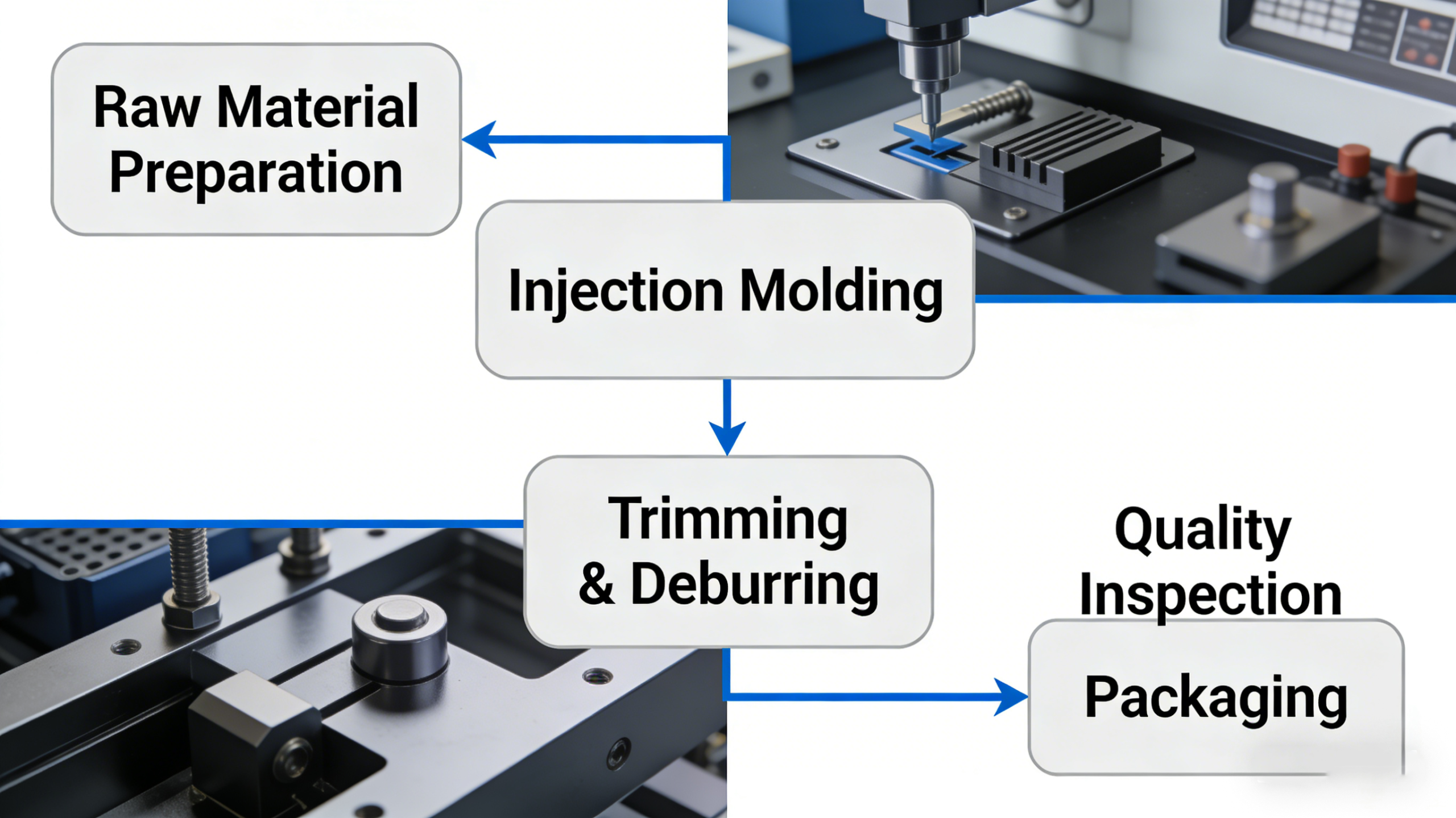
Step 1: Requirement Analysis and DFM Evaluation
The senior engineering team conducts product manufacturability analysis, providing professional suggestions based on product functional requirements and usage environment:
- Product structure optimization to avoid molding defects
- Material selection suggestions to balance performance and cost
- Mold design solution to ensure production feasibility
Step 2: Mold Design and Manufacturing
Adopt advanced CAD/CAE technology for mold design to ensure mold quality and service life:
- Design software: Using professional software such as UG, Pro/E, AutoCAD
- CAE analysis: Conducting flow, cooling, and warpage analysis through Moldflow
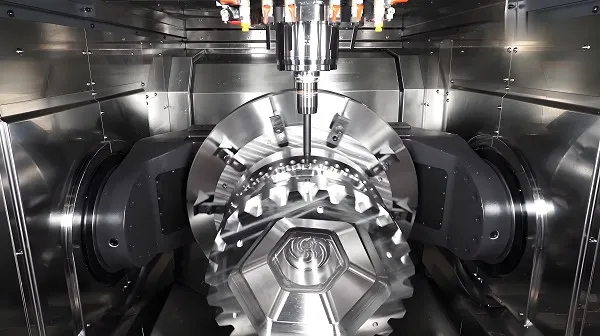
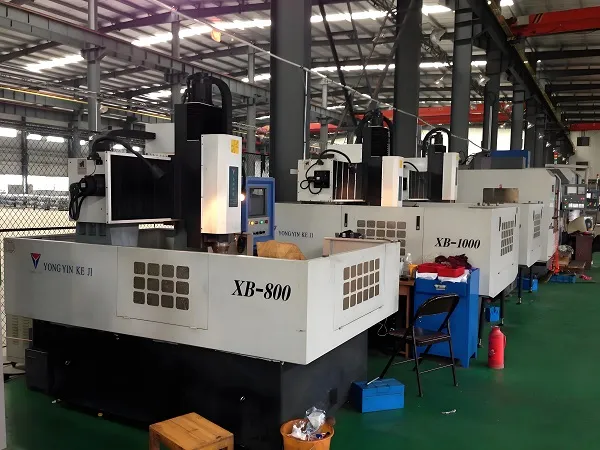
- Processing equipment: 5-axis machining center with positioning accuracy ≤0.005mm
- Mold materials: Selecting high-quality mold steels such as Cr12MoV, S136, H13 according to production volume
Step 3: Mold Testing and Process Optimization
Conduct mold debugging and process parameter optimization in professional mold testing workshop:
- Injection molding equipment: Equipped with Haitian, Chen Hsong and other brand injection molding machines with clamping force 50-2000 tons
- Process control: Precisely control temperature, pressure, speed and other parameters to ensure stable product quality
- Quality inspection: Conduct full-dimensional inspection and performance testing on mold test samples
Step 4: Mass Production and Process Control
Adopt strict process control system to ensure stability and consistency of mass production:
- Production management: Implement ISO 9001 quality management system with clear operating specifications for each process
- Process monitoring: Real-time monitoring of injection molding parameters, sampling inspection every 2 hours
- Quality traceability: Record production data through MES system to achieve full traceability of product quality
Step 5: Post-Processing and Surface Decoration
Provide various post-processing and surface decoration processes to meet different appearance requirements:
- Surface treatment: Polishing, sandblasting, texture, etching, etc.
- Coating processes: Spraying, silk-screen printing, pad printing, hot stamping, etc.
- Assembly services: Provide product assembly and packaging services
Step 6: Quality Inspection and Delivery
Strict quality inspection system to ensure products meet customer requirements:
- Dimensional inspection: Coordinate measuring machine, projector and other precision testing equipment
- Performance testing: Mechanical property tests such as tensile strength, impact strength, heat distortion temperature
- Environmental testing: Environmental adaptability tests such as high-low temperature cycling, damp heat, salt spray
Quality Assurance: Comprehensive Quality Control System
Xiamen Goldcattle has established a comprehensive quality control system to ensure that every custom plastic component meets customer quality requirements:
1. Raw Material Control
All raw materials undergo strict inspection and testing:
- Supplier evaluation: Select high-quality raw material suppliers and establish long-term cooperative relationships
- Incoming inspection: Conduct appearance, density, melt index and other index tests on each batch of raw materials
- Material traceability: Record raw material batch information to achieve quality traceability
2. In-Process Quality Control
Strict process control to ensure production process stability:
- First article inspection: Conduct first article inspection before each batch production to ensure correct process parameters
- Patrol inspection system: Conduct quality checks every 2 hours during production
- Statistical process control: Adopt SPC technology to monitor production process and timely detect and solve problems
3. Finished Product Quality Inspection
Comprehensive finished product inspection to ensure product quality meets requirements:
- Full-dimensional inspection: 100% inspection for critical dimensions, sampling according to AQL 1.0 for general dimensions
- Appearance inspection: Conduct appearance inspection under standard light source to ensure surface quality
- Performance testing: Conduct corresponding performance tests according to product requirements
Application Cases: Successfully Serving Well-Known Enterprises in Multiple Industries
With professional technology and strict quality control, Xiamen Goldcattle has successfully provided custom plastic component services for well-known enterprises in multiple industries:
Case 1: Automotive Component Customization
- Project background: Customizing plastic components around the engine for a well-known automobile manufacturer
- Technical challenges: High temperature resistance (120°C), high strength, complex structure
- Solution: Using PA66+30% glass fiber material, optimizing mold cooling system
- Quality indicators: Dimensional accuracy ±0.1mm, high temperature resistance 150°C, impact strength ≥80kJ/m²
Case 2: Medical Device Components
- Project background: Customizing surgical instrument handles for a medical device company
- Technical challenges: Medical-grade materials, high precision, surface antibacterial treatment
- Solution: Using ABS medical-grade material, mold surface coated with antibacterial coating
- Quality indicators: Complies with GB/T 16886 standard, cytotoxicity grade 1
Case 3: Electronic Device Housings
- Project background: Customizing smartphone housings for a consumer electronics enterprise
- Technical challenges: Thin-walled structure, high-gloss surface, drop performance
- Solution: Using PC+ABS alloy material, optimizing injection molding process parameters
- Quality indicators: Wall thickness 0.8mm, surface roughness Ra≤0.05μm, drop test 1.5m without burst.
Service Commitment: Professional, Efficient, and Reliable
Xiamen Goldcattle commits to providing professional, efficient, and reliable custom plastic component services for every customer:
1. Technical Support Commitment
- Provide free DFM analysis services
- 7×24 hour technical consultation support
- Professional design optimization suggestions
2. Quality Assurance Commitment
- All products comply with relevant international and national standards
- Provide detailed quality inspection reports
- 1-year quality guarantee period, lifetime technical support
3. Delivery Time Commitment
- Mold design and manufacturing: 15-30 working days
- Sample production: 5-7 working days
- Mass production: Negotiable according to order quantity
4. After-Sales Service Commitment
- Provide product usage and maintenance guidance
- Support product improvement and optimization services
- Establish customer files and provide long-term technical support
Contact Us: Start Your Custom Plastic Component Journey
If you have custom plastic component requirements, please contact our professional team:
- Website: www.xmgoldcattle.com
Our professional engineering team will provide you with free technical consultation and solution design to help you achieve product innovation and cost optimization.
Company Qualification Certifications:
- ISO 9001:2015 Quality Management System Certification
- ISO 13485:2016 Medical Device Quality Management System Certification
- IATF 16949:2016 Automotive Industry Quality Management System Certification
- National High-tech Enterprise Certification
Technical Standards Followed:
- ISO 20457:2018 Plastics – Tolerances and acceptance conditions for moulded parts
- GB/T 14486-2019 Dimensional tolerances for plastic moulded parts
- GB 4806.7-2016 Food contact plastic materials and articles
- GB/T 16886 Biological evaluation of medical devices
- RoHS 2.0 Restriction of Hazardous Substances Directive