Metal 3D Printing Services for Complex & Low-Volume Parts
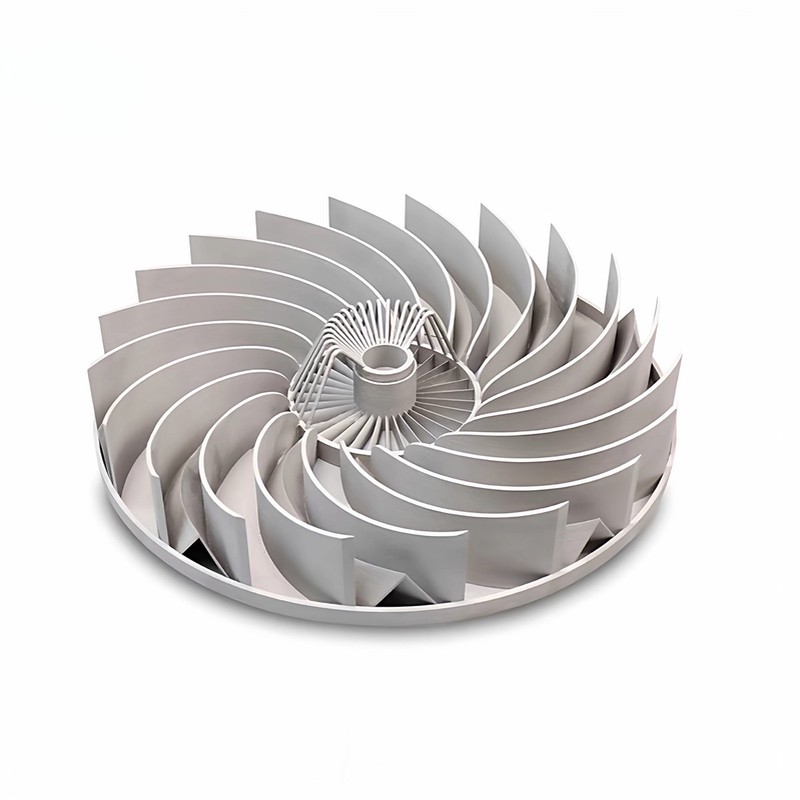
Metal 3D printing is ideal for complex, lightweight, and low-volume metal parts that are difficult or expensive to machine using traditional CNC processes. We deliver industrial-grade DMLS/SLM parts with certified quality for aerospace, medical, and industrial applications.
What Problems We Solve
- Complex Internal Channels: Manufacture conformal cooling channels and internal flow paths that are impossible to produce with CNC machining.
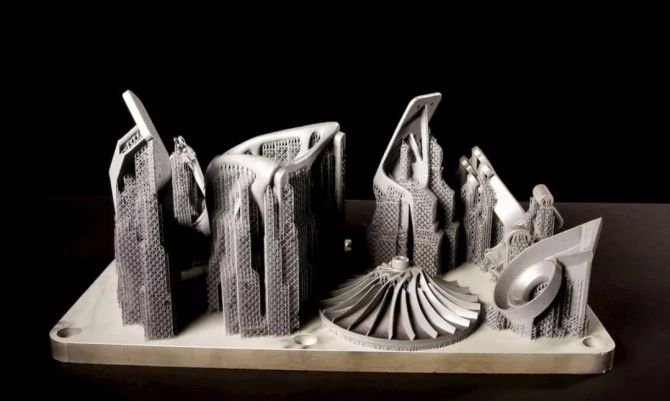
- Lightweight Lattice Structures: Build optimized lattice and topology-optimized parts that reduce weight by up to 50% while maintaining structural strength.
- Rapid Prototyping Without Tooling: Cut your development time by up to 50% by eliminating the need for custom tooling or molds for early-stage testing.
- Low-Volume Production (1–100 pcs): Cost-effective production for small batches without the high upfront cost of traditional manufacturing tooling.
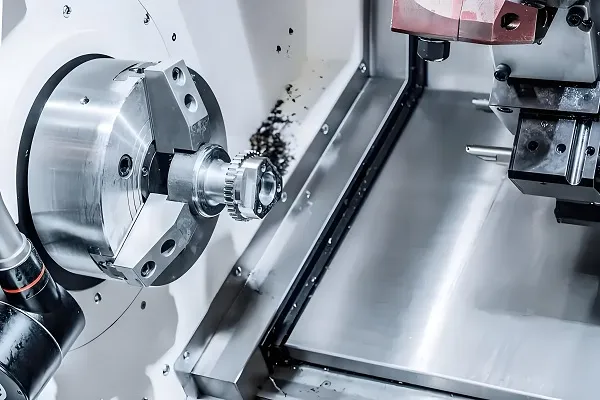
Metal 3D Printing vs CNC: When to Choose Which
Metal 3D printing is not a replacement for CNC machining — it is a complementary technology. The right choice depends on your part geometry, volume, and tolerance requirements.
Technical Capabilities & Compliance
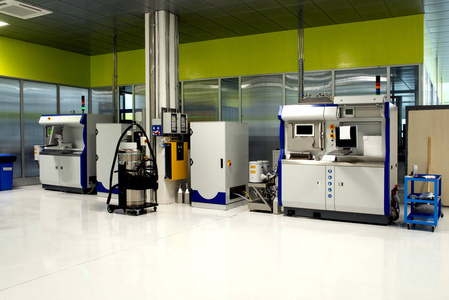
We use industrial-grade Direct Metal Laser Sintering (DMLS) and Selective Laser Melting (SLM) technologies to produce fully dense metal parts with consistent mechanical properties.
- Tolerance: ±0.1–0.2mm for standard parts
- Layer Thickness: 20–60μm for high-resolution builds
- Relative Density: ≥99.5% (Tested per GB/T 38979-2020)
- Build Size: Up to 250 x 250 x 300mm
Certified Standards
Our production process complies with international and industry standards:
- GB/T 38979-2020: Density Test for Additive Manufactured Metallic Parts
- ISO 14801:2017: Flow Rate Test for Metal Powders
- ASTM E8: Standard Test Methods for Tension Testing of Metallic Materials
- ISO/ASTM 52900: Additive Manufacturing – General Principles – Terminology
*All test data is for reference only, subject to actual part geometry and process parameters.
Detailed Process, Workflow & Material Details
1. Manufacturing Technology: DMLS & SLM
Direct Metal Laser Sintering (DMLS) and Selective Laser Melting (SLM) are the two leading powder-bed fusion additive manufacturing technologies we use, both enabling the production of fully dense, industrial-grade metal parts.
Selective Laser Melting (SLM)
SLM fully melts the metal powder particles with a high-energy fiber laser, producing 99.9% dense parts with mechanical properties equivalent to forged materials. This technology is ideal for high-strength structural parts, aerospace components, and medical implants that require strict mechanical performance.
Direct Metal Laser Sintering (DMLS)
DMLS sinters the surface of the powder particles to bond them together, allowing for a wider range of material combinations and lower thermal stress. It is perfect for complex functional parts, heat exchangers, and low-volume production parts with complex geometries.
The entire printing process takes place in a sealed inert argon chamber, with oxygen level controlled below 0.1% to prevent oxidation of the metal powder. We control the layer thickness between 20-60μm, ensuring high resolution and fine detail for your parts, while supporting overhangs as low as 10 degrees with optimized support structures.
2. End-to-End Production Workflow
Our standardized 7-step workflow ensures consistent quality, full traceability, and on-time delivery for every order, with engineering oversight at every stage:
CAD Upload & Quote
DfAM Design Review
Build Parameter Setup
Layer-by-Layer Printing
Post-Processing & Heat Treatment
Quality Inspection & Testing
Delivery with Inspection Report
During post-processing, we perform stress relief heat treatment at 800°C for 2 hours to eliminate residual thermal stress, ensuring your part remains dimensionally stable for years of operation.
3. Detailed Material Introduction
All our metal powder is gas-atomized, with a strict particle size distribution of 15-53μm to ensure optimal flowability and printing quality, complying with ISO 14801 powder test standards. We offer 3 core industrial materials to meet your different application needs:
Titanium Ti6Al4V (TC4)
- Density: 4.43g/cm³, only 57% of steel’s weight
- Tensile Strength: 895-1100MPa, equivalent to forged steel
- Fully biocompatible, excellent corrosion resistance
- Maximum service temperature: 400°C
Best for: Aerospace structural parts, medical implants, high-temperature engine components
Stainless Steel 316L
- Density: 7.98g/cm³, excellent corrosion resistance
- Tensile Strength: 550-650MPa, good ductility and toughness
- Low carbon content, no intergranular corrosion risk
- Maximum service temperature: 800°C
Best for: Industrial tools, fluid handling parts, medical devices, chemical processing components
Aluminum AlSi10Mg
- Density: 2.65g/cm³, ultra-lightweight for weight-sensitive parts
- Tensile Strength: 300-400MPa, excellent thermal conductivity
- High productivity, low cost for large-format parts
- Maximum service temperature: 200°C
Best for: Heat exchangers, automotive parts, lightweight housings, high-speed motor components
*All material performance data is for reference only, tested under standard laboratory conditions.
Material Selection Guide
Choose the right material based on your strength, corrosion resistance, weight, and cost requirements.
*Material performance data is for reference only, tested under standard laboratory conditions.
Key Limitations & Considerations
Transparency is key to building trust. We are clear about what metal 3D printing can and cannot do, to help you make the right engineering decision.
Mechanical Strength
As-built 3D printed parts have slightly lower mechanical strength compared to fully forged CNC parts, and have minor anisotropy in build direction.
Surface Roughness
As-built parts have a rough surface (Ra 6-10μm). For tight tolerance or smooth surface requirements, additional CNC post-processing is required.
Simple Part Cost
For simple, blocky parts with no complex features, 3D printing will be more expensive than CNC machining, especially for large quantities.
Support Structures
Overhangs below 45 degrees require support structures, which need to be removed post-build. This adds minor processing time and cost.
Cost Logic: How Metal 3D Printing Pricing Works
Unlike CNC machining, metal 3D printing cost is not based on material removal, but on the time and material required to build the part layer by layer.
Build Time
The largest cost driver. Larger parts or parts with fine layer thickness take longer to build, directly impacting the total cost.
Material Cost
Metal powder (especially titanium) is more expensive than bar stock. However, material utilization is over 95%, far higher than CNC’s 30-50%.
Post-Processing
Additional cost for support removal, heat treatment, CNC finishing, or surface polishing, depending on your requirements.
Rule of Thumb:
For orders of 1 to 100 parts, metal 3D printing is almost always cheaper than CNC, as it eliminates the programming, setup, and tooling cost. For orders over 100 parts, CNC becomes more cost-effective due to economies of scale.
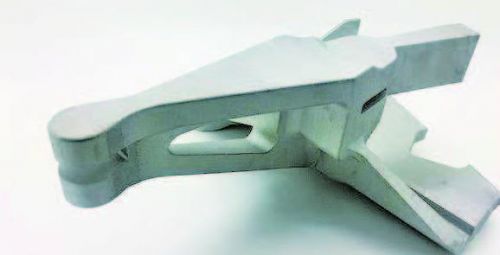
Case Study: Aerospace Bracket Optimization
Challenge
An aerospace customer needed a lightweight mounting bracket with internal conformal cooling channels to reduce operating temperature. Traditional CNC machining could not produce the internal channels without assembling multiple parts, which added weight and assembly cost.
Solution
We used DMLS metal 3D printing with Ti6Al4V titanium alloy to produce the part in a single build. The optimized topology design reduced material usage while maintaining structural strength, and the internal channels were built directly into the part.
Result
- 40% weight reduction compared to the original CNC machined part
- 30% reduction in operating temperature via conformal cooling
- Eliminated 3 assembly steps, reducing total production time by 60%
- Passed all aerospace durability tests with 1000 hours of stable operation
Hybrid Manufacturing: 3D Printing + CNC Finishing
We combine the best of both technologies to deliver parts that have the complex geometry of 3D printing, and the precision and surface finish of CNC machining.
Step 1: 3D Printing
We 3D print the near-net-shape part, including all complex internal features and lightweight structures that CNC cannot produce.
Step 2: Heat Treatment
We perform stress relief heat treatment to eliminate residual thermal stress from the printing process, ensuring dimensional stability.
Step 3: CNC Finishing
We machine the critical mating surfaces to achieve tight tolerances (±0.01mm) and smooth surface finish for your assembly requirements.
Frequently Asked Questions
Q: Is metal 3D printing stronger than CNC machining?
A: For most materials, the mechanical strength of properly processed 3D printed parts is very close to forged CNC parts, within 5-10% difference. However, 3D printed parts have minor anisotropy, meaning strength is slightly lower along the build direction.
Q: What tolerance can you achieve with metal 3D printing?
A: As-built, we can achieve ±0.1-0.2mm tolerance for most parts. With additional CNC post-processing on critical surfaces, we can achieve tolerance down to ±0.005mm, same as standard CNC machining.
Q: Is metal 3D printing cheaper than CNC?
A: It depends on quantity and part complexity. For low volume (1-100 parts) with complex geometry, 3D printing is significantly cheaper. For high volume or simple parts, CNC is more cost-effective.
Q: What kind of parts are suitable for metal 3D printing?
A: Parts with complex internal features, lightweight lattice structures, low-volume production, or parts that require rapid iteration without tooling are the best fit. Simple, high-volume parts are better suited for CNC.
Q: Do you offer post-machining services for 3D printed parts?
A: Yes, we offer full post-processing services including support removal, heat treatment, CNC machining, polishing, and surface coating to meet your exact requirements.
Ready to Get Started?
Upload your CAD file today to get an instant quote for your custom metal 3D printed parts. Our engineering team will review your design and provide recommendations within 24 hours.