Material Selection and Performance Characteristics
The choice of materials is critical in automotive customization, as it directly impacts performance, durability, and aesthetics. European manufacturers utilize a sophisticated selection of advanced materials to meet the exacting requirements of discerning customers.
Carbon Fiber Composites
- Tensile strength: 3,600 MPa (5x stronger than steel)
- Density: 1.55 g/cm³ (30% lighter than aluminum)
- Modulus of elasticity: 230 GPa (excellent stiffness-to-weight ratio)
- Applications: Body panels, interior trim, performance components
Aluminum Alloys
- 6061-T6: Yield strength 276 MPa, excellent machinability
- 7075-T6: Tensile strength 572 MPa, high strength-to-weight ratio
- 5052-H32: Excellent corrosion resistance, formability
- Applications: Structural components, suspension parts, wheels
High-Strength Steels
- 4130 Chromoly: Tensile strength 970 MPa, weldable
- 4340 Alloy Steel: Yield strength 745 MPa, heat treatable
- Docol 1200M: Ultra-high strength for safety components
- Applications: Roll cages, suspension arms, drive shafts
Titanium Alloys
- Ti-6Al-4V: Tensile strength 900 MPa, corrosion resistant
- Density: 4.51 g/cm³ (40% lighter than steel)
- Temperature resistance: Up to 400°C
- Applications: Exhaust systems, high-performance fasteners
Advanced Manufacturing Processes
European automotive customization relies on state-of-the-art manufacturing technologies to achieve the highest levels of precision and quality.
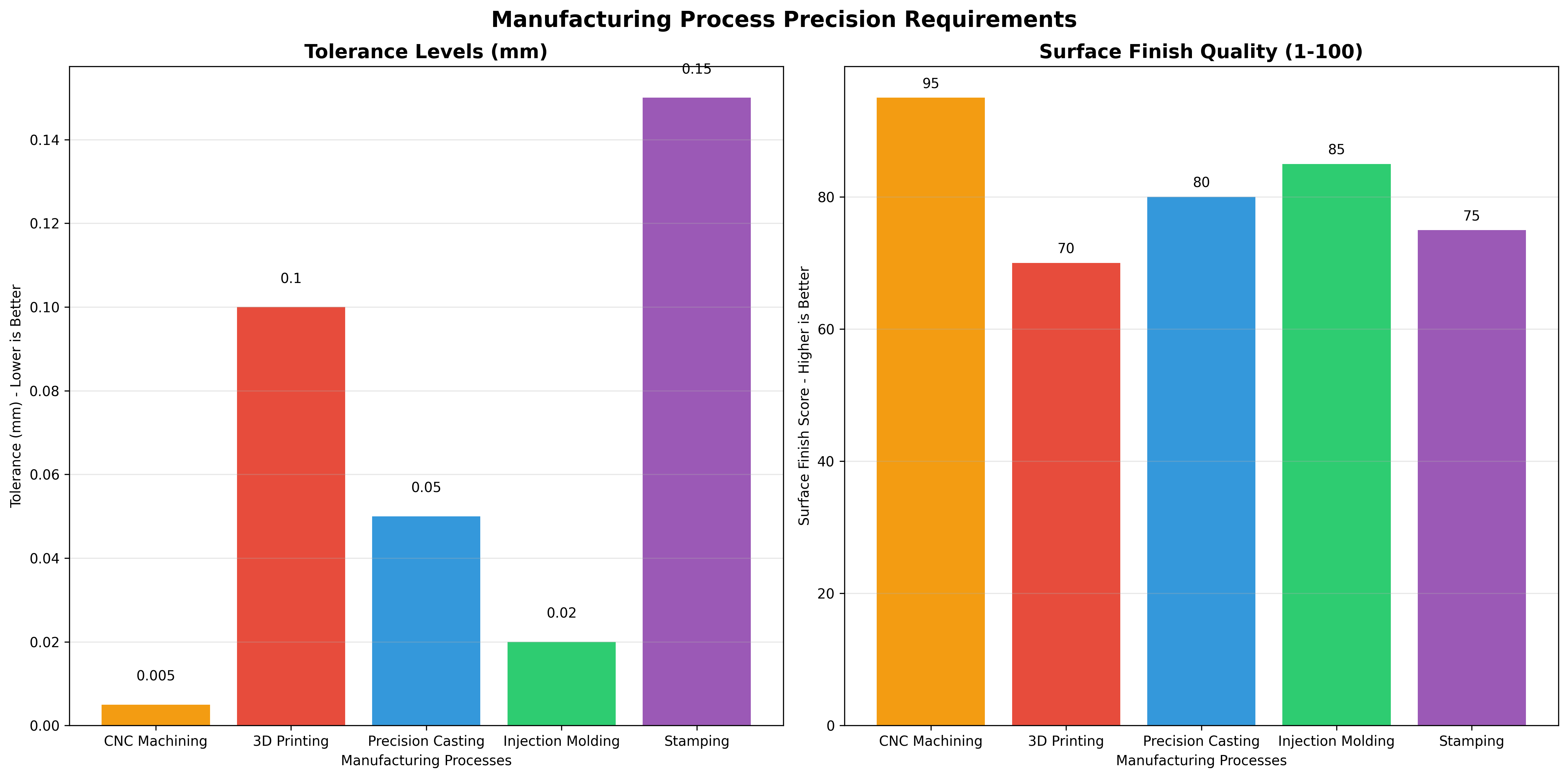
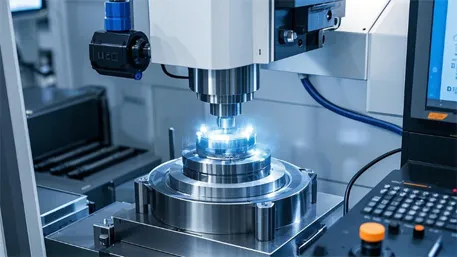
CNC Machining Excellence
- Multi-axis capabilities: 5-axis simultaneous machining for complex geometries
- Tolerance levels: ±0.005mm (5 microns) for critical components
- Surface finish: Ra 0.4 μm (mirror-like quality)
- Materials processed: Aluminum, steel, titanium, composites
3D Printing Technologies
- SLS (Selective Laser Sintering): For high-strength plastic components
- SLM (Selective Laser Melting): For metal parts with complex internal structures
- FDM (Fused Deposition Modeling): For rapid prototyping and tooling
- Layer resolution: 25-100 μm for precise details
Precision Casting
- Investment casting: Dimensional accuracy of ±0.1mm for intricate parts
- Sand casting: Cost-effective for larger components with complex shapes
- Die casting: High-volume production with tight tolerances
- Heat treatment: T6, T7, and H112 processes for optimal material properties
Injection Molding
- High-precision molds: ±0.02mm tolerance for plastic components
- Material compatibility: Engineering plastics, elastomers, composites
- Cycle times: 30-90 seconds for efficient production
- Surface finishes: Textured, painted, or chrome-plated options