Ripple Milling is an advanced CNC machining technique. It uses a rippled toolpath to maintain a constant material removal rate. This significantly boosts machining efficiency and protects both the machine tool and the cutting tool. This innovative technology is transforming traditional CNC machining methods and bringing revolutionary improvements to the manufacturing industry.
I’ve been working in CNC machining for 15 years. I’ve witnessed how Ripple Milling evolved from just an idea into a commonly used machining method in factories today. In this article, I’ll break down this technology to explain how it works, where it can be applied, and what benefits it brings. My goal is to help everyone understand this new addition to modern manufacturing.
What is Ripple Milling?
Basic Definition
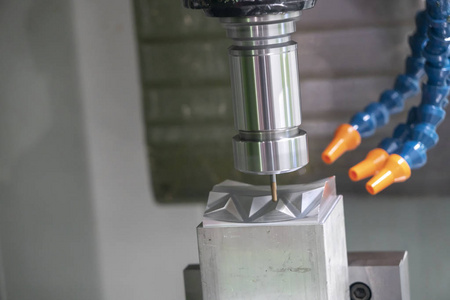
Ripple Milling, also known as Ripple Milling, is a special CNC machining strategy. Its key features include:
- Rippled toolpath: The toolpath consists of continuous arcs, avoiding sharp right-angle turns in traditional machining.
- Dynamic cutting parameter adjustment: Automatically adjusts the cutting step distance and depth based on the machine’s load.
- Constant material removal rate: Maintains a stable material removal rate throughout the machining process.
- Adaptive load control: Intelligently adjusts cutting parameters to protect the machine tool and the cutting tool.
This technology was first proposed by CAD/CAM software developers like WorkNC and has now become a standard feature in high-end CNC machining.
Comparison with Traditional Machining
There are significant differences between traditional CNC machining and Ripple Milling:
|
Machining Method
|
Toolpath
|
Machine Load
|
Machining Efficiency
|
Surface Quality
|
Tool Life
|
|
Traditional Machining
|
Straight lines + right-angle turns
|
High fluctuations, sudden load spikes at corners
|
Low
|
Average
|
Short
|
|
Ripple Milling
|
Continuous arc-shaped ripples
|
Stable, automatically adjusts load
|
60-70% higher
|
Excellent
|
Longer
|
How Ripple Milling Works
Core Technical Principles
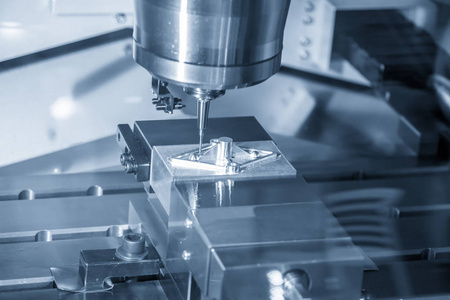
The working principles of Ripple Milling are based on several key mechanisms:
1. Rippled Toolpath Generation
Traditional machining toolpaths usually consist of straight segments and right-angle turns. In contrast, Ripple Milling designs the toolpath as a continuous arc trajectory:
- Arc transitions: Uses arcs at all corners instead of 90° right angles.
- Smooth connections: Adjacent toolpaths connect smoothly through arcs.
- No sudden stops or starts: Keeps the tool movement speed stable, avoiding frequent acceleration and deceleration.
2. Dynamic Cutting Parameter Adjustment
Ripple Milling can monitor and adjust cutting parameters in real-time:
- Load sensing: Monitors spindle load, cutting force, and vibrations in real-time.
- Intelligent adjustment: Automatically adjusts the cutting step distance and depth according to the load.
- Constant removal rate: Maintains a stable material removal rate in different areas.
3. Optimization of Material Removal Rate
Through precise algorithm control, it achieves the best material removal efficiency:
- Treatment of concave areas: Automatically reduces the cutting step distance in concave material areas.
- Treatment of convex areas: Appropriately increases the cutting step distance in convex material areas.
- Load balancing: Ensures uniform machine load throughout the machining process.
Technical Implementation Methods
Ripple Milling is mainly implemented in the following ways:
1. Side Edge Cutting Method
Side edge cutting is the main application method of Ripple Milling:
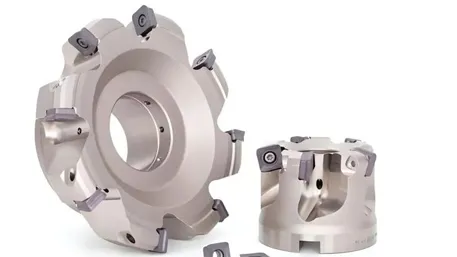
- Tool selection: Uses tools with side edges, such as tungsten carbide or high-speed steel tools.
- Cutting strategy: Utilizes the side edges of the tool for cutting, allowing for larger cutting depths.
- Layered machining: For harder materials, combines the main Z-axis cutting depth with the sub-Z-axis cutting depth.
2. Bottom Edge Cutting Method
Bottom edge cutting suits specific machining needs:
- Application scenarios: Ideal for surface finishing and machining thin-walled parts.
- Advantages: Although the Z-axis cutting depth is small, it still maintains high machining efficiency.
- Surface quality: Achieves a better surface finish.
Advantages of Ripple Milling
Improved Machining Efficiency
Ripple Milling offers significant advantages in machining efficiency:
- 60-70% efficiency increase: Reduces machining time by 40-50% compared to traditional methods.
- Case data: In one actual application, traditional machining took 52 minutes, while Ripple Milling only took 20 minutes.
- Production benefits: Greatly shortens the production cycle and improves equipment utilization.
Protection of Machine Tools and Cutting Tools
This technology effectively protects machine tools and cutting tools:
- Stable load: Avoids sudden load spikes at corners in traditional machining.
- Reduced vibrations: The smooth toolpath significantly decreases machining vibrations.
- Extended tool life: Reduces tool impacts and wear, prolonging tool life.
- Lower maintenance costs: Decreases machine breakdowns and repair needs.
Enhanced Machining Quality
Ripple Milling can significantly improve machining quality:
- Better surface finish: The rippled toolpath reduces machining marks.
- Higher dimensional accuracy: The stable cutting process improves dimensional consistency.
- Improved geometric tolerances: Reduces machining errors caused by load changes.
- Lower residual stress: The uniform distribution of cutting force decreases residual stress in the workpiece.
Real-world Application Cases
Mold Manufacturing Industry
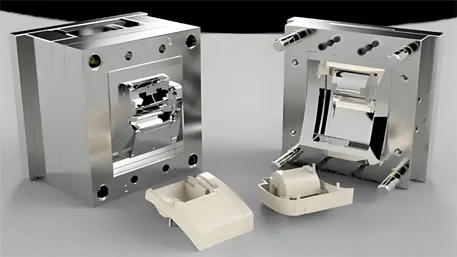
Mold manufacturing is a key application area for Ripple Milling:
- Machining complex cavities: Efficiently completes rough machining for complex mold cavity structures.
- Machining hard materials: Performs well when machining mold steels with a hardness above HRC45.
- Case results: After adopting Ripple Milling, a mold factory reduced the mold machining time from 72 hours to 24 hours.
Aerospace Manufacturing
The aerospace industry has high demands for machining quality and efficiency:
- Machining titanium alloys: Effectively controls the cutting temperature when machining difficult materials like titanium alloys and high-temperature alloys.
- Machining complex structural parts: Provides an ideal machining solution for complex parts such as aircraft engine blades.
- Accuracy assurance: Ensures the machining accuracy and surface quality of key components.
Automotive Component Production
The automotive manufacturing industry widely uses Ripple Milling:
- Mass production: Significantly improves production efficiency in the mass production of automotive components.
- Engine parts: Greatly enhances the machining efficiency of complex parts like engine blocks and cylinder heads.
- Cost control: Reduces production costs and increases market competitiveness.
Application Conditions of Ripple Milling
Equipment Requirements
To apply Ripple Milling, certain equipment conditions must be met:
- CNC system requirements: Requires a modern CNC system that supports complex toolpaths.
- Servo system: High-precision servo drives and high-resolution encoders.
- Spindle performance: Sufficient spindle power and rigidity to withstand heavy cutting loads.
- Stability: The machine tool should have high overall rigidity and stability to reduce vibration effects.
Programming Software
Ripple Milling requires support from professional programming software:
- WorkNC: The software that first proposed the concept of Ripple Milling.
- Mastercam: Supports similar dynamic milling functions.
- UG NX: Has advanced variable-axis milling capabilities.
- PowerMill: Offers efficient rough machining strategies.
Operator Requirements
Operators need to have relevant skills and knowledge:
- Technical training: Must receive specialized training in Ripple Milling.
- Experience accumulation: Gain practical experience in machining different materials and parts.
- Parameter optimization: Be able to optimize machining parameters according to actual conditions.
- Problem-solving: Have the ability to handle issues that arise during the machining process.
Pages: 1 2