Complete Guide to High-Density Polyethylene Machining Processes, Design Guidelines and Applications
Introduction to HDPE CNC Machining
High-Density Polyethylene (HDPE) is a versatile thermoplastic polymer widely used in CNC machining applications due to its excellent machinability, chemical resistance, and cost-effectiveness.
This comprehensive guide provides engineers, designers, and procurement professionals with the technical knowledge and practical guidelines needed to successfully machine HDPE components for various industrial applications.
Key Takeaway: HDPE offers an excellent balance of mechanical properties, chemical resistance, and machinability, making it a popular choice for custom CNC machined parts across multiple industries.
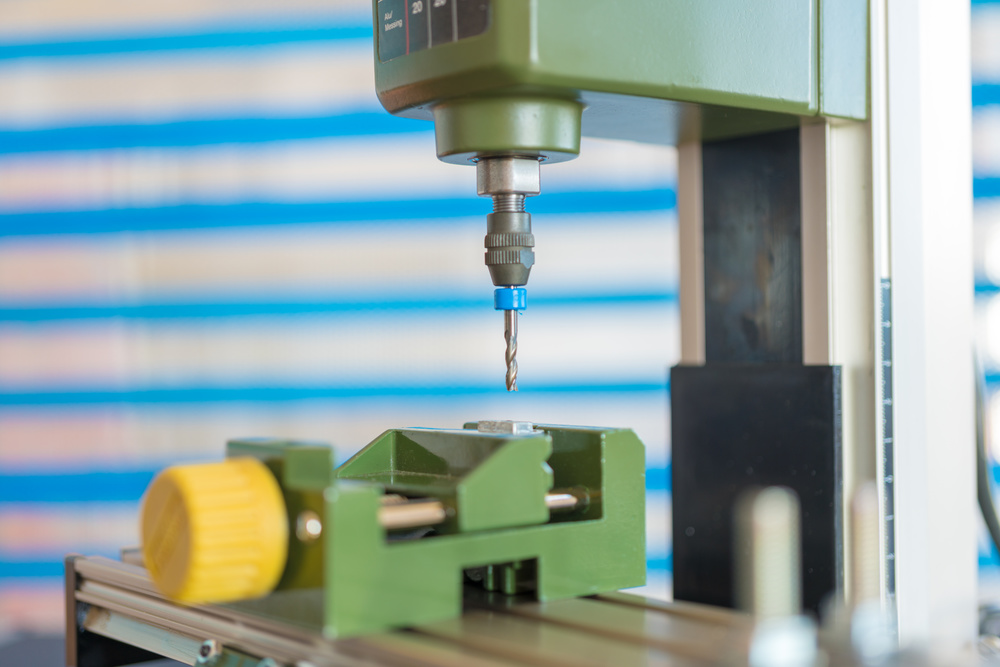
CNC milling machine processing HDPE plastic components
HDPE Material Overview
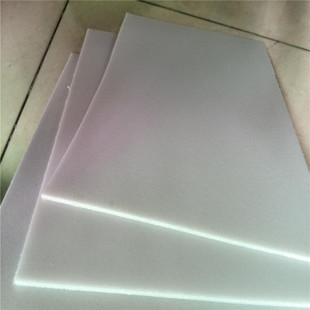
HDPE plastic sheets in various thicknesses
What is HDPE?
High-Density Polyethylene (HDPE) is a semi-crystalline thermoplastic polymer known for its high strength-to-density ratio, excellent chemical resistance, and low moisture absorption.
HDPE is produced through the polymerization of ethylene gas under controlled conditions, resulting in a linear polymer structure with minimal branching, which contributes to its high density and mechanical properties.
The material is available in various grades, including virgin, recycled, and modified formulations to meet specific application requirements.
Key Material Properties
| Property | Typical Value | Test Method |
|---|---|---|
| Density | 0.955–0.961 g/cm³ | ASTM D792 |
| Melting Point | 126–135°C | ASTM D3418 |
| Tensile Strength | 23–29 MPa | ASTM D638 |
| Flexural Modulus | 800–1,200 MPa | ASTM D790 |
| Izod Impact Strength | 40–100 J/m | ASTM D256 |
| Water Absorption | < 0.01% | ASTM D570 |
Technical Note
HDPE’s low moisture absorption (<0.01%) makes it an excellent choice for applications where dimensional stability is critical, even in humid environments. The material’s chemical resistance allows it to withstand exposure to most acids, alkalis, and solvents.
Advantages of CNC Machining HDPE
Excellent Machinability
HDPE machines easily with standard CNC tools, producing clean cuts with minimal burr formation. The material’s low melting point allows for high feed rates and efficient material removal.
Chemical Resistance
Resistant to most acids, alkalis, and solvents, making it ideal for chemical processing equipment and laboratory applications.
Low Friction
Natural lubricity makes HDPE suitable for bearings, gears, and sliding components where low friction is required.
Cost-Effective
Lower material cost compared to engineering plastics like PEEK or PPS, with good mechanical properties for many applications.
Food Safe
FDA-compliant grades available for food processing equipment, cutting boards, and food contact applications.
Impact Resistance
Excellent toughness and impact resistance, even at low temperatures, making it suitable for outdoor applications.
Design Consideration
While HDPE offers many advantages, it has a relatively low modulus of elasticity compared to metals, so designers should consider deflection in load-bearing applications. Reinforcement may be required for structural components.
CNC Machining Process for HDPE
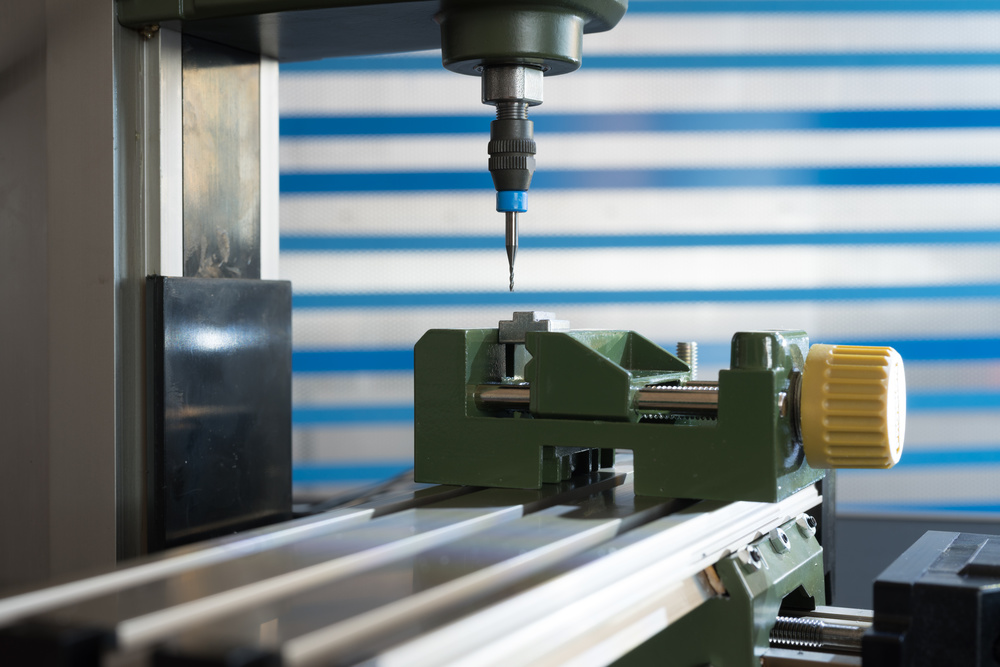
CNC machining center processing plastic components
Machining Considerations
HDPE machining requires specific strategies to manage its low melting point and tendency to deform under stress. Proper tool selection, cutting parameters, and fixturing are critical for achieving high-quality results.
The material’s low thermal conductivity can cause heat buildup during machining, which can lead to melting and poor surface finish. Using sharp tools and appropriate cutting speeds helps minimize this issue.
HDPE also has a tendency to stick to cutting tools, so using tools with polished flutes and positive rake angles is recommended to improve chip evacuation.
Recommended Cutting Parameters
| Operation | Spindle Speed (RPM) | Feed Rate (mm/min) | Depth of Cut (mm) |
|---|---|---|---|
| CNC Milling (Roughing) | 8,000–12,000 | 1,000–2,000 | 3–5 |
| CNC Milling (Finishing) | 12,000–18,000 | 2,000–3,000 | 0.5–1.0 |
| CNC Turning (Roughing) | 2,000–4,000 | 50–150 | 0.5–3.0 |
| CNC Turning (Finishing) | 4,000–6,000 | 100–300 | 0.2–0.5 |
| Drilling | 3,000–8,000 | 50–200 | Through hole |
Tool Selection Guidelines
End Mills
- 2-flute end mills recommended for better chip evacuation
- Carbide or high-speed steel (HSS) tools
- Positive rake angles (5-15°)
- Polished flutes to reduce chip adhesion
Turning Tools
- Sharp tooling with 10-15° relief angles
- Positive rake angles for clean cutting
- Carbide inserts for longer tool life
- Point angle of 55-60° for optimal results
Drilling Tools
- Twist drills with split points
- High helix angles for improved chip removal
- Polished flutes to prevent sticking
- Peck drilling recommended for deep holes
Design Guidelines for HDPE CNC Parts
Key Design Considerations
Designing for HDPE CNC machining requires understanding the material’s unique properties and limitations. Proper design can significantly improve part quality, reduce production costs, and enhance performance.
Wall Thickness
Recommended Minimum Wall Thickness:
- 1.0 mm for small parts (<50 mm)
- 1.5 mm for medium parts (50-150 mm)
- 2.0 mm for large parts (>150 mm)
Uniform wall thickness is important to prevent warping and ensure consistent machining. Avoid sudden changes in thickness that can cause stress concentrations.
Corner Radii
Recommended Minimum Corner Radius:
- 0.5 mm for internal corners
- 0.3 mm for external corners
- 1.0 mm for high-stress applications
Sharp corners should be avoided as they can create stress concentrations and are difficult to machine properly. Generous radii improve part strength and machinability.
Hole Design Guidelines
| Hole Type | Minimum Diameter | Maximum Depth Ratio | Recommended Clearance |
|---|---|---|---|
| Through Holes | 1.0 mm | 10:1 (depth:diameter) | 0.1-0.2 mm |
| Blind Holes | 1.5 mm | 6:1 (depth:diameter) | 0.1-0.2 mm |
| Threaded Holes | M2.5 | 3:1 (depth:diameter) | Standard thread clearance |
Surface Finish Requirements
Standard Finish
Ra 3.2–6.3 μm (125–250 μin)
Achieved with standard machining parameters
Fine Finish
Ra 0.8–3.2 μm (32–125 μin)
Requires finishing passes with high speed and light cuts
Polished Finish
Ra 0.2–0.8 μm (8–32 μin)
Requires additional polishing operations
Design Tip
When designing HDPE parts, consider using draft angles of 1-2° on vertical surfaces to improve ejection from molds if the part will also be produced via injection molding. This design feature doesn’t affect CNC machining but provides flexibility for future production changes.
HDPE Machining Tolerances
Achievable Tolerances
HDPE machining tolerances depend on several factors including part size, geometry, machining process, and material grade. Proper fixturing and machining parameters are essential for achieving tight tolerances.
The material’s coefficient of thermal expansion (130–150 x 10^-6 /°C) is relatively high, so temperature control during machining is important for maintaining dimensional accuracy.
| Part Size | Standard Tolerance | Precision Tolerance | Ultra-Precision Tolerance |
|---|---|---|---|
| < 50 mm | ±0.1 mm | ±0.05 mm | ±0.025 mm |
| 50–150 mm | ±0.15 mm | ±0.08 mm | ±0.04 mm |
| 150–300 mm | ±0.2 mm | ±0.12 mm | ±0.06 mm |
| > 300 mm | ±0.3 mm | ±0.18 mm | ±0.10 mm |
Tolerance Considerations
Thermal Expansion
HDPE has a high coefficient of thermal expansion (130–150 x 10^-6 /°C), which can cause dimensional changes with temperature variations.
Parts should be measured at a controlled temperature of 23°C ±2°C.
Part Geometry
Complex geometries and thin walls may require looser tolerances due to material flexibility and machining challenges.
Symmetrical designs help minimize warping.
Machining Process
CNC milling typically achieves tighter tolerances than CNC routing or turning.
Secondary operations may be required for ultra-precision tolerances.
Tolerance Recommendation
Specify the loosest tolerances that meet functional requirements to minimize production costs. Tighter tolerances require more precise machining, additional inspection, and may increase lead times.
Surface Finishing Options
Available Finishing Processes
HDPE parts can be finished using various processes to improve appearance, functionality, or performance. The choice of finishing method depends on the application requirements and desired outcome.
Deburring
Removes sharp edges and burrs created during machining. This is typically the first finishing step for all HDPE parts.
- Hand deburring with files and sandpaper
- Tumbling with media for small parts
- Brushing with abrasive brushes
Polishing
Creates a smooth, glossy surface finish. Polishing improves appearance and can reduce friction in sliding applications.
- Mechanical polishing with abrasive compounds
- Flame polishing for edge finishing
- Buffing with felt wheels
Texturing
Creates a controlled surface texture for improved grip, appearance, or functional performance.
- Bead blasting for matte finish
- Chemical etching for uniform texture
- CNC texturing for precise patterns
Chemical Treatments
Improve surface properties such as adhesion for bonding or painting.
- Plasma treatment for surface activation
- Chemical etching for improved adhesion
- Flame treatment for bonding preparation
Surface Finish Comparison
| Finish Type | Ra Value (μm) | Typical Applications | Cost |
|---|---|---|---|
| As-machined | 3.2–6.3 | Internal components, non-critical surfaces | Low |
| Deburred | 1.6–3.2 | General purpose parts, handling surfaces | Low-Medium |
| Polished | 0.2–0.8 | Food contact, medical devices, aesthetic parts | Medium-High |
| Textured | 6.3–25.0 | Grip surfaces, non-slip applications | Medium |
Common Machining Challenges
Typical Issues and Solutions
HDPE machining presents several challenges due to the material’s unique properties. Understanding these challenges and implementing appropriate solutions is key to producing high-quality parts.
Thermal Deformation
HDPE has a low melting point (126–135°C) and low thermal conductivity, which can cause heat buildup during machining leading to melting and deformation.
Solutions:
- Use sharp cutting tools to reduce cutting forces
- Implement proper chip evacuation
- Use coolant or compressed air for cooling
- Reduce depth of cut and increase feed rate
- Allow sufficient time for cooling between passes
Burr Formation
HDPE tends to form burrs during machining due to its ductile nature. Burrs can affect part fit, function, and appearance.
Solutions:
- Use tools with positive rake angles
- Increase cutting speed and feed rate
- Use climb milling instead of conventional milling
- Implement deburring operations
- Use sharp tools to minimize tearing
Chip Adhesion
HDPE chips can stick to cutting tools and workpiece surfaces, causing poor surface finish and tool wear.
Solutions:
- Use tools with polished flutes
- Apply coolant or lubricant
- Use compressed air to clear chips
- Increase feed rate to break chips into smaller pieces
- Use tool coatings that reduce adhesion
Dimensional Stability
HDPE’s high coefficient of thermal expansion can cause dimensional changes with temperature variations.
Solutions:
- Machine in temperature-controlled environment
- Allow parts to stabilize before measurement
- Use proper fixturing to minimize deformation
- Consider thermal expansion in design
- Use stress-relieved material
Pro Tip
When machining large HDPE parts, it’s recommended to perform roughing and finishing operations separately with sufficient cooling time between them. This helps minimize thermal deformation and ensures better dimensional accuracy.
Applications of HDPE CNC Parts
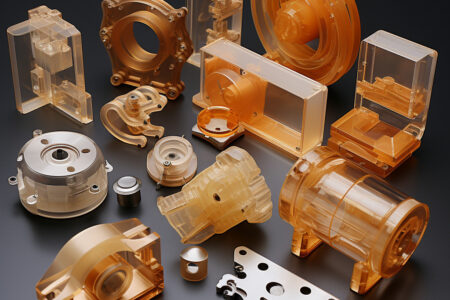
Various CNC machined plastic components including HDPE parts
Industry Applications
HDPE CNC parts are used across a wide range of industries due to their excellent combination of properties. The material’s versatility makes it suitable for both simple and complex components.
From food processing equipment to medical devices, HDPE’s chemical resistance, low friction, and cost-effectiveness make it a popular choice for many applications.
The material’s FDA compliance also makes it suitable for food contact applications, while its impact resistance makes it ideal for outdoor and industrial use.
Industry-Specific Applications
Food Processing
HDPE’s hygienic properties and FDA compliance make it ideal for food processing equipment.
- Cutting boards and food contact surfaces
- Food containers and trays
- Conveyor components and guides
- Sanitary tank liners
- Processing equipment parts
Medical Devices
HDPE’s biocompatibility and chemical resistance make it suitable for medical applications.
- Fluid containers and tubing
- Equipment panels and housings
- Lab trays and sample holders
- Surgical tool components
- Medical device enclosures
Automotive
HDPE’s lightweight and impact-resistant properties make it suitable for automotive applications.
- Coolant reservoirs and fluid tanks
- Bushings and wear strips
- Fuel tank components
- Mounting plates and brackets
- Protective covers and shields
Electronics
HDPE’s insulating properties make it suitable for electronic applications.
- Terminal blocks and circuit casings
- Protective covers and shields
- Device internal components
- Conduits and cable protectors
- Connector frames and housings
Chemical Processing
HDPE’s chemical resistance makes it ideal for chemical processing applications.
- Storage tanks and containers
- Custom pipe fittings and valves
- Seals, gaskets, and O-rings
- Manifolds and fluid handling components
- Pump components and impellers
Marine
HDPE’s resistance to water and salt makes it suitable for marine applications.
- Boat components and fittings
- Dock bumpers and fenders
- Mooring components
- Marine hardware parts
- Underwater equipment housings
Common HDPE Component Types
| Component Type | Key Features | Typical Industries |
|---|---|---|
| Bearings and Bushings | Low friction, self-lubricating | Industrial machinery, automotive |
| Gears and Sprockets | Quiet operation, corrosion resistant | Packaging equipment, conveyor systems |
| Manifolds and Fittings | Chemical resistance, leak-tight | Chemical processing, medical |
| Guides and Slides | Wear resistant, low friction | Automation equipment, packaging |
| Covers and Housings | Impact resistant, insulating | Electronics, outdoor equipment |
HDPE vs Other Engineering Plastics
Material Comparison
Choosing the right plastic material for your CNC machining application requires careful consideration of various factors including mechanical properties, chemical resistance, cost, and machinability.
| Material | Density (g/cm³) | Tensile Strength (MPa) | Chemical Resistance | Cost Relative to HDPE |
|---|---|---|---|---|
| HDPE | 0.955–0.961 | 23–29 | Excellent | 1.0x |
| POM (Acetal) | 1.41 | 65 | Good | 2.5x |
| Nylon (PA6) | 1.14 | 70 | Good | 2.0x |
| PTFE (Teflon) | 2.20 | 28 | Excellent | 8.0x |
| PEEK | 1.30 | 90 | Excellent | 15.0x |
| PVC | 1.40 | 50 | Good | 1.2x |
Performance Comparison
HDPE vs POM
- HDPE has better chemical resistance
- POM has higher stiffness and strength
- HDPE is more cost-effective
- POM has better dimensional stability
- HDPE has lower friction coefficient
HDPE vs Nylon
- HDPE has lower moisture absorption
- Nylon has higher wear resistance
- HDPE is easier to machine
- Nylon has better load-bearing capacity
- HDPE is more chemical resistant
HDPE vs PTFE
- HDPE is significantly less expensive
- PTFE has lower friction
- HDPE has better machinability
- PTFE has higher temperature resistance
- Both have excellent chemical resistance
Selection Guide
Choose HDPE when cost-effectiveness, chemical resistance, and low friction are primary requirements. For applications requiring higher strength, stiffness, or wear resistance, consider POM, nylon, or other engineering plastics. For extreme chemical resistance or high temperature applications, PTFE or PEEK may be more suitable.
How to Order Custom HDPE CNC Parts
Ordering Process
Submit CAD Files
Upload your 3D CAD files (STEP, IGES, STL, or SolidWorks format)
Material Confirmation
Specify HDPE grade and any special requirements
DFM Review
Our engineering team reviews your design for manufacturability
Quote Approval
Receive and approve detailed quote with lead times
Prototype Machining
Production of prototype parts for testing and validation
Mass Production
Full production with quality control and inspection
What We Need from You
Design Files
- 3D CAD models (STEP, IGES, STL, SLDPRT)
- 2D drawings with dimensions and tolerances
- Assembly files (if applicable)
- Material specifications
Technical Requirements
- Tolerance requirements
- Surface finish specifications
- Special finishing requirements
- Testing and inspection requirements
Production Details
- Quantity required
- Lead time requirements
- Packaging requirements
- Delivery location and method
Frequently Asked Questions
Is HDPE good for CNC machining?
Yes, HDPE is an excellent material for CNC machining. It has good machinability, produces clean cuts, and requires minimal tooling. Its low melting point and chemical resistance make it suitable for a wide range of applications.
What tolerance can HDPE achieve?
HDPE can typically achieve tolerances of ±0.1 mm for standard applications, with precision machining capable of achieving ±0.05 mm or better for smaller parts. Tolerances depend on part size, geometry, and machining process.
Is HDPE better than POM?
HDPE and POM have different properties. HDPE has better chemical resistance and is more cost-effective, while POM has higher stiffness and dimensional stability. The choice depends on specific application requirements.
Can HDPE be sterilized?
Yes, HDPE can be sterilized using ethylene oxide (EO) gas, gamma radiation, or autoclaving at temperatures up to 121°C. However, repeated autoclaving may cause some degradation over time.
Is HDPE food safe?
Yes, HDPE is FDA-compliant for food contact applications when using food-grade resins. It is commonly used for cutting boards, food containers, and processing equipment components.
What is the maximum temperature HDPE can withstand?
HDPE has a continuous use temperature of approximately 80–100°C. It can withstand short-term exposure to higher temperatures up to its melting point of 126–135°C.
Can HDPE be glued or bonded?
HDPE has low surface energy, which makes it difficult to bond with standard adhesives. Specialized adhesives designed for polyethylene or surface treatments like plasma etching or flame treatment are required for effective bonding.
How does HDPE compare to UHMWPE?
UHMWPE (Ultra-High Molecular Weight Polyethylene) has higher molecular weight and better wear resistance than HDPE, but is more difficult to machine. HDPE is more cost-effective and easier to process, making it suitable for most general applications.
Can HDPE be recycled?
Yes, HDPE is highly recyclable and is identified by the resin identification code #2. Recycled HDPE is commonly used for plastic lumber, pipes, and other applications where virgin material properties are not required.
What is the lead time for custom HDPE parts?
Lead times typically range from 5-10 days for prototypes and 15-25 days for production quantities, depending on complexity and volume. Rush delivery options are available for urgent requirements.
Ready to Start Your HDPE CNC Project?
Our team of experienced engineers is ready to help you with your custom HDPE CNC machining needs. Contact us today for a free quote and expert advice.