CNC Machining Thin Wall Parts Solution – Minimize Deformation & Improve Precision
Expert solutions for machining thin wall components with high precision and minimal distortion. We solve the toughest thin wall machining challenges including warping, chatter, and tolerance drift to help you reduce scrap rate and improve part stability.
Challenges in CNC Machining Thin Wall Parts
Deformation Due to Cutting Forces
Thin wall structures have extremely low rigidity. Even small cutting forces can cause elastic deflection of the wall, leading to dimension errors and out-of-tolerance features. For parts with wall thickness less than 1mm, this issue becomes even more critical.
Vibration and Chatter
The weak rigidity of thin walls easily triggers self-excited vibration during machining. This creates chatter marks on the surface, reduces surface finish, and can even cause tool breakage, especially during high-speed machining processes.
Heat-Induced Distortion
Cutting heat generated during machining causes localized temperature rise. For materials with high thermal expansion coefficient like aluminum, this can lead to significant thermal deformation. Industry data shows that heat-induced distortion can account for over 40% of total deformation in thin wall parts (Data for reference only).
Clamping Stress
Traditional clamping methods with vises or clamps can introduce external stress on thin workpieces. This stress can cause the part to deform after clamping is released, resulting in warping or bending of the final part.
Our Solutions for Thin Wall Machining
① Toolpath Optimization
We use advanced adaptive machining technology and symmetric milling toolpaths to balance material removal and stress release. Our optimized toolpath reduces cutting force by up to 30% by adjusting the cutting direction and stepover automatically based on the part rigidity. We also apply finite element simulation to predict potential deformation areas and implement pre-compensation in the toolpath.
- Symmetric material removal for uniform stress release
- Adaptive feed rate adjustment for weak rigidity areas
- Pre-deformation compensation based on FEA simulation
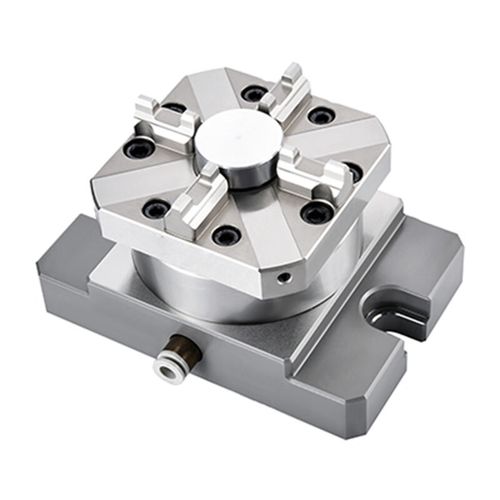
② Custom Fixture & Vacuum Clamping
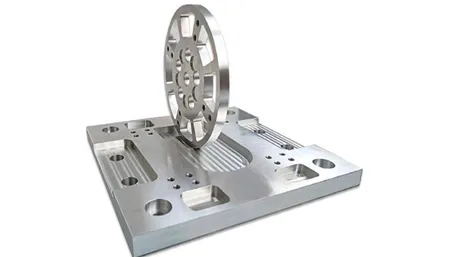
Instead of traditional point clamping, we use full-surface vacuum clamping to distribute the holding force evenly across the entire part. This eliminates localized clamping stress and provides maximum support for thin walls during machining. For complex parts, we design custom fixtures with support pins to reinforce weak areas during the roughing process.
- Full-surface vacuum clamping for zero localized stress
- Custom fixture with temporary support pins
- Low-pressure holding to avoid part deformation
③ Optimized Cutting Parameters
We adopt the “High Speed, Low Feed, Small Depth” strategy for thin wall machining. By increasing spindle speed and reducing cutting depth, we minimize the cutting force and heat generation. Our 20 years of experience allows us to adjust parameters precisely for different materials to achieve the best result.
Test data shows that for 6061 aluminum 0.8mm wall parts, adjusting spindle speed from 8000rpm to 15000rpm and feed rate from 100mm/min to 150mm/min reduced the deformation from 0.12mm to 0.03mm (Data for reference only).
Typical Cutting Parameters
| Material | Spindle Speed | Feed Rate | Cutting Depth |
|---|---|---|---|
| Aluminum | 12000-18000 rpm | 1000-1500 mm/min | 0.1-0.3 mm |
| Stainless Steel | 6000-10000 rpm | 500-800 mm/min | 0.08-0.2 mm |
| Titanium | 4000-8000 rpm | 300-600 mm/min | 0.05-0.15 mm |
④ Step-by-Step Machining Strategy
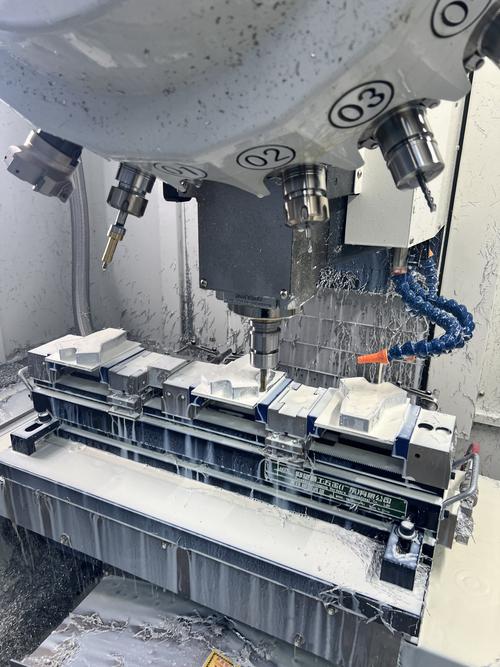
We separate the process into 3 stages: Roughing, Semi-finishing, and Finishing. After roughing, we leave 0.2-0.5mm allowance for semi-finishing to release the residual stress generated during roughing. We also perform intermediate stress relief annealing for high-stress materials like 7075 aluminum to eliminate internal stress before final finishing.
- Roughing: Remove 80% of material with large cutting parameters
- Semi-finishing: Release residual stress with light cutting
- Finishing: Final precision machining with minimal cutting force
- Optional stress relief annealing for high-performance materials
Design for Manufacturability (DFM) for Thin Wall Parts
Early DFM review can reduce your development cost by up to 30% and avoid machining issues before production. Our engineering team provides free DFM analysis for all thin wall part orders to help you optimize your design for better manufacturability.
Our DFM Recommendations:
- Increase wall thickness where possible: We recommend minimum wall thickness of 0.8mm for aluminum, 0.5mm for stainless steel, and 0.4mm for titanium to reduce machining difficulty.
- Add ribs for strength: Add support ribs to thin wall areas to increase rigidity without adding too much weight. This can significantly reduce vibration and deformation during machining.
- Avoid sharp corners: Add internal radius (minimum R0.5mm) to internal corners to reduce stress concentration and tool wear, which also helps to avoid chatter marks.
- Control aspect ratio: Keep the aspect ratio of thin walls under 5:1 to ensure sufficient rigidity during machining.
Compliance Standards: Our DFM process follows ISO 2768-mK tolerance standards and AS9100 aerospace manufacturing requirements to ensure your parts meet the strictest industry specifications.
CNC Machining Capabilities for Thin Wall Parts
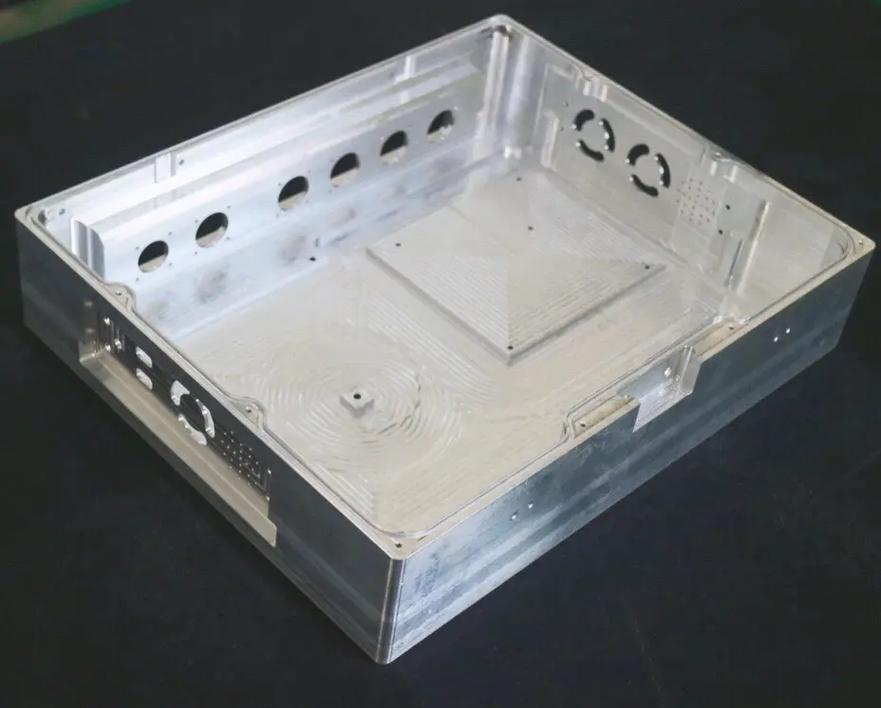
With 20 years of experience in precision CNC machining, we have the advanced equipment and expertise to handle the most complex thin wall parts. Our capabilities include:
5-Axis Machining
Our 5-axis CNC machines allow us to machine complex thin wall parts from multiple angles in a single setup, reducing re-fixturing errors and deformation.
High-Speed Machining
High-speed machining centers with spindle speed up to 40,000rpm enable us to reduce cutting force and achieve excellent surface finish for thin walls.
Micro Machining
We can machine ultra-thin walls as thin as 0.3mm for aluminum parts, meeting the requirements of micro components for medical and electronics industries.
Ultrasonic Assisted Machining
For hard materials like titanium, we use ultrasonic assisted machining to reduce cutting force by 40-60%, minimizing deformation during processing.
Material Considerations for Thin Wall Machining
Aluminum Alloys
Aluminum is the most common material for thin wall parts due to its low density and good machinability. However, it has high thermal expansion coefficient and low rigidity, making it prone to deformation.
Our Solution: We use high-speed machining with through-spindle coolant to control cutting heat, and stress relief annealing for 7075 aluminum to eliminate residual stress. We can achieve minimum 0.3mm wall thickness for aluminum parts.
Typical Materials: 6061-T6, 7075-T6, 5052, 2024
Stainless Steel
Stainless steel has high strength and corrosion resistance, but it is prone to work hardening and generates high cutting heat during machining. This makes thin wall stainless steel parts very challenging to process.
Our Solution: We use sharp coated carbide tools and optimized cutting parameters to reduce work hardening. Our custom fixtures provide full support to avoid deflection. Minimum wall thickness for stainless steel is 0.5mm.
Typical Materials: 304, 316, 17-4 PH, 440C
Titanium Alloys
Titanium has excellent strength-to-weight ratio, but it has low thermal conductivity and high elasticity, leading to serious elastic deformation and tool wear during thin wall machining.
Our Solution: We use ultrasonic assisted machining to reduce cutting force, and PCD tools to handle the high hardness. We also apply real-time deformation compensation to ensure precision. Minimum wall thickness for titanium is 0.4mm.
Typical Materials: Ti-6Al-4V (TC4), Ti-6Al-4V ELI, Grade 5
Precision Control for Thin Wall Components
We have a complete quality control system to ensure every thin wall part meets your strict requirements. All our processes comply with ISO 9001 and ISO 13485 quality management standards.
Tolerance Control
We can hold tight tolerance down to ±0.005mm for critical dimensions of thin wall parts, verified by CMM inspection.
Surface Finish
Our optimized machining process achieves excellent surface finish as low as Ra 0.4μm, eliminating the need for post polishing.
Deformation Control
We control the final deformation of thin wall parts within 0.02mm, ensuring part stability after machining.
Our inspection process follows ISO 10360 coordinate measurement standards to ensure 100% accurate quality verification.
Case Studies: Thin Wall CNC Parts
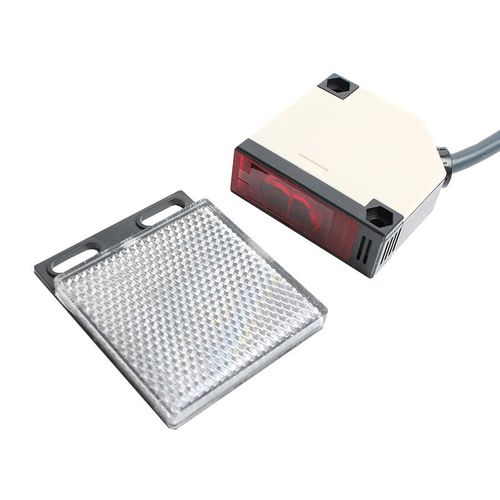
Opto-Electronic Sensor Housing
- Part Details: 6061 Aluminum, 0.3mm wall thickness
- Challenge: Customer was facing 40% scrap rate due to wall deformation and dimension out of tolerance
- Our Solution: Custom vacuum fixture + step-by-step machining + toolpath compensation
- Result: Wall tolerance stabilized at ±0.02mm, deformation controlled within 0.02mm, yield rate improved to 97.9% (Data for reference only)
New Energy Vehicle Battery Tray
- Part Details: 6061 Aluminum extrusion, 0.45mm wall thickness
- Challenge: Original process had only 70% yield rate due to large size thin wall warping
- Our Solution: Symmetric milling + stress relief process + custom hydraulic fixture
- Result: Deformation controlled within 0.03mm, yield rate improved to 99.5%, processing time reduced by 30% (Data for reference only)
Frequently Asked Questions
How thin can CNC machining go?
For aluminum parts, we can machine walls as thin as 0.3mm. For stainless steel, the minimum wall thickness is 0.5mm, and for titanium it is 0.4mm. The exact minimum thickness depends on the part size and geometry, our engineering team can review your design to confirm the feasibility.
How to avoid deformation in thin wall CNC machining?
We avoid deformation through a combination of optimized toolpath, custom vacuum clamping, optimized cutting parameters, and step-by-step machining with stress relief. We also use FEA simulation to predict and compensate for potential deformation before machining.
What is the best material for thin wall parts?
Aluminum alloys like 6061-T6 are the most popular choice for thin wall parts due to their good machinability, low density, and relatively low cost. For applications requiring higher strength or corrosion resistance, stainless steel or titanium can be used, though they require more specialized machining processes.
Can you machine thin aluminum parts?
Yes, we have extensive experience in machining thin aluminum parts. Aluminum is our most commonly processed material for thin wall components. We can handle everything from small electronic housings to large aerospace components, with precise deformation control and high yield rate.
What tolerance can you hold for thin wall parts?
We can hold tolerance down to ±0.005mm for critical dimensions of thin wall parts, depending on the material and part size. All parts are inspected by CMM to ensure they meet your tolerance requirements.
Facing challenges with thin wall parts?
Our engineering team is ready to provide you with a custom solution to solve your deformation and precision issues.