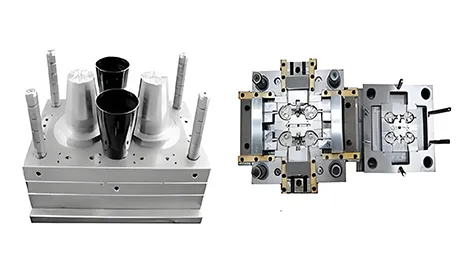
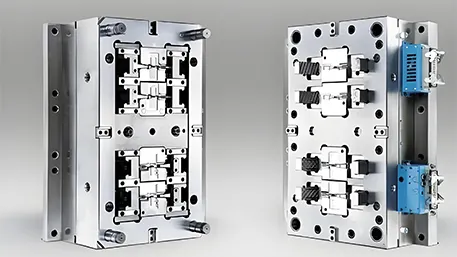
Complete Engineering Decision Guide for Manufacturing Processes
Introduction to Manufacturing Processes
When it comes to manufacturing components, engineers and product designers face a critical decision between CNC machining and 3D printing. These two processes represent fundamentally different approaches to creating physical parts: subtractive manufacturing vs additive manufacturing.
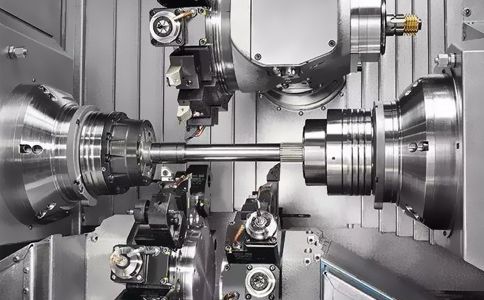
CNC machining uses subtractive manufacturing to remove material from a solid block
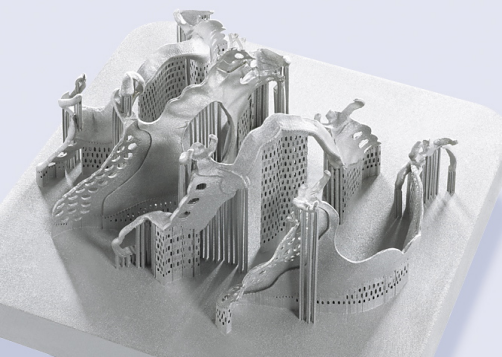
3D printing uses additive manufacturing to build parts layer by layer
This guide provides a comprehensive comparison of CNC machining and 3D printing, including technical specifications, material properties, cost analysis, and application recommendations to help you make informed engineering decisions.
Key Differences at a Glance
| Factor | CNC Machining | 3D Printing |
|---|---|---|
| Process Type | Subtractive | Additive |
| Accuracy | ±0.005–0.025 mm | ±0.1–0.5 mm |
| Surface Finish | Smooth (Ra 0.8 μm) | Layer lines visible |
| Mechanical Strength | Full material strength | 10-20% of material strength |
| Design Complexity | Limited by tool access | High complexity possible |
| Best for Quantity | Small to medium batches | Prototypes & small runs |
Manufacturing Principles
CNC Machining: Subtractive Manufacturing
CNC (Computer Numerical Control) machining is a subtractive manufacturing process that removes material from a solid block (billet) using precision cutting tools. The process follows these key steps:
- CAD model creation and conversion to CNC programming language (G-code)
- Material fixturing on the machine bed
- Precision cutting using rotating tools (milling, turning, drilling)
- Multiple tool changes for complex geometries
- Quality inspection and finishing operations
3D Printing: Additive Manufacturing
3D printing (also known as additive manufacturing) builds parts layer by layer from digital 3D models. The most common technologies include:
- FDM (Fused Deposition Modeling): Melts and extrudes thermoplastic filaments
- SLA (Stereolithography): Cures liquid resin using UV light
- SLS (Selective Laser Sintering): Sinters polymer or metal powder using laser
- MJF (Multi Jet Fusion): Uses inkjet technology to fuse powder materials
Precision & Tolerance Comparison
CNC Machining Tolerances
CNC machining offers exceptional precision, with tolerances governed by international standards such as ISO 2768. Typical capabilities include:
- Standard tolerance: ±0.025 mm (ISO 2768-f for metals)
- High-precision CNC: ±0.005 mm with specialized equipment
- Repeatability: ±0.002 mm for modern 5-axis machines
- Tighter tolerances possible with secondary operations (grinding, lapping)
3D Printing Tolerances
3D printing tolerances vary significantly by technology and material:
- FDM: ±0.1–0.3 mm or ±0.1% of part size
- SLA: ±0.05–0.15 mm
- SLS: ±0.3% for parts >100 mm (±0.3 mm below 100 mm)
- MJF: ±0.3% for parts >100 mm (±0.2 mm below 100 mm)
Engineering Note:
For applications requiring tolerances tighter than ±0.1 mm, CNC machining is generally the preferred process. 3D printed parts may require post-processing to achieve higher precision.
Surface Finish Quality
Surface Roughness Comparison
| Process | Typical Ra Value | Surface Appearance | Post-Processing Required |
|---|---|---|---|
| CNC Milling | 0.8–3.2 μm | Smooth, tool marks visible | Optional for most applications |
| CNC Turning | 0.4–1.6 μm | Very smooth, mirror finish possible | Optional |
| FDM 3D Printing | 6.3–25 μm | obvious layer lines | Often required for cosmetic parts |
| SLA 3D Printing | 1.6–6.3 μm | Smooth surface, slight layer lines | Optional |
| SLS 3D Printing | 12.5–25 μm | Grainy texture | Often required |
Post-Processing Options
3D printed parts often require post-processing to improve surface finish:
- Sanding: Removes layer lines, starts with coarse grit (80-120) and progresses to fine grit (400-600)
- Polishing: Achieves high-gloss finish using compounds or buffing wheels
- Priming and Painting: Covers surface imperfections and provides protective coating
- Vapor Smoothing: Uses chemical vapor to melt surface layer (for ABS and similar materials)
- CNC Finishing: Combining 3D printing with CNC machining for critical surfaces
Mechanical Strength & Material Properties
Strength Comparison
The mechanical properties of parts produced by CNC machining and 3D printing differ significantly due to their manufacturing processes:
| Material | CNC Machined Tensile Strength | 3D Printed Tensile Strength | Strength Retention |
|---|---|---|---|
| Aluminum 6061-T6 | 310 MPa | 220 MPa (SLM) | 71% |
| Stainless Steel 316L | 515 MPa | 480 MPa (SLS) | 93% |
| Titanium Ti-6Al-4V | 895 MPa | 860 MPa (SLM) | 96% |
| ABS Plastic | 40 MPa | 28 MPa (FDM) | 70% |
| PETG | 55 MPa | 42 MPa (FDM) | 76% |
*Test data based on standard ASTM testing methods, results may vary by manufacturer and process parameters. Data for reference only.
Anisotropic vs Isotropic Properties
Key Engineering Consideration:
CNC machined parts exhibit isotropic mechanical properties, meaning strength is consistent in all directions. 3D printed parts are anisotropic, with significantly lower strength in the layer direction (Z-axis) due to layer bonding limitations.
- CNC Machining: Maintains full material properties, consistent strength in all directions
- 3D Printing: Layer adhesion creates weaker bonds between layers, Z-axis strength typically 50-80% of XY strength
- Metal 3D Printing: Better layer bonding than plastic, but still exhibits some anisotropy
- Orientation Matters: 3D printed parts should be oriented to maximize strength in load-bearing directions
Design Complexity & Geometry Freedom
CNC Machining Design Constraints
CNC machining is limited by tool access and geometry that can be reached with cutting tools:
- Limited by tool length and reach
- Internal cavities require specialized tools or multiple setups
- Undercuts require 5-axis machining or additional operations
- Minimum feature size limited by tool diameter
- Deep holes require specialized drilling tools
3D Printing Design Advantages
3D printing offers unparalleled design freedom for complex geometries:
- Complex internal structures (lattices, honeycombs)
- Internal channels for fluid flow or heat exchange
- Organic shapes and topology-optimized designs
- Multi-part assemblies printed as single components
- Custom geometries and personalized parts
- Minimal support structures required for overhangs up to 45°
Design Tip:
3D printing enables lightweighting through topology optimization, reducing material usage while maintaining structural integrity. This is particularly valuable for aerospace and automotive applications where weight reduction is critical.
Cost Analysis & Production Volume
Cost Comparison by Production Volume
| Production Volume | Best Process | Cost per Unit | Lead Time | Typical Applications |
|---|---|---|---|---|
| 1-10 parts | 3D Printing | $50-200 | 1-3 days | Concept prototypes, design validation |
| 10-100 parts | CNC Machining | $20-100 | 3-7 days | Functional prototypes, small production runs |
| 100-1000 parts | CNC Machining | $10-50 | 5-10 days | Low-volume production, custom components |
| 1000+ parts | Injection Molding | $1-10 | 2-4 weeks | High-volume production, mass manufacturing |
*Cost estimates based on typical aluminum parts, actual costs may vary by material, complexity, and supplier. Data for reference only.
Cost Factors
CNC Machining Costs
- Material cost (waste factor 20-50%)
- Programming and setup time
- Machine time (hourly rate $50-150)
- Tooling costs (drills, end mills)
- Finishing and inspection
3D Printing Costs
- Material cost (minimal waste 5-10%)
- 3D model preparation
- Printing time (hourly rate $15-50)
- Support material removal
- Post-processing operations
Industry Application Examples
Aerospace & Defense
CNC Machining Applications
- Engine components (turbine blades, housings)
- Airframe structural parts
- Precision hydraulic fittings
- Landing gear components
- Avionics enclosures
3D Printing Applications
- Topology-optimized brackets
- Internal cooling channels
- Rapid prototyping of new designs
- Custom tooling and fixtures
- Complex fuel system components
Medical & Dental
CNC Machining Applications
- Surgical instruments
- Orthopedic implants (knee, hip)
- Dental crowns and bridges
- Medical device housings
- Precision laboratory equipment
3D Printing Applications
- Patient-specific surgical guides
- Custom orthotics and prosthetics
- Dental models and aligners
- Biocompatible implants
- Medical device prototypes
Automotive & Motorsports
CNC Machining Applications
- Engine blocks and cylinder heads
- Transmission components
- Suspension parts
- Brake system components
- Custom racing parts
3D Printing Applications
- Rapid prototyping of new designs
- Custom interior components
- Aerodynamic testing models
- Jigs and fixtures for production
- Complex intake manifolds
Engineering Decision Guide
When to Use CNC Machining vs 3D Printing
| Requirement | Best Process | Rationale |
|---|---|---|
| Tolerance < 0.02 mm | CNC Machining | Superior precision and repeatability |
| Complex internal geometry | 3D Printing | No tool access limitations |
| High mechanical strength | CNC Machining | Full material properties retained |
| Low-cost prototype | 3D Printing | Fast turnaround, minimal setup |
| Smooth surface finish | CNC Machining | Ra values down to 0.8 μm |
| Small production run (10-100) | CNC Machining | Better economies of scale |
| Custom or personalized parts | 3D Printing | No additional tooling costs |
| Metal components | Both (depends on requirements) | CNC for precision, 3D printing for complexity |
Hybrid Manufacturing (Future Trend)
Hybrid manufacturing combines the best of both technologies by using 3D printing for complex geometries and CNC machining for precision finishing:
Hybrid Process Workflow:
- 3D print near-net shape part with complex internal features
- CNC machine critical surfaces to achieve tight tolerances
- Finish with surface treatment as required
- Reduces material waste compared to traditional CNC machining
- Enables complex geometries while maintaining precision
- Ideal for aerospace components with internal cooling channels
- Combines design freedom with engineering accuracy
- Growing trend in high-value manufacturing industries
Conclusion
Choosing between CNC machining and 3D printing depends on your specific engineering requirements, production volume, and budget constraints. Here are the key takeaways:
Choose CNC Machining when:
- Precision tolerances are critical
- High mechanical strength is required
- Smooth surface finish is needed
- Production volume is 10-1000 parts
- Material properties must be fully retained
Choose 3D Printing when:
- Complex geometries are required
- Rapid prototyping is needed
- Custom or personalized parts are needed
- Production volume is 1-10 parts
- Weight reduction through topology optimization
For optimal results, consider hybrid manufacturing approaches that combine the design freedom of 3D printing with the precision of CNC machining. By understanding the strengths and limitations of each process, you can make informed engineering decisions that balance performance, cost, and time-to-market.
Technical Specifications & Standards
International Standards
| Standard | Description | Application |
|---|---|---|
| ISO 2768 | General tolerances for linear and angular dimensions | CNC machining default tolerances |
| ISO 286 | Geometrical product specification for cylindrical surfaces | Shaft and hole fits |
| ISO 5459 | Rules for use of datums in geometric tolerancing | Precision machining applications |
| ASTM F3318 | Standard test method for tensile properties of 3D printed plastics | 3D printing material testing |
| ASTM E8 | Standard test methods for tension testing of metallic materials | Metal strength testing |
Material Compatibility
CNC Machining Materials
- Metals: Aluminum, steel, stainless steel, titanium, brass, copper
- Plastics: ABS, PVC, PEEK, Delrin, Teflon, acrylic
- Composites: Carbon fiber, fiberglass, G10
- Other: Wood, foam, rubber
3D Printing Materials
- Plastics: PLA, ABS, PETG, TPU, PEEK, PEI
- Metals: Titanium, stainless steel, aluminum, tool steel
- Ceramics: Alumina, zirconia, silicon carbide
- Other: Resins, sand, wax