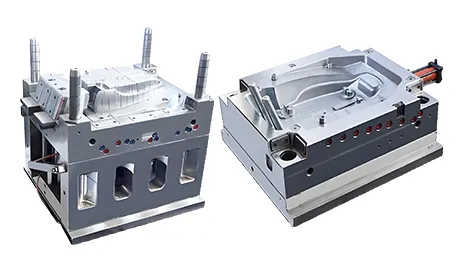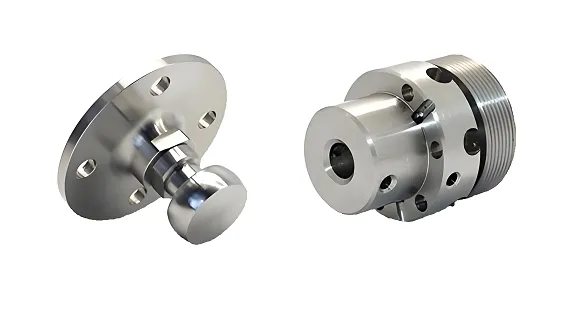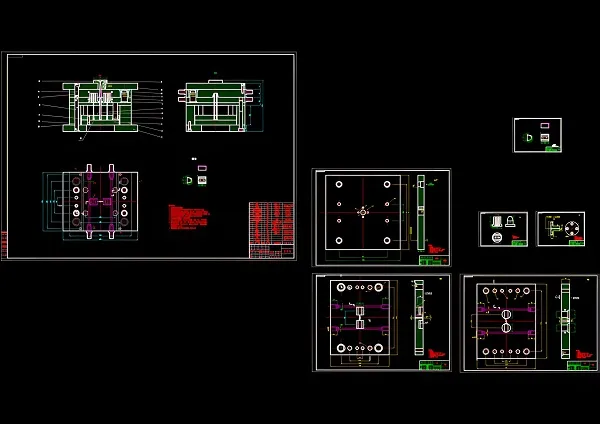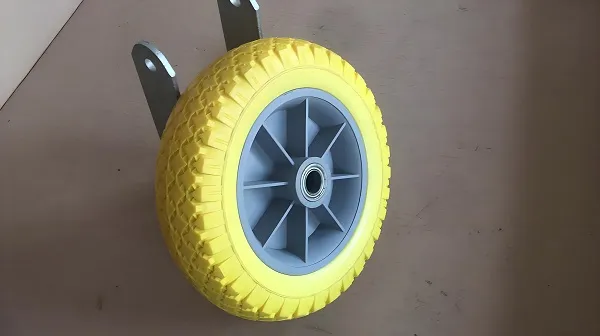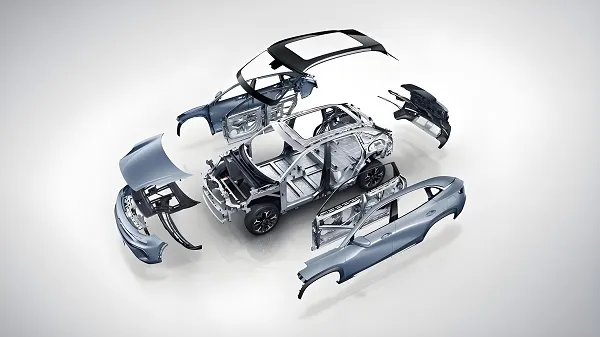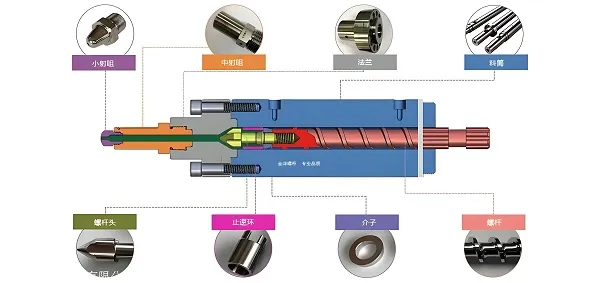
Plastic injection molding is a high-volume manufacturing process that injects molten thermoplastic material into precision mold cavities to produce identical, repeatable parts. It is ideal for mass production of complex plastic components, offering exceptional dimensional consistency, low per-unit cost, and broad material compatibility for industries from automotive to medical.
✅ High-volume mass production
✅ Exceptional repeatability
✅ Broad material compatibility
✅ Low per-unit production cost
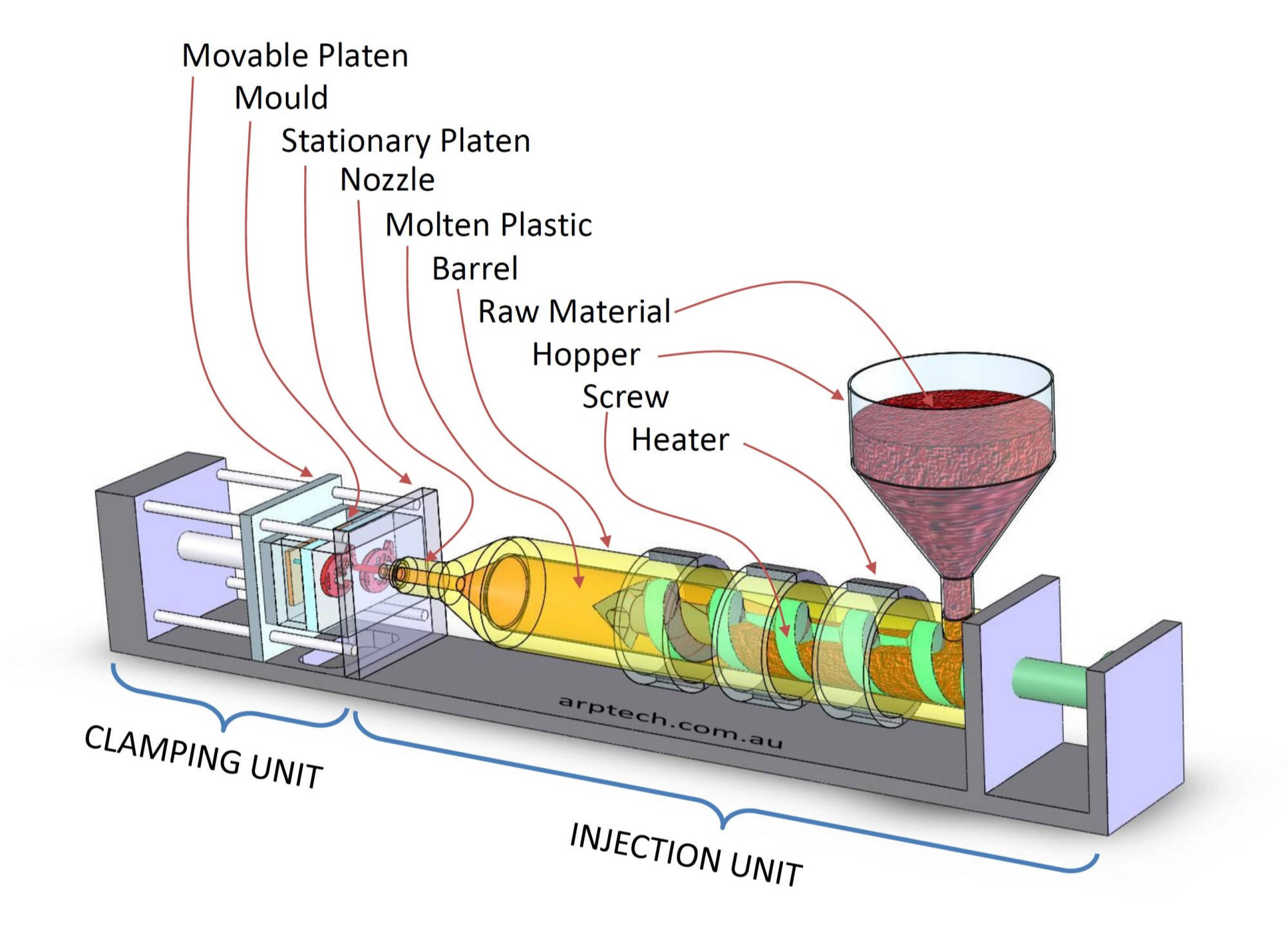
How Plastic Injection Molding Works
The injection molding process follows a highly optimized, repeatable cycle that transforms raw plastic pellets into finished parts in minutes. At Goldcattle, we add an extra layer of DFM review and quality control to ensure every part meets your specifications.
Our full production workflow also includes upfront DFM analysis, custom mold fabrication, sampling, and mass production, ensuring a seamless end-to-end process for your project.
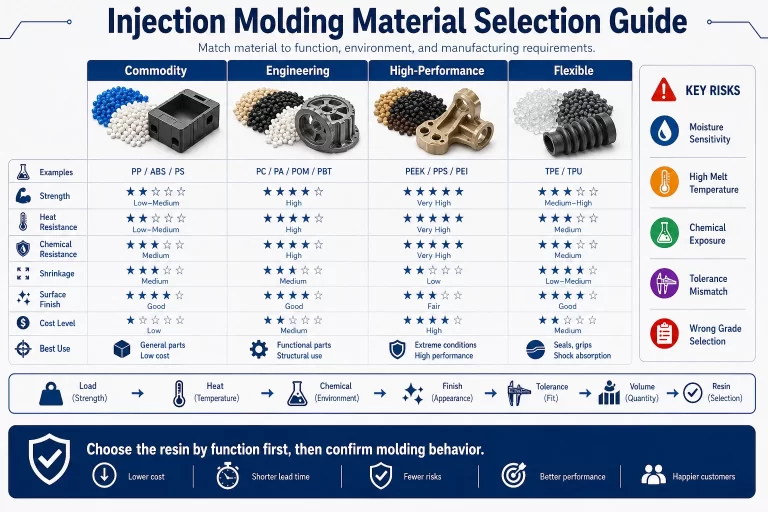
Common Plastic Materials Used in Injection Molding
Choosing the right material is critical to your part’s performance. We support a wide range of thermoplastics to meet different strength, temperature, and cost requirements:
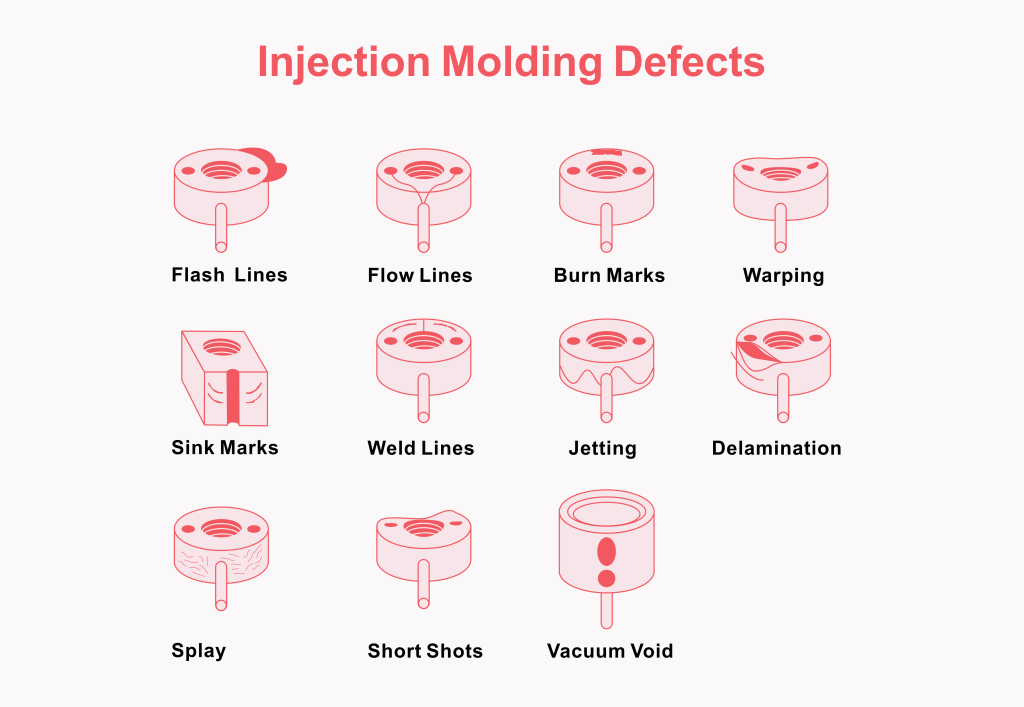
Common Injection Molding Defects and How to Avoid Them
Understanding common defects and their root causes helps us catch issues early in the design phase, avoiding costly rework and delays. Our engineering team addresses these issues during the DFM review process:
- Sink Marks
Caused by uneven wall thickness or insufficient packing pressure. We fix this by optimizing part design to maintain uniform wall thickness and adjusting process parameters.
- Warping
Caused by uneven cooling rates across the part. We resolve this by balancing the mold cooling system and optimizing material shrinkage properties.
- Flash
Excess material at the parting line, caused by insufficient clamping force or worn mold surfaces. We prevent this with precise mold machining and proper tonnage calculation.
- Short Shots
Incomplete part filling, caused by low injection pressure or poor material flow. We fix this by adjusting process parameters and optimizing mold venting.
- Weld Lines
Visible lines where two flow fronts meet. We mitigate this by optimizing gate location and adjusting melt temperature to ensure proper material bonding.
When Is Injection Molding the Right Manufacturing Process?
Injection molding is not the right fit for every project. This comparison helps you decide if it’s the best choice for your production needs:
What Information Do Manufacturers Need for Injection Molding Quotation?
To provide you with an accurate, fast quote for your injection molding project, we recommend preparing the following information. This helps us avoid back-and-forth communication and deliver your quote within 24 hours:
3D CAD File
Your part’s 3D model, preferably in STEP or IGES format, to enable DFM analysis and tooling design.
Material Specification
The plastic material you need, or the performance requirements (strength, temperature resistance) for your part.
Annual Volume
Your expected annual production volume, to help us optimize the mold design and production process.
Tolerance & Finish
Critical dimensional tolerances and surface finish requirements, to ensure we can meet your quality standards.
Frequently Asked Questions
What is plastic injection molding?
Plastic injection molding is a high-volume manufacturing process that injects molten thermoplastic into precision mold cavities to produce identical, repeatable parts, ideal for mass production of complex plastic components.
How accurate is injection molding?
With precision tooling and process control, injection molding can achieve tolerances as tight as ±0.005mm for critical parts, making it suitable for high-precision engineering applications.
What plastic is best for injection molding?
The best material depends on your application. ABS is great for general use, PC for high impact, Nylon for wear resistance, and PEEK for high-temperature medical applications.
How expensive is injection mold tooling?
Tooling cost depends on part complexity and cavity count, typically ranging from $1,000 to $10,000+ for custom molds. However, this cost is amortized over the production volume, leading to low per-unit costs.
Can injection molding make complex parts?
Yes! Injection molding can produce extremely complex geometries with undercuts, inserts, and intricate details, as long as the part is designed for manufacturability with proper draft angles and wall thickness.
What file format is needed for injection molding quotation?
We prefer STEP or IGES files, as they preserve full solid geometry and dimensional data for accurate DFM analysis. We also support STL, OBJ, and DWG/DXF files if needed.
Goldcattle’s Injection Molding Capabilities
As a professional custom injection molding manufacturer, Goldcattle has built a full set of production capabilities to support your project from prototype to mass production, with strict quality control to meet global standards.
Advanced Production Equipment
- 10-1000 ton precision injection molding machines, covering small to large part production
- Automated robotic part handling system for consistent cycle time and quality
- In-house precision mold machining equipment: 3-axis/5-axis CNC, EDM, and wire cutting
- ISO 8 class clean room for medical and food-grade part production
Engineering & Technical Expertise
- Precision tolerance control down to ±0.005mm for critical engineering parts
- 10+ years of DFM analysis experience, reducing production cost by up to 20%
- Support for insert molding, overmolding, and tight tolerance molding
- Flexible production capacity: from 100 prototype parts to 1,000,000+ mass production units
Global Quality Certifications
- ISO 9001:2015 Quality Management System
- ISO 13485:2016 Medical Device Quality Management
- IATF 16949:2016 Automotive Quality Management System
- RoHS, REACH, and FDA material compliance for global market access