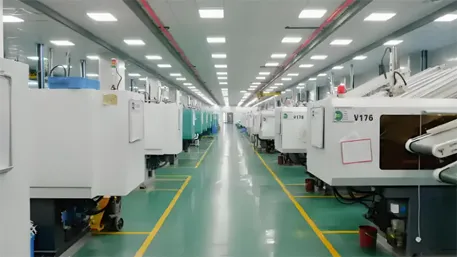
CNC stainless steel machining is a precision manufacturing process that uses computer numerical control (CNC) machines to shape stainless steel into complex components with exceptional accuracy. Stainless steel is one of the most widely used materials in CNC machining due to its unique combination of strength, corrosion resistance, and durability.
This comprehensive guide will explore everything you need to know about CNC stainless steel machining, including material properties, machining processes, applications, surface finishing options, and cost considerations.
What Is CNC Stainless Steel Machining
CNC stainless steel machining is a subtractive manufacturing process that uses computer-controlled tools to remove material from stainless steel workpieces to create precise components. This process offers exceptional accuracy and repeatability, making it ideal for producing complex parts with tight tolerances.
Key Characteristics of Stainless Steel
- Excellent Corrosion Resistance: Chromium content forms a passive oxide layer that protects against rust and corrosion
- High Strength-to-Weight Ratio: Provides exceptional strength while maintaining relatively low weight
- Good Machinability: Can be precision machined into complex geometries
- Biocompatibility: Suitable for medical and food contact applications
- Temperature Resistance: Maintains properties at both high and low temperatures
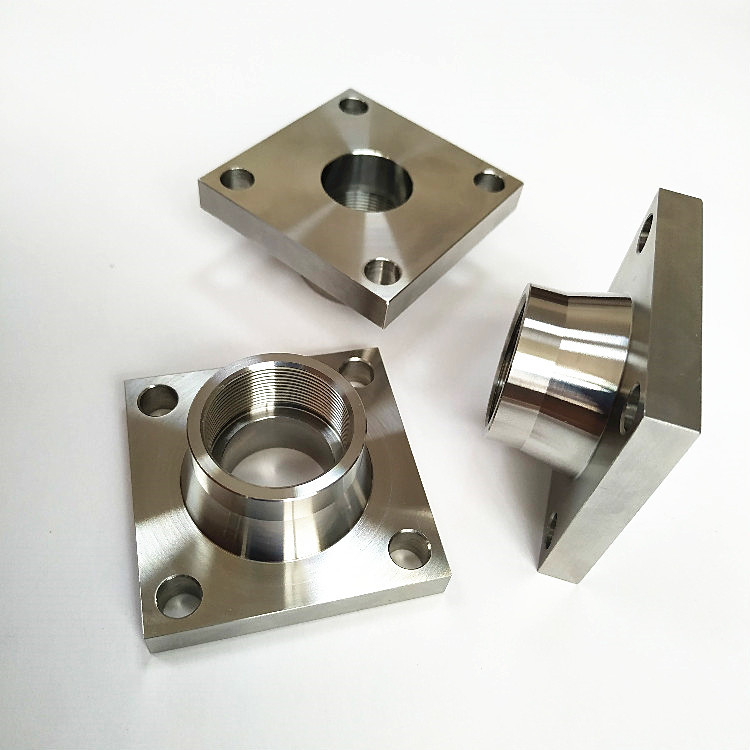
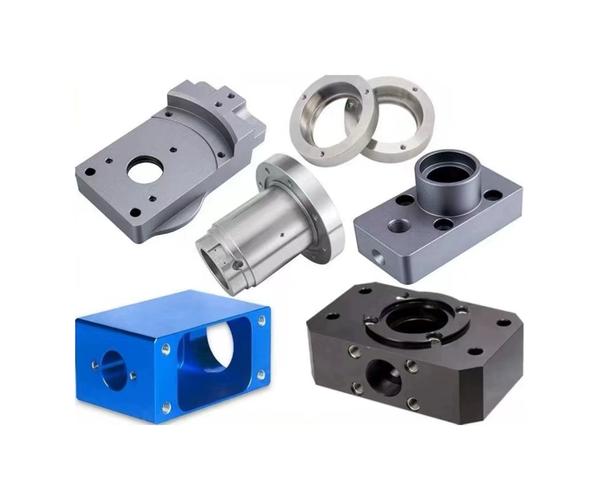
Precision CNC machined stainless steel components showing excellent surface finish and complex geometries
Advantages of CNC Stainless Steel Machining Parts
Exceptional Corrosion Resistance
Stainless steel components resist rust and corrosion even in harsh environments, extending service life and reducing maintenance costs.
High Strength & Durability
Offers excellent mechanical properties with tensile strength up to 800 MPa, making it suitable for demanding applications.
Precision Machining Capabilities
Achieves tight tolerances of ±0.01 mm or better, ensuring consistent quality and performance.
Cost-Effective Production
Long tool life and efficient machining processes result in lower production costs for high-volume runs.
Versatile Applications
Suitable for use in medical, aerospace, automotive, food processing, and industrial equipment applications.
Excellent Surface Finish
Achieves smooth surface finishes down to Ra 0.2 μm without additional finishing operations.
Common Stainless Steel Grades for CNC Machining
Selecting the right stainless steel grade is critical for achieving optimal performance and cost-effectiveness. Here are the most commonly used grades in CNC machining:
| Grade | Key Characteristics | Mechanical Properties | Typical Applications |
|---|---|---|---|
| 304 Stainless Steel |
|
|
|
| 316 Stainless Steel |
|
|
|
| 316L Stainless Steel |
|
|
|
| 430 Stainless Steel |
|
|
|
Industry Standards for Stainless Steel Materials
- ASTM A240: Standard specification for chromium and chromium-nickel stainless steel plate, sheet, and strip for pressure vessels and for general applications
- ASTM A276: Standard specification for stainless steel bars and shapes for structural and mechanical applications
- ASTM A484/A484M: Standard specification for general requirements for stainless steel bars, billets, and forging stock
- GB/T 3280: Chinese national standard for cold-rolled stainless steel plates, sheets, and strips
- JIS G4303: Japanese industrial standard for stainless steel bars
- EN 10088-2: European standard for stainless steels – Technical delivery conditions for sheet/plate and strip of corrosion resisting steels for general purposes
CNC Stainless Steel Machining Processes
CNC Milling Stainless Steel
Uses rotating cutting tools to remove material from the workpiece. Ideal for creating complex shapes, slots, and pockets in stainless steel components.
Typical Tolerances: ±0.01 mm
Surface Finish: Ra 0.4-1.6 μm
CNC Turning Stainless Steel
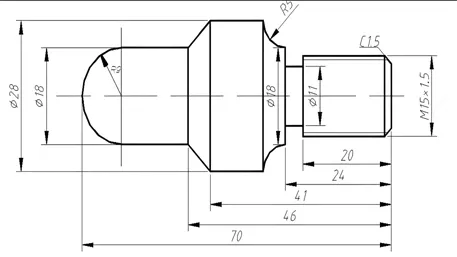
Rotates the workpiece while cutting tools remove material to create cylindrical components. Perfect for shafts, bolts, and other round parts.
Typical Tolerances: ±0.005 mm
Surface Finish: Ra 0.2-0.8 μm
5-Axis Stainless Steel Machining
Offers simultaneous movement along five axes, enabling the production of highly complex geometries in a single setup.
Typical Tolerances: ±0.003 mm
Surface Finish: Ra 0.1-0.4 μm
Recommended Machining Parameters
Optimal Cutting Parameters for Stainless Steel
| Operation | Cutting Speed (m/min) | Feed Rate (mm/rev) | Depth of Cut (mm) |
|---|---|---|---|
| Rough Milling | 80-120 | 0.2-0.5 | 3-5 |
| Finish Milling | 120-150 | 0.1-0.2 | 0.5-1.0 |
| Rough Turning | 100-150 | 0.15-0.3 | 2-4 |
| Finish Turning | 150-200 | 0.05-0.1 | 0.2-0.5 |
Note: Parameters may vary based on specific material grade, tooling, and machine capabilities. These values are provided as general guidelines only.
Applications of CNC Stainless Steel Machined Parts
Medical Industry
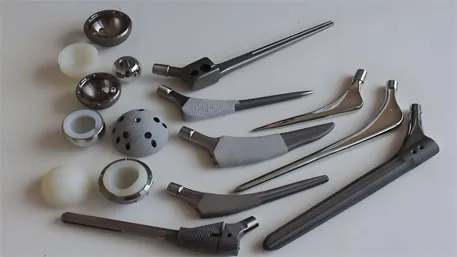
Stainless steel is widely used in medical applications due to its biocompatibility, corrosion resistance, and ease of sterilization. CNC machined stainless steel components include surgical instruments, implants, medical device housings, and diagnostic equipment parts.
Key Requirements: ASTM F138/F139 standards for surgical implants, Ra ≤0.8 μm surface finish, and strict cleanliness requirements.
Aerospace Industry
The aerospace industry relies on stainless steel for its high strength-to-weight ratio and excellent temperature resistance. CNC machined components include engine parts, structural components, fasteners, and hydraulic system parts.
Key Requirements: AS9100 quality standards, tight tolerances (±0.005 mm), and compliance with NADCAP specifications.
Food & Beverage Industry
Stainless steel is the material of choice for food processing equipment due to its hygienic properties and corrosion resistance. CNC machined parts include valves, pumps, conveyors, and processing equipment components.
Key Requirements: FDA 21 CFR Part 177.2600 compliance, Ra ≤0.4 μm surface finish, and easy cleanability.
Automotive Industry
Stainless steel is used in automotive applications for its durability and corrosion resistance. CNC machined components include exhaust system parts, fuel system components, brake system parts, and engine components.
Key Requirements: IATF 16949 quality standards, high fatigue resistance, and compatibility with automotive fluids.
Industrial Equipment
Stainless steel CNC machined parts are used in a wide range of industrial equipment including pumps, valves, gears, and machine components that require high strength and corrosion resistance.
Surface Finishing for CNC Stainless Steel Parts
Surface finishing is an important aspect of CNC stainless steel machining that enhances both the appearance and performance of the final product. Here are the most common surface finishing options:
| Finish Type | Benefits | Typical Applications | Surface Roughness (Ra) |
|---|---|---|---|
| Passivation |
|
Medical devices, food equipment | 0.4-1.6 μm |
| Electropolishing |
|
Medical implants, semiconductor equipment | 0.05-0.2 μm |
| Bead Blasting |
|
Architectural components, industrial equipment | 1.6-6.3 μm |
| Brushing |
|
Architectural hardware, consumer products | 0.8-3.2 μm |
| Powder Coating |
|
Industrial equipment, architectural components | Depends on coating thickness |
CNC Stainless Steel Machining Tolerances
CNC stainless steel machining can achieve very tight tolerances, depending on the specific process, machine capabilities, and part geometry. The following are typical tolerance ranges for different machining operations:
Tolerance Capabilities for CNC Stainless Steel Machining
| Machining Process | Typical Tolerance Range | Best Possible Tolerance | Factors Affecting Tolerance |
|---|---|---|---|
| CNC Milling | ±0.01 to ±0.02 mm | ±0.003 mm |
|
| CNC Turning | ±0.005 to ±0.01 mm | ±0.002 mm |
|
| 5-Axis Machining | ±0.003 to ±0.008 mm | ±0.001 mm |
|
| Drilling | ±0.01 to ±0.03 mm | ±0.005 mm |
|
Stainless Steel CNC Machining Cost Factors
The cost of CNC stainless steel machining depends on several key factors that influence production time, material usage, and overall complexity. Understanding these factors can help optimize your design for cost-effectiveness:
Material Grade Selection
- 304 Stainless Steel: Most cost-effective option for general applications
- 316 Stainless Steel: Typically 20-30% more expensive than 304 due to molybdenum content
- Specialty Grades: High-performance alloys can be 50-100% more expensive than standard grades
Part Complexity
- Simple geometries: Lower cost due to shorter machining time
- Complex features: Higher cost for multi-axis machining and specialized tooling
- Internal features: Deep cavities and complex internal geometries increase setup time and tool wear
Machining Time
- Roughing operations: Remove bulk material quickly but generate more tool wear
- Finishing operations: Require slower feed rates and more passes for precision
- Setup time: Complex parts require more time for fixturing and tool changes
Surface Finish Requirements
- Standard finish: Least expensive, achievable with standard machining
- Premium finishes: Electropolishing and passivation add additional processing steps and cost
- Decorative finishes: Brushing and bead blasting require specialized equipment and labor
Production Volume
- Prototyping: Higher unit cost due to setup and programming time
- Low volume (1-100 parts): Moderate cost with some economies of scale
- High volume (1000+ parts): Lower unit cost due to optimized processes and tooling
Cost Estimation Guidelines (USD per Hour)
| Machining Process | Basic Machine Rate | Advanced Machine Rate | Additional Costs |
|---|---|---|---|
| 3-Axis Milling | $60-80 | $80-120 |
|
| CNC Turning | $50-70 | $70-100 |
|
| 5-Axis Machining | $120-180 | $180-250 |
|
Note: Rates vary by region, machine capabilities, and material difficulty. These are approximate guidelines only.
Design Tips for CNC Stainless Steel Parts
Proper design is essential for achieving optimal results in CNC stainless steel machining. Follow these guidelines to improve manufacturability, reduce costs, and ensure quality:
Wall Thickness Considerations
- Minimum Wall Thickness: 0.8-1.0 mm for small parts, 1.5-2.0 mm for larger components
- Uniform Thickness: Maintain consistent wall thickness to prevent distortion during machining
- Rib Design: Use ribs to increase stiffness without increasing overall thickness
Hole Design Guidelines
- Depth-to-Diameter Ratio: Maximum 10:1 for through holes, 5:1 for blind holes
- Hole Diameter: Minimum 1.5 mm for standard drilling, smaller holes require special tooling
- Countersink Design: Use standard countersink angles (82° or 90°) for optimal tooling compatibility
Corner and Edge Design
- Internal Corners: Use minimum radius equal to tool radius + 0.1 mm
- External Edges: Include chamfers or radii to reduce stress concentrations and improve handling
- Minimum Radius: 0.5 mm for internal corners, 0.2 mm for external edges
Thread Design Considerations
- Thread Type: Use standard thread types (UNC, UNF, metric) for cost-effective machining
- Thread Depth: Minimum 1.5x diameter for sufficient engagement
- Thread Relief: Include relief at the end of threads to prevent tool breakage
Surface Finish Requirements
- Functional Surfaces: Specify only the surface finish required for functionality
- Standard Finishes: Use standard Ra values to avoid unnecessary costs
- Finish Compatibility: Ensure specified finishes are compatible with the material and application
How to Order Custom CNC Stainless Steel Parts
Ordering custom CNC stainless steel parts is a straightforward process when you work with an experienced manufacturing partner. Follow these steps to ensure a smooth and successful project:
1. Prepare Your CAD Files
- Provide detailed 3D CAD models (STEP, IGES, or SolidWorks files)
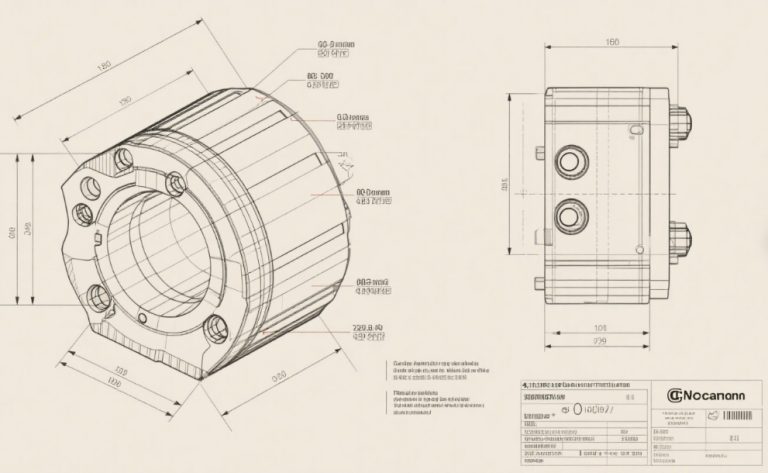
- Include 2D drawings with critical dimensions and tolerances
- Specify material grade and surface finish requirements
- Note any special requirements or testing needs
2. Engineering Review
- Our engineering team will review your design for manufacturability
- Provide feedback on design improvements to reduce cost and improve quality
- Confirm material selection and process recommendations
- Address any potential issues or concerns
3. Quotation Process
- Receive detailed quotation with pricing, lead time, and delivery options
- Review and approve the quotation before production begins
- Confirm order details and specifications
- Place your order with purchase order or payment
4. Production Process
- Material procurement and preparation
- CNC programming and setup
- Precision machining of components
- Quality inspection and testing
- Surface finishing and treatment processes
5. Quality Control & Inspection
- First article inspection for prototype and initial production runs
- In-process quality checks throughout production
- Final inspection to ensure compliance with specifications
- Documentation and certification provided with shipment
6. Shipping & Delivery
- Careful packaging to protect components during shipping
- Multiple shipping options available (standard, expedited, international)
- Tracking information provided for all shipments
- On-time delivery guaranteed
Frequently Asked Questions (FAQ)
Stainless steel is widely used in CNC machining due to its unique combination of properties including excellent corrosion resistance, high strength, good machinability, biocompatibility, and temperature resistance. These characteristics make it suitable for a wide range of applications across many industries.
The best stainless steel grade for CNC machining depends on your specific application requirements. 304 stainless steel is the most cost-effective general-purpose grade, while 316 offers better corrosion resistance for harsh environments. 316L is preferred for welded components and high-purity applications, and 430 is a cost-effective ferritic option.
CNC stainless steel machining can achieve very tight tolerances, typically ranging from ±0.005 mm to ±0.02 mm depending on the specific process and part complexity. With advanced 5-axis machining equipment, tolerances as tight as ±0.001 mm can be achieved for critical features.
Common surface finishes for CNC stainless steel parts include passivation, electropolishing, bead blasting, brushing, and powder coating. Each finish offers different benefits in terms of corrosion resistance, appearance, and functional performance.
Lead times for CNC stainless steel machining vary depending on part complexity, production volume, and finishing requirements. Prototypes can typically be completed in 3-5 business days, while production runs may take 1-4 weeks. Rush options are available for urgent projects.
CNC stainless steel parts are used in a wide range of industries including medical, aerospace, food and beverage, automotive, industrial equipment, marine, and semiconductor manufacturing. The material’s unique properties make it suitable for many different applications.
Get Started with Your Custom CNC Stainless Steel Machining Project Today
Contact our team of experienced engineers to discuss your project requirements and receive a free, no-obligation quotation.