Is CNC Stronger Than Forged?
Short Answer: No.
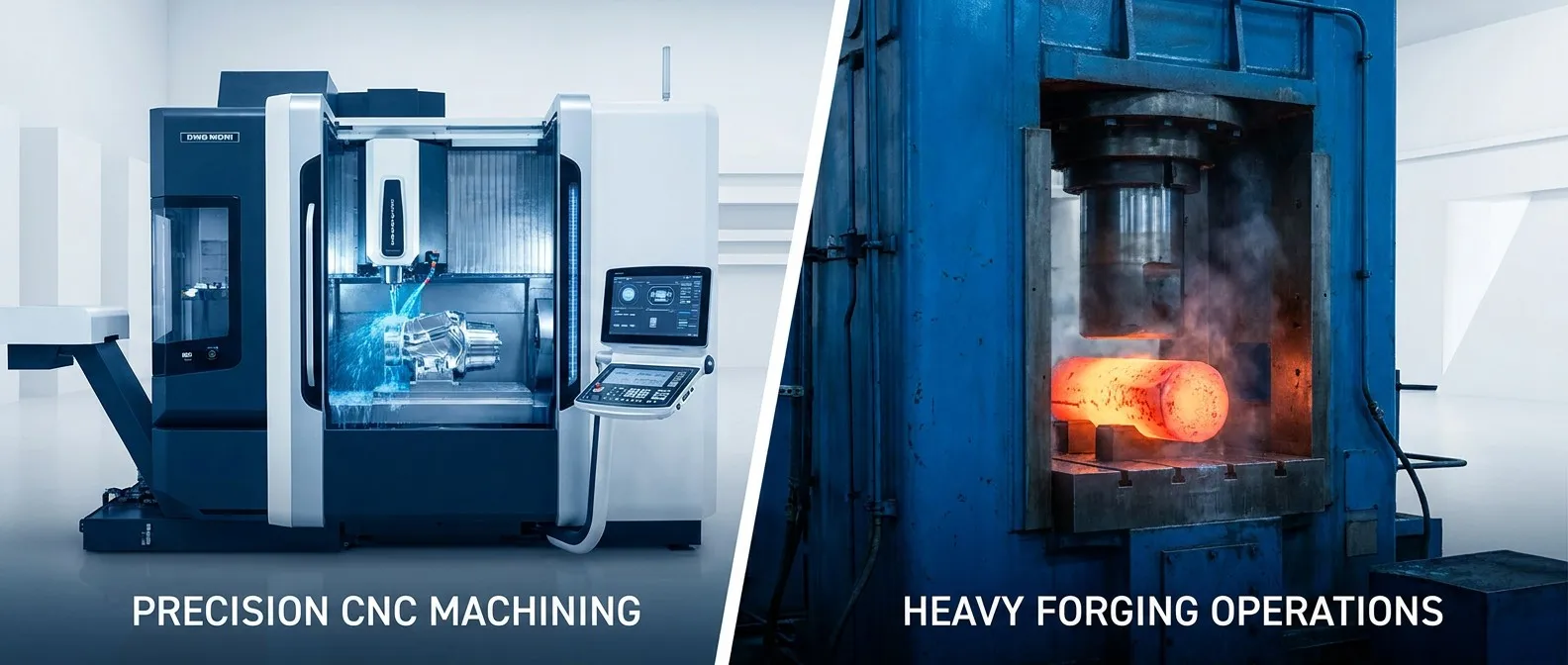
Forged parts are generally stronger because forging aligns the metal grain flow and improves internal density. CNC machining provides much higher dimensional accuracy and tighter tolerances. For high-strength precision components, forged blanks are often CNC machined as a secondary process.
→ Forging
→ CNC Machining
→ Forged + CNC Finish
Quick Summary
CNC machining does not inherently make a metal stronger than forging. Forging improves the internal grain structure and mechanical properties of the material, while CNC machining focuses on dimensional accuracy and surface finish. In many industrial applications, forged blanks are CNC machined to combine superior strength with high precision.
CNC vs Forging: Head-to-Head Comparison
Why Forging Produces Stronger Parts
Forging uses compressive force to reshape metal while it remains solid. This plastic deformation aligns the grain structure along the principal stress direction, eliminating internal voids and creating a continuous fiber flow pattern.
The result: a denser, more homogeneous microstructure with significantly higher tensile strength, impact resistance, and fatigue life compared to machined-from-billet equivalents.
Key Parameter — Grain Flow Alignment
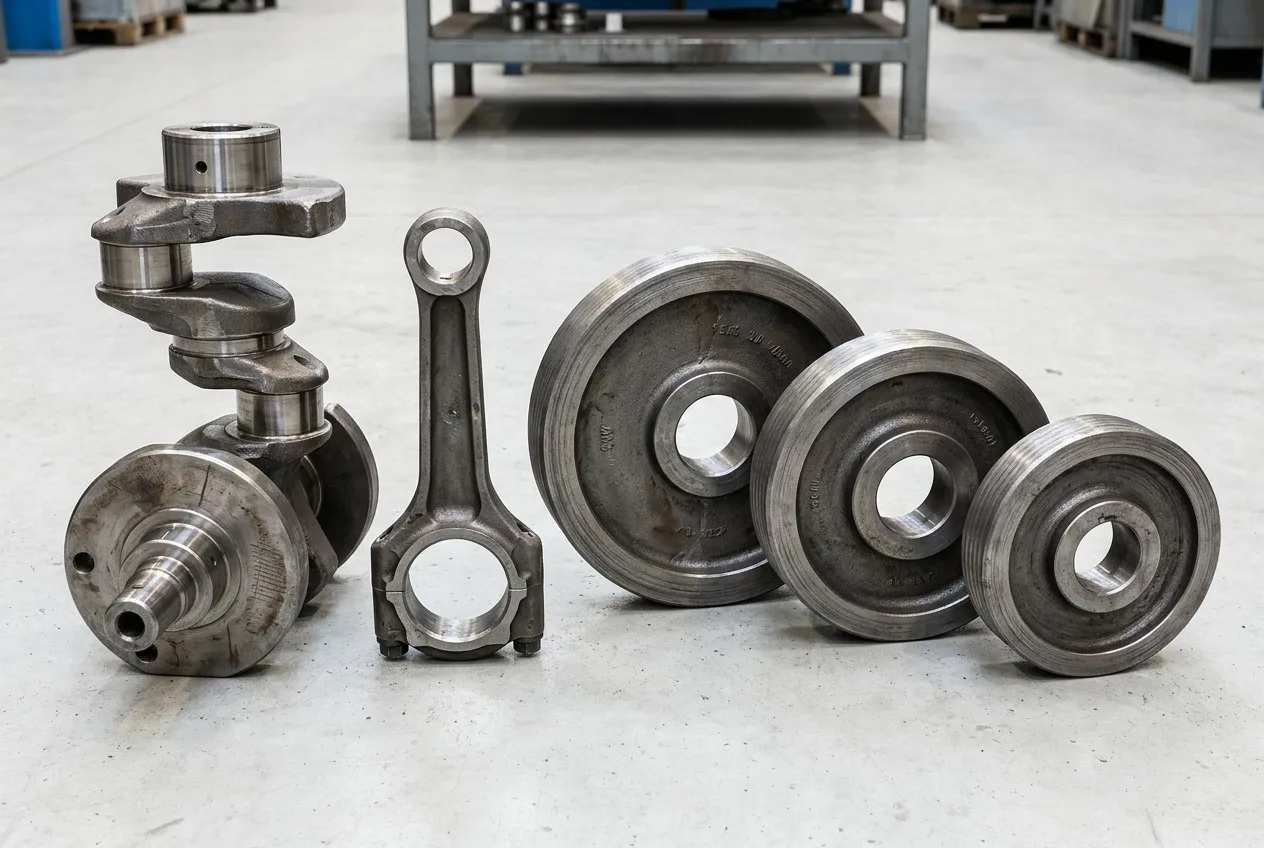
In a forged crankshaft, metal fibers follow the contour continuously, giving 20–30% higher fatigue endurance versus billet-machined parts where the grain is interrupted by cutting.
Where CNC Machining Excels
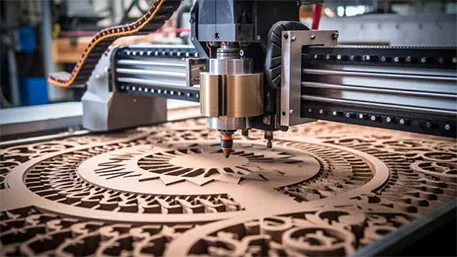
CNC machining removes material from a solid billet with computer-controlled precision. It does not alter the internal grain structure — part strength equals the raw material’s baseline properties. But what it delivers is unmatched dimensional control.
For components where tolerance, surface quality, and geometric complexity matter more than raw load capacity, CNC is often the sole viable route.
Key Parameter — Residual Stress
Cutting forces introduce surface residual stress. Properly managed (feed rate, tool path, finishing pass), this can be controlled. Unmanaged, it reduces fatigue life by up to 15%.
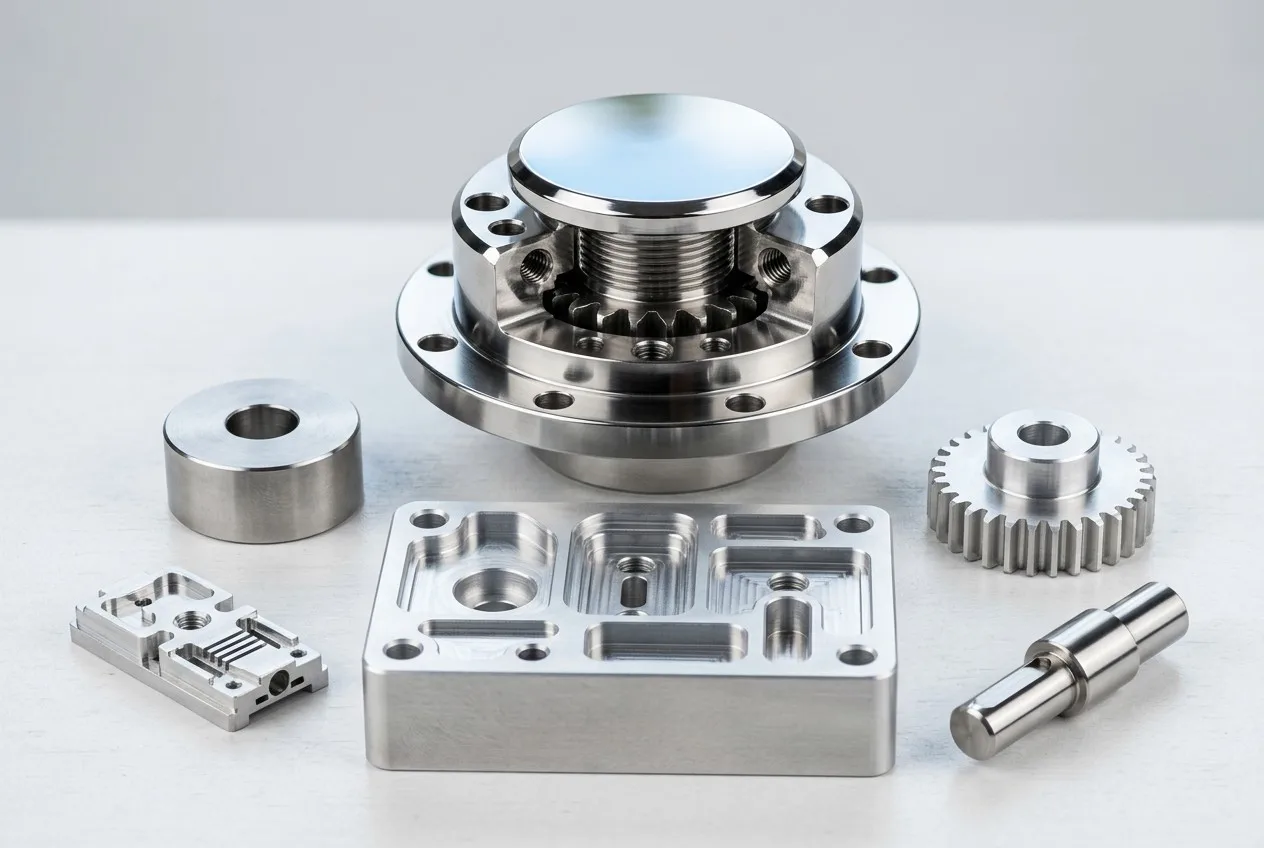
Choose CNC Machining When:
- ✓ Tight tolerances (±0.005 mm or tighter)
- ✓ Prototype or low-volume production
- ✓ Complex 3D geometry (5-axis required)
- ✓ Small-batch aluminum components
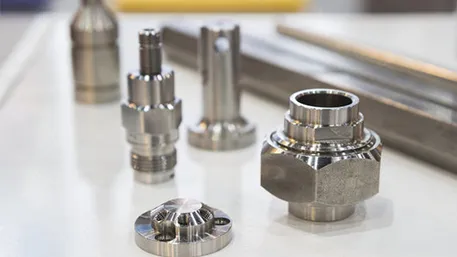
- ✓ Stainless steel precision parts (303 / 304 / 316 / 17-4PH)
- ✓ Medical device housings & surgical tools
- ✓ Aerospace brackets & fixture plates
- ✓ Surface finish Ra ≤ 0.8 μm required
Choose Forging When:
- ✓ Heavy static or dynamic loads
- ✓ High fatigue resistance required
- ✓ Automotive crankshafts & connecting rods
- ✓ Suspension & steering components
- ✓ Oil & gas pressure fittings
- ✓ Mining & earthmoving equipment
- ✓ Marine propulsion shafts
- ✓ Volume production (> 1,000 pcs)
Why Forged + CNC Finish Machining Is Often the Best Solution
In demanding mechanical applications, neither process alone achieves the optimal result. The industry-standard approach for high-performance load-bearing components is a two-stage workflow: forge first for structural integrity, then machine for dimensional precision.
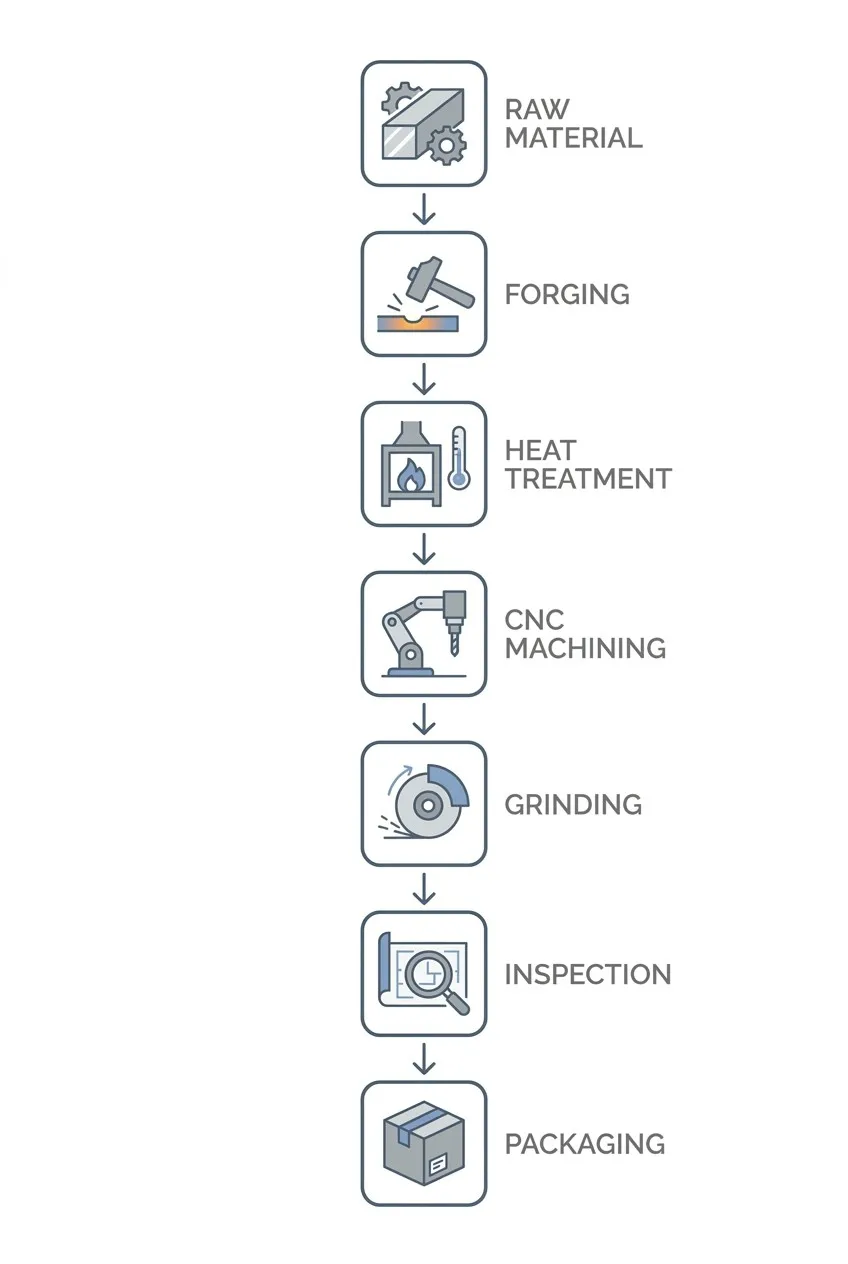
Combined Process Flow
1. Raw Material Selection (bar / billet)
2. Forging (closed-die or open-die)
3. Normalizing / Annealing
4. Heat Treatment (quench + temper)
5. Rough CNC Machining
6. Finish CNC Machining
7. Grinding (if required)
8. Quality Inspection (CMM / Zeiss)
9. Packaging & Shipping
Engineering Note: Forging first ensures grain continuity through the critical cross-sections. Subsequent CNC operations remove only the surface layer, leaving the forged grain core intact. This is why aerospace landing gear, turbine shafts, and high-pressure valves almost universally follow this sequence.
Recommended Process by Application
Automotive
Crankshafts, connecting rods — Forged + CNC. Engine brackets, sensor housings — CNC only
Aerospace
Landing gear, turbine discs — Forged + CNC. Fixture plates, satellite brackets — CNC only
Medical
Surgical tool handles, implant prototypes — CNC only. Orthopedic joint implants (high-load) — Forged + CNC
Oil & Gas
Pressure flanges, valve bodies — Forged + CNC. Gauge housings, instrument mounts — CNC only
Mining & Heavy Equipment
Bucket pins, track links — Forged + CNC. Control panels, hydraulic manifolds — CNC only
Electronics
Device enclosures, heat sinks — CNC only. Forging rarely used in this sector due to low load requirements
Material Behavior: CNC vs Forged Across Common Alloys
Note: UTS values are approximate and depend on heat treatment condition. For aluminum alloys like 6061-T6, forging provides negligible strength gain over billet because the T6 temper already maximizes precipitation hardening — CNC is preferred. For high-alloy steels (4140 / 4340), forging gains of 8–17% are structurally significant for fatigue-loaded parts.
Cost & Lead Time Comparison
★ = cost-efficiency rating (5 = best value). Forging die amortization makes it uneconomical below ~500 pcs. CNC has no tooling overhead, ideal for prototyping.

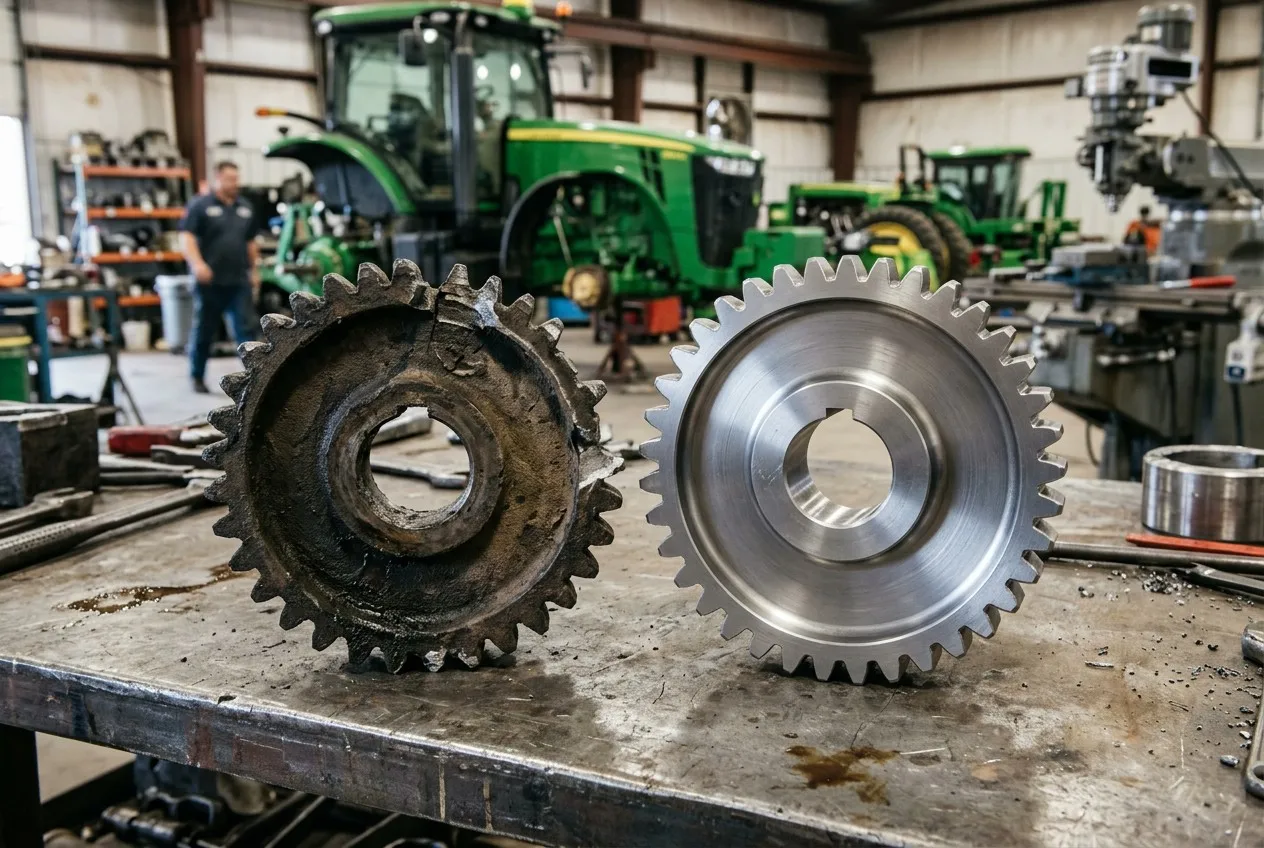
Case Study: Agricultural Gear Upgrade
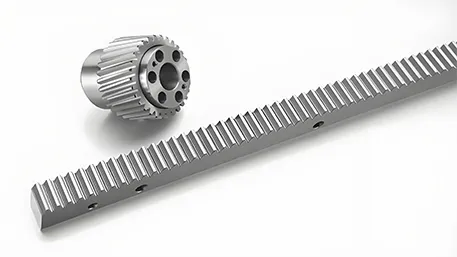
Engineering Insight: The cast gear’s porosity at tooth root fillets created crack initiation sites. Forging eliminated internal voids, and CNC profiling achieved the precise involute curve needed for smooth meshing — neither process alone would have solved both problems.
Xiamen Goldcattle: Your Forged + CNC Partner
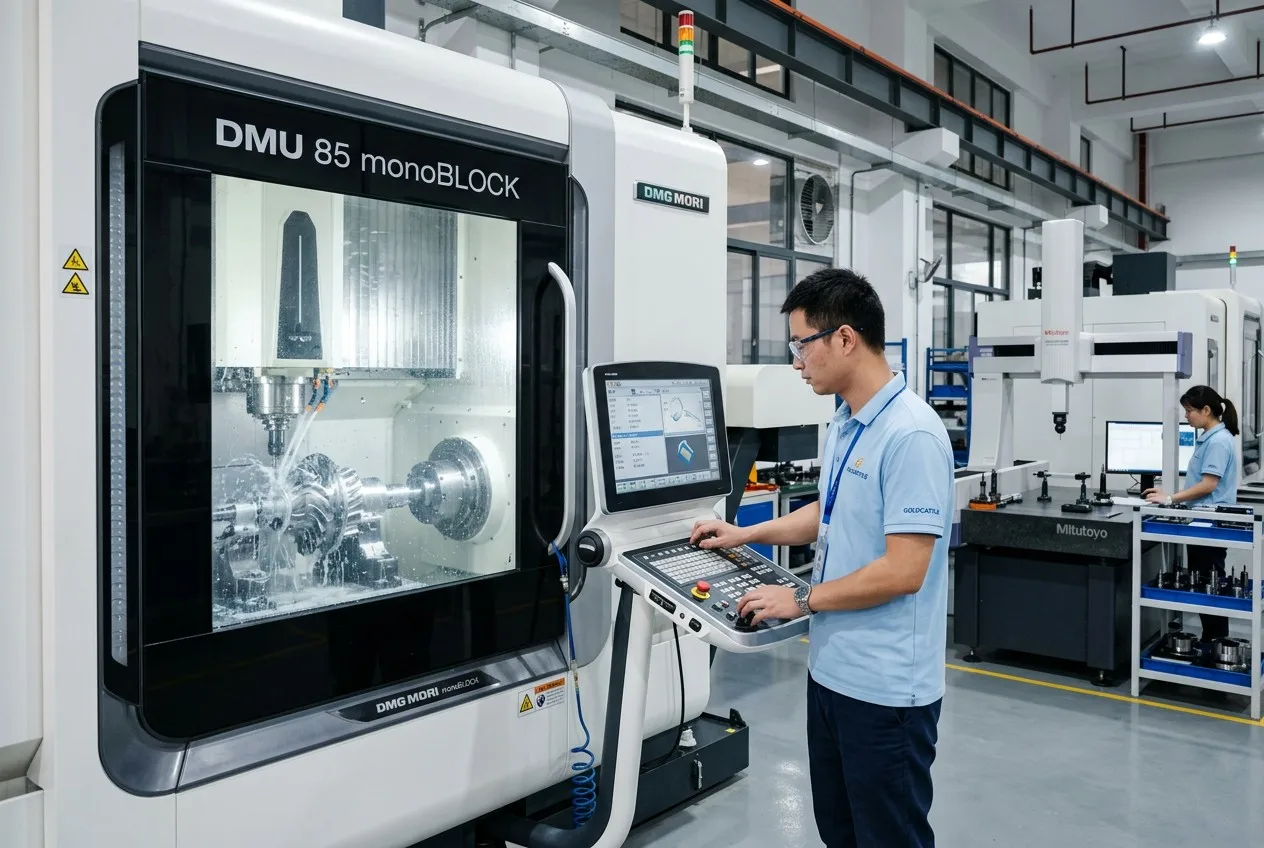
With over 15 years serving North American and European OEMs, Xiamen Goldcattle operates both CNC machining and forging coordination under one roof. We manage the full workflow — from material specification through forging subcontract, heat treatment, precision machining, and final inspection.
Core Capabilities
- 5-axis CNC milling & turning (DMG MORI, tolerance ±0.005 mm)
- Swiss-type precision lathe (±0.002 mm for micro parts)
- Closed-die forging coordination (4140, 4340, 1045, 17-4PH)
- Heat treatment: quench, temper, anneal, solution + age
- Grinding & surface finishing (Ra 0.2–0.8 μm)
- CMM inspection (Zeiss) with full dimensional report
- ISO 9001:2015 certified; medical-grade ISO 13485 available
Frequently Asked Questions
Is forged steel always stronger than CNC-machined steel?
Not always — but usually. Forging aligns grain flow and eliminates porosity, giving 8–17% higher UTS in most steels. For some aluminum alloys (6061-T6), the gain is negligible because precipitation hardening dominates.
Can forged parts be CNC machined?
Yes — this is standard practice. Forged blanks provide the structural backbone; CNC delivers the precision surfaces and complex features. Most high-performance shafts and gears follow this sequence.
Does CNC cutting reduce material strength?
CNC removes material but does not weaken the remaining structure if proper parameters are used. However, interrupted grain flow at machined surfaces can reduce fatigue resistance compared to a forged-only profile.
Is billet aluminum stronger than forged aluminum?
For 6061-T6, no — the T6 temper equalizes performance. For 7075, forged aluminum is ~12% stronger due to grain alignment. “Billet” sounds premium but simply means machined from a solid block.
Which process is cheaper for small batches?
CNC is significantly cheaper below ~500 pieces. Forging requires custom dies costing \$5,000–\$30,000+, which only amortizes at higher volumes.
Which process offers tighter tolerances?
CNC machining achieves ±0.005 mm routinely, ±0.002 mm on Swiss-type equipment. Forging tolerances are ±0.2 mm at best — post-machining is required for any precision feature.
Which is better for aerospace components?
Load-critical parts (landing gear, turbine discs) use forged + CNC. Structural brackets and housings where loads are moderate use CNC from billet or plate.
What materials can be forged?
Carbon steels, alloy steels, stainless steels, titanium alloys, aluminum alloys, copper alloys, and nickel-based superalloys. Not all plastics or ceramics — those require injection molding or CIM.
Can forged parts be anodized or plated?
Yes. Forged aluminum parts are typically CNC-finished first, then anodized. Forged steel parts can be zinc-plated, chrome-plated, or nitride-coated after machining.
Can forged parts be heat treated after machining?
Yes, but sequence matters. Standard practice: forge → normalize → rough CNC → quench/temper → finish CNC. Heat treating after finish machining risks distortion.
What industries use forged components most?
Automotive, aerospace, oil & gas, mining, marine, agriculture, construction, and defense — any sector where components face cyclic or shock loading.
How do I choose between CNC and forging for my project?
Consider four factors: load type (static vs cyclic), tolerance requirement, production volume, and geometry complexity. Upload your drawing to get a specific recommendation — see the CTA below.
Need Help Choosing Between CNC Machining and Forging?
Upload your drawing (STEP, IGES, PDF or DWG). Our engineers will recommend the most cost-effective manufacturing process based on your required strength, tolerances, production volume and budget.