Industrial Applications
Where Our Pulleys Excel
Our custom stainless steel pulleys are engineered for reliability in the most demanding environments. They provide smooth mechanical motion, reduce friction, and distribute loads evenly across cables, ropes, or belts.
Technical Insight: Load Distribution Efficiency
Properly designed groove profiles reduce cable/belt wear by 25-30% compared to standard pulleys, extending the service life of both the pulley and the transmission medium.
Primary Applications:
- Construction Machinery: Cranes, excavators, concrete pumps
- Material Handling: Hoists, winches, conveyor systems
- Agricultural Equipment: Harvesters, tractors, irrigation systems
- Industrial Lifting: Overhead cranes, gantry systems
- Marine & Offshore: Deck machinery, mooring systems
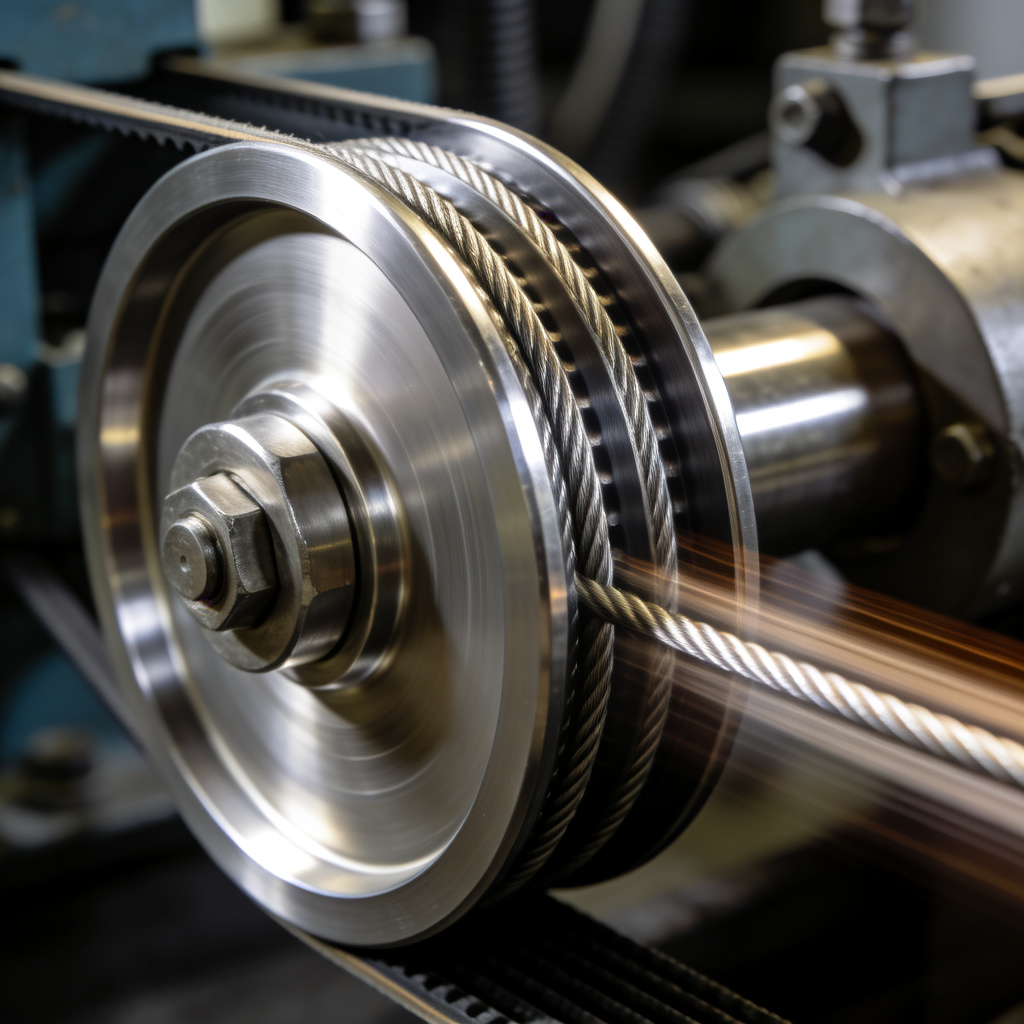
Our pulleys provide smooth mechanical motion and efficient load distribution in industrial applications.
Technical Specifications
Technical Insight: ISO 2768 Tolerance Standards
We adhere to ISO 2768-m (medium) tolerance class for linear dimensions, which provides ±0.1mm tolerance for nominal sizes up to 3mm and ±0.5mm for sizes up to 400mm. For critical features, we can achieve ISO 2768-f (fine) class tolerances of ±0.05mm.
Key Product Features
High Strength Construction
Manufactured from 304/316 stainless steel with tensile strength of 515-690MPa. Our pulleys withstand 1.5x rated load without deformation, ensuring reliability in heavy-duty applications.
Superior Corrosion Resistance
Specifically engineered for humid, dusty, or outdoor environments. Our 316 stainless steel variants survive 1000+ hours in salt spray tests per ASTM B117 standards, making them ideal for marine and coastal applications.
Precision-Machined Grooves
Groove surfaces achieve Ra ≤1.6μm surface finish, reducing cable/belt wear by 25-30% compared to industry standard pulleys. Hardened groove surfaces (HRC 40-45) extend service life to 10,000+ operating hours.
Dimensional Stability
Maintains precise tolerances under temperature fluctuations from -20°C to 120°C. Our manufacturing process ensures consistent performance across all environmental conditions.
Alternative Materials & Their Features
Carbon Steel (S45C)
Best for: Cost-effective indoor applications with moderate loads (≤100kN)
Features: High tensile strength (600-700MPa), requires painting/galvanizing for rust protection
Cost: 30-40% lower than stainless steel
Ductile Iron (GGG50)
Best for: Shock-loaded applications like construction cranes
Features: Excellent impact resistance (15-20J at -20°C), superior vibration damping
Note: 20% heavier than steel, 30% more cost-effective
Alloy Steel (42CrMo)
Best for: Extreme load applications in mining machinery
Features: Superior strength (1000-1200MPa after heat treatment), handles 500kN+ loads
Requires: Corrosion protection coating
Aluminum Alloy (6061-T6)
Best for: Portable equipment and light construction machinery
Features: Lightweight (2.7g/cm³ vs steel’s 7.8g/cm³), good corrosion resistance
Limitation: Maximum load capacity 50kN
Manufacturing Process
Material Preparation
Cut stainless steel round bars/plates to blank size using plasma cutting or sawing. All materials come with verified certification (3.1B reports for chemical composition) to ensure compliance with international standards including ASTM, EN, and JIS.
Precision Machining
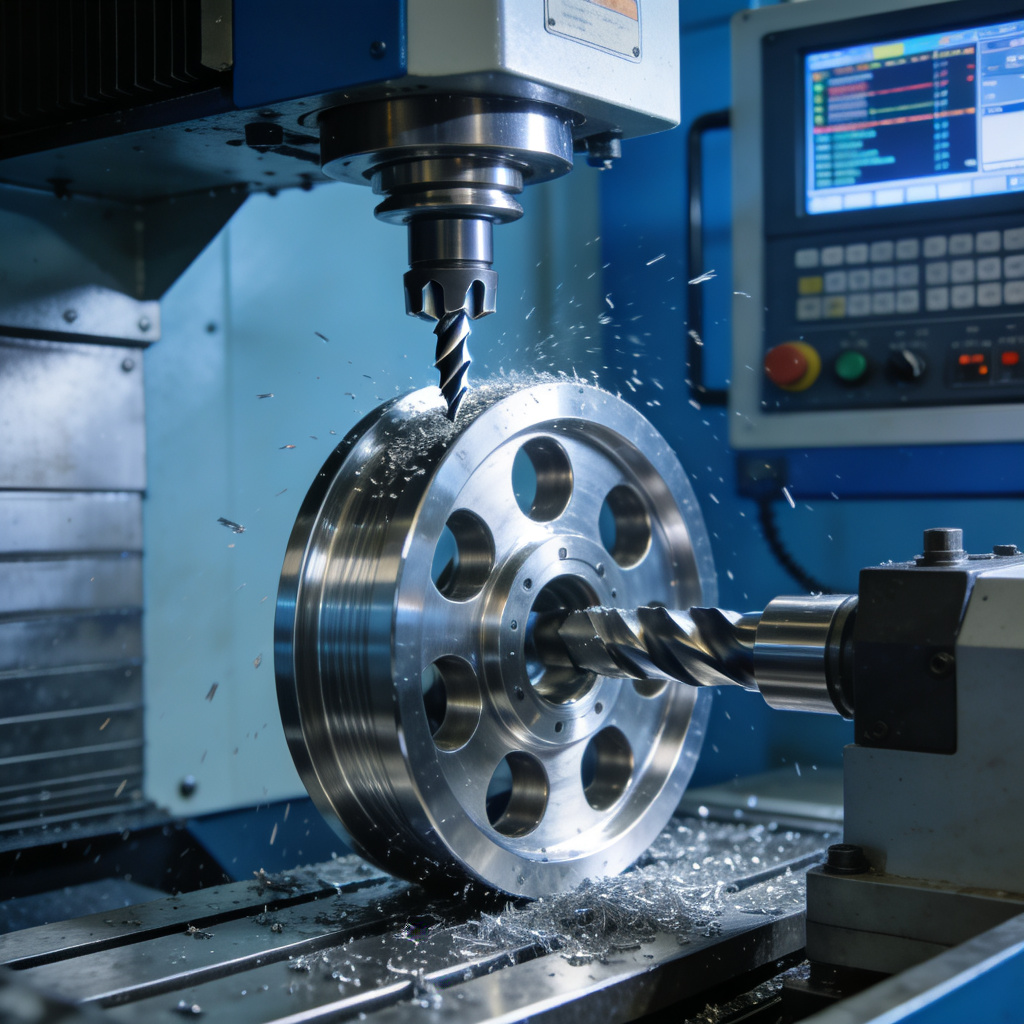
CNC turning for outer diameter, bore, and hub faces (±0.05mm tolerance). CNC milling or grinding for groove profiles, ensuring consistent shape and surface finish (Ra ≤1.6μm). We utilize advanced CNC grinding with real-time measurement systems to maintain groove precision.
Heat Treatment & Surface Finishing
Solution annealing (1050-1100°C) for stress relief. Optional surface hardening for grooves (HRC 40-45). Passivation (nitric acid bath) to enhance corrosion resistance, with electropolishing available for high-precision applications (Ra ≤0.8μm).
Quality Assurance
100% dimensional inspection with CMM. Static load testing at 1.5x rated load for 10 minutes. Dynamic balancing (G6.3 grade) for pulleys over 500mm diameter. Ultrasonic testing for weld integrity on split pulleys.
Technical Insight: Overcoming Manufacturing Challenges
Large diameter pulleys (>500mm) require specialized dynamic balancing to reduce vibration. Thin-wall designs (diameter-to-wall-thickness ratio >20:1) need specialized fixturing and controlled feed rates to prevent deformation during machining. Post-machining passivation (20-30% nitric acid, 30-60 minutes) is critical to restore the passive chromium layer on 304/316 stainless steel.
Quality Control & Inspection
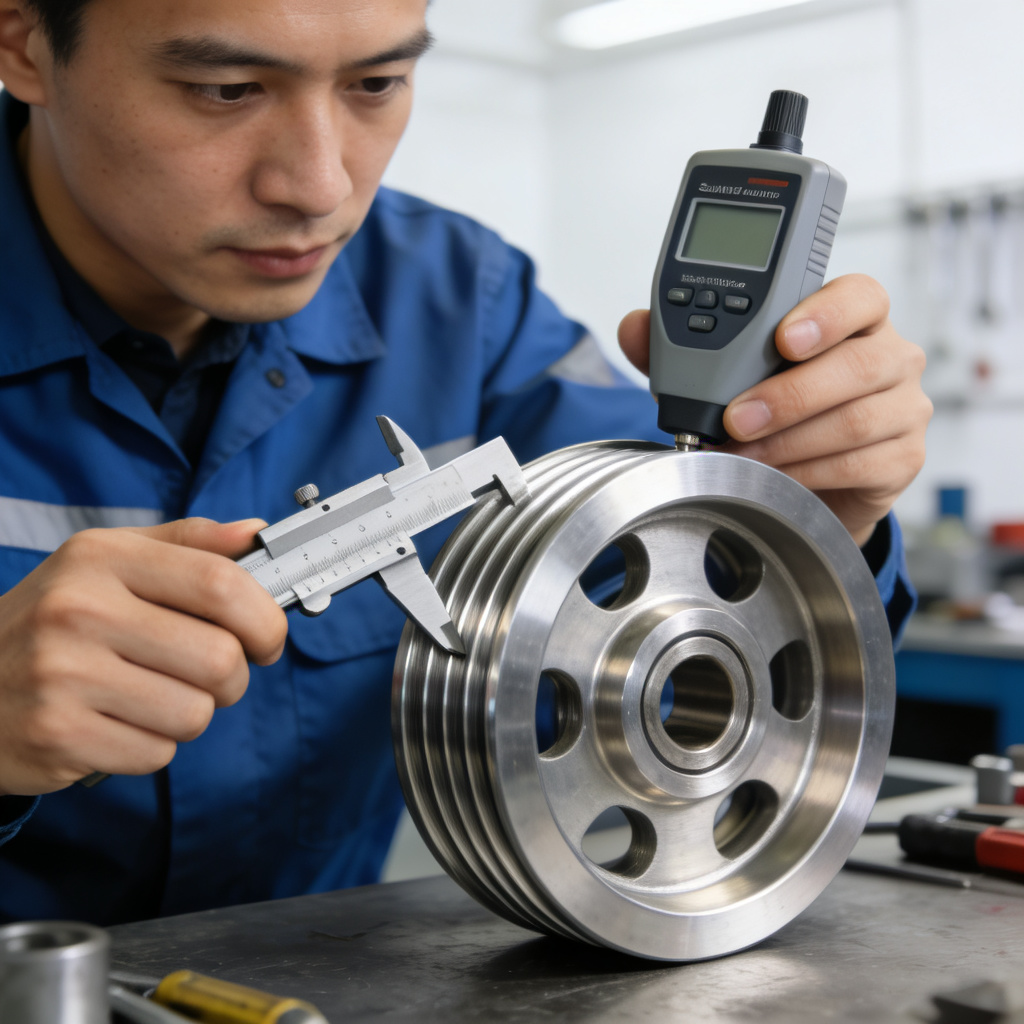
Our quality control technicians use state-of-the-art measuring equipment to ensure every pulley meets specifications.
ISO 9001:2015 Certified Quality Management
We maintain a strict quality management system certified to ISO 9001:2015 standards. Our quality control processes include:
- First Article Inspection (FAI): Complete dimensional verification of the first production part
- In-Process Inspection: Regular checks during production to maintain quality
- Final Inspection: Comprehensive quality check before shipment
- Coordinate Measuring Machine (CMM): High-precision 3D measurement of complex geometries
- Surface Finish Analysis: Verification of surface roughness parameters
- Material Certification: 3.1B material certificates for all stainless steel components
We provide detailed inspection reports with every shipment, ensuring complete traceability and quality assurance.
Product Portfolio
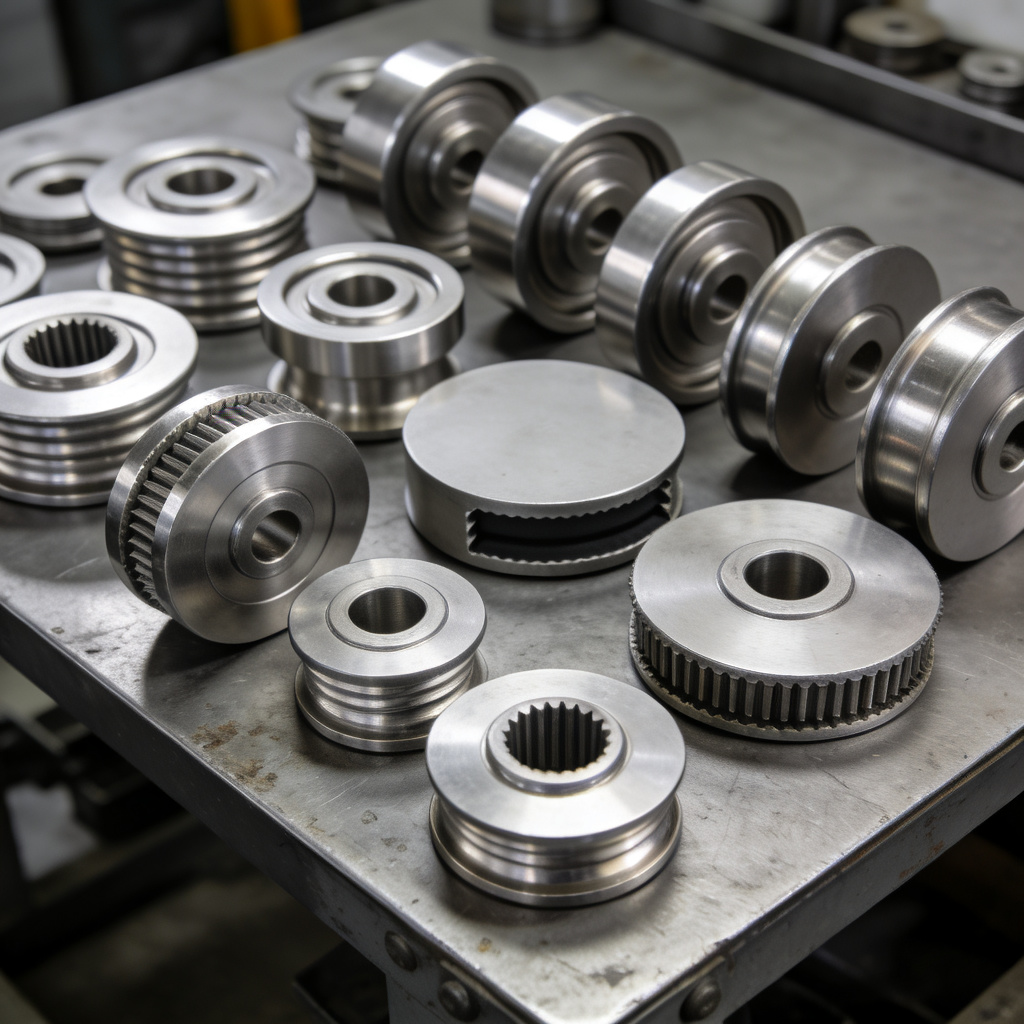
Our comprehensive product portfolio includes various types of stainless steel pulleys for different applications.
Single Groove Pulleys
Designed for single cable or belt applications. Available in diameters from 50mm to 800mm with various groove profiles.
• Ideal for light to medium load applications
• Simple installation and maintenance
• Cost-effective solution
Multi-Groove Pulleys
Multiple grooves for parallel cable or belt runs. Perfect for power transmission systems requiring multiple drive lines.
• 2-6 grooves available
• Synchronized power transmission
• Space-saving design
Split Pulleys
Two-piece design allows installation without removing shaft components. Ideal for retrofitting existing machinery.
• Easy on-site installation
• No shaft disassembly required
• Precision alignment features
Timing Belt Pulleys
Precision-machined teeth for positive drive timing belts. Provides accurate synchronization and high torque transmission.
• Precision tooth profiles
• Zero slip operation
• High torque capacity
Custom Engineered Pulleys
Tailored solutions for unique applications. Our engineering team works with you to design pulleys that meet your specific requirements.
• Unique groove profiles
• Special bore configurations
• Material customization options
Frequently Asked Questions
Why is my pulley causing excessive cable wear?
Excessive cable wear typically results from mismatched groove dimensions or rough groove surfaces. The cable diameter should be 85-90% of the groove width for optimal performance. Groove surface roughness should be Ra ≤1.6μm; surfaces rougher than Ra 3.2μm can accelerate wear. We recommend verifying groove dimensions and considering re-grinding for smoother finishes.
How do I calculate the maximum load for a custom pulley?
Load capacity depends on material strength, diameter, and wall thickness. Our engineering formula is: Load (kN) = (π × diameter × wall thickness × material tensile strength) / (8 × safety factor). We typically use a safety factor of 1.5 for standard applications. Our engineers can perform detailed calculations based on your specific requirements.
Can stainless steel pulleys be used in marine environments?
Yes, with proper specification. For marine applications, we recommend 316 stainless steel with electropolishing. This combination resists saltwater corrosion, surviving 2000+ hours in ASTM B117 salt spray tests. In marine conditions, 316 stainless steel typically outlasts 304 stainless steel by 3-5 times.
When should I choose forged vs. machined pulleys?
Forged pulleys are recommended for diameters >300mm and heavy loads (>200kN) as they offer superior grain structure and strength. Machined pulleys are more cost-effective for smaller sizes (<300mm) or complex groove profiles. Our engineers can help determine the optimal manufacturing method based on your specific requirements.
What surface treatments are available for stainless steel pulleys?
We offer several surface treatments including passivation (standard for corrosion protection), electropolishing (for enhanced corrosion resistance and smoother surfaces), hard chrome plating (for wear resistance), and PTFE coating (for reduced friction). The best treatment depends on your specific application environment and requirements.