Tool life is the total cutting time or number of good parts a tool can produce before it must be replaced or reground. Accurate prediction prevents unplanned downtime and controls cost.
1. Core Definitions
Tool life (T): minutes of actual cutting until a defined wear limit is reached.
Tool durability: cutting time between two successive regrinds.
Total tool life: durability × (number of regrinds + 1).

2. Classic Calculation Models
A. Taylor’s Equation (VTm = C)
V = cutting speed (m/min)
T = tool life (min)
m, C = material & tool constants from supplier tables
B. Practical Shop-Floor Formulas
|
Method
|
Formula
|
Units
|
|
By cutting time
|
N = 19100·V·f / (D·h)
|
parts
|
|
By cutting distance
|
N = 318300·L·f / (D·h)
|
parts
|
V = m/min, f = mm/rev, D = mm, h = mm, L = km
3. Data-Driven & AI Approaches
Modern CNC controllers collect spindle-load, vibration and temperature data in real time. Edge AI models (e.g., AT-LSTM networks) convert these signals into remaining-useful-life predictions with ±5 % accuracy.
4. Step-by-Step Planning Workflow
Collect baseline data: record tool, material, speed, feed and actual failure time.
Choose a model: start with Taylor for quick estimates, then refine with shop-floor formulas.
Set a safety factor: 75 % of calculated life is common industrial practice.
Implement condition monitoring: add spindle-load sensors and AI prediction for dynamic updates.
Automate alerts: program the CNC to lock the spindle and prompt change when the preset count or predicted life is reached.
5. Replacement Decision Matrix
|
Indicator
|
Action
|
|
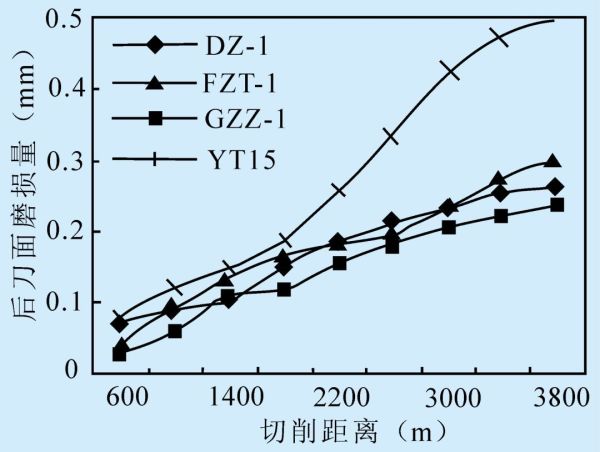
Flank wear ≥ 0.2 mm
|
Immediate change
|
|
Surface roughness ↑ 20 %
|
Schedule change
|
|
Spindle load ↑ 15 %
|
AI flag → change soon
|
Disclaimer
All experimental data presented in this paper are derived from controlled production environments and standardized test procedures. However, due to differences in equipment models, material batches, and on-site operating conditions, readers are advised to verify and adjust technical parameters according to their specific application scenarios before practical implementation.
All experimental data presented in this paper are derived from controlled production environments and standardized test procedures. However, due to differences in equipment models, material batches, and on-site operating conditions, readers are advised to verify and adjust technical parameters according to their specific application scenarios before practical implementation.