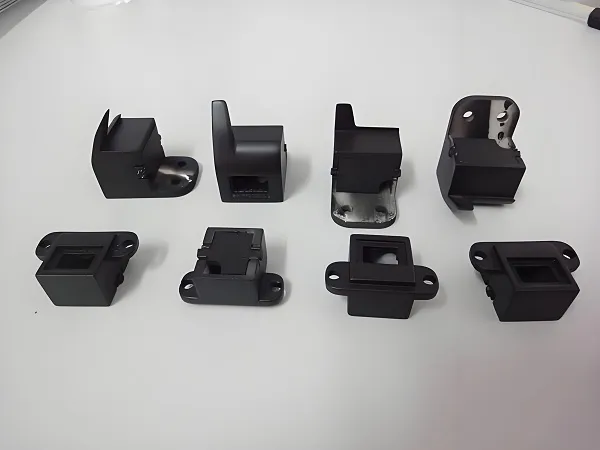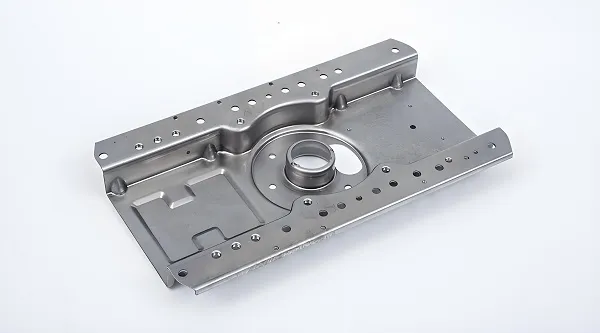
Short Answer
Choose Metal 3D Printing if
- ✔ Complex geometries & internal channels
- ✔ Low-volume production (1–100 pcs)
- ✔ Rapid prototyping (3–7 days)
- ✔ Frequent design changes needed
- ✔ Part consolidation (merge assemblies)
Choose Investment Casting if
- ✔ High-volume production (500+ pcs)
- ✔ Lower unit cost at scale
- ✔ Large components (>2m possible)
- ✔ Mature, stable designs
- ✔ Superior as-cast surface finish
Metal 3D Printing vs Investment Casting — At-A-Glance Comparison
| Item | Metal 3D Printing (SLM/DMLS) | Investment Casting |
|---|---|---|
| Tooling Cost | None ($0) | $5K–20K |
| MOQ | 1 piece | Usually 500+ |
| Design Freedom | Excellent | Moderate |
| Internal Channels | Excellent | Limited / Impossible |
| Min. Wall Thickness | 0.3–0.8 mm | ≥2 mm |
| Surface Finish (as-built) | Ra 6–12 μm | Ra 3–6 μm |
| Mechanical Strength | Excellent (near full density) | Excellent (potential porosity) |
| Unit Cost (Low Volume) | Higher | Lower (after tooling amortized) |
| Lead Time | 3–7 days | 20–40 days |
| Design Changes | Easy & Free (CAD update) | Difficult & Costly (new mold) |
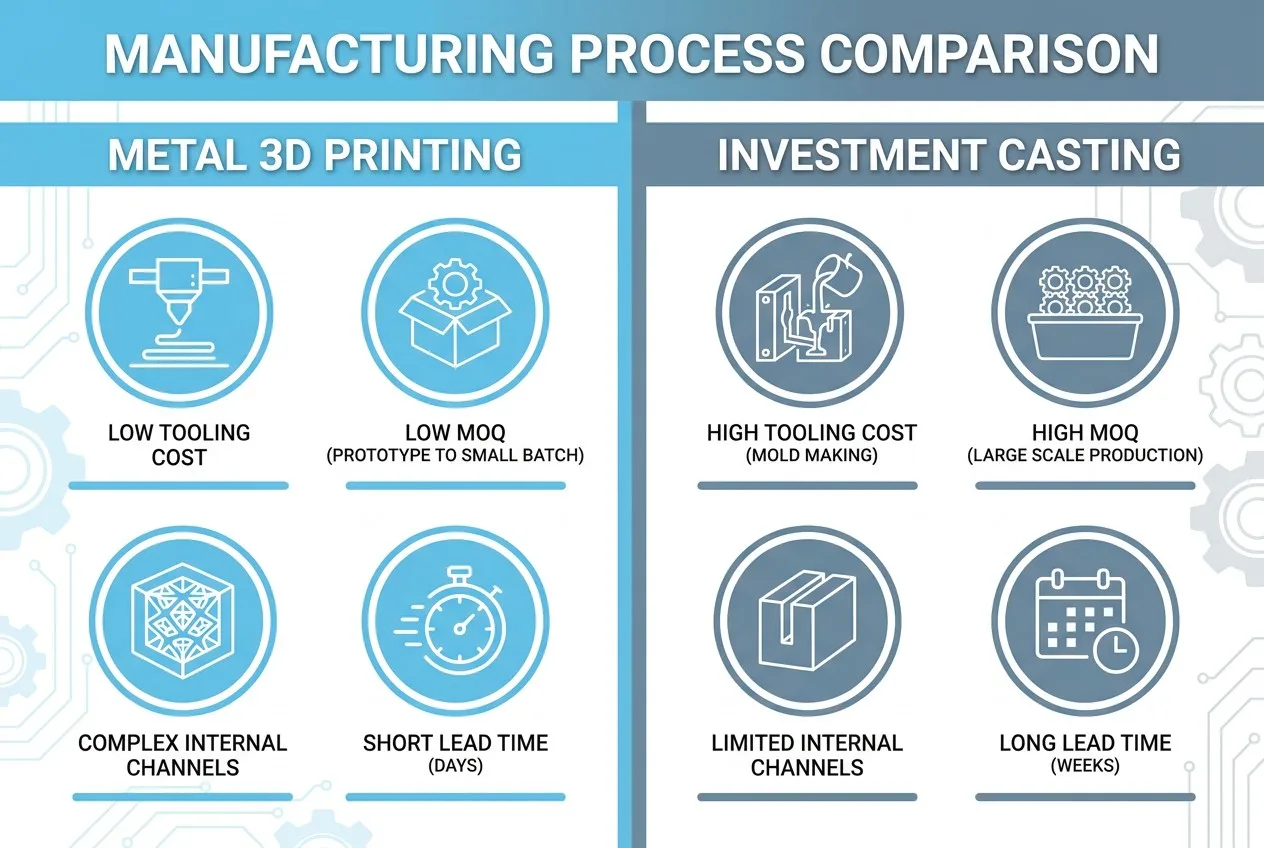
Which Process Should You Choose?
| Requirement | Additive | Casting |
|---|---|---|
| Prototype (1–50 pcs) | ⭐⭐⭐⭐⭐ | ⭐ |
| Complex Internal Channels | ⭐⭐⭐⭐⭐ | ⭐ |
| Large Production (500+) | ⭐ | ⭐⭐⭐⭐⭐ |
| Lowest Unit Cost | ⭐ | ⭐⭐⭐⭐⭐ |
| Short Lead Time | ⭐⭐⭐⭐⭐ | ⭐⭐ |
| Lightweight / Topology | ⭐⭐⭐⭐⭐ | ⭐ |
| Design Flexibility | ⭐⭐⭐⭐⭐ | ⭐⭐ |
| Best Surface Finish (as-built) | ⭐⭐⭐ | ⭐⭐⭐⭐⭐ |
How Each Process Works
Metal 3D Printing (SLM/DMLS): A high-power laser selectively melts metal powder layer by layer inside a sealed build chamber. Each layer traces the cross-section defined by your CAD file. No molds, no tooling — the digital file is the “tool.” After printing, the part is removed from the powder bed, stress-relieved, and optionally post-processed.
Investment Casting: A wax pattern of the part is created (often from a mold). The pattern is coated in ceramic slurry layer by layer to form a shell. The wax is burned out, leaving a hollow ceramic mold. Molten metal is poured in, and after cooling, the ceramic shell is broken away to recover the final component.
Metal 3D Printing (SLM/DMLS)
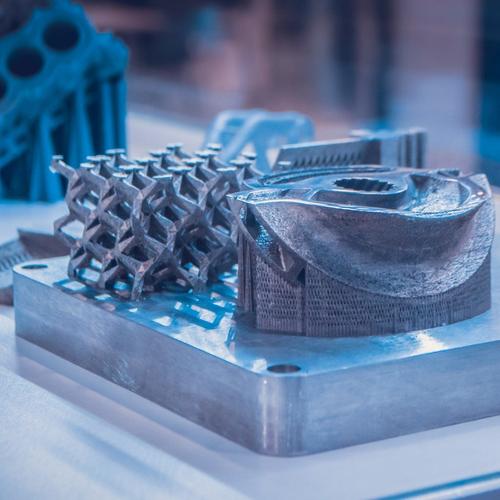
A Chinese technician monitors the SLM process inside a modern manufacturing facility
Investment Casting
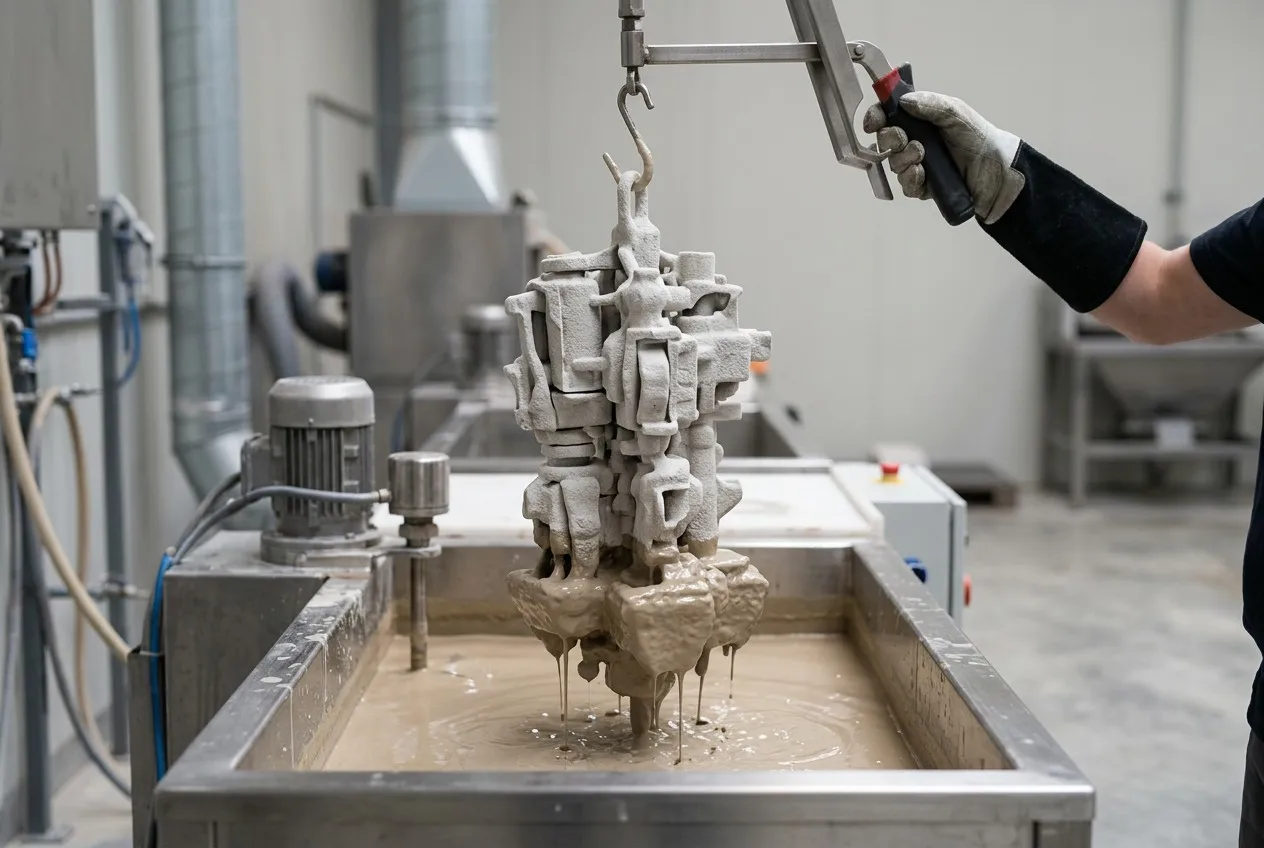
Ceramic shell mold during the investment casting dipping process
Cost & Lead Time Comparison
| Factor | Additive | Casting |
|---|---|---|
| Initial Tooling | $0 | $5K–20K |
| Per-unit Cost (50 pcs) | $85–120 | $8–15 |
| Per-unit Cost (1K pcs) | $25–40 | $3–5 |
| Typical Lead Time | 3–7 days | 20–40 days |
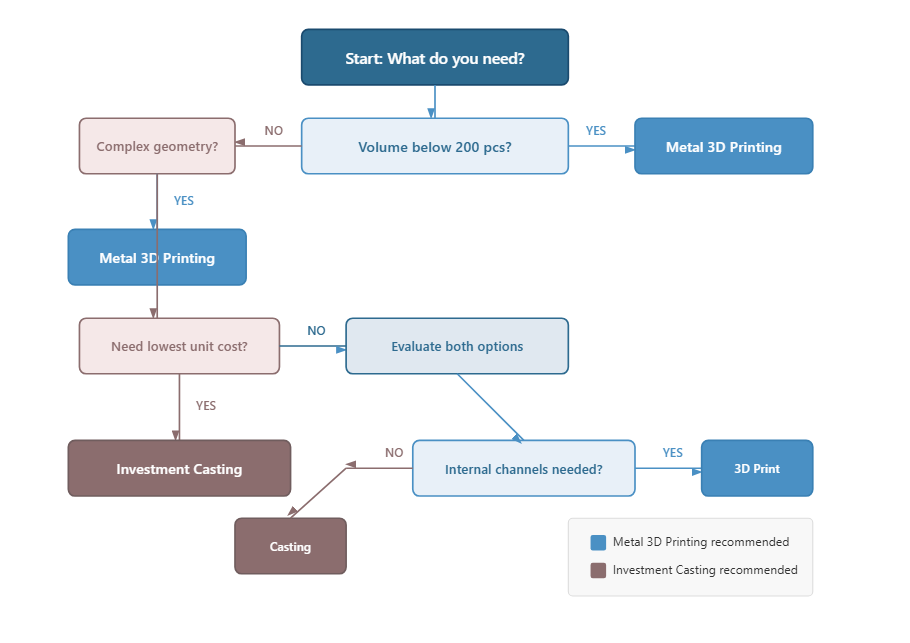
| Breakeven Volume | Below ~200 pcs | Above ~500 pcs |
*No tooling investment means additive starts at a fraction of the casting cost. For runs above ~500 pcs, casting delivers a 5–10× cost advantage per unit. Below ~200 pcs, additive wins on total cost even though the per-unit price is higher.
Available Materials
| Material | Additive | Casting |
|---|---|---|
| 316L Stainless | ✔ | ✔ |
| 17-4PH | ✔ | ✔ |
| AlSi10Mg | ✔ | ✔ |
| Ti6Al4V | ✔ | ✔ |
| Inconel 718 | ✔ | ✔ |
| Maraging Steel | ✔ | ✘ |
Ti6Al4V and Inconel 718 are preferred for aerospace-grade applications, while AlSi10Mg and Maraging Steel are common in robotics and consumer electronics. Both processes produce comparable mechanical properties in their respective alloys.
Mechanical Properties & Surface Finish
| Property | Additive | Casting |
|---|---|---|
| Tensile Strength (316L) | ≥900 MPa | ≥900 MPa |
| Yield Strength (316L) | ≈550 MPa | ≈550 MPa |
| Hardness (HRC) | 30–40 HRC | 30–40 HRC |
| Density | 7.99 g/cm³ (near full) | 7.99 g/cm³ (potential porosity) |
| Surface Finish (as-built) | Ra 6–12 μm | Ra 3–6 μm |
| Dimensional Accuracy | ±0.05 mm | ±0.1–0.25 mm |
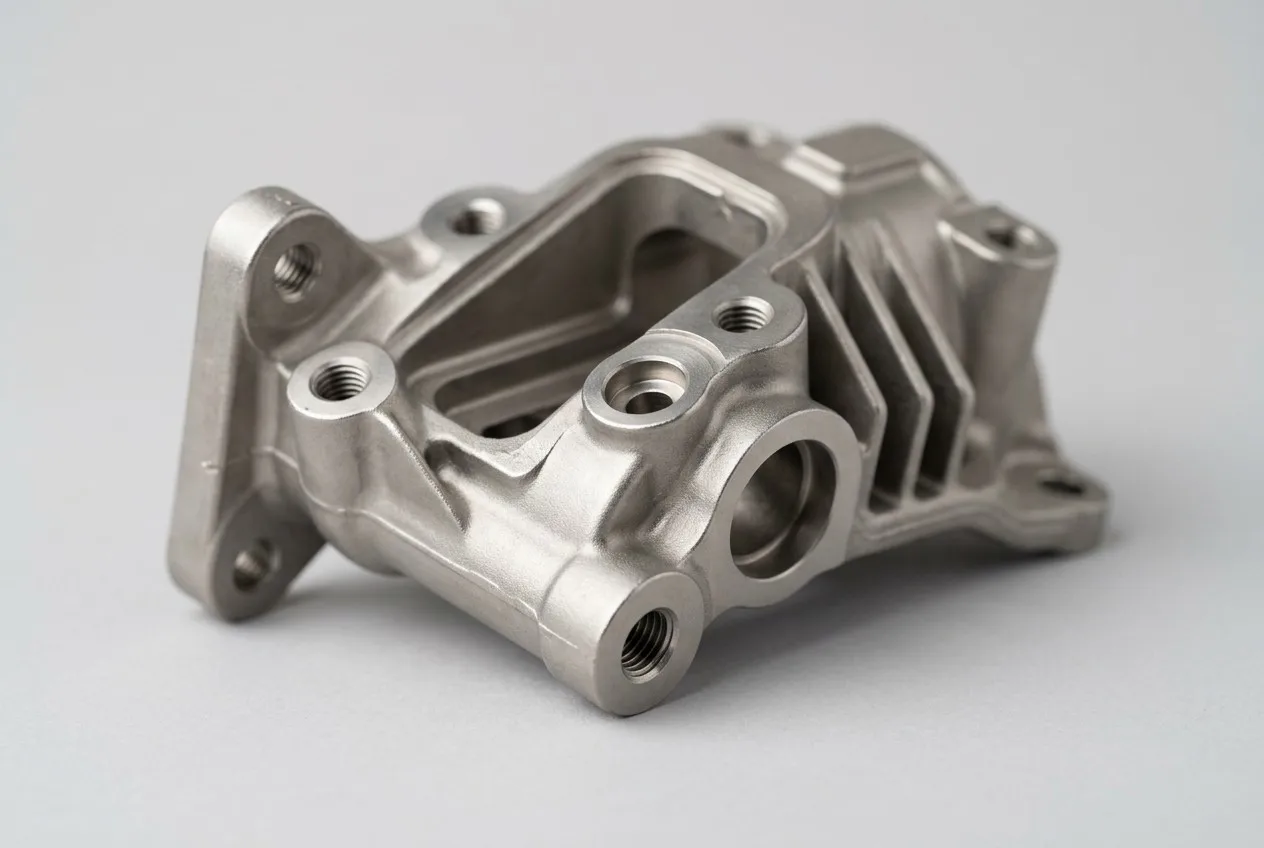
Both processes achieve comparable strength in common alloys. 3D printing yields near-full density with potential for minor micro-porosity in certain orientations. Casting can develop porosity in thick sections but offers superior surface finish out-of-the-mold.

Design Freedom: When Geometry Wins
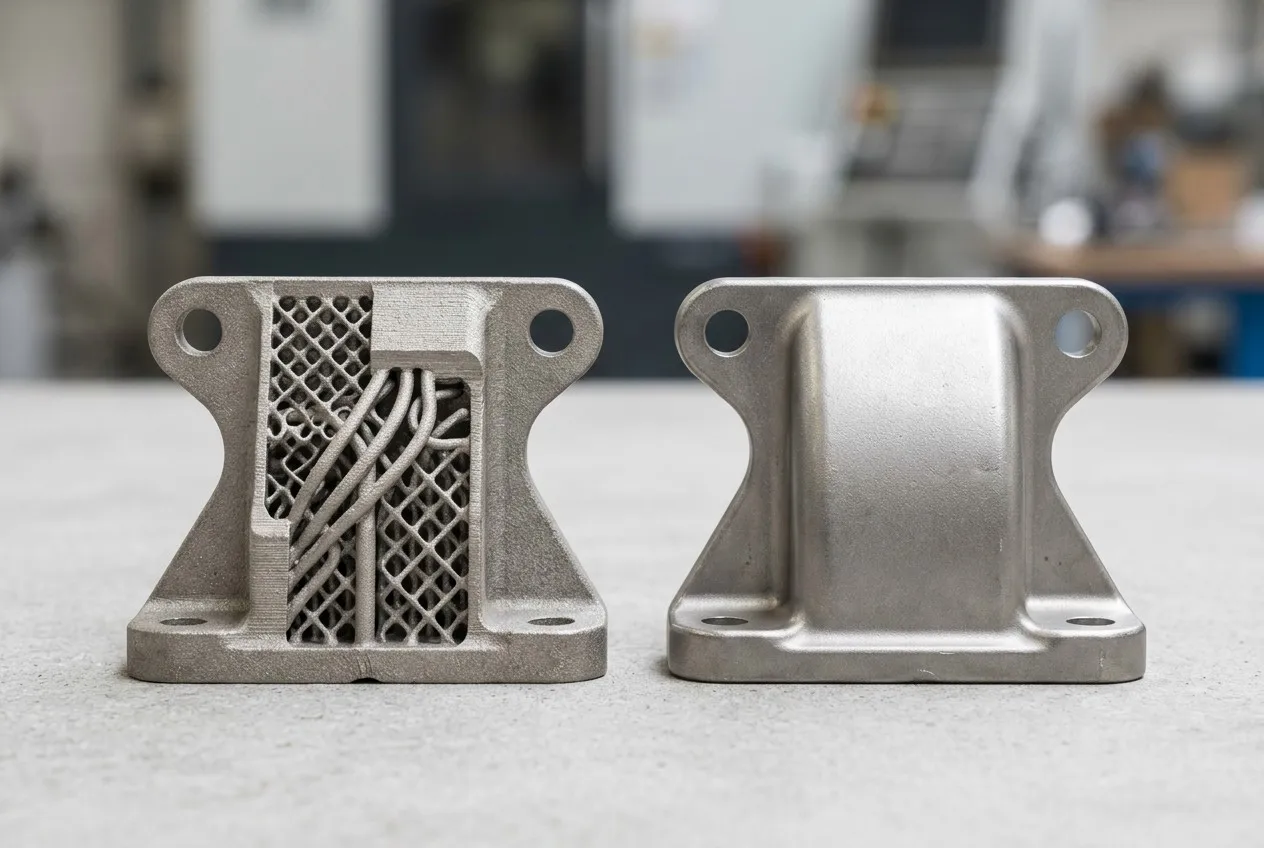
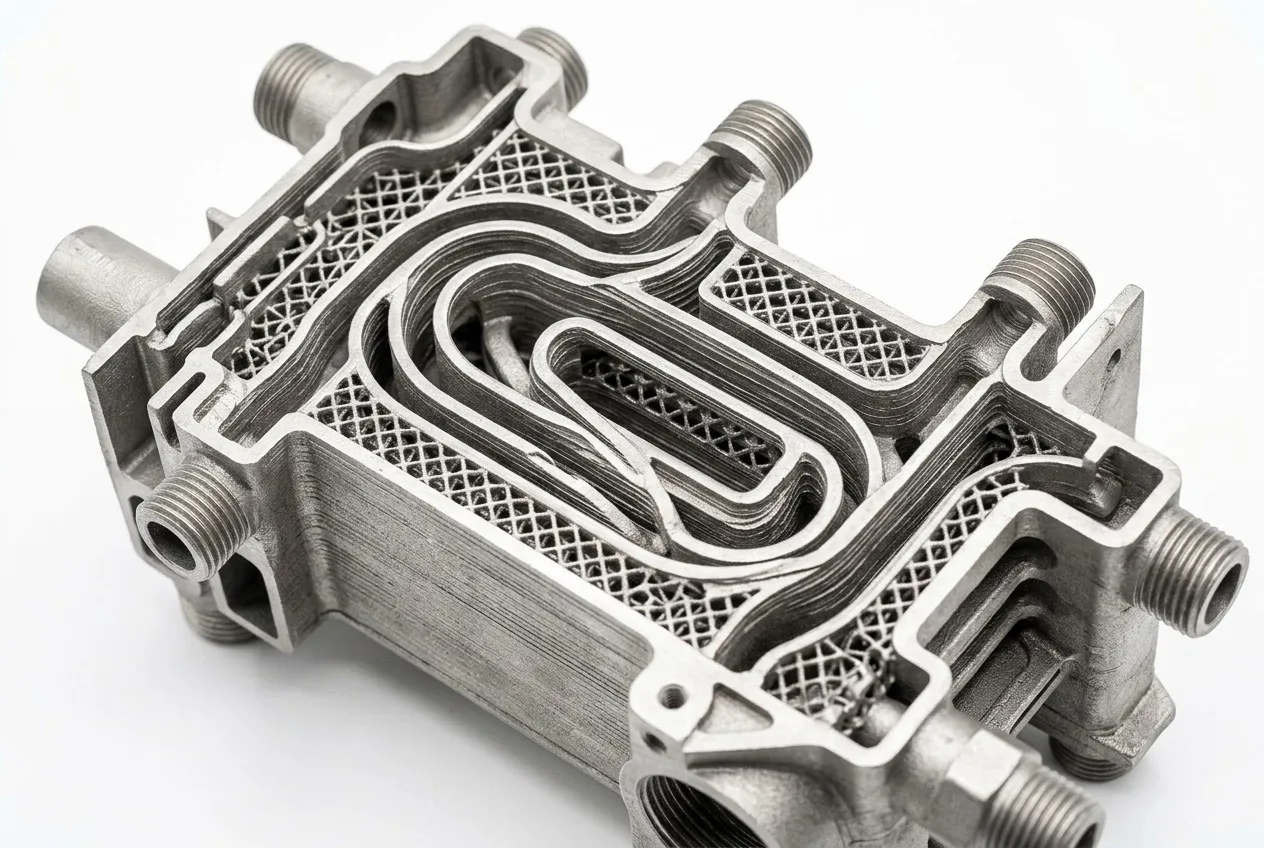
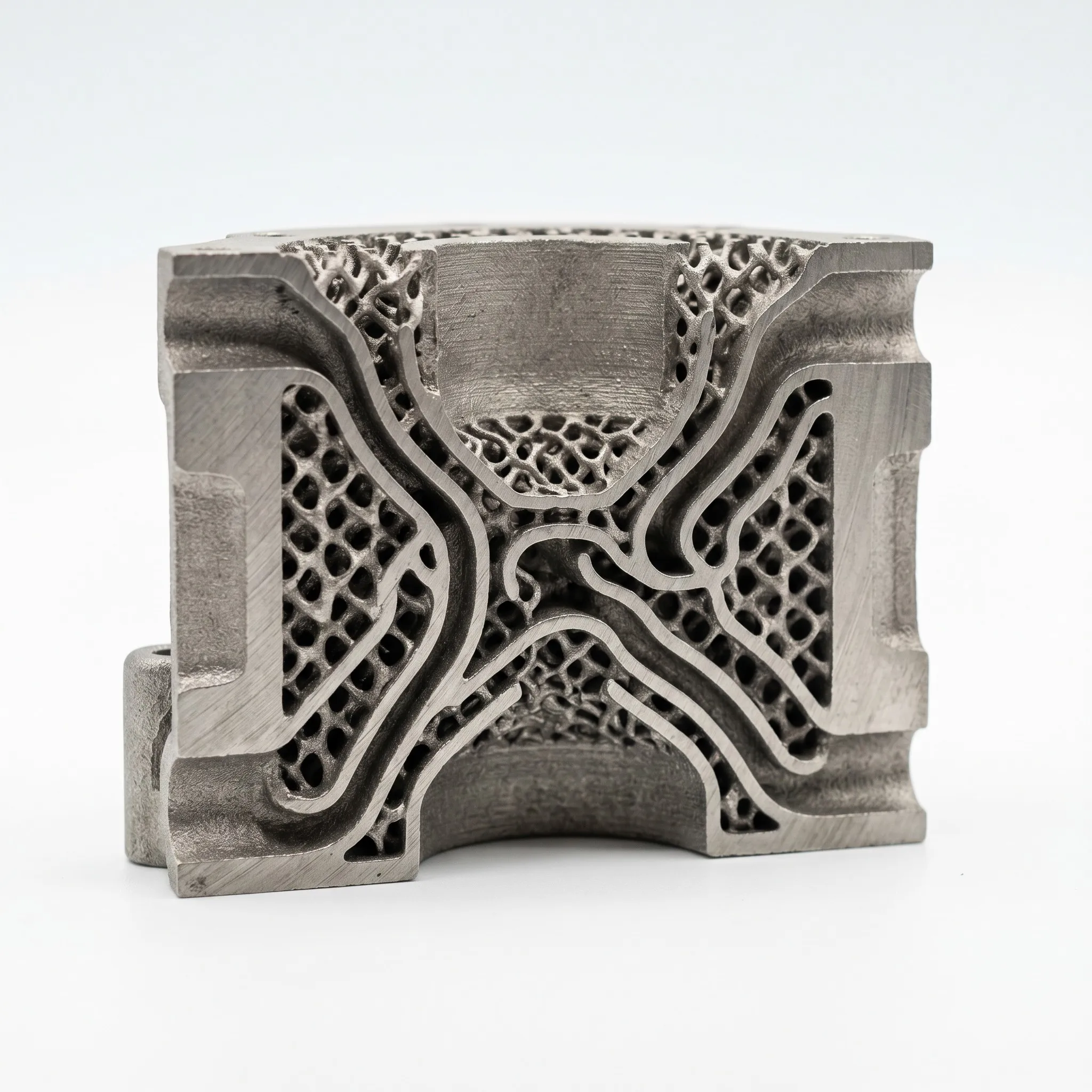
Metal 3D printing removes the constraints of traditional manufacturing. Internal cooling channels, undercuts, lattice structures, and organic shapes become possible without multi-part assemblies. Design changes take hours instead of weeks.
What 3D printing enables
- ✔ Conformal cooling channels — 70% weight reduction vs. drilled passages
- ✔ Topology optimization — lattice infill reduces mass while maintaining strength
- ✔ Part consolidation — merge 8 components into a single print
- ✔ Iteration speed — modify design in hours, not weeks
- ✔ No mold constraints — undercut, cavity, and organic shapes freely
Industry Applications & Typical Parts
Automotive
Turbine brackets, Impeller housings, Custom fixtures
Medical
Titanium implants, Surgical tool handles
Aerospace
Lattice structures, Heat exchangers, Fuel nozzles
Robotics
Lightweight brackets, End effectors
Industrial Equipment
Valve bodies, Pump housings, Gearboxes
Consumer Electronics
Heat sinks, Housing frames, Connector shells
Real Case: From 8 Parts to 1
Traditional Casting Approach
| Tooling Cost | $7,800 |
| Lead Time | 32 days |
| Assembly Parts | 8 components |
| Total Weight | 1.85 kg |
Metal 3D Printing Approach
| Tooling Cost | $0 |
| Lead Time | 6 days |
| Assembly Parts | 1 component |
| Total Weight | 1.22 kg |
34%
Weight Reduction
84% fewer assembly steps
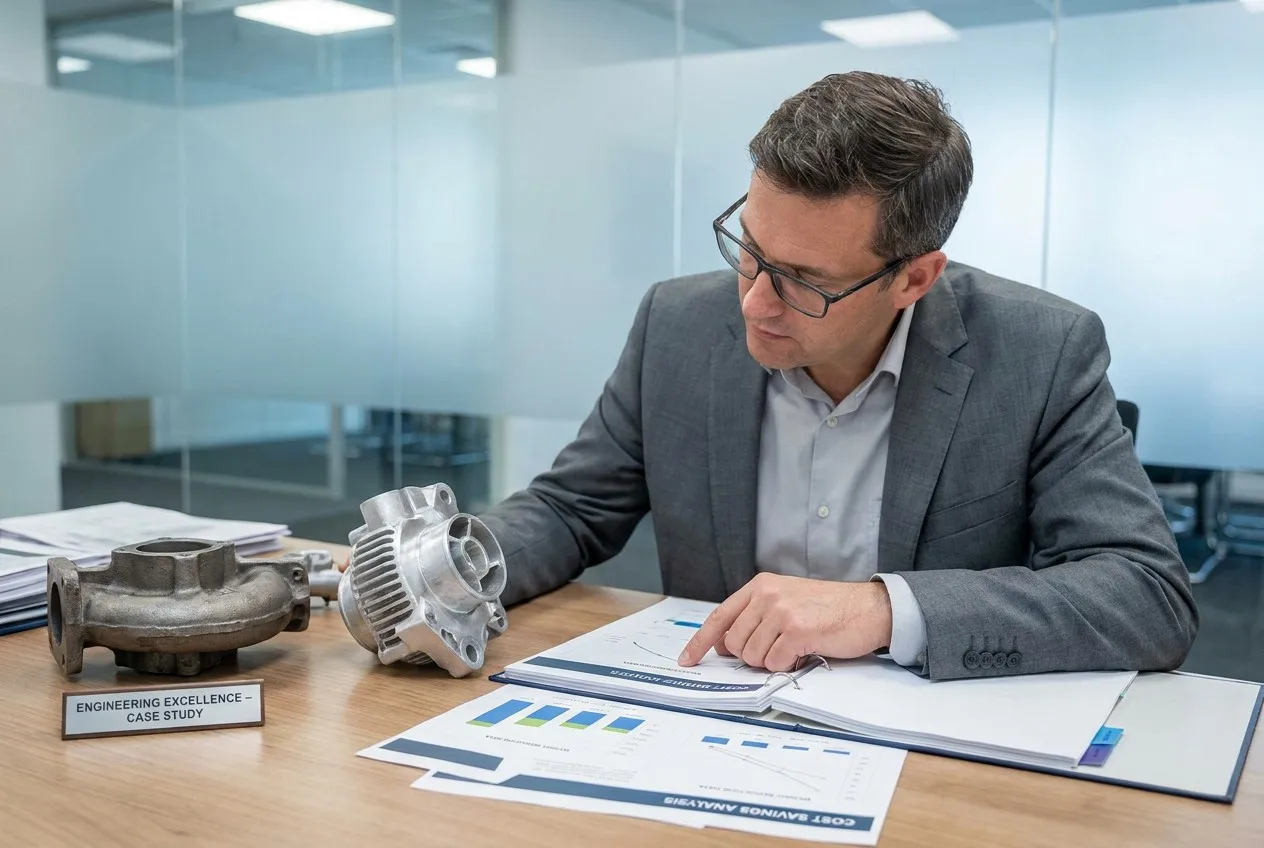
A German robotics company needed a lightweight cooling bracket. Traditional casting required expensive tooling ($7,800), 32-day lead time, and an 8-part assembly. Metal 3D printing delivered a single consolidated part in 6 days with 34% weight reduction — eliminating tooling cost, reducing assembly complexity, and accelerating iteration.
Our Metal 3D Printing Capability
Materials
- 316L Stainless Steel
- 17-4PH Stainless Steel
- AlSi10Mg Aluminum
- Ti6Al4V Titanium
- Inconel 718 Superalloy
- Maraging Steel
Technical Specs
- Build Size: 250×250×300 mm
- Accuracy: ±0.05 mm
- Surface Finish: Ra 3.2 μm (as-built)
- Min. Wall: 0.3 mm
Post-Processing
- Heat Treatment (stress relief / HIP)
- CNC Machining (finish surfaces)
- Surface Polishing (mirror finish)
- Anodizing / Plating / Coating
Quality Assurance
- CMM Inspection (±0.01 mm)
- 3D Scanning (point-cloud validation)
- X-ray / CT (internal defect detection)
- ISO 9001:2015 Certified
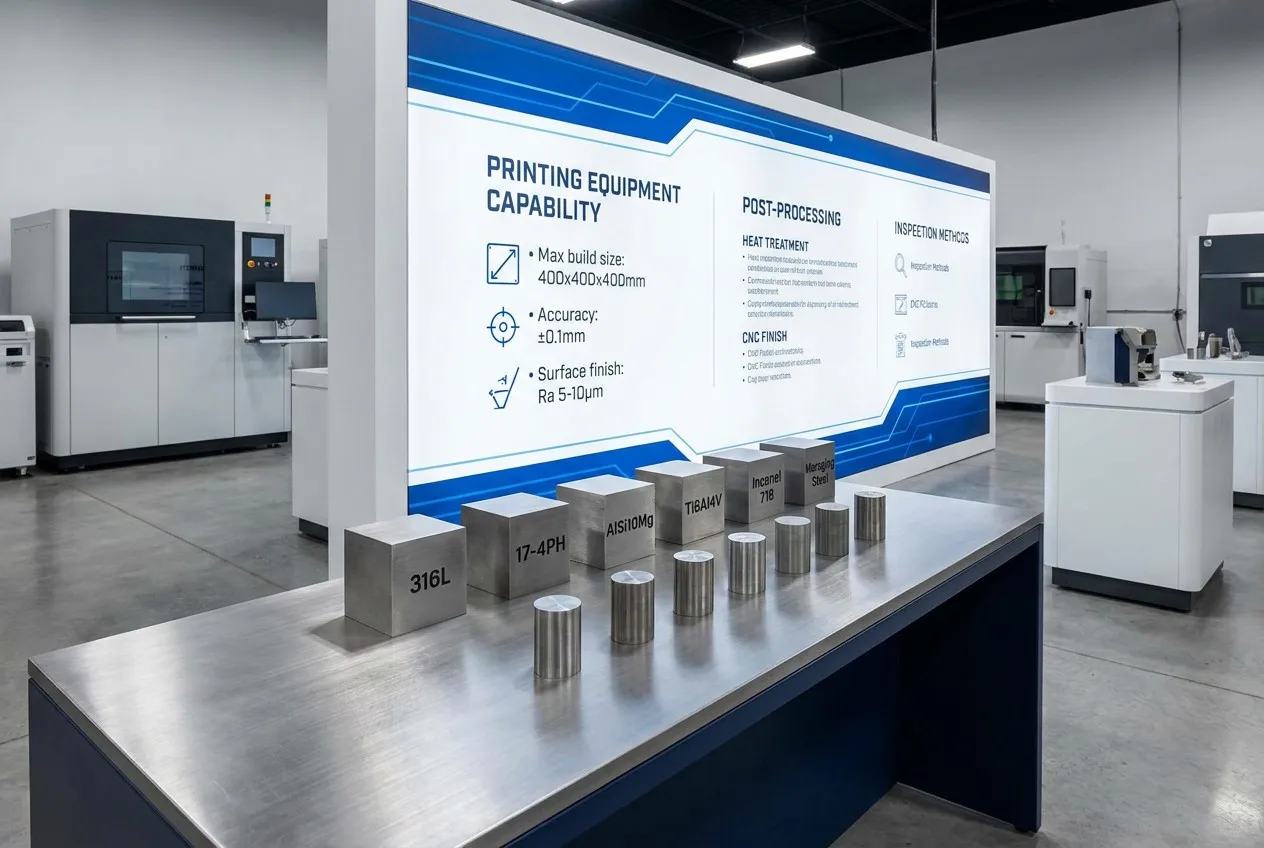
Full inspection with CMM, 3D scanning, and X-ray ensures every part meets specification. ISO 9001 certified facility since 2001.
How to Decide: Manufacturing Process Selector
Frequently Asked Questions
Can metal 3D printing replace casting?
Not entirely. Each has strengths. 3D printing excels at complex geometry, rapid iteration, and low-volume needs. Casting dominates at high-volume, simple shapes, and cost efficiency. Many projects benefit from combining both: 3D printed prototypes validated with cast production parts.
Is metal 3D printing stronger than cast parts?
Both achieve comparable tensile strength — 316L stainless reaches ~900 MPa via either method. 3D printed parts achieve near full density with potential minor micro-porosity along build direction, while investment cast parts can develop porosity in thick sections. Post-processing (HIP + CNC finish) brings both to equivalent mechanical performance.
When is investment casting better?
Investment casting is the right choice when you need high-volume production (500+ pieces), simple external geometry, wall thickness above 2 mm, and the lowest possible unit cost. It also produces excellent surface finish directly from the mold — often Ra 3–6 μm without post-processing.
What is the minimum order quantity for metal 3D printing?
There is no MOQ — you can order a single piece. This makes it ideal for prototyping, custom one-offs, and design validation before committing to volume production tooling.
Can you combine 3D printing and casting in one project?
Yes — a common workflow is: 3D print a prototype for functional testing → validate the design → then transition to investment casting for volume production. This saves tooling risk and accelerates your development cycle.
What surface finish can I expect from metal 3D printing?
As-built surfaces are typically Ra 6–12 μm. With post-processing (CNC machining of critical surfaces, polishing, or tumbling), you can achieve Ra 0.8 μm or better on functional surfaces. Non-critical surfaces may retain the characteristic “stair-step” texture.
How does lead time compare for international orders?
Metal 3D printing: 3–7 business days production + shipping. Investment casting: 20–40 business days (includes tooling/mold creation) + shipping. For urgent projects, additive manufacturing is often the only viable path.
Which materials are available for both processes?
316L, 17-4PH, AlSi10Mg, Ti6Al4V, and Inconel 718 are available via both methods. Maraging Steel is exclusive to additive. Copper alloys and some cast irons are more practical via casting.
What is the cost crossover point between 3D printing and casting?
Typically around 200–500 pieces. Below that, 3D printing wins on total cost (no tooling). Above that, casting’s lower per-unit cost amortizes the $5K–20K tooling investment. The exact crossover depends on part complexity and material.
Does Xiamen Goldcattle offer both processes?
Yes. We provide metal 3D printing (SLM/DMLS), investment casting, and CNC machining — all under one ISO 9001 certified facility. This means you can prototype with 3D printing and scale with casting, without switching suppliers.
What quality certifications does Xiamen Goldcattle hold?
ISO 9001:2015 certified. Every part undergoes CMM inspection, 3D scanning, or X-ray/CT as required. Full dimensional reports and material certificates are provided with each shipment.
Why Xiamen Goldcattle?
Experience
Precision manufacturing since 2001 — 25+ years serving Western OEMs across automotive, aerospace, medical, and robotics sectors. Deep understanding of international quality standards and procurement workflows.
Expertise
In-house SLM/DMLS 3D printing, investment casting, and CNC machining. Our engineers evaluate each project holistically — recommending the optimal process based on your geometry, volume, timeline, and budget, not pushing a single technology.
Authoritativeness
ISO 9001:2015 certified facility. Exporting to 50+ countries. Featured OEM supplier for Fortune 500 companies. Published manufacturing case studies with verifiable project outcomes.
Trustworthiness
Full dimensional reports, material certificates, and NDT results with every shipment. 100% inspection on critical dimensions. Transparent pricing — no hidden tooling fees or surprise charges.
Ready to Decide? Get a Free Process Recommendation
Upload your CAD file and tell us your volume, timeline, and budget. Our engineers will recommend the optimal process — 3D printing, casting, or a combined approach — within 24 hours.