5. Injection Molding Technology
5.1 Equipment Selection
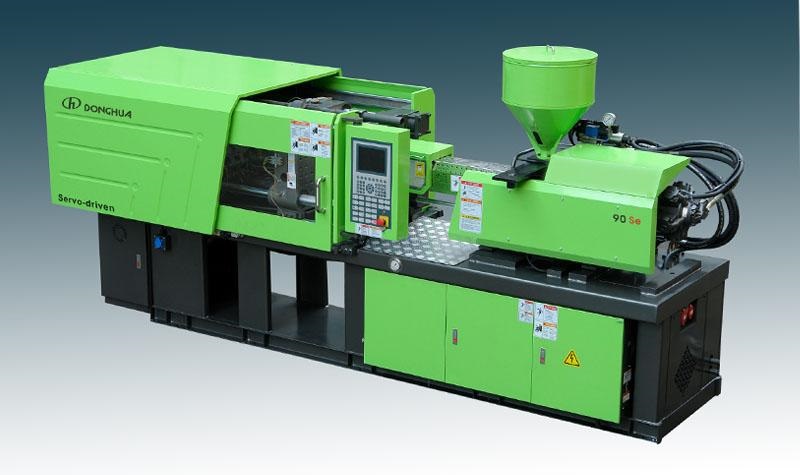
Injection Molding Machine Specifications
- Clamping force: 500-1000kN
- Shot volume: 100-200cm³
- Screw diameter: 30-40mm
- Injection speed: 0-200mm/s
Auxiliary Equipment
- Dryer: Temperature 80-90℃, time 2-4h
- Mold temperature controller: Accuracy ±1℃
- Robot: Automatic part removal, stacking
- Chiller: Cooling capacity 5-10kW
5.2 Process Parameter Settings
Temperature Control
- Barrel temperature: Front zone 180-200℃, middle zone 165-180℃, rear zone 150-170℃
- Nozzle temperature: 170-180℃
- Mold temperature: 50-80℃
- Drying temperature: 80-90℃
Pressure Control
- Injection pressure: 70-90MPa
- Holding pressure: 40-60MPa
- Back pressure: 5-15MPa
- Clamping force: 80-100MPa
Time Control
- Injection time: 2-5s
- Holding time: 8-15s
- Cooling time: 20-40s
- Cycle time: 30-60s
5.3 Process Optimization Methods
Filling Optimization
- Multi-stage injection: Fast filling → Slow holding
- Gate position optimization: Avoid weld lines, bubbles
- Injection speed adjustment: Balance filling and shear
Cooling Optimization
- Uniform cooling: Avoid excessive temperature difference
- Cooling time: Ensure sufficient solidification
- Mold temperature: Control shrinkage deformation
Quality Control
- Dimensional control: Adjust through holding time and pressure
- Appearance control: Adjust through temperature and speed
- Performance control: Adjust through material and process
5.4 Troubleshooting
Sink Marks
- Causes: Insufficient holding pressure, uneven cooling
- Solutions: Increase holding pressure and time, optimize cooling system
Deformation
- Causes: Uneven shrinkage, improper cooling
- Solutions: Optimize mold temperature, adjust holding parameters
Bubbles
- Causes: Insufficient material drying, too fast injection speed
- Solutions: Strengthen drying, reduce injection speed
Flash
- Causes: Insufficient clamping force, large mold gap
- Solutions: Increase clamping force, repair mold to adjust gap
6. Quality Control Technology
6.1 Mold Quality Inspection
Dimensional Inspection
- Cavity dimension: IT7-IT8 grade
- Core dimension: IT7-IT8 grade
- Template parallelism: ≤0.02mm
- Position accuracy: ≤0.05mm
Surface Quality Inspection
- Molding surface: Ra≤0.4μm
- Non-molding surface: Ra≤1.6μm
- Surface defects: No scratches, no bumps
- Polishing quality: Uniform mirror effect
Performance Inspection
- Movement performance: Smooth, flexible
- Sealing performance: No leakage
- Strength performance: No deformation, no cracks
- Life test: 1000 cycles without failure
6.2 Product Quality Inspection
Dimensional Inspection
- Critical dimensions: ±0.1mm
- Fit dimensions: ±0.05mm
- Geometric tolerances: Meet drawing requirements
- Batch consistency: ≤0.05mm
Appearance Inspection
- Surface defects: No sink marks, bubbles, flash
- Color uniformity: ΔE≤1.0
- Glossiness: ≥80GU at 60° angle
- Texture effect: Uniform, clear
Performance Inspection
- Sealing performance: No leakage under negative pressure 0.08MPa×30s
- Drop performance: No damage from 1.2m height×10 times
- Temperature resistance: -20℃ to 100℃×50 cycles
- Chemical performance: Meet FDA, LFGB standards
6.3 Process Quality Control
Statistical Process Control (SPC)
- Key parameter monitoring: Temperature, pressure, time
- Control chart analysis: X-R chart, P chart, C chart
- Process capability analysis: CPK≥1.33
Quality Traceability System
- Raw material traceability: Batch, supplier, inspection report
- Production process traceability: Equipment, parameters, operator
- Inspection record traceability: Inspection items, results, time
- Non-conforming product traceability: Cause, treatment, preventive measures
7. Maintenance Technology
7.1 Daily Maintenance
Pre-shift Inspection
- Mold surface cleaning: No oil, no debris
- Lubrication of moving parts: Guide pillars, slides, ejector pins
- Cooling system check: No leakage, normal water flow
- Safety device check: Limit switches, emergency stop buttons
In-process Monitoring
- Mold temperature: Normal range
- Noise and vibration: No abnormalities
- Product quality: Stable dimensions, appearance
- Production efficiency: Stable cycle time
Post-shift Maintenance
- Clean mold: Remove plastic residues
- Apply rust preventive oil: Protect molding surfaces
- Close water circuits: Prevent rusting
- Record operation: Production quantity, fault conditions
7.2 Periodic Maintenance
Weekly Maintenance
- Check fasteners: Bolts, nuts tightness
- Clean cooling system: Remove scale, impurities
- Check seals: O-rings, oil seals
- Test safety functions: Emergency stop, protection devices
Monthly Maintenance
- Replace lubricating oil: Guide rails, ball screws
- Check wear conditions: Guide pillars, slides
- Calibrate equipment: Temperature, pressure sensors
- Clean filters: Hydraulic oil, air
Quarterly Maintenance
- Comprehensive inspection: All components
- Precision testing: Mold, equipment
- Performance testing: No-load, load operation
- Preventive replacement: Wearable Parts
7.3 Fault Diagnosis and Troubleshooting
Common Faults
- Mold cannot close: Foreign objects, deformation, misalignment
- Product dimensions unstable: Temperature, pressure fluctuations
- Poor surface quality: Mold wear, improper process
- Moving parts jamming: Poor lubrication, foreign objects
Diagnosis Methods
- Visual inspection: Observe appearance, movement
- Measurement analysis: Dimensions, gaps, temperatures
- Data analysis: Process parameters, trends
- Simulation testing: No-load, load testing
Troubleshooting Methods
- Cleaning method: Remove foreign objects, residues
- Adjustment method: Gaps, pressures, temperatures
- Replacement method: Wearing Parts,worn parts
- Repair method: Welding, grinding, polishing
7.4 Mold Life Management
Life Assessment
- Cavity wear: Dimension changes, surface quality
- Moving parts: Increased gaps, reduced precision
- Fatigue cracks: Stress concentration areas
- Corrosion conditions: Water, chemical medium effects
Life Extension Measures
- Surface treatment: Coating, nitriding
- Lubrication optimization: Select appropriate lubricants
- Process improvement: Reduce molding pressure
- Maintenance enhancement: Regular maintenance, inspection
Scrap Standards
- Dimensional deviation: Unable to adjust
- Surface quality: Unable to repair
- Structural damage: Cracks, deformation
- Repair cost: Exceeds 50% of new mold