Custom plastic injection molding solutions for OEM components, from mold design and DFM optimization to mass production manufacturing.
Plastic injection molding is the most efficient manufacturing method for producing high-volume custom plastic parts with consistent quality and low per-unit cost.
What Problems We Solve For You
As a custom plastic injection molding company with 20 years of experience, we understand that your biggest concerns are not just about making parts, but about eliminating risks in your production process. We help customers solve the most challenging molding issues:
Warpage and Shrinkage Control
We eliminate dimensional instability caused by uneven cooling and material shrinkage through advanced mold design and process optimization.
Complex Geometry Moldability
We solve moldability issues for intricate part designs that other suppliers struggle to produce consistently.
Mass Production Consistency
We ensure every part from the first to the millionth meets your exact dimensional requirements with zero variation.
Reduced Tooling Lead Times
Our optimized mold manufacturing process cuts typical tooling lead time from 8 weeks to as little as 2 weeks for urgent projects.
Engineering Material Expertise
We help you select the perfect engineering plastic to meet your performance, cost, and environmental requirements.
DFM Cost Reduction
Our design for manufacturing analysis helps you reduce part cost by up to 30% through design optimization before tooling starts.
With 20 years of manufacturing experience, our plastic injection molding capabilities cover the full range of custom part requirements for industries worldwide.
Our Injection Molding Capabilities
Unlike general injection molding shops, we have invested in advanced equipment and processes to handle the most demanding custom part requirements. Our parameterized capabilities ensure we can deliver exactly what you need:
Injection Machine Tonnage
Standard Tolerance Accuracy
Part Weight Range
Annual Production Capacity
Maximum Tooling Life Shots
Quality Management System
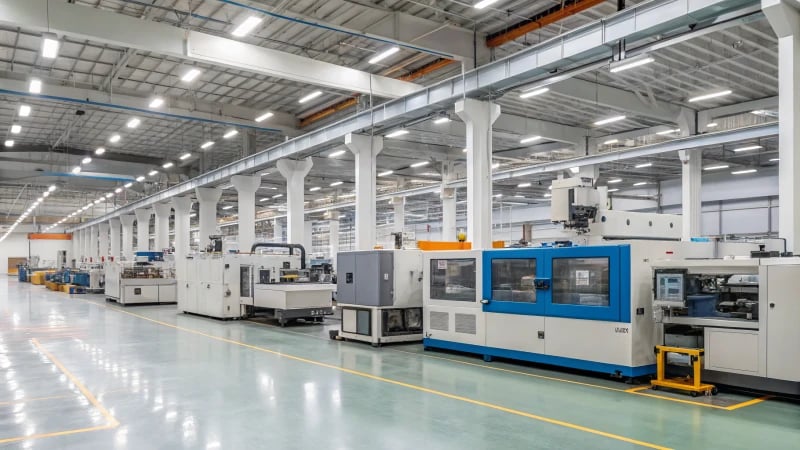
Successful custom injection molding requires precise material selection matched to your part’s functional requirements, environment, and budget.
Supported Plastic Materials
With decades of material processing experience, we work with over 50+ thermoplastic materials to meet your specific application needs. Below are our most commonly used materials with detailed technical specifications:
| Material | Key Properties | Technical Specs | Common Applications |
|---|---|---|---|
| ABS | High impact resistance, excellent dimensional stability, easy to paint/plate | Shrinkage: 0.4-0.8%, Temp: -40°C to 90°C | Consumer electronics housings, automotive interior parts, toys |
| PC (Polycarbonate) | Extreme impact resistance, high transparency, excellent heat resistance | Shrinkage: 0.5-0.7%, Temp: -40°C to 120°C | Electrical components, safety helmets, optical lenses, medical devices |
| Nylon (PA6/PA66) | High wear resistance, low friction, good chemical resistance, can be glass filled | Shrinkage: 0.8-1.5%, Temp: -40°C to 120°C | Gears, bearings, mechanical parts, automotive underhood components |
| POM (Acetal) | Ultra-low friction, high stiffness, excellent dimensional stability | Shrinkage: 1.5-3.0%, Temp: -40°C to 100°C | Gears, bushings, fasteners, precision mechanical parts |
| PP (Polypropylene) | Low cost, chemical resistant, flexible, good fatigue resistance | Shrinkage: 1.0-2.5%, Temp: 0°C to 110°C | Packaging, automotive parts, household goods, living hinges |
| PMMA (Acrylic) | Optical clarity, UV resistance, scratch resistant | Shrinkage: 0.2-0.8%, Temp: -40°C to 80°C | Lenses, light guides, display covers, decorative parts |
| PEEK | Ultra-high temperature resistance, biocompatible, chemical inert | Shrinkage: 1.0-1.5%, Temp: -60°C to 260°C | Aerospace components, medical implants, high-temperature industrial parts |
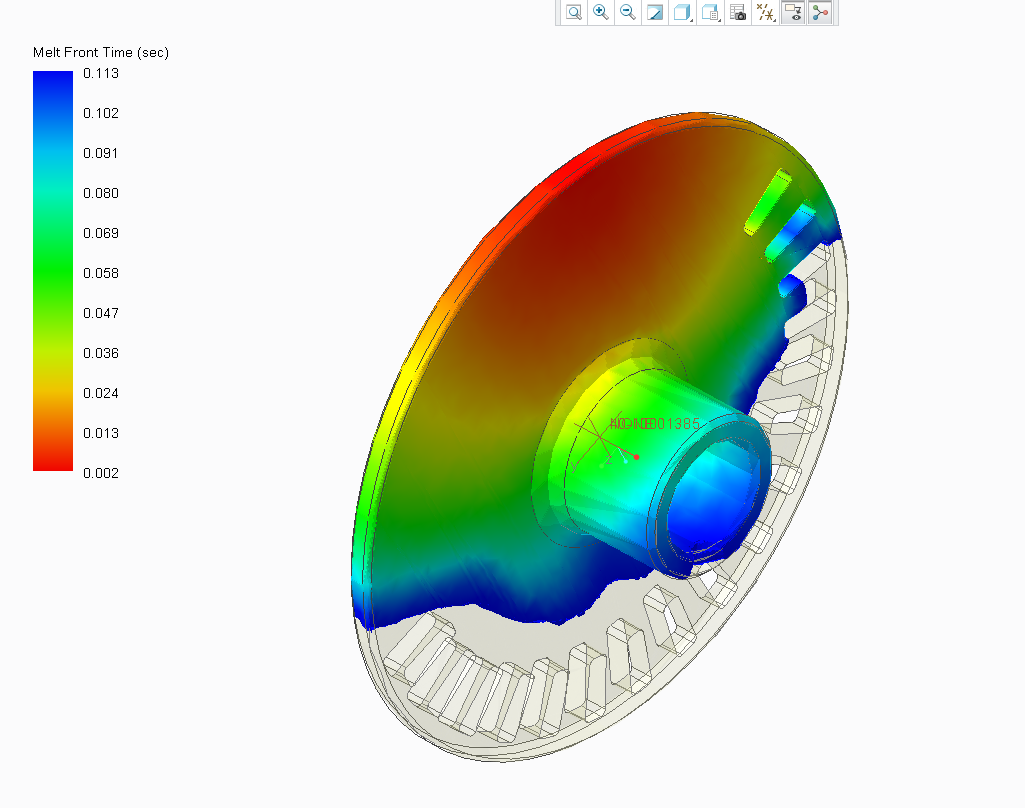
Successful custom injection molding requires optimized part geometry, balanced wall thickness, and proper gate placement to avoid molding defects before tooling begins.
Engineering Design & DFM Support
As an experienced plastic injection molding company, we know that 80% of your part cost is determined during the design phase. Our engineering team provides comprehensive DFM (Design for Manufacturing) support to ensure your part is moldable, cost-effective, and defect-free before we start cutting steel.
Draft Angle Optimization
We calculate and recommend optimal draft angles to ensure smooth part ejection without surface damage, even for deep cavity molds.
Wall Thickness Balancing
We analyze your part design to ensure uniform wall thickness, eliminating sink marks, warpage, and long cycle times caused by uneven cooling.
Gate Location Planning
Our engineers select the optimal gate location to ensure complete fill, minimal weld lines, and easy post-processing for gate removal.
Mold Flow Simulation
Using advanced Moldflow software, we simulate the entire molding process to predict and prevent fill issues, air traps, and weld lines before tooling.
Sink Mark Prevention
We identify potential sink mark locations early and provide design modifications to eliminate these cosmetic defects in thick wall sections.
Weld Line Elimination
We optimize flow paths and process parameters to minimize or eliminate weld lines, ensuring your part meets both structural and cosmetic requirements.
Quality is not an accident – it’s the result of systematic process control, rigorous inspection, and continuous improvement throughout the entire manufacturing process.
How We Ensure Molded Part Quality
With 20 years of serving OEM customers across automotive, medical, and industrial industries, we have developed a comprehensive quality control system that ensures every part meets your exact specifications. We don’t just inspect parts – we control the process to prevent defects from happening in the first place.
First Article Inspection (FAI)
We perform full AS9102 compliant first article inspection for every new mold, documenting 100% of critical dimensions before mass production starts.
CMM Dimensional Verification
Our coordinate measuring machine provides automated, high-precision dimensional verification for complex part geometries with micron-level accuracy.
Pre-Tooling Mold Flow Analysis
We validate mold design and process parameters through simulation to eliminate potential quality issues before we manufacture the mold.
Process Parameter Validation
We document and lock in optimal process parameters during trial runs to ensure consistent production quality over the life of the tool.
SPC Production Monitoring
Statistical Process Control monitors critical dimensions during production to catch variations early and maintain consistent quality.
Material Traceability
Full material lot traceability from raw material to finished parts, with material certification provided for every production run.
Our proven custom mold design process ensures transparent communication, predictable timelines, and perfect results from your first contact to full production.
Custom Mold Design & Manufacturing Process
Understanding the mold making process helps you plan your project timeline and expectations. Our streamlined 7-step process has been refined over 20 years to deliver high-quality molds on time, every time:
1. CAD File Review
Our engineering team reviews your 3D CAD file to understand your part requirements, critical dimensions, and material needs.
2. DFM Analysis & Quote
We complete a full DFM analysis, provide design recommendations, and deliver a detailed, transparent quote within 24 hours.
3. Mold Design Finalization
Our mold designers create the complete mold design, including cooling systems, ejection systems, and gating solutions.
4. Tool Manufacturing
Our experienced mold makers manufacture the mold using high-grade steel, with precision CNC machining and EDM for complex features.
5. First Trial Shots (T1)
We run the first trial shots to test the mold, check part dimensions, and identify any areas for optimization.
6. Mold Optimization (T1-T2)
We make any necessary adjustments to the mold based on T1 results, ensuring perfect part quality before approval.
7. Production Approval & Launch
Once you approve the sample parts, we launch mass production, with regular updates and quality inspections throughout.
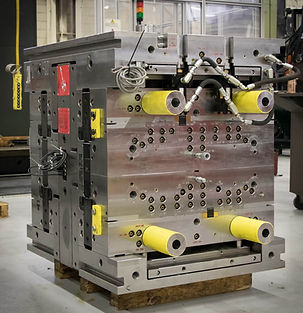
We support your entire product lifecycle, from early prototype testing to full-scale mass production, with seamless transitions between phases.
From Prototype to Mass Production
As your long-term manufacturing partner, we understand that your product evolves over time. Whether you need a few prototype parts for testing, bridge tooling for early market launch, or full mass production for millions of parts, we have the capabilities to support you at every stage:
Prototype Tooling
Fast, low-cost aluminum tooling for 10-100 parts, perfect for functional testing and design validation in as little as 1 week.
Bridge Production
Pre-production tooling for 100-10,000 parts, allowing you to launch your product while your production tool is being built.
Low-Volume Molding
Flexible low-volume production for 10,000-100,000 parts, ideal for specialty products, spare parts, or niche markets.
High-Volume Mass Production
Full-scale production for 100,000+ parts, with automated processing, strict quality control, and just-in-time delivery.
With 20 years of experience, we have solved thousands of injection molding challenges, turning potential failures into successful production runs.
Common Injection Molding Challenges We Solve
Every molding project has its unique challenges. Our experienced team has seen it all, and we have proven solutions for the most common molding defects that cause delays and cost overruns:
| Problem | Root Cause | Our Solution |
|---|---|---|
| Warpage | Uneven cooling rates across part sections causing differential shrinkage | Optimized conformal cooling channel design, process parameter tuning, and material-specific shrinkage compensation |
| Sink Marks | Excessive wall thickness causing material to shrink inward after molding | Core-out redesign to uniform wall thickness, gas assist molding, or process optimization to pack out sinks |
| Flash | Excess material escaping between mold halves due to poor clamping or worn tooling | Precision tooling tolerance adjustment, clamping force optimization, and regular mold maintenance protocols |
| Short Shot | Material solidifying before the mold is completely filled | Gate location redesign, flow path optimization, increased injection pressure, and material temperature adjustment |
| Bubble/Voids | Trapped air or moisture in the material causing internal voids | Proper material pre-drying, optimized venting design, and process adjustments to eliminate air traps |
| Weld Lines | Material flow fronts meeting and not fully bonding during fill | Flow path optimization, melt temperature adjustment, and weld line relocation to non-critical areas |
Choosing the right plastic injection molding supplier is critical to your project’s success – the right partner will eliminate risks, reduce costs, and accelerate your time to market.
How to Choose a Plastic Injection Molding Supplier
When you’re searching for a plastic injection molding company for custom parts, you need to look beyond just price. Here are the key factors you should evaluate to ensure you select the right partner:
Mold Capability & Equipment
Ensure your supplier has the right equipment to handle your part size and complexity. Our 50T-1000T injection machines can handle parts from 1g to 5kg, covering 99% of common custom part requirements. We also have the precision machining equipment to manufacture complex multi-cavity molds.
Quality Systems & Certifications
Verify that your supplier has the quality certifications required for your industry. We hold ISO 9001:2015 for general manufacturing, IATF 16949:2016 for automotive customers, and ISO 13485:2016 for medical device clients, ensuring we meet the strictest industry standards.
Material Expertise
Working with engineering plastics requires specialized knowledge. Our team has decades of experience processing everything from standard ABS to high-performance PEEK, ensuring we can handle your specific material requirements without trial and error.
Engineering Support
The best suppliers don’t just manufacture parts – they help you optimize your design. Our in-house engineering team provides DFM analysis, mold flow simulation, and design recommendations to reduce your cost and improve part quality before tooling starts.
Production Scalability
Your supplier should be able to grow with you. We support everything from 10-piece prototypes to 1 million+ part mass production, with seamless transitions between phases so you don’t have to switch suppliers as your business grows.
Communication & Transparency
Clear communication is essential for custom manufacturing. We provide regular project updates, transparent pricing with no hidden fees, and a dedicated account manager who understands your project and is available to answer your questions anytime.
Industries We Serve
Automotive
Interior, exterior, and underhood components
Medical
Device components, surgical tools, diagnostic parts
Consumer Electronics
Housings, connectors, structural components
Industrial Equipment
Machinery parts, handles, gears, enclosures
Smart Devices
IoT components, sensor housings, wearable parts
Aerospace
Lightweight components, high-temperature parts
We’ve answered thousands of customer questions over the years – here are the most common ones we receive about custom plastic injection molding.
Frequently Asked Questions
What is the minimum order for custom injection molding?
We don’t have a strict minimum order quantity. We support orders as small as 100 parts for prototype and low-volume projects, all the way up to millions of parts for mass production. We work with startups and large OEMs alike, adapting to your specific volume needs.
How much does a plastic injection mold cost?
Mold cost depends on part size, complexity, number of cavities, and steel type. Simple single-cavity molds start around $2,000, while complex multi-cavity production molds can range from $10,000 to $50,000. We provide transparent, detailed quotes with no hidden fees, and we’ll help you choose the right tooling option for your budget and volume.
How long does tooling and production take?
Standard tooling lead time is 3-4 weeks, with production starting immediately after sample approval. For urgent projects, we offer expedited tooling that can be completed in as little as 2 weeks. Production lead time is typically 1-2 weeks for most orders, depending on volume.
What tolerances can injection molding achieve?
Our standard tolerance for injection molding is ±0.02mm for most parts, which meets the requirements of most industries. For high-precision applications, we can achieve tighter tolerances down to ±0.005mm with specialized tooling and process control, depending on part size and material.
Can you help optimize my part for molding?
Absolutely! This is one of the most valuable services we provide. Our engineering team will review your CAD design, perform a full DFM analysis, and provide recommendations to optimize your part for manufacturability. This can reduce your part cost by up to 30%, eliminate molding defects, and shorten your lead time.
Ready to Start Your Custom Molding Project?
Upload your CAD file today for a free engineering review and DFM analysis. Our team will get back to you with a detailed quote within 24 hours.