Custom aluminum motorcycle components manufactured from your CAD, drawings or samples, with anodized finishes planned together with critical dimensions and final inspection. We support aftermarket brands, distributors, custom builders and product development teams.
At a Glance
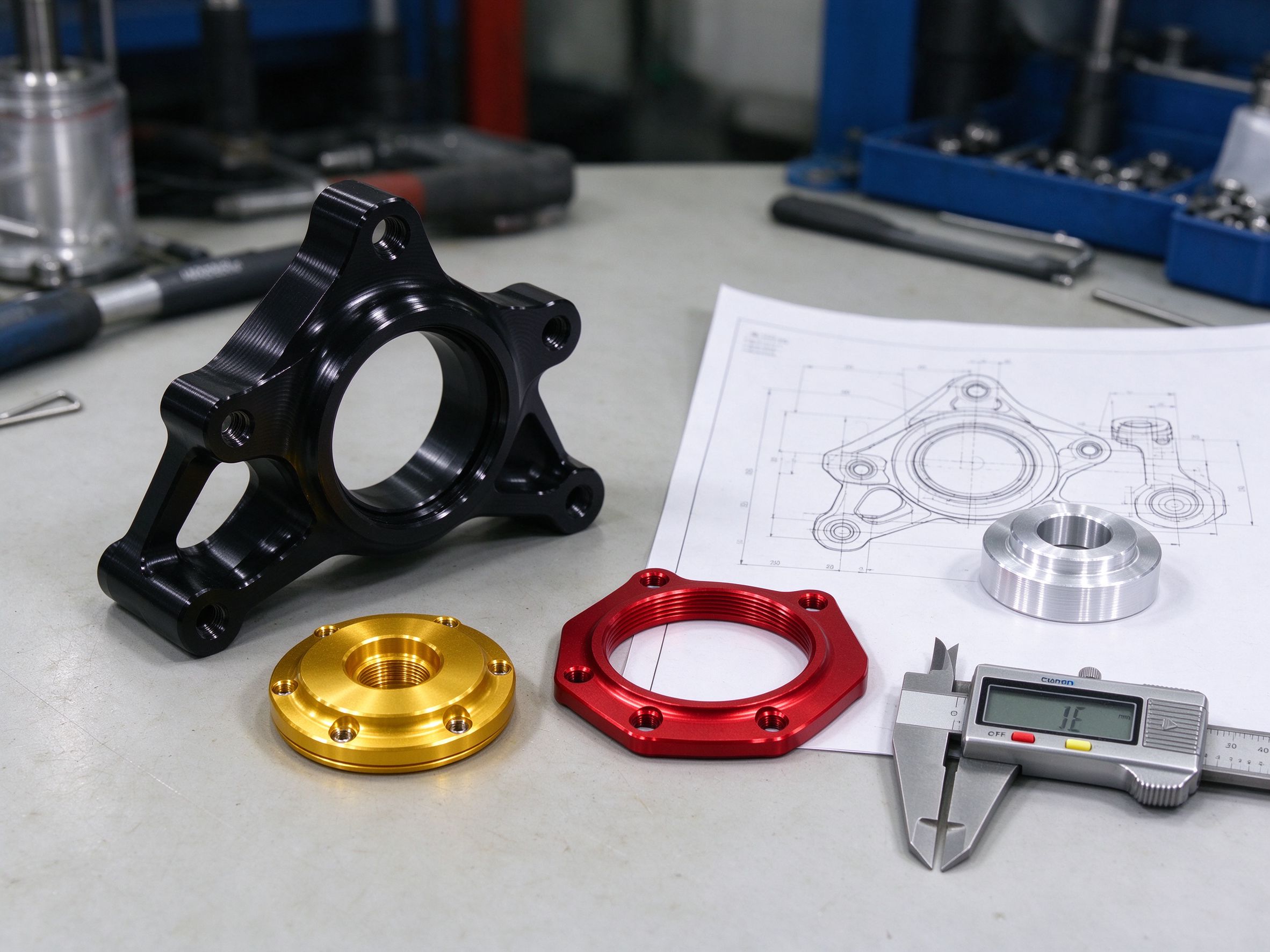
We manufacture custom aluminum motorcycle components by CNC machining and plan the anodizing specification together with critical dimensions, surface requirements and final inspection. Anodizing is not a last-minute coating step — it changes surface dimensions, so holes, threads, mating faces and color requirements are reviewed during machining design, not after.
What We Manufacture
We organize motorcycle parts by manufacturing and finishing logic, not by filling every motorcycle system category:
Brackets, mounts, spacers, bushings
Hole positions, mounting datums, mating dimensions and finish requirements defined on the drawing.
Covers, caps, decorative components
Machining detail, color, texture, gloss and batch-to-batch appearance consistency.
Sprocket covers, chain guards, protective plates
Geometry, mounting position, material choice and the operating environment.
Handlebar mounts, clamps, risers
Accepted where material specification and verification requirements are confirmed for the specific part.
Who We Support
Custom components for your own product range, manufactured to your drawings and finish specs.
Repeat orders with consistent color, dimensions and documentation.
Prototype batches to validate fit, appearance and anodizing color before tooling or larger runs.
Low-volume machined parts with specified anodized finishes.
Aluminum Material Selection
Material affects machining, anodizing appearance and part performance. The grade and temper are confirmed against the project drawing:
| Material | Typical use | Anodizing note |
|---|---|---|
| 6061-T6 | General brackets, mounts, covers | Good machining and anodizing response; common for colored finishes |
| 7075-T6 | Higher-strength structural components | Machinable and anodizable; strength and finish reviewed per application |
| Other aluminum alloys | Project-specific requirements | Machinability, appearance and coating results vary by alloy and temper |
Anodizing Types & Finish Options
| Type | Main role | What the buyer specifies |
|---|---|---|
| Type II — sulfuric acid | Colored and clear anodizing, general protection | Color, appearance, film thickness, sealing requirement |
| Type III — hardcoat | Wear-oriented applications | Film thickness, dimensional allowance, mating and assembly requirements |
| Type I — chromic acid | Specific processes and specifications | Project specification and confirmed supply capability |
The choice between Type II and Type III is not decided by "which is harder" alone — it depends on application, dimensions, appearance, wear and the applicable specification. Film thickness values and hardness claims are confirmed per alloy, process and inspection requirement, not stated as universal guarantees.
CNC + Anodizing Workflow
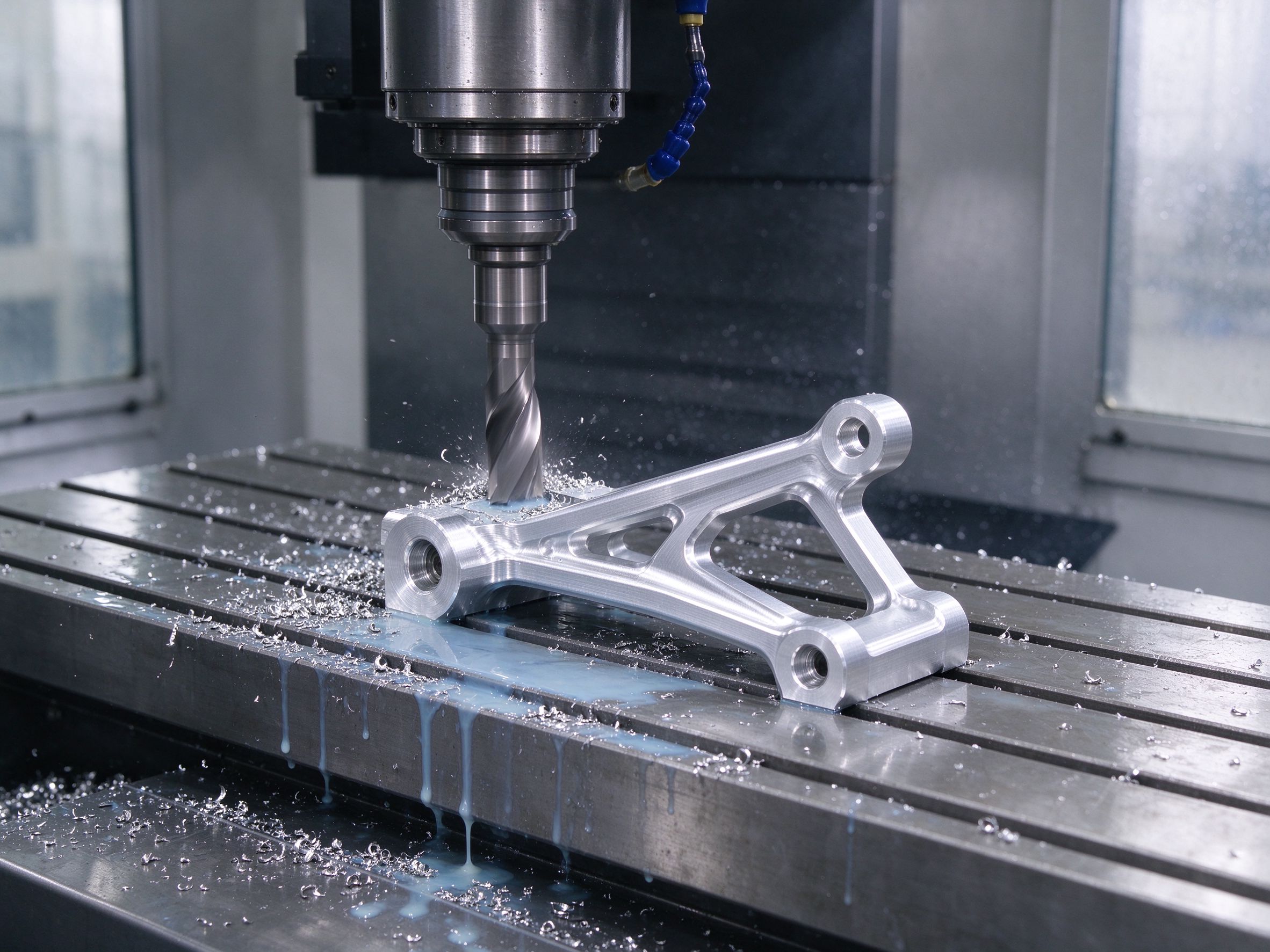
The machining and finishing stages are planned as one project, not two separate quotes:
Drawing / CAD / sample review
Part use, material, quantity, critical dimensions and final surface requirements.
DFM + finish planning
Machining route set; anodizing type, masking and critical-dimension effects reviewed in advance.
CNC machining
Machined against the approved drawing, with functional features and assembly interfaces controlled.
Deburr & surface prep
Edge condition and surface preparation checked before anodizing.
Anodizing / finishing
Applied to the project-confirmed type, color, film and appearance specification.
Final inspection
Final dimensions, surface quality, assembly fit and project documentation.
Does Anodizing Affect CNC-Machined Dimensions?
Yes. Anodizing changes the surface dimensions of aluminum parts because the anodic coating forms through conversion of the substrate and growth of the oxide layer. The dimensional effect depends on the alloy, coating process and specified film thickness — which is why critical holes, threads and mating surfaces are reviewed during machining and finish planning, not after.
| Part area | What is confirmed before machining |
|---|---|
| Precision bores & clearance holes | Final bore diameter requirement after anodizing |
| Threads | Masking, plugging or other protection; coating build-up on thread flanks |
| Bearing or bushing fits | Final assembly size and contact condition |
| Mating and sealing faces | Flatness, contact area, finish limitations |
| Appearance surfaces | Color, texture, gloss, allowed appearance deviation |
| Marking / laser-etch areas | Process sequence, position, final legibility |
There is no fixed compensation value that applies to every part. The allowance is defined from the anodizing specification, film requirement, dimensional tolerance and the actual process for that project.
Color & Appearance Consistency
Color results depend on alloy, material state, surface preparation and process conditions. Exact appearance requirements are agreed on a physical sample, not on a color name alone:
Sample-based approval
Color and gloss are confirmed against an approved sample made from the actual alloy and finish, with the acceptable deviation range agreed in advance.
Batch control
Where color consistency matters across production batches, the alloy batch, surface preparation and anodizing conditions are managed per the agreed standard.
Quality Control & Documentation
Acceptance is based on the drawing, the anodizing specification and the agreed inspection scope:
Material
Aluminum grade, temper and applicable material specification verified; material records supplied where the order requires them.
Machined dimensions
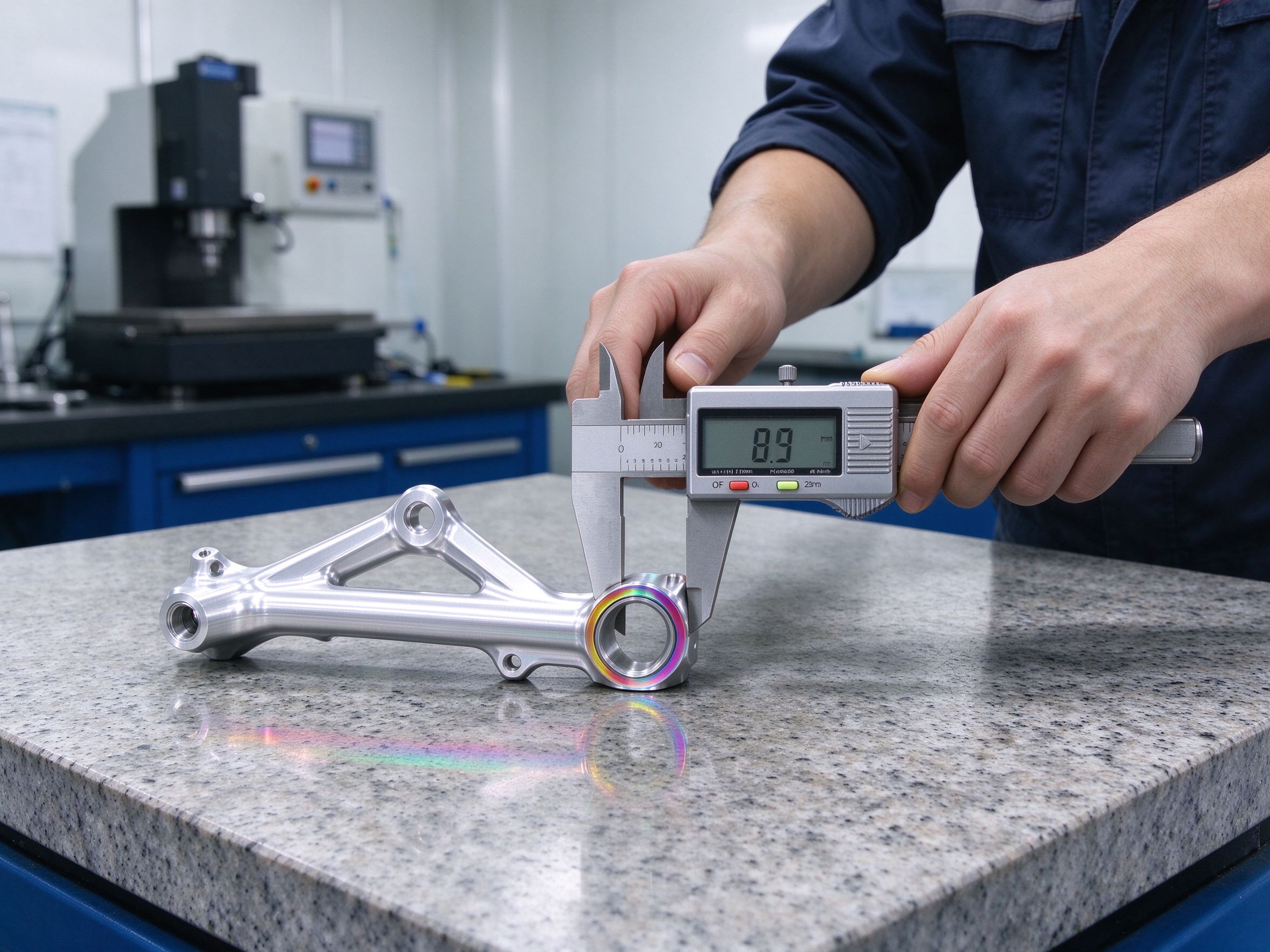
Critical holes, mating faces, threads and datums inspected against the drawing. CMM and dimensional reports where the project scope requires them.
Anodizing quality
Film, color, appearance, sealing and required checks confirmed against the procurement specification. Corrosion testing is run only where the project specifies it.
Final delivery
Final dimensions, surface appearance, protective packaging, part marking and the project-defined inspection and conformity documents.
Production & Cost Factors
Quotes and lead times are built from the project, not from a fixed price list:
| Factor | How it affects quote / lead time |
|---|---|
| Material grade & stock | Alloy, temper, bar/plate availability |
| Geometry complexity | Machining time, setups, 5-axis vs 3-axis work |
| Quantity | Prototype, batch or repeat production planning |
| Anodizing batch | Color batch size and scheduling |
| Color matching | Sample approval, alloy and finish conditions |
| Masking | Threads, bores and contact faces protected from coating |
| Inspection & documents | Dimensional reports, coating records, FAI where required |
Fixed "prototype 3–5 days / production 10–15 days" promises are not made — lead time is confirmed from quantity, material, machining, anodizing and inspection requirements for each order.
What to Include in a CNC-Anodized Motorcycle Parts RFQ
| Information | Why it matters |
|---|---|
| 2D drawing + 3D CAD | Geometry, hole positions, datums and critical dimensions |
| Material grade / temper | Aluminum alloy and material state |
| Quantity & annual forecast | Machining, batch and finish scheduling |
| Anodizing type / specification | Type II, Type III or the project-applicable spec |
| Color sample or approved reference | Mutually agreed color acceptance |
| Film thickness requirement | How coating and machined dimensions fit together |
| Critical dimensions after finishing | Verification against coated final dimensions |
| Masking instructions | Holes, threads and contact faces that must stay uncoated |
| Inspection & documents | Material records, dimensional reports, FAI as required |
| Packaging / destination | Protection, marking and shipping requirements |
Frequently Asked Questions
What materials are suitable for anodized CNC motorcycle parts?
What is the difference between Type II and Type III anodizing?
Does anodizing affect hole size and mating dimensions?
Can anodized motorcycle parts be supplied in different colors?
How is color consistency controlled across production batches?
Can threads and precision bores be masked during anodizing?
Which aluminum alloy should I specify for a custom motorcycle component?
How are safety-critical motorcycle parts reviewed before production?
What is needed for a CNC-anodized motorcycle parts quote?
Can you work from an existing sample?

Request a CNC + Anodizing Review
Send your CAD, drawing or sample. We will review material, machining route, anodizing type, color sample and dimensional requirements, and return a manufacturing plan with finish and inspection scope.
Xiamen Goldcattle · Manufacturing since 1998 · CNC 3/4/5-axis · Anodized aluminum motorcycle parts · Coating-included dimensional inspection