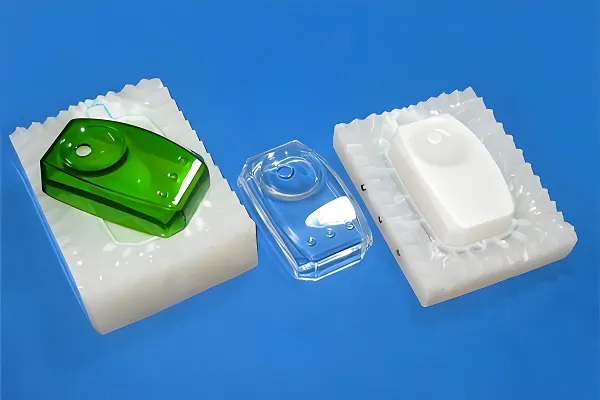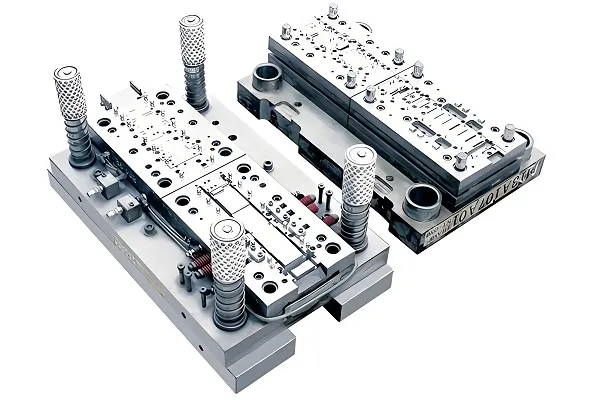
Custom Concrete & Cement Planter Plastic Molds
Reusable Injection-Molded Forms for Commercial Planter Production
Engineering-grade plastic molds designed to increase your concrete planter output while reducing per-unit mold costs — serving garden decor manufacturers, landscaping suppliers, and OEM concrete product producers worldwide.
Durable ABS & PP Construction
Injection-molded thermoplastics delivering 100–500+ production cycles
Split-Mold Demolding Design
Fast, damage-free concrete release to cut labor costs
Full OEM Customization
Custom dimensions, textures, branding, and more from prototype to mass production
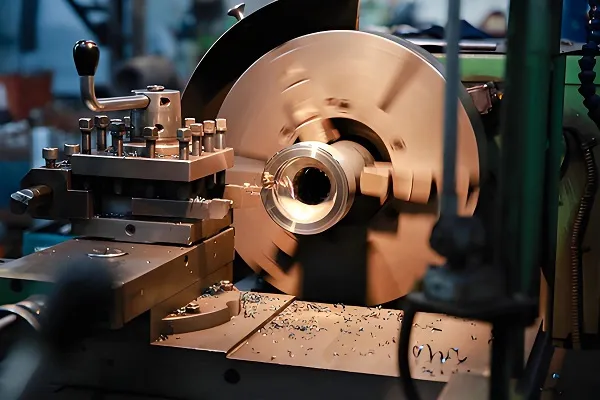
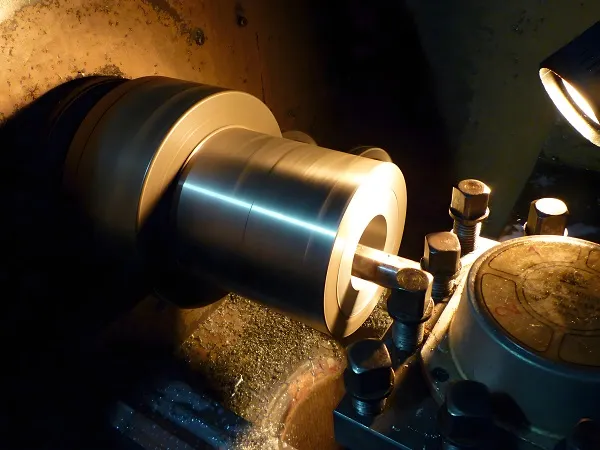
Precision CNC Tooling
In-house machining with complete quality inspection system
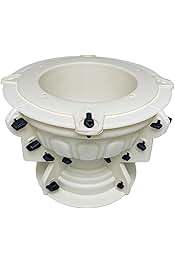
Mold Technical Specifications
Engineering parameters to help you evaluate the right mold for your commercial production needs.
| Specification | Standard Grade | Advanced Grade |
|---|---|---|
| Mold Material | Polypropylene (PP) | ABS Plastic |
| Material Density | 0.90–0.91 g/cm³ | 1.04–1.07 g/cm³ |
| Mold Wall Thickness | 2.0–3.0 mm | 3.0–8.0 mm (customizable) |
| Estimated Mold Lifespan | 100–300 casting cycles | 300–500+ casting cycles |
| Temperature Resistance | -20°C to 100°C | -40°C to 120°C |
| Surface Finish (Cavity) | Ra ≤ 1.6 µm | Ra ≤ 0.8 µm |
| Dimensional Tolerance | ±0.5 mm | ±0.1 mm (critical dimensions) |
| Compatible Casting Materials | Standard concrete, cement mortar | GFRC, lightweight concrete, pigmented mixes |
| Demolding Type | Split mold (multi-part) | Split mold with integrated release features |
| Production Method | Injection molding | Injection molding (high-pressure 1000–2000 bar) |
| MOQ (Custom Molds) | 10 pcs | 10 pcs |
| Lead Time (Custom Mold) | 15–25 working days | 15–25 working days |
| Lead Time (Standard Mold) | 7–15 working days | 7–15 working days |
| Quality Certification | ISO 9001:2015 | ISO 9001:2015 |
* Actual mold lifespan is affected by concrete mix, release agent usage, maintenance, and operation practices. Data above assumes standard curing conditions (20±5°C, humidity ≥95%) and proper operation.
Mold Material Selection Guide
Choosing the right mold material directly impacts your production efficiency and tool lifespan. Compare our two core injection molding materials to find the best fit for your project.
| Property | Polypropylene (PP) Molds | ABS Plastic Molds |
|---|---|---|
| Strength-to-Weight Ratio | Good — lightweight with adequate structural integrity | Excellent — high rigidity and impact resistance |
| Surface Finish Quality | Good — smooth surface achievable | Superior — excellent surface finish transfers to concrete |
| Impact Resistance | Excellent — absorbs shock without cracking | High — resists cracking under repeated use |
| Chemical Resistance | Superior — resists cement alkalinity and most mold release agents | Good — resistant to oils, acids, and weather exposure |
| Heat Resistance | 100–120°C (softening point) | Up to 120°C (continuous service) |
| Low-Temperature Performance | Brittle below -20°C | Good — maintains toughness down to -40°C |
| Cost Efficiency | More economical — lower material and processing cost | Higher cost — premium material with longer service life |
| Dimensional Stability | Moderate — may warp under sustained load | Excellent — resists warping and maintains cavity accuracy |
| Best For | Budget-conscious commercial production, standard concrete mixes, moderate-volume runs | High-volume commercial production, GFRC/sprayed concrete, premium surface finish requirements |
| Typical Mold Lifespan | 100–300 cycles | 300–500+ cycles |
Selection Recommendations
- ABS molds are the mainstream choice for commercial-scale production, ideal for GFRC spray processes and high-value decorative planter mass production due to their structural stability, deformation resistance, and superior surface effect transfer.
- PP molds offer clear cost-effectiveness advantages for budget-sensitive projects, medium-output production, and scenarios requiring frequent planter style changes.
- For ABS molds, a wall thickness of ≥2.0 mm is recommended to ensure sufficient compressive strength and cycle life; for large outdoor planter molds, a wall thickness of 3.0–8.0 mm is suggested.
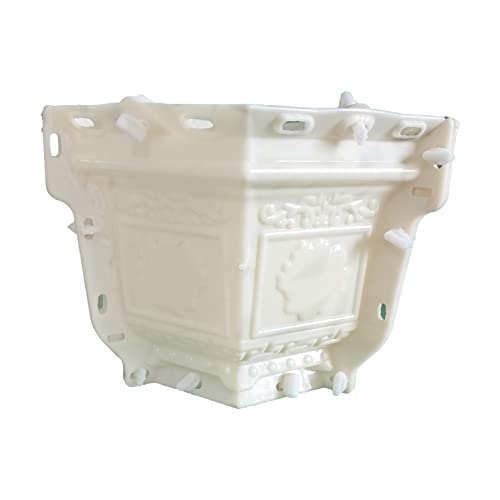
Custom decorative ABS planter mold with textured patterns
Industry Applications & Use Cases
Goldcattle concrete planter molds serve a wide range of commercial scenarios, tailored to your industry-specific needs.
| Industry / User Profile | Typical Concrete Planter Application | Key Requirements We Solve |
|---|---|---|
| Garden Decor Brands | Decorative planters for retail distribution, seasonal collections | Consistent surface finish, custom textures and shapes, brand logo integration, medium-to-high volume production |
| Commercial Landscaping Suppliers | Large outdoor planters for streetscapes, plazas, hotel entrances | Large mold dimensions, heavy-duty wall construction, durability for high-cycle use, weather-resistant finished products |
| Concrete Planter Manufacturers | High-volume standard planter production for wholesale distribution | Maximum mold lifespan, fast demolding efficiency, optimized production cost per casting, consistent dimensional output |
| DIY Mold Brands & Distributors | Consumer-oriented reusable mold sets for home concrete crafting | Ease of demolding (no special equipment required), clear instructions, compact packaging, brand labeling |
| Home Decor & Furniture Brands | Indoor/outdoor decorative concrete planters as product line extension | Premium surface finish (matte, textured, polished), GFRC compatibility, unique geometric designs, low MOQ for market testing |
| Nursery & Garden Centers | Functional planters for plant retail and display | Drainage hole integration, weather durability, stackable designs, cost-effective bulk production |
Each application scenario has unique mold design, material, and process requirements. Our engineering team provides targeted mold solution recommendations during the DFM phase based on your industry characteristics.
ABS vs Silicone Concrete Planter Molds — Commercial Production Comparison
One of the most common decision points for B2B buyers. We’ve broken down the objective technical comparison to help you choose the right tool for your production needs.
| Comparison Dimension | ABS Plastic Molds (Goldcattle) | Silicone Molds (Market Alternative) |
|---|---|---|
| Durability & Lifespan | 300–500+ cycles; resists warping, cracking, and abrasion | 50–150 cycles; degrades over time, especially with abrasive concrete mixes |
| Structural Rigidity | High — rigid walls maintain cavity shape under concrete pressure | Low — flexible walls may distort during pouring and curing, requiring external support |
| Surface Finish Transfer | Smooth, consistent finish directly from polished cavity | Good for intricate textures and undercuts; flexible demolding preserves fine details |
| Large Planter Production | Excellent — rigid structure supports large cavity dimensions without deformation | Limited — large silicone molds require reinforcement frames, increasing complexity |
| Demolding Process | Split-mold mechanical release; may require mold release agent for optimal results | Inherent non-stick properties; flexible demolding without release agent in most cases |
| Production Speed | Fast — rigid molds enable rapid cycle times for mass production | Slower — careful demolding required to avoid tearing; limited to lower daily output |
| Cost per Casting (Long-Term) | Lower — higher upfront investment amortized over more cycles | Higher — lower upfront cost but more frequent replacement increases long-term per-unit cost |
| Best For | Commercial mass production, large planters, GFRC applications, standardized product lines | Small-batch crafts, intricate artistic designs, prototype development, DIY consumer market |
| Not Recommended For | Parts with deep undercuts requiring flexible mold extraction | High-volume production, large planters over 40 cm diameter, abrasive GFRC mixes |
Key Takeaway: For commercial-scale concrete planter production, ABS plastic molds deliver significant advantages in durability, production efficiency, and long-term cost. Silicone molds are better suited for small-batch craft work, fine-texture artisanal products, and prototype development phases.
DFM (Design for Manufacturing) — Concrete Planter Mold Design Guidelines
Optimizing your planter mold design improves production efficiency, extends tool life, and reduces per-unit production costs. These are our engineering team’s proven recommendations.
Wall Thickness Guidelines
| Mold Parameter | Minimum Recommendation | Preferred (Production) | Notes |
|---|---|---|---|
| Standard planter (≤40 cm) mold wall thickness | 2.0 mm | 3.0 mm | Balances material cost with structural integrity |
| Large planter (40–80 cm) mold wall thickness | 3.0 mm | 5.0 mm | Increased wall thickness resists concrete hydrostatic pressure |
| Extra-large planter (>80 cm) mold wall thickness | 5.0 mm | 8.0 mm | Thicker walls prevent sidewall bowing and maintain dimensional accuracy |
Draft Angle
- Minimum draft angle: 1.5° per side (smooth cavity surface)
- Preferred draft angle: 2–3° per side for consistent demolding
- Textured surfaces require additional draft (add 1° per 0.025 mm texture depth)
Drainage Hole Design
- Integrated drainage holes eliminate secondary drilling operations
- Minimum drainage hole diameter: 8 mm
- Recommended: 1–3 drainage holes per planter bottom, positioned away from structural stress points
Parting Line Placement
- Parting lines should be positioned along non-visual surfaces or geometric edges to minimize post-processing
- For large molds, 2–3 part split design recommended for easier demolding and worker safety
Additional DFM Recommendations
- Corner Radii: Internal corners minimum R2 mm; external corners minimum R1 mm — improves concrete flow and reduces stress concentrations
- Surface Texture: Specify texture depth and pattern during the design phase; shallow textures (<0.5 mm) are easier to release than deep textures
- Mold Release Features: Integrated ejection pins or pry slots reduce demolding time in production environments
- File Formats: Submit STEP, IGES, or 3D CAD files for accurate DFM analysis. 2D drawings with dimensions also accepted
- Brand Integration: Logo and text engraving on mold cavity surface available — specify font, size, and position in design documents
Engineering Challenges & Proven Solutions
Injection molds face specific challenges in concrete planter production. Here are the common issues we’ve solved with our proven engineering experience.
| Production Challenge | Root Cause | Goldcattle Proven Solution |
|---|---|---|
| Mold Wall Cracking | Repeated concrete pouring pressure, inadequate wall thickness, low-temperature brittleness (PP) | ABS material upgrade for high-cycle production; wall thickness optimization per planter size; proper mold storage above 5°C |
| Concrete Sticking / Difficult Demolding | Inadequate draft angle, rough cavity surface, insufficient mold release agent | Draft angle ≥2° on all vertical surfaces; cavity polishing to Ra ≤0.8 µm; integrated pry slots and ejection features in mold design |
| Dimensional Inconsistency Across Castings | Mold wall deflection under hydrostatic concrete pressure; temperature cycling | Increased wall thickness for large planters; ABS material for superior dimensional stability; controlled concrete pour height |
| Surface Blemishes on Finished Concrete | Air bubble entrapment, cavity surface imperfections, aggressive concrete mix | Polished mold cavity finish; vibration table recommendation (30–60 seconds per pour); GFRC spray-up technique for premium surface quality |
| Mold Warping Over Time | Sustained concrete weight load, improper storage, thermal cycling | ABS material selection for superior rigidity; mold storage in flat position; reinforced ribbing in large mold designs |
| Short Mold Lifespan (<50 cycles) | Aggressive GFRC mixes, inadequate cleaning between casts, abrasive aggregates | Mold maintenance protocol: clean after each casting cycle with pH-neutral cleaner; avoid metal scrapers on cavity surface; use release agent specifically formulated for concrete |
| Drainage Hole Blockage During Casting | Concrete flowing into drainage hole channels during pour | Integrated plug inserts in mold design; pre-formed drainage channels with positive draft; post-cure drilling as backup method |
| Uneven Concrete Color / Staining | Mold residue transfer, inconsistent concrete mix, curing temperature variation | Mold cleaning protocol between batches; batch-controlled concrete mixing; standardized curing conditions |
Mold Manufacturing Process
Our standardized production process integrates CNC machining, injection molding, and quality inspection to deliver consistent, high-quality planter molds.
Design & Engineering
CAD modeling based on your specifications, with DFM optimization to ensure manufacturability and mass production efficiency.
Mold Tooling Fabrication
Precision cavity production with 3/4/5-axis CNC machining, EDM, and wire cutting to replicate complex surfaces and fine textures.
Plastic Material Preparation
ABS or PP pellets are dried and color-matched (if needed) to improve injection efficiency and product consistency.
Injection Molding
Molten plastic is injected under high pressure (1000–2000 bar) with precise temperature and speed control for uniform wall thickness.
Cooling & Demolding
Controlled cooling to ensure dimensional stability and minimal residual stress before demolding.
Post-Processing
Gate trimming, parting line polishing, surface finishing, and functional checks for every mold.
Quality Inspection
100% inspection including dimensional accuracy, surface roughness, pressure resistance, temperature tolerance, and durability simulation.
Packaging & Shipping
Protective cleaning, secure export packaging, and global shipping with complete customs documentation.
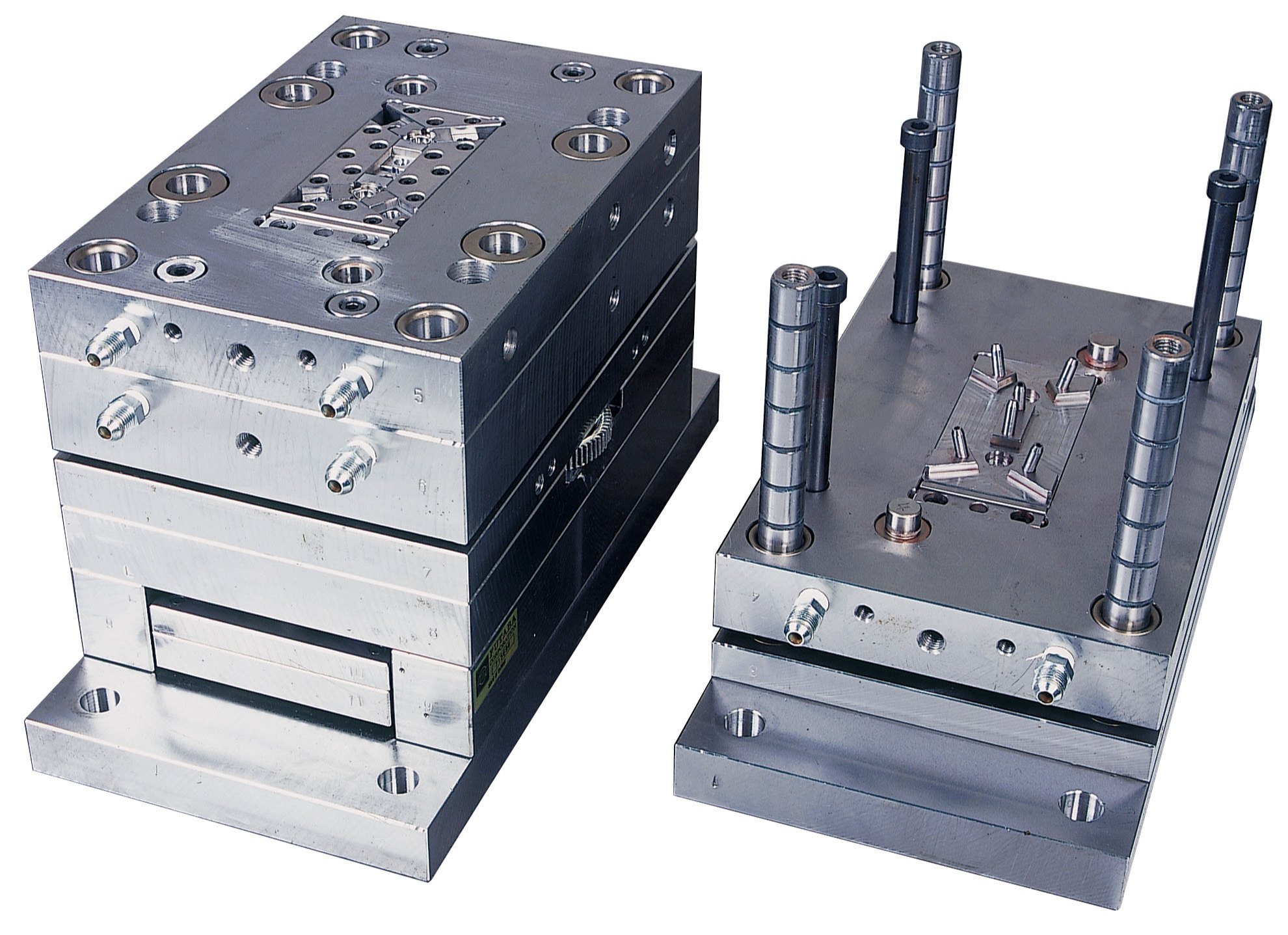
In-house precision injection mold tooling
Case Study — Custom ABS Molds for European Garden Brand
A European garden decor brand needed to develop a new line of large outdoor concrete planters, requiring reusable molds, easy demolding, and retail-grade surface quality for their finished products.
| Client Industry | Garden decor brand (retail distribution) |
| Planter Type | Large rectangular outdoor planter, 80 × 40 × 60 cm |
| Mold Material | ABS Plastic (wall thickness: 5 mm) |
| Mold Type | 3-part split mold with integrated drainage hole plugs |
| Surface Finish Requirement | Smooth interior cavity for premium concrete surface; branded logo engraving on front panel |
| Compatible Materials | Standard concrete and GFRC |
| Production Volume | Initial order: 50 mold sets; follow-up production: 200+ mold sets |
| Key Challenge | Large cavity dimensions required reinforced mold wall design to prevent deflection during pouring; consistent surface quality across all molds |
| Solution Applied | Increased wall thickness to 5 mm with integrated reinforcing ribs; CNC-machined master pattern for consistency; polished cavity to Ra ≤ 0.8 µm |
| Estimated Mold Lifespan | 400–500 casting cycles per mold |
| Lead Time | 20 working days from drawing approval to shipment |
| Quality Inspection | 100% dimensional inspection, surface roughness verification, mold assembly fit test |
Result: The client completed product sampling and market testing within two weeks of receiving the first batch of molds, then placed a follow-up order for 200 additional mold sets for full-series mass production. The split-mold design and integrated drainage hole features significantly reduced the client’s production labor costs.
* Note: Replace this with your real project data, photos, and quantifiable results to build stronger trust with B2B buyers.
How to Choose the Right Concrete Planter Mold — Buyer’s Decision Guide
Choosing the right mold is critical to your commercial planter production success. Use this guide to make the optimal decision for your business.
1. Determine Your Production Volume
| Production Scale | Recommended Material |
|---|---|
| Low volume (<500 planters/year) | PP Molds |
| Medium volume (500–3,000 planters/year) | ABS Molds (Standard Grade) |
| High volume (3,000+ planters/year) | ABS Molds (Advanced Grade, thick wall) |
2. Select Material Based on Concrete Type
| Concrete Type | Recommended Material |
|---|---|
| Standard concrete / cement | PP or ABS |
| GFRC (Glass Fiber Reinforced Concrete) | ABS (preferred) |
| Lightweight concrete | PP or ABS |
| Pigmented / colored concrete | ABS |
3. Evaluate Mold Design Features
- Wall Thickness: Determines mold rigidity and lifespan; thicker walls for large/heavy planters
- Parting Line Design: Affects demolding ease and finished surface quality; multi-part split molds for complex shapes
- Drainage Hole Integration: Eliminates secondary drilling; reduces production labor cost
- Surface Texture: Transfers directly to finished concrete; specify details in design phase
- Brand Logo / Marking: Adds brand value; can be integrated into the mold cavity
4. Consider Total Cost of Ownership (TCO)
Don’t just compare mold unit price. Factor in these long-term costs:
- Mold lifespan (cycles before replacement)
- Demolding efficiency (labor cost per casting)
- Surface finish quality (rework and rejection rate)
- Shipping cost (mold weight and volume)
5. Verify Supplier Capabilities
- In-house CNC machining and injection molding capabilities
- DFM engineering review and design optimization
- ISO 9001 certified quality control system
- Material certification and batch inspection reports
- OEM customization and prototyping services
- Export packaging and international logistics experience
Frequently Asked Questions
1. What is the best material for commercial concrete planter molds?
ABS plastic is the recommended material for commercial production due to its high strength, impact resistance, and dimensional stability under repeated use. It resists warping, cracking, and abrasion through repeated cycles, making it the go-to choice for businesses prioritizing mass production reliability. PP is a cost-effective alternative for moderate-volume production.
2. How many times can a reusable ABS concrete planter mold be used?
Depending on mold wall thickness and production conditions, ABS molds typically deliver 100–500+ casting cycles. Standard-grade molds achieve 100–300 cycles, while advanced-grade molds (thicker walls, premium ABS formulation) can reach 300–500+ cycles. Actual lifespan depends on concrete mix abrasiveness, mold maintenance, and demolding practices.
3. Are ABS molds better than silicone molds for concrete planters?
For commercial mass production, ABS molds are better due to higher durability, structural rigidity, and suitability for large planter dimensions. They deliver more consistent dimensional output and lower cost per casting over their lifespan. Silicone molds are better for intricate artistic designs, small-batch crafts, and applications requiring flexible demolding for deep undercuts.
4. Can you make large concrete planter molds for outdoor commercial use?
Yes. Goldcattle supports custom large-size concrete planter mold manufacturing for commercial landscaping, streetscape, and outdoor decoration projects. We adjust mold wall thickness to meet the structural requirements of large cavities.
5. Do you support OEM planter mold production?
Yes. We provide full OEM customization services including custom planter shapes, dimensions, surface textures, drainage hole configurations, and brand logo engraving. Our 5-step customization process covers demand communication, scheme design, quotation, mold production, and quality inspection.
6. Are your molds compatible with GFRC (Glass Fiber Reinforced Concrete)?
Yes. Our ABS plastic planter molds are compatible with GFRC spray-up and cast applications. For GFRC production, we recommend ABS molds with polished cavity surfaces to achieve premium concrete surface finish quality.
7. How do you prevent concrete from sticking to plastic molds?
Key measures include: adequate draft angle (≥2°) on all vertical surfaces, polished cavity finish (Ra ≤0.8 µm), proper application of concrete-specific mold release agent before each pour, and integrated demolding features (pry slots, ejection pins) for mechanical assistance.
8. What is your MOQ for custom concrete planter molds?
MOQ is 10 pcs for custom mold orders. For production runs, we scale to your volume requirements.
9. What is your lead time for custom planter molds?
Custom mold development: 15–25 working days. Standard/repeat mold production: 7–15 working days. Lead time varies based on mold complexity and order quantity.
10. Do you provide mold design support if I only have a sketch or idea?
Yes. Our engineering team can create 3D CAD models from concept sketches, reference images, or basic dimensional specifications. We provide DFM recommendations during the design phase.
11. What quality certifications do you hold?
Our production facility is ISO 9001:2015 certified. Every mold undergoes 100% inspection including dimensional checks, surface finish verification, pressure resistance testing, and assembly fit testing before shipment.
12. Can you sign NDA (Non-Disclosure Agreement) for custom mold projects?
Yes. We regularly execute NDAs to protect our clients’ proprietary designs, brand assets, and product development plans. NDA execution can be completed before any technical discussion begins.
13. Do ABS molds require a vibrating table?
For standard concrete mixes, a vibrating table is recommended (30–60 seconds per pour) to achieve optimal surface finish and eliminate air bubbles. For GFRC spray-up applications, vibration may not be required.
14. How should I maintain my concrete planter molds to extend lifespan?
Clean molds after each casting cycle with pH-neutral cleaner. Avoid metal scrapers on cavity surfaces. Store molds in a flat position away from direct sunlight and extreme temperatures. Apply release agent before each pour using a consistent application method.
15. Do you provide mold samples for testing before mass production?
Yes. We offer prototype mold development and sample production for client evaluation before committing to full production volumes.
16. How do you handle international shipping and customs?
We ship globally via air freight (DHL, FedEx, UPS) for small-volume orders and sea freight for bulk orders. All shipments include proper customs documentation. We offer EXW, FOB, CIF, and DAP shipping terms based on your preference.
17. What file formats do you accept for mold design?
We accept STEP (.stp), IGES (.igs), SolidWorks, DWG, PDF, and STL files. 2D engineering drawings with complete dimensions are also accepted. For concept-stage projects, sketches and reference images can be used to initiate DFM discussion.
Ready to Start Your Planter Mold Project?
Send us your requirements, and our engineering team will get back to you within 1 business day with a customized solution and transparent quotation.
Our Quote Process
DFM Review
24hrs
Transparent
Quotation
Prototype
Sampling
Mass
Production
Global
Shipping
No CAD files? No problem. Send us your concept sketches or reference photos, and our engineering team will turn them into precise 3D models and provide a detailed quote.
All inquiries are responded to within 1 business day.