Precision CNC Machining Technology for Custom Parts: Tolerances, Materials, Processes & Applications – Goldcattle Guide
Get custom precision parts with ±0.005mm tight tolerances, complex geometries, and consistent quality for your US/EU OEM projects. We help you cut costs by 15-30% while meeting strict industry standards.
ISO 9001
AS9100
20+ Years Experience
RoHS/REACH Compliant
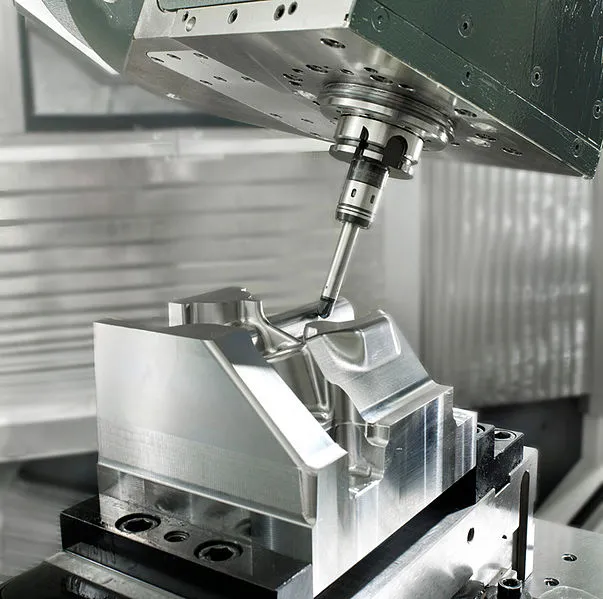
Table of Contents
Introduction
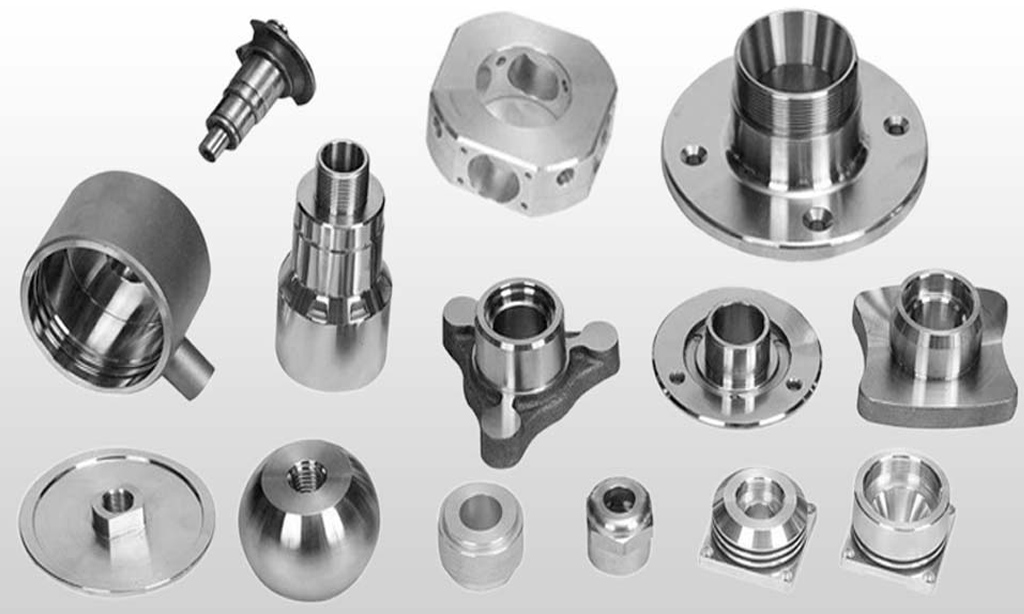
In today’s demanding global markets, precision CNC machining has become the backbone of custom part manufacturing for OEMs across aerospace, medical, automotive, and electronics industries. Unlike generic manufacturing methods, this technology enables us to deliver parts with ultra-tight tolerances, complex geometries, and consistent quality, even for high-mix, low-to-medium volume runs.
At Goldcattle, with over 20 years of experience serving US and European clients, we don’t just make parts – we solve your manufacturing pain points. Our engineering team works with you from design to delivery, using Design for Manufacturability (DFM) feedback to help you reduce production costs by 15-30% while meeting the strictest industry standards, from AS9100 for aerospace to ISO 13485 for medical devices.
Whether you need a single prototype or a 100,000-unit production run, our precision CNC capabilities ensure your parts are delivered on time, within spec, and ready to integrate into your supply chain.
CNC Machining vs. Traditional Manufacturing
Wondering why CNC machining is the go-to choice for precision custom parts? Here’s how it stacks up against conventional manufacturing methods:
| Factor | CNC Machining | Traditional Manual Machining | Injection Molding |
|---|---|---|---|
| Typical Precision | ±0.005mm achievable | ±0.02-0.05mm | ±0.1mm |
| Batch Consistency | 100% repeatable, SPC monitored | Variable, operator-dependent | High for large runs |
| Complex Geometry Support | Full support, 5-axis for undercuts | Limited, simple shapes only | Limited by mold design |
| Lead Time for Prototypes | 3-5 days | 5-7 days | 4-6 weeks (tooling) |
| Cost for Small Runs (<100pcs) | Low, no tooling cost | High, labor-intensive | Very high, tooling amortization |
CNC Processes Explained
Not all CNC machining is the same. We match the right process to your part’s requirements to deliver the best balance of precision, speed, and cost:
3-Axis Milling
Best for simple, flat parts with basic features.
Tolerance Range: ±0.01mm
Typical Use: Enclosures, brackets, general parts
4-Axis Milling
Adds rotation to machine sides of parts in one setup.
Tolerance Range: ±0.008mm
Typical Use: Cylindrical parts, shafts, indexable features
5-Axis Milling
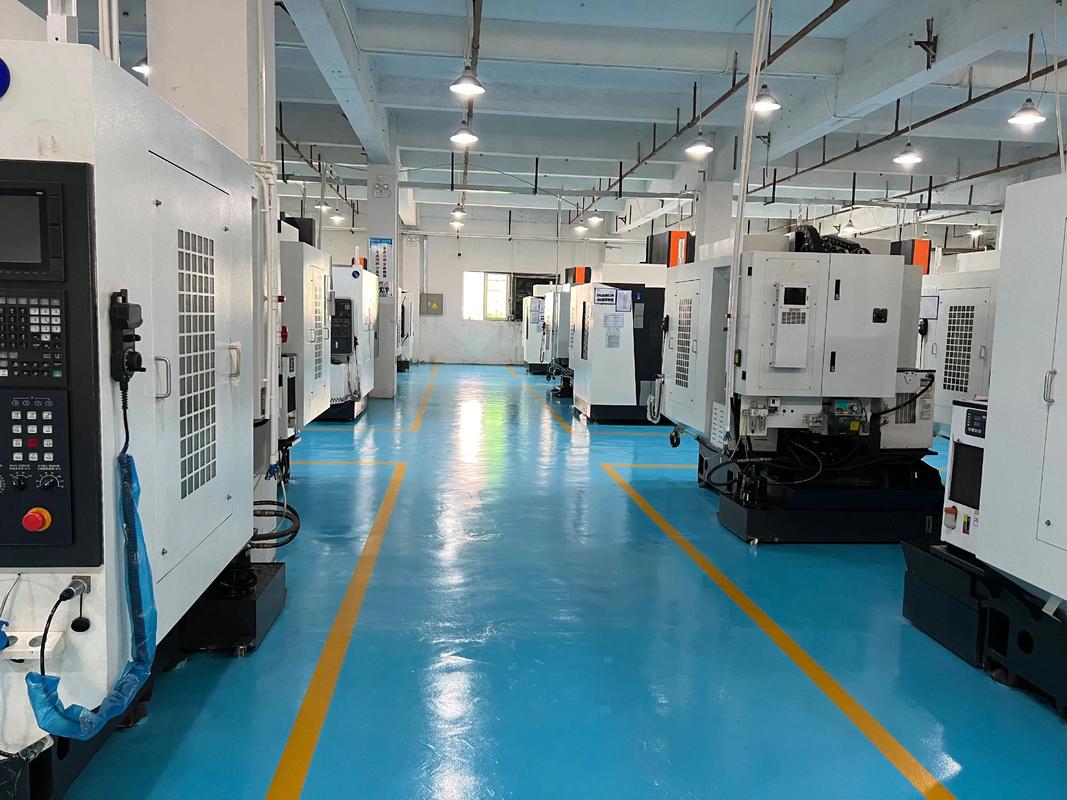
Machines 5 sides of a part in one setup, perfect for complex geometries.
Tolerance Range: ±0.005mm
Typical Use: Aerospace components, turbine blades, medical implants
CNC Turning
Rotates material to cut cylindrical, rotational parts.
Tolerance Range: ±0.007mm
Typical Use: Pins, bolts, shafts, fittings
Swiss Turning
High-precision turning for tiny, complex small parts.
Tolerance Range: ±0.003mm
Typical Use: Medical devices, electronics connectors, micro-parts
Materials Selection Guide for Custom CNC Parts
Choosing the right material is critical to your part’s performance, cost, and compliance. We work with over 50+ materials, and here are the most popular choices for our US/EU clients:
| Material | Key Benefits | Best For |
|---|---|---|
| Aluminum 6061 | Lightweight, good corrosion resistance, easy to machine | General parts, enclosures, prototypes |
| Aluminum 7075 | High strength, high fatigue resistance | Aerospace, automotive performance parts |
| Stainless Steel 304 | Good corrosion resistance, cost-effective | Food equipment, general industrial parts |
| Stainless Steel 316 | Excellent corrosion resistance, marine-grade | Medical devices, marine equipment, chemical processing |
| Titanium Grade 5 | Ultra high strength-to-weight, biocompatible | Aerospace, medical implants, racing parts |
| PEEK | Biocompatible, high temperature resistance, low weight | Medical implants, semiconductor equipment, aerospace interiors |
We also support brass, copper, tool steel, and other engineering plastics. Learn more about our material options.
Tolerance Control & Quality Assurance
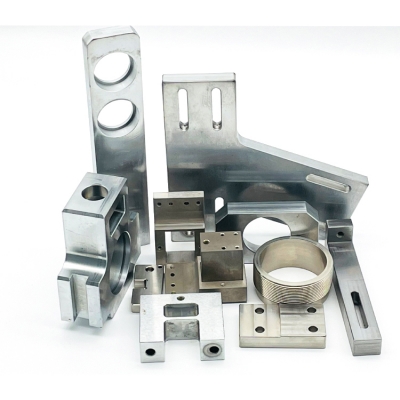
For precision parts, tight tolerances and consistent quality are non-negotiable. We follow global standards like ISO 2768 and ASME Y14.5 to ensure your parts meet your exact specifications, every time.
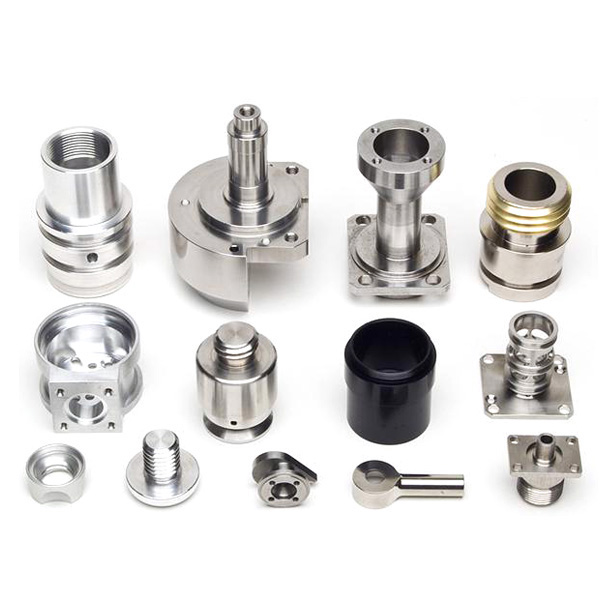
Our End-to-End Quality Process
- Incoming Material Inspection: We verify material certifications and properties before production starts, ensuring you get the exact material you ordered.
- In-Process Monitoring: Our machines use real-time sensor monitoring and SPC (Statistical Process Control) to catch variations before they become defects.
- Final CMM Inspection: We use coordinate measuring machines (CMM) to verify every critical dimension, with traceable measurement records for every batch.
- Certificate of Conformance: Every order comes with a full CoC, including material test reports and inspection data, to support your compliance requirements.
Our typical Cpk value for critical dimensions is >1.33, ensuring 99.99% of parts meet your tolerance requirements.
Solving Common Custom Part Challenges
We’ve helped hundreds of clients overcome the most common manufacturing pain points for custom precision parts:
Complex Geometries
Parts with undercuts, internal features, or organic shapes? Our 5-axis machines machine all sides in one setup, eliminating multiple setups and reducing error while delivering the exact shape you need.
Thin-Wall Parts
Thin walls can warp during machining. We use optimized fixturing, adaptive cutting parameters, and stress-relief processes to maintain part stability, even for 0.5mm thin walls.
Ultra-Tight Tolerances
For parts requiring ±0.005mm or tighter tolerances, we use temperature-controlled machining environments and high-precision tooling to ensure every dimension is perfect.
Hard-to-Machine Materials
Titanium, Inconel, or PEEK? We have specialized tooling and process parameters for these materials, ensuring we can machine them without defects or excessive tool wear.
Industry Applications
Our precision CNC parts power critical applications across a wide range of industries, each with their own unique requirements:
Aerospace
We deliver lightweight, high-strength parts that meet AS9100 standards, from turbine blades to structural brackets. Our parts help reduce aircraft weight by up to 25% while meeting ±0.01mm tolerances for critical flight components.
Automotive
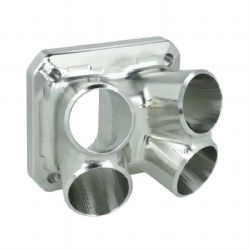
From performance racing parts to production vehicle components, we deliver consistent, reliable parts that can withstand extreme temperatures and stress. We support both prototype development and medium-volume production runs.
Medical
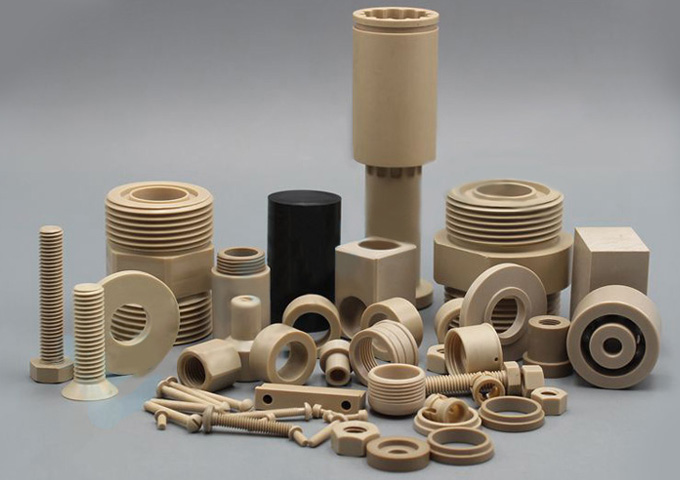
Our ISO 13485 compliant processes deliver biocompatible parts for medical devices and implants. We work with materials like titanium and PEEK, with full traceability and sterile packaging options to meet your regulatory requirements.
Electronics
We produce miniaturized, high-precision parts for semiconductors, connectors, and consumer electronics. Our Swiss turning capabilities deliver micro-parts with ±0.003mm tolerances, perfect for the latest miniaturized devices.
Client Case Studies
See how we’ve helped our clients solve their manufacturing challenges:
Aerospace Titanium Bracket
Challenge: A US aerospace client needed a complex titanium bracket with tight tolerances, strict weight requirements, and AS9100 compliance. Their previous supplier couldn’t meet the tolerance requirements and had 20% defect rates.
Our Solution: We used 5-axis CNC machining to machine the part in one setup, eliminating multiple setups. Our engineering team provided DFM feedback to optimize the design for manufacturability, reducing material waste.
Results:
- Reduced part weight by 25% while maintaining strength
- Achieved 100% tolerance compliance for ±0.01mm critical dimensions
- Cut production cost by 22% for the client
- Delivered 100% on-time, with full AS9100 documentation
Medical PEEK Implant Component
Challenge: A European medical device client needed a PEEK implant component with micro-tolerances, biocompatibility, and ISO 13485 compliance. They needed 500 units per month, with full batch traceability.
Our Solution: We used precision Swiss turning to machine the micro-features, with temperature-controlled processing to avoid material deformation. We implemented clean-room packaging to meet sterile requirements.
Results:
- Achieved ±0.008mm tolerances for critical implant dimensions
- 100% batch consistency, with zero defects over 12 months of production
- Reduced lead time from 6 weeks to 10 days
- Provided full traceability and compliance documentation for FDA audit
DFM Tips to Reduce Your Part Cost
Small design changes can make a big difference in your part cost and lead time. Here are our top tips to optimize your design for manufacturability:
Avoid tight tolerances unless they are functionally necessary – they add significant cost and lead time.
Use standard tool radius for internal corners (minimum 0.5mm) to avoid special tooling costs.
Standardize hole sizes to standard drill bits to reduce tool change time.
Keep wall thickness above 0.5mm to avoid warping and machining issues.
Avoid deep, narrow cavities – they require special long tools and increase machining time.
Remove unnecessary features – every extra surface adds machining time and cost.
When you upload your CAD file, our engineering team will provide free DFM feedback to help you optimize your design and save cost.
Our Capabilities Snapshot
We have the equipment and expertise to handle any custom CNC project, from prototypes to large production runs:
| Equipment Type | Brands | Work Range | Precision |
|---|---|---|---|
| 5-Axis Machining Centers | Makino, DMG Mori | 650 x 650 x 500mm | ±0.005mm |
| 3/4-Axis Milling | Haas, Fanuc | 1500 x 800 x 700mm | ±0.01mm |
| CNC Turning | Mazak, Okuma | Ø400 x 1000mm | ±0.007mm |
| Swiss Turning | Tsugami, Star | Ø32 x 200mm | ±0.003mm |
| CMM Inspection | Zeiss | 900 x 1200 x 600mm | ±0.001mm |
We support volumes from 1-piece prototypes up to 100,000+ unit production runs, with flexible lead times to meet your project timeline.
Compliance & Supply Chain Reliability
For global OEMs, compliance and supply chain reliability are critical. We’ve built our processes to meet the strictest requirements for US and European markets:
Certifications
We are certified to ISO 9001, AS9100, ISO 13485, and IATF 16949, ensuring our processes meet global quality standards.
Regulatory Compliance
All our materials and processes are compliant with RoHS, REACH, and ITAR requirements, so you can import your parts without hassle.
IP Protection
We sign NDAs for every project, and we never share your design files or part details with third parties, protecting your intellectual property.
Reliable Logistics
We work with trusted global logistics partners, with DDP shipping options to US and EU, so you get your parts door-to-door without customs hassle.
Our typical lead times: 3-5 days for prototypes, 10-15 days for production runs, with expedited options available for urgent projects.
Frequently Asked Questions
What tolerances can you hold on aluminum vs titanium?
For aluminum, we can hold tolerances as tight as ±0.005mm for standard parts, and ±0.003mm for critical features. For titanium, we can achieve ±0.007mm standard, with ±0.005mm for critical dimensions, thanks to our specialized machining processes.
How do you ensure batch consistency for production runs?
We use Statistical Process Control (SPC) to monitor our processes in real time, and we inspect first articles and random samples from every batch. We also use automated tool wear compensation to ensure consistency across thousands of parts, with a typical Cpk of >1.33 for critical dimensions.
Do you support ITAR/RoHS for US/EU markets?
Yes, we are ITAR registered, and all our materials and processes are fully compliant with RoHS and REACH regulations. We can provide all the necessary documentation to support your import and compliance requirements for US and European markets.
What are your lead times for prototypes vs production?
For prototypes, our standard lead time is 3-5 business days, with expedited 1-2 day options available. For production runs, lead times depend on part complexity and volume, but typically range from 10-15 business days for most projects.
Can you work with my custom material?
Yes, we work with a wide range of materials beyond our standard list. If you have a specific material requirement, just let us know, and we can source it or work with material you provide, as long as it’s machinable.
Do you offer surface treatment options?
Yes, we offer a full range of surface treatments, including anodizing, powder coating, passivation, polishing, plating, and more. We can match your specific surface finish requirements, including Ra values for precision parts.
What file formats do you accept for CAD files?
We accept all common CAD file formats, including STEP, IGES, STL, SolidWorks, Pro/E, AutoCAD, and more. Just upload your file, and we can work with it directly.
Ready to Start Your Custom CNC Project?
Upload your CAD files today for free DFM feedback and a detailed, no-obligation quote. Our engineering team will review your design and get back to you within 24 hours.
Served 100+ international OEMs across US and Europe | 20+ Years of Precision Manufacturing Experience