Precision CNC Machining Services | Custom High-Quality Parts Manufacturing
Precision CNC machining is the manufacturing backbone for demanding industries — but only when delivered with the right balance of tight tolerances, repeatable quality, and fast turnaround. Whether you need custom prototypes or volume production, Goldcattle CNC machining and manufacturing services combine 3-axis, 4-axis, and 5-axis capabilities with a rigorous quality management system to produce parts that consistently meet your specifications.
CNC Machining Capabilities
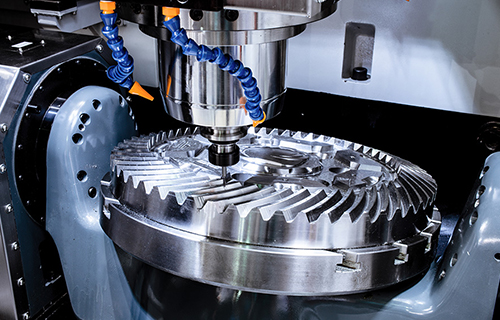
CNC Machines & Capacity
| Machine Type | What It Does | Ideal For |
|---|---|---|
| 3-Axis CNC Milling | Moves along X, Y, Z | Flat surfaces, brackets, covers |
| 4-Axis CNC Milling | Adds A-axis rotation | Side holes, angled features |
| 5-Axis CNC Milling | Simultaneous 5-axis movement | Complex geometries, aerospace parts |
| CNC Turning / Lathe | Rotates workpiece for cutting | Shafts, bushings, connectors |
| CNC Drilling & Tapping | Automated hole-making | Multi-hole patterns, threaded holes |
| Wire & Sinker EDM | Electrical discharge machining | Hardened steel, intricate shapes |
Maximum workpiece size up to 1500×800×500mm, supporting large format components.
Machining Tolerances We Hold
| Tolerance Level | Range | Typical Application |
|---|---|---|
| Standard | ±0.05 mm | Non-critical structural parts |
| Precision | ±0.01 mm | Fitting surfaces, mating parts |
| High Precision | ±0.005 mm | Aerospace, medical devices |
| Ultra-Precision | ±0.002–0.003 mm | Optics, micro-machined parts |
Surface Finishing Capabilities
| Finish Type | Typical Ra Value | When to Use |
|---|---|---|
| As-Machined | Ra 0.8–3.2 μm | Internal functional surfaces |
| Fine Machined / Ground | Ra 0.4–0.8 μm | Sealing surfaces, bearing seats |
| Bead Blasted | Ra 3.2–6.3 μm | Cosmetic matte appearance |
| Anodized / Plating | Varies | Corrosion resistance + color |
Materials We Machine
| Category | Specific Grades |
|---|---|
| Aluminum Alloys | 6061, 7075, 5052, 5083, 2024 |
| Stainless Steel | 303, 304, 316, 17-4 PH |
| Carbon & Alloy Steel | 1018, 1045, 4140, 4340, A2, D2 |
| Titanium Alloys | Ti-6Al-4V (Grade 5) |
| Brass & Copper | C360, C110 |
| Engineering Plastics | PEEK, PTFE, POM, Nylon, ABS, PC |
Full material traceability available for all aerospace and medical grade materials.
We process virtually all engineering-grade metals and high-performance plastics — from single prototypes in 6061 aluminum to production runs of 50,000 parts per month in 316 stainless steel — with a controlled supply chain ensuring full material traceability.
Quality Control & Inspection System
Precision without verification is just a claim. Every part we machine goes through a systematic quality control process designed to catch deviations before they reach your receiving dock.
| Stage | Method | Tools |
|---|---|---|
| Incoming material | Mill certificate review; hardness check | Spectrometer, hardness tester |
| In-process inspection | Sampling at defined intervals | Micrometers, calipers, bore gauges |
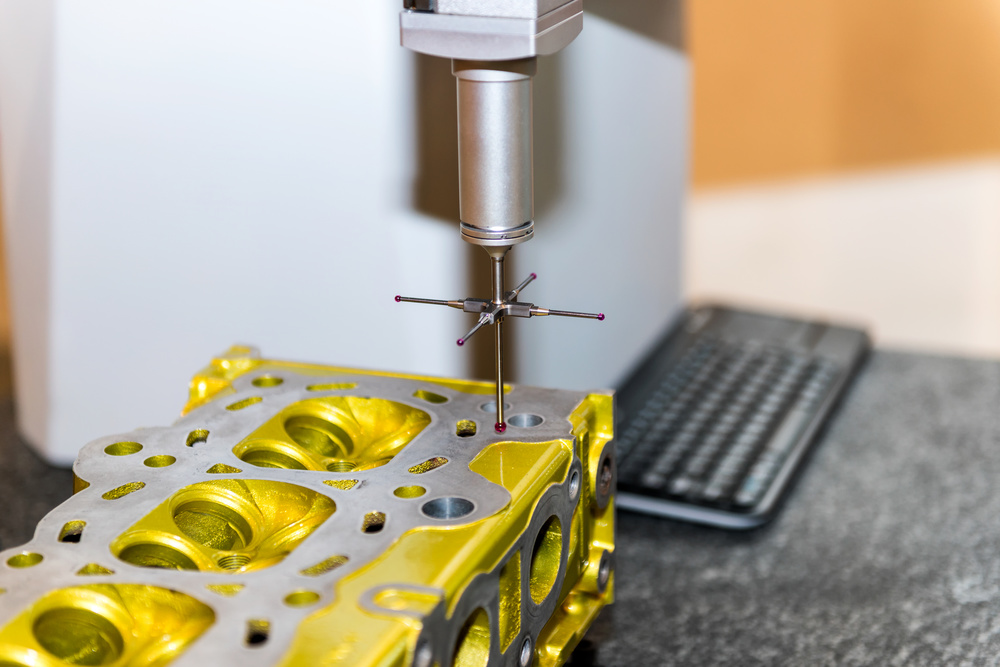
| First-article inspection | Full dimensional check | CMM (Coordinate Measuring Machine) |
| Final inspection | 100% or AQL sampling | CMM, surface roughness tester |
Process Transparency — How a CNC Machining Order Works
From receiving your CAD file to shipping your finished precision parts, every CNC machining order at Goldcattle follows a transparent engineering workflow designed to eliminate costly surprises.
DFM Review & Quoting
We analyze your CAD for manufacturability, flagging over-tolerance areas that drive up cost. Quote delivered typically within 24 hours.
CAM Programming & Fixturing
Toolpaths are optimized for your material, with custom soft jaws designed to prevent thin-wall deformation.
Machining Execution
Parts are machined on the optimal machine type, with grade-specific cutting tools to minimize wear and maintain stability.
Deburring & Finishing
All parts get edge break and deburring as standard, with specified surface finishes applied per your requirements.
Inspection & Documentation
Full dimensional inspection with CMM, with inspection reports documenting all critical dimensions.
Packing & Shipping
Parts are cleaned, preserved, and packed with protective packaging to ensure they arrive in perfect condition.
Throughout this process, you’re always in the loop. We communicate any issues found during DFM before machining starts — so you’re never surprised by a deviation you didn’t approve.
Common CNC Machining Challenges and Our Solutions
| Challenge | Root Cause | Quality Impact | Our Solution |
|---|---|---|---|
| Warping / Distortion | Internal stress release during material removal | Out-of-tolerance flatness; scrapped parts | Roughing-finishing with stress relief; custom vacuum fixtures |
| Burr Formation | Tool exit; material ductility | Assembly interference; cosmetic rejection | Dedicated finishing tools; edge break; vibratory deburring |
| Chatter / Poor Surface Finish | Tool overhang; incorrect speeds/feeds | Visible tool marks; stress risers | Optimized tool holders; validated cutting parameters |
| Tolerance Stack-up | Multiple setups; fixturing errors | Features out of position; inspection failure | 5-axis single-setup machining; GD&T datum review |
| Thin-wall deflection | Clamping/cutting force on thin features | Wall thickness variation beyond tolerance | Custom soft jaws; low-force fixturing; optimized step-over |
| Tool wear on hard materials | Titanium/steel accelerates tool degradation | Gradual dimensional drift; surface issues | Tool wear monitoring; grade-specific carbide tooling |
Effective defect prevention in CNC machining requires addressing root causes proactively — not just inspecting problems after they occur. Our engineering-first approach identifies potential issues during DFM review before any metal is cut, avoiding rework and ensuring consistently high-quality results from first article to final shipment.
CNC Machining vs Other Manufacturing Methods
Choosing the right manufacturing method for your project is critical to balancing cost, lead time, and quality. Here’s how CNC compares to the most common alternatives:
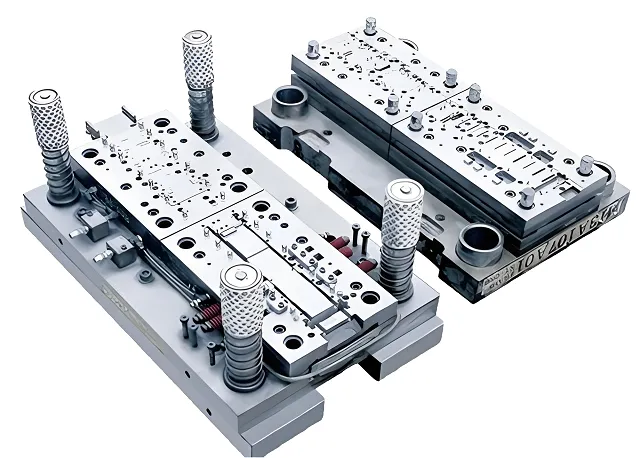
CNC vs Die Casting
| Tolerance | CNC: ±0.01mm | Die Cast: ±0.05-0.1mm |
| Setup cost | CNC: Low | Die Cast: High ($xxk mold) |
| Lead time | CNC: Days | Die Cast: 4-12 weeks |
| Ideal volume | CNC: 1-10k | Die Cast: >5k |
CNC vs 3D Printing
| Material properties | CNC: Full wrought | 3D Print: Near-wrought |
| Surface finish | CNC: Ra 0.4μm | 3D Print: Ra 6-15μm |
| Precision | CNC: ±0.01mm | 3D Print: ±0.1-0.2mm |
| Best for | CNC: Functional parts | 3D Print: Complex lattices |
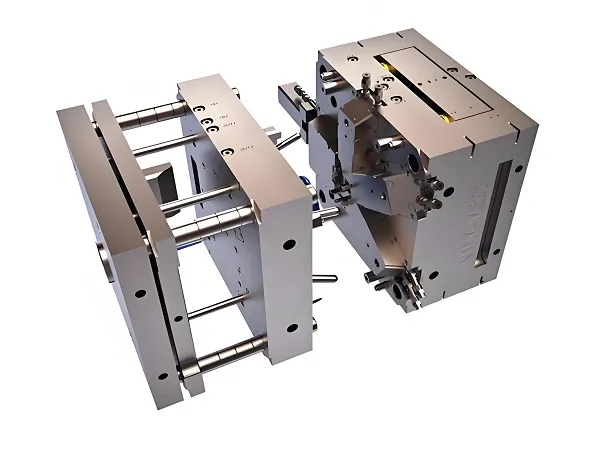
CNC vs Injection Molding
| Materials | CNC: Metals + Plastics | IM: Primarily plastics |
| Setup cost | CNC: Low | IM: High ($xxk mold) |
| Per-part cost | CNC: Higher | IM: Very low at volume |
| Ideal volume | CNC: <10k | IM: >10k |
If you need fewer than 100–500 parts with tight tolerances and immediate turnaround, CNC machining is almost always the most cost-effective choice. For quantities above 10,000 and tolerances above ±0.05 mm, die casting or injection molding may offer lower per-part cost — but with significantly higher upfront investment and longer lead time. Our team can advise on the optimal manufacturing strategy for your specific project.
Applications & Industries Served
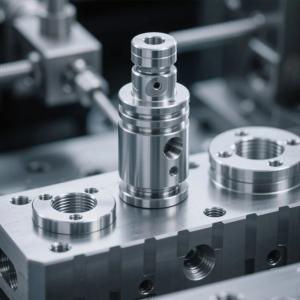
| Industry | Typical Parts | Critical Requirements |
|---|---|---|
| Aerospace | Engine brackets, structural components | ±0.01mm tolerances; material traceability |
| Automotive | Engine parts, chassis components | Process capability; cost-efficient volume |
| Medical Devices | Implants, surgical instruments, housings | Biocompatible materials; Ra ≤0.4μm finish |
| Electronics | Heat sinks, RF enclosures, connectors | Thin-wall capability; thermal management |
| Industrial Equipment | Shafts, bearings, gear blanks, pumps | Material strength; tight-fit tolerances |
| Mold Making | Mold bases, core inserts, electrodes | Tool steel machining; tight flatness |
CNC machining is the enabling manufacturing process behind critical components across today’s most demanding industries. With modern CNC machine tools forming the backbone of precision manufacturing — enabling high-accuracy, scalable, and digitally connected production — parts are produced for a wide range of sectors including aerospace, medical, automotive, and electronics.
Case Study — High-Precision Aerospace Housing
Project: Aerospace Aluminum Housing with Internal Channels
Industry: Aerospace
Material: 6061-T6 Aluminum
Challenge: The housing required positional tolerance of ±0.01 mm across multiple mounting holes and flatness of 0.02 mm across a 200 mm sealing surface. Previous supplier was unable to hold flatness after machining, resulting in 12% rejection rate.
Our Solution:
- Performed DFM analysis identifying residual stress as the root cause of post-machining warping
- Introduced a stress-relief operation between roughing and finishing passes
- Designed a custom vacuum fixture for the finishing operation, eliminating clamping-induced deformation
- Used in-process probing to verify datum reference before finish cuts
Project Results:
- Flatness achieved: 0.015 mm across the sealing surface (25% better than spec)
- Positional tolerance on mounting holes: held to ±0.008 mm
- First-article yield: 100%
- Production rejection rate: <0.5% across the entire order
This project demonstrates our approach to precision machining challenges — identify the root cause, engineer the solution before cutting metal, and verify with data.
Why Precision CNC Machining Matters — Cost of Getting It Wrong
When CNC machined parts are out of tolerance, the cost goes far beyond scrapping a single part:
Assembly failure
Line stoppages, contract penalties, delayed shipments
Field failure
Warranty claims, reputational damage
Rework cost
3–10× the original machining cost
Supply chain disruption
Weeks of delay waiting for replacements
Compliance risk
Audit findings, certification consequences
In short, precision isn’t just a “nice to have.” It is the measurable difference between a supplier who reduces your risk and one who adds to it.
How to Get a Quote & Start Your Project
Getting a quote for your CNC machining project is straightforward:
Prepare your CAD files (STEP, IGES, SolidWorks)
Upload for our free DFM review
Receive your quote within 24 hours
Approve, and we start machining
Frequently Asked Questions
What is CNC machining and manufacturing?
CNC (Computer Numerical Control) machining is a subtractive manufacturing process where computer-controlled cutting tools remove material from a solid workpiece to produce a finished part with precise dimensions, tight tolerances, and repeatable quality — used for both prototyping and production.
What precision can CNC machining achieve?
Standard CNC machining achieves ±0.05 mm, precision machining achieves ±0.01 mm, and high-precision machining can reach ±0.005 mm or tighter. Surface finish as-machined typically ranges from Ra 0.4 μm to Ra 3.2 μm depending on material, tooling, and process parameters.
What materials can CNC machining process?
CNC machining can process virtually all engineering metals — aluminum (6061, 7075), stainless steel (303, 304, 316), carbon steel, alloy steel, titanium, brass, copper — and high-performance plastics such as PEEK, PTFE, POM, and nylon.
Is CNC machining suitable for mass production?
CNC machining is ideal for low-to-medium volume production (typically 1 to 50,000 parts). For very high volumes (>50,000 parts), die casting or injection molding may offer lower per-part cost — but require upfront tooling investment and longer lead time.
What is the difference between 3-axis and 5-axis CNC machining?
3-axis machining moves the tool in X, Y, Z — suitable for parts with features on one face. 5-axis machining adds two rotational axes, enabling the tool to access multiple faces of the part in a single setup — essential for complex geometry, angled features, and reducing fixture changes. 5-axis machining can reduce setup time significantly and improve accuracy by eliminating re-fixturing errors.
How do you ensure quality in CNC machining?
Quality is ensured through systematic DFM review before machining, programmed toolpaths eliminating operator variability, in-process inspection with tool wear monitoring, and final CMM dimensional verification. We work to ISO 2768 tolerances and GD&T for critical features, backed by ISO 9001 and ISO 13485 certification.
What is the typical lead time for CNC machining services?
Typical lead time is 5–15 business days for standard parts, depending on complexity, material availability, and order volume. Expedited options are available. We provide a confirmed delivery date at the quoting stage.
What CAD file formats do you accept?
We accept STEP (.stp, .step), IGES (.igs), SolidWorks (.sldprt), Parasolid (.x_t), and most standard 3D CAD formats. 2D drawings in PDF with GD&T callouts are strongly recommended for critical tolerance specifications.
Ready to get started?
Upload your CAD file today and get a quote within 24 hours, with a free DFM analysis included.
🛠️ Aluminum, Steel, Titanium, Plastics📋 ISO 9001 / ISO 13485
⏱️ 5-15 Day Lead Time📩 24h Quote + Free DFM