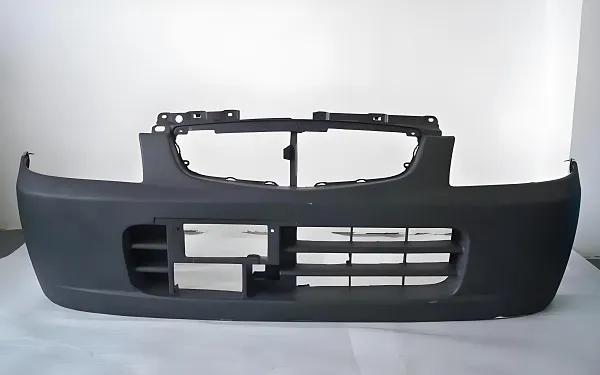
A comprehensive engineering and procurement guide for precision CNC machined plastic components
What Are CNC Plastic Machining Parts?
CNC plastic machining parts are precision components manufactured through computer numerical control (CNC) subtractive manufacturing processes. This technology involves removing material from solid plastic blocks using specialized cutting tools to create complex geometries with tight tolerances.
The process is ideal for producing high-quality prototypes and low-volume production parts across various industries. CNC plastic machining offers exceptional accuracy, repeatability, and the ability to work with a wide range of engineering plastics.
Key Characteristics:
- Subtractive manufacturing process
- Precision milling and turning operations
- Tight tolerance capabilities (±0.001 inches typical)
- Suitable for prototypes and low-volume production
- Compatible with diverse engineering plastics
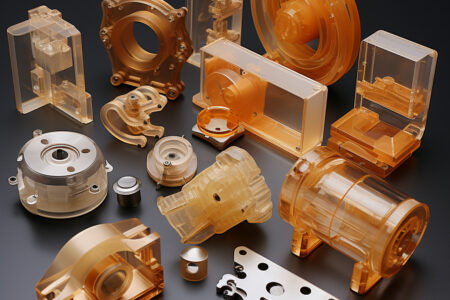
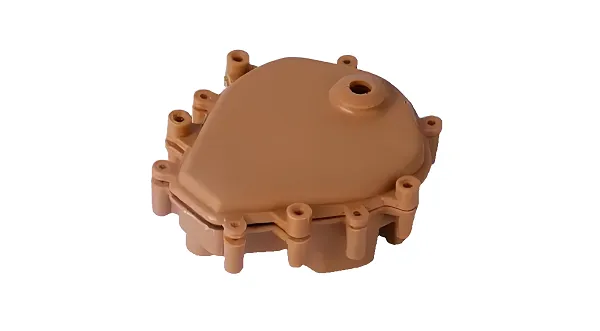
Precision CNC machined plastic components showcasing complex geometries
Common Plastic Materials for CNC Machining
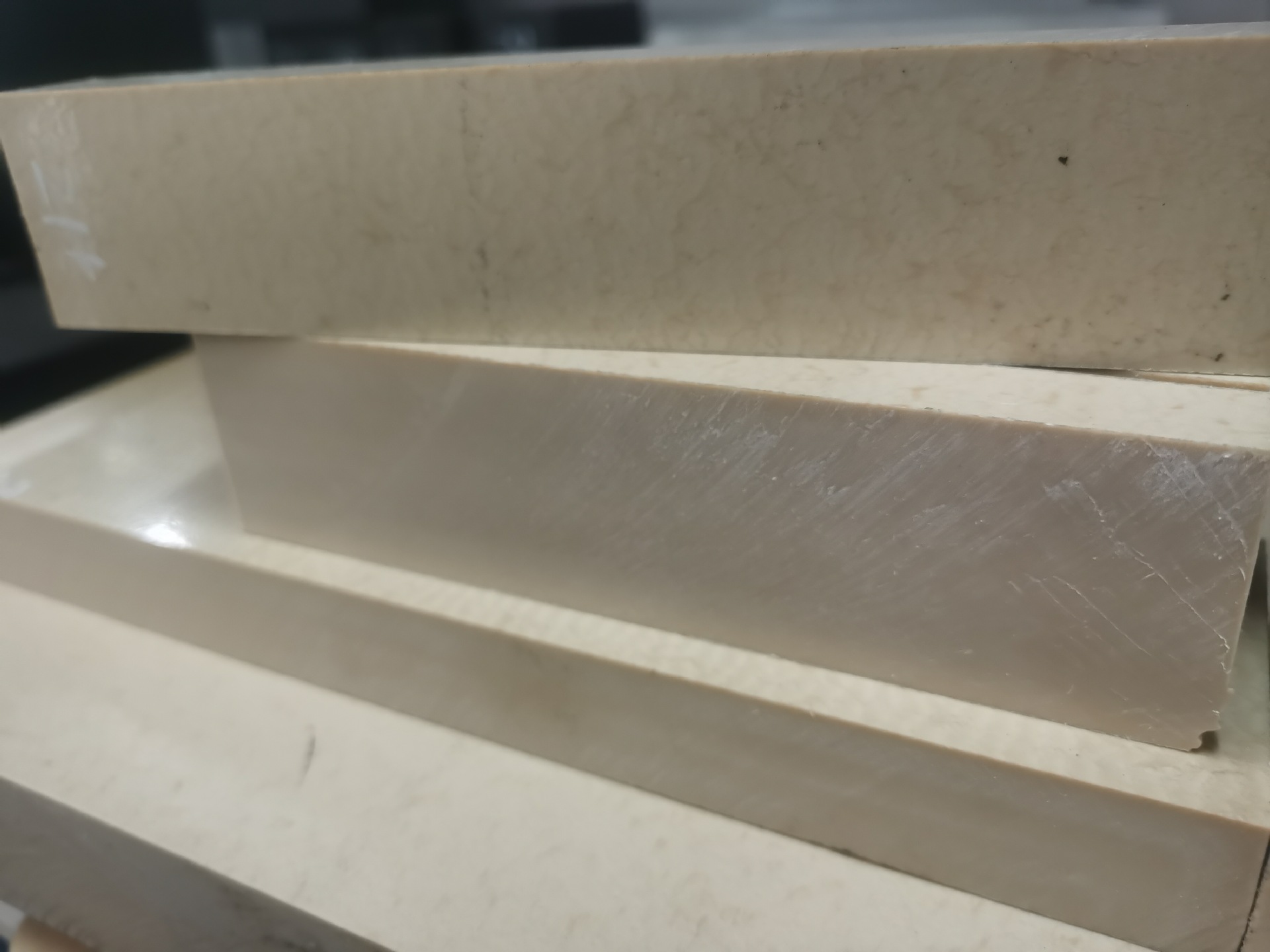
PEEK plastic sheets ready for CNC machining operations
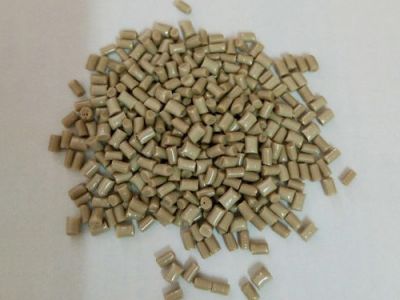
PEEK resin pellets used in manufacturing high-performance plastic components
| Material | Key Properties | Temperature Resistance | Common Applications |
|---|---|---|---|
| POM / Delrin | Low friction, high precision, excellent dimensional stability | Up to 100°C (212°F) | Gears, bearings, bushings, precision mechanical parts |
| Nylon (PA) | High strength, wear resistant, good impact resistance | Up to 120°C (248°F) | Mechanical parts, gears, sprockets, electrical insulators |
| PEEK | High temperature resistance, chemical stability, biocompatible | Up to 260°C (500°F) | Aerospace components, medical devices, semiconductor equipment |
| PTFE | Ultra-low friction, chemical inertness, non-stick properties | Up to 260°C (500°F) | Seals, gaskets, bearings, chemical processing equipment |
| ABS | Low cost, easy to machine, good impact resistance | Up to 80°C (176°F) | Housings, enclosures, consumer electronics, prototypes |
| Acrylic | Transparent, good optical clarity, easy to polish | Up to 90°C (194°F) | Optical components, displays, signage, protective shields |
Material Selection Guide
When selecting materials for CNC plastic machining, consider the following factors:
- Temperature requirements: Choose materials that can withstand operating temperatures
- Chemical exposure: Select chemically resistant plastics for harsh environments
- Mechanical loads: Match material strength to application requirements
- Cost considerations: Balance performance needs with budget constraints
- Regulatory compliance: Ensure materials meet industry standards (FDA, UL, etc.)
CNC Plastic Machining Process
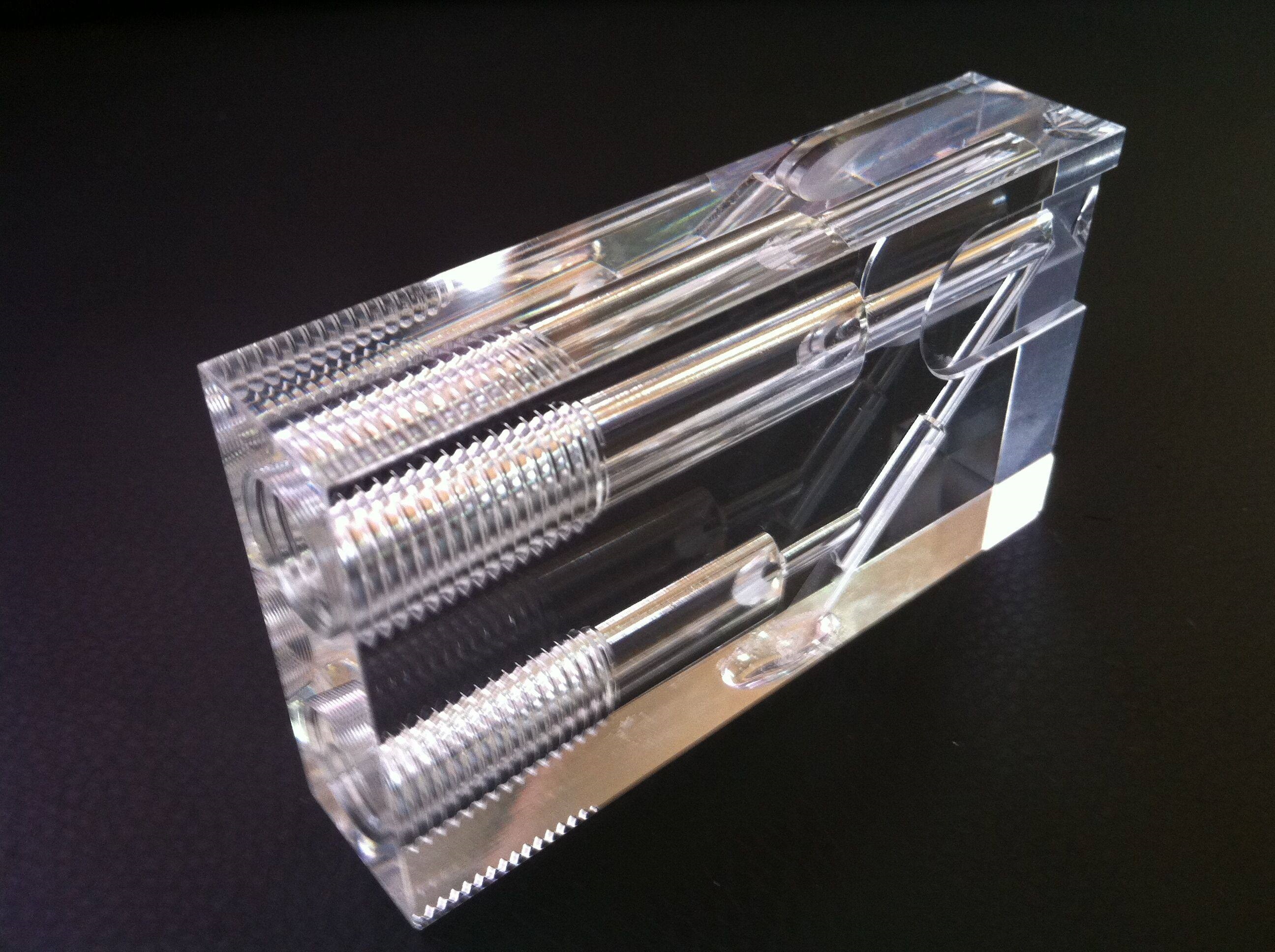
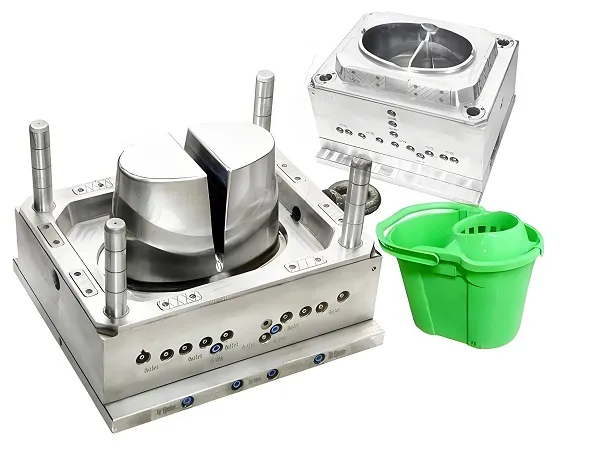
Complex CNC machined plastic components requiring precise manufacturing processes
1. Design & Engineering
The process begins with detailed CAD design and engineering analysis. Engineers create 3D models and specify material requirements, tolerances, and surface finish requirements.
Key considerations include draft angles, wall thickness, and feature accessibility for machining tools.
2. CAM Programming
Computer-aided manufacturing (CAM) software generates toolpaths based on the CAD model. The software determines optimal cutting strategies, tool selection, and machining parameters.
Simulation tools verify toolpaths to avoid collisions and ensure efficient material removal.
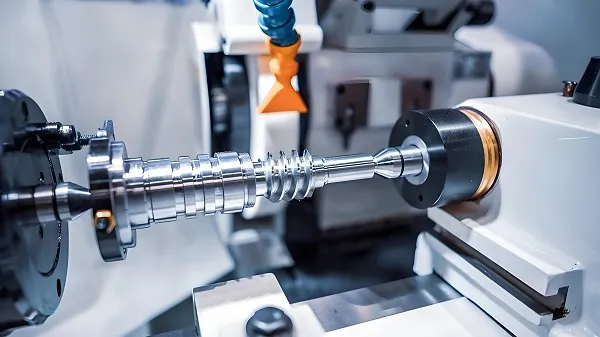
3. Milling & Turning
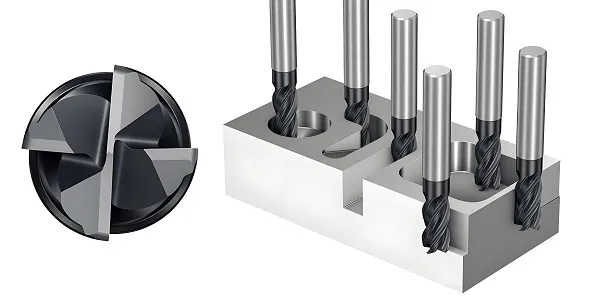
CNC machines perform precise cutting operations using specialized tools for plastic materials. Milling creates complex geometries while turning produces cylindrical components.
Specialized cutting parameters are used to minimize heat generation and prevent material deformation.
4. Finishing Operations
Secondary operations include deburring, polishing, sandblasting, and surface treatments. These processes improve surface quality and prepare parts for assembly or use.
Vapor polishing is often used for transparent plastics to achieve optical clarity.
5. Quality Inspection
Precision measurement tools verify dimensional accuracy and quality. CMM (Coordinate Measuring Machine) ensures parts meet specified tolerances.
Visual inspection checks for surface defects and ensures compliance with quality standards.
6. Packaging & Delivery
Finished parts are carefully packaged to prevent damage during shipping. Protective materials ensure parts arrive in perfect condition.
Traceability documentation is included for quality control and regulatory compliance.
Machining Parameters for Plastics
Optimal cutting parameters vary by material type. Here are general guidelines (**For reference only**):
| Material | Cutting Speed (m/min) | Feed Rate (mm/tooth) | Depth of Cut (mm) |
|---|---|---|---|
| POM | 150-250 | 0.1-0.2 | 1-3 |
| Nylon | 120-200 | 0.15-0.25 | 1-4 |
| PEEK | 80-150 | 0.08-0.15 | 0.5-2 |
| PTFE | 100-180 | 0.1-0.2 | 1-3 |
Applications of CNC Plastic Parts
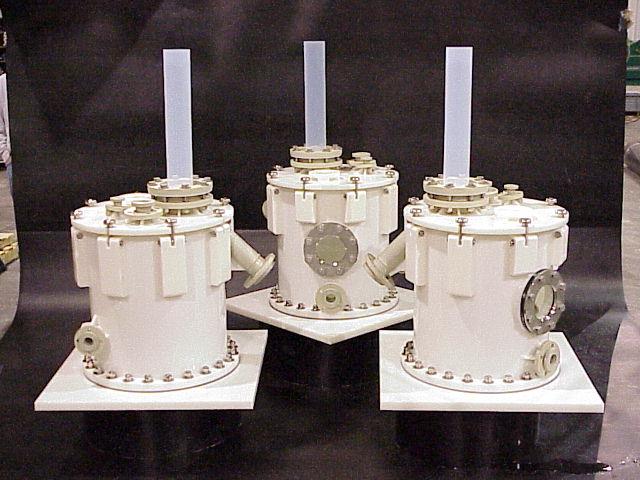
Industrial plastic components used in demanding applications requiring precision and durability
Industrial Automation
- Guides and rails: Low friction surfaces for smooth linear motion
- Wear pads: Protect metal components from friction and wear
- Jigs and fixtures: Precision tooling for assembly processes
- Sensor housings: Protect sensitive electronics from contaminants
- Gear components: Quiet operation with excellent wear resistance
Plastic components reduce weight, minimize noise, and provide excellent chemical resistance in industrial environments.
Medical Devices
- Surgical tools: Biocompatible materials for medical procedures
- Prosthetics: Lightweight, durable components for mobility aids
- Diagnostic equipment: Precision components for accurate measurements
- Implants: PEEK components used in orthopedic applications
- Device housings: Sterilizable enclosures for medical instruments
Medical grade plastics meet strict biocompatibility and sterilization requirements.
Electronics & Semiconductors
- Housings and enclosures: Electrical insulation and EMI shielding
- Insulation parts: Prevent electrical conduction between components
- Cable guides: Protect wiring and organize cable management
- Wafer handling tools: Contamination-free semiconductor processing
- Test sockets: Precision interfaces for electronic testing
Plastics provide excellent electrical properties and chemical resistance for electronics manufacturing.
Aerospace & Automotive
- Interior components: Lightweight materials reduce overall weight
- Electrical connectors: Reliable performance in extreme conditions
- Fluid system components: Chemical resistance for fuel and hydraulic systems
- Thermal management parts: Heat dissipation and insulation
- Aerospace structural components: High strength-to-weight ratio
Advanced engineering plastics meet stringent aerospace and automotive industry standards.
Advantages of CNC Plastic Machining
Lightweight
Plastic components are significantly lighter than metal alternatives, reducing overall system weight and improving energy efficiency.
Weight reduction: 50-80% compared to metal components
Corrosion Resistance
Engineering plastics resist chemical attack and environmental degradation, making them ideal for harsh operating conditions.
Excellent resistance to acids, bases, and solvents
Electrical Insulation
Plastics provide excellent electrical insulation properties, preventing current leakage and ensuring safety in electronic applications.
Dielectric strength: 10-30 kV/mm
Fast Prototyping
CNC machining allows rapid production of functional prototypes, enabling quick design validation and iteration.
Prototype lead time: 1-3 days typical
Low Friction
Many plastics have inherent low friction properties, reducing wear and extending component life in moving applications.
Coefficient of friction: 0.04-0.3 (depending on material)
Cost Effective
For low to medium volume production, CNC machining is often more cost-effective than injection molding due to lower tooling costs.
No expensive molds required
Performance Comparison Data (**For reference only**)
| Property | Plastic (PEEK) | Aluminum (6061-T6) | Steel (1018) |
|---|---|---|---|
| Density (g/cm³) | 1.3 | 2.7 | 7.8 |
| Tensile Strength (MPa) | 90 | 290 | 440 |
| Modulus of Elasticity (GPa) | 3.6 | 69 | 200 |
| Coefficient of Friction | 0.3 | 0.45 | 0.5 |
| Thermal Conductivity (W/m·K) | 0.25 | 167 | 50 |
CNC Plastic vs Injection Molding
Process Comparison
| Factor | CNC Machining | Injection Molding |
|---|---|---|
| Production Volume | Prototypes to 10,000 parts | 10,000+ parts (mass production) |
| Lead Time | 1-5 days | 2-6 weeks (including mold making) |
| Tooling Cost | Low (no molds required) | High ($5,000-$50,000+ per mold) |
| Part Cost | Higher per part | Lower per part at high volumes |
| Design Complexity | Excellent for complex geometries | Limited by mold design constraints |
| Tolerance Capability | ±0.001 inches (0.025mm) | ±0.002-0.005 inches (0.05-0.127mm) |
| Material Selection | Wide range of engineering plastics | Limited to moldable resins |
| Design Changes | Easy and low cost | Expensive and time-consuming |
When to Choose CNC Machining
- Prototyping and small production runs
- Complex geometries with tight tolerances
- High-performance engineering plastics
- Quick turnaround requirements
- Design iterations and modifications
- Low volume production (under 10,000 parts)
When to Choose Injection Molding
- Mass production (10,000+ parts)
- Simple to moderately complex designs
- Lower cost per part requirements
- Standard thermoplastic materials
- Long production runs
- Established designs with no changes expected
Design Tips for CNC Plastic Parts
Wall Thickness
Maintain consistent wall thickness throughout the part to prevent warping and ensure uniform material removal.
Recommended minimum: 0.8mm (0.031 inches)
Recommended maximum: 6mm (0.236 inches)
Tolerances
Specify appropriate tolerances based on functional requirements. Tighter tolerances increase cost and production time.
Standard tolerance: ±0.1mm (±0.004 inches)
Precision tolerance: ±0.025mm (±0.001 inches)
Heat Deformation
Consider thermal expansion properties when designing parts that will experience temperature changes.
Use proper cutting parameters to minimize heat generation during machining.
Surface Finishing
Specify surface finish requirements based on application needs. Different finishing processes are available.
Ra 0.8μm: Standard machining finish
Ra 0.2μm: Polished finish
Tool Accessibility
Ensure all features are accessible to machining tools. Avoid deep internal features that require special tools.
Consider tool diameter when designing internal cavities and holes.
Draft Angles
Include draft angles on vertical surfaces to facilitate part removal from fixtures and improve machining efficiency.
Recommended draft angle: 1-3 degrees
Design Guidelines Summary
- Maintain uniform wall thickness
- Use appropriate tolerances
- Consider thermal expansion
- Specify surface finishes
- Ensure tool accessibility
- Include draft angles
- Avoid sharp corners
- Use radii for stress relief
How to Choose the Right Plastic Material
Material Selection Decision Table
| Requirement | Recommended Material | Alternative Materials |
|---|---|---|
| High Temperature Resistance | PEEK, PTFE | PEI, PPS |
| Low Friction | POM (Delrin), PTFE | UHMWPE, Nylon |
| Transparency | Acrylic, Polycarbonate | PETG, SAN |
| Chemical Resistance | PTFE, PEEK | PVDF, ETFE |
| High Strength | PEEK, Nylon | Polycarbonate, POM |
| Biocompatibility | PEEK, Medical Grade Nylon | POM, Polycarbonate |
| Electrical Insulation | PTFE, POM | PVC, Epoxy |
| Low Cost | ABS, Acrylic | PVC, Polypropylene |
Material Selection Factors
- Operating environment: Temperature, chemicals, humidity
- Mechanical loads: Tensile, compressive, impact forces
- Electrical requirements: Insulation, conductivity, EMI shielding
- Regulatory compliance: FDA, UL, RoHS, REACH
- Cost considerations: Material cost, machining complexity
- Availability: Lead time, minimum order quantities
Testing & Validation
- Mechanical testing: Tensile strength, impact resistance
- Environmental testing: Temperature cycling, humidity exposure
- Chemical testing: Resistance to solvents and chemicals
- Electrical testing: Dielectric strength, insulation resistance
- Durability testing: Wear resistance, fatigue life
- Regulatory testing: Biocompatibility, flame retardancy
CNC Plastic Machining Cost Factors
Material Cost
Material costs vary significantly based on type and quality. Engineering plastics like PEEK can be 5-10 times more expensive than standard plastics like ABS.
Cost range: $5-$50 per kg (**For reference only**)
Machining Time
Complex parts with intricate geometries require more machining time, increasing overall cost. Optimizing designs can reduce machining time.
Typical rate: $80-$150 per hour (**For reference only**)
Tolerance Requirements
Tighter tolerances require more precise machining and additional inspection steps, increasing production costs.
Standard tolerances are more cost-effective than precision tolerances.
Surface Finishing
Special surface finishes like polishing, sandblasting, or vapor polishing add additional cost and production time.
Finishing cost: $5-$50 per part (**For reference only**)
Quantity
Larger production quantities typically reduce per-part costs due to setup time amortization and material volume discounts.
Volume discounts apply for quantities over 100 parts.
Secondary Operations
Additional processes like assembly, bonding, or adding hardware increase overall part cost.
Each secondary operation adds $1-$20 per part (**For reference only**)
Cost Reduction Strategies
- Use standard tolerances where possible
- Optimize designs for machining efficiency
- Select cost-effective materials
- Minimize complex features
- Combine multiple parts into one design
- Order in larger quantities for volume discounts
- Avoid unnecessary surface finishes
- Use standard tool sizes
How to Choose a CNC Plastic Machining Supplier
Key Selection Criteria
- ISO certification: ISO 9001 quality management system
- Tolerance capability: Ability to meet specified precision requirements
- Engineering support: Design assistance and technical expertise
- Minimum order quantity (MOQ): Flexible production quantities
- Lead time: Ability to meet delivery schedules
- Material expertise: Experience with engineering plastics
- Quality control: Inspection processes and documentation
- Cost competitiveness: Pricing and value proposition
Supplier Evaluation Checklist
- Review portfolio of similar projects
- Request sample parts for quality assessment
- Verify certifications and compliance
- Check customer references and reviews
- Evaluate communication responsiveness
- Assess technical capabilities and equipment
- Understand quality control processes
- Compare pricing and delivery terms
Questions to Ask Potential Suppliers
- What materials do you specialize in?
- What tolerances can you achieve?
- What is your typical lead time?
- What quality certifications do you have?
- Do you offer design assistance?
- What inspection equipment do you use?
- What is your minimum order quantity?
- Do you provide material certifications?
- What surface finishes do you offer?
- Can you handle complex geometries?
- What is your pricing structure?
- Do you offer volume discounts?
Industry Standards & Specifications
Quality Management Standards
- ISO 9001: Quality management systems
- ISO 13485: Medical device quality management
- AS9100: Aerospace quality management
- IATF 16949: Automotive quality management
Material Standards
- ASTM D638: Tensile testing of plastics
- ASTM D256: Izod impact testing
- ASTM D790: Flexural testing of plastics
- ISO 10350: Plastics – determination of properties
Regulatory Compliance
- FDA: Food and Drug Administration (medical, food contact)
- UL: Underwriters Laboratories (electrical safety)
- RoHS: Restriction of Hazardous Substances
- REACH: Registration, Evaluation, Authorization of Chemicals
Machining Standards
- ASME Y14.5: Dimensioning and tolerancing
- ISO 1101: Geometrical product specifications
- ANSI B4.1: Preferred limits and fits
- ISO 2768: General tolerances for linear dimensions
Standard Tolerance Chart (**For reference only**)
| Dimension Range (mm) | Standard Tolerance (mm) | Precision Tolerance (mm) | Ultra Precision (mm) |
|---|---|---|---|
| 0-50 | ±0.10 | ±0.05 | ±0.025 |
| 50-120 | ±0.15 | ±0.08 | ±0.04 |
| 120-250 | ±0.20 | ±0.10 | ±0.05 |
| 250-500 | ±0.30 | ±0.15 | ±0.08 |
Frequently Asked Questions
What plastic is best for CNC machining?
The best plastic depends on your application requirements. PEEK offers excellent high-temperature performance, POM provides low friction, PTFE has superior chemical resistance, and Nylon offers good strength and wear resistance.
Is CNC machining plastic expensive?
CNC machining plastic can be cost-effective for prototypes and low-volume production. Costs depend on material complexity, tolerances, and quantity. For high-volume production, injection molding is usually more economical.
What tolerances can be achieved with CNC plastic machining?
Typical tolerances are ±0.1mm (±0.004 inches), with precision tolerances of ±0.025mm (±0.001 inches) achievable on smaller features. Ultra-precision tolerances down to ±0.01mm are possible with specialized equipment.
How long does CNC plastic machining take?
Lead times typically range from 1-5 days for prototypes and small orders. Larger quantities or more complex parts may take longer. Rush services are often available for urgent requirements.
Can CNC machine all types of plastic?
CNC machines can work with most engineering plastics including PEEK, POM, Nylon, PTFE, ABS, Acrylic, and Polycarbonate. Some specialty plastics may require specific machining techniques.
What surface finishes are available for CNC plastic parts?
Common surface finishes include as-machined, polished, sandblasted, and vapor polished. The choice depends on application requirements for aesthetics, functionality, or compatibility with other components.
How does CNC plastic machining compare to 3D printing?
CNC machining offers better precision, surface finish, and material options compared to 3D printing. However, 3D printing is better for complex internal geometries that are difficult to machine.
What design considerations are important for CNC plastic parts?
Key considerations include wall thickness, tolerances, tool accessibility, draft angles, and surface finish requirements. Designing for manufacturability can significantly reduce costs and improve quality.