By 2025, demand for on-demand manufacturing and low-volume production is rapidly growing, driven by the rise of hardware startups, supply chain reshoring trends, and the need for faster time-to-market.
Whether you are a startup launching your first hardware product, an R&D team validating a new design, or an established OEM testing market demand before full mass production, waiting weeks for prototypes or paying premium prices for small batches is no longer acceptable.
This is why rapid CNC prototyping and low-volume production have become the top choice for engineering and procurement teams across North America and Europe. Companies no longer want to wait 4-6 weeks for traditional tooling; they want to go from CAD to functional parts in days, with the ability to iterate quickly.
What is CNC Rapid Prototyping?
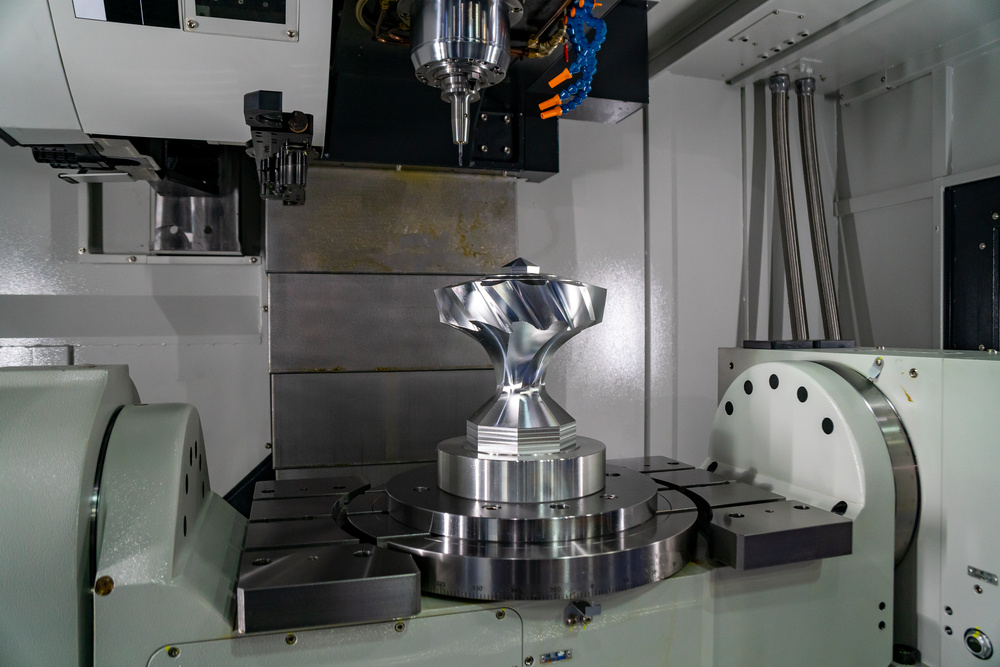
CNC rapid prototyping is a subtractive manufacturing method that uses computer-controlled CNC machines to quickly produce physical parts directly from 3D CAD files.
Unlike additive methods such as 3D printing, CNC prototypes use the same production-grade materials as your final mass-produced parts. This allows you to conduct full functional testing, assembly checks, and even user trials before investing in expensive tooling.
CNC Prototyping vs 3D Printing: Why CNC Wins for Functional Parts
3D printing works well for visual models, but CNC machining offers clear advantages for functional prototypes:
- Production-grade materials: CNC uses real metals and engineering plastics, not prototype-only materials
- Ultra-high precision: We routinely hold ±0.005mm tolerances, perfect for mechanical assembly
- Excellent surface finish: CNC delivers smooth, production-quality surfaces right out of the machine
Data shows that 78% of engineering teams now prefer CNC prototypes for critical functional testing, reducing overall product development cycles by 32%.
What is Low-Volume CNC Production?
Low-volume CNC production, also called low-volume CNC machining, typically refers to the production of 10 to 10,000 parts. It is the middle ground between prototyping and full mass production.
It is ideal for these scenarios:
- ✓
Market testing: Launch small batches to test market demand before investing in high-volume tooling - ✓
Pilot production: Validate your manufacturing process before scaling up - ✓
Bridge production: Supply your customers while waiting for injection molding tools to be built - ✓
Custom & low-volume products: For products that never need mass production, such as specialized industrial equipment or custom medical devices
With no minimum order quantity, it is perfect for startups and small businesses that need flexibility without the high upfront costs of traditional manufacturing.
Core Advantages of Rapid Prototyping & Low Volume Production
Combining rapid prototyping and low-volume production gives you unmatched advantages in today’s fast-paced market.
Faster Time-to-Market
No need to wait weeks for tooling. Our rapid CNC service delivers prototypes in 3-7 business days, and low-volume production in 1-3 weeks. Validate designs, get user feedback, and launch your product weeks or even months faster than your competitors.
Cost-Effective, No Tooling
Traditional manufacturing methods like injection molding require expensive tooling that can cost tens of thousands of dollars. CNC requires no tooling investment, drastically lowering upfront costs and making it affordable for prototypes and small batches.
Engineering-Grade Precision
Every part is machined to your exact specifications, with ±0.005mm tolerances. Your prototypes are not just models — they are functional parts ready for stress testing, assembly checks, and end-user testing, identical to your final production parts.
High Design Flexibility
Need to change your design after the first iteration? No problem. With CNC, you can update your CAD file and produce a new batch the next day, no need to modify expensive tooling. Iterate quickly and perfect your design before full-scale production.
Why Choose Xiamen Goldcattle?
Xiamen Goldcattle has been serving global startups and OEMs for 26 years, with deep expertise in rapid CNC prototyping and low-volume production workflows. When deadlines are tight, you need a supplier that can respond fast, communicate clearly, and deliver consistent quality.
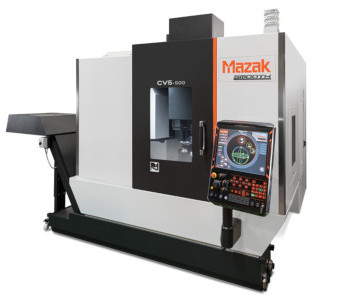
Multi-Axis CNC Equipment
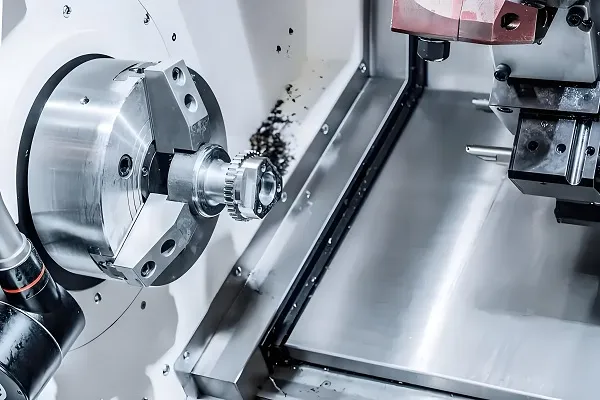
Our factory houses over 100 CNC machines, including 3-axis, 4-axis, and 5-axis machining centers, as well as Swiss-type lathes. We can handle complex geometries in a single setup, reducing lead times and ensuring precision.
Fast Lead Times
Prototypes in 3-7 business days, low-volume production in 1-3 weeks. With a 99.8% on-time delivery rate, we keep your project on schedule.
Wide Material Selection
Full range of production-grade materials to match your needs:
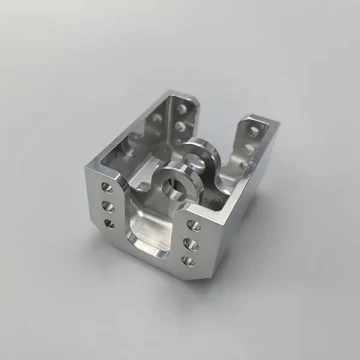
- Metals: Aluminum, stainless steel, titanium, copper, brass, Inconel
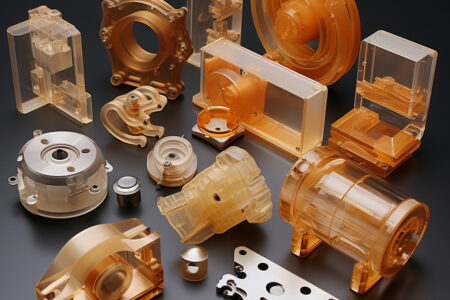
- Plastics: ABS, PC, Nylon, PEEK, POM, and more
Quality Assurance
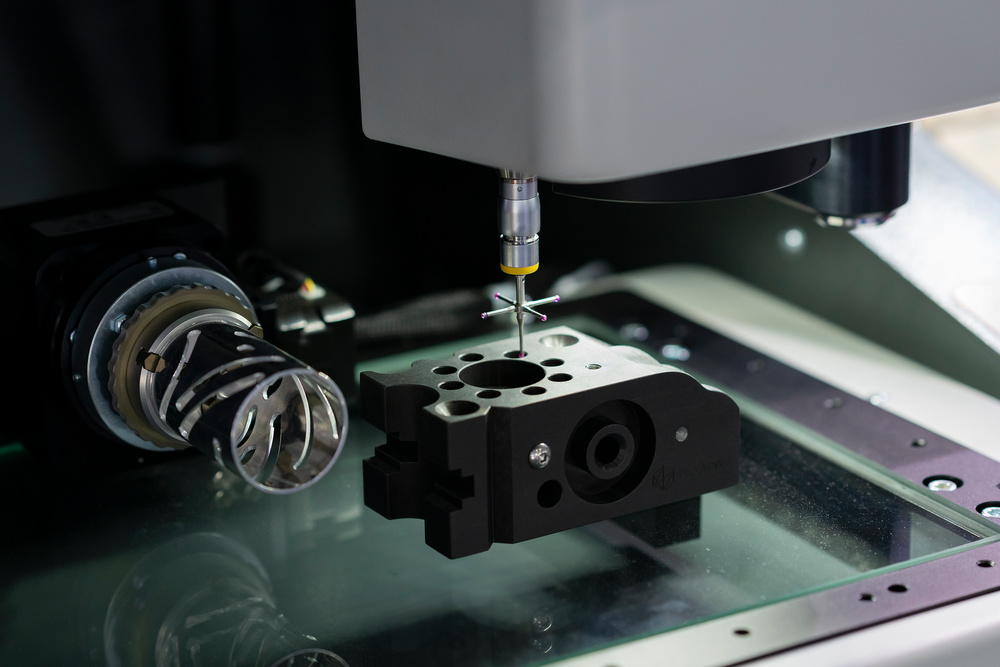
ISO 9001:2015 certified, with an in-house metrology lab equipped with CMM and optical comparators to verify every part meets your specifications. Every order includes full inspection reports and material certificates.
Engineering & DFM Support
We provide free Design for Manufacturability (DFM) analysis. Every quote includes a design review to identify potential issues and provide optimization recommendations, helping you balance cost, speed, and performance before production.
CNC Prototyping vs Injection Molding
Choosing the right manufacturing method is critical. Here is how they compare:
If you are in the product development phase, or need fewer than 10,000 parts, CNC prototyping and low-volume production is almost always faster and more cost-effective.
Types of CNC Rapid Prototyping Processes
CNC rapid prototyping is not a single process — we offer multiple common machining methods to match your part needs.
CNC Milling
Ideal for complex 3D shapes, flat parts, feature panels, enclosures, and more. Using 3-axis, 4-axis, and 5-axis machines, we can machine multiple sides of your part in a single setup.
CNC Turning
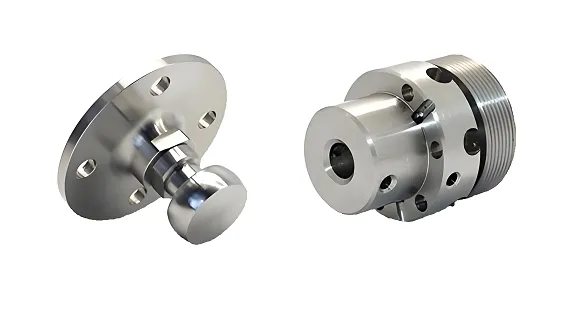
Perfect for rotational parts such as shafts, pins, connectors, and sleeves. Our Swiss-type lathes are especially capable of producing precision thin and long parts.
Combined Machining
Some parts require a combination of turning and milling, which can be completed on turn-mill centers. Complex parts may require multiple setups or multi-axis machines to finish in one go.
Material Selection Considerations
Choosing the right material is critical for your prototype testing. You need to consider several factors:
Functional Requirements
- Strength: Aluminum 6061 for moderate strength, titanium for high strength
- Corrosion resistance: 316 stainless steel or titanium for medical and marine applications
- Temperature resistance: Inconel or titanium for high-temperature environments
- Conductivity: Copper or aluminum for parts that need electrical conductivity
Cost Considerations
- Aluminum: Low cost, easy to machine, ideal for most prototypes
- Stainless steel: Medium cost, good strength and corrosion resistance
- Titanium: High cost, but offers exceptional performance
- Engineering plastics (PEEK, POM): Relatively low cost for specific applications
Prototype Post-Processing Options
After CNC machining, we offer a full range of post-processing services:
Mechanical Finishing
Deburring, polishing, chamfering, tapping, and drilling to finish your part.
Surface Treatment
Anodizing for aluminum, passivation for stainless steel, electroplating, powder coating, and more.
Additional Services
Heat treatment to adjust material properties, laser marking for identification, and full assembly of multi-part components.
Design Tips & Considerations
Considering manufacturability during design can save you time and cost:
- Tolerance setting: Only use tight tolerances for critical fitting features, use looser tolerances for non-critical areas to reduce cost.
- Wall thickness: Minimum 1-2mm for metal parts, 1.5-3mm for plastic parts to avoid deformation.
- Corner design: Use fillets for all internal corners instead of sharp edges, with a radius larger than your tool radius.
- Feature orientation: Arrange features to minimize setups, keeping them on the same side where possible.
Prototype Testing Guidelines
Once you receive your prototypes, here are the key tests to validate your design:
Dimensional Validation
Check critical dimensions with calipers and micrometers, or use CMM for full measurement to confirm your part matches the CAD file.
Functional Testing
Test assembly fit, movement of active components, load strength, and performance under different environmental conditions like temperature and vibration.
User Testing
Collect feedback from real users on usability, appearance, ergonomics, and overall experience to refine your final product.
Frequently Asked Questions
Q: How complex can CNC prototypes be?
A: We can machine most complex parts. Multi-axis machines can handle complex shapes in one setup, though extremely complex parts may require multiple setups or split into multiple components for assembly.
Q: How much does a prototype cost?
A: There is no fixed price, it depends on part size, complexity, material, and quantity. Simple parts can cost as little as tens of dollars, while complex parts can be a few hundred. Unit costs decrease for larger batch sizes.
Q: Can you make transparent parts?
A: Yes, we can use transparent plastics like PC and acrylic. However, as a subtractive process, CNC transparency is not as good as injection molding. For high transparency requirements, polishing or alternative processes can be considered.
Q: Are prototypes the same as production parts?
A: If you use the same material, the performance will be very similar. However, CNC and injection molding are different processes, so internal structure and residual stress may differ. Prototypes are primarily used to validate function and design before production.
Q: How fast can I get my prototypes?
A: Simple parts take 3-5 business days, complex parts take 5-7 business days. Rush services are available for urgent projects, though additional fees may apply.
Industries We Serve
Our rapid CNC services support a wide range of industries to accelerate their product development.
Aerospace & Defense
Rapid validation of new component designs
Medical Devices
Functional prototypes for surgical instruments & implants
Automotive
EV development & high-performance custom parts
Electronics & Hardware
Startup enclosures, brackets, and connectors
Industrial Automation
Test parts for automation equipment & robotics
Consumer Products
Appearance & functional validation for new products
Cost Optimization Tips
Want to reduce your prototyping costs? Try these actionable tips:
- Simplify your design, remove unnecessary features
- Loosen tolerances for non-critical features
- Minimize the number of setups required
- Choose cost-effective materials for prototyping
- Upgrade to high-performance materials only after validation
- Order multiple parts to share fixed costs
- Communicate early with your supplier for DFM feedback
- Understand cost and lead time impacts before finalizing design
The content of this article is for reference only. To learn more about our custom manufacturing services, explore the full details of Xiamen Goldcattle’s offerings.