Can Titanium Be CNC Machined? Challenges, Grades & Design Considerations
Short answer: yes. Titanium is machined every day on standard CNC equipment. The real question is how to machine it so parts come out accurate, repeatable, and cost-effective. This page explains the engineering difficulty, the grades you can use, how to choose titanium against aluminum or stainless, and what to design for before you send a drawing.
The Short Answer — and Why It Is Not the Whole Answer
Titanium is a mature, well-understood machining material. The difficulty is engineering-specific, and it is manageable with the right approach.
Yes, titanium can be CNC machined
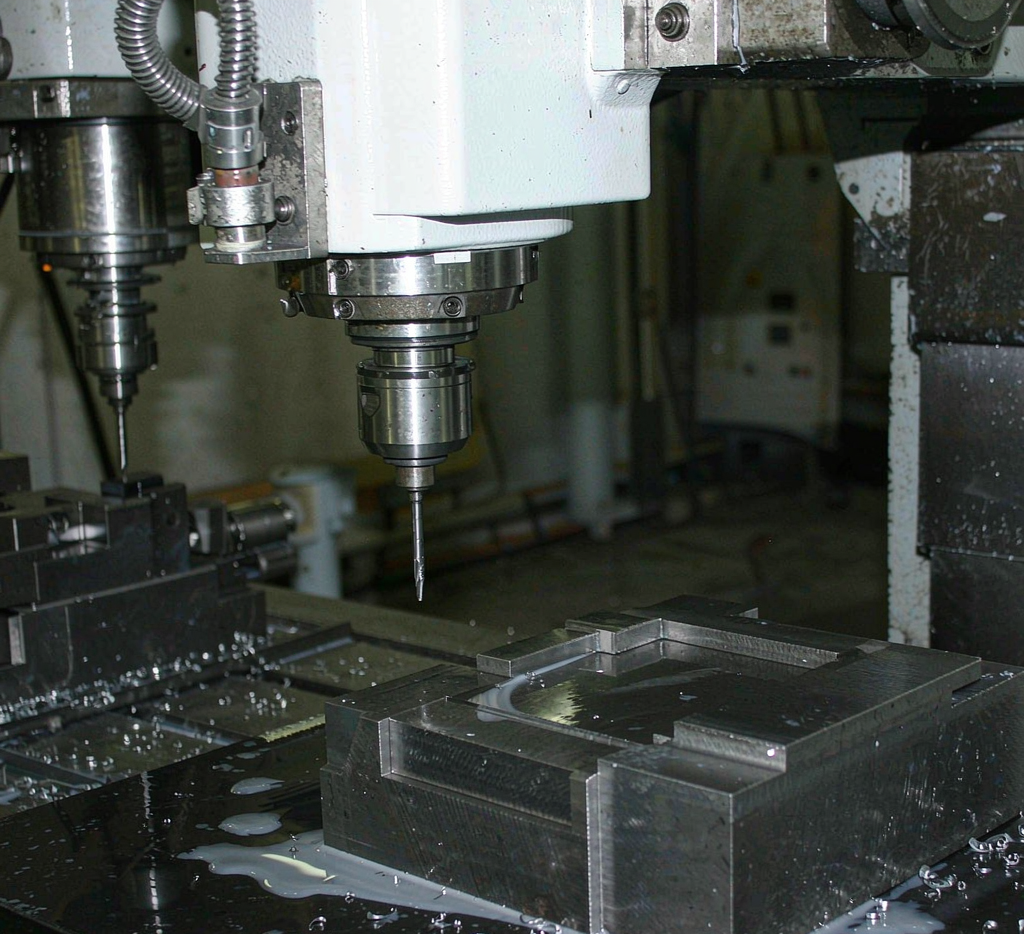
Titanium and its alloys are cut on the same categories of equipment used for steel and aluminum: 3-, 4-, and 5-axis machining centers, CNC lathes, and mill-turn machines. No exotic machine is required. What changes is the process discipline around it.
The reason titanium gets a reputation for being "hard to machine" is that the habits that work on aluminum — high speed, light passes, generic tooling — backfire on titanium. Heat builds at the edge, the surface can harden, and tools wear fast. None of that is a mystery; it is a set of known factors you design the process around.
If you are evaluating titanium for a part, the useful questions are not "can it be done" but "which grade, with what tolerances, at what volume, and does the performance justify the cost." The rest of this page answers those.
Why Titanium Is Harder to Machine — Five Engineering Factors
These are the real reasons titanium behaves differently at the spindle. Manage them and the material machines predictably.
1. Low thermal conductivity
Most of the cutting heat stays at the tool edge instead of flowing into the chip or workpiece. Tools overheat fast, so parameters and coolant are chosen to carry heat away from the edge.
2. Work hardening
Alpha-beta alloys harden if the tool rubs or takes too light a cut. The hardened layer then wears the next tool. A consistent, positive chip load with sharp edges avoids this.
3. Abrasive tool wear
Titanium's constituents and any hardened surface abrade tool edges quickly. Tool material, coating, and edge preparation matter more than on aluminum, and tool life is planned into the process.
4. Cutting forces & vibration
Titanium's strength at temperature means real cutting forces. On long tools or slender features this invites chatter and poor finish, so rigidity, tool selection, and cutting strategy are deliberate.
5. Thin-wall deflection
Thin walls and ribs flex under the cut and under clamping, which is the main accuracy risk on titanium. Fixturing, support, and staged removal are planned before the first pass.
6. Chip evacuation
Long, stringy, or hot chips can gall or score the part and recut the tool. Proper chip breaking, coolant direction, and toolpath design keep the cut clean.
There Is No Single "Correct" Cutting Parameter
A number quoted for one job is not a rule for another. Here is what actually drives the process.
Cutting speed, feed, and depth of cut for titanium are set per job. They depend on the exact grade, the tool material and coating, machine rigidity, coolant strategy, and the feature being cut. A parameter that is correct for annealed Ti-6Al-4V on a rigid 5-axis machine with through-spindle coolant may be wrong for the same alloy on a lightly rigid setup or for a different grade. In practice this usually means carbide tooling with positive, sharp edge geometry, a coating selected for the alloy and operation, and coolant directed at the cutting zone — but the exact combination is still confirmed on the actual material and machine during setup, not assumed from a generic table. We establish cutting data during setup and DFM review rather than copying a fixed table from another part.
Be cautious of any source that hands you a single "titanium cutting speed" as a universal value. The honest, repeatable approach is to treat parameters as job-specific and to verify them on the actual material and machine.
Titanium Grades You Can CNC Machine
These are the grades most often seen in machined components. The right choice depends on strength, corrosion, temperature, and biocompatibility needs.
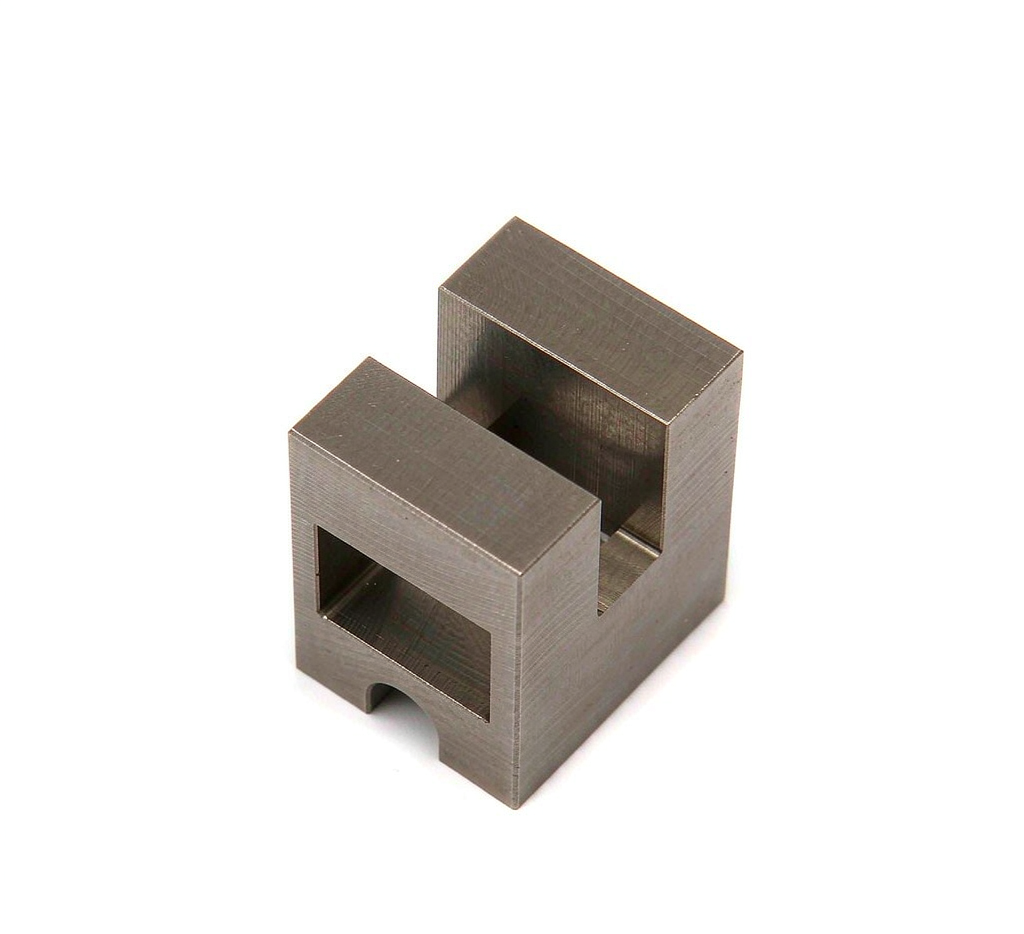
| Grade | Common name / UNS | Typical use | Machining note |
|---|---|---|---|
| Grade 1 | CP Ti (R50250) | Most ductile; forming, corrosion parts | Softest CP; gummy, needs sharp tools |
| Grade 2 | CP Ti (R50400) | Chemical, marine, general corrosion | Most common CP grade; moderate |
| Grade 5 | Ti-6Al-4V (R56400) | Aerospace, medical, general | Most machined alloy; work-hardens |
| Grade 23 | Ti-6Al-4V ELI (R56407) | Medical implants | Like G5, lower interstitial; same behavior |
| Grade 9 | Ti-3Al-2.5V (R56320) | Tubing, lightweight structures | Stronger than CP, still machinable |
Commercially pure grades (1–4) trade strength for ductility and corrosion; the alpha-beta alloys (5, 23, 9) add strength through alloying. Grade 5 (Ti-6Al-4V) is the default for most machined titanium because of its availability and balance of properties.
Specify Four Things, Not Just "Titanium"
An accurate quote and a correct part start with a precise specification. Four elements matter.
Grade
The alloy or CP grade — for example Ti-6Al-4V (Grade 5) or Grade 2. This sets strength, corrosion, and machining behavior.
Product form
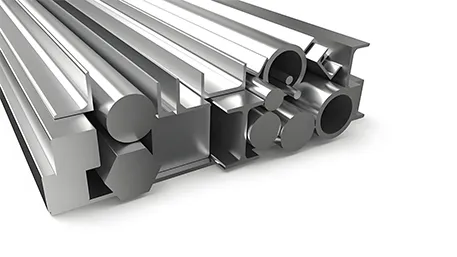
Bar, plate, billet, sheet, or tube. Form affects how the stock is fixtured and how much material is removed.
Condition
Annealed, solution-treated, or aged. Condition changes hardness and how the material responds in the cut.
Specification
The governing standard such as ASTM B348 or an AMS number. This locks chemistry, melt practice, and traceability.
Why this matters
Saying "titanium" is not enough. Two parts both called "Ti-6Al-4V" can differ in condition, melt source, and certification, and those differences change machinability, cost, and what documentation you can receive. Define all four and the shop can quote to what you actually need.
Titanium vs 6061 Aluminum vs Stainless — How to Choose
The right material is the one whose properties match the job. Titanium wins on a narrow but valuable set of conditions.
| Property | 6061 Aluminum | Titanium (Ti-6Al-4V) | 316 Stainless |
|---|---|---|---|
| Density / weight | Lightest | ~60% heavier than Al, ~40% lighter than steel | Heaviest |
| Strength-to-weight | Good | Excellent | Fair |
| Max service temp | Low (~200°C practical) | High (~300–400°C practical) | Moderate |
| Corrosion (chlorides) | Poor unless coated | Excellent | Good |
| Machinability | Excellent | Difficult | Moderate–difficult |
| Relative cost | Low | High | Moderate |
| Choose when | Weight, cost, easy machining lead | Weight + corrosion + temperature all matter | Corrosion + low cost, weight not critical |
For a deeper look at material selection across the shop, see our Materials Hub.
When Titanium Is Worth the Cost — and When It Isn't
An honest material decision saves more than a clever process. Use titanium where its properties pay back.
Worth it when…
Weight saving is critical (aerospace, motorsport, portable equipment); the part sees chlorides, seawater, or chemicals; service temperature exceeds what aluminum allows; or biocompatibility is required. There titanium's cost is justified by performance.
Usually not worth it when…
The part is static and indoor; aluminum or a coated steel would meet the spec; volume is high and cost dominates; or tolerances are loose enough that titanium's advantages are unused. In those cases a cheaper material is the better engineering choice.
We will tell you plainly when a different material would serve you better. Specifying titanium "because it is strong" often wastes budget on properties the application never uses.
Design for Machining (DFM) — Titanium Checklist
Small design choices have an outsized effect on titanium cost and accuracy. Review these before release.
Design points that help
- Keep wall thickness reasonable; very thin walls need special fixturing and raise risk.
- Use generous radii on internal corners — titanium does not like sharp slot bottoms.
- Avoid deep, narrow pockets that trap heat and chips.
- Tolerance only what matters; blanket tight tolerances add cost without benefit.
- Define stock condition and specify the standard so material is sourced correctly.
Confirm before quoting
- Exact grade, form, condition, and specification.
- Critical dimensions vs cosmetic dimensions.
- Surface finish requirement and any post-process (passivation, anodize, coating).
- Inspection scope: FAI, CMM report, material cert, cleanliness.
- Quantity and delivery date — they shape the process route.
Surface Finishes for CNC Titanium
Titanium finishes differ from aluminum. Choose by function, not by habit.
| Finish | What it does | Typical use |
|---|---|---|
| As-machined | Clean cut surface, Ra ~0.8–3.2 µm by tooling | Most functional parts |
| Bead blast | Uniform matte texture | Cosmetic, grip, light deburr |
| Passivation | Improves oxide corrosion resistance | Chemical, marine, medical |
| Electropolish | Smoothes and brightens surface | Cleanliness-critical, biocompatible |
| Ti anodize (oxide) | Thin-film color, mostly cosmetic/id | Identification, brand, device looks |
| DLC / TiN coating | Wear-resistant hard layer | Sliding, cutting, wear surfaces |
Inspection & Traceability
Dimensional control and documentation are part of the deliverable, especially for demanding environments.
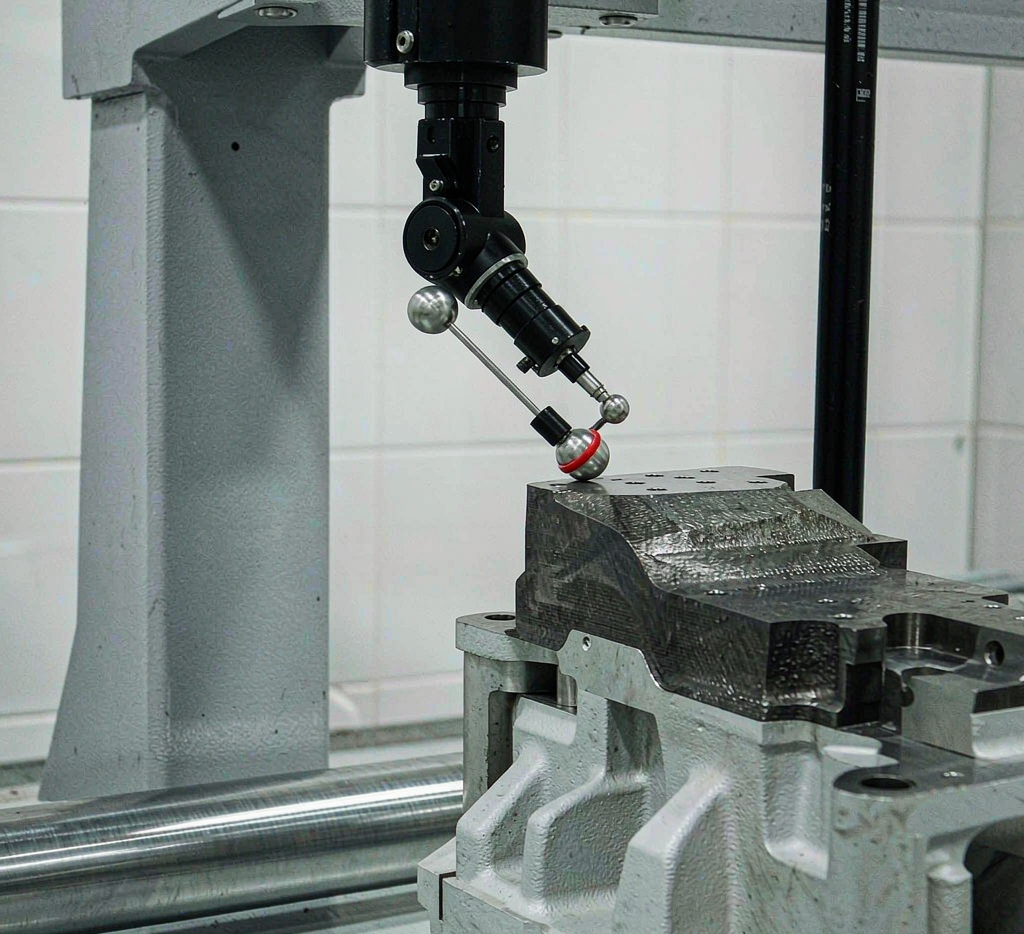
What we measure and document
- CMM inspection against the 3D model for critical features.
- Thread and gauge checks for functional interfaces.
- Surface roughness measurement where specified.
- Material certificate (mill cert) for the stock used.
- Certificate of conformance and, on request, first-article inspection per AS9102.
Note that AS9102 is a first-article inspection standard, not a certification we hold. We can prepare FAI reports on request where your program requires them, under our ISO 9001:2015 system.
Titanium CNC Machining vs Additive Manufacturing
Both make titanium parts. They serve different points on the quantity–geometry–property curve.
| Factor | CNC machining | Additive (3D printing) |
|---|---|---|
| Material state | Full-density, isotropic stock | As-built, anisotropic; may need HIP/heat treat |
| Geometry | Limited by tool access | Complex internal features possible |
| Surface finish | Good as-machined | Rougher; often needs finishing |
| Volume | Strong for prototype to mid-volume | Best for very low qty or unique parts |
| Lead time | Fast with stock on hand | Longer, process-dependent |
For most production titanium parts, machined titanium is the more predictable and often lower-risk route. Additive earns its place for internal lattices, consolidated assemblies, or one-off geometries that cannot be cut.
A Representative Workflow: Prototype to Production
A generalized example of how a titanium part typically moves through the shop — no single program's figures are presented as universal.
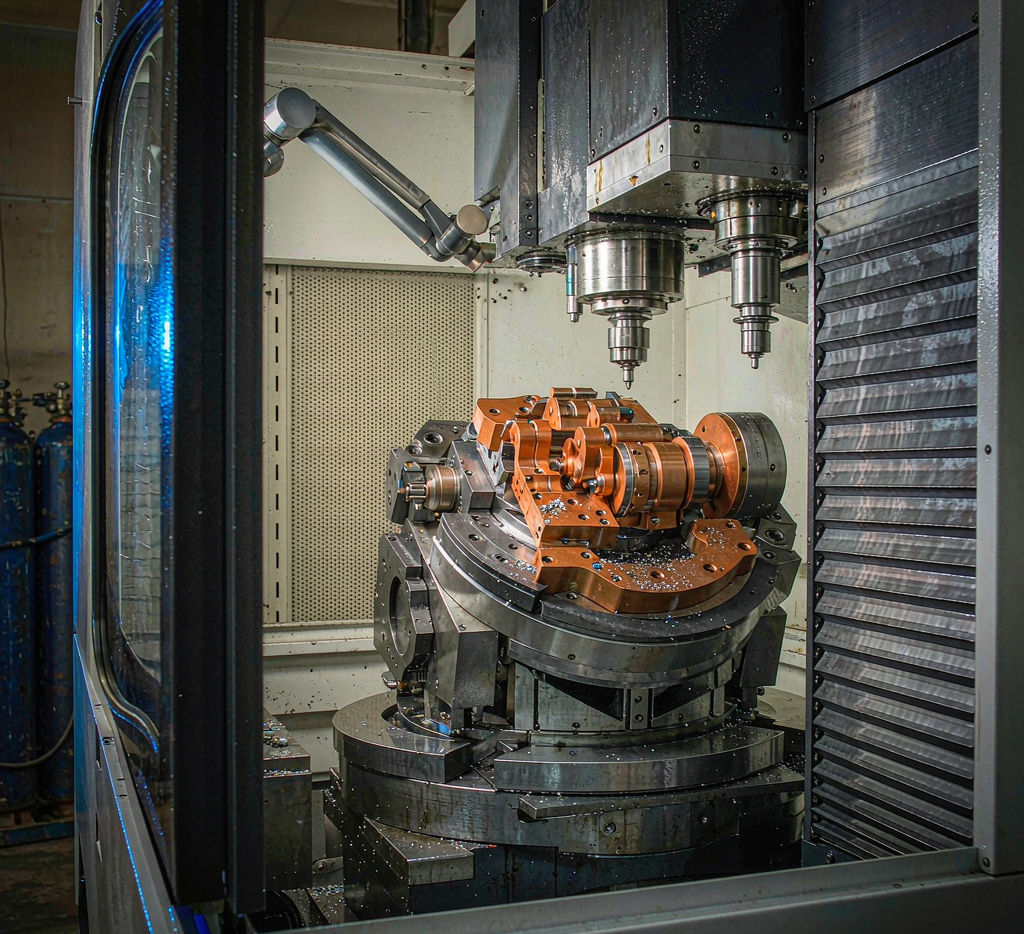
From drawing to delivered parts
- DFM review — grade, tolerances, fixtures, and inspection are agreed before cutting.
- Prototype — a small batch validates geometry, fit, and any thin-wall behavior, typically within a few working days subject to stock.
- Process lock — cutting data, fixturing, and inspection plan are documented so volume parts repeat.
- Production — parts are machined, inspected, and documented to the agreed scope, with material cert and CoC where required.
This is a generalized workflow. Actual lead times depend on material availability, part complexity, and inspection scope — we state them per order rather than as fixed claims.
RFQ Checklist — What to Send for a Titanium Quote
The more complete your package, the faster and more accurate the quote.
Geometry
3D model (STEP/IGES) and a 2D drawing with tolerances and critical-feature callouts.
Material
Grade, form, condition, and specification. Name the standard so stock is sourced right.
Quantity & date
Target quantity, repeat cadence if any, and required delivery date.
Environment
Operating temperature, media (seawater, chemical), and mechanical load.
Finish
Surface finish, post-process, and any cosmetic requirement.
Documentation
Material cert, CoC, FAI per AS9102 on request, RoHS/REACH if needed.
Goldcattle's Titanium CNC Capability
This page answers the engineering questions; the service page covers how we run titanium work.
What we do in-house
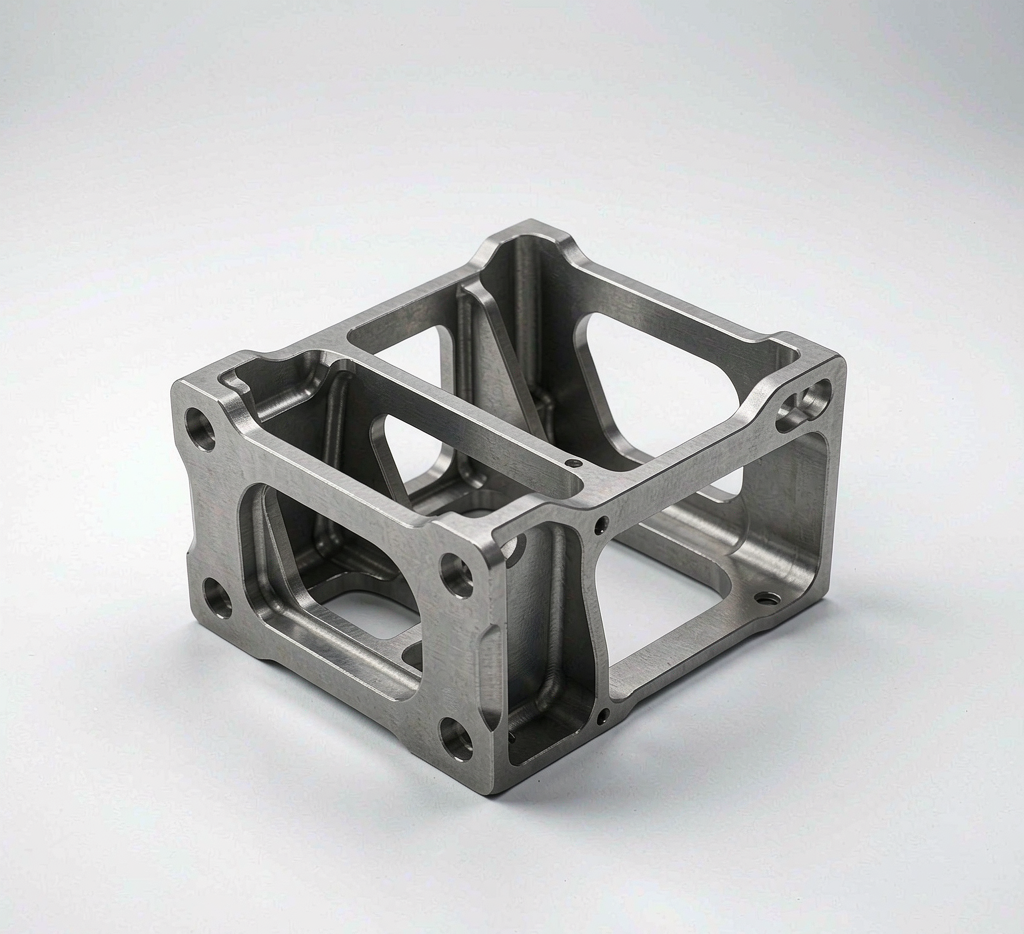
- Titanium CNC machining is performed in-house on our own CNC equipment under our ISO 9001:2015 quality system.
- We work common grades including Ti-6Al-4V (Grade 5), Grade 23 ELI, Grade 2, and Grade 9, plus customer-specified grades.
- Prototypes through production, with DFM review, inspection, and documentation to the agreed scope.
- Where a program requires IATF 16949-aligned process disciplines, we can apply them — but we do not claim IATF 16949 certification we do not hold, and we do not claim aerospace or medical certifications we cannot document.
Frequently Asked Questions
Can titanium be CNC machined?
Yes. Titanium and its alloys are routinely CNC machined on standard milling, turning, and multi-axis equipment. The real question is how to machine it so you get accurate, repeatable parts without burning tools or fighting dimensional movement. With the right grade selection, sharp tooling, conservative parameters, and correct fixturing, titanium is a well-understood machining material.
Is titanium hard to machine?
It is harder than aluminum and many steels, but the difficulty is specific rather than mysterious. The main engineering factors are low thermal conductivity, a tendency to work-harden if the tool rubs instead of cuts, abrasive tool wear, high cutting forces with vibration risk, thin-wall deflection, and chip evacuation. Address those factors and titanium machines predictably.
What titanium grade is best for CNC machining?
Ti-6Al-4V (Grade 5) is by far the most machined titanium alloy because of its balance of strength, temperature capability, and availability. Grade 23 is the low-interstitial ELI version used where biocompatibility is required and machines the same way. Grade 2 (commercially pure) is common for corrosion-resistant non-structural parts, while Grade 9 (Ti-3Al-2.5V) is used for tubing and lightweight structures.
Can you machine commercially pure (CP) titanium?
Yes. Grades 1 through 4 are commercially pure titanium with rising strength and falling ductility across the grades. They machine more easily than the alpha-beta alloys in terms of hardness, but they are gummy and tend to build up on the tool edge, so sharp tools and proper rake angles still matter. Grade 1 is the softest and most formable; Grade 2 is the general-purpose grade.
What cutting speed should I use for titanium?
There is no single number that applies to all titanium work. Sensible cutting speed depends on the exact grade, tool material and coating, machine rigidity, coolant strategy, and depth of cut. A parameter published for one alloy, tool, and machine can be wrong for another. We establish cutting data per job during setup and DFM review rather than quoting a fixed table.
Is titanium more expensive to machine than aluminum?
Generally yes. Titanium raw stock costs more than aluminum, it removes material more slowly because cutting parameters are conservative, tool wear is higher, and cycle times are longer. The honest comparison is total part cost versus the performance you gain — weight saving, corrosion resistance, or temperature capability — not just the machining rate.
Can titanium replace 6061 aluminum in my part?
Only when the properties justify it. Titanium offers far better strength-to-weight than 6061, much higher service temperature, and superior corrosion resistance in chlorides and chemicals. But it costs more and machines slower. If your part does not need those properties, 6061 is usually the smarter choice. We help buyers decide based on load, temperature, and environment rather than defaulting to titanium.
What tolerances can CNC titanium hold?
Tolerances are feature-, geometry-, and condition-dependent, not a single blanket number. General-profile work commonly holds ±0.1 mm or tighter; ±0.01 mm is achievable on qualified features when stock condition, part geometry, fixturing, and measurement method all support it. We confirm achievable tolerances on your drawing during DFM review instead of promising a universal figure.
Which surface finishes work on titanium?
As-machined titanium typically reaches a clean Ra 0.8–3.2 µm depending on tooling. Bead blasting gives a uniform matte look; passivation improves corrosion resistance; electropolish smooths the surface; and thin-film oxide anodizing (Ti anodize) produces color for identification or cosmetic use. Hard coatings such as DLC or TiN can be applied where wear demands it. Titanium is not anodized the way aluminum is.
Does titanium work harden?
Yes, especially the alpha-beta alloys. If the cutting tool rubs or takes too light a cut, the surface can work-harden and accelerate tool wear on the next pass. The standard countermeasure is to maintain a consistent, positive chip load with sharp tools and avoid dwelling or light scraping passes. This is a primary reason titanium needs deliberate parameters.
Can you machine thin-wall titanium parts?
Yes, but thin walls deflect under cutting forces and clamping, which is the main risk to accuracy. Strategies include rigid but even fixturing, balanced cutting forces, sharp tools, staged material removal, and verifying wall flatness during machining rather than only at final inspection. We assess wall thickness and support geometry during DFM before committing to a process.
Is titanium CNC machining better than 3D printing?
It depends on quantity, geometry, and property requirements. CNC machining gives full-density, isotropic titanium with excellent surface finish and fast turnaround for prototypes and low-to-mid volumes. Titanium additive manufacturing suits complex internal features and very low quantities but has anisotropic properties, rougher surfaces, and higher part cost. For most production parts, machined titanium is the more predictable route.
How do I correctly specify titanium for a quote?
Give the grade, the product form (bar, plate, billet, sheet), the condition (annealed, solution treated, etc.), and the specification (for example ASTM B348 or AMS). Attach a 3D model and a 2D drawing with tolerances, state quantity and delivery date, and note the operating environment. The more precisely you define these, the more accurate the quote and the fewer surprises in production.
What industries use CNC titanium parts?
Aerospace and defense, medical and dental, chemical and marine processing, motorsport and high-performance cycling, and semiconductor and vacuum equipment are common users. The driver is usually weight saving, corrosion resistance in aggressive media, biocompatibility, or service at temperatures where aluminum is unsuitable.
Do you hold aerospace or medical certification for titanium?
We operate under an ISO 9001:2015 quality system and machine titanium for demanding environments. Where a customer program requires IATF 16949-aligned process disciplines or AS9102 first-article inspection, we can apply those practices and supply the documentation, but we do not claim aerospace or medical certifications we do not hold. We will tell you plainly what we can document.
How should I start a titanium CNC project?
Send a 3D model (STEP/IGES), a 2D drawing with tolerances, the intended grade and form, quantity and target date, and the operating environment. We run a DFM review covering grade choice, tolerances, fixtures, and inspection, then return a quote with realistic lead time. Starting from a clear specification avoids the most common delays.
Ready to machine titanium?
Send your drawing and we will run a DFM review covering grade, tolerances, fixturing, and inspection, then return a realistic quote and lead time.
- 3D model + 2D drawing with tolerances
- Grade, form, condition, specification
- Quantity, date, operating environment

Focused on titanium and engineering-material part production, DFM review, and process planning for international buyers.