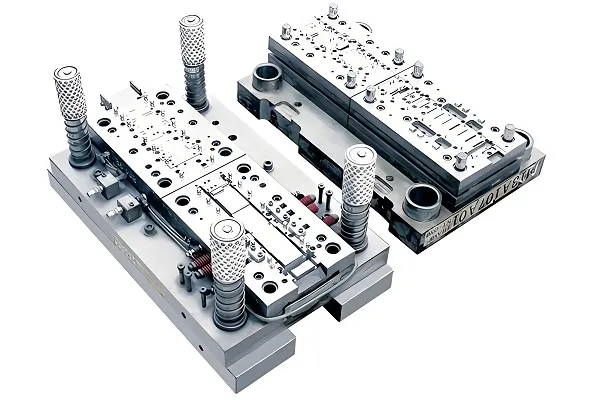
Ti-6Al-4V CNC Machining — Grade 5 Titanium Parts
You specified Ti-6Al-4V (Grade 5). The real questions: can this shop machine it to your drawing, how is the material confirmed, what makes it difficult, how is tolerance verified, and what documents do you receive?
At a Glance
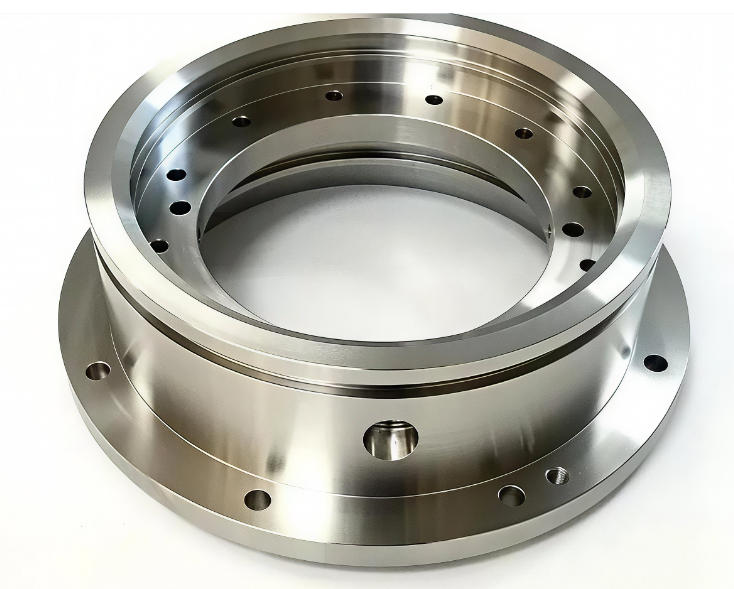
Yes — Ti-6Al-4V (Grade 5) can be machined to your drawing when it defines the grade, condition, datums, tolerances and GD&T. The shop confirms the material certificate and heat/lot before cutting, reviews geometry in DFM, machines on 3-, 4- or 5-axis equipment, and verifies critical features on a CMM against your drawing and inspection plan — not a generic tolerance number.
What Is Grade 5 Titanium (Ti-6Al-4V)?
Ti-6Al-4V is the most widely specified high-strength titanium alloy and the source of the "Grade 5" label. The name reflects roughly 6% aluminium and 4% vanadium balanced with titanium — giving high strength-to-weight and good corrosion resistance across aerospace, medical, motorsport and structural parts.
"Titanium" alone is ambiguous. State the exact grade plus its governing standard (for example "Ti-6Al-4V per AMS 4928X" or "Grade 5 per ASTM B348/B348M") so the part is sourceable and verifiable, not a category guess.
Ti-6Al-4V Material Specifications
Typical annealed ranges, confirmed against the governing standard at quotation; they describe the material, not a finished-part tolerance.
| Property / Standard | Typical value or scope | Why a buyer cares |
|---|---|---|
| Chemistry | 6% Al, 4% V, balance Ti | Defines the alloy identity (Grade 5). |
| Density / tensile | ~4.43 g/cm³ / ~900–1000 MPa | Mass and load-bearing capability. |
| ASTM B348 / B348M | Bars, billets, forgings | Common mill product form and grade. |
| AMS 4928X | Ti-6Al-4V annealed stock, where applicable | Aerospace-material specification for Grade 5. |
| ISO 5832-3:2021 / ASTM F136 | Implant-related Ti-6Al-4V / ELI | Medical material reference. |
Why Is Grade 5 Titanium Difficult to Machine?
Short answer: it is more demanding than aluminum or steel, but controllable. Map each behavior to a process response rather than one blanket problem.
Grade 5 machining is a process-control problem — the same alloy machines well or poorly on how the shop manages heat, rigidity, tool wear and verification.
Which CNC Processes Are Used for Ti-6Al-4V?
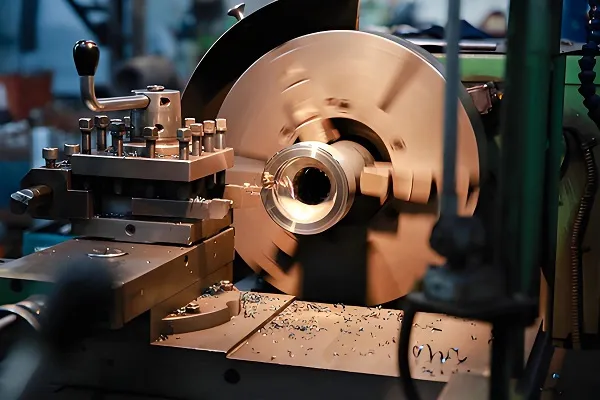
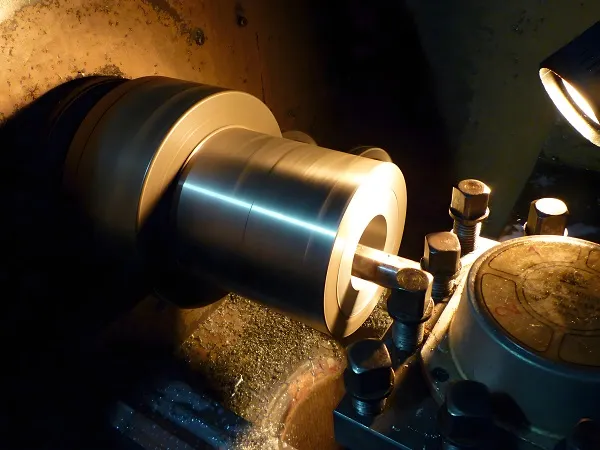
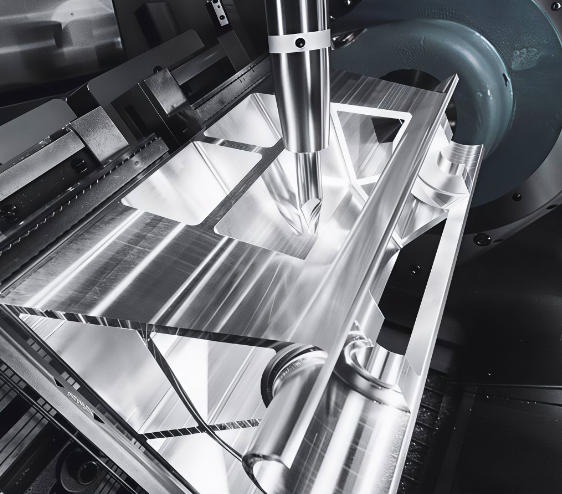
Short answer: geometry drives the choice. Prismatic features are milled, rotational features are turned, mixed parts use mill-turn, and complex features benefit from simultaneous 5-axis titanium machining. Goldcattle runs 3-, 4- and 5-axis milling and turning on equipment such as DMG MORI DMU 50, NLX 2500 and LASERTEC, with CNC turning for titanium parts where rotational features dominate.
How Ti-6Al-4V Parts Are Machined
The workflow below is the chain a buyer should expect a supplier to describe — from drawing to documented release.
Grade, condition, datums, GD&T, finish, thin walls and pockets reviewed before cutting.
Grade, condition and heat/lot confirmed against the material certificate.
Roughing controls heat and load; finishing brings CTQ features and finish to the drawing.
CMM inspection, material cert, dimensional report and FAI where required.
Ti-6Al-4V Tolerance and GD&T
Short answer: tolerance is not one number. It depends on geometry, wall thickness, datum strategy, workholding, tool wear and inspection — three practical tiers:
General machining and finishing. Non-critical and cosmetic dimensions.
Controlled finishing and tighter setups. Features needing better-than-general control.
Qualified CTQ features only: bearing seats, mating bores, locating surfaces, hole position, flatness — confirmed by CMM.
Ti-6Al-4V DFM Guidelines
Most titanium cost and risk are set during design, so review these features in DFM:
Sensitive to deflection and heat. Review against wall height-to-thickness ratio, not a fixed minimum.
Limited by tool reach, holder clearance and chatter; wider radii and staged passes help.
Constrained by available tool diameter; smaller radii raise cycle time.
Watch tool deflection, chip evacuation and coolant delivery.
Prone to vibration; short reach and support manage the risk.
A clean datum reference frame reduces setup error and tolerance stack-up.
None of these is a prohibition — review the feature in DFM, not at first article.
Surface Finish and Secondary Operations
Surface finish is a specification, not an afterthought: a required Ra value changes tooling and pass strategy, and is defined per drawing and application.
Standard mill/turn finish; Ra depends on tooling and pass strategy, specified with the feature.
Uniform matte texture; cosmetic and handling-related.
Lower Ra on specified surfaces; process-defined.
Mostly color/cosmetic; titanium anodizing differs from aluminum hardcoat and is project-specific.
CMM Inspection of Ti-6Al-4V Parts
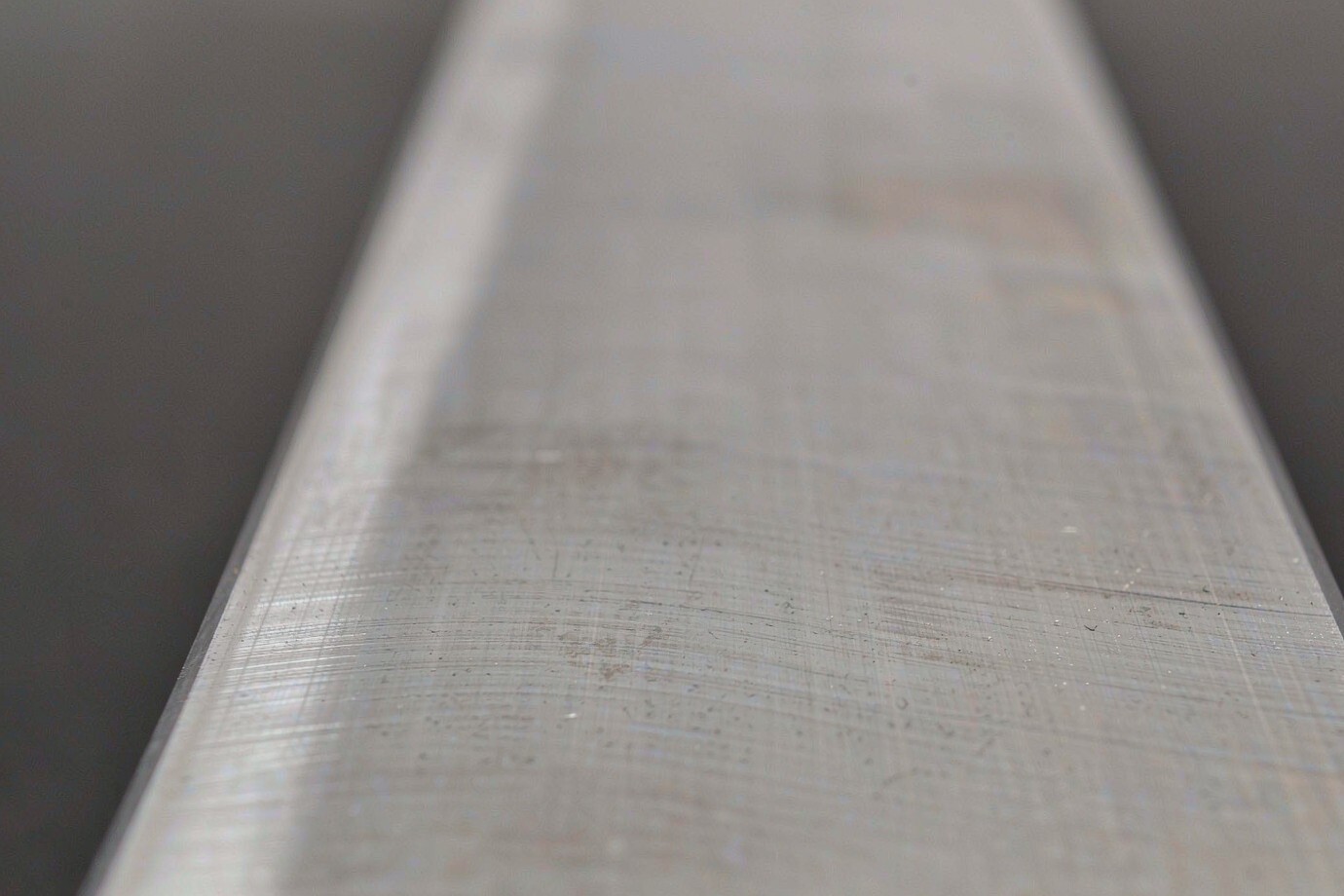
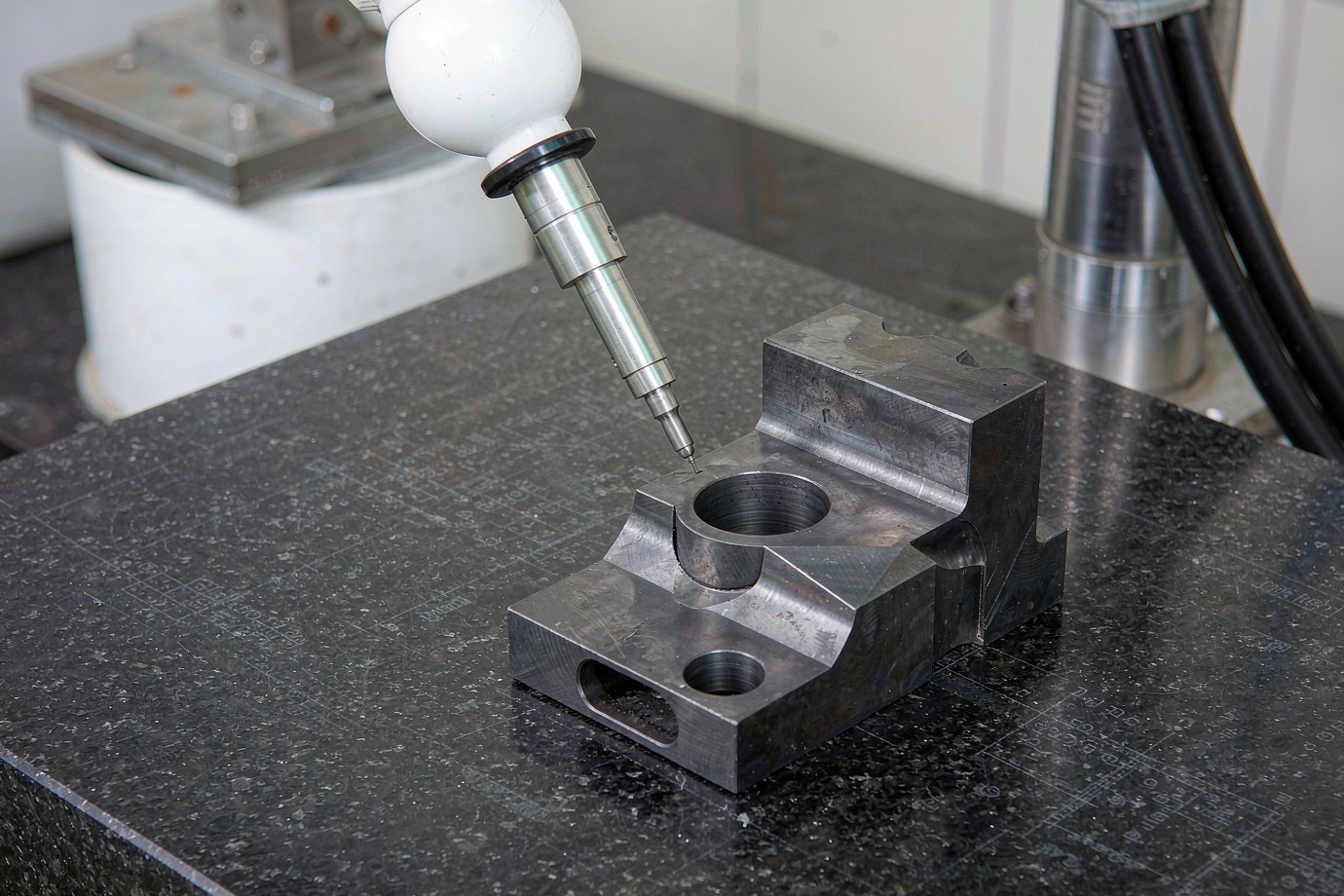
Short answer: the inspection method must match the tolerance claimed — a caliper cannot confirm a ±0.005 mm feature. Critical and geometric features are verified on a CMM (at Goldcattle, a Zeiss Prismo with ±0.0005 mm capability), supported by micrometers, calipers, bore gauges and roughness testers.
Material Traceability for Grade 5 Titanium
Traceability links a finished part to its material and process: a material certificate (grade, condition, heat/lot), a dimensional inspection report, and a certificate of conformity. The heat/lot is the link between bar, certificate and part.

Quality Documents You Receive
Short answer: expect a material certificate per EN 10204 3.1, a dimensional inspection report, a certificate of conformity, and FAI per AS9102 where required (available on request). The quality system is ISO 9001:2015 certified; aerospace under AS9100-aligned and medical under ISO 13485-aligned controls.
Where Ti-6Al-4V Grade 5 Is Used
Brackets, structural and engine-adjacent parts where weight and strength matter.
Instruments and components; implant-related work is medical titanium CNC machining under ISO 13485-aligned controls.
Lightweight, high-strength structural parts.
Corrosion-resistant components for demanding environments.
Grade 5 vs Grade 23 (Ti-6Al-4V vs ELI)
| Attribute | Grade 5 (Ti-6Al-4V) | Grade 23 (Ti-6Al-4V ELI) |
|---|---|---|
| Chemistry | 6% Al, 4% V | 6% Al, 4% V (same) |
| Interstitials | Standard limits | Reduced O, N, C, Fe |
| Typical use | Industrial, aerospace, motorsport | Implant-related applications |
| Governing standard | ASTM B348, AMS 4928X | ASTM F136, ISO 5832-3 |
Grade 23 (ELI) is chosen for a device or implant requirement under a medical material specification, not a marginal strength difference; Grade 5 is the standard for most industrial and aerospace work.
Ti-6Al-4V vs Aluminum 7075
| Factor | Ti-6Al-4V (Grade 5) | Aluminum 7075-T6 |
|---|---|---|
| Density | ~4.43 g/cm³ | ~2.81 g/cm³ |
| Machinability | More demanding | Excellent |
| Corrosion resistance | Excellent | Good |
| Raw material cost | Higher | Lower |
| Best use | Demanding strength/weight, corrosion | Weight and cost optimization |
Choose titanium when the application justifies its strength, corrosion or temperature advantages — not because it is perceived as higher-end. Aluminum 7075 is the more economical answer for many parts.
What Makes Ti-6Al-4V Parts Expensive?
Short answer: cost follows a chain of process control and verification, not the material alone.
- Raw titanium price — higher material cost than common alloys.
- Machining time — lower removal rates than easier-to-cut alloys.
- Tool wear — more tool consumption per part.
- Tight tolerance — more process control and CMM verification.
- Complex geometry / 5-axis use — more CAM programming and machine time.
- Small quantity — less setup cost amortization.
Case Study: Ti-6Al-4V 5-Axis Aerospace Bracket
A representative job shows how the workflow maps to a real part; values are characteristic of a defined project, not a standard claim.
- MaterialTi-6Al-4V (Grade 5)
- ProcessSimultaneous 5-axis milling
- EquipmentDMG MORI DMU 50
- Tolerance±0.005 mm on qualified CTQ
- InspectionZeiss Prismo CMM
- DocumentationMaterial cert, FAI on request
- Lead time8 working days (prototype)
Machined in fewer setups to hold datum consistency across multi-face features; roughing controlled heat and load, finishing brought the CTQ bores and flatness to the drawing, and the first article was CMM-measured before repeat production. Tolerance, cycle time and documentation are set from the drawing and validated plan.
Ti-6Al-4V RFQ Checklist
- 3D CAD model (STEP, IGES or native)
- 2D drawing with dimensions and GD&T
- Material grade and condition (e.g. Ti-6Al-4V per AMS 4928X)
- Quantity and prototype-vs-production intent
- Critical tolerances and datum strategy
- Surface finish specification
- Heat treatment or coating needs
- Inspection and documentation requirements
- Application, annual volume and target delivery
Xiamen Goldcattle Plastic & Metal Products Co., Ltd. has provided custom machined parts since 1998, with 3-, 4- and 5-axis milling and turning across 100+ machines and six processes under one ISO 9001:2015 quality system, with AS9100- and ISO 13485-aligned frameworks.
Frequently Asked Questions
Can you machine Ti-6Al-4V (Grade 5) to my drawing?
What tolerance can Grade 5 titanium hold?
Is Grade 5 titanium difficult to machine?
What is the difference between Grade 5 and Grade 23 titanium?
Can Ti-6Al-4V be machined on a 5-axis machine?
How is tight tolerance on titanium parts verified?
What quality documents do I receive with titanium parts?
What should I send to get a Ti-6Al-4V CNC quote?
Need Ti-6Al-4V Parts Machined From Your Drawing?
Send your CAD model and drawing. We can review the grade and tolerances, run DFM, and define the machining, inspection and documentation plan for your program.
Free DFM review · Quote typically within 24 hours
Explore CNC Machining Capabilities →