Functional Requirements
- Sealing performance: No leakage under negative pressure 0.08MPa for 30 seconds
- Temperature resistance: No cracks after 50 thermal cycles from -20℃ to 100℃
- Drop performance: No damage after dropping from 1.2m height
2. Mold Design Technology
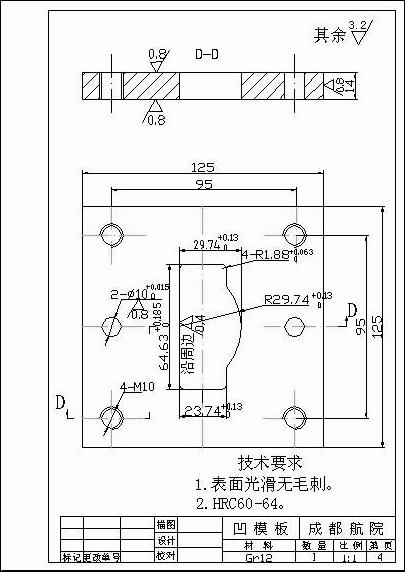
2.1 Mold Structure Design
Cavity Quantity Selection
- Single cavity mold: Suitable for small batch production or mold testing
- Two cavity mold: Balances production efficiency and mold cost
- Four cavity mold: Suitable for mass production
Parting Surface Design
- Position selection: At the maximum Contour of the product, facilitating demolding
- Shape design: Mainly flat parting surface, curved parting surface for complex products
- Sealing design: Width 4-6mm, fitting clearance ≤0.02mm
Gating System Design
Sprue
- Diameter: 4-6mm
- Taper: 2-3°
- Length: 80-120mm
- Material: T10A steel, hardness 50-55HRC
Runner
- Cross-sectional shape: Circular or trapezoidal
- Diameter: 6-10mm
- Surface roughness: Ra≤1.6μm
Gate Design
- Type: Pin gate or submarine gate
- Size: Pin gate diameter 0.8-1.5mm
- Position: Center of cup bottom or non-appearance surface of edge
- Quantity: One gate per cavity
2.2 Molding Parts Design
Cavity Design
- Structure type: Integral or combined
- Size calculation: Part size × (1 + shrinkage rate)
- Surface treatment: Polished to Ra≤0.4μm
Core Design
- Structure type: Combined, facilitating processing and maintenance
- Cooling design: Built-in cooling water channels
- Surface treatment: Mirror polished to Ra≤0.2μm
Thread Molding Design
- Structure type: Threaded core or threaded cavity
- Demolding method: Rotational demolding or forced demolding
- Fitting clearance: 0.03-0.05mm
2.3 Cooling System Design
Design Principles
- Uniform cooling, temperature difference ≤5℃
- Water channels close to cavity, distance 10-15mm
- Avoid interference with other components
Water Channel Parameters
- Diameter: 8-12mm
- Spacing: 30-50mm
- Flow rate: 1-2m/s
- Inlet temperature: 15-25℃
Special Designs
- Conformal cooling: 3D printed cooling channels for complex shapes
- Zonal control: Independent temperature control for different areas
- Turbulence design: Increase heat exchange efficiency
2.4 Ejection Mechanism Design
Ejector Pin Design
- Quantity: 6-12 pieces
- Diameter: 3-6mm
- Material: T8A steel, hardness 50-55HRC
- Distribution: Uniformly distributed on cup bottom
Ejector Plate Design
- Thickness: 15-25mm
- Material: 45 steel, hardness 230-270HB
- Guidance: Guide pillar guidance to ensure smooth movement
Ejection Force Calculation
- Calculation formula: F = A×P×μ×K
- A: Contact area
- P: Cavity pressure
- μ: Friction coefficient
- K: Safety factor (1.5-2.0)