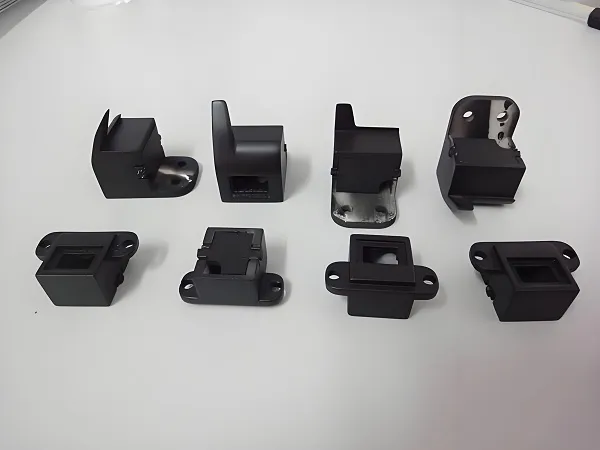
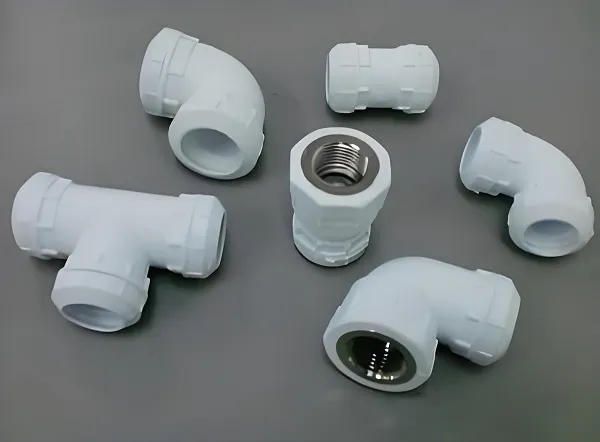
Precision Machined Components for Aerospace, Automotive, and Robotics Industries
CNC milling parts are essential components in modern manufacturing, widely used in aerospace, automotive, and robotics industries. As an experienced CNC machining manufacturer with over 20 years of industry expertise, we provide high-precision custom milled parts with tight tolerances and fast turnaround times.
Our state-of-the-art facilities house 5-axis CNC machines that can produce complex geometries with exceptional accuracy, serving engineering teams, procurement managers, and product developers worldwide.
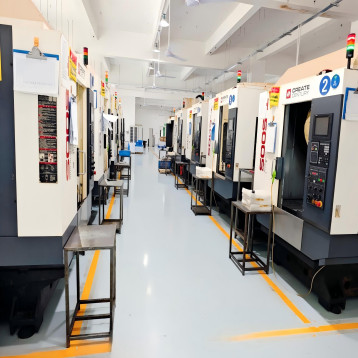
What Are CNC Milling Parts
CNC milling parts are precision-machined components created using computer numerical control (CNC) milling machines. This subtractive manufacturing process removes material from a solid block to create complex shapes and geometries with high accuracy.
Unlike CNC turning, which rotates the workpiece while a cutting tool remains stationary, CNC milling uses rotating cutting tools that move along multiple axes to create intricate features such as slots, holes, and 3D contours.
Common CNC Milling Part Types
- Mechanical components (gears, shafts, brackets)
- Prototypes and functional test parts
- Precision instrument components
- Aerospace structural parts
- Automotive engine components
- Robotic system parts
Types of CNC Milling Parts
Aluminum CNC Milling Parts
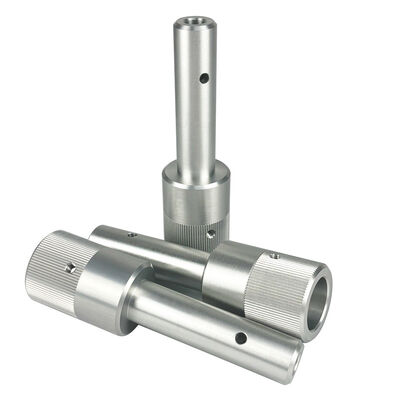
Lightweight, corrosion-resistant, and easy to machine, aluminum parts are ideal for aerospace, automotive, and consumer electronics applications.
Stainless Steel CNC Milling Parts
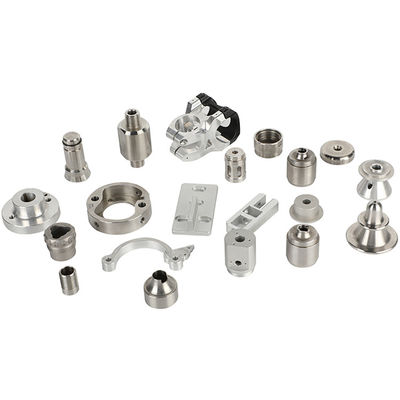
High strength, excellent corrosion resistance, and biocompatibility make stainless steel parts perfect for medical, marine, and food processing equipment.
Plastic CNC Milling Parts
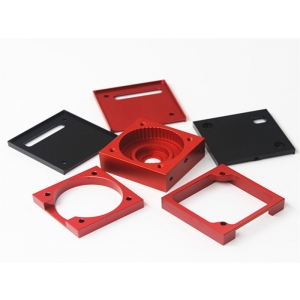
Engineered plastics offer excellent chemical resistance, electrical insulation, and cost-effectiveness for a wide range of industrial applications.
Materials for CNC Milling Parts
Choosing the right material is critical for optimal performance and cost-effectiveness. Here are the most commonly used materials for CNC milling parts:
| Material | Key Properties | Typical Applications |
|---|---|---|
| Aluminum 6061 | Lightweight, good machinability, corrosion resistant | Automotive components, aerospace parts, electronics |
| Aluminum 7075 | High strength-to-weight ratio, fatigue resistant | Aerospace structures, military components |
| Stainless Steel 304 | Excellent corrosion resistance, food safe | Medical devices, marine equipment, food processing |
| Stainless Steel 316 | Superior corrosion resistance, biocompatible | Implants, surgical instruments, offshore equipment |
| Brass C360 | Excellent machinability, good electrical conductivity | Electrical components, plumbing fittings |
| POM (Acetal) | High strength, low friction, chemical resistant | Gears, bearings, automotive interior parts |
| PTFE (Teflon) | Extremely low friction, chemical inert | Seals, gaskets, chemical processing equipment |
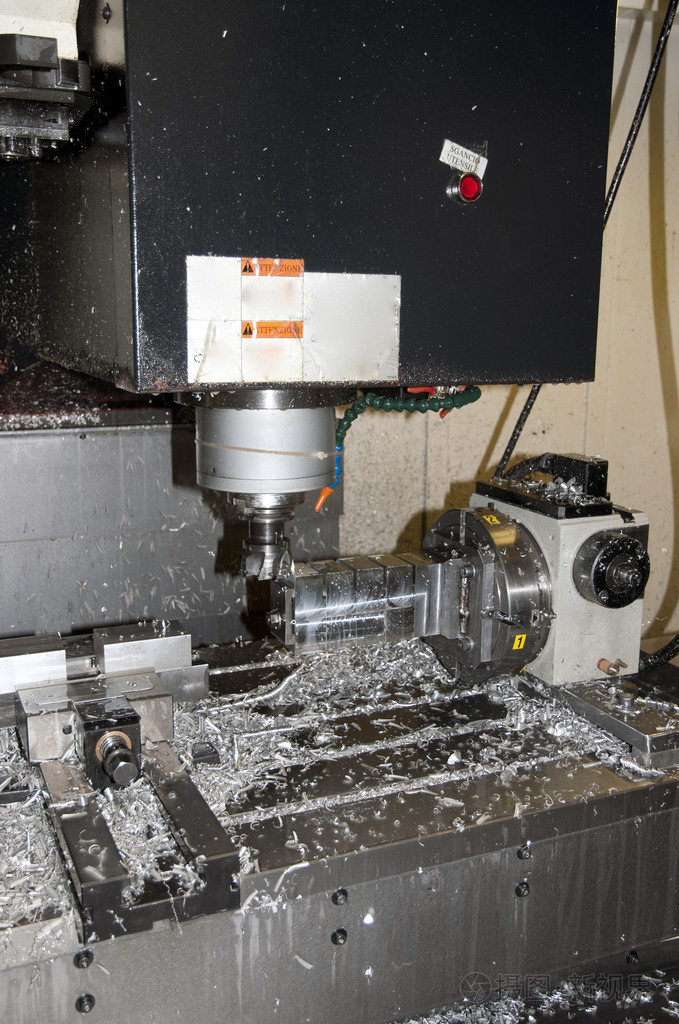
CNC Milling Process Explained
Machine Capabilities
- 3-axis CNC milling: Basic X, Y, Z axis movement for simple geometries
- 4-axis CNC milling: Adds rotational axis for complex parts
- 5-axis CNC milling: Simultaneous 5-axis movement for intricate 3D shapes
- High-speed machining: Reduces cycle times while maintaining precision
Standard Manufacturing Workflow
- Design & Engineering: CAD modeling and DFM analysis to optimize part design for manufacturability
- Programming: CAM software generates toolpaths and G-code instructions for the CNC machine
- Setup: Material fixturing, tool selection, and machine calibration
- CNC Machining: Automated material removal according to programmed instructions
- Quality Inspection: CMM measurement and visual inspection to ensure dimensional accuracy
- Surface Treatment: Anodizing, plating, or other finishing processes as required
Tolerances & Precision Standards
Precision is critical for CNC milling parts, especially in high-performance applications. Our machining capabilities meet the most demanding tolerance requirements:
Standard Tolerances
- ±0.01mm (0.0004″) for general applications
- ±0.005mm (0.0002″) for precision features
- ±0.002mm (0.00008″) for ultra-precision components
Geometric Tolerancing
- ISO 2768 general tolerances
- GD&T (Geometric Dimensioning and Tolerancing)
- Flatness: 0.005mm per 100mm
- Parallelism: 0.008mm per 100mm
Engineering Tip:
Specifying tighter tolerances than necessary increases production costs and lead times. Work with our engineering team to determine the optimal tolerance balance between performance and cost for your application.
Surface Finishing Options
Surface finishing enhances the appearance, durability, and functionality of CNC milling parts. We offer a comprehensive range of finishing processes:
Anodizing
Electrochemical process that creates a durable oxide layer on aluminum parts, providing corrosion resistance and wear protection. Available in clear, black, and custom colors.
Typical thickness: 5-25 microns
Powder Coating
Dry powder applied electrostatically and cured under heat to create a hard, durable finish. Excellent for corrosion protection and color matching.
Typical thickness: 60-120 microns
Sandblasting
Propels abrasive material at high pressure to create a uniform matte finish and remove surface contaminants.
Media types: Aluminum oxide, glass beads, silicon carbide
Electroplating
Deposits a thin layer of metal (chrome, nickel, zinc) onto the part surface to improve corrosion resistance and appearance.
Common finishes: Zinc plating, nickel plating, chrome plating
Passivation
Chemical treatment for stainless steel parts to remove free iron and enhance corrosion resistance.
Complies with ASTM A967 and QQ-P-35 standards
Polishing & Buffing
Creates a smooth, reflective surface using abrasive compounds and buffing wheels. Ideal for aesthetic applications.
Surface finishes: Ra 0.2 to Ra 0.025 microns
Industry Applications
Aerospace
Aircraft structural components, engine parts, avionics housings, and landing gear components requiring strict FAA and AS9100 compliance.
Automotive
Engine components, transmission parts, suspension systems, and custom racing parts with high strength and durability requirements.
Robotics
Robot arms, gearboxes, sensor mounts, and precision components that require high accuracy and repeatability.
Medical
Surgical instruments, implant components, diagnostic equipment parts, and medical device housings meeting ISO 13485 standards.
Electronics
Heat sinks, chassis components, connector housings, and precision parts for consumer electronics and industrial equipment.
Energy
Oil and gas components, renewable energy parts, power generation equipment, and precision components for energy infrastructure.
Cost Factors & Pricing Guide
Understanding the factors that influence CNC milling costs helps you optimize your design for better value. Typical CNC milling parts cost ranges from $10 to $500 depending on complexity and material.
Key Cost Influencing Factors
Material Costs
Accounts for 20-40% of total cost. Premium materials like titanium and specialty alloys cost significantly more than aluminum or steel.
Complexity & Geometry
Intricate designs with tight tolerances, deep pockets, or complex 3D shapes require more machining time and specialized tools.
Machining Time
Depends on part size, material hardness, and required precision. 5-axis machining typically costs more than 3-axis.
Surface Finishing
Specialized finishes like anodizing, plating, or passivation add to the total cost but improve part performance and durability.
Quantity
Larger production volumes reduce per-unit costs through economies of scale and optimized setup processes.
Quality Requirements
Strict inspection requirements and documentation add cost but ensure compliance with industry standards.
How to Reduce CNC Milling Costs
- Use standard tolerances where possible
- Choose cost-effective materials that meet performance requirements
- Design for manufacturability (DFM) to minimize complex features
- Optimize part orientation to reduce setup time
- Consider batch production for repeated orders
- Work with experienced manufacturers who can provide design optimization suggestions
Design Tips for CNC Milling Parts
Proper design for manufacturability (DFM) ensures your CNC milling parts are produced efficiently and cost-effectively while maintaining required performance.
Geometry Optimization
- Avoid sharp internal corners – use fillets instead
- Maintain uniform wall thickness where possible
- Minimize deep, narrow pockets that require long tools
- Use standard tool sizes for holes and features
Tolerance Design
- Specify tolerances only where necessary
- Use geometric tolerancing for critical features
- Consider manufacturing capabilities when setting tolerances
- Allow for reasonable clearance fits
Material Selection
- Choose materials based on functional requirements
- Consider machinability when selecting alloys
- Account for material properties like thermal expansion
- Evaluate cost vs. performance trade-offs
Feature Design
- Design parts to minimize setup changes
- Use consistent feature sizes where possible
- Avoid over-constraining part fixturing
- Include locating features for assembly
Why Choose Our CNC Milling Services
Industry-Leading Capabilities
Advanced Equipment
- 5-axis CNC milling machines for complex geometries
- High-speed machining centers for reduced cycle times
- Coordinate Measuring Machines (CMM) for precision inspection
- Latest CAD/CAM software for optimized toolpaths
Quality Assurance
- ISO 9001:2015 and AS9100D certified
- Full traceability and documentation
- First article inspection (FAI) reports
- Continuous improvement processes
Customer Benefits
- Low minimum order quantity (MOQ) – starting at 1 piece
- Fast turnaround – 1-3 days for prototypes
- Competitive pricing with volume discounts
- Dedicated engineering support
Get Your Free Quote Today
Upload your CAD file and receive a detailed quote within 24 hours
Trusted by Industry Leaders
We’ve been providing precision CNC milling services for over 20 years, serving more than 1,000 customers across 20+ industries. Our commitment to quality and customer satisfaction has earned us long-term partnerships with Fortune 500 companies and innovative startups alike.
Frequently Asked Questions
What is the difference between CNC milling and turning?
CNC milling uses rotating cutting tools that move along multiple axes to remove material from a stationary workpiece, while CNC turning rotates the workpiece against a stationary cutting tool. Milling is better for complex shapes and features, while turning is ideal for cylindrical parts.
What tolerance can CNC milling achieve?
Our CNC milling machines can achieve tolerances as tight as ±0.002mm (0.00008″) for precision features. Standard tolerances are ±0.01mm (0.0004″) for general applications. The achievable tolerance depends on material, part size, and feature complexity.
What materials are best for CNC milling?
The best material depends on your application requirements. Aluminum 6061 is a versatile choice for many applications due to its good machinability and strength-to-weight ratio. Stainless steel 304 offers excellent corrosion resistance, while engineered plastics like POM provide good chemical resistance and cost-effectiveness.
How long does CNC milling take?
Lead times vary depending on part complexity, quantity, and finishing requirements. Prototypes can be completed in 1-3 days, while production runs typically take 5-15 business days. Rush delivery options are available for urgent orders.
What file formats do you accept for CNC milling?
We accept most common CAD file formats including STEP, IGES, STL, SolidWorks (SLDPRT), CATIA, Pro/ENGINEER, and AutoCAD (DWG/DXF). For best results, provide STEP or IGES files as they maintain dimensional accuracy across different CAD systems.
What is the minimum order quantity for CNC milling parts?
We accept orders starting from 1 piece, making us ideal for prototyping and small production runs. For larger quantities, we offer volume discounts and can provide dedicated production planning to meet your delivery schedule.
How do I get a quote for CNC milling parts?
You can get a free quote by uploading your CAD file through our website or contacting our sales team directly. We provide detailed quotes within 24 hours that include material costs, machining time, finishing costs, and delivery options.
What surface finishes are available for CNC milling parts?
We offer a wide range of surface finishes including anodizing, powder coating, sandblasting, electroplating, passivation, polishing, and more. The best finish depends on your application requirements for corrosion resistance, appearance, and functionality.
Ready to Start Your Project?
Our team of experienced engineers is here to help you with all your CNC milling needs
Get in Touch
Email: charlie@plasticmetalparts.com
Phone: +86-18150097490
Office Hours
Monday-Friday: 8:00 AM – 6:00 PM (GMT+8)
Saturday: 9:00 AM – 12:00 PM (GMT+8)
Sunday: Closed