A door sill is among the most structurally and environmentally stressed components in any building opening. Positioned at the intersection of interior and exterior — often exposed to driving rain, standing water, and intense sunlight — it must perform as a structural support, a moisture barrier, an air seal, and in many applications, a thermal break.
For architects, door system manufacturers, and building supply distributors, sourcing wood-based sills and thresholds involves evaluating whether a manufacturing partner can deliver precise dimensional control, long-term dimensional stability, and verified moisture resistance — not just mill a wooden profile.
Goldcattle provides custom CNC-machined wooden door sills and thresholds, manufactured from kiln-dried hardwood (8–12% moisture content), engineered composite wood, or aluminum-clad hardwood — with custom dimensioning, OEM batch production, and documented quality control.
What Is a Wooden Door Sill?
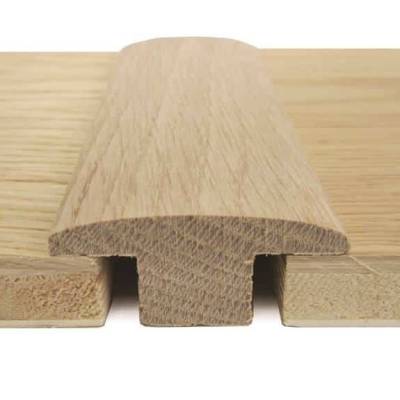
A wooden door sill is the horizontal structural base component installed beneath a door frame to provide structural support, define the transition between interior and exterior finished floor levels, and serve as the primary defense against water infiltration, air leakage, and pest entry at the door opening. The sill sits directly on the rough opening substrate and supports the door jamb and threshold assembly.
In summary, a wooden door sill is a structural and weather-sealing base component that supports the door frame while preventing water ingress and providing a defined floor transition at the door opening.
Door Sill vs. Threshold: Understanding the Difference
This module is a high-traffic information entry point. In actual engineering, the responsibilities of sill and threshold are clearly distinguished.
In the U.S., accessibility standards require threshold height no greater than 3/4 inch, with a beveled slope no greater than 1:2. In New Zealand Building Code E2/AS1, there are clear regulations on the minimum ground clearance between the threshold and the floor. For grooved sills, the horizontal plane of the groove is used as the measurement benchmark. Under UK NHBC standards, the maximum height difference of the threshold is 15mm, which can be used with small internal ramps and external sills, with a maximum slope of 15 degrees.
In simple terms: the sill is the structural foundation that supports the door system; the threshold is the sealing and drainage component that sits on top to fine-tune the gap and channel water away. Many modern commercial systems integrate both into a single engineered assembly.
In summary, the door sill provides the structural base and primary weather seal for a door opening, while the threshold delivers the final water drainage, air seal adjustability, and accessible ground transition; together they form a weathertight assembly governed by building codes including ADA, NHBC, and E2/AS1.
Wood Material Options for Custom Door Sills
The selection of exterior sill materials must simultaneously meet durability, corrosion resistance, machining, and outdoor aesthetic requirements.
For natural hardwoods, oak and mahogany have been used as exterior door sills for up to half a century. Ipe (Brazilian Walnut) is known for its extremely high density and natural corrosion resistance, but it is difficult to process — it requires carbide tools, and pre-drilling is necessary due to its high hardness. White oak, with its sufficient supply in North America, moderate density, and natural tyloses that block water, has become the most commonly used hardwood for exterior sills in North America.
Modern exterior door sills have undergone a fundamental change from the early simple structure of “just an oak or mahogany board with a rubber seal strip”. At that time, the design worked well initially, but it was inevitable that it would eventually rot or warp. Therefore, aluminum-clad and composite sill systems have become the mainstream commercial specification.
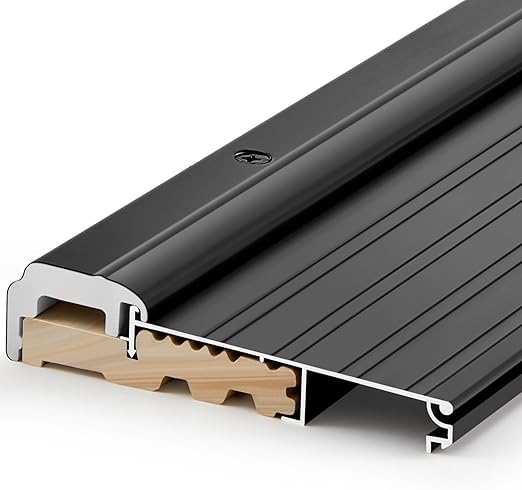
In summary, natural hardwoods (white oak and mahogany) provide authentic aesthetics but require kiln-drying and protective treatment for exterior use, while aluminum-clad and composite wood options eliminate moisture degradation risk entirely — making material selection a balance between visual design requirements and long-term weather performance.
Key Engineering Challenges in Wood Door Sill Manufacturing
Effective moisture management is the difference between a sill that performs for decades and one that requires replacement after the first severe weather season. The goal is to keep wood moisture content below 22% — the threshold at which rot fungi become active.
The key factor determining wood-based sill longevity is moisture management from three directions — internal (kiln-dried moisture content), external (aluminum cladding or composite barrier), and installation (sill pan flashing and continuous sealant) — with any single failure point compromising the entire door opening weather seal.
How We Ensure Exterior Sill Durability & Weather Performance
Manufacturing an exterior wooden door sill that maintains dimensional stability and weather seal integrity for 20+ years requires systematic control of moisture from kiln to installation.
Moisture Content Control:
Wood moisture content is the core variable for the physical stability of all wooden exterior door sill components. Kiln-dried wood is to dry the wood to a moisture content level of 5%–14% without changing its molecular structure. When we manufacture sills, the target moisture content for natural hardwood is 8–12%, which is a range verified by a large number of on-site tests — dry enough to ensure that the subsequent moisture absorption and expansion space is controllable, while avoiding brittle cracking caused by over-drying and rapid moisture absorption during use. For exterior door and window wood, kiln-drying to 12–14% can help it adapt to outdoor environmental conditions faster.
Exterior woods are often kiln dried to around 12–14% moisture content specifically because this helps exterior woods acclimate more quickly to outdoor environmental conditions. After kiln-drying to our target range, sills are allowed to equalize in a controlled environment before final dimensioning.
Grain Orientation & Machining:
Quarter-sawn or rift-sawn grain orientation is prioritized for solid hardwood sills, as this cut exhibits approximately 50% less tangential movement with humidity changes compared to flat-sawn lumber. Our final precision dimensioning is performed via CNC machining to ensure that each sill matches its specified profile and mounting geometry consistently across production batches.
End-Grain Sealing:
All exterior door sill components are covered with an impregnating end-sealant on their end faces before leaving the factory. The rate of water absorption on the end face of wood can reach 10–15 times that of the longitudinal surface; unsealed end faces are the most common but most preventable starting point of decay in sill systems.
In summary, exterior wood sill durability is engineered at the material level — through controlled 8–12% kiln-dried moisture content, quarter-sawn grain orientation for dimensional stability, and end-grain sealing to eliminate the most common moisture ingress pathway — creating a sill that resists rot, maintains its seal, and protects the door opening across decades of weather exposure.
Custom OEM & Batch Production Capabilities
The core logic of commercial procurement is “can we reorder stably for a long time”, not “can I buy a wooden door sill”.
For door system manufacturers, millwork distributors, and high-end residential production builders, the ability to source custom wooden door sills to exact specifications — consistently across repeat orders — determines whether a supplier can support long-term business operations.
Customization Options:
Batch Production Process:
- Profile Confirmation — Customer provides CAD drawing, reference sample, or physical template
- DFM Review — 24–48 hours: profile machinability analysis and material recommendation if needed
- Sampling — Pre-production sample for profile, dimension, and finish approval (7–10 working days)
- Production Run — Kiln-dried material preparation → CNC precision profiling → end-grain sealing → surface finishing → QC inspection
- Documentation & Shipping — Dimensional inspection report per batch; batch traceability documentation
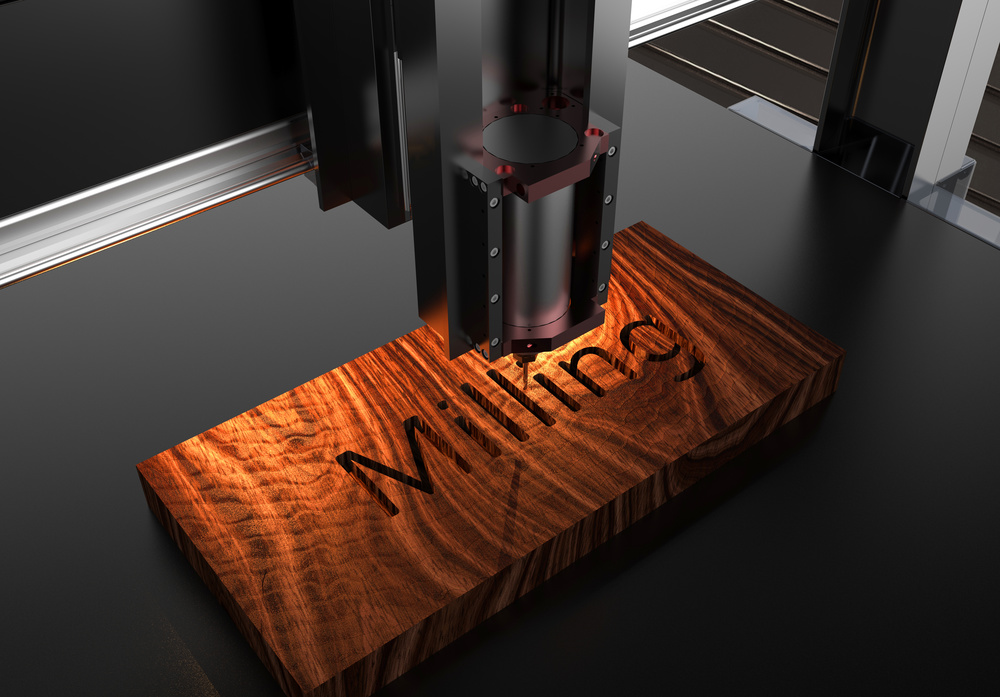
Custom OEM wooden door sill manufacturing requires more than milling capability — it demands moisture-controlled material preparation, CNC profiling precision, documented batch consistency, and the ability to match identical specifications across repeat production runs.
Common Wood Door Sill Problems & Solutions
Every wood sill failure mode in the field can be traced to moisture — either moisture content at manufacture, moisture exposure in service, or moisture management at installation. Systematic control at all three stages separates production-grade sill manufacturing from commodity wood milling.
Case Study — Exterior Hardwood Sill System for Coastal Climate
Project: Exterior Door Sill Assembly for High-End Coastal Residential Development
Industry: Residential Architecture / Custom Millwork
Location: Atlantic Seaboard (Zone 4 Marine Environment)
Material: Aluminum-Clad White Oak Hardwood Core
Challenge: The coastal site combined high ambient humidity, wind-driven rain exposure, and salt-laden air — conditions that historically caused solid wood sills to swell, cup, and rot within 3–6 years. Developer required a 15-year structural warranty on all door openings, demanding a sill solution compatible with custom 8-foot entry door systems.
Our Solution:
- Specified quarter-sawn white oak core kiln-dried to 8–10% moisture content for the hardwood substrate
- CNC-machined each sill to exact custom profile (beveled top surface for drainage; back-dam edge to prevent inward water migration)
- Extruded aluminum cladding tray sealed to hardwood core, creating a waterproof top and exterior face
- Factory-applied end-grain sealant on all cut ends; continuous sill pan flashing supplied per opening
- Dimensional inspection report provided per batch delivery (50–100 sills per phase)
Results:
- Sills delivered to specification across 3 development phases over 18 months; zero profile rejections
- 2-year field inspection: no swelling, cupping, or rot observed in any installed sill
- Developer achieved door opening weather-tightness sign-off on first inspection cycle
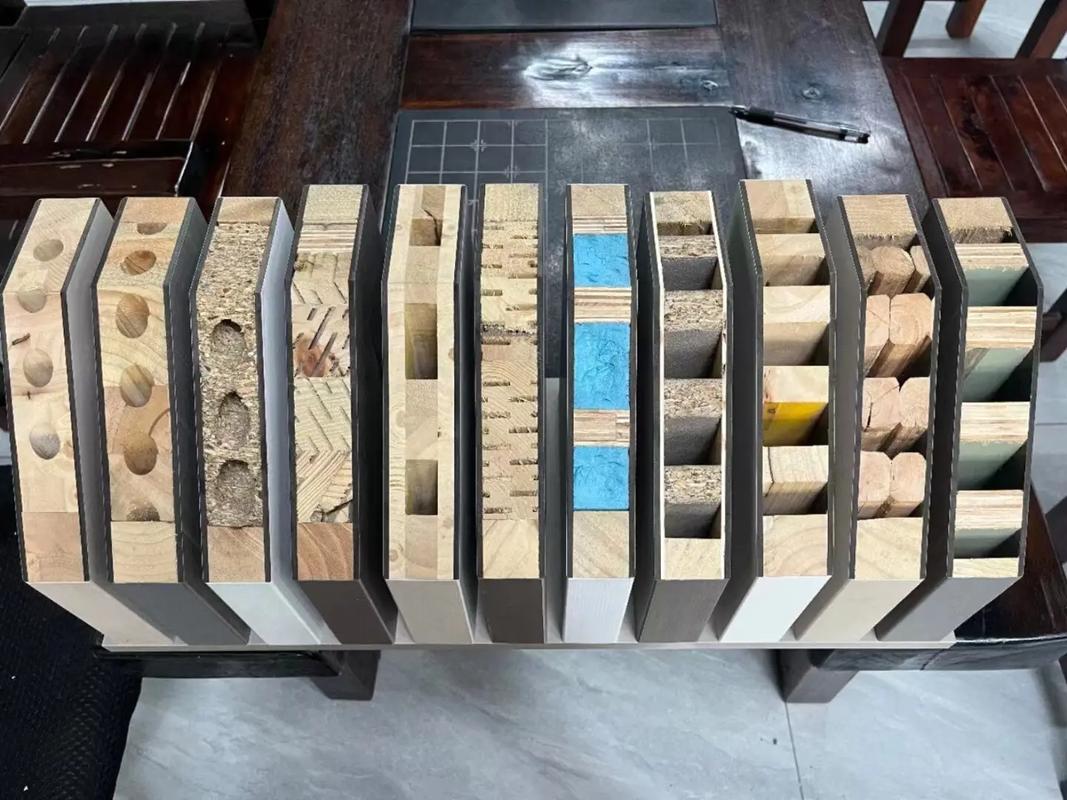
This project demonstrates our approach to exterior wood sill manufacturing — material selection matched to environmental exposure, precision CNC profiling for dimensional consistency, and documented batch quality control supporting long-term commercial supply relationships.
Engineering Standards for Exterior Door Sills & Thresholds
In North American and European markets, exterior door sills and thresholds are subject to building code performance requirements — not just dimensional specifications.
For procurement professionals and specification writers, requesting that sill products be sourced from manufacturers who understand these testing and code requirements — including ASTM E330 structural verification and ASTM E1105 water penetration resistance — reduces installation risk and call-back cost.
In summary, exterior door sill and threshold systems are regulated at the building code level — not just for dimensions, but for structural wind load resistance (ASTM E330), water penetration prevention (ASTM E1105), and accessible design (ADA) — making supplier manufacturing knowledge of these standards a critical factor in commercial specification.
FAQ
Q1: What is the difference between a door sill and a threshold?
A door sill is the structural base component that supports the door frame and provides the primary weather barrier. A threshold sits on top of the sill to provide adjustable sealing at the door bottom and final water drainage. The sill is structural; the threshold is the final seal.
Q2: Can wooden door sills be used for exterior doors?
Yes — but only when properly specified. Hardwood sills kiln-dried to 8–12% moisture content, with end-grain sealed and protected by a roof overhang, can perform well in exterior applications. For fully exposed positions without protection from direct rain, aluminum-clad or composite thresholds that eliminate wood-to-weather contact are strongly recommended.
Q3: What is the best wood for exterior door sills?
White oak is the most widely used hardwood for exterior sills in North America due to its natural rot resistance, availability, and machinability. Mahogany provides excellent stability and classic appearance. Ipe offers extreme density and natural durability but requires carbide tooling. For maximum durability, aluminum-clad hardwood combines the structural benefits of wood with the weather protection of aluminum.
Q4: How do you prevent wooden door sills from rotting?
Rot prevention requires a three-stage approach: (1) Manufacturing: kiln-dry to 8–12% moisture content to eliminate fungal growth potential; (2) Protection: end-grain sealing plus aluminum cladding for exposed surfaces; (3) Installation: continuous sill pan flashing beneath the sill and continuous sealant at all frame interfaces. Wood moisture content must stay below 22% — the threshold at which rot fungi become active.
Q5: What moisture content should exterior wooden door sills have?
Exterior wooden door sills should be kiln-dried to 8–12% moisture content before final dimensioning, with exterior woods often targeting 12–14% to accelerate acclimation to outdoor environmental conditions.
Q6: How are custom wooden door sills manufactured for commercial projects?
Custom sills are manufactured through: kiln-dried material preparation → CNC precision profiling per customer CAD → end-grain sealing → surface finishing → dimensional QC inspection. OEM batch production ensures identical specifications across repeat orders.
Q7: What is an aluminum-clad door sill and when is it recommended?
An aluminum-clad door sill consists of a hardwood core encapsulated in an extruded aluminum tray on the top and exterior face. It is recommended for fully exposed exterior applications where a solid wood sill would face direct rain, standing water, or intense UV exposure, as the aluminum shell provides a waterproof barrier that eliminates wood-to-weather contact entirely.
Q8: What is the ideal door sill profile for accessibility compliance?
In the United States, accessibility standards require threshold height not exceeding 3/4 inch with a beveled slope no greater than 1:2. In the UK per NHBC standards, max upstand is 15 mm with sill ramp slope ≤15°.
Q9: What are the common reasons exterior door sills fail?
The most common causes are: wood rot from moisture content exceeding 22%; swelling causing seal failure; water infiltration from inadequate sill pan flashing; and warping from differential drying. All can be prevented with kiln-drying, end-grain sealing, aluminum cladding, and proper installation flashing.
Need custom wooden door sills manufactured to your profile?
Upload your sill profile drawing or CAD file.
→ Receive a DFM review within 24–48 hours
→ Pre-production sample available for profile approval
→ OEM batch production with documented dimensional inspection
Our Capabilities & Trust Signals
🔧 Materials
White Oak, Mahogany, Maple, Teak (kiln-dried 8–12% MC); Aluminum-Clad Hardwood; Engineered Composite
📐 CNC Precision
Profile tolerance ±0.5 mm; digital calibration per production batch
🛡️ Weather Protection
End-grain sealed; UV-stabilized exterior coatings; aluminum-clad moisture barrier available
📋 Documentation
Dimensional inspection report per batch; moisture content verification; material certifications
💧 Moisture Control
Kiln-dried to 8–12% MC; environmental equalization before final dimensioning
⚙️ Capabilities
Custom profiles, OEM batch production, pre-drilled mounting, custom packaging