Progressive Die Stamping Services for High-Volume Precision Metal Parts
Goldcattle provides custom progressive stamping services as part of our comprehensive metal stamping services, supporting high-volume production with consistent quality and cost-efficient tooling solutions for OEMs across multiple industries.
- ✓ Custom progressive die design & manufacturing
- ✓ Precision high-volume metal forming
- ✓ Secondary operations support
- ✓ Fast lead time for tooling & production
- ✓ Strict dimensional quality control
What Is Progressive Stamping?
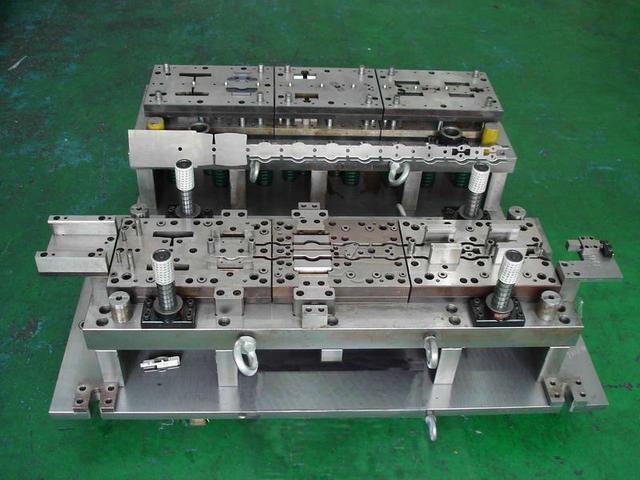
Progressive stamping is a high-efficiency metal forming process where a continuous strip of sheet metal passes through multiple sequential die stations. Unlike single-stage operations, each station performs a specific manufacturing step simultaneously as the material advances through the tool.
Common operations performed across these stations include punching, bending, embossing, forming, and trimming. The part remains connected to the carrier strip until the final station, where the finished component is separated from the material web.
This process is widely used for precision, high-volume metal parts requiring exceptional repeatability and lower per-piece production costs, making it ideal for mass production environments.
How Progressive Die Stamping Works
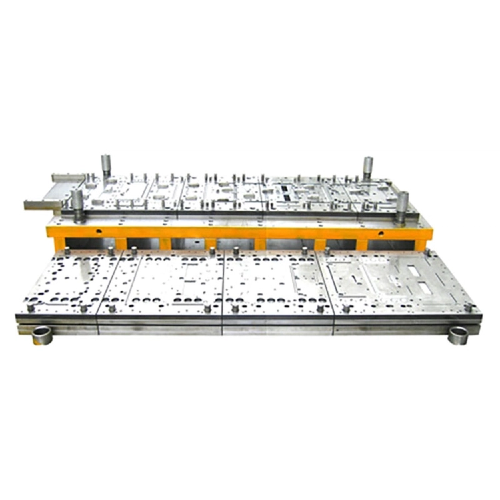
Material Feeding
Coiled sheet metal is fed into the stamping press at a controlled pace, ensuring consistent alignment with the die stations.
Die Positioning
The material strip is precisely positioned against the progressive die, with pilot pins ensuring accurate alignment for each operation.
Sequential Forming
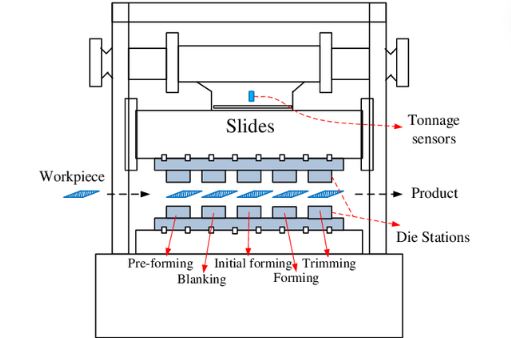
Each station performs a specific operation simultaneously, including piercing, bending, embossing, and trimming, gradually shaping the part.
Part Separation
Once all forming operations are complete, the finished part is cut away from the carrier strip, ready for further processing or inspection.
Quality Inspection
Every part undergoes initial quality checks to ensure dimensional accuracy and surface quality before packaging and delivery.
Benefits of Progressive Stamping
Progressive stamping is the ideal manufacturing solution when your project demands efficiency, consistency, and cost-effectiveness for large production runs.
High Production Speed
Significantly faster cycle times compared to manual or single-stage operations, enabling rapid order fulfillment
Dimensional Repeatability
Exceptional consistency across thousands or millions of parts, eliminating variation between production runs
Lower Unit Cost
Reduced labor requirements and optimized material utilization drive down per-part costs for high-volume projects
Reduced Labor Input
Automated operation minimizes manual handling, reducing labor costs and the risk of human error
High Material Utilization
Optimized strip layout minimizes material waste, maximizing the value of your raw material investment
Complex Part Capability
Ability to produce intricate geometries with multiple features in a single production process
Progressive Stamping vs. Other Stamping Methods
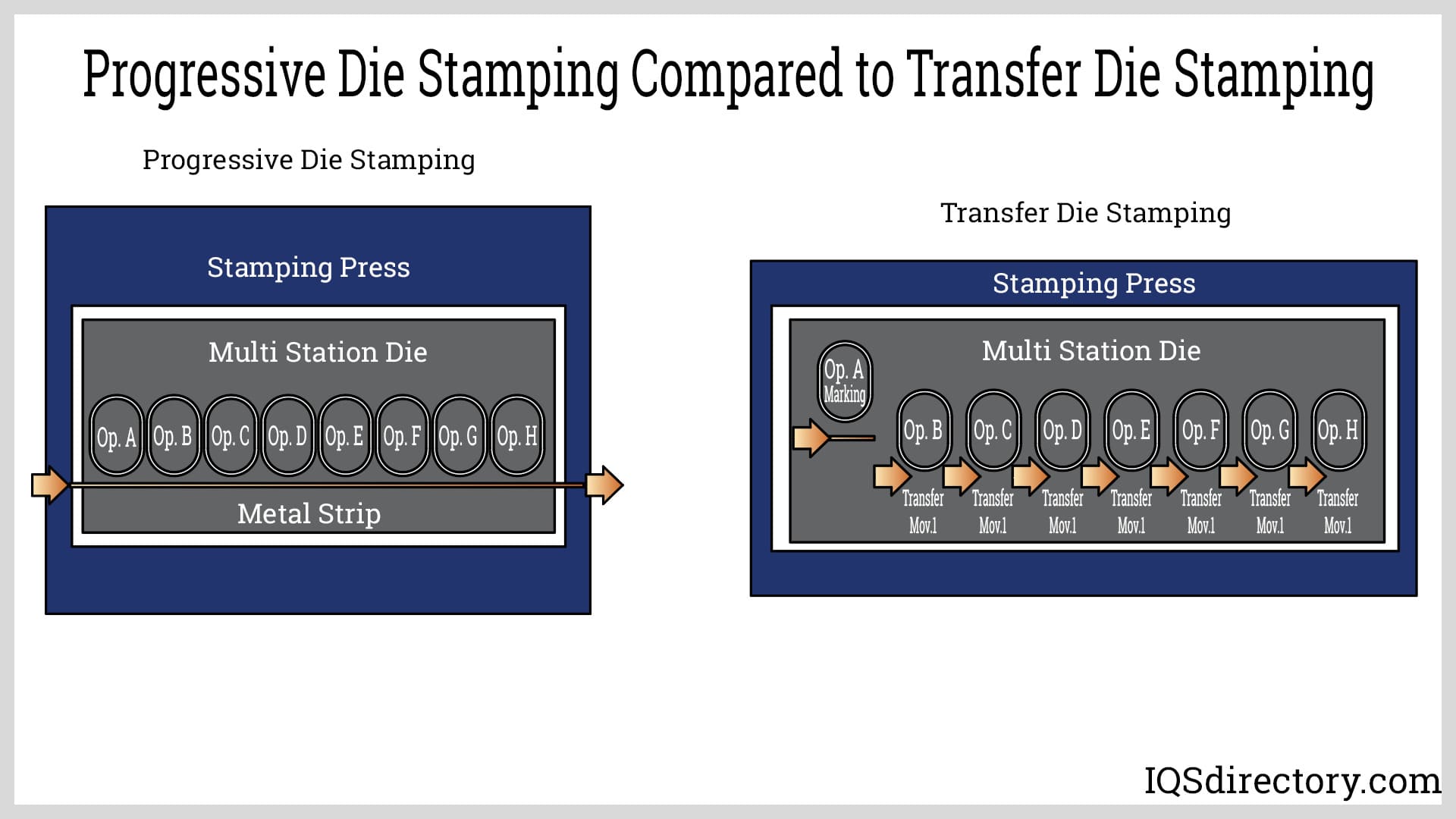
Understanding the differences between stamping methods helps you select the right manufacturing process for your specific project requirements. Here’s how progressive stamping compares to the common alternative, transfer stamping:
| Process Feature | Progressive Stamping | Transfer Stamping |
|---|---|---|
| Production Volume | Very High | Medium |
| Part Complexity | Medium-High | Very High |
| Production Speed | Fast | Moderate |
| Initial Tool Cost | High | High |
| Per-Part Cost | Very Low | Medium |
Our Progressive Stamping Capabilities
As an experienced progressive stamping manufacturer, we have the equipment and expertise to handle a wide range of projects, from small precision components to larger industrial parts.
Materials We Work With
Copper
Brass
Aluminum
Spring Steel
Carbon Steel
Specifications
- • Material thickness: 0.1mm – 6.0mm
- • Standard tolerance: ±0.02mm
- • Maximum part size: 600mm x 400mm
- • Production volume: 1,000 – 10,000,000+ parts
Available Operations
Blanking
Bending
Embossing
Tapping
Welding
Plating
Quality Control in Progressive Stamping
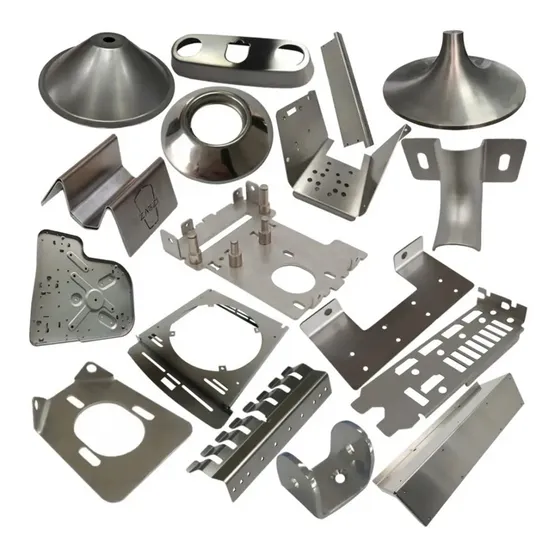
Maintaining consistent quality in high-volume progressive stamping requires strict process monitoring and proactive tool management. We implement rigorous quality control measures to ensure every part meets your exact specifications.
- ✓ First Article Inspection (FAI) for every new production run
- ✓ In-process dimensional checks to catch issues early
- ✓ Strict burr control and edge quality verification
- ✓ Proactive tool wear monitoring and maintenance
- ✓ Raw material certification and incoming inspection
- ✓ Final visual and dimensional inspection before shipment
Our in-house tool & die manufacturing capabilities also allow us to quickly repair or adjust tooling, minimizing downtime and ensuring consistent production quality over the life of your project.
Industries We Serve
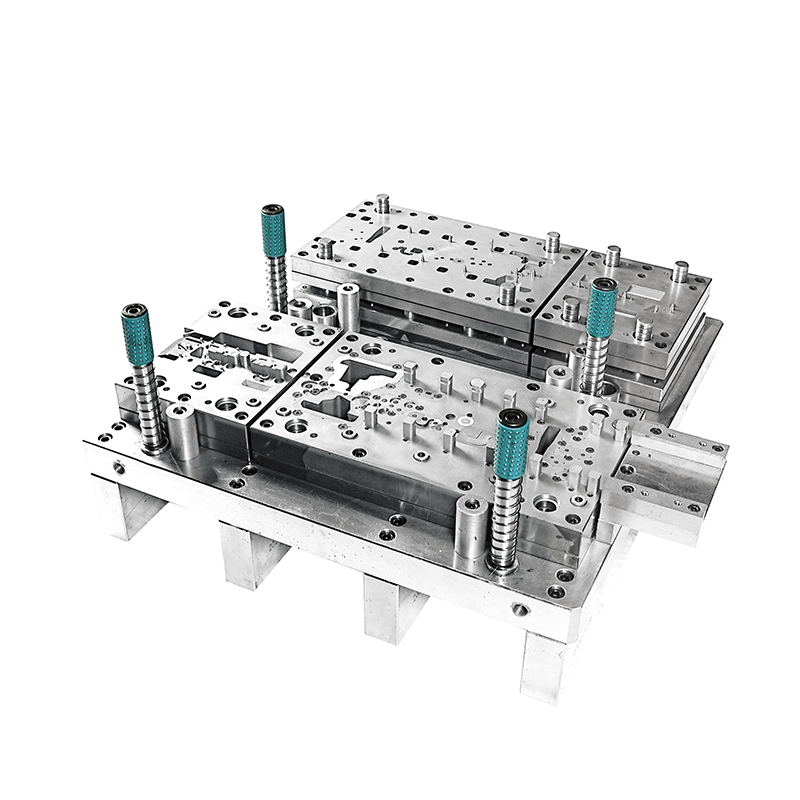
Our progressive stamping services support a wide range of industries, delivering reliable, high-quality parts that meet the strictest industry standards.
Automotive
Connector terminals, brackets, and structural components
Electronics
Shielding covers, contacts, and precision hardware
Appliance
Internal hardware, brackets, and functional components
Medical Devices
Implantable parts, device components, and surgical tools
Industrial Equipment
Machine components, fasteners, and structural parts
Frequently Asked Questions
What materials are suitable for progressive stamping?
We work with a wide range of ductile metals ideal for stamping, including stainless steel, copper, brass, aluminum, spring steel, and carbon steel. We can also accommodate other specialty materials based on your specific project requirements, as long as the material has sufficient formability for the process.
What is the difference between progressive and transfer stamping?
Progressive stamping uses a continuous metal strip that moves through multiple die stations, with parts remaining connected to the strip until completion. Transfer stamping separates the part from the strip early and moves it between stations mechanically. Progressive is ideal for high-volume small-to-medium parts, while transfer works better for larger, more complex components.
Is progressive stamping suitable for prototype production?
While progressive stamping is optimized for high-volume production, we can support prototype development using soft tooling or transitional processes. This allows you to test your part design before investing in full hard tooling for mass production, ensuring the design works as expected before scaling.
What tolerance can progressive stamping achieve?
Our standard progressive stamping process can achieve tolerances as tight as ±0.02mm for most parts, depending on the material, part size, and complexity. For less critical features, we can maintain standard commercial tolerances that balance cost and performance for your project.
How long does progressive die tooling last?
With proper maintenance, our progressive dies can last anywhere from 1 million to 10 million+ cycles, depending on the material being stamped and the complexity of the part. We provide proactive tool maintenance to extend tool life and ensure consistent quality throughout your production run.
When should progressive stamping be selected?
Progressive stamping is the best choice when you need high-volume production of small-to-medium precision metal parts, where low unit cost, fast production speed, and consistent dimensional repeatability are your top priorities. It is particularly cost-effective for production runs over 10,000 parts.
Ready to Start Your Progressive Stamping Project?
Whether you need custom tooling for a new product or high-volume production of existing parts, we have the expertise to deliver consistent quality at competitive prices.