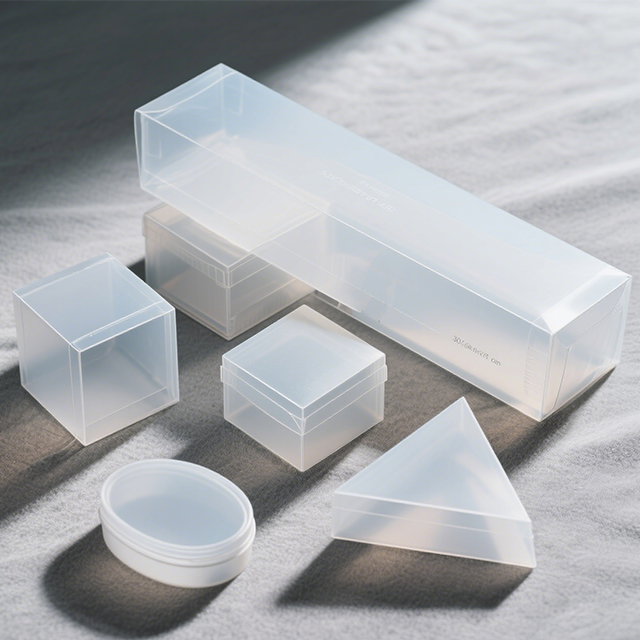
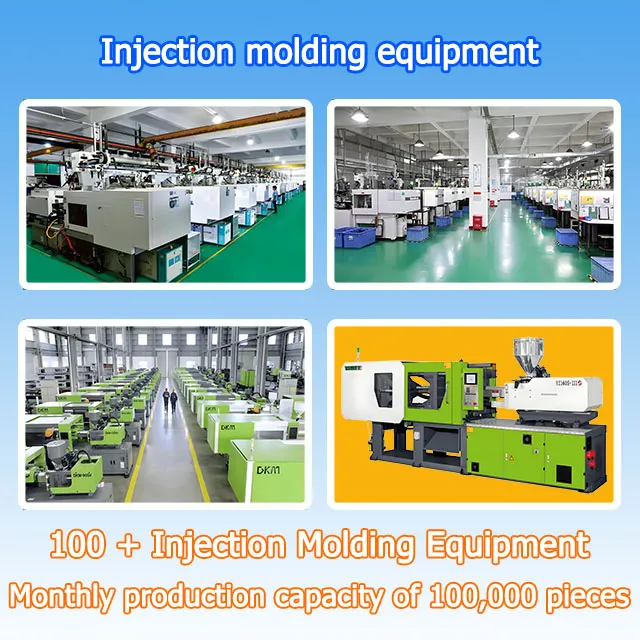
Injection Molding Factory for Custom PVC Transparent Packaging Boxes
Product Name: Custom PVC Transparent Packaging Boxes
Material: Food – grade PVC, eco – friendly PVC (optional)
Transparency Level: High clarity (90% + light transmission), customizable opacity available
Thickness Range: 0.2mm – 2mm (adjustable based on usage)
Size: Fully customizable (minimum: 3cm×3cm×1cm; maximum: 50cm×30cm×20cm)
Shape: Square, rectangular, cylindrical, irregular shapes (based on your design)
Printing Options: Silk – screen printing, digital printing, hot stamping (logo, pattern, text)
Surface Treatment: Glossy, matte, frosted, anti – scratch coating (optional)
MOQ: 500 pieces (negotiable for trial orders)
Lead Time: 7 – 15 working days (depending on customization complexity)
Description
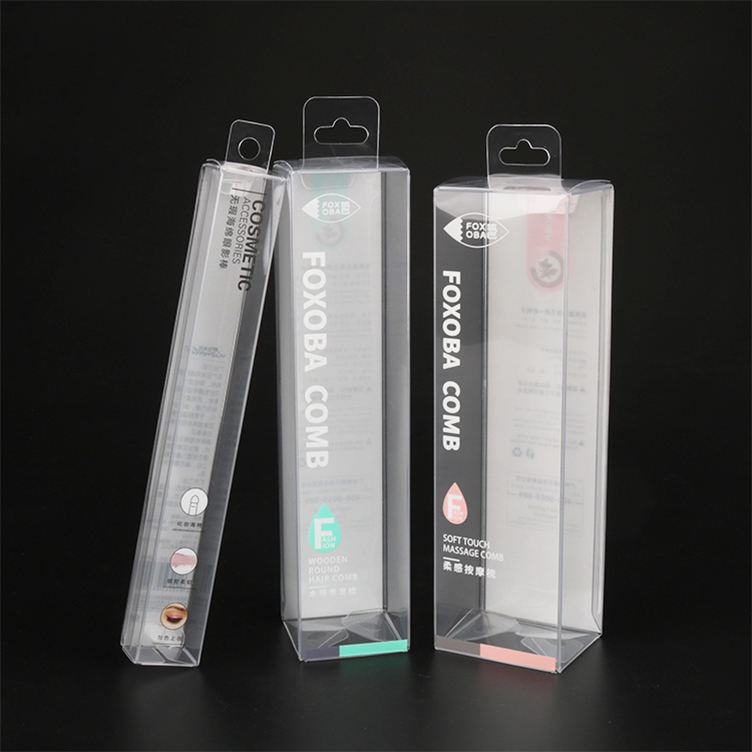
Transparent plastic packaging serves two critical functions simultaneously: protecting the product inside while providing maximum shelf visibility — a combination that directly influences consumer purchase decisions in retail and e-commerce environments. For cosmetics brands, electronics manufacturers, and food producers sourcing packaging at commercial scale, the choice of a packaging supplier involves evaluating whether the manufacturer can deliver consistent optical clarity, dimensional precision, and cosmetic surface quality across production batches numbering in the thousands or millions.
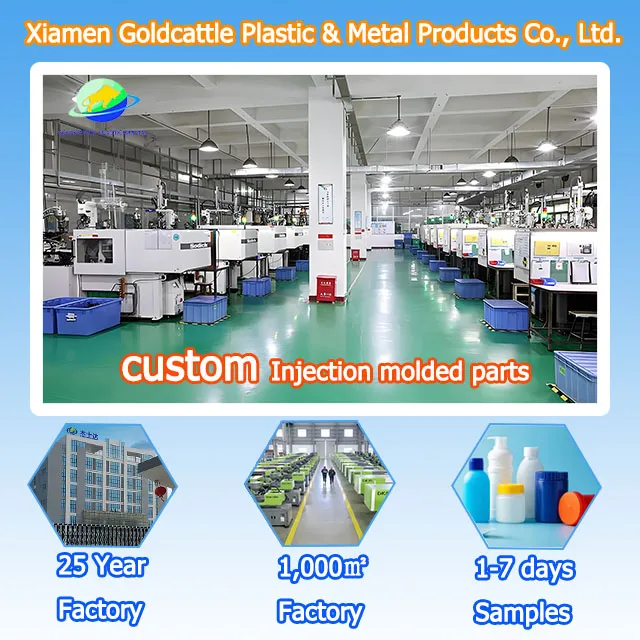
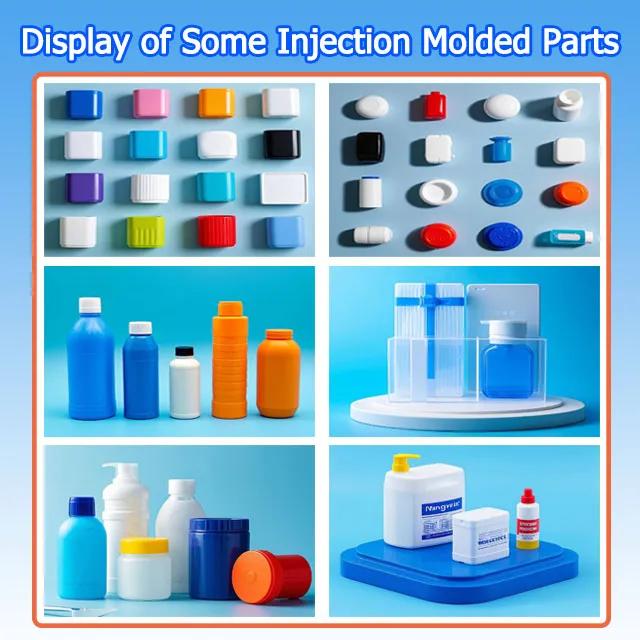
Goldcattle provides custom transparent plastic packaging boxes manufactured through precision injection molding, working with PVC, PET, RPET, and PC materials. From DFM review and mold development to multi-cavity production and cosmetic quality inspection, our manufacturing process is designed to deliver packaging that meets the optical, mechanical, and regulatory requirements of North American and European markets — with documented quality verification supporting your brand’s compliance needs.
What Are Transparent Plastic Packaging Boxes?
Transparent plastic packaging boxes are custom-engineered protective and display packaging components manufactured through injection molding — designed to improve product visibility, retail presentation, and transportation protection simultaneously. Unlike standard opaque packaging, transparent injection-molded boxes require strict control of optical clarity (typically 90%+ light transmittance), surface quality (free from flow marks, haze, scratches, and weld lines), and dimensional consistency (±0.1mm or better) — making their manufacture significantly more demanding than opaque alternatives.
In summary, transparent plastic packaging boxes are injection-molded display and protective components that must simultaneously satisfy optical clarity requirements, cosmetic surface quality standards, and precise dimensional tolerances — making them among the most quality-sensitive products in commercial packaging manufacturing.
Material Options for Transparent Plastic Packaging
Material selection is the single most consequential decision in transparent packaging manufacturing — directly determining optical performance, mechanical durability, chemical resistance, regulatory compliance, and recyclability profile. For brands sourcing packaging for North American and European markets, material choice also carries significant implications for regulatory compliance and environmental positioning.
| Material | Light Transmittance | Key Properties | Best Application | Regulatory & Environmental Notes |
|---|---|---|---|---|
| PVC (Polyvinyl Chloride) | 90%+ | High transparency; good flexibility; excellent printability; cost-effective; food-grade available | Cosmetics packaging, small electronics boxes, retail display boxes, short-to-medium lifecycle products | Most widely used currently; subject to increasing EU PPWR scrutiny; limited recycling infrastructure vs PET |
| PET (Polyethylene Terephthalate) | 88–92% | Excellent clarity; high strength-to-weight ratio; good chemical resistance; superior barrier properties | Food packaging, premium cosmetics, medical device packaging, extended shelf life products | Widely recyclable; strong sustainability positioning; PPWR-compliant for mono-material design |
| RPET (Recycled PET) | 85–90% | Post-consumer recycled content; ~50% reduced carbon footprint; properties near virgin PET | Brands with ESG commitments; food-contact packaging; circular economy positioning | Global market projected to reach US$25.9B by 2033; food-contact grades require specific certification |
| PC (Polycarbonate) | 88–91% | Superior impact resistance; heat resistance to 135°C; high strength; optical-grade clarity | Heavy-duty protective packaging; reusable systems; high-temperature applications | Higher raw material cost; excellent durability supports reuse models; recyclable in specialist streams |
| PP (Polypropylene) | Translucent (85%+) | Excellent chemical resistance; good fatigue resistance; lightweight; lower cost | Food containers, industrial packaging, hinged/living-hinge box designs | Mono-material PP aligns with PPWR recyclability requirements; increasingly specified for circular design |
For brands transitioning packaging portfolios toward sustainability, PET and RPET represent the mainstream future direction — offering verified recycling infrastructure and regulatory alignment — while PVC remains widely used where cost sensitivity and immediate availability are the primary considerations. We support material selection guidance based on your specific product requirements, target market regulations, and sustainability objectives.
In summary, transparent packaging material selection balances five interdependent factors — optical clarity, mechanical protection, chemical compatibility, regulatory compliance, and sustainability profile — with PET and RPET increasingly preferred for EU and North American markets due to recyclability infrastructure and alignment with PPWR requirements, while PVC remains cost-effective for applications where immediate recyclability is not the primary decision driver.
Our Transparent Packaging Injection Molding Capabilities
Precision Multi-Cavity Injection Molding
Our injection molding capability is purpose-built for the demanding optical and dimensional requirements of transparent packaging production:
- Dimensional precision: ±0.1mm on general positions; ±0.05mm achievable on critical fit features, verified through multi-point CMM measurement
- Optical performance: 90%+ light transmittance validated on production samples; haze controlled to <2% for premium cosmetic-grade packaging
- Mold design: Multi-cavity molds (2–8 cavities) with hot runner systems; mold flow simulation performed before tooling to optimize gate position
- Size range: Minimum 3cm × 3cm × 1cm; maximum 50cm × 30cm × 20cm; wall thickness 0.2mm–2mm adjustable
- Production efficiency: Supporting volumes from 500-piece trial orders to 500,000+ piece annual production programs
Cosmetic Surface Quality Control
Surface quality in transparent packaging is unforgiving — every defect is visible to the end consumer:
- Surface finish options: Glossy, matte, frosted, anti-scratch coating
- Defect prevention: Dedicated transparent-molding production cell with humidity control; mold surface polished to optical-grade finish (Ra ≤0.05μm)
- Quality standard: Zero visible flow marks, haze, weld lines, black specks, or surface scratches on Class-A cosmetic surfaces
Transparent injection molding requires extreme attention to detail across the entire process — from material drying to mold temperature control. Designing a transparent plastic part is not just about choosing the right material, but perfecting every step of manufacturing to deliver consistent, defect-free results.
Secondary Processing & Branding
Beyond molding, we provide integrated secondary processing that transparent packaging commonly requires:
- Printing options: Silk-screen printing, digital printing, hot stamping for logos, brand details, and patterns
- Surface treatment: Glossy, matte, frosted, anti-scratch coating, all applied to preserve underlying transparency
- Custom features: Hinged lids, snap-fit closures, custom insert integration, tamper-evident design
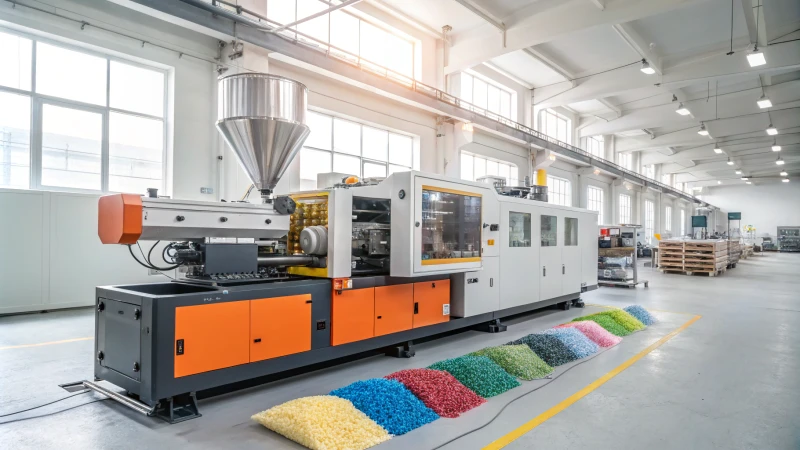
From multi-cavity precision injection molding with optical-grade mold finishing to integrated printing, surface treatment, and cosmetic inspection, our transparent packaging manufacturing system delivers production-ready packaging components that reduce our customers’ supply chain complexity and incoming quality inspection burden.
Key Engineering Challenges in Transparent Packaging Manufacturing
Transparent plastic packaging presents unique manufacturing challenges that separate experienced injection molders from general-purpose producers. Achieving consistent clarity across production batches requires systematic control of material, process, tooling, and handling variables.
| Challenge | Root Cause | Commercial Impact | Our Solution |
|---|---|---|---|
| Flow marks / surface ripples | Premature material solidification; insufficient mold temperature; injection speed variation | Visible cosmetic defect; entire batch rejected at incoming QC | Optimized temperature profile; validated injection parameters; sequential valve gate control |
| Weld lines in visible zones | Dual melt flow fronts converging around core features | Visible line disrupting transparency; reduced local strength | Mold flow simulation; gate position optimization; localized mold heating at knit lines |
| Haze / Reduced clarity | Inadequate mold polish; material degradation; moisture contamination; crystallinity issues | Cloudy packaging; perceived quality degradation; reduced product visibility | Optical-grade mold polishing; optimized melt temperature; thorough material drying; controlled cooling |
| Bubbles / Silver streaks | Moisture in hygroscopic materials; trapped air; material degradation | Visible internal defects; structural weakness | Material pre-drying; optimized mold venting; adjusted processing parameters |
| Surface scratches | Part-on-part contact; conveyor handling; shipping abrasion | Scratched surfaces; cosmetic rejection; cannot be reworked | Robotic part removal; protective film application; optional anti-scratch hard coating |
| Thin-wall warpage | Uneven cooling; differential shrinkage; residual stress | Poor lid fit; inconsistent gaps; assembly rejection | Warpage prediction via simulation; conformal cooling channels; optimized packing pressure |
Achieving optical clarity in transparent injection molded parts requires precise control of several interconnected process parameters — injection speed, melt temperature, mold temperature, packing pressure, and cooling time all interact to determine the final optical quality of the molded part.
The key factor distinguishing experienced transparent packaging manufacturers from general injection molders is not equipment alone — it is the systematic engineering approach to managing flow marks, weld lines, haze, bubble formation, surface scratches, and thin-wall warpage through mold flow simulation, optical-grade mold finishing, controlled material preparation, and validated process parameters — all of which determine whether packaging meets the zero-visible-defect standard required for retail shelf display.
Quality Control & Documentation for Transparent Packaging
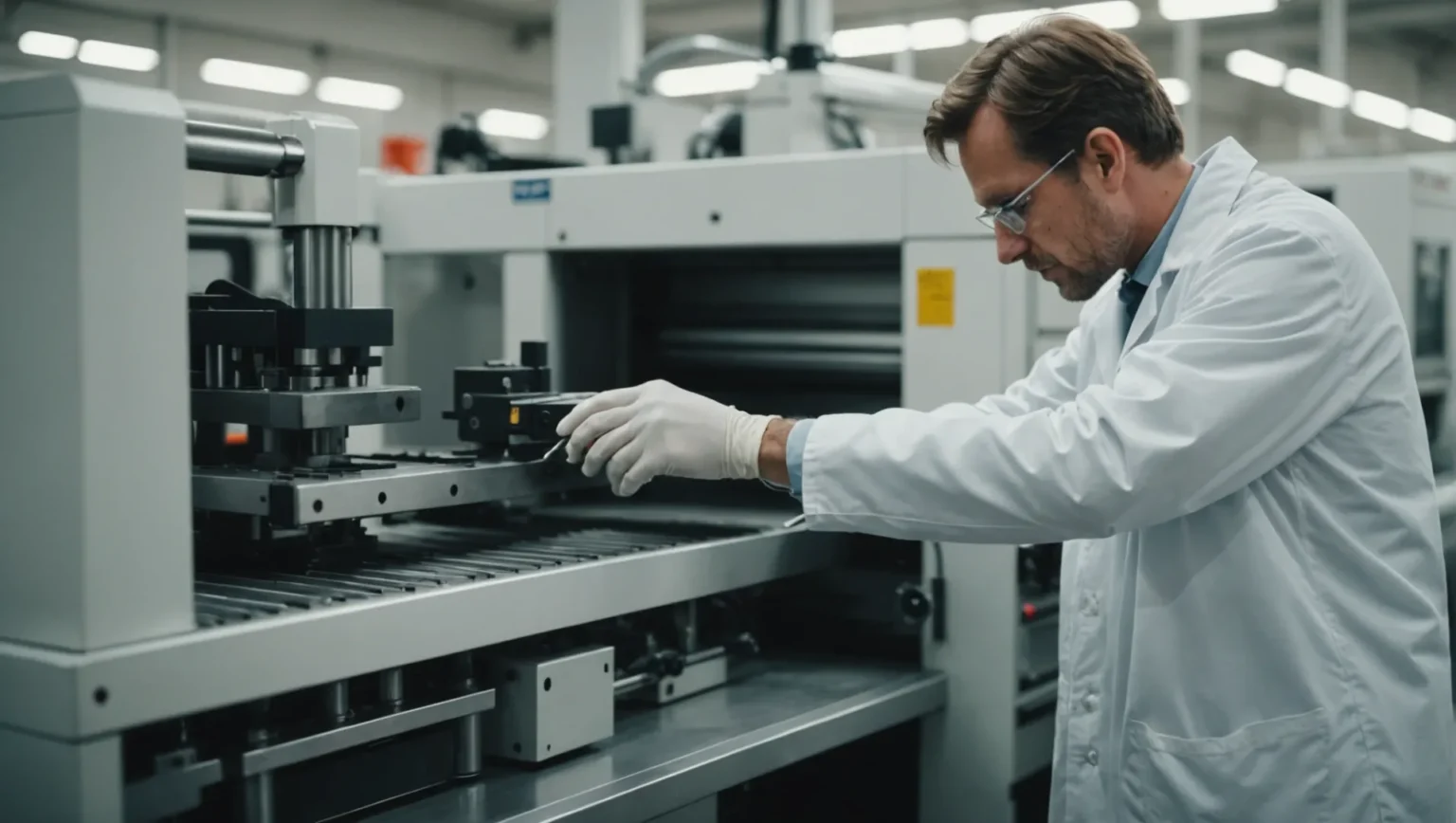
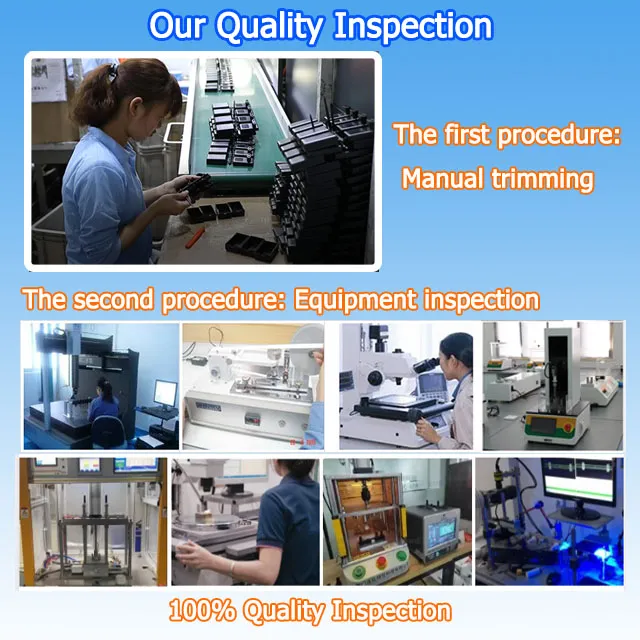
For brands and OEMs sourcing transparent packaging, the quality of cosmetic surfaces directly determines shelf appeal and consumer perception. Quality control for transparent parts requires more than dimensional measurement — optical and surface quality must be systematically verified.
| Inspection Stage | Method | What We Verify | Standard |
|---|---|---|---|
| Incoming material | Mill certificate review; moisture content verification | Material grade conformance; moisture within processing specification | Per material manufacturer specification |
| In-process | Visual inspection under controlled lighting; dimensional spot-check | Surface defects; critical dimensions | Zero visible defects on Class-A surfaces; ±0.1mm |
| First article | CMM dimensional report; optical clarity test; magnification inspection | Full dimensional conformance; light transmittance ≥90%; haze <2% | Per customer specification |
| Final batch | AQL sampling per ISO 2859; visual inspection; dimensional verification | Cosmetic quality; fit and function; dimensional conformance | Per customer specification |
| Documentation | Certification review; report generation | Traceable quality record | Per customer and regulatory requirements |
For food-contact packaging, we provide food-grade material certification (applicable PVC, PET, PP grades). For cosmetic and personal care brands, material safety documentation aligned with industry requirements is available. RoHS compliance documentation is provided for electronics packaging applications.
In summary, transparent packaging quality control requires four integrated layers — incoming material verification, in-process visual and dimensional monitoring, first-article optical and dimensional validation, and final batch inspection with documented quality records — ensuring that every production batch delivers the optical clarity and cosmetic quality required for retail shelf display.
Regulatory Compliance & Sustainability Alignment
For brands sourcing transparent packaging for North American and European markets, navigating the evolving regulatory landscape — particularly around sustainability and chemical safety — has become an integral part of supplier qualification.
European Union: PPWR (Packaging and Packaging Waste Regulation)
The EU Packaging and Packaging Waste Regulation (PPWR), officially Regulation (EU) 2025/40, entered into force on February 11, 2025, and will fully apply from August 12, 2026. Key implications for transparent plastic packaging include:
- Recyclability requirements: Packaging must be designed for recyclability; mono-material designs are favored over multi-material combinations
- Recycled content mandates: Increasing requirements for post-consumer recycled content in plastic packaging — driving demand for RPET and r-PP
- Substance restrictions: Heavy metals total concentration must not exceed 100mg/kg; PFAS limits for food-contact packaging effective from August 2026
North America: State-Level Regulations
The U.S. regulatory environment is evolving at the state level, with multiple states introducing extended producer responsibility (EPR) laws for packaging and restrictions on certain single-use plastics. Cosmetics packaging suppliers should be prepared to demonstrate compliance with FDA 21 CFR (for products contacting skin) and Proposition 65 requirements (for California market).
Our Compliance Support
We manufacture transparent packaging with consideration for these regulatory requirements:
- Material documentation: Full material certification including grade, composition, and regulatory status (food-grade, RoHS)
- Recyclable material options: PET and mono-material PP available for brands prioritizing recyclability compliance
- Recycled content: RPET options available for brands with recycled content mandates
- Testing support: Documentation to support customer regulatory submissions (EU PPWR, FDA, Proposition 65)
In summary, transparent packaging for European and North American markets must navigate an increasingly complex regulatory environment — with EU PPWR driving recyclability and recycled content requirements, and U.S. state-level regulations adding jurisdiction-specific compliance needs — making supplier material documentation and regulatory awareness essential components of packaging sourcing decisions.
OEM & Custom Manufacturing Process for Transparent Packaging
For brands launching new products or refreshing existing packaging lines, the ability to source custom transparent packaging to exact specifications — consistently across repeat orders — determines whether a supplier can support long-term brand growth.
Customization Range
| Size | Minimum 3cm × 3cm × 1cm; maximum 50cm × 30cm × 20cm; fully custom |
| Shape | Square, rectangular, cylindrical, irregular profiles — per customer CAD or reference sample |
| Wall Thickness | 0.2mm–2mm adjustable based on structural, weight, and cost requirements |
| Material | PVC, PET, RPET, PC — selected per application, regulatory, and sustainability requirements |
| Transparency | High clarity (90%+ light transmittance); optional opacity adjustment for special effects |
| Surface Finish | Glossy, matte, frosted, anti-scratch coating |
| Branding | Silk-screen printing, digital printing, hot stamping — logo, text, patterns |
| Special Features | Hinged lids, snap-fit closures, tamper-evident design, custom insert integration |
OEM Process Flow
- Design Review & DFM (24–48 hours): CAD file receipt (STEP, IGES, SolidWorks) or reference sample; DFM analysis covering wall thickness, draft angle, gate position, and weld line prediction
- Material Consultation: Material recommendation based on product compatibility, target market regulations, and sustainability objectives
- Prototype Development: 3D-printed or CNC-machined prototype for design validation; pre-production samples from prototype tooling
- Production Mold Manufacturing & Trial: Multi-cavity production mold build; mold trial with full dimensional and optical quality validation
- Mass Production & Delivery: Production ramp-up with in-process quality monitoring; MOQ from 500 pieces (negotiable for trial orders); lead time 7–15 working days depending on complexity
Custom transparent packaging OEM manufacturing spans five integrated stages — DFM review, material consultation, prototype development, mold manufacturing and trial, and mass production — with documented quality verification at each stage to support brand packaging programs from concept to sustained production delivery.
Why Choose Our Transparent Packaging Manufacturing Services
Selecting a transparent packaging manufacturing partner requires evaluating more than unit price. The cost of inadequate quality — cosmetic defects visible on retail shelves, inconsistent fit between lid and base, surface scratches that degrade brand perception — directly impacts brand reputation and customer satisfaction. Our manufacturing service is structured to minimize that risk:
- 🔧 Material Expertise: PVC, PET, RPET, PC with full certification; food-grade, RoHS-compliant options
- 👁️ Optical Quality: 90%+ light transmittance; haze controlled to <2% for premium applications
- 📐 Precision Molding: ±0.1mm dimensional tolerance; multi-cavity production with hot runner systems
- 🎨 Surface Quality: Glossy, matte, frosted, anti-scratch coating; optical-grade mold finishing
- ⚙️ OEM Flexibility: Custom size, shape, material, and features; MOQ from 500 pieces; 24–48h DFM review
- 📋 Regulatory Support: EU PPWR-aligned material options; FDA, Proposition 65 compliance documentation
- 🖨️ Integrated Branding: Silk-screen, digital, and hot stamping printing for your brand identity
- 📄 Full Documentation: Material certs; dimensional reports; compliance documentation with every order
In summary, the right transparent plastic packaging manufacturer delivers more than molded boxes — they provide material engineering guidance, optical-grade manufacturing, cosmetic quality verification, and regulatory documentation that support your brand’s quality standards and market compliance requirements.
FAQ — Custom Transparent Plastic Packaging
Q1: What materials are used for transparent plastic packaging boxes?
The most common materials for injection-molded transparent packaging boxes are PVC (90%+ light transmittance, good flexibility, cost-effective — widely used for cosmetics and electronics packaging), PET (88–92% transmittance, excellent chemical and moisture barrier properties, widely recyclable), RPET (recycled PET with reduced carbon footprint, suitable for brands with ESG commitments), and PC (superior impact and heat resistance, suitable for reusable and heavy-duty applications). The choice depends on optical requirements, product compatibility, target market regulations, and sustainability goals.
Q2: Is PVC packaging recyclable?
PVC recycling infrastructure is more limited compared to PET. While PVC is technically recyclable, its chlorine content complicates the recycling process, and dedicated PVC recycling streams are less developed than PET recycling systems. In the EU, the PPWR is driving a shift toward more readily recyclable materials like PET and mono-material PP. For brands prioritizing recyclability, PET and RPET are generally preferred over PVC.
Q3: What causes haze in transparent plastic packaging?
Haze in transparent injection-molded parts is typically caused by: (1) inadequate mold surface polish — the mold cavity must be polished to optical-grade finish (Ra ≤0.05μm); (2) material degradation from excessive melt temperature or residence time in the barrel; (3) moisture in hygroscopic materials (PC, PET) that has not been adequately dried before processing; and (4) crystalline structure formation from improper cooling rate control. Preventing haze requires systematic process control across all these areas.
Q4: How do manufacturers prevent scratches on clear plastic packaging?
Scratch prevention starts in the mold — polished cavity surfaces minimize ejection friction — and continues through controlled robotic part removal (eliminating part-on-part contact), protective film application post-molding for high-value packaging, and anti-scratch hard coating application for applications requiring extended shelf life or handling durability.
Q5: What is the difference between PVC and PET for packaging applications?
PVC offers 90%+ light transmittance with good flexibility and printability at a cost-effective price point, making it the most widely used transparent packaging material currently. PET offers comparable or slightly better clarity with superior chemical resistance, oxygen and moisture barrier properties, and a well-established recycling infrastructure. PET is increasingly preferred for EU and North American markets due to recyclability alignment with PPWR requirements, while PVC remains cost-effective where immediate recyclability is not the primary decision factor.
Q6: What is the typical minimum order quantity for custom transparent packaging?
Standard MOQ is 500 pieces, negotiable for trial orders. Production volumes can scale from small-batch trial runs to 500,000+ pieces annually, with multi-cavity mold configurations supporting efficient high-volume production.
Q7: What surface finishes are available for transparent plastic boxes?
Available surface finishes include: glossy (bright, eye-catching retail display finish), matte (elegant, premium feel with reduced fingerprint visibility), frosted (unique textured surface diffusing transparency for a softer light effect), and anti-scratch coating (applied to preserve surface quality through extended retail shelf life and handling). Each finish is applied in a controlled process that preserves the underlying transparency.
Q8: What regulations apply to transparent plastic packaging for EU and US markets?
For the EU market, the Packaging and Packaging Waste Regulation (PPWR, Regulation (EU) 2025/40) entered into force in February 2025, with full application from August 2026 — driving requirements for recyclability, recycled content, and substance restrictions. For the US market, state-level extended producer responsibility (EPR) laws are being introduced, and FDA 21 CFR compliance applies to packaging contacting cosmetic and food products. We provide material documentation to support customer regulatory submissions for both markets.
Ready to develop your custom transparent packaging?
- → DFM review within 24–48 hours
- → Material recommendation including sustainability options (PET, RPET)
- → Quote within 24 hours
- → Prototype and pre-production samples available