Our Core Stamping Capabilities
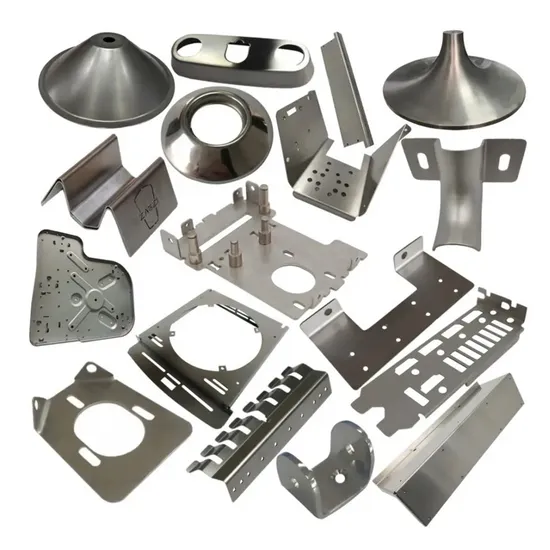
We offer a full range of custom metal stamping capabilities to meet your project requirements, from small precision components to large industrial parts, supporting both prototype and high-volume production:
| Capability | Available Details |
|---|---|
| Materials | Stainless Steel, Aluminum, Copper, Brass, Carbon Steel |
| Sheet Thickness | 0.1mm – 5mm |
| Tolerance Capability | ±0.05mm |
| Production Volume | Prototype to Mass Production (1 to 1,000,000+ pieces) |
| Tooling Options | Progressive Die, Single-Hit Die, Transfer Die |
| Surface Finishes | Plating, Powder Coating, Anodizing, Passivation, Polishing |
Quick Answer
Metal stamping is a high-efficiency manufacturing process used to produce precise metal components from sheet materials. It is widely used in automotive, electronics, industrial equipment and appliance manufacturing because it offers excellent repeatability, low unit costs at scale and consistent dimensional accuracy for large production runs.
Materials Available for Metal Stamping
We work with a wide range of sheet metal materials to meet different application requirements, each with unique properties that make them suitable for specific use cases:
| Material | Key Advantages | Typical Applications |
|---|---|---|
| 304 Stainless Steel | Good corrosion resistance, cost-effective | Electronics, general industrial parts |
| 316 Stainless Steel | Excellent chemical and corrosion resistance | Marine, medical device components |
| Aluminum 5052 | Lightweight, good formability | Automotive, aerospace components |
| Copper | Excellent electrical conductivity | Electrical connectors, busbars |
| Brass | Good machinability, corrosion resistance | Hardware, plumbing components |
How Metal Stamping Works
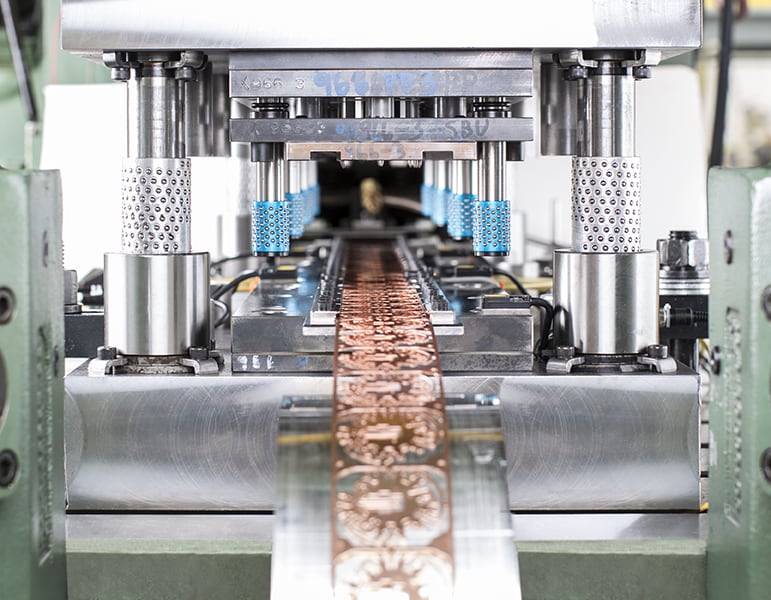
Metal stamping uses specialized dies to transform flat sheet metal into the desired shape. We offer a range of stamping processes to meet different part requirements:
Blanking
The first step in most stamping projects, where we cut the basic outline of the part from the sheet metal, creating a blank workpiece for further processing.
Piercing
The process of creating holes, slots, or other cutout features in the sheet metal, using a punch and die to remove the unwanted material.
Bending
We use specialized tooling to bend the sheet metal into the desired angle, creating 3D features like brackets, flanges, and housings.
Deep Drawing
A process that pulls the sheet metal into a die to create deep, hollow parts like cups, enclosures, and cylindrical components, with no seam.
Progressive Die Stamping
Our most efficient process for high-volume production, where we perform multiple stamping operations in sequence as the sheet moves through the die, eliminating setup errors. Learn more about progressive die stamping.
Metal Stamping vs Laser Cutting
Choosing the right manufacturing process is critical to optimizing your project cost and lead time. Here’s how metal stamping compares to laser cutting, to help you make the right decision:
| Factor | Metal Stamping | Laser Cutting |
|---|---|---|
| Tooling Cost | Higher upfront cost | Lower upfront cost |
| Unit Cost | Very low at scale | Higher per part |
| Production Speed | Very high for mass production | Moderate, part by part |
| Prototype Suitability | Moderate, requires tooling | Excellent, no tooling needed |
| High Volume Production | Excellent, consistent cost | Poor, high labor cost |
Industry Applications
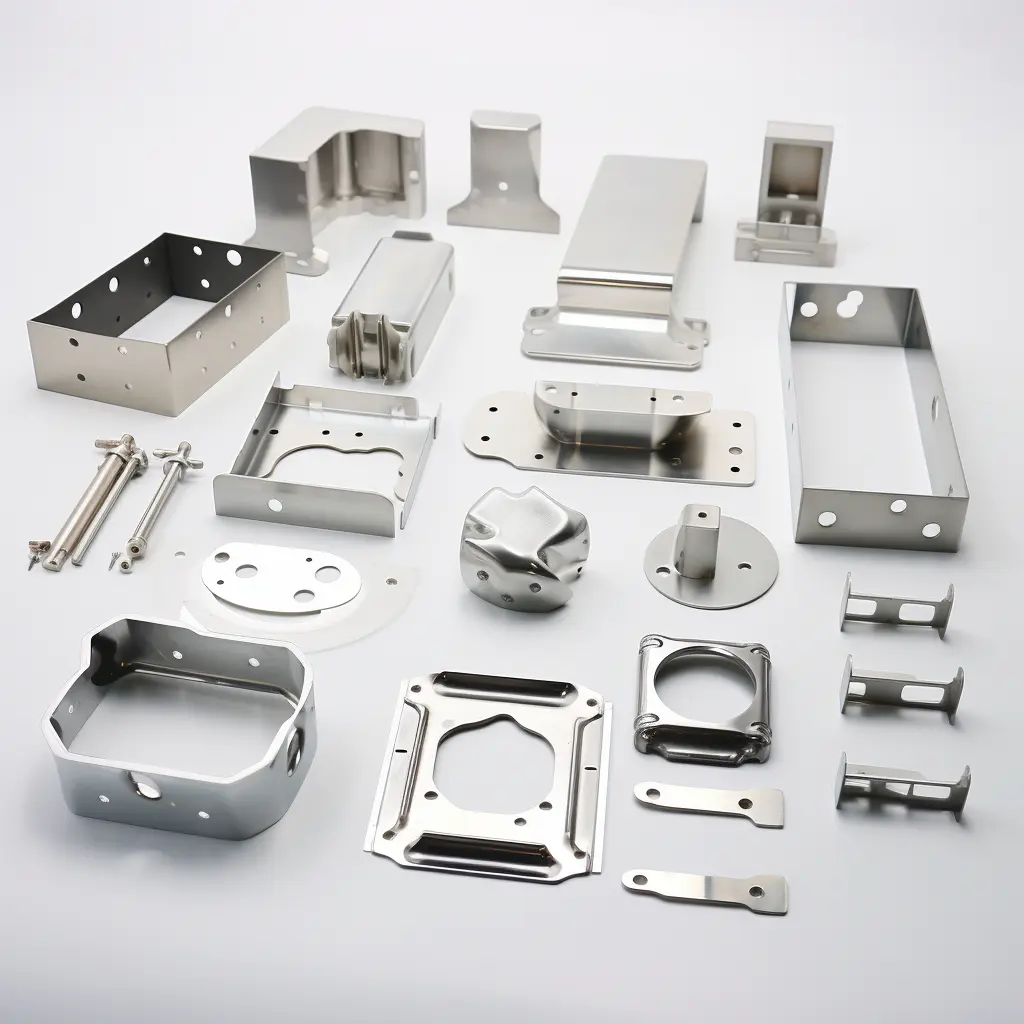
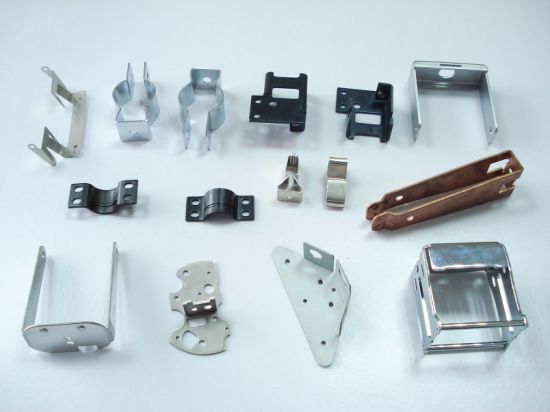
Our custom stamped metal parts are used across a wide range of industries, providing reliable, cost-effective components for critical applications:
Automotive
We produce precision brackets, chassis components, clips, and connectors for automotive systems, meeting strict automotive quality standards for durability and performance.
Electronics
Our stamped parts include electrical connectors, shielding components, terminal contacts, and mounting hardware for consumer and industrial electronics.
Home Appliances
We manufacture structural sheet metal parts, mounting plates, and functional components for home appliances, ensuring consistent fit and finish.
Medical Devices
Precision stainless steel stamped components for medical devices, including surgical instruments, diagnostic equipment parts, and implantable components, meeting ISO 13485 standards.
Industrial Equipment
Custom mounting plates, housings, and structural components for industrial machinery, conveyor systems, and power transmission equipment. Explore our automotive stamping solutions.
Common Challenges in Metal Stamping & Our Solutions
Stamping stainless steel and other high-strength materials comes with unique engineering challenges. Our team has years of experience overcoming these issues to deliver parts that meet your exact requirements:
| Challenge | Our Solution |
|---|---|
| Burr Formation | Regular tool sharpening and maintenance, plus secondary deburring operations to ensure clean, burr-free edges. |
| Material Springback | Precision die compensation and over-bending techniques to account for springback, ensuring parts bend to the exact angle required. |
| Material Cracking | Material optimization and process adjustment, including grain direction control, to prevent cracking during bending and forming. |
| Dimensional Variation | Strict process control, regular die inspection, and in-process quality checks to ensure consistent dimensions across every part. |
Case Studies
Automotive Stainless Steel Bracket
Project Challenge: An automotive customer needed 500,000 stainless steel brackets annually, with tight tolerances and consistent performance across high-volume production.
Our Solution: We designed a custom progressive die stamping process, which allowed us to produce all features in a single pass, eliminating secondary operations. We also implemented in-process inspection to ensure consistent quality.
Project Result: We reduced the customer’s unit cost by 40% compared to their previous CNC machined parts, while improving dimensional consistency and reducing their assembly time.
Copper Electrical Connector
Project Challenge: An electronics customer needed high-precision copper connectors, with strict conductivity requirements and tight tolerances for the contact features.
Our Solution: We used precision progressive die stamping to produce the parts, with tight tolerance control for the contact areas. We also added a secondary tin plating process to improve conductivity and corrosion resistance.
Project Result: We delivered the parts with 100% pass rate on electrical testing, meeting the customer’s strict performance requirements, and supported their 100,000-piece monthly production run.
Xiamen Goldcattle Metal Stamping Service Introduction
-
Industry Coverage Covers aerospace, medical, electronics, auto & telecom, regulation-compliant parts.
-
Material Capability 15+ years: process common & custom metals, various workpieces.
-
Technical Solutions Proprietary tech fixes stamping issues, defect-free complex parts.
-
Quality Assurance ±0.005mm precision, full traceability, ISO9001 & RoHS compliant.
-
Client Support Supports NA & EU clients, end-to-end services, 20+ treatments, 1-piece MOQ.

Frequently Asked Questions
What materials can be stamped?
We can stamp a wide range of materials including stainless steel, aluminum, copper, brass, carbon steel, and specialty alloys like Inconel and titanium for specialized applications.
What tolerance can metal stamping achieve?
Our standard stamping process can hold tolerances of ±0.05mm, and we can achieve tighter tolerances down to ±0.02mm for critical precision parts.
What is progressive die stamping?
Progressive die stamping is a high-efficiency process where multiple stamping operations are performed in sequence as the sheet metal moves through the die, allowing for fast, consistent production of complex parts.
Is stamping suitable for prototypes?
Yes, we can produce prototype stamp parts using soft tooling, or we can use CNC machining for prototypes if you need a small number of parts without the tooling investment.
What is the minimum sheet thickness for stamping?
We can stamp sheet material as thin as 0.1mm for small precision parts, up to 5mm thick for heavier industrial components.
How long do stamping dies last?
Progressive stamping dies can last for 1 million to 5 million cycles, depending on the material and part complexity, with regular maintenance to extend their service life.
Is stamping cheaper than CNC machining?
For high-volume production, stamping is significantly cheaper than CNC machining, as it can produce parts much faster with less labor. For low-volume prototypes, CNC machining is often more cost-effective.
Can stainless steel be stamped?
Yes, we regularly stamp stainless steel parts, including 304 and 316 grades, using specialized tooling and process parameters to account for the material’s strength and work hardening properties.
What industries use stamped components?
Stamped components are used across automotive, electronics, medical, industrial equipment, aerospace, and home appliance industries, among others.
How do I choose a stamping supplier?
Look for a supplier with experience in your material and industry, the ability to handle your production volume, comprehensive quality control, and engineering support to help optimize your part design for manufacturability.
Custom Metal Stamping Services for Your Project
At Xiamen Goldcattle, we offer comprehensive custom metal stamping services, from prototype tooling to high-volume production, with full engineering support to help you optimize your part design for cost and quality.