Choosing between Chinese mold makers takes more than comparing tooling prices or factory photos. The decision starts with the same technical specification and RFQ scope for every supplier, then reviews DFM output, mold design, steel selection, machining and inspection evidence, trial-sampling plans, and tooling ownership terms. A lower quote is only competitive when the scope, sample validation, documentation and acceptance criteria are comparable.
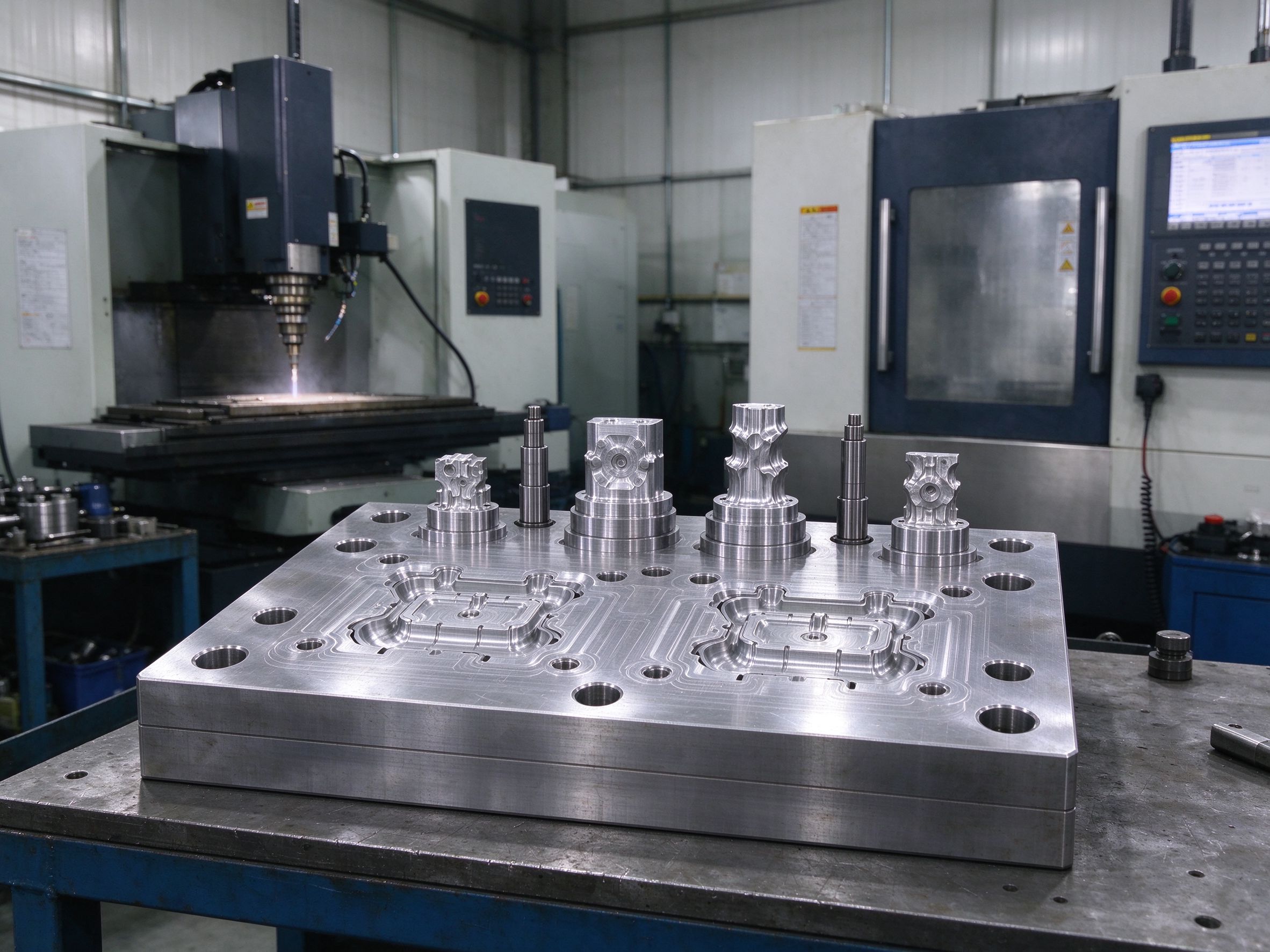
Compare suppliers on evidence, not on price alone. Give every candidate the same part, resin, annual volume, cycle-time target, appearance and acceptance standard, and ask for the same quote scope. Then read the DFM comments, look at who actually machines the cavities, check what T1 samples and reports are included, and confirm who owns the mold and how it moves. The right supplier is the one whose engineering, validation and total tooling cost match your part design and production plan.
What Type of Mold Supplier Do You Actually Need?
The right comparison starts with what you are buying. A mold-only shop, a mold-and-molding shop, and a parts-only supplier are not judged on the same points.
| Your buying situation | Supplier type to shortlist | What to compare most |
|---|---|---|
| Mold only, then shipped to your US/EU molder | Professional mold maker | Tooling completeness, target-machine compatibility, documentation, ownership and transfer terms |
| Mold plus ongoing plastic parts | Integrated mold-and-molding supplier, or a clearly responsible pair | Who owns what after T1, production capability, total part cost, change control |
| Startup, design not frozen | Supplier that handles soft tools, iteration and engineering changes | Change cost, bridge-tool approach, feedback speed, sample validation |
| Stable volume, long production run | Supplier with production-grade mold design, trials, maintenance and inspection | Expected mold life, cycle time, cavity balance, dimensional stability, maintenance plan |
| Multi-cavity, complex appearance, tight critical dimensions | Supplier with engineering analysis and validation capability | Runner and cooling design, cavity-to-cavity variation, appearance standard, dimensional reports |
Multi-cavity tools, hot runners or higher mold classes are not automatically better. They are chosen by annual demand, part geometry, material, cycle time, appearance requirements and tooling budget.
The 8 Criteria for Comparing China Mold Makers
1. DFM before quoting
Did they review your real CAD and drawings, or just send a price? Look for written comments on parting line, draft, wall thickness, gate, cooling, venting and ejection.
2. Mold design & steel
Steel grade, heat treatment, hardness, cavity count, runner type, cooling layout, expected life. The steel choice should match resin, volume and surface finish, not be copied from another project.
3. Machining evidence
Can they show CNC, EDM, wire-cut, grinding, assembly and measurement capability on parts like yours? Which operations are in-house and which are outsourced?
4. Validation plan
What does the quote include for T0, T1, T2? How many shots, how many samples, dimensional reports, appearance standard, and who pays for rework?
5. Quote transparency
Does the price list steel, cavities, runner system, standard components, trials, modifications, documentation, packing and shipping? Hidden extras usually appear after deposit.
6. Communication & schedule
Named engineering and commercial contacts, stage plan, open-issues list, change confirmation, risk warnings before delays.
7. Ownership & transfer
When does the mold become yours? Can it move to another molder? Do you receive 2D/3D files, BOM, parameters and spare-parts list?
8. After-sales support
Maintenance, spares, wear parts, modifications, repair turnaround, and production support after the mold is approved.
Use the Same RFQ Scope to Compare Three Suppliers
Three suppliers can return similar-looking numbers for very different work. Send the same list to each and compare line by line.
| RFQ item | Must be confirmed in writing |
|---|---|
| Mold type | Prototype / soft tool / production mold, expected mold class or target life |
| Cavities & structure | Number of cavities, family mold or not, two-plate / three-plate, side actions and lifters |
| Steel & treatment | Steel grade, supplier spec, heat treatment, hardness requirement |
| Runner & auxiliaries | Cold / hot runner, gate type, cooling, venting, ejection |
| Components range | Mold base, inserts, slides / lifters, standard-component brand or standard, spares |
| Trial scope | T0 / T1 / T2 stages, samples per stage, freight, measurement, rework cost responsibility |
| Acceptance documents | Mold inspection record, part dimensional report, appearance standard, functional test if required |
| Technical handover | Mold 2D / 3D files, BOM, process parameters, maintenance manual, spare-parts list |
| Commercial terms | Payment milestones, modification fees, acceptance criteria, lead time, packing and freight |
| Ownership & transfer | Ownership after final payment, storage and maintenance, transfer timeline, support during move |
| Parts pricing (if applicable) | Resin grade, quantity, cycle time, unit price and its assumptions |
How to Read a Mold Maker's DFM Review
A useful DFM is a list of specific risks and options, not a one-page "looks good to us." Expect comments on:
- Parting line — where it falls on the visible surface, witness lines and cosmetic impact.
- Draft — whether walls and ribs release without scuffing, and where draft needs to be added.
- Wall thickness — sections that may sink, warp or fill poorly, with proposed gating or rib adjustments.
- Gate location — flow length, weld lines on visible surfaces, pressure drop, venting needs.
- Cooling — where cooling lines reach the hot spots, and expected cycle-time implications.
- Ejection — pin marks acceptable on non-cosmetic surfaces, lifters or stripper plates where needed.
If a supplier promises a fixed price and lead time without opening your CAD, the quote is built on assumptions you have not agreed to.
Separate Equipment Lists from Real Machining Evidence
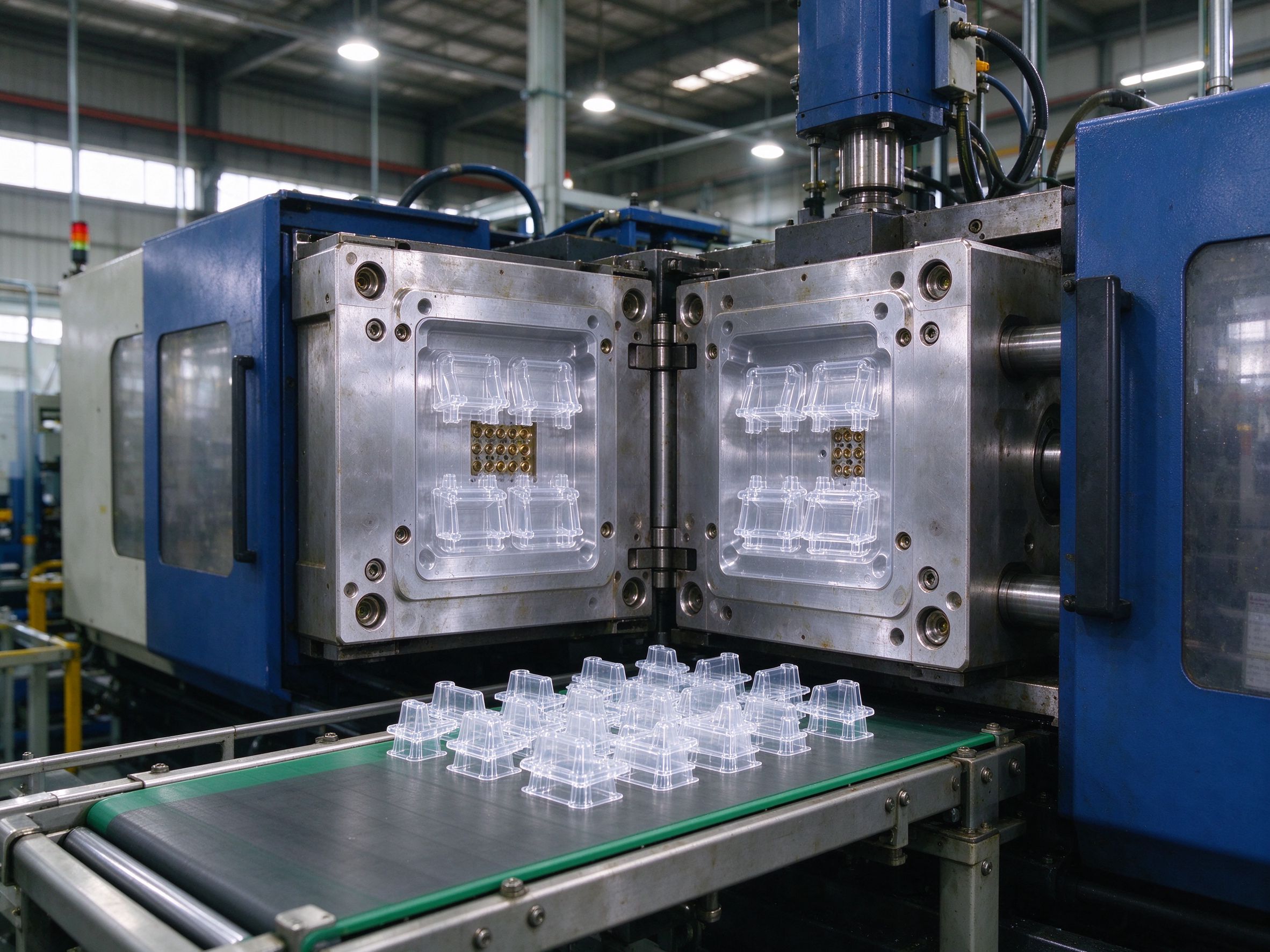
A photo of a CNC room does not tell you who actually cuts your cavities. Ask directly:
- Which operations are done in-house: CNC milling, die-sink EDM, wire-cut, grinding, mold assembly, spotting?
- Which are outsourced: heat treatment, surface treatment, standard components, hot runner supplies?
- How are outsourced parts inspected and accepted before assembly?
Outsourcing is not automatically a problem. The issue is when a shop cannot explain who did what, or cannot show inspection records for heat-treated or coated components.
T0, T1 and T2: What Each Trial Should Prove
| Stage | Purpose | What to expect |
|---|---|---|
| T0 | First shot on the shop floor | Check that the mold opens, ejects, cools and fills. Expect short shots, flash and unknown process. Not for part approval. |
| T1 | First meaningful sample | Samples at a stable process, dimensional report, appearance photos, list of defects and proposed fixes. This is the first real engineering review. |
| T2 | After modifications | Samples after gate, cooling, ejection or steel changes, compared against T1. Confirms the root cause was fixed, not masked. |
Agree in the quote how many trials are included, who covers material and shipping for samples, and which defects count as mold issues versus process tuning. Without that boundary, T1 revisions can be invoiced as extra work.
Mold Ownership, Transferability and Machine Compatibility
For US and European buyers, the mold is a production asset that may one day move. Before paying the deposit, confirm:
- Ownership transfers after which payment milestone, and what documentation goes with it.
- The mold can physically move to your nominated molder. That means mold-base dimensions, tie-bar spacing, minimum and maximum mold height, locating ring, nozzle radius, ejection and cooling interfaces all match the target machine.
- You receive 2D and 3D mold files, BOM, process parameters, maintenance manual and spare-parts list.
- Storage, rust-proofing, insurance, repair and modification costs during production are defined.
- Outsourced components and standard parts are identified well enough for future service.
A written statement that "the mold belongs to the customer" is not enough. The contract has to define what is handed over, in what format, and how the supplier supports a future transfer.
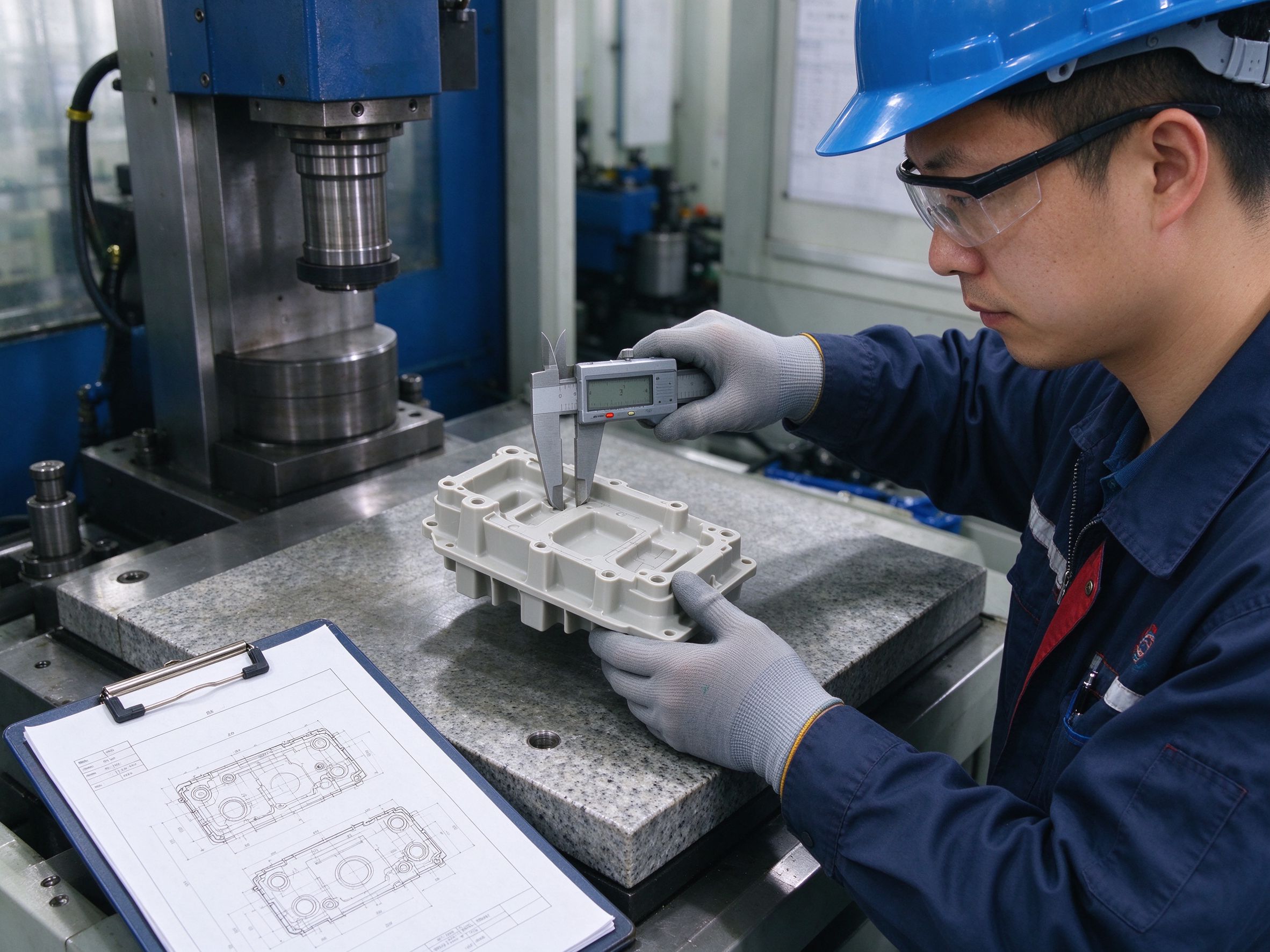
A 100-Point Comparison Scorecard
Use this as a starting framework for shortlisting candidates. Score each item 0 = no evidence, 1 = partial evidence with gaps, 2 = evidence that matches your project. Drop items that do not apply from the total.
| Dimension | Weight | What evidence looks like |
|---|---|---|
| DFM & engineering | 20 | Written design risks, options, trade-offs against your CAD |
| Mold technical proposal | 15 | Steel, cavities, runner, cooling, venting, ejection, expected life |
| Mold-making & quality evidence | 15 | Machining capability, measurement, material and heat-treatment records |
| Trial & sample validation | 15 | T0/T1/T2 plan, sample count, dimensional report, rework boundaries |
| Quote transparency & total cost | 10 | Same scope as competitors, no surprise extras |
| Communication & schedule | 10 | Named contacts, stage plan, change response, risk warnings |
| Ownership & handover | 10 | Ownership terms, files, BOM, transfer and maintenance support |
| After-sales support | 5 | Repairs, spares, modifications, production support |
Warning signs regardless of total score: no steel or cavity count in the quote; fixed price and lead time without CAD review; no clear ownership or documentation; no T1 inspection basis; claims of fully in-house work that cannot be mapped to real operations. Treat missing evidence as "to be verified," not as a pass.
When to Choose an Integrated Mold-and-Molding Supplier
If you also plan to buy molded parts long-term, an integrated shop removes handoff friction between mold making and production. You compare T1 samples, cycle time, cavity balance, critical dimensions and ongoing delivery rather than only whether the mold can be shipped. If your plan is to run the tooling in your own facility or with a preferred molder, the balance shifts to documentation, machine compatibility and transfer support.
Frequently Asked Questions
How do I compare two or three Chinese injection mold makers?
What should a China mold maker quote include?
How many mold trials should I include in the contract?
Should I buy the mold and molded parts from one supplier?
What are the warning signs in a low mold quote?

Compare Your Mold Project on the Same Basis
Send your CAD or part drawing, resin, expected annual volume, target market and production plan. We will return a DFM review, mold proposal and a clear scope of trials, documentation and ownership so you can compare suppliers on the same terms.
Xiamen Goldcattle · Manufacturing since 1998 · Injection mold making and custom CNC machining · Related: our mold manufacturing service →