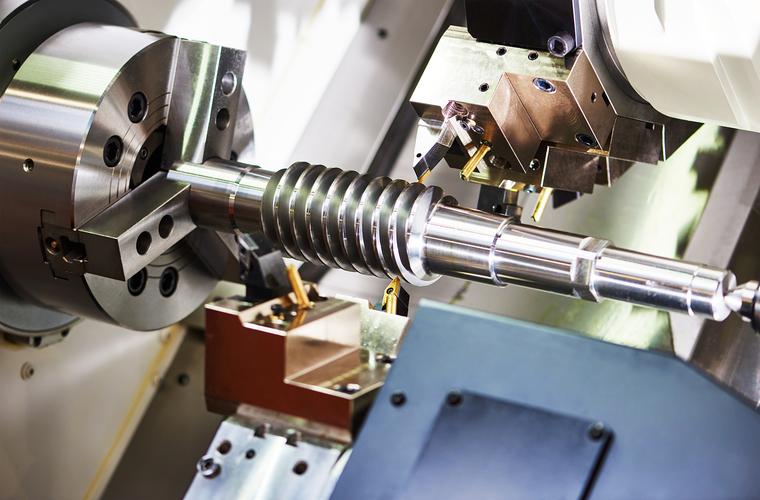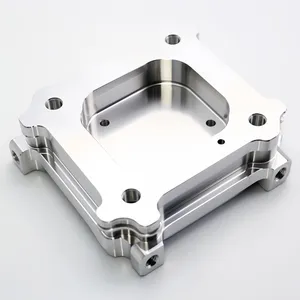
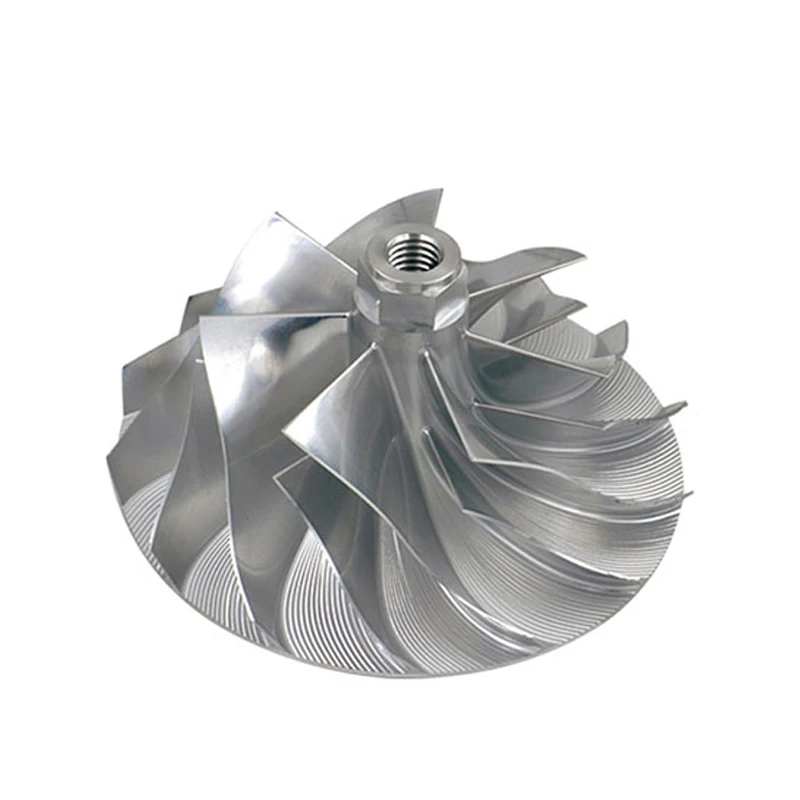
Turbine blades are typically machined using simultaneous 5-axis CNC technology to process their complex, curved airfoil geometries. This advanced method enables precise manufacturing of thin-wall structures from high-temperature superalloys, meeting the strict performance requirements of aerospace, power generation, and industrial turbine applications.
What Makes These Components Difficult to Machine?
Turbine blades present unique manufacturing challenges that set them apart from standard metal parts, requiring specialized expertise and equipment:
- Extremely complex airfoil geometries with twisted, curved surfaces that can’t be produced with standard machining
- Thin-wall structures (as thin as 0.5mm) that are prone to deformation during cutting
- Strict aerodynamic profile requirements that demand micron-level precision
- Hard-to-machine superalloys that cause rapid tool wear and heat buildup
- Zero-defect requirements, as failure can lead to catastrophic system damage
Common Materials Used for Turbine Blades
| Material | Key Properties | Typical Applications |
|---|---|---|
| Inconel 718 | High temperature strength, corrosion resistance, weldable | Industrial gas turbines, turbochargers |
| Inconel 738 | Ultra-high temperature creep resistance | Aerospace hot-section blades |
| Ti-6Al-4V Titanium | Lightweight, high strength, biocompatible | Low-pressure compressor blades, medical turbines |
| Haynes 230 | Oxidation resistance, long-term thermal stability | High-temperature industrial gas turbines |
| Stellite 6 | Wear resistance, hardfacing capability | Edge protection for blade tips |
All our materials come with full mill test reports, with 100% traceability to ensure compliance with aerospace and energy industry standards.
Why 5-Axis CNC Machining Is Required
Traditional 3-axis machining can’t meet the requirements of modern turbine blade production. Here’s how 5-axis technology delivers the necessary precision and efficiency:
| Factor | 3-Axis Machining | 5-Axis Machining |
|---|---|---|
| Complex Geometry Access | Limited, requires multiple setups for curved surfaces | Full access to all surfaces in a single setup |
| Tool Orientation | Fixed vertical orientation, causes tool deflection | Dynamic tilt adjustment, optimal cutting angle at all times |
| Setup Time | 5+ setups required, high alignment error risk | Single setup, eliminates alignment errors |
| Surface Finish | Stepped surfaces, requires extensive polishing | Smooth continuous cuts, minimal post-processing |
| Lead Time | 4-6 weeks for complete part production | 2-3 weeks, 50% faster delivery |
The CNC Turbine Blade Machining Process
- CAD Modeling & Design Optimization
We start with your 3D model, optimizing it for manufacturability by accounting for material shrinkage and cutting forces.
Design note: We reserve 0.1-0.3mm stock for finishing passes - CAM Toolpath Generation
Our engineers generate dynamic 5-axis toolpaths, automatically adjusting tool orientation to avoid collisions and ensure consistent cutting forces.
Process note: We use adaptive clearing to reduce tool wear by 30% - Workholding & Setup
We use custom fixtures to secure the raw material, ensuring zero movement during the high-precision cutting process.
Setup note: Custom fixtures reduce part deformation by 80% - Rough Machining
We remove most of the excess material, leaving a uniform allowance for the finishing pass.
Parametric note: Cutting speed: 60-100m/min for superalloys - Finish Machining
The 5-axis machine performs the final precision cuts, shaping the complex airfoil profile to exact specifications.
Precision note: Feed rate maintained at 0.1-0.2mm/tooth for smooth finish - Quality Inspection & Validation
We perform full 3D inspection to verify the part profile, dimensions, and surface quality before delivery.
Inspection note: 100% of parts go through CMM profile validation
Quality Control for Turbine Blade Production
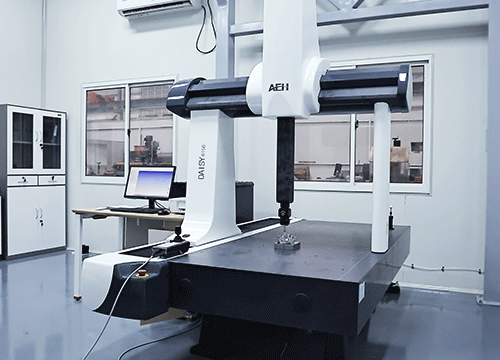
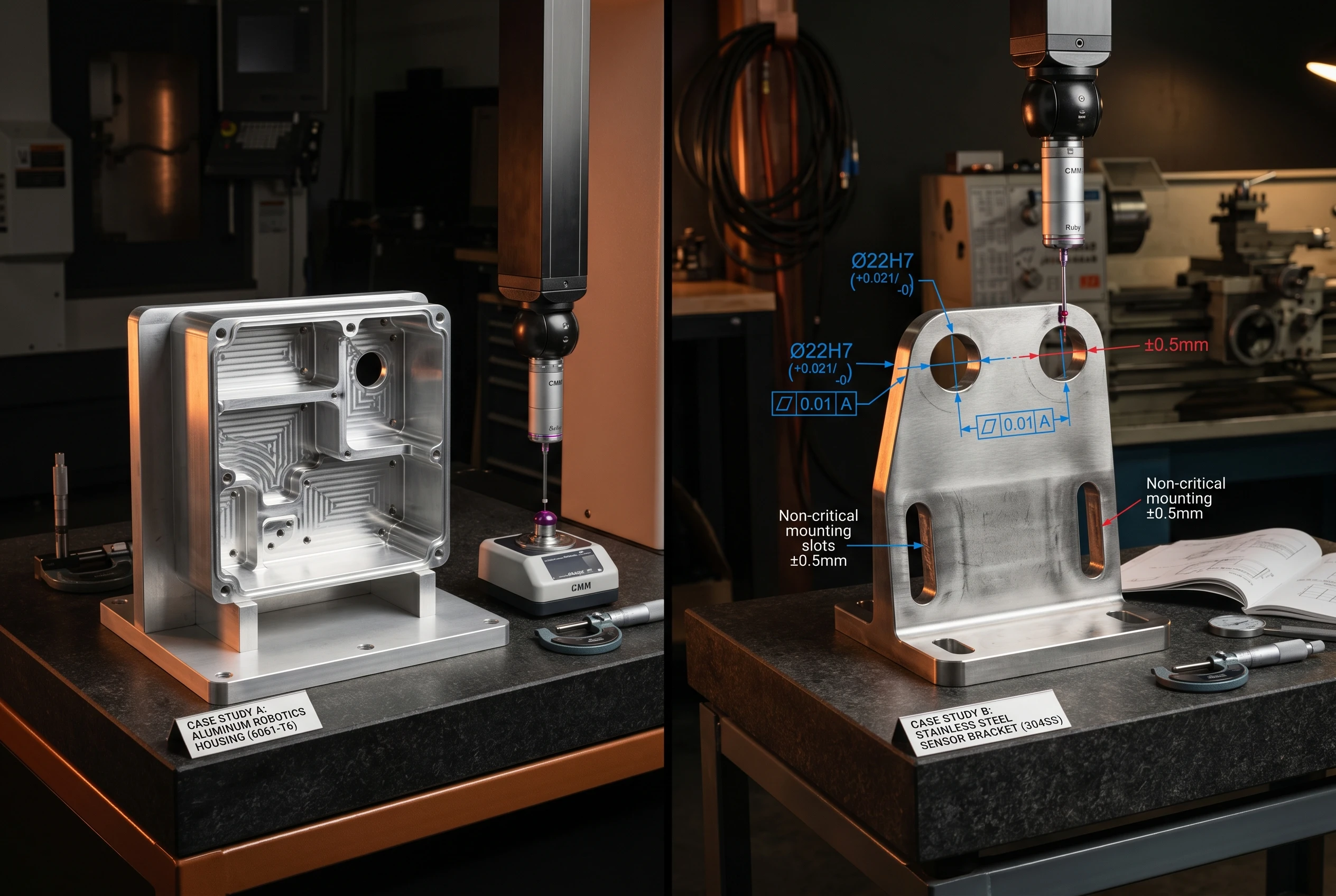
- Coordinate Measuring Machine (CMM) Inspection: Full 3D profile scanning to verify airfoil geometry against your CAD model, with accuracy down to 0.001mm
- Surface Roughness Testing: Validation of surface finish to ensure aerodynamic performance, typically achieving Ra 0.8-1.6μm as-standard
- First Article Inspection (FAI): Complete dimensional validation of the first part in every production run, with full AS9102 compliant reports
- Material Certification: Full traceability of raw materials, with mill test reports and heat treatment records for every batch
- Non-Destructive Testing (NDT): Dye penetrant testing to detect micro-cracks or surface defects, ensuring zero failure risk
Common Challenges and Our Solutions
| Challenge | Our Solution |
|---|---|
| Tool wear when machining superalloys | Use of solid carbide tools with PVD coating, plus dynamic speed adjustment to maintain optimal cutting temperature |
| Thin wall deformation during cutting | Low-force adaptive machining, plus custom support fixtures to minimize part deflection |
| Strict profile tolerance requirements | Closed-loop machining with in-process inspection, adjusting toolpaths in real-time to maintain profile accuracy |
| Heat buildup affecting material properties | High-pressure coolant delivery with temperature control, preventing material oxidation and heat damage |
| Long lead times for complex blade projects | In-house end-to-end production, eliminating wait times from multiple suppliers, delivering parts 30% faster |
Industry Applications
Aerospace
- Jet engine compressor blades
- Turbine hot-section components
- Aircraft auxiliary power units
Power Generation
- Gas turbine blades for power plants
- Steam turbine components
- Industrial turbine parts
Automotive
- Turbocharger compressor wheels
- Performance turbo components
- Racing engine turbine parts
Industrial
- Oil & gas turbine components
- Marine propulsion turbines
- Industrial compressor parts
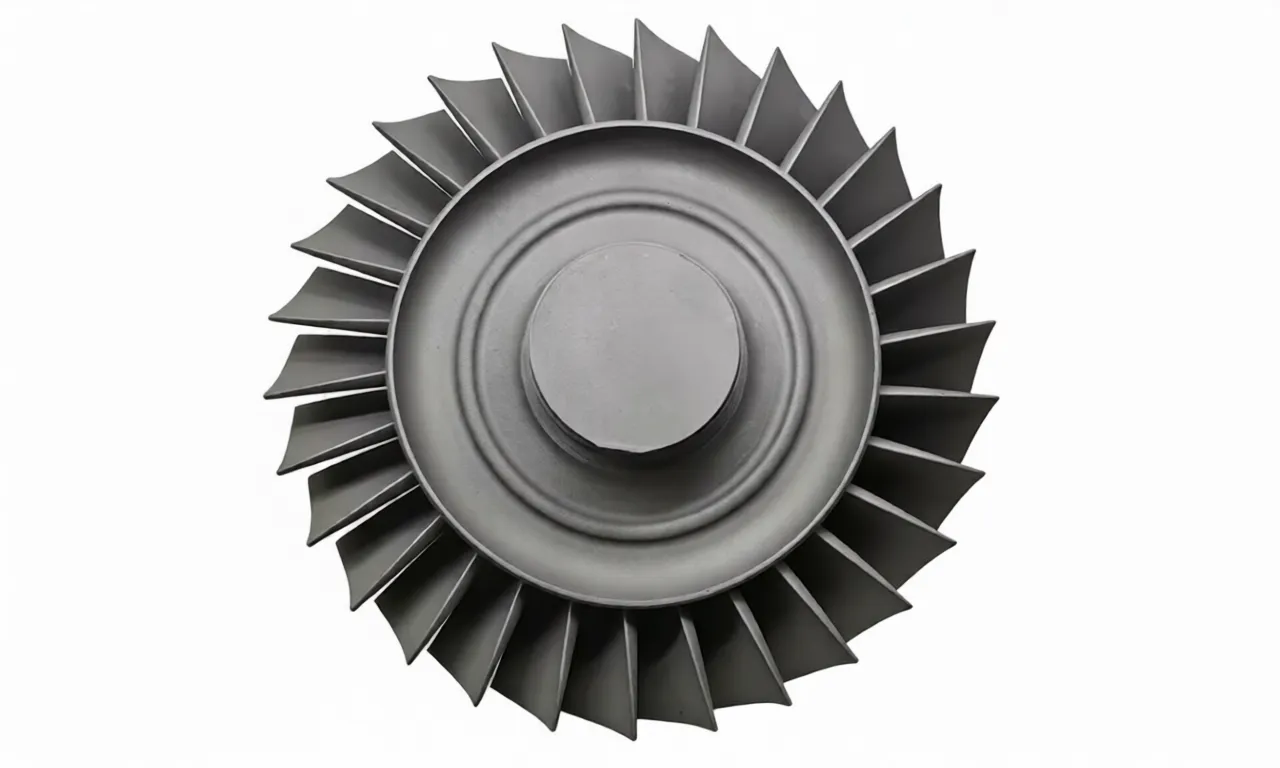
Our Turbine Blade Machining Capabilities
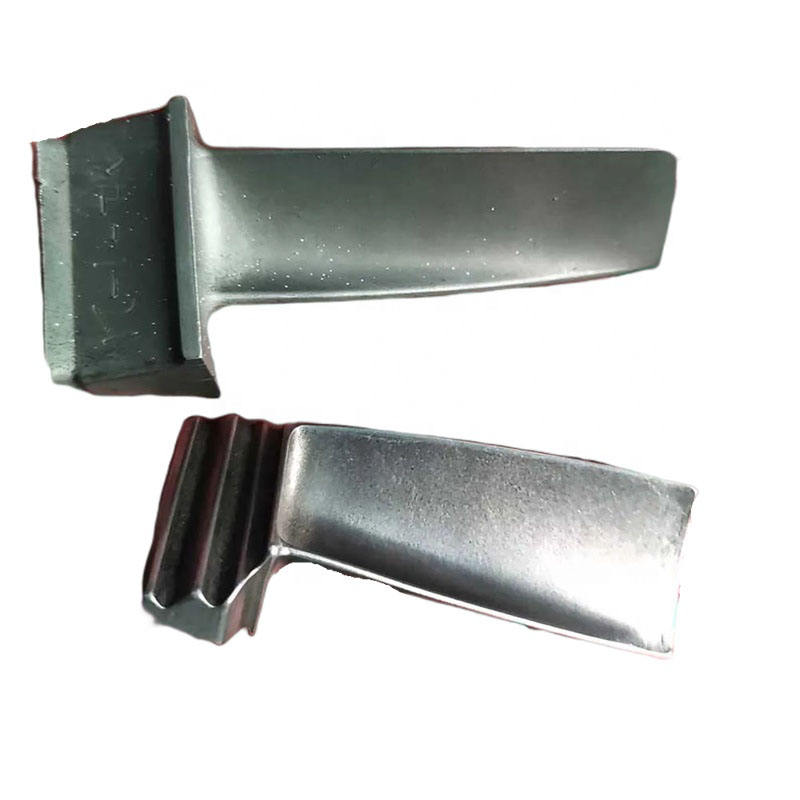
As a national high-tech enterprise with 26 years of precision manufacturing experience, Xiamen Goldcattle delivers end-to-end turbine blade machining solutions that meet the strictest aerospace and energy industry standards. Our engineering team averages 12+ years of specialized experience in superalloy processing, having delivered over 200 custom turbine component projects for global clients.
Our Hardware & Processing Strength
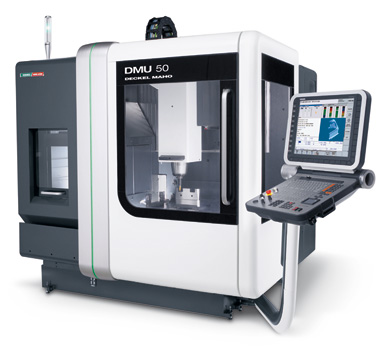
- 8 advanced simultaneous 5-axis CNC machining centers with 0.001mm positioning accuracy, dedicated to high-precision aerospace parts
- Full in-house quality lab with Hexagon CMM equipment, enabling 100% 3D profile inspection for every production part
- Custom workholding and fixturing capabilities, specifically designed to eliminate thin-wall deformation during superalloy cutting
- End-to-end production capacity, handling orders from 1-piece prototyping to 50,000+ units annual mass production
What We Can Achieve
- Consistent profile tolerance of ±0.02mm for airfoil surfaces, exceeding standard aerodynamic performance requirements
- Full processing capability for all common superalloys, titanium, and high-temperature alloys, with proven process parameters for each material
- 100% raw material traceability, with complete AS9102 compliant first article inspection reports and material certificates
- Full compliance with ISO 9001, AS9100, and NADCAP standards, supporting the strictest aerospace and defense project requirements
Problems We Solve For You
- Complex airfoil geometries that traditional machining shops can’t process with the required precision and consistency
- Long lead times and quality inconsistencies from working with multiple suppliers, we deliver all processes in-house
- Strict documentation and compliance requirements for aerospace and energy clients, with full traceability for every part
- High production costs and extended lead times for superalloy components, our optimized processes reduce costs by 25% and cut lead times by 40%
Frequently Asked Questions
What tolerance can you achieve for turbine blade profiles?
We can achieve profile tolerance of ±0.02mm for airfoil surfaces as standard, with the ability to reach ±0.005mm for critical high-precision applications with additional processing.
How long does it take to produce custom turbine blades?
For prototype parts, we can deliver initial samples in 2-3 weeks. For mass production, typical lead times are 3-4 weeks after tooling and process validation, depending on part complexity and order volume.
Can you machine custom superalloys for turbine applications?
Yes, we have extensive experience processing a wide range of superalloys including Inconel 718/738, Haynes 230, Waspaloy, and custom nickel-based alloys, along with titanium and stainless steel grades.
What is the minimum order quantity for turbine blade production?
We support orders from 1-piece prototypes up to 50,000+ units annual production. There’s no minimum order quantity, as we work with clients across the full product lifecycle from development to mass deployment.
Do you provide material certificates and inspection reports?
Absolutely. Every order comes with full material traceability, mill test reports, CMM inspection reports, and AS9102 compliant first article inspection reports as required, to meet your industry compliance needs.
Can you do post-processing like heat treatment or coating?
Yes, we offer full post-processing services including heat treatment, surface coating (PVD, HVOF), polishing, plating, and non-destructive testing to deliver fully finished parts ready for your application.
Is 5-axis machining required for all turbine blades?
For most modern turbine blades with complex airfoil geometries, 5-axis machining is required to achieve the necessary precision and efficiency. For simple, small blades, we can sometimes use 3-axis machining, but 5-axis delivers far better quality and lead times.
Can you work with our existing CAD models?
Yes, we support all common CAD formats including STEP, IGES, STL, SolidWorks, and CATIA files. Our engineering team will review your model and provide a free DFM review to optimize it for manufacturing.
Do you offer DFM reviews for turbine blade projects?
Yes, we provide complimentary Design for Manufacturability reviews for all turbine blade projects. Our engineers will analyze your design to identify potential issues, optimize for cost and quality, and provide recommendations before production starts.
What quality certifications do you hold for aerospace machining?
We are certified to ISO 9001, AS9100, and IATF 16949 standards, with full capability to meet NADCAP requirements for aerospace and defense projects, ensuring the highest level of quality and compliance.
Custom Turbine Blade CNC Machining Services
Looking to start your turbine blade project? Our engineering team offers complimentary Design for Manufacturability (DFM) reviews to help you optimize your part design for cost, quality, and performance. We support you from prototyping through full mass production, with aerospace-grade quality and on-time delivery.