Precision Metal Stamping Tooling Solutions for Industrial Manufacturing
Goldcattle provides custom precision metal stamping solutions for automotive, electronics, medical, and industrial applications, supporting prototype to mass production with tolerances up to ±0.01mm.
15+ Years of Expertise
PPAP & FAI Supported
RoHS Compliant
What Determines Metal Stamping Precision?
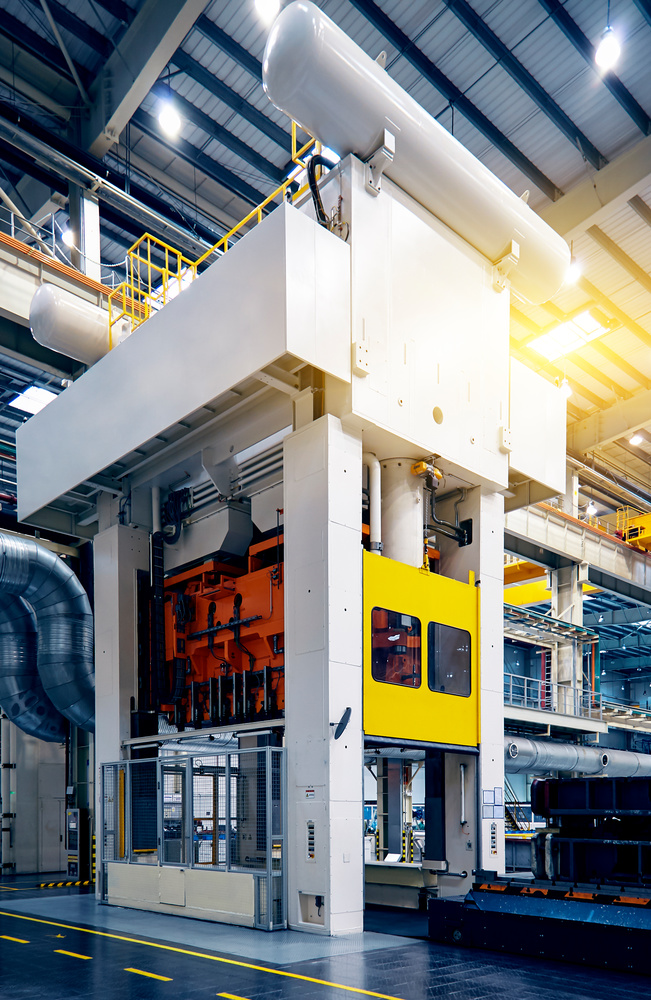
Precision isn’t just a buzzword—it’s the result of dozens of tiny, controlled variables working together. Even small shifts in these factors can make or break your part’s performance in critical applications.
💡 Fun Fact: Did you know? A 0.005mm mismatch in die clearance can create burrs that increase part wear by 30% in high-vibration automotive systems? That’s why we fine-tune clearance for every unique material and part design.
| Factor | Impact on Stamping Results |
|---|---|
| Die Clearance | Directly controls burr size and edge quality; optimized per material thickness and hardness |
| Material Springback | Affects dimensional stability; we add pre-compensation in die design to counteract material rebound |
| Tool Steel Hardness | Determines die lifespan and consistent performance over millions of cycles |
| Lubrication System | Reduces friction to improve surface finish and prevent tool wear during high-speed runs |
| Press Tonnage Stability | Ensures consistent force application across every stamping cycle, eliminating part variation |
Industrial Metal Stamping Capabilities
Our in-house equipment and engineering team let us handle everything from tiny electronic terminals to large structural automotive parts, with full control over every production step.
| Material Thickness | 0.2mm – 8mm |
| Press Capacity | 25T – 400T |
| Standard Tolerance | ±0.01mm |
| Die Types Supported | Progressive / Compound / Transfer |
| Surface Finishes | Powder coating / Zinc plating / Anodizing / Passivation |
| Order Volume | Prototype to Mass Production (1pcs to 10M+ pcs/month) |
| Typical Lead Time | 7 – 25 days (depends on part complexity) |
Types of Metal Stamping Dies
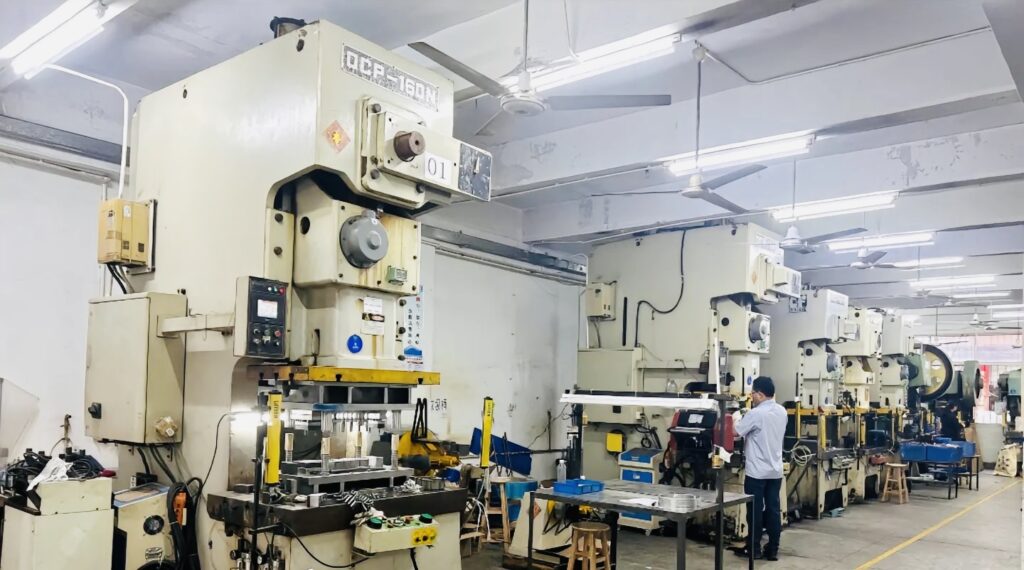
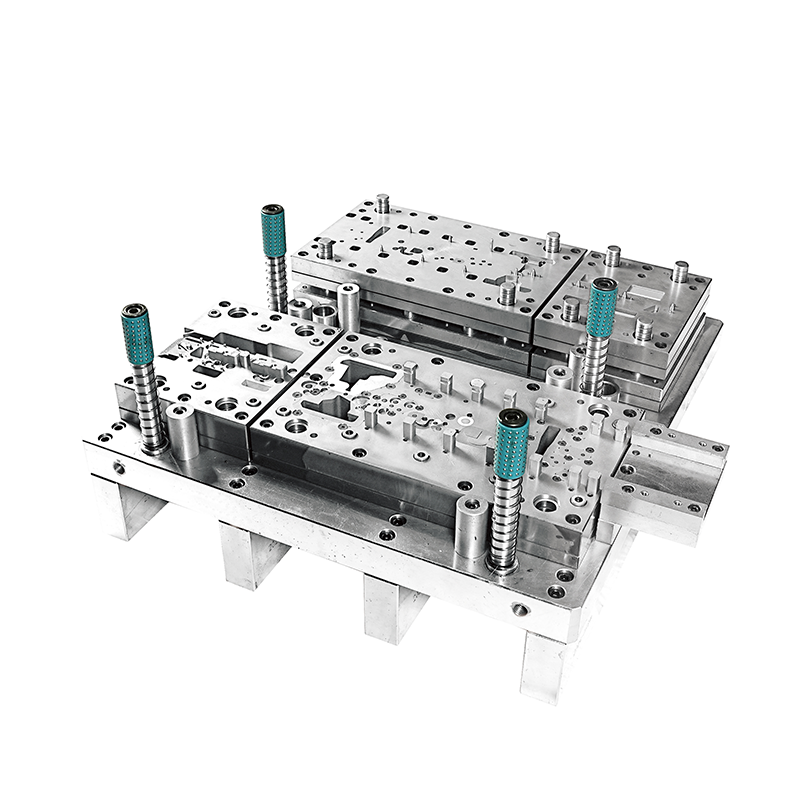
Choosing the right die type is critical to balancing cost, speed, and part quality. We match the perfect die solution to your project’s volume and complexity:
| Die Type | Best For Your Project |
|---|---|
| Progressive Die | High-volume production: Enables multiple operations in one continuous run, cutting per-part cost and lead time for large orders |
| Transfer Die | Complex, large parts: Ideal for deep-drawn or geometrically intricate components that need separate station processing |
| Compound Die | Simple blanking parts: Perfect for flat, precision components like washers or terminals, delivering fast turnaround for low to mid volumes |
Material Compatibility
We work with a wide range of metals to match your part’s performance needs, from corrosion-resistant medical components to high-strength automotive parts, with deep expertise in processing each material’s unique properties.
💡 Quick Tip: Different materials need completely different die tuning! For example, spring steel needs 5% more over-bend compensation than aluminum to hit your target angle after stamping.
Stainless Steel
Our most popular corrosion-resistant option, available in multiple grades to match your needs:
- 304 SS: The universal grade, excellent general corrosion resistance, easy to form. Ideal for food equipment, medical parts, and general industrial components.
- 316 SS: Higher molybdenum content for superior salt/acid corrosion resistance, perfect for marine, chemical, and high-temperature medical devices.
- 430 SS: Ferritic grade with lower cost, magnetic, good for non-critical corrosion applications like home appliance parts.
Aluminum
Lightweight with excellent strength-to-weight ratio, perfect for weight-sensitive projects:
- 1100 Aluminum: Pure soft aluminum, great ductility for deep-drawn parts like enclosures, excellent corrosion resistance.
- 5052 Aluminum: Alloy grade with higher strength, good weldability, ideal for brackets, heat shields, and marine components.
- 6061 Aluminum: Heat-treatable high-strength alloy, perfect for structural aerospace and automotive parts, supports anodizing.
Copper & Brass
Unmatched electrical and thermal conductivity, ideal for electronic components:
- Pure Copper: Highest conductivity, soft formability, used for electrical terminals and heat exchangers.
- Brass: Copper-zinc alloy, higher strength and wear resistance, perfect for plumbing fittings, connectors, and decorative parts.
- Beryllium Copper: High-strength spring alloy, excellent elasticity, used for precision contact springs and high-reliability connectors.
Carbon & Alloy Steel
High strength and cost-effective, the go-to for structural and heavy-duty parts:
- Low Carbon Steel: Soft, easy to form and weld, low cost, ideal for general brackets and stamped hardware.
- Medium Carbon Steel: Higher strength, heat-treatable, used for load-bearing automotive and industrial parts.
- High Strength Steel: DP/HSLA steel for automotive safety parts, requires specialized springback compensation in tooling.
Detailed Stamping Process & Operations
Our end-to-end stamping process covers every step to deliver finished, ready-to-use parts, with full control over quality at every stage:
💡 Fun Fact: A single progressive die can complete 10+ different stamping operations in one continuous run, which is how we can produce complex parts at high speed with zero part handling error!
Common Stamping Operations
We offer a full range of stamping operations to create parts of any shape and function:
Blanking
Cutting a flat, custom-shaped piece from the metal sheet, creating the base for further operations or finished flat parts.
Piercing
Creating holes, slots, or custom cutouts in the part, with precision to meet your exact hole position and size requirements.
Bending
Forming the material into angles or shapes, with springback compensation to ensure your part hits the exact target angle after processing.
Deep Drawing
Stretching the material into seamless 3D shapes like cups, shells, or enclosures, capable of forming parts up to 10x the material thickness.
Embossing
Creating raised or indented patterns, logos, or textures on the part surface, adding functionality or branding without extra processes.
Coining
Precision squeezing of the material to create ultra-tight tolerances and clean edges, ideal for high-precision parts like terminals.
Real Production Case Study
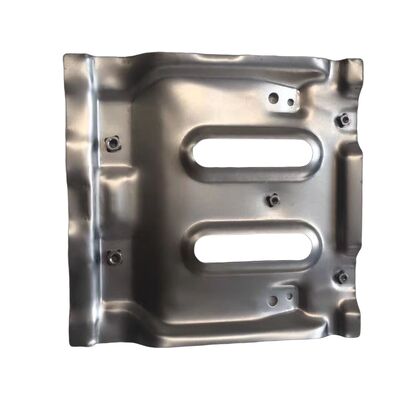
Automotive Bracket Stamping Project
Customer Requirement
304 stainless steel bracket with burr-free edges, 50,000 pcs monthly order for a North American automotive supplier.
Core Challenge
Initial samples had post-forming deformation and unstable hole alignment, leading to 18% scrap rate in the client’s assembly line.
Our Solution
Redesigned the progressive die with springback compensation, added automated in-die inspection stations to catch errors mid-run.
Final Result
- Tolerance improved to ±0.02mm, meeting strict automotive standards
- Scrap rate reduced by 31%, cutting the client’s assembly cost
- Production speed increased by 45%, enabling on-time monthly delivery
DFM Optimization Support
Our engineering team provides free Design for Manufacturability reviews to catch issues before production starts, saving you time and cost on reworks.
Here are the most common design mistakes we help our clients fix:
| Common Design Issue | Manufacturing Impact |
|---|---|
| Sharp Internal Corners | Can cause premature tool cracking, increasing die maintenance cost and downtime |
| Excessive Bend Depth | Leads to material tearing or part deformation, requiring expensive secondary operations |
| Overly Tight Hole Spacing | Increases tearing risk between holes, leading to high scrap rates for thin materials |
| Wrong Material Grain Direction | Causes cracking during bending, especially for high-strength steel parts |
Why Global Buyers Choose Goldcattle
We don’t just make parts—we deliver end-to-end solutions that remove the hassle of overseas sourcing for our clients.
| In-house Die Manufacturing | Faster design iteration, no outsourcing delays for tooling changes |
| Automated Inspection | 100% part consistency, with SPC tracking for every production run |
| Multi-process Integration | Stamping + welding + coating + assembly, reducing your outsourcing workload |
| Dedicated Engineering Support | English-speaking project managers, 24hr response time for your queries |
Industries We Serve
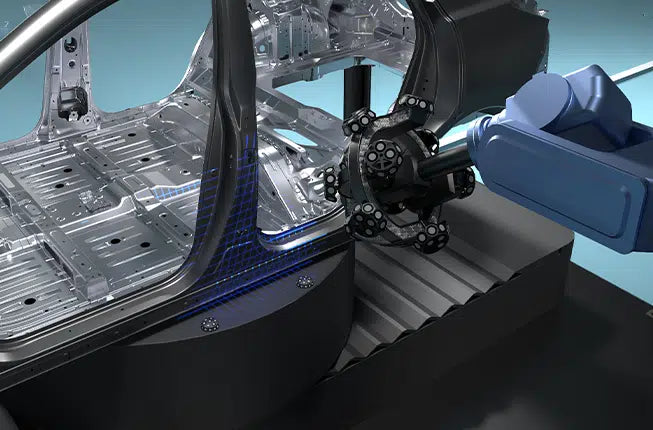
We’ve delivered precision stamping parts to clients across 12+ industries, with deep expertise in the strictest regulatory standards:
| Industry | Typical Stamped Parts |
|---|---|
| Automotive | Brackets, clips, heat shields, sensor housings |
| Electronics | Terminals, shielding cases, connector components |
| Medical | Stainless steel housings, surgical instrument components |
| Industrial Equipment | Machine brackets, hardware fittings, structural parts |
| Aerospace | Lightweight structural components, fastener parts |
| Robotics | Actuator components, frame parts, sensor mounts |
Frequently Asked Questions
What tolerance can metal stamping achieve?
Our standard precision stamping can hold tolerances as tight as ±0.01mm, depending on part size, material, and complexity. We can adjust our process to meet your specific tolerance requirements.
How long does a progressive die last?
With proper maintenance, our progressive dies can last for 1 to 10 million cycles, depending on the material and part complexity. We use high-grade tool steel to maximize die lifespan for mass production projects.
What is the best material for corrosion-resistant stamped parts?
304 and 316 stainless steel are the most popular choices for corrosion resistance, ideal for medical, marine, and outdoor applications. We also offer aluminum with anodizing or steel with zinc plating for cost-effective corrosion protection.
Can you support low-volume prototyping?
Yes! We support orders from 1-piece prototypes all the way up to 10 million+ mass production parts. Our rapid prototyping process lets you test your design before committing to full tooling.
How do you prevent burrs in stamping?
We optimize die clearance for each material, use sharp, high-precision tooling, and add secondary deburring processes when needed. For critical parts, we also use in-die shaving to achieve completely burr-free edges.
What industries use precision stamping?
Precision stamping is used across automotive, electronics, medical, aerospace, industrial equipment, and robotics industries, among others. It’s ideal for high-volume, high-precision part production.